Discus Tank Mates: 8 Compatible Species (and 7 to Avoid)
Almost nothing here is decided by behaviour. A Discus is a slow, mild, easily bullied fish, and the list below is short for one reason: it wants 28–30 °C water held at near-zero nitrate, and that combination quietly disqualifies most of the community fish sold in the same shops. Choosing housemates for one is an exercise in husbandry compromise — every candidate has to be asked whether it can live permanently in bathwater-warm, very clean, very soft water without shortening its own life.
Reviewed by the AquariumStocking team · Updated
The tank size that makes this work
Volume matters here less as swimming space and more as a buffer for water quality: the bigger the body of water, the slower it drifts between the large, frequent water changes discus keeping depends on. Our database puts the discus minimum at 70 gallons.
55 gallons
Enough for a group of five or six discus and a bottom crew, and nothing else. At this volume you are changing 50 percent of the water several times a week, so bare-bottom or thin sand and easily-lifted hardscape earn their place. Every extra fish you add here is measured in how much longer maintenance takes, not in how it looks.
The size where a discus tank can carry a second dimension — a small warm-water shoal in mid-water and a plant layout that survives the water change routine. Six discus need the floor space to establish a loose pecking order without one fish being cornered, and 75 gallons gives it to them without turning maintenance into a second job.
Comfortable rather than ambitious. Temperature and nitrate move slowly in this much water, which is precisely what discus reward, and there is length for larger warm-water species — a big pleco, a group of rainbowfish — that would crowd a 55. This is also the only realistic size for mixing discus with angelfish, and even then it is a calculated risk rather than a recommendation.
Start with the thermometer, not the temperament chart
A discus tank sits at 28–30 °C indefinitely. That is the top of the tolerance range for corydoras, most tetras and nearly every livebearer, and fish held permanently at their ceiling burn through their lifespan — faster metabolism, lower dissolved oxygen, shorter lives. A species that "can take" 28 °C for a summer is not the same as a species that thrives there for five years. Only the second kind belongs on this list.
Bioload is the second filter
Discus keeping is built on very clean water, so every additional fish is an additional nitrate source competing with the fish you actually bought. This is why the compatible list favours modest, tidy species over impressive ones. A large common pleco technically survives the temperature; what it does to your nitrate between water changes is the reason it is not recommended.
Feeding speed decides more pairings than aggression
Discus eat slowly and deliberately, often taking a minute to commit to a bite. Anything quick and greedy — danios, barbs, most rasboras — strips the tank before a discus has decided, and the discus thins out over months without a single act of aggression taking place. Slow or bottom-oriented feeders are the safe category.
Nervous fish make nervous discus
A darting, erratic tank mate keeps discus pinned at the back with clamped fins and darkened colour, and stressed discus stop eating before they show any other symptom. Steady, unhurried swimmers are worth more here than colourful ones. This is also why the group of discus itself matters: five or six settle each other, two or three do not.
Soft, acidic water narrows the field again
At pH 5.5–7.0 and low hardness, the livebearers and rift lake fish that want hard alkaline water are out on parameters alone, regardless of how peaceful they are. The species that fit are overwhelmingly South American, which is convenient — they came from the same soft blackwater conditions and want the same maintenance regime.
Plan around the water change routine
Whatever you add has to tolerate being in a tank that loses half its water twice a week, sometimes with the lights on and a siphon moving through the layout. Skittish or delicate species find this far more stressful than the discus do. Fish that simply carry on — catfish under wood, a shoal that regroups within a minute — are the ones that last in this tank.
Compatible species, ranked by fit
Ordered by how well each one actually lives at 29 °C long term, not by how often it appears in discus display tanks.
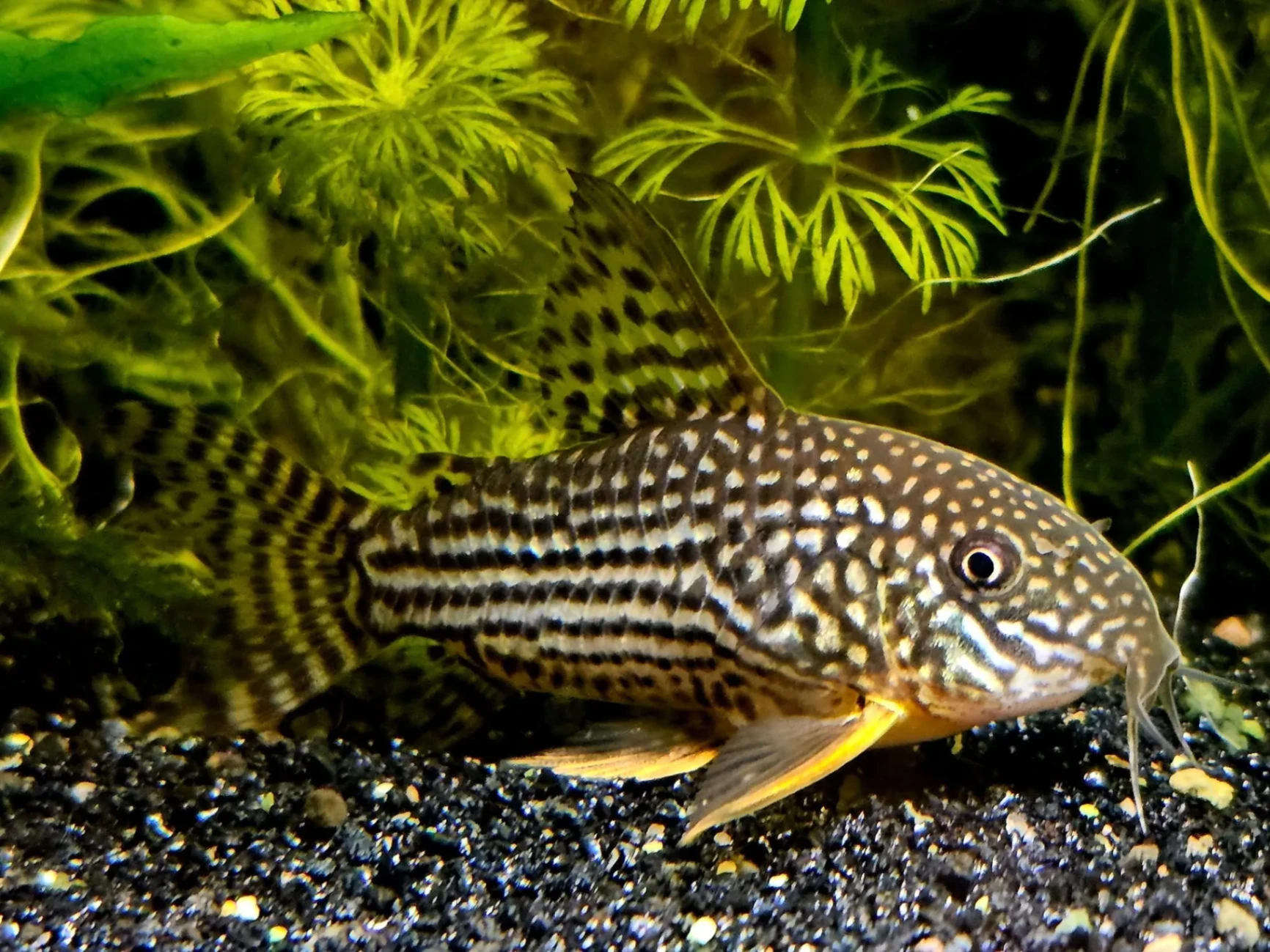
Corydoras Sterbai
Corydoras sterbai
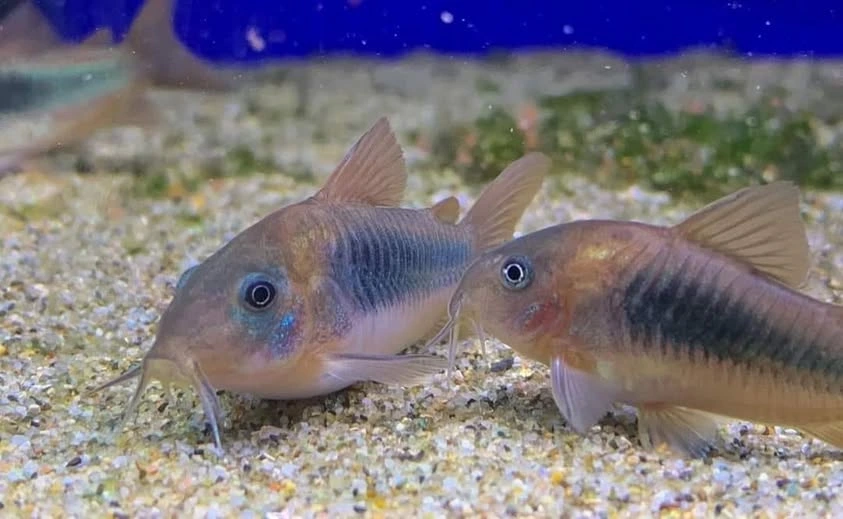
The one corydoras that belongs in a discus tank, and the reason is narrow: it handles sustained high temperature where bronze and panda corys are being slowly cooked. Sterbai stay on the floor, clear the uneaten beefheart and pellet that discus feeding inevitably leaves, and never enter the water column the discus use. Keep at least six on sand and feed sinking food after the discus have finished, because they will not compete for it.
A dwarf cichlid that genuinely wants the same conditions rather than merely surviving them — 26–30 °C, soft, acidic water is its natural preference, not its limit. It works the lower third of the tank, claims a small flat stone and largely ignores fish as big as a discus. The catch is that rams are only as robust as the water they came from; buy from a supplier keeping them warm and soft, not from a tank at 24 °C.
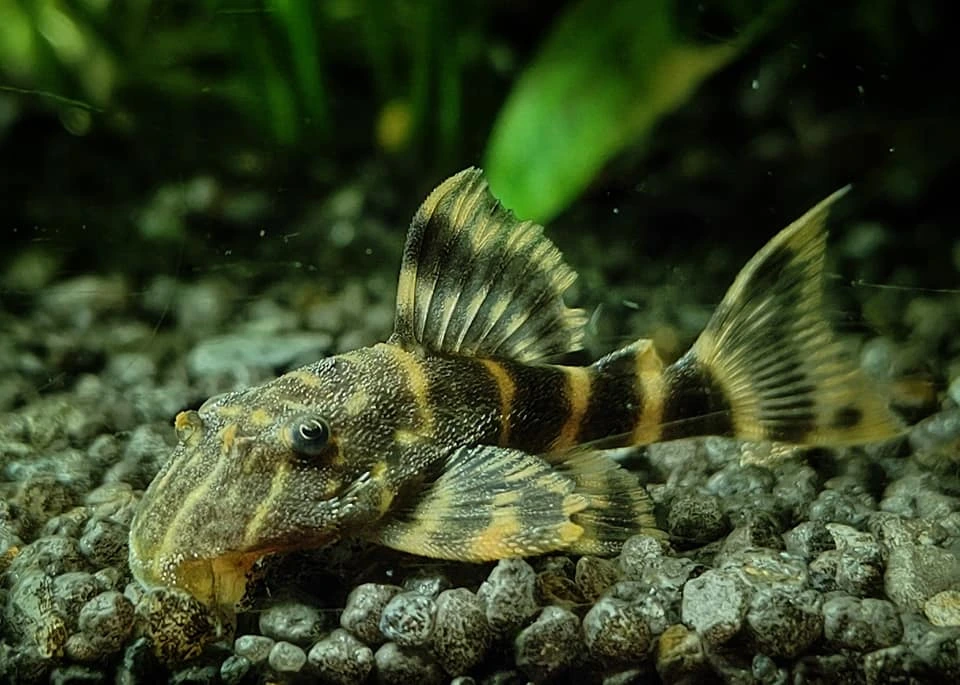
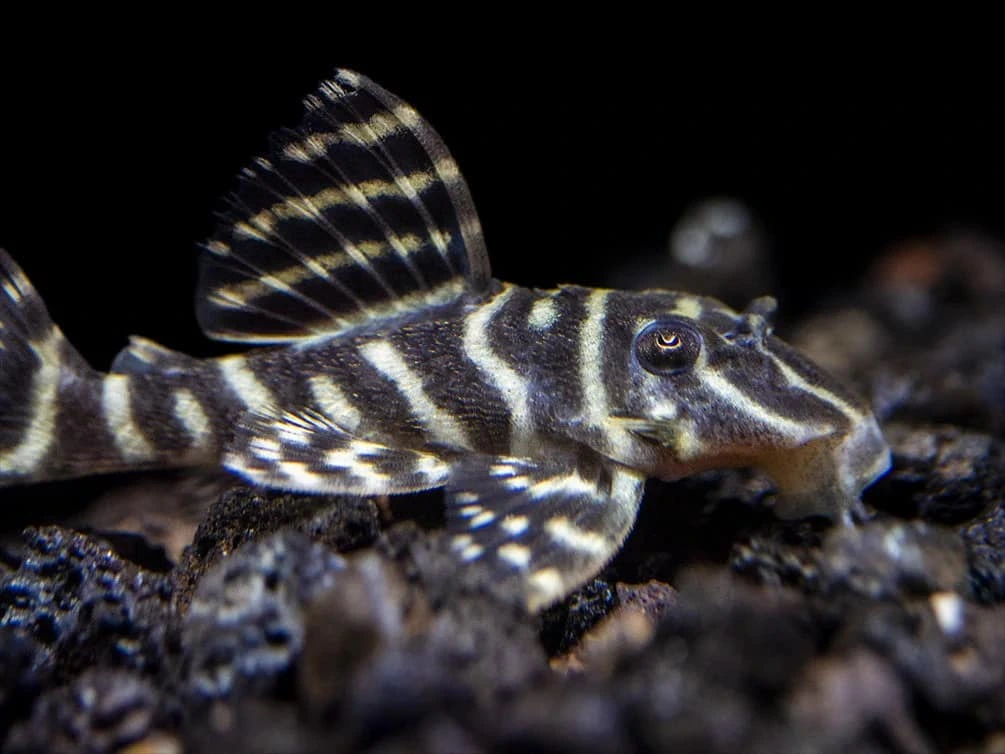
Small enough not to matter to your nitrate and warm-water tolerant to 30 °C, which most plecos are not. It spends the day inside driftwood rasping at it and comes out at night, so it never interacts with the discus at all. Give it real wood — it eats the stuff, and without it the fish slowly starves in a tank that looks well fed. At 9 cm it is the sensible answer where a common pleco is not.
Another South American dwarf that treats discus water as home rather than as a compromise. It occupies caves and the substrate line, displays constantly among its own kind and has no interest in a fish ten times its weight. A male with two or three females in a tank with broken sightlines will breed, and even a spawning pair only defends a small radius near the floor — well below where the discus hang.
Its temperature requirement reads 26–32 °C, which makes a discus tank one of the few community setups it can honestly live in. It is small, quiet, and entirely nocturnal, hiding in narrow caves through the day. Two warnings: it is carnivorous rather than an algae eater, so it needs sinking protein food of its own, and it is expensive enough that most keepers give it a species tank instead.
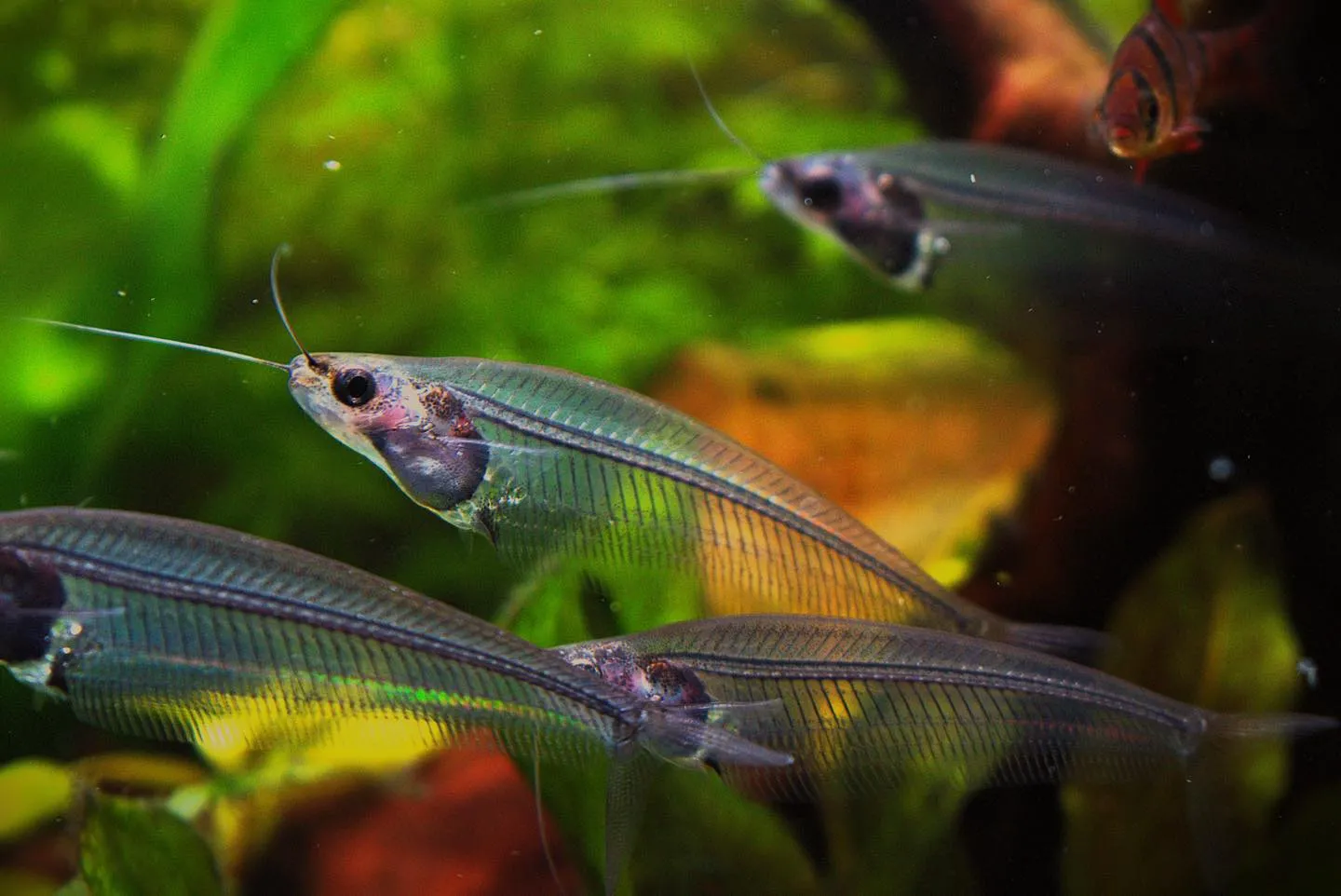
A mid-water shoaling fish that moves slowly, which is unusual and exactly what this tank needs. Glass catfish hover in a loose group in the current rather than darting about, so they never outpace a discus at feeding time. They need a group of six or more — kept in twos and threes they refuse to eat — and they want the same warm, soft, well-filtered water. Their transparency also makes early illness visible, which is oddly useful.
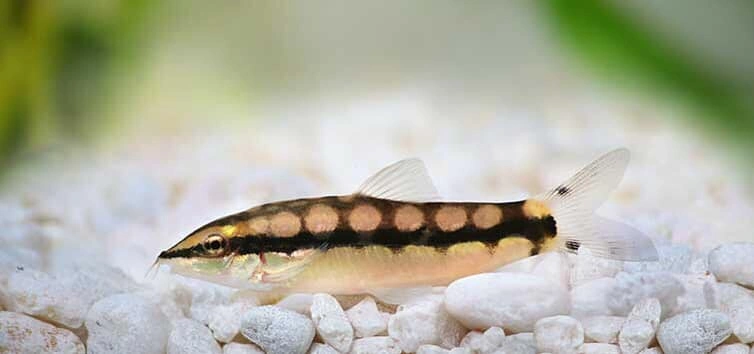
The rare loach that fits: 25–30 °C, only 6 cm, and busy along the bottom rather than through the middle. They are quicker than everything else in the tank but they forage downward, so they collect leftovers instead of intercepting food heading for the discus. Keep six or more so their energy stays directed at each other, and expect them to eat any pest snails as a side benefit.
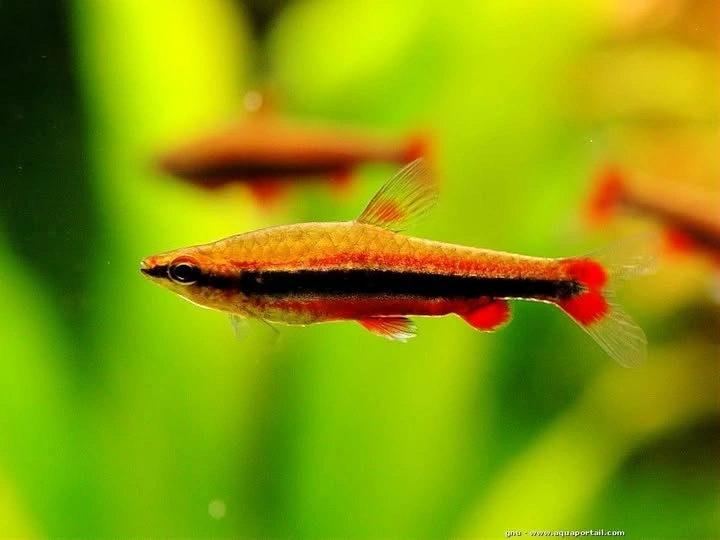
A small warm-water South American that hangs almost motionless in the upper water, angled nose-up, and adds movement without adding pace. At 6 cm it is too small to intimidate a discus and too calm to unsettle one. It has a small mouth, so feed accordingly, and keep eight or more — a thin group hides in the plants and you never see them. Soft acidic water is its preference rather than its tolerance.
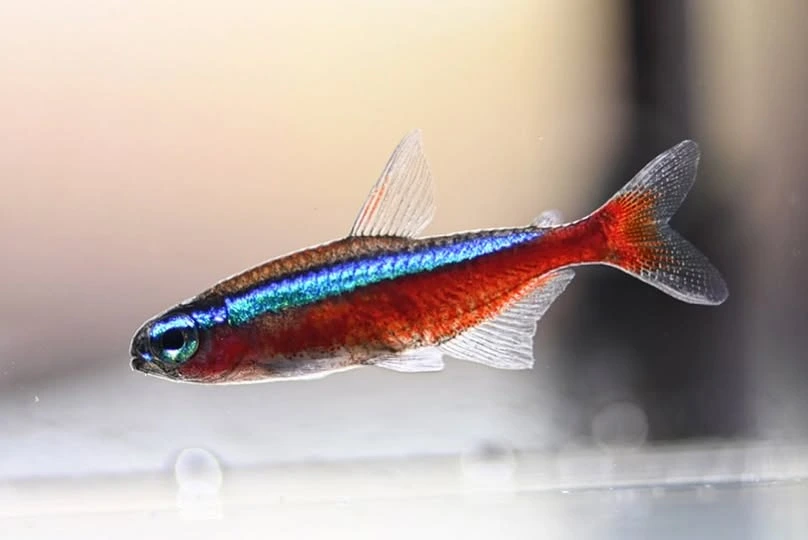
The most common recommendation on the internet and the one most worth questioning. Cardinals do come from the same water and they do survive at 29 °C, but their range runs to 27 °C for a reason: held above it permanently their metabolism runs hot and they live a fraction of the years they should. They also feed far faster than discus. The pairing looks correct and quietly costs you a shoal every eighteen months.
Tops out at 26 °C, several degrees below where this tank runs. Bronze corys in a discus tank breathe faster, surface-gulp more and die early, and because they do it slowly the cause is rarely identified. Every job you want them for is done better here by corydoras sterbai, which was built for the heat.
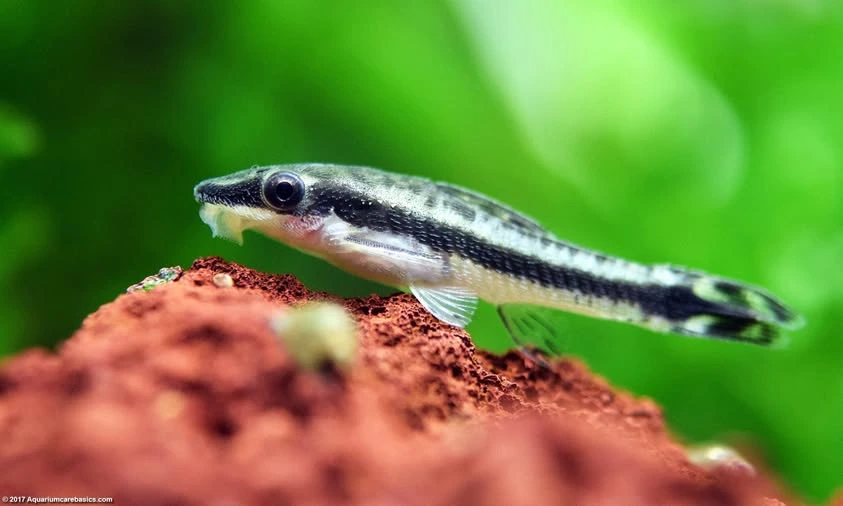
A cool-water grazer with a 22–26 °C range and a famously fragile constitution even at its ideal temperature. Discus heat pushes it past what it can sustain, and a discus tank rarely grows the film algae it needs to eat in the first place. It is a fish that struggles in good conditions; this is not one.
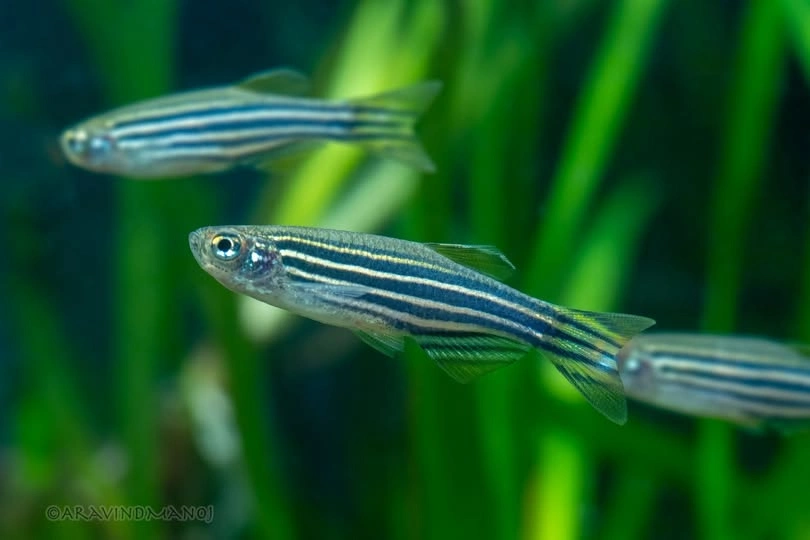
Fast, greedy and happiest around 22–24 °C. Danios cross the tank at the sound of the lid and clear the surface before a discus has committed to a bite, and their constant speed keeps a nervous fish at the back glass. Both halves of the problem — the pace and the temperature — get worse in a warm tank, because heat only makes them more active.
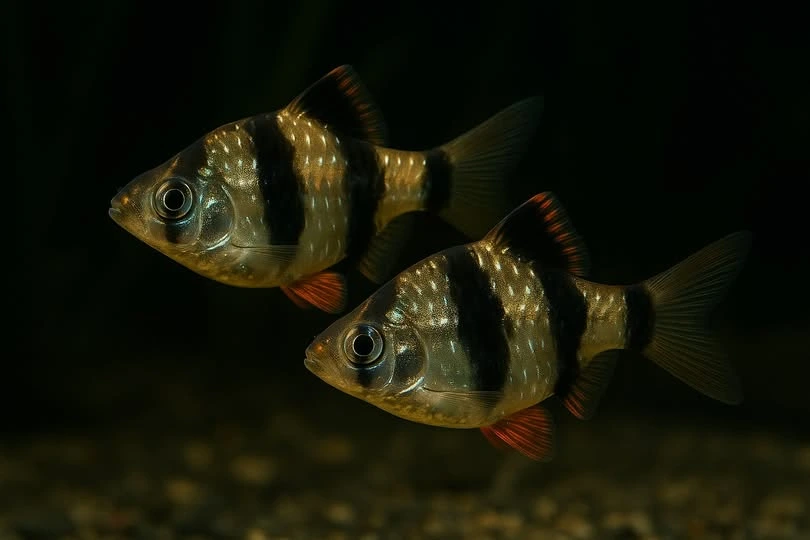
The trailing pelvic fins on a discus are exactly the target tiger barbs go for, and a discus is far too slow to avoid them. Add that they want cooler water and eat at three times the pace, and there is nothing to salvage. A bigger barb group reduces nipping among themselves and does nothing for the fish being nipped.
Beyond the obvious size mismatch, an oscar is the single worst thing you can do to the water quality a discus depends on. It produces waste at an industrial rate, digs up whatever is planted, and eats aggressively. Even where temperature ranges technically overlap, the two species want opposite tanks.
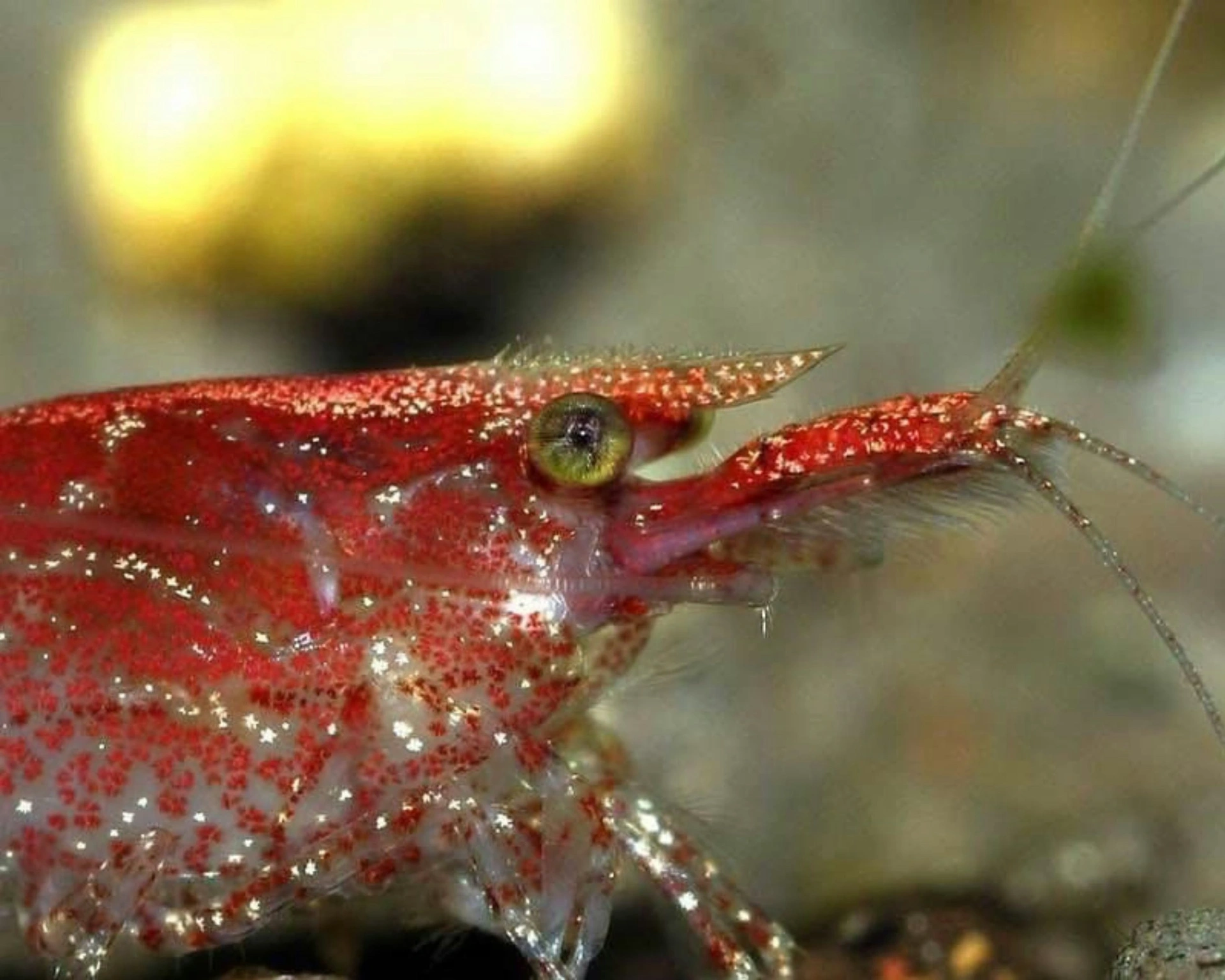
Discus pick methodically through planting and a 2 cm shrimp is a straightforward meal, so a colony gets grazed down over a few months rather than eaten in one night. Cherry shrimp also breed poorly above 27 °C, so even in a tank without predators the discus temperature alone would thin them. Snails are the honest cleanup option here.
Both of these are common in discus tanks and both have a specific way of going wrong. The deciding factor is on each card.
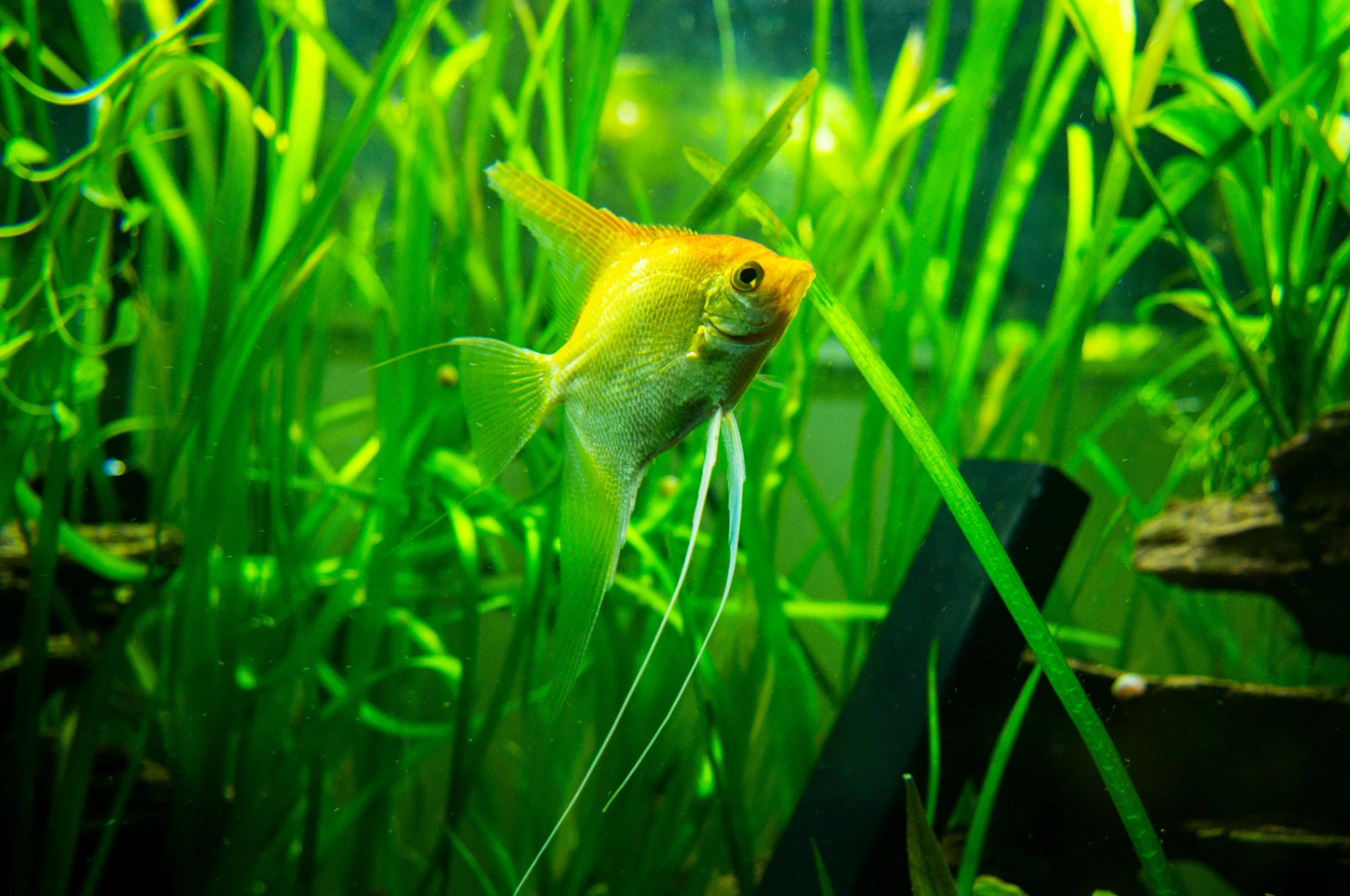
Angelfish
Pterophyllum scalare
Condition: Only in 100 gallons or more, with quarantined stock and no spawning pair
The pairing sits right at the edge of both species' temperature ranges, and that part works. What goes wrong is behavioural and biological: angelfish feed faster, claim vertical territory once they pair, and are a well-known carrier of parasites that discus have little resistance to. In a big tank with quarantined, unpaired angels it holds together for years. In a 55 with a spawning couple, the discus stop eating within a fortnight.
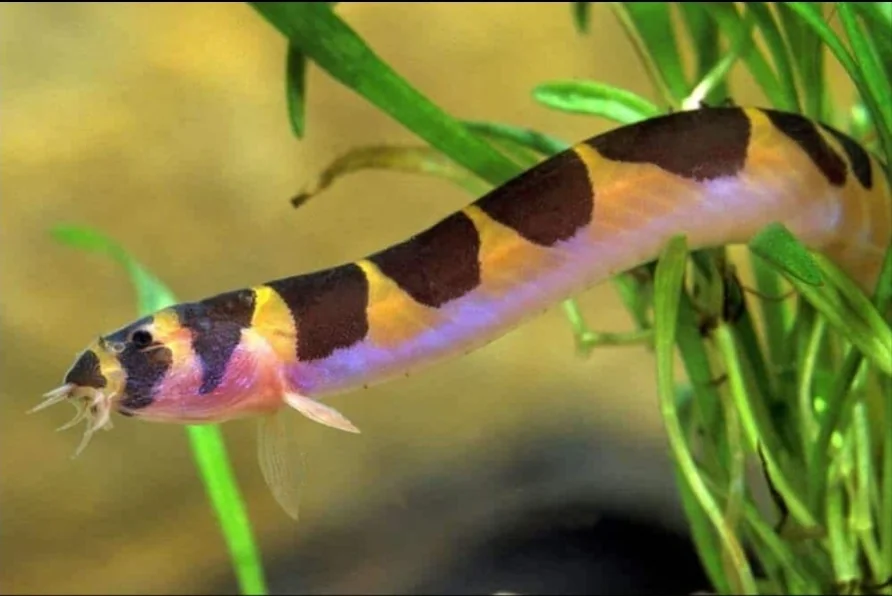
Condition: Only at the lower end of the discus range, around 28 °C, over soft sand
Kuhlis top out around 28 °C, which is the floor of discus keeping rather than the middle of it, so this pairing only works if you run your tank cool for a discus tank. Where it does, they are an excellent fit — nocturnal, entirely bottom-bound, and effective at working leftover food out of the sand before it fouls. Sharp gravel and an unsealed lid are the two things that kill them.
Drop your tank size and shortlist into the stocking calculator to check bioload, swim-level balance and compatibility flags.
Frequently asked questions
What temperature should a discus tank run at?
28–30 °C, held steady. That single figure decides most of the tank mate list: it is above the long-term comfort range of corydoras, most tetras, livebearers and otocinclus, so the fish you can add are limited to species that genuinely thrive in heat rather than merely tolerate it.
Can discus live with cardinal tetras?
They coexist, but it is not as good a pairing as its reputation. Cardinals sit above their preferred ceiling at discus temperatures and burn through their lifespan, and they take food faster than a discus does. If you want a mid-water shoal in a discus tank, glass catfish and golden pencilfish are slower feeders with better heat tolerance.
How many discus should be kept together?
Five or six minimum. Discus establish a pecking order, and in a group of two or three the lowest fish is harassed constantly and stops eating. In a group of five or more the aggression is spread thin enough that nobody bears it alone. That group size, not the tank mates, is what usually determines whether a discus tank succeeds.
Can discus live with angelfish?
In a large tank, with quarantined angels and no spawning pair, yes — the temperature ranges overlap. The risks are that angelfish feed faster, become territorial once paired, and are a known source of parasites discus handle badly. It is a pairing for a 100-gallon tank and an experienced keeper, not a default choice.
What is the minimum tank size for discus with tank mates?
Our database puts the discus minimum at 265 litres, around 70 gallons, and that is the point where a group of six plus a bottom crew is workable. Volume here is mostly about water stability: the more of it there is, the less the parameters move between the large, frequent water changes discus keeping requires.
Do discus need a bare-bottom tank?
No, but they need one you can clean quickly. Bare-bottom or thin sand makes siphoning uneaten food trivial, and the food discus are usually fed fouls water fast. A planted discus tank is entirely possible; it just means choosing plants that handle 29 °C and accepting a slower maintenance routine.
Why do my discus hide and refuse to eat?
Almost always water quality, temperature swings or a tank mate that moves too fast. Discus signal stress by darkening, clamping their fins and going off food well before anything else shows. Check nitrate and temperature first, then ask whether something in the tank is darting or feeding aggressively enough to keep them at the back.
Can discus live with plecos?
With the small warm-water ones. Clown plecos and zebra plecos are quiet, nocturnal and rated well into the discus range. Large common plecos are not recommended — they add enormous waste to a tank whose entire premise is low nitrate, and some develop a habit of rasping at the flanks of slow-moving fish.