Stocking Guide
    9 min read

    Best Fish for a 40 Gallon Tank

    34 species that unlock at 40 gallons — Angelfish, Rainbowfish, and active swimmers that finally have room to thrive.

    The 40 gallon tank — especially the 40 breeder (36×18×16") — is where serious fishkeeping starts. You finally get Angelfish. You get Rainbowfish that need room to show off their colors. You get active species like Giant Danios and Denison Barbs that would pace endlessly in anything smaller.

    This isn't just "more fish than a 30 gallon." It's access to species that genuinely require this footprint. The 40 breeder's extra depth makes it ideal for tall fish like Angels and gives bottom dwellers like Pictus Catfish the floor space they need. Every species below is selected because 40 gallons is where they start to work — not where they merely survive.

    Schooling Fish for a 40 Gallon Tank

    At 40 gallons, you can keep the larger schooling species in proper numbers. Boesemani Rainbowfish need a group of 6 to color up. Giant Danios need the swimming length. Denison Barbs — one of the most striking fish in the hobby — finally fit. Mix and match, but give each school enough numbers to behave naturally.
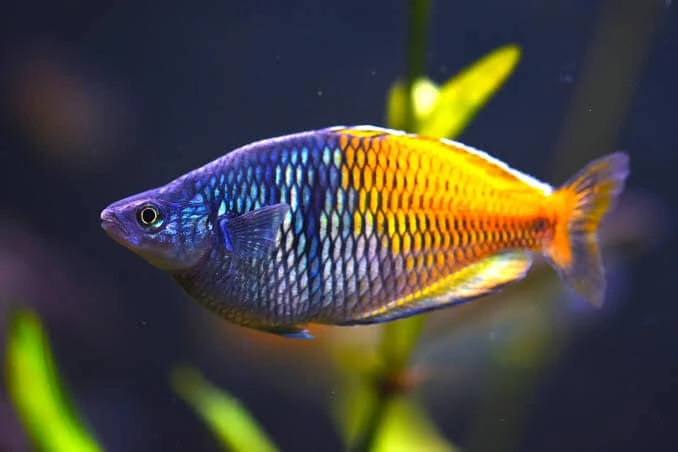
    Boesemani rainbow fish swimming in an aquarium slowly
    Easy-Moderate

    Boesemani Rainbowfish

    Melanotaenia boesemani

    Half blue, half orange — males intensify these colors as they mature. One of the most stunning freshwater fish available, but they need space and a group to show it.

    10 cmSchool: 624-28°C
    Congo tetra swimming in an aquarium
    Moderate

    Congo Tetra

    Phenacogrammus interruptus

    Iridescent bodies that shift blue to gold, flowing fins on males. A 40 gallon lets you keep a proper school without cramping them.

    8 cmSchool: 6-824-28°C
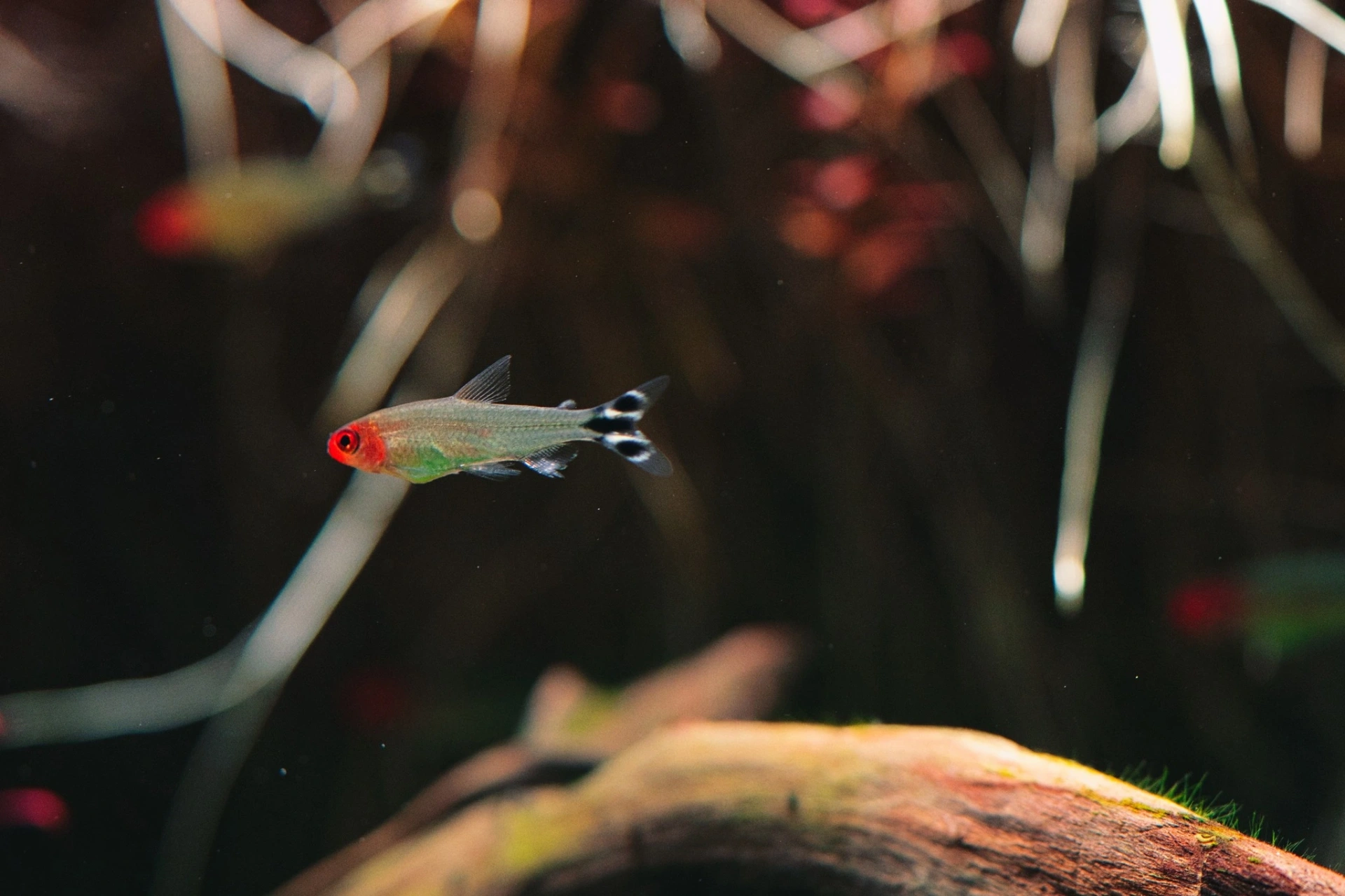
    Rummy nose tetra swimming in an aquarium
    Moderate

    Rummy-Nose Tetra

    Hemigrammus rhodostomus

    The tightest schooling tetra. In a 40 gallon you can keep 12-15 and watch them move like a single organism. Red nose intensity = water quality indicator.

    5 cmSchool: 12-1524-28°C
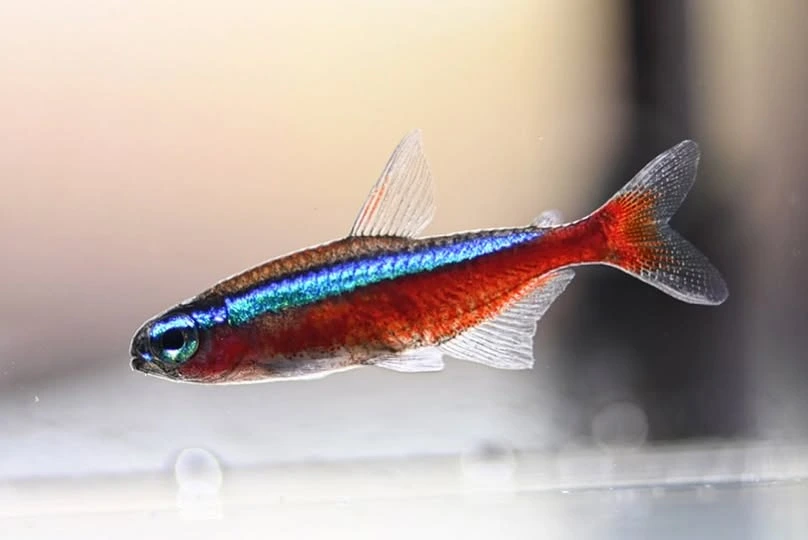
    Single cardinal tetra swimming in an aquarium
    Easy-Moderate

    Cardinal Tetra

    Paracheirodon axelrodi

    Full red stripe the entire body length. A school of 15+ in a planted 40 gallon creates the classic aquarium look everyone pictures.

    5 cmSchool: 15-2024-30°C
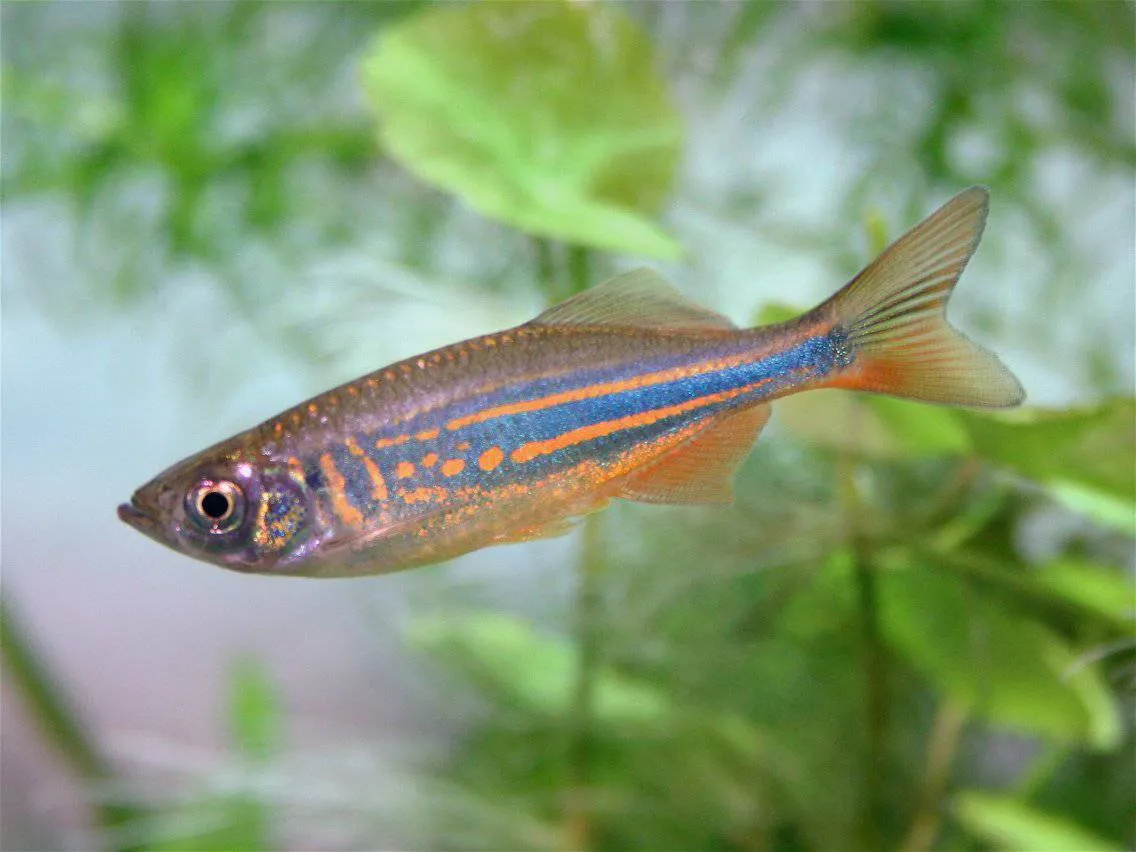
    A single giant danio swimming in an aquarium
    Easy

    Giant Danio

    Devario aequipinnatus

    Hyperactive torpedo. They sprint back and forth constantly and need the length a 40 gallon provides. Hardy, bold, and impossible to ignore.

    10 cmSchool: 6-822-26°C
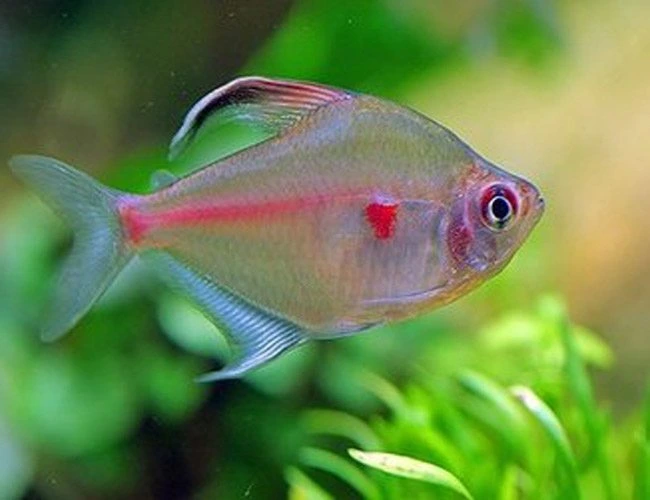
    Bleeding heart tetra swimming in an aquarium
    Easy-Moderate

    Bleeding Heart Tetra

    Hyphessobrycon erythrostigma

    Deep-bodied tetra with a blood-red spot. Larger than most tetras — a 40 gallon lets you keep a substantial school that shows off their finnage.

    6 cmSchool: 8-1023-28°C
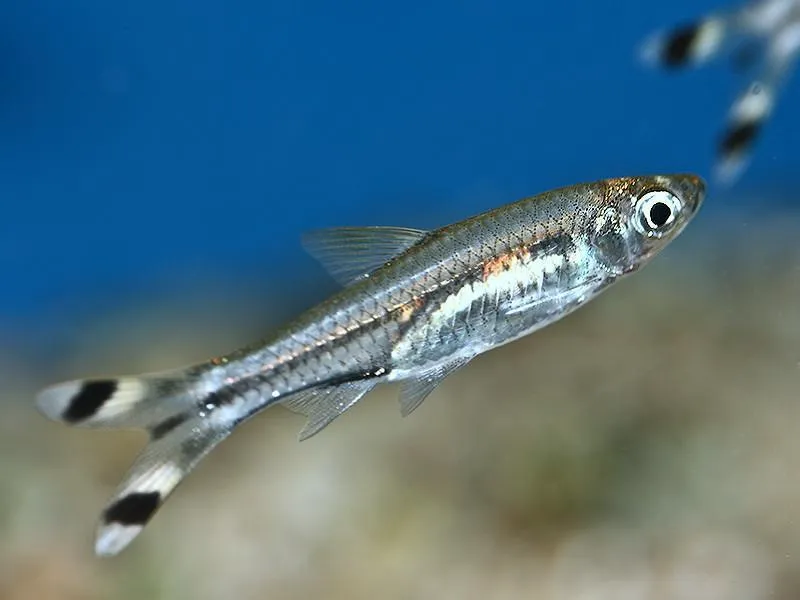
    Scissortail rasbora swimming in an aquarium
    Easy

    Scissortail Rasbora

    Rasbora trilineata

    Named for the forked tail that opens and closes as they swim. Active, streamlined, and constantly on the move across the tank length.

    10 cmSchool: 822-26°C
    Buenos Aires tetra swimming at the bottom of an aquarium
    Easy

    Buenos Aires Tetra

    Hyphessobrycon anisitsi

    One of the hardiest tetras — tolerates cool water, warm water, and beginner mistakes. Will eat live plants, so pair with tough species like Java Fern.

    7 cmSchool: 6-818-28°C
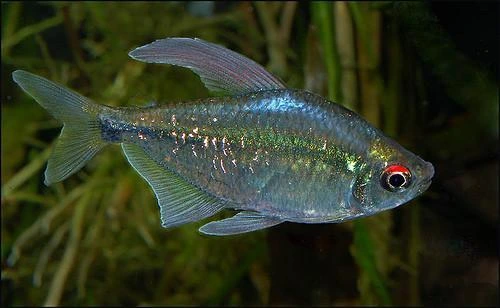
    A diamond tetra swimming at the bottom of an aquarium
    Easy

    Diamond Tetra

    Moenkhausia pittieri

    Scales shimmer like crushed glass under good lighting. Underrated — males develop impressive dorsal extensions with age.

    6 cmSchool: 824-28°C
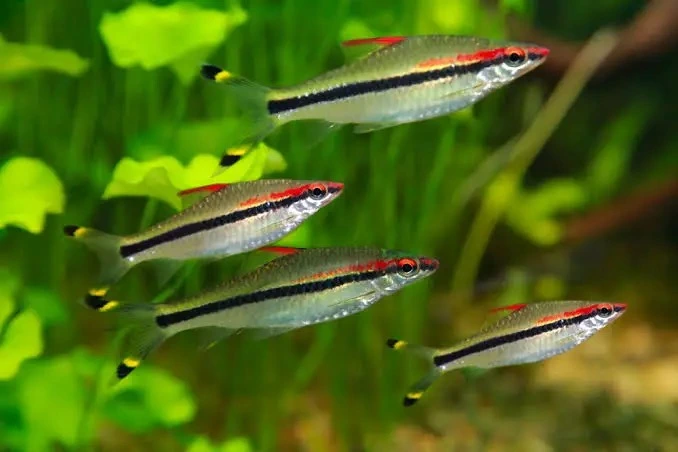
    A group of denison barbs swimming in an aquarium
    Moderate

    Denison Barb

    Sahyadria denisonii

    Red and black torpedo with a reputation as the most beautiful barb. Active swimmers that need length — a 40 gallon is the minimum for a small group.

    12 cmSchool: 615-25°C

    Centerpiece Fish for a 40 Gallon Tank

    This is where Angelfish become viable. The 40 gallon's height accommodates their tall bodies, and the footprint gives them room to establish territory without terrorizing everything else. Larger gouramis, peaceful cichlids, and underrated species like the Kribensis all work here as focal points.
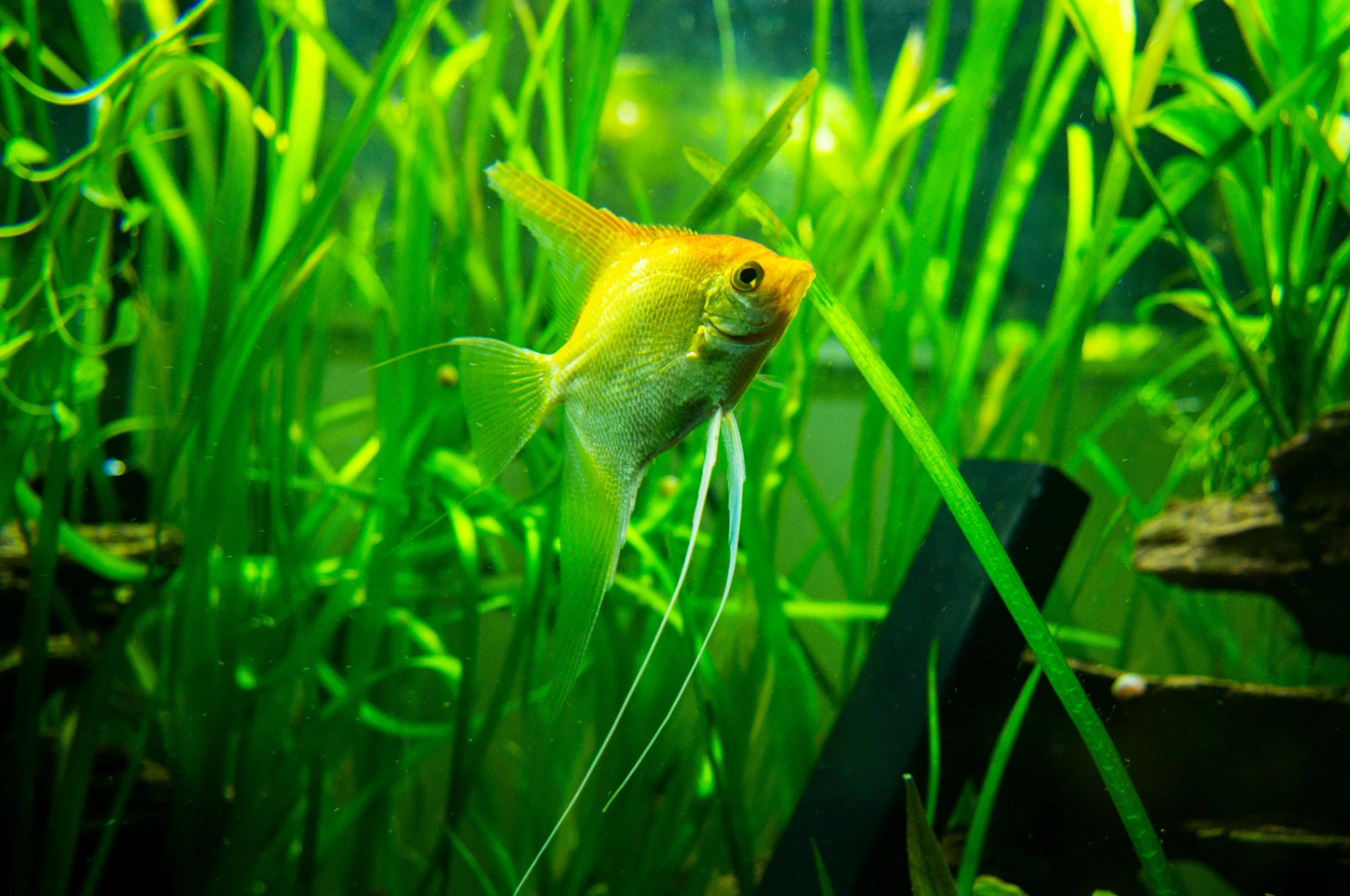
    Yellow Angelfish swimming near the surface among aquatic plants
    Moderate

    Angelfish

    Pterophyllum scalare

    The iconic freshwater fish. Tall, elegant, and finally appropriate at 40 gallons. Keep a pair or accept that a group will sort out hierarchy through aggression. Avoid small tankmates they can swallow.

    15 cm tallSchool: 224-30°C
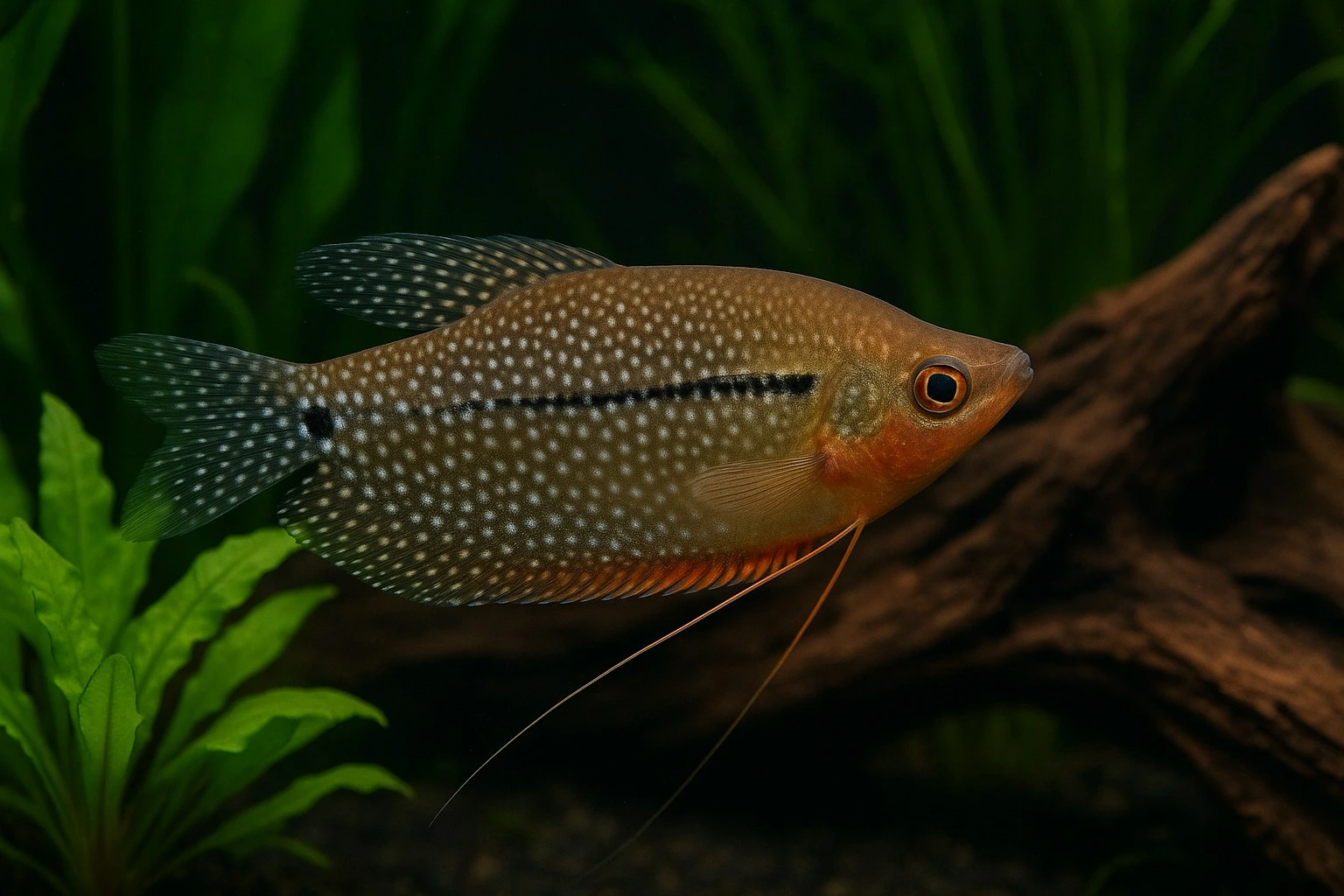
    Pearl Gourami swimming in the middle of an aquarium
    Easy-Moderate

    Pearl Gourami

    Trichopodus leeri

    Lace-pattern scales and a bold black lateral line. Peaceful despite their size — one of the most elegant centerpiece options for a community tank.

    12 cmSchool: 1-224-28°C
    Electric blue acara swimming near aquarium plants
    Easy-Moderate

    Electric Blue Acara

    Andinoacara pulcher

    A cichlid you can trust in a community. Metallic blue, surprisingly mellow temperament, and beautiful without being aggressive.

    15 cmSchool: 1-222-28°C
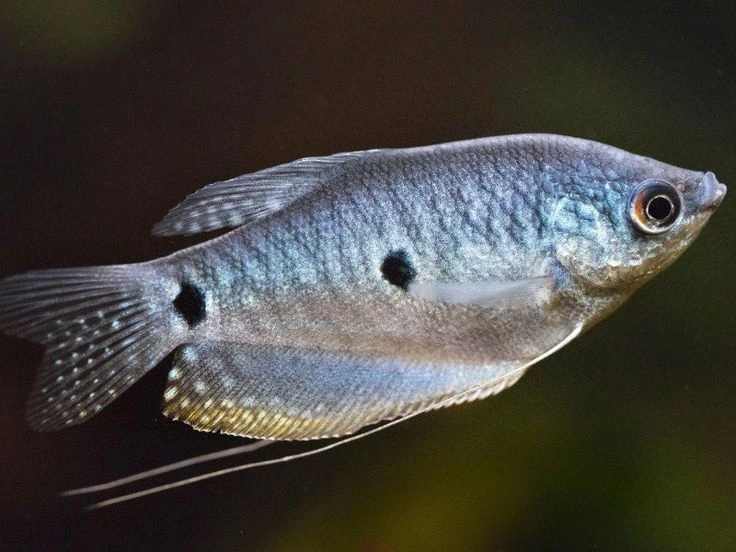
    Three spot gourami swimming in an aquarium
    Easy

    Three-Spot Gourami

    Trichopodus trichopterus

    Comes in blue, gold, and opaline color forms. Bolder and hardier than Pearl Gouramis — can hold its own with semi-aggressive tankmates.

    12 cmSchool: 122-28°C
    Colorful bolivian ram swimming in an aquarium
    Easy-Moderate

    Bolivian Ram

    Mikrogeophagus altispinosus

    The forgiving Ram — handles cooler water, harder water, and new fishkeepers. Less flashy than German Blues but far more likely to survive.

    8 cmSchool: 1 pair22-27°C
    Kribensis swimming in an aquarium
    Easy

    Kribensis

    Pelvicachromis pulcher

    West African dwarf cichlid with a purple-red belly on females. Cave spawners that become protective parents. Underrated color and personality.

    10 cmSchool: 1 pair24-28°C
    Keyhole cichlid swimming in an aquarium
    Easy

    Keyhole Cichlid

    Cleithracara maronii

    The shy cichlid. Peaceful, rarely bothers tankmates, and named for the keyhole marking on their flank. Pairs bond for life.

    10 cmSchool: 1-222-28°C

    Rainbowfish for a 40 Gallon Tank

    Rainbowfish are built for tanks this size. They're active swimmers that need horizontal space, they color up best in groups, and males display constantly when competing for female attention. A rainbowfish-focused 40 gallon is one of the most underrated setups in the hobby.
    Boesemani rainbow fish swimming in an aquarium slowly
    Easy-Moderate

    Boesemani Rainbowfish

    Melanotaenia boesemani

    The flagship rainbow. Juveniles look washed out — adults develop the intense blue-front, orange-back split that makes them famous. Patience pays off.

    10 cmSchool: 624-28°C
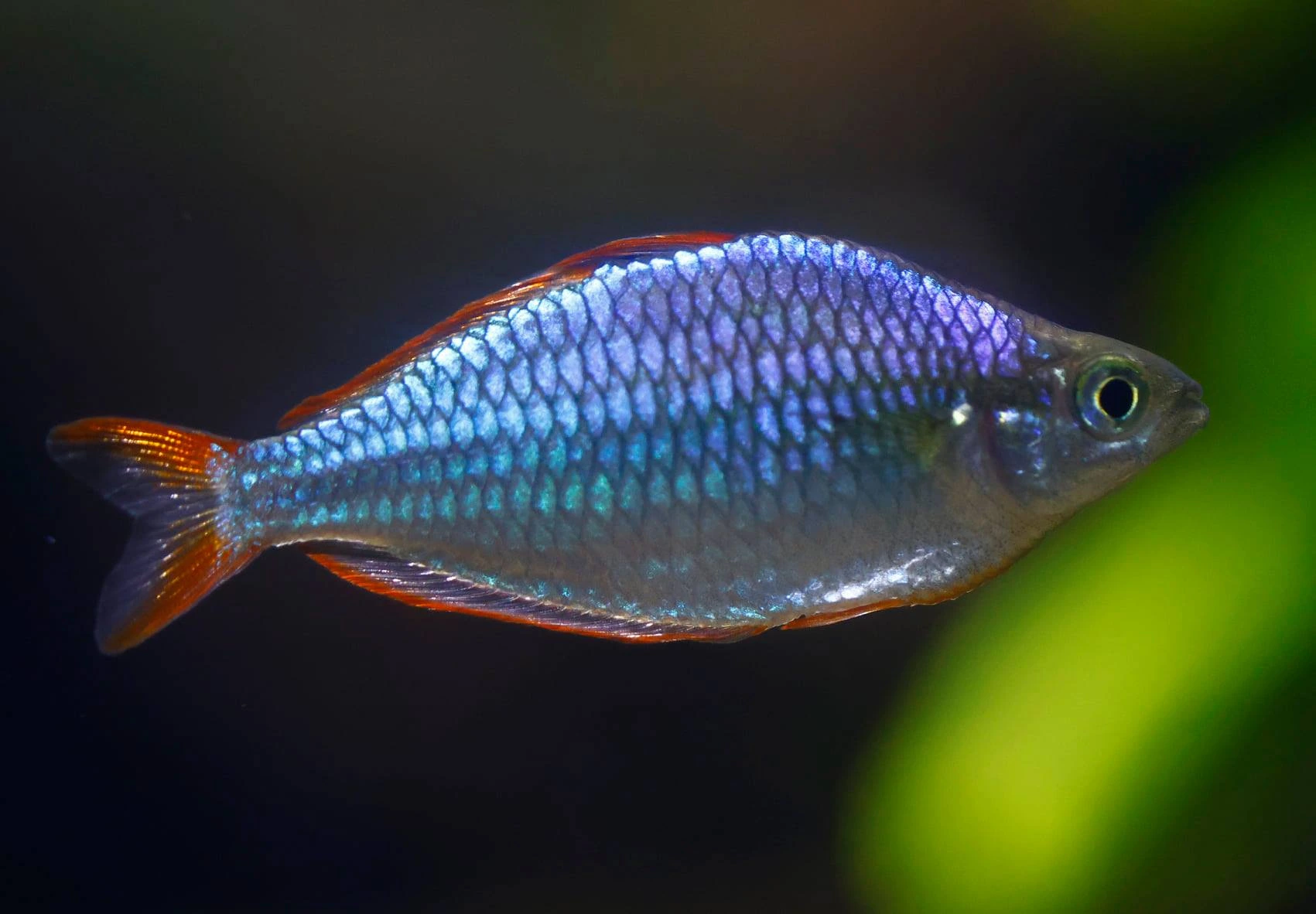
    Dwarf neon rainbowfish swimming slowly in an aquarium
    Easy

    Dwarf Neon Rainbowfish

    Melanotaenia praecox

    Electric neon blue body with bright red fins. Smaller than Boesemani, so you can keep a larger school. Males flash constantly at each other.

    6 cmSchool: 6-824-28°C
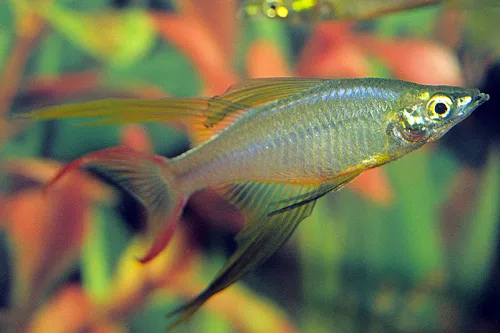
    Threadfin rainbowfish swimming in an aquarium
    Moderate

    Threadfin Rainbowfish

    Iriatherina werneri

    Delicate trailing fins on males make them look like tiny sailboats. Best in a calm tank — avoid boisterous tankmates that will outcompete them for food.

    5 cmSchool: 6-824-30°C

    Bottom Dwellers for a 40 Gallon Tank

    The 40 breeder's extra floor space (36×18") opens up species that need room to roam. Pictus Catfish are active hunters that pace constantly. Weather Loaches get large and quirky. The standard Corydoras and loach options still apply — but you can keep them in larger, more natural groups.
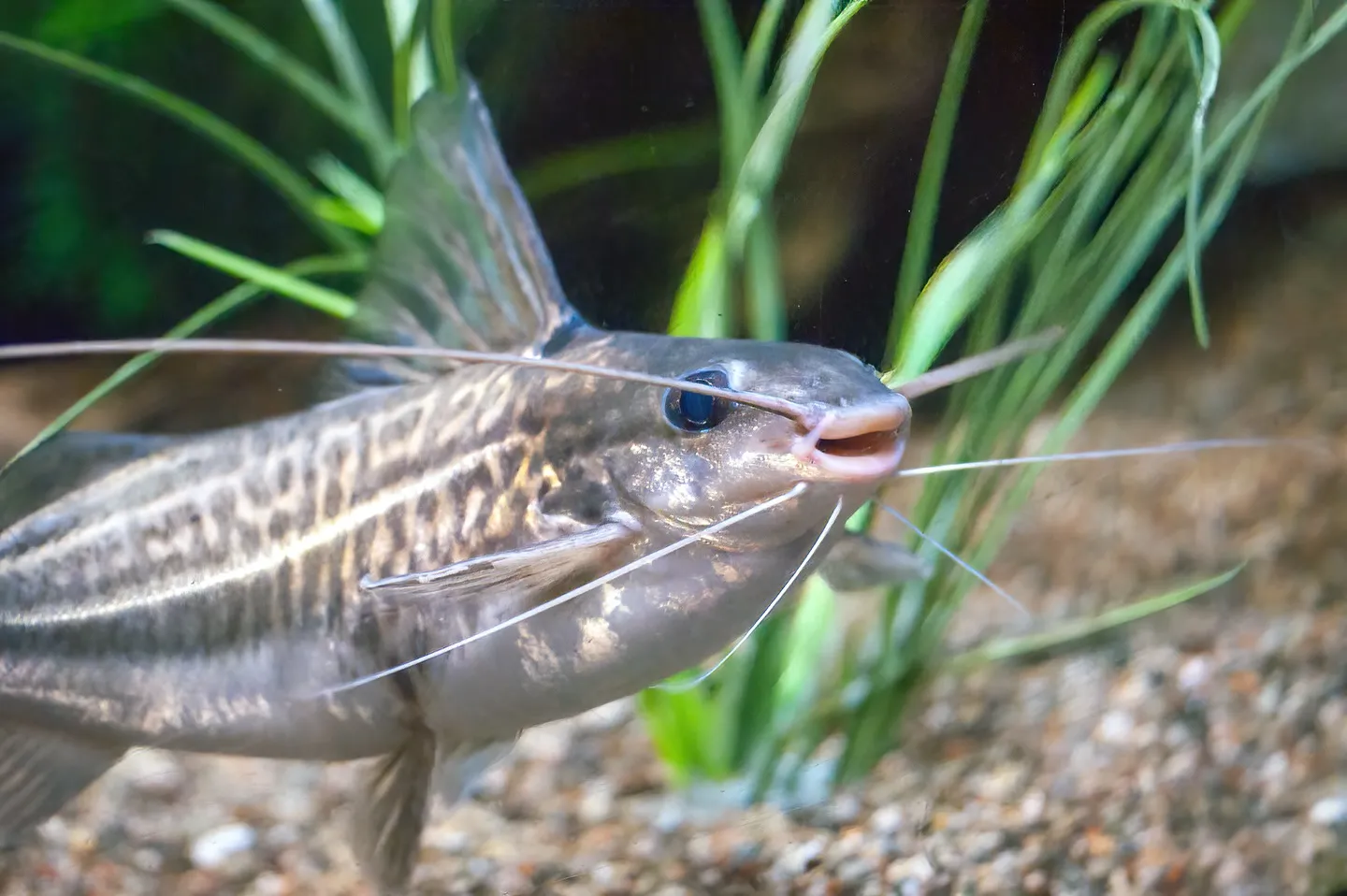
    Pictus catfish slowly swimming in an aquarium
    Moderate

    Pictus Catfish

    Pimelodus pictus

    Spotted, long-whiskered, and constantly patrolling. Active day and night — one of the few catfish you'll actually see moving. Will eat anything small enough to fit in their mouth.

    12 cmSchool: 2-322-26°C
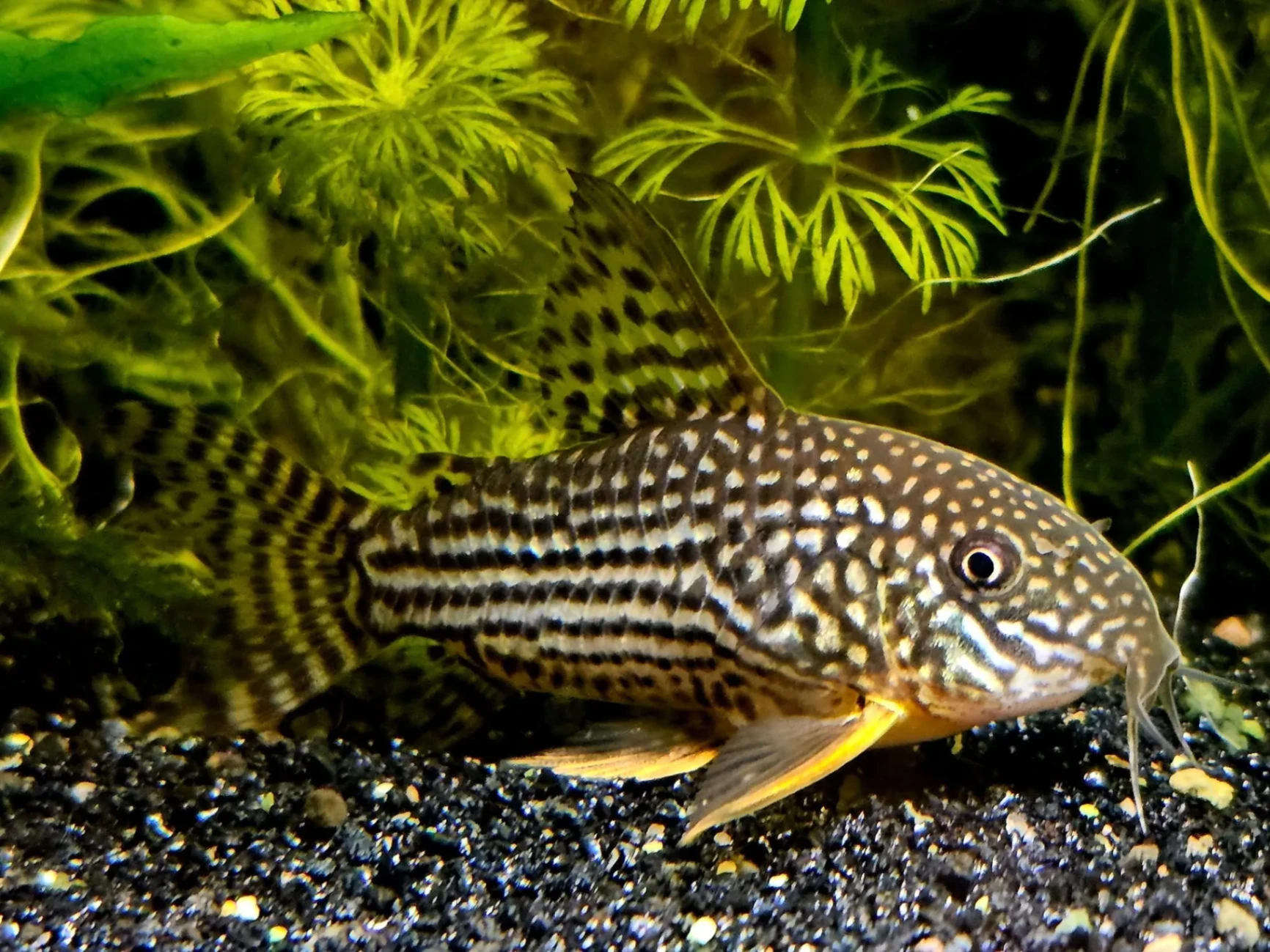
    Corydoras sterbai laying at the bottom of an aquarium near aquatic plants
    Easy

    Corydoras Sterbai

    Corydoras sterbai

    White spots on dark body, orange pectoral fins. One of the best Corydoras for warmer tanks — pairs well with Angelfish, Rams, and other heat-lovers.

    6 cmSchool: 824-28°C
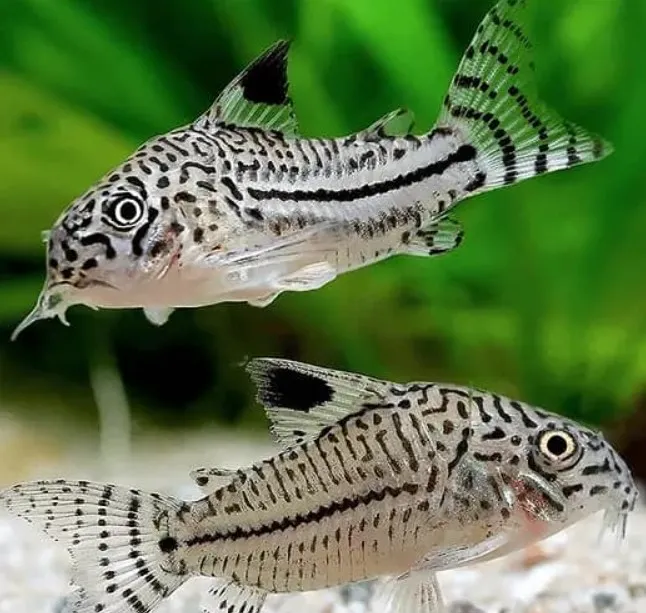
    Two corydoras julii swimming near each other at the bottom of an aquarium
    Easy

    Corydoras Julii

    Corydoras julii

    Leopard-spotted pattern. Often confused with C. trilineatus in stores — true Julii are less common but both make excellent community fish.

    5 cmSchool: 822-26°C
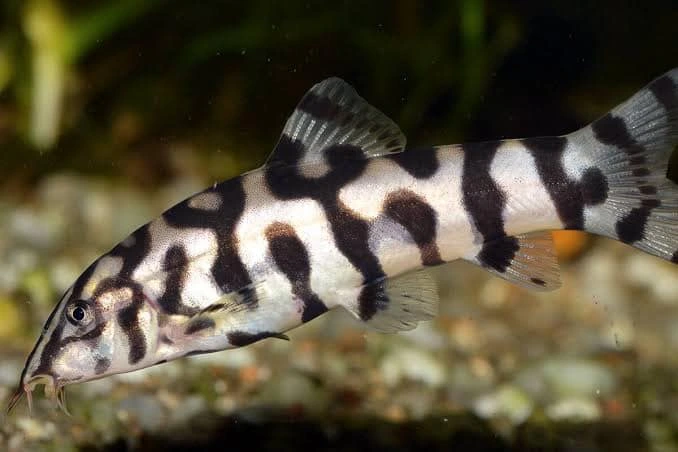
    Yoyo loach swimming in an aquarium
    Easy-Moderate

    Yoyo Loach

    Botia almorhae

    Y-O-Y-O pattern, bold personality. Active during the day, investigates everything, and wipes out snail populations. Needs company — keep at least 4.

    13 cmSchool: 4-524-28°C
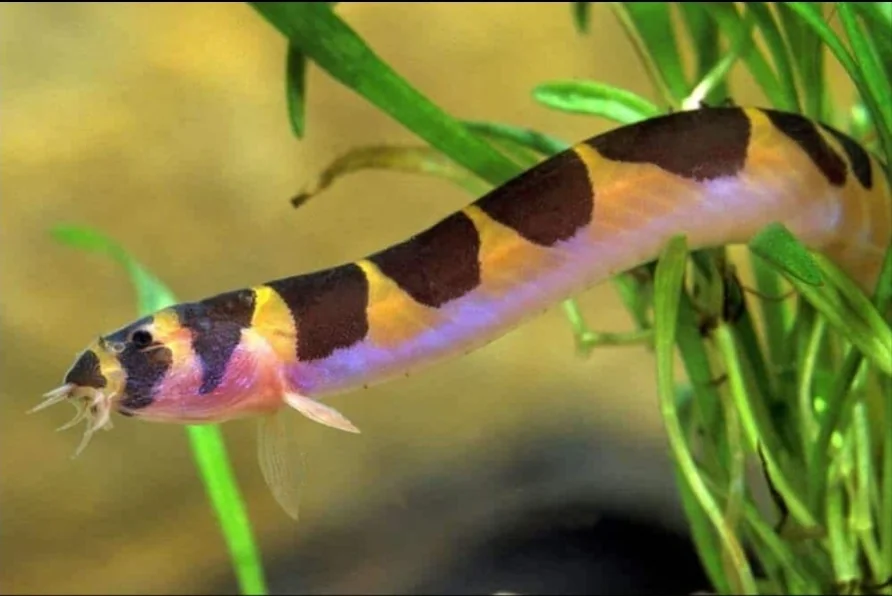
    Kuhli Loach emerging from aquarium plants
    Easy-Moderate

    Kuhli Loach

    Pangio kuhlii

    Eel-shaped, striped, and mostly nocturnal. In a group of 6+ they get bolder and you'll see them more often.

    10 cmSchool: 624-30°C
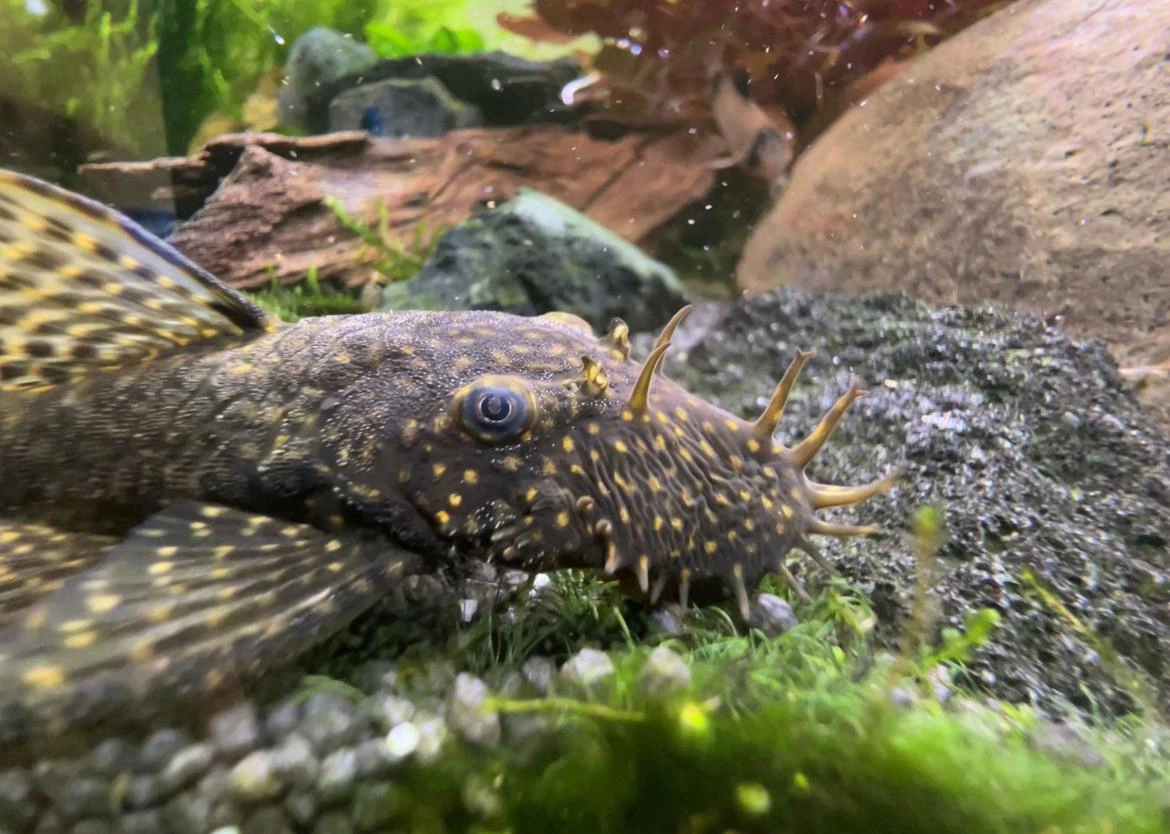
    Bristlenose pleco laying at the bottom of an aquarium
    Easy

    Bristlenose Pleco

    Ancistrus sp.

    The algae pleco that stays manageable. Males grow distinctive bristles. One keeps a 40 gallon clean without the waste issues of larger plecos.

    12 cmSchool: 123-27°C
    Two weather loaches laying at the bottom of an aquarium
    Easy

    Weather Loach

    Misgurnus anguillicaudatus

    Also called Dojo Loach. Gets large, tolerates cold water, and has a reputation for reacting to barometric pressure changes. Quirky and personable.

    20 cmSchool: 2-315-25°C

    Livebearers for a 40 Gallon Tank

    At 40 gallons, livebearers have room to establish social groups without constant stress. Males can display, females can escape harassment, and the inevitable fry have hiding spots. Population control is still your main challenge — keep all males, or accept that you're running a breeding operation.

    Red swordtail swimming in an aquarium
    Easy

    Swordtail

    Xiphophorus hellerii

    Males develop the signature sword tail extension. Active swimmers that use horizontal space. Multiple males will spar, so balance the ratio.

    12 cmSchool: 6-822-28°C
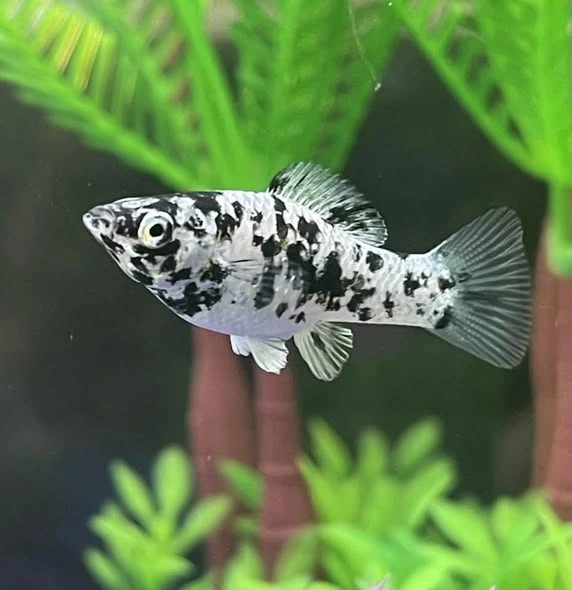
    White large molly with black spots swimming near aquarium plants
    Easy

    Molly

    Poecilia sphenops

    Available in black, silver, dalmatian, balloon, and lyretail varieties. Prefers harder, more alkaline water than most community fish.

    10 cmSchool: 6-824-28°C
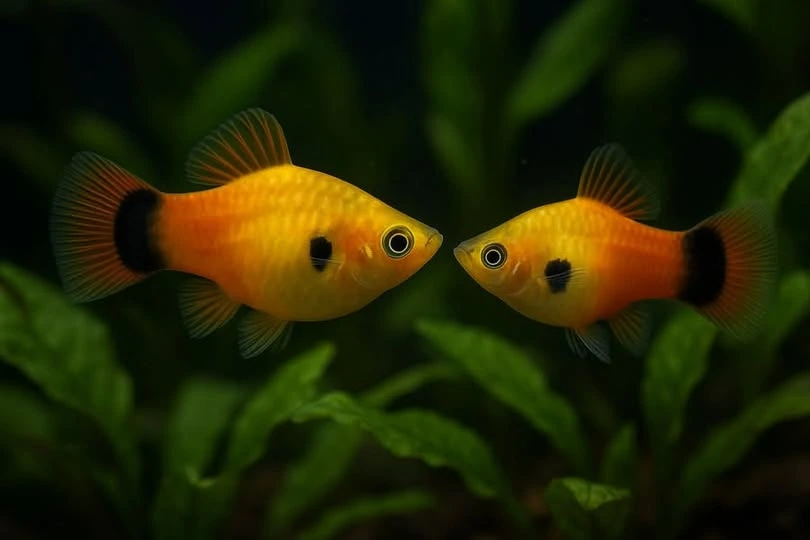
    Two orange platies swimming in aquarium plants
    Easy

    Platy

    Xiphophorus maculatus

    Chunky, colorful, and endlessly variable. One of the most forgiving fish for beginners — wide temperature and parameter tolerance.

    7 cmSchool: 8-1020-26°C

    Invertebrates for a 40 Gallon Tank

    The cleanup crew scales with tank size. More water means more surfaces for algae, more substrate for detritus, and more capacity for filter-feeding shrimp. Bamboo Shrimp especially benefit from the flow patterns possible in a 40 gallon.
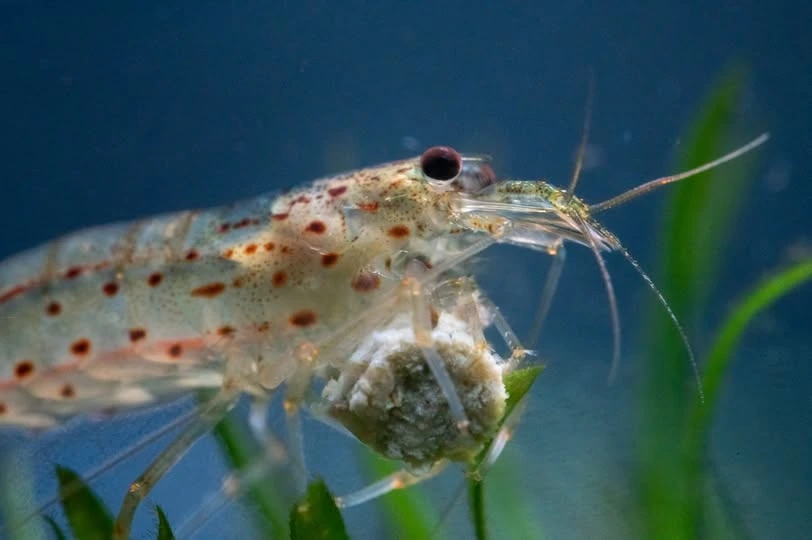
    Amano shrimp eating a piece of algae wafer at the bottom of an aquarium
    Easy

    Amano Shrimp

    Caridina multidentata

    The algae-eating standard. Large enough to avoid most fish predation. A crew of 10+ keeps a 40 gallon spotless.

    5 cmSchool: 8-1222-27°C
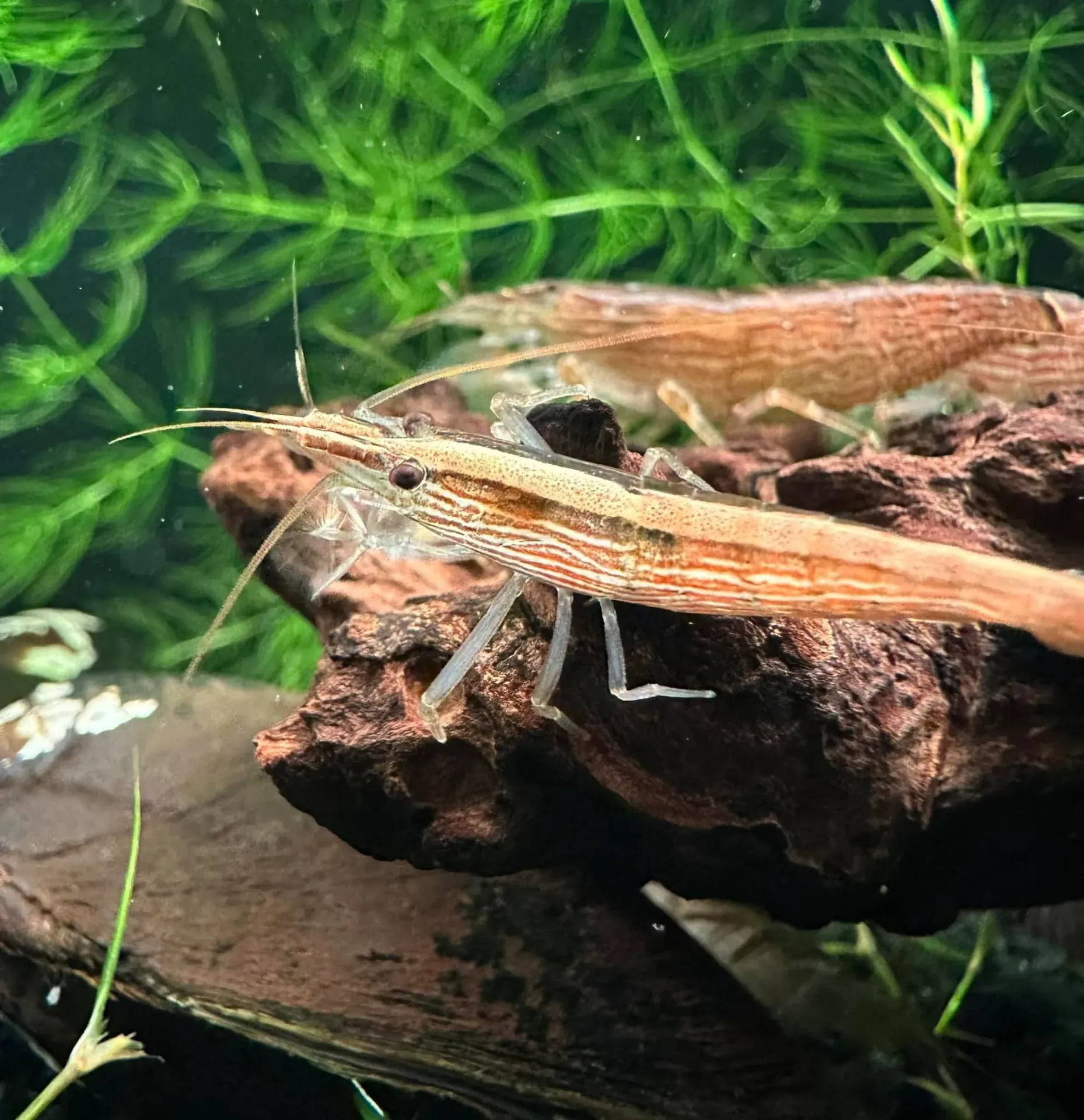
    A group of bamboo shrimp standing on aquarium driftwood
    Moderate

    Bamboo Shrimp

    Atyopsis moluccensis

    Filter feeders that station themselves in current and fan the water for food. Unique behavior — they'll find the best flow spots and set up shop.

    8 cmSchool: 2-422-28°C
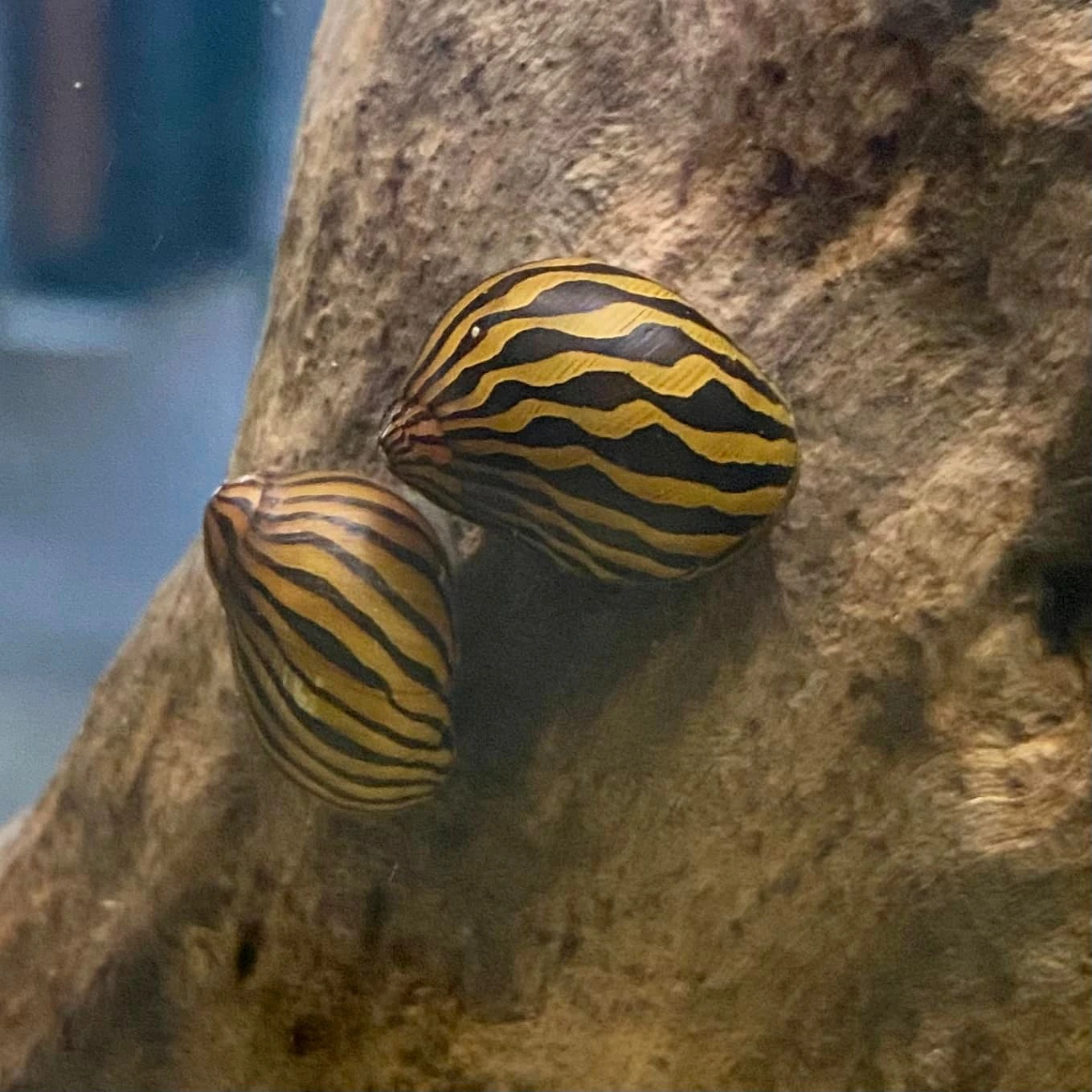
    Two nerite snails on a piece of driftwood in an aquarium
    Easy

    Nerite Snail

    Neritina sp.

    Algae grazing machines with attractive shell patterns. Won't breed in freshwater — eggs appear but don't hatch.

    2.5 cmSchool: 4-522-26°C
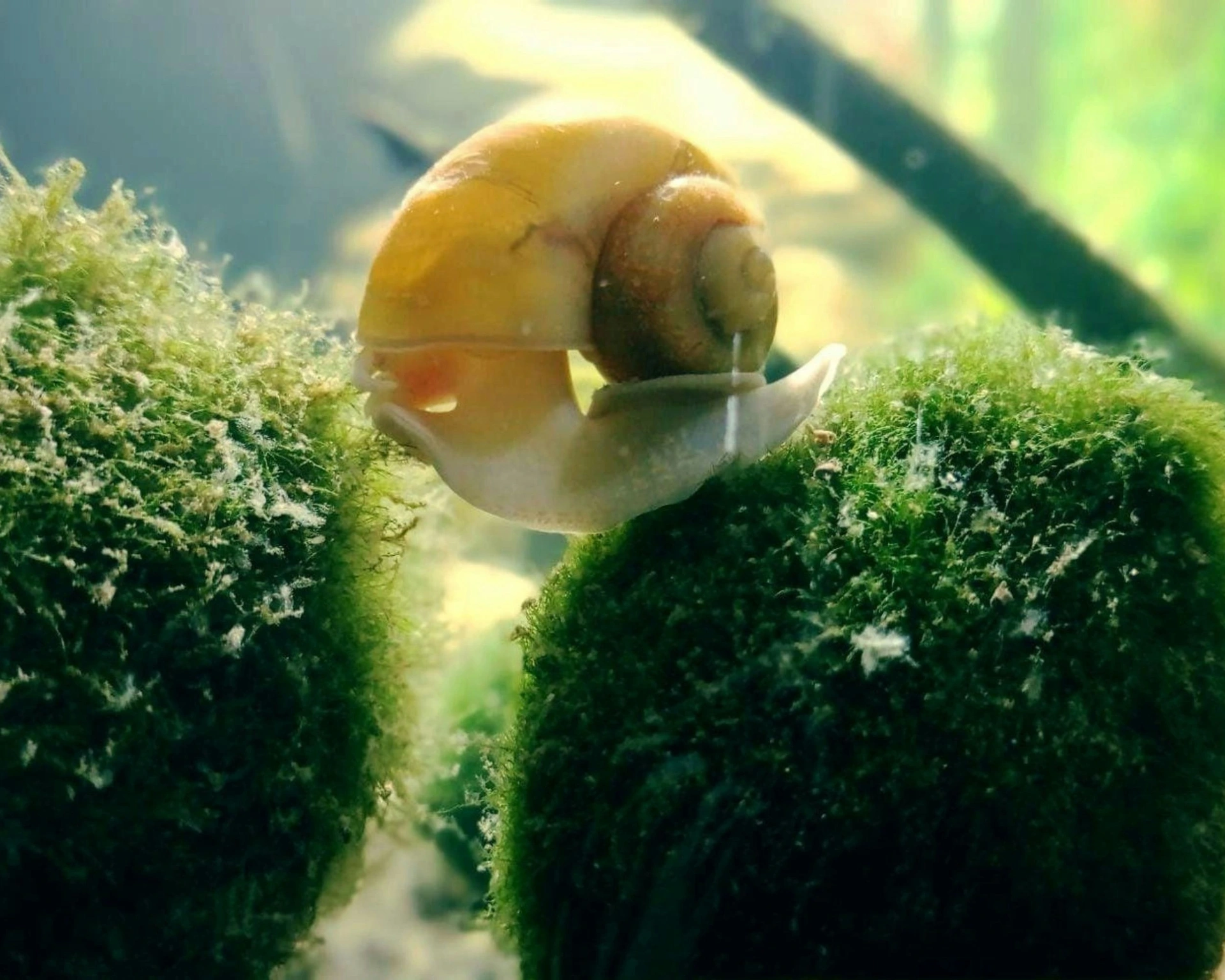
    A yellow mystery snail walking on a marimo moss ball in an aquarium
    Easy

    Mystery Snail

    Pomacea bridgesii

    The snail with personality. Climbs to the surface to breathe, extends a siphon, and comes in gold, blue, purple, and ivory.

    5 cmSchool: 2-320-28°C

    Stocking Ideas for a 40 Gallon Tank

    Four proven combinations where every species is compatible by temperament, temperature, and tank zone. These work as complete setups or starting points for your own plan.

    The Rainbowfish Display

    Intermediate

    6 Boesemani Rainbowfish + 6 Corydoras Sterbai + 1 Bristlenose Pleco + 4 Nerite Snails

    Built around the Boesemani — give them good food and time, and the males will color up into the best fish in the hobby.

    The Angelfish Community

    Intermediate

    2 Angelfish + 8 Rummy-Nose Tetras + 6 Corydoras Julii + 5 Amano Shrimp

    Classic pairing that works because adult Rummy-Nose are too large to eat. Avoid adding small tetras later — the Angels will hunt them.

    The Active Tank

    Intermediate

    6 Giant Danios + 6 Denison Barbs + 4 Yoyo Loaches

    Constant motion. All three species are active, semi-boisterous, and can handle each other's energy. Not a peaceful tank — an exciting one.

    The Peaceful Planted

    Beginner

    15 Cardinal Tetras + 1 Pearl Gourami + 8 Kuhli Loaches + 6 Amano Shrimp + 2 Bamboo Shrimp

    Calm and beautiful. A big school of Cardinals, an elegant centerpiece, and a cleanup crew that includes the unique Bamboo Shrimp filter feeders.

    ⚠️ Fish to Avoid

    A 40 gallon is a substantial tank — but these species will still outgrow it or cause problems. Most are sold as juveniles when they're small and manageable. They don't stay that way.

    OscarGrows to 30+ cm

    Will outgrow a 40 gallon within the first year. Needs 280+ liters and produces massive waste.

    Clown LoachGrows to 25+ cm

    Small and cute at purchase, enormous at maturity. Needs a school of 5+ and eventually 400+ liters.

    Bala SharkGrows to 30+ cm

    Active schooling fish that needs 450+ liters. The name is marketing — it's not a shark, just a big, nervous fish.

    Silver DollarGrows to 15 cm

    Disc-shaped vegetarians that need groups of 5+ and 200+ liters. Will eat every plant.

    SeverumGrows to 20+ cm

    Beautiful but large cichlid. Needs 280+ liters and gets territorial during breeding.

    Blood Parrot CichlidGrows to 20+ cm

    Hybrid cichlid that grows large and produces significant waste. Needs 280+ liters minimum.

    Jack DempseyGrows to 25 cm

    Named after a boxer. Aggressive, territorial, and needs 200+ liters with carefully chosen tankmates.

    How Many Fish in a 40 Gallon Tank?

    The number depends on species, not some universal formula. A 40 gallon can hold a pair of Angelfish with a supporting cast of tetras and Corydoras. Or 6 Boesemani Rainbowfish with bottom dwellers. Or a dense community of smaller species.

    The "inch per gallon" rule is useless — it ignores bioload, activity level, territory needs, and how fish actually use space. A 40 breeder's footprint (36×18") matters more than its volume for bottom dwellers. The length matters more for active swimmers. Stock based on what the specific species need.

    🐟 25-35

    small-medium fish

    Typical community: 12-15 schoolers + 6-8 bottom dwellers + centerpiece

    📐 Breeder vs Long

    Breeder has more floor space

    Long (48×13×16") has more swimming length

    ⚖️ Activity matters

    As much as size

    6 Giant Danios need more space than 15 Cardinals

    40 Gallon Setup Notes

    A few things to consider before stocking your 40 gallon — tank shape, cycling, and filtration all matter more at this size.

    📐

    Know your tank shape

    40 breeder (36×18×16") is ideal for Angelfish and bottom dwellers. 40 long (48×13×16") suits active swimmers like Danios and Rainbowfish. Choose fish based on your actual dimensions.

    ⏱️

    Cycle time doesn't change

    Bigger tank, same cycling requirement: 4-6 weeks before fish. Add species in groups over a month — your filter bacteria need time to catch up with each addition.

    🔧

    Filtration matters more

    A 40 gallon needs robust filtration, especially with messy fish like Pictus Catfish or large schools. Aim for 8-10x turnover per hour. Canister filters shine at this size.

    Underrated 40 Gallon Picks Worth a Look

    Beyond the obvious community staples, a 40 gallon opens the door to a handful of species most stocking lists skip. The Electric Blue Acara is the standout — a cichlid mellow enough for a community tank, and it finally has room to swim here. If you want a smaller centerpiece, the Bolivian Ram forgives harder, cooler water in a way German Blues never will, and a pair of Keyhole Cichlids will quietly bond and spawn without bullying anyone.

    For the bottom third, a group of six Bronze Corydoras on sand is the low-effort choice, while Dwarf Chain Loaches bring constant movement and clear out pest snails. Run higher flow and cooler water and you can add a Hillstream Loach to graze the glass and hardscape. Want something genuinely different? A Peacock Eel works in a 40 gallon provided the tank mates are too big to swallow, and a Pearl Gourami makes a calm, elegant surface-level centerpiece. Bottom-dweller shopping in general is easier once you know the family — see all types of loaches for group sizes, flow and temperature needs.

    Ready to stock your 40 gallon?

    Check compatibility, bioload, and tank capacity for your exact setup.