Stocking Guide
    10 min read

    Best Fish for a 30 Gallon Tank

    60+ species that genuinely thrive in a 30 gallon — from schooling tetras and hatchetfish to centerpiece cichlids, puffers, and active barbs. Honest picks based on adult size, bioload, and temperament.

    A 30 gallon tank is where the hobby gets genuinely exciting. You unlock species that simply don't work in smaller setups — Congo Tetras with their iridescent fins, Electric Blue Acaras that need room to establish territory, Tiger Barb schools large enough to keep the nipping in check.

    The jump from 20 to 30 gallons isn't just about more fish. It's about different fish — species that need the swimming room, the territory, or the school size that 30 gallons provides. Every species on this list is here because it genuinely thrives at this size, not because it can technically survive. We've also kept the Fish to Avoid section, because the same pet store mistakes that plague 20 gallon tanks will ruin a 30 gallon just as fast.

    Best Schooling Fish for a 30 Gallon Tank

    A 30 gallon gives you room for larger tetra species and bigger schools. Congo Tetras, Scissortail Rasboras, and Bleeding Heart Tetras all need this kind of space to look their best. You can also keep classic species like Cardinals and Rummy-Nose in the numbers they deserve — 10-15 fish moving in unison.
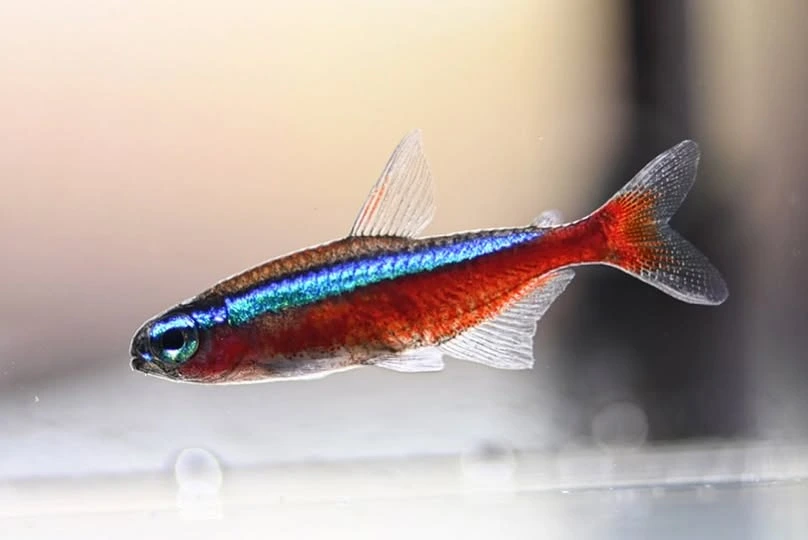
    Single cardinal tetra swimming in an aquarium
    Easy-Moderate

    Cardinal Tetra

    Paracheirodon axelrodi

    The upgraded neon — a full red stripe runs the entire body instead of just halfway. A school of 12+ in a planted 30 gallon is one of the best sights in the hobby.

    5 cmSchool: 10-1524-30°C
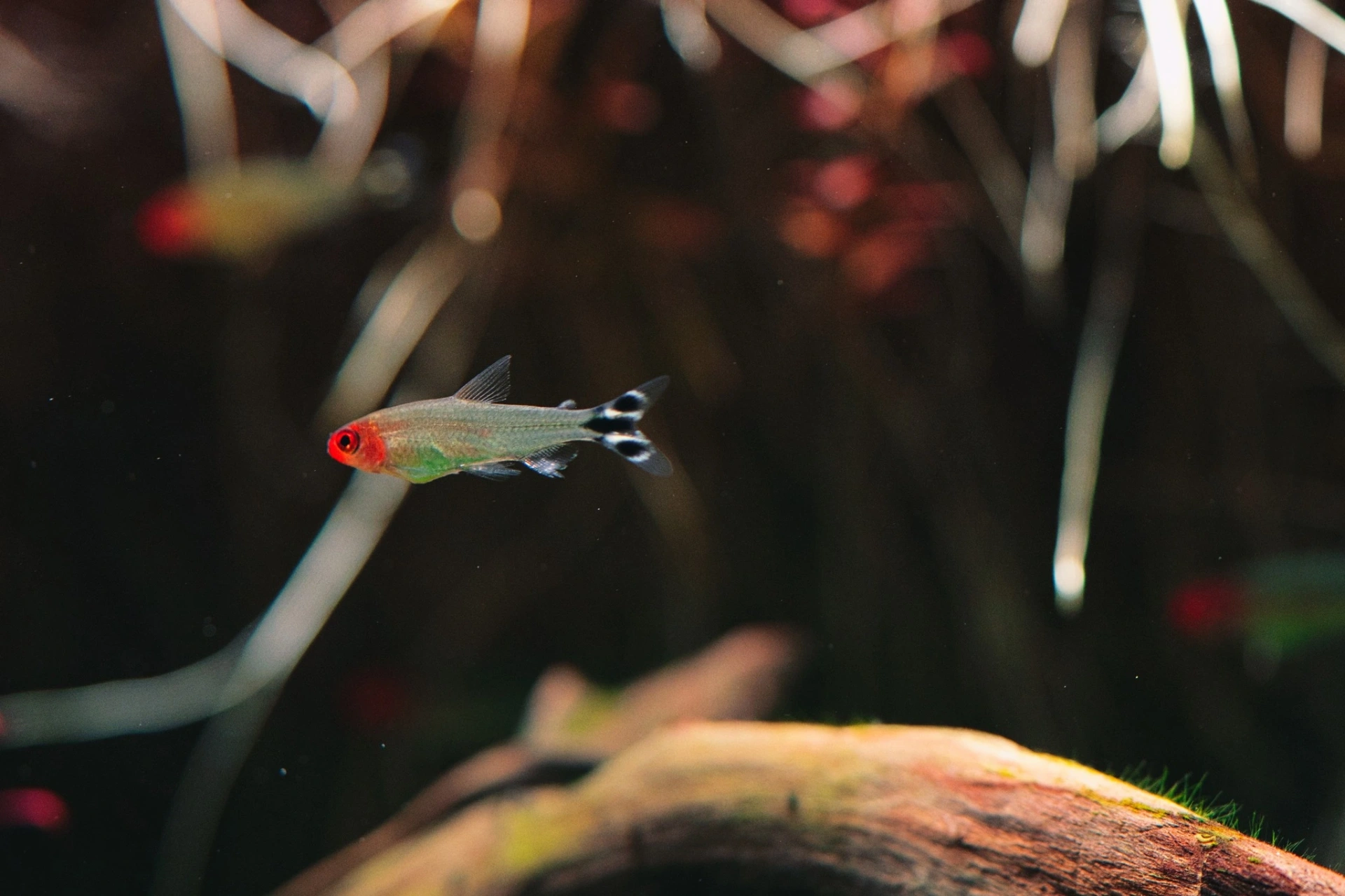
    Rummy nose tetra swimming in an aquarium
    Moderate

    Rummy-Nose Tetra

    Hemigrammus rhodostomus

    The tightest schooling tetra you can keep. When they turn as one, it's mesmerizing. The intensity of their red nose tells you exactly how good your water quality is.

    5 cmSchool: 10-1224-28°C
    Congo tetra swimming in an aquarium
    Moderate

    Congo Tetra

    Phenacogrammus interruptus

    This is why you upgrade to a 30 gallon. Males develop flowing fins and an iridescent body that shifts from blue to gold. Needs the space — cramped Congos lose their finnage and color.

    8 cmSchool: 6-824-28°C
    A school of black skirt tetras swimming in an aquarium
    Easy

    Black Skirt Tetra

    Gymnocorymbus ternetzi

    Hardy, dramatic, and available in long-fin varieties. The flowing black fins create real visual impact, especially against a planted background.

    6 cmSchool: 6-820-26°C
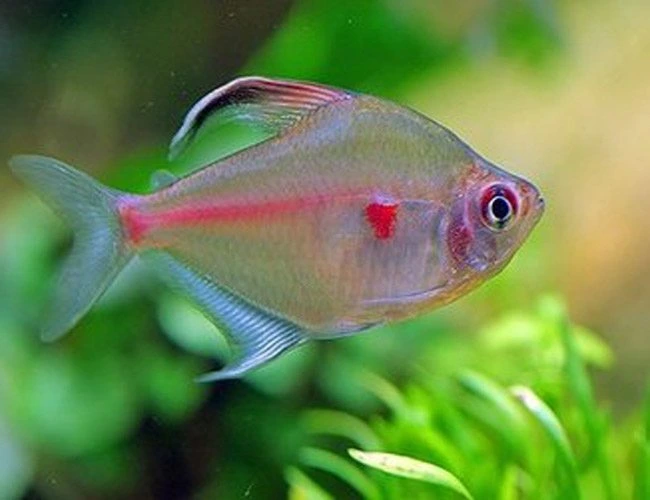
    Bleeding heart tetra swimming in an aquarium
    Easy-Moderate

    Bleeding Heart Tetra

    Hyphessobrycon erythrostigma

    Named for the blood-red spot on their side. Larger and deeper-bodied than most tetras — they look better with the extra swimming room a 30 gallon provides.

    6 cmSchool: 6-823-28°C
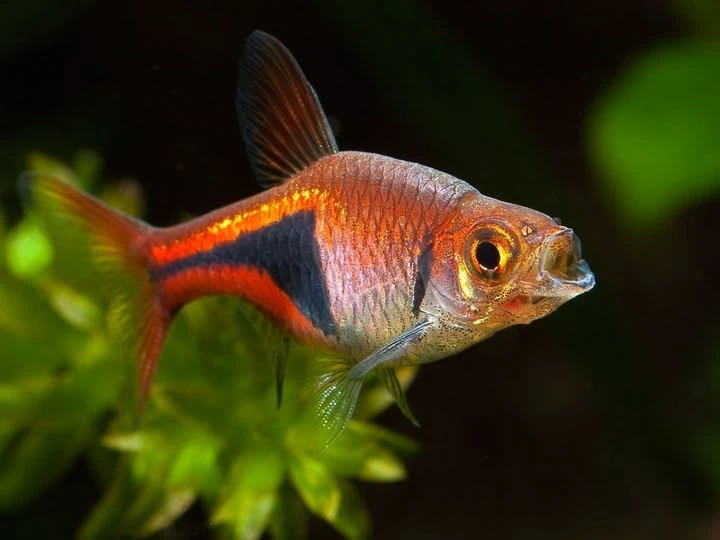
    Harlequin Rasbora swimming in the middle of an aquarium
    Easy

    Harlequin Rasbora

    Trigonostigma heteromorpha

    Copper body, bold black triangle, zero drama. The definition of a reliable community fish — works with practically everything on this list.

    4.5 cmSchool: 10-1222-28°C
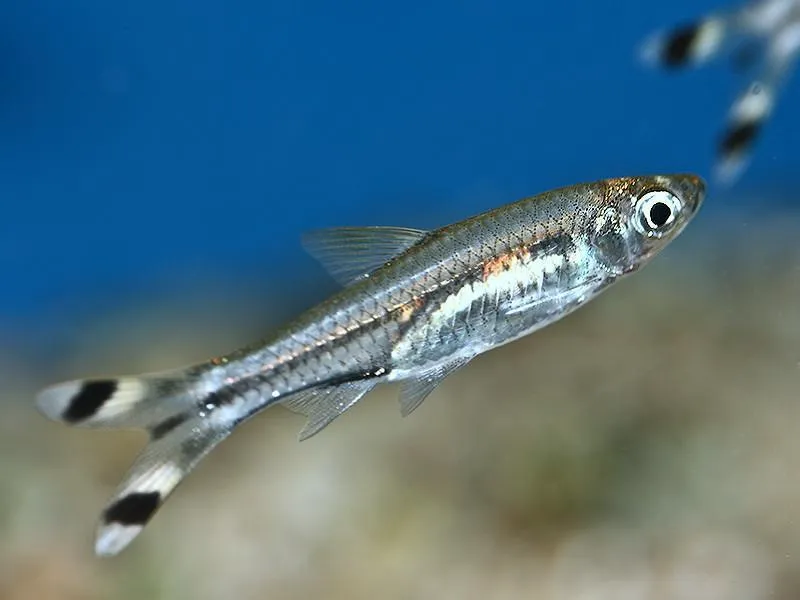
    Scissortail rasbora swimming in an aquarium
    Easy

    Scissortail Rasbora

    Rasbora trilineata

    Active, streamlined, and constantly on the move. They need horizontal swimming space — a 30 gallon long is ideal. Named for the distinctive forked tail that opens and closes as they swim.

    10 cmSchool: 6-822-26°C
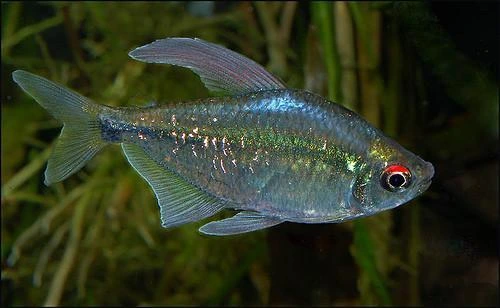
    A diamond tetra swimming at the bottom of an aquarium
    Easy

    Diamond Tetra

    Moenkhausia pittieri

    Underrated and under-kept. Under good lighting, the scales shimmer like crushed diamonds. Males develop extended dorsal fins with age.

    6 cmSchool: 6-824-28°C
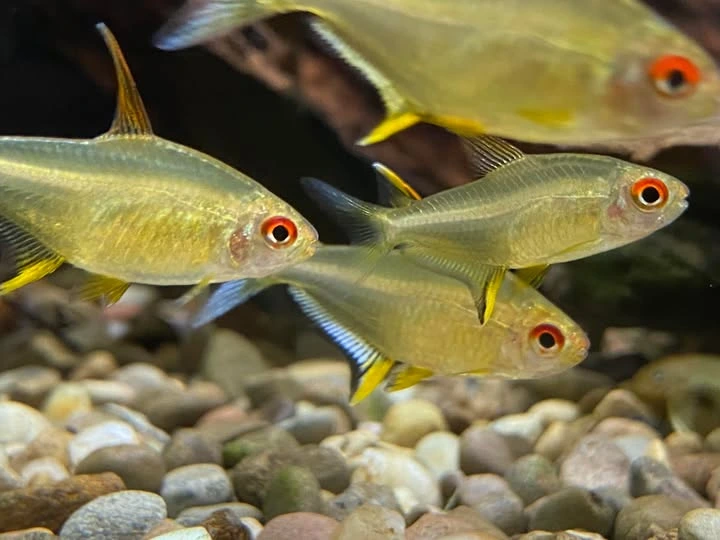
    A school of lemon tetras swimming near the aquarium substrate
    Easy

    Lemon Tetra

    Hyphessobrycon pulchripinnis

    Translucent body with bright yellow fins and a striking red eye. One of the hardiest tetras available — tolerates a wider range of conditions than most.

    5 cmSchool: 8-1022-28°C
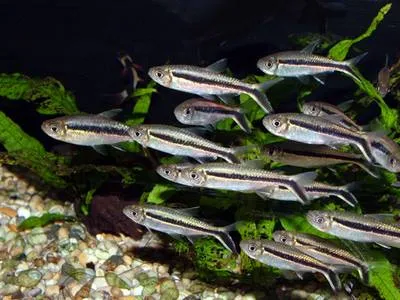
    A large school of penguin tetras swimming together in an aquarium
    Easy

    Penguin Tetra

    Thayeria boehlkei

    Swims at an unusual upward angle and features a bold black stripe from gill to tail. Active mid-level swimmer that adds movement and pattern to community tanks.

    5 cmSchool: 8-1022-28°C
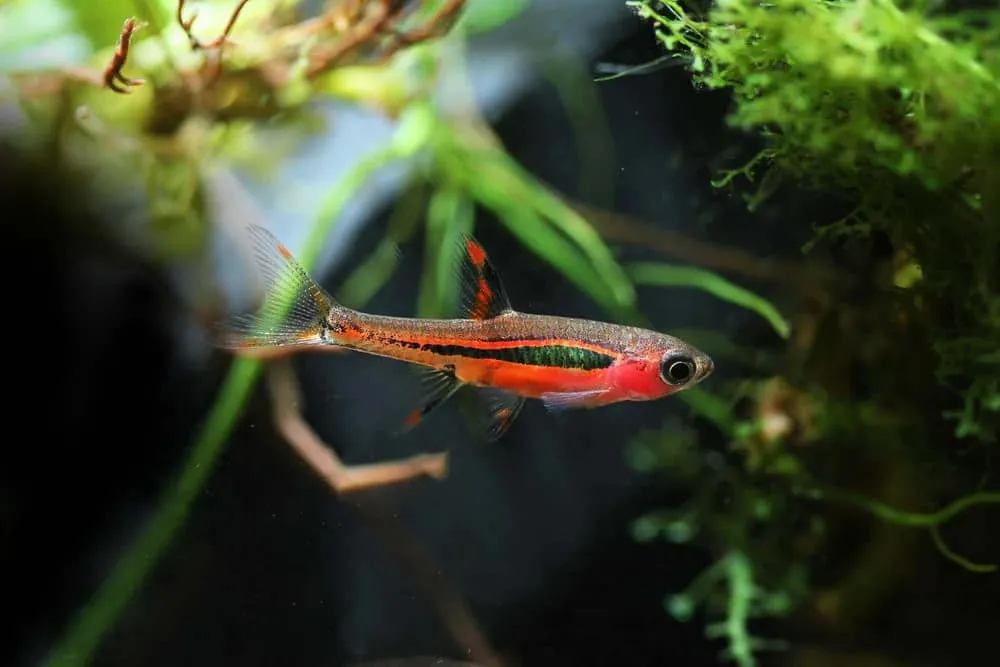
    A single chili rasbora swimming in an aquarium
    Easy-Moderate

    Chili Rasbora

    Boraras brigittae

    In a 30 gallon, you can finally keep a massive school of 20. Against dark substrate and dense plants, the fiery red color is breathtaking. Tiny bioload means room for other species.

    2 cmSchool: 15-2023-28°C
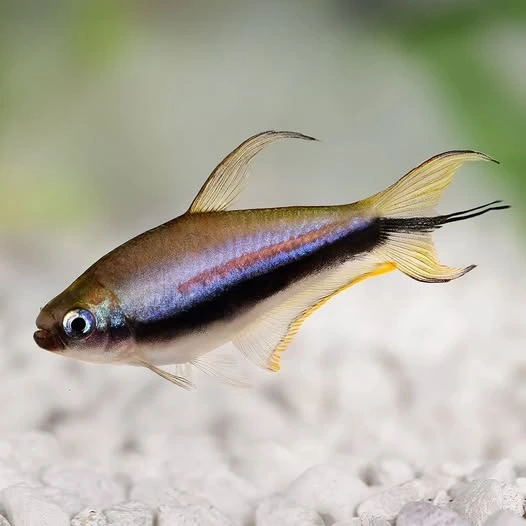
    Emperor tetra looking for food near aquarium substrate
    Easy-Moderate

    Emperor Tetra

    Nematobrycon palmeri

    Deep purple-blue body with a distinctive three-pointed tail and gold eyes. Males have extended dorsal rays — one of the most regal-looking tetras available.

    5 cmSchool: 8-1023-27°C
    A single Colombian tetra swimming peacefully in a planted fish tank
    Easy

    Colombian Tetra

    Hyphessobrycon columbianus

    Silver body with brilliant red-orange tail — the color combination pops against green plants. Hardy and less common than the usual tetra suspects.

    6 cmSchool: 6-822-28°C
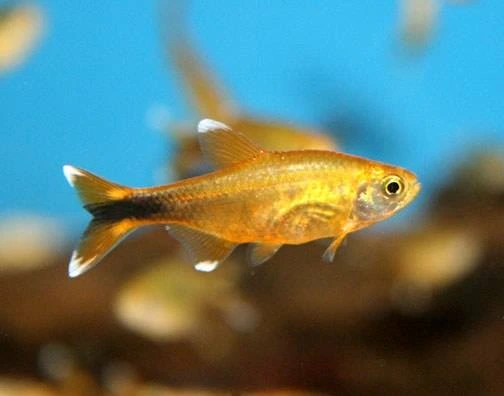
    Orange silvertip tetra swimming in a fish tank
    Easy

    Silvertip Tetra

    Hasemania nana

    Golden-copper body with bright silver tips on the fins. Active swimmer with a slight fin-nipping tendency — keep in larger schools to distribute behavior.

    5 cmSchool: 8-1022-28°C
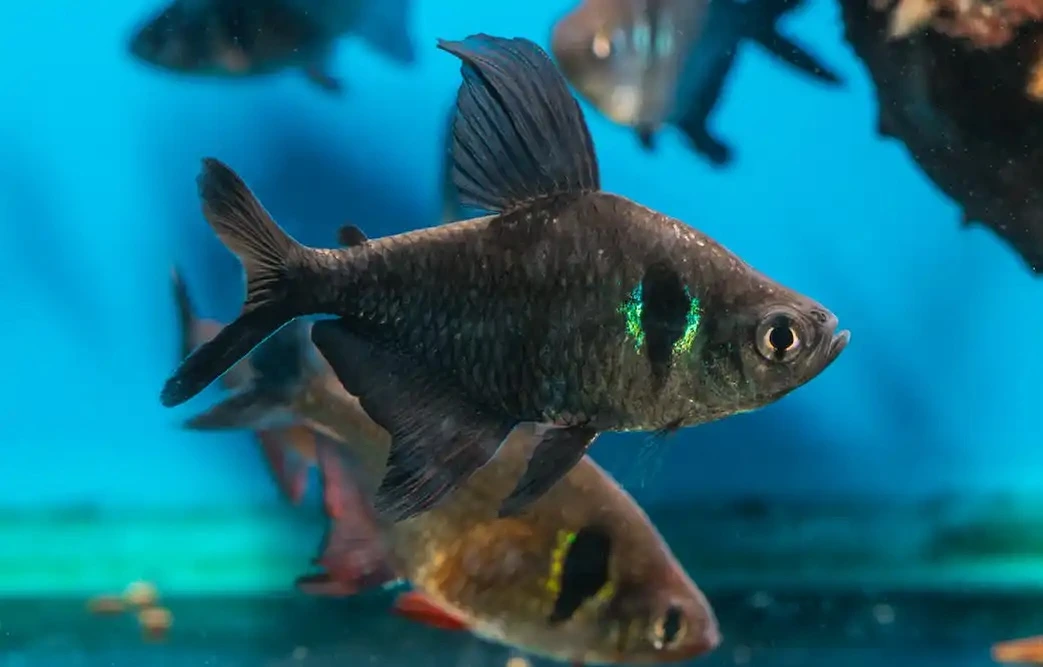
    A group of black skirt tetras swimming in an aquarium
    Easy

    Black Phantom Tetra

    Hyphessobrycon megalopterus

    Males spar with dramatically spread black fins — impressive display behavior without actual aggression. The ghostly dark coloration pairs beautifully with brighter species.

    4 cmSchool: 8-1022-28°C
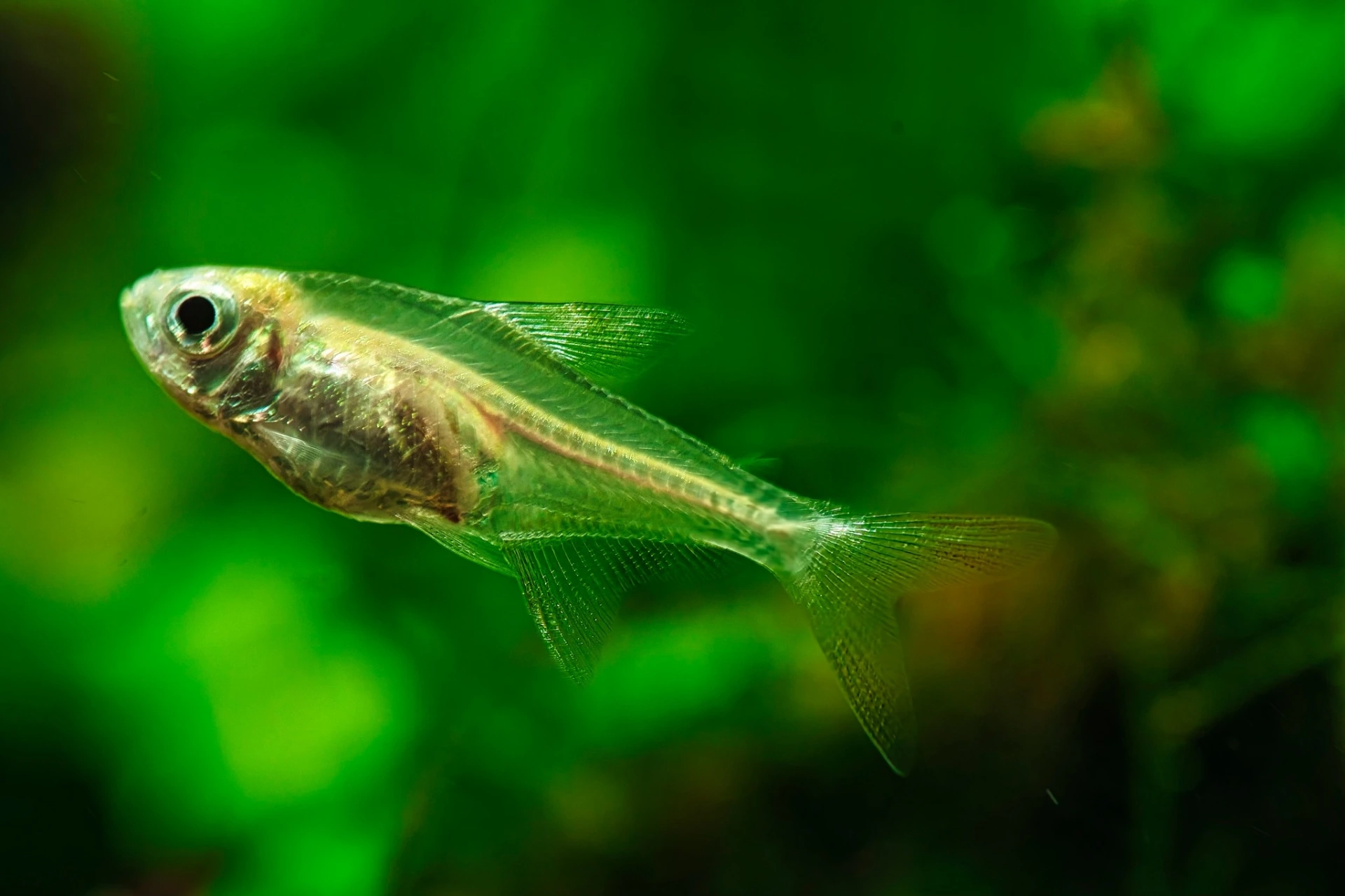
    X-ray tetra swimming in an aquarium
    Easy

    X-Ray Tetra

    Pristella maxillaris

    You can see right through them — translucent body with visible skeleton and yellow/black dorsal fins. Incredibly hardy and one of the most forgiving tetras for beginners.

    4 cmSchool: 8-1022-28°C
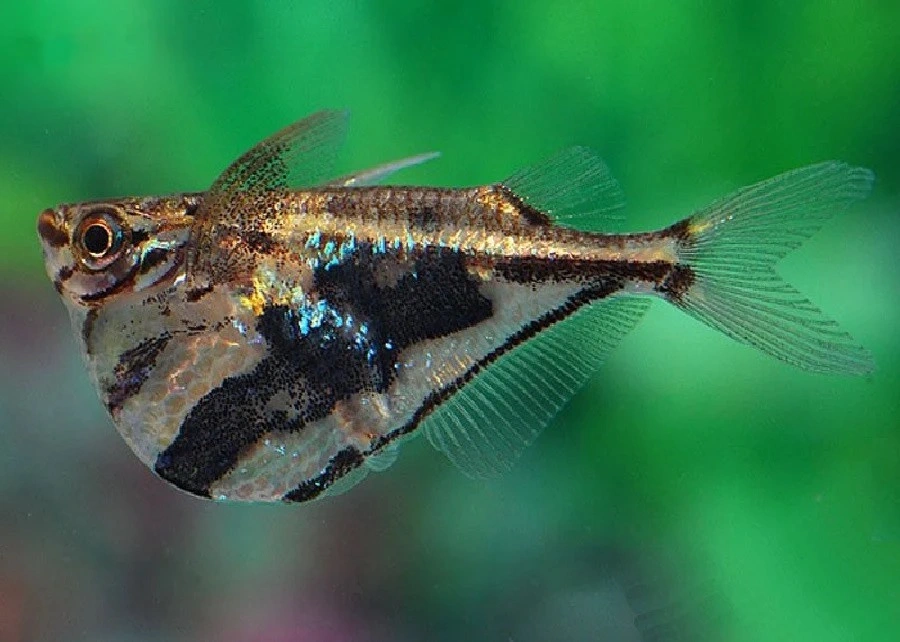
    Marbled hatchetfish swimming peacefully in a fish tank
    Moderate

    Marbled Hatchetfish

    Carnegiella strigata

    Surface-dwelling specialists with deep, hatchet-shaped bodies. They actually fly using powerful pectoral muscles — a tight lid is essential. Unique addition to any community tank.

    4 cmSchool: 6-824-28°C
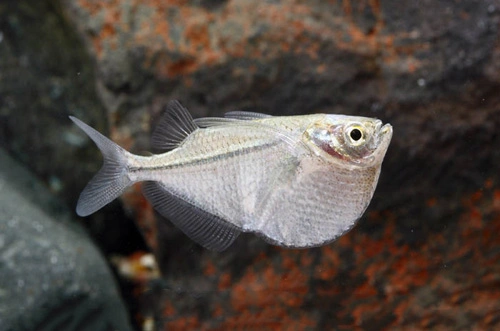
    Silver hatchetfish swimming in an aquarium
    Moderate

    Silver Hatchetfish

    Gasteropelecus sternicla

    Larger than their marbled cousins with a striking silver body. Same surface-dwelling, flying behavior — keep in schools and never leave gaps in your lid coverage.

    6 cmSchool: 6-823-28°C

    Best Centerpiece Fish for a 30 Gallon Tank

    A 30 gallon opens up centerpiece options that don't work in smaller tanks. The Electric Blue Acara needs this space. The Pearl Gourami looks cramped in a 20. Dwarf cichlids like Apistos and Rams can establish proper territories without constant conflict. This is where you pick one stunning fish (or pair) and build the tank around them.
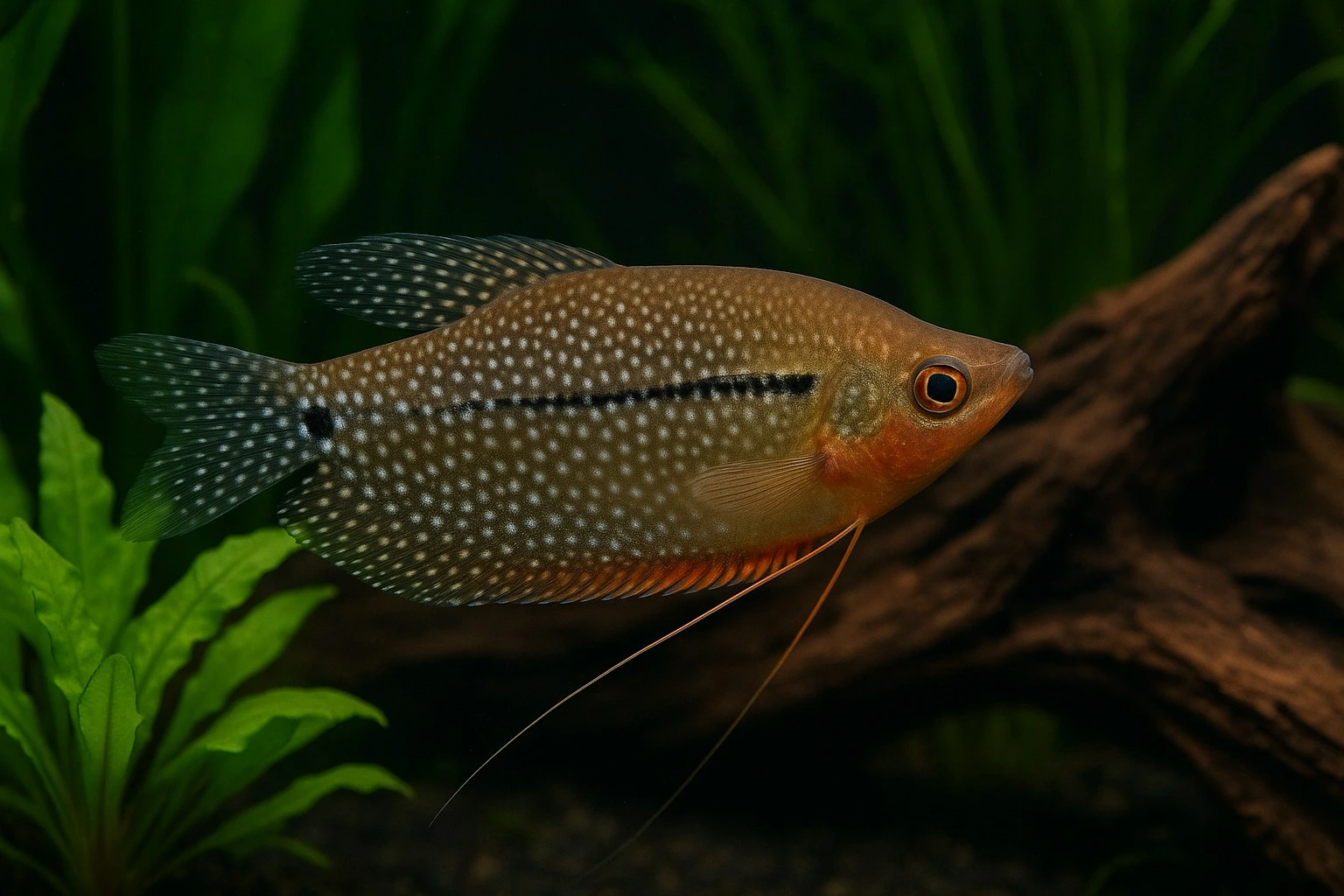
    Pearl Gourami swimming in the middle of an aquarium
    Easy-Moderate

    Pearl Gourami

    Trichopodus leeri

    Arguably the most elegant gourami. Lace-pattern scales, a bold black line from nose to tail, and orange-red breeding colors in males. Peaceful despite their size — perfect 30 gallon centerpiece.

    12 cmSchool: 1-224-28°C
    Electric blue acara swimming near aquarium plants
    Easy-Moderate

    Electric Blue Acara

    Andinoacara pulcher

    A cichlid you can keep in a community tank. Stunning metallic blue coloration, surprisingly peaceful temperament. A 30 gallon is the minimum — they need room to claim a territory without terrorizing tankmates.

    15 cmSchool: 122-28°C
    Colorful bolivian ram swimming in an aquarium
    Easy-Moderate

    Bolivian Ram

    Mikrogeophagus altispinosus

    The Ram for people who've killed German Blues. Tolerates cooler water, harder water, and beginner mistakes. Less flashy but far more forgiving — and still a beautiful fish.

    8 cmSchool: 1 pair22-27°C
    German Blue Ram swimming at the bottom of an aquarium
    Moderate

    German Blue Ram

    Mikrogeophagus ramirezi

    Electric blue, orange, and black in a tiny package. One of the most beautiful freshwater fish available — but they need warm, soft, stable water. Not for new tanks.

    6 cmSchool: 1 pair25-30°C
    Two apistogramma swimming near aquarium plants
    Moderate

    Apistogramma Cacatuoides

    Apistogramma cacatuoides

    The 'Cockatoo Dwarf Cichlid' — males have extended dorsal rays and come in multiple color morphs. Personality-packed and small enough to keep in a community without dominating.

    7 cmSchool: 1 pair24-28°C
    Keyhole cichlid swimming in an aquarium
    Easy

    Keyhole Cichlid

    Cleithracara maronii

    The most peaceful cichlid in the hobby. Shy, gentle, and named for the keyhole-shaped marking on their side. Underrated — pairs bond for life and rarely bother tankmates.

    10 cmSchool: 1-222-28°C
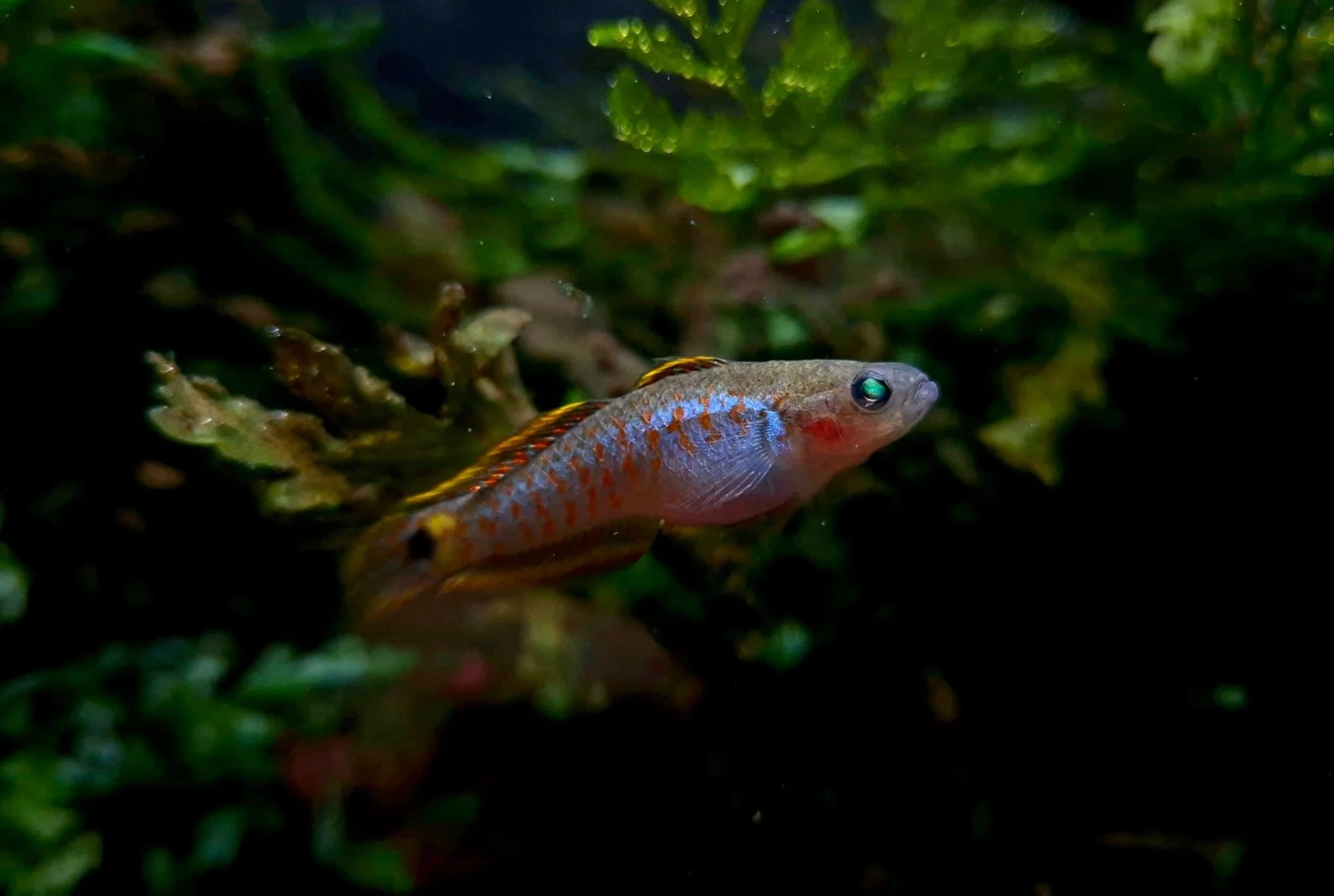
    Peacock gudgeon swimming near aquarium moss
    Easy-Moderate

    Peacock Gudgeon

    Tateurndina ocellicauda

    Electric blue body with red-spotted fins and a distinctive head bump on males. One of the most colorful small fish available — peaceful and breeds readily in caves.

    7 cmSchool: 2-322-26°C
    Golden wonder killifish swimming at the top of aquarium, looking at aquatic floating plants
    Easy-Moderate

    Golden Wonder Killifish

    Aplocheilus lineatus

    Surface-dwelling predator with metallic gold-green scales. Will eat very small fish and shrimp — but stunning in the right community. Pairs perfectly with mid-level and bottom dwellers.

    10 cmSchool: 2-322-28°C
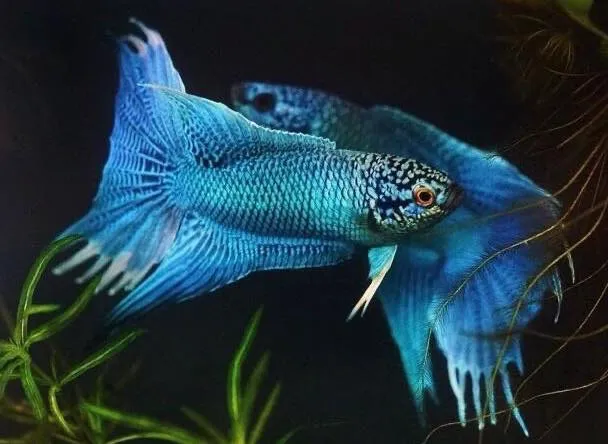
    Two blue paradise fish swimming closely to each other in an aquarium
    Easy

    Paradise Fish

    Macropodus opercularis

    One of the original aquarium fish — kept for centuries in Asia. Blue and red stripes, tolerates cold water, but can be aggressive with similar-looking fish. Keep singly or one male with females.

    10 cmSchool: 116-26°C
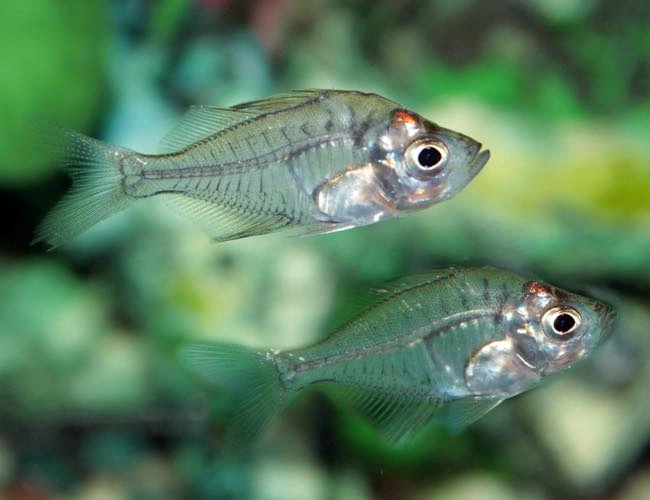
    Two Indian glassfish closely swimming in an aquarium
    Easy-Moderate

    Indian Glassfish

    Parambassis ranga

    Completely transparent — you can see their spine and organs. Avoid dyed specimens. In a group of 6+ they become confident and display constantly. Unique addition to any community.

    7 cmSchool: 6-820-28°C
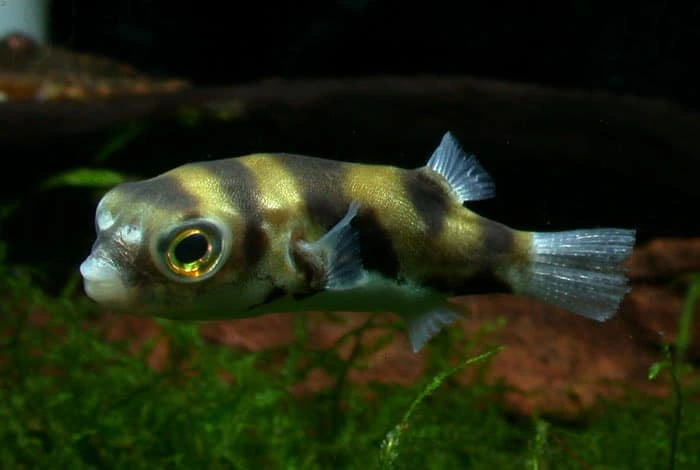
    Amazon puffer swimming near aquarium moss and driftwood
    Moderate

    Amazon Puffer

    Colomesus asellus

    A rare freshwater puffer that can live in a community. Needs hard-shelled foods to wear down constantly growing teeth. Active, curious, and full of personality — but choose tankmates carefully.

    8 cmSchool: 3-522-28°C

    Best Barbs & Active Swimmers for a 30 Gallon Tank

    This is where a 30 gallon earns its keep. Tiger Barbs need a school of 8-10 to keep their aggression directed at each other — and that school needs room. Rosy Barbs, Odessa Barbs, and Zebra Danios are all hyperactive swimmers that look stressed in smaller tanks. Give them the space and they'll reward you with constant movement and color.
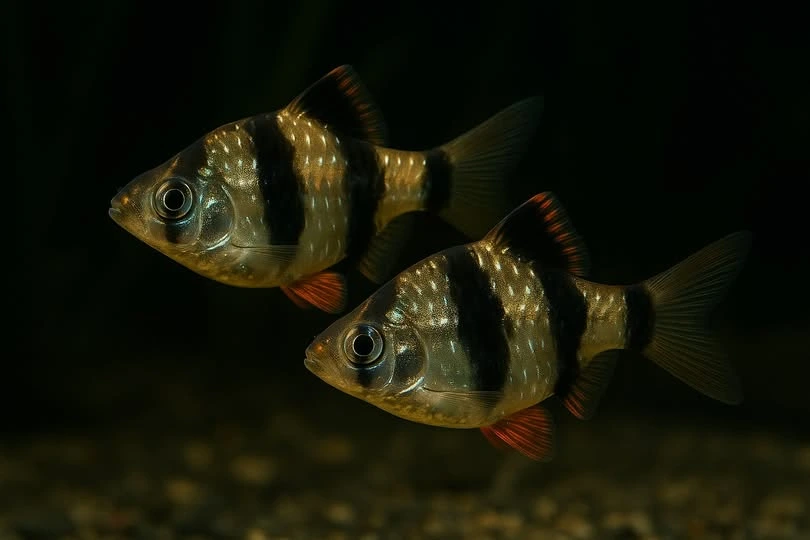
    Two Tiger Barbs swimming in the middle of an aquarium
    Easy-Moderate

    Tiger Barb

    Puntigrus tetrazona

    Notorious fin nippers — but only when kept in small groups. A school of 10 in a 30 gallon keeps the pecking order busy enough that they leave other fish alone. Active, bold, and endlessly entertaining.

    7 cmSchool: 8-1022-26°C
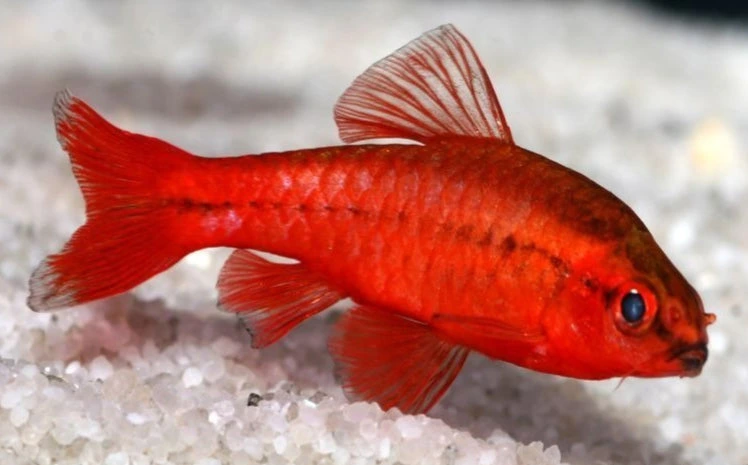
    Cherry Barb swimming at the bottom of an aquarium
    Easy

    Cherry Barb

    Puntius titteya

    The peaceful barb. Males turn deep crimson when displaying for females. Unlike their Tiger cousins, they won't nip fins or cause drama — one of the most underrated community fish.

    5 cmSchool: 6-822-27°C
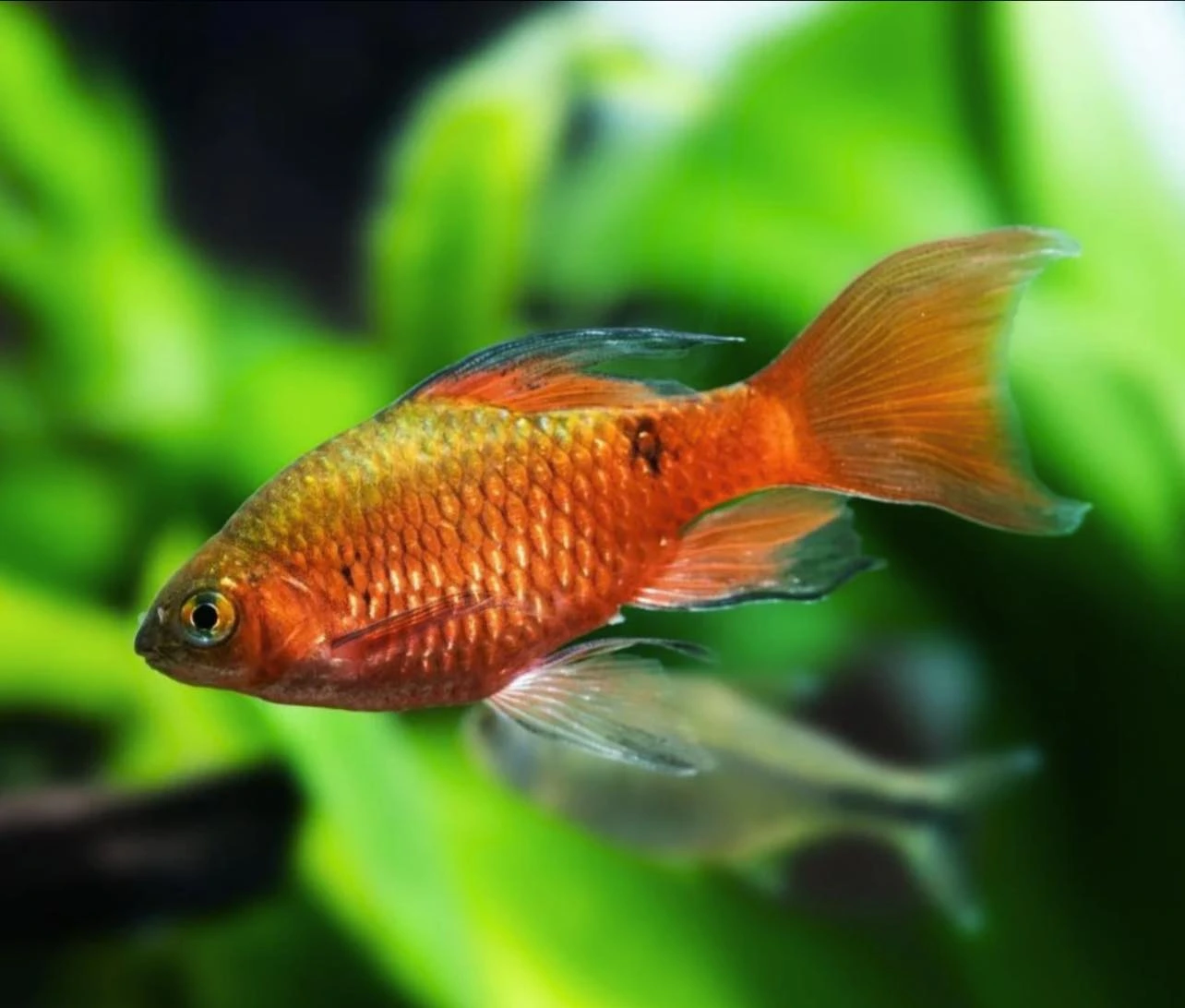
    Longfin rosy barb swimming in an aquarium
    Easy

    Rosy Barb

    Pethia conchonius

    Larger and more cold-tolerant than most tropicals — perfect for cooler or unheated tanks. Males flush pink-red during breeding. Hardy enough for beginners, active enough to keep things interesting.

    10 cmSchool: 618-24°C
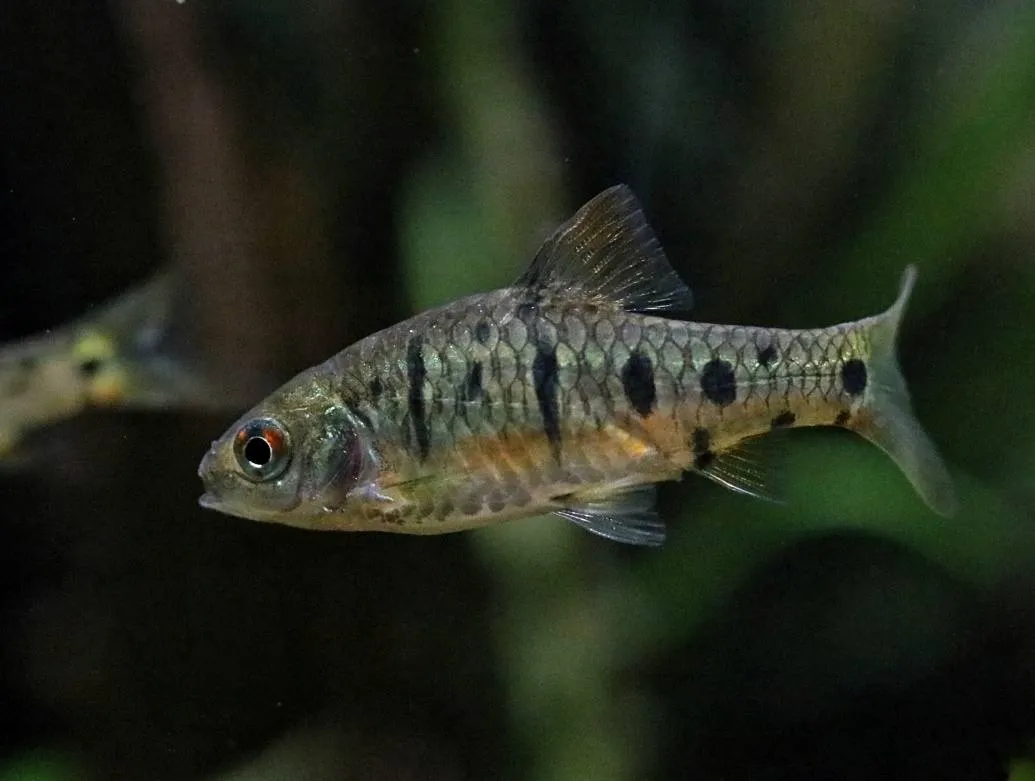
    Odessa barb swimming in an aquarium
    Easy

    Odessa Barb

    Pethia padamya

    Males develop an intense red-orange stripe that rivals any tetra. Relatively peaceful for a barb, though they can be boisterous. Does best with other active species.

    6 cmSchool: 6-822-26°C
    Gold barb swimming in an aquarium
    Easy

    Gold Barb

    Barbodes semifasciolatus

    Bright gold-yellow body, peaceful temperament, and tolerates a wide temperature range. Less common than Tiger Barbs but arguably easier to keep in a community.

    7 cmSchool: 6-818-24°C
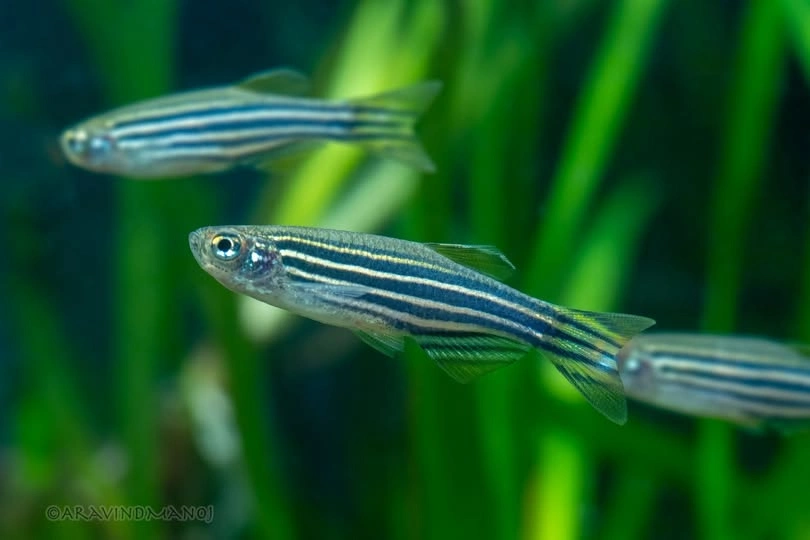
    Three Zebra Danios swimming near aquarium plants
    Easy

    Zebra Danio

    Danio rerio

    The fish that survives everything. Hyperactive, constantly racing across the tank, and nearly impossible to kill. Best in a long tank where they can sprint. Cool-water tolerant.

    5 cmSchool: 8-1018-24°C

    Best Bottom Dwellers for a 30 Gallon Tank

    A 30 gallon gives you room for the larger Corydoras species, proper Kuhli Loach groups, and active loaches like the Yoyo that would bully their way through a smaller tank. You can also run a Bristlenose Pleco comfortably — or add a Hillstream Loach if you've got good flow.
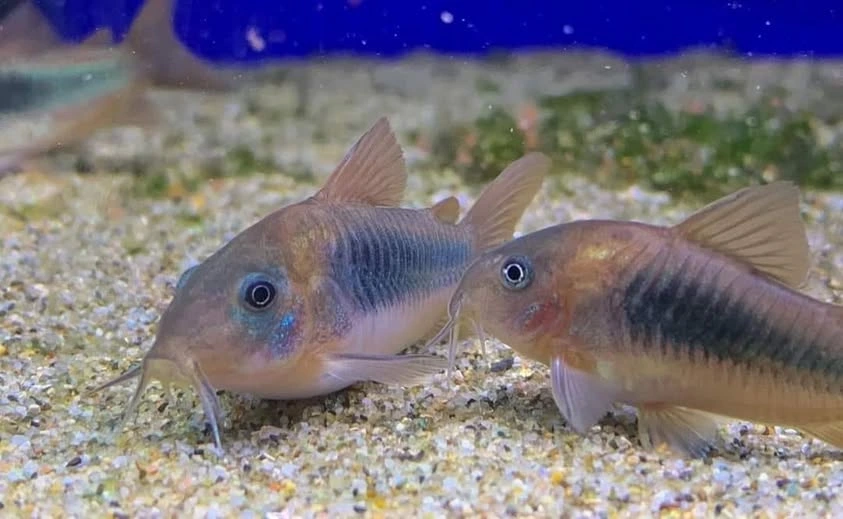
    Two bronze corydoras swimming at the bottom of an aquarium
    Easy

    Bronze Corydoras

    Corydoras aeneus

    The original community catfish. Endlessly foraging, endlessly social. In a 30 gallon, you can keep a proper school of 8 and watch their group behavior come alive.

    7 cmSchool: 6-822-26°C
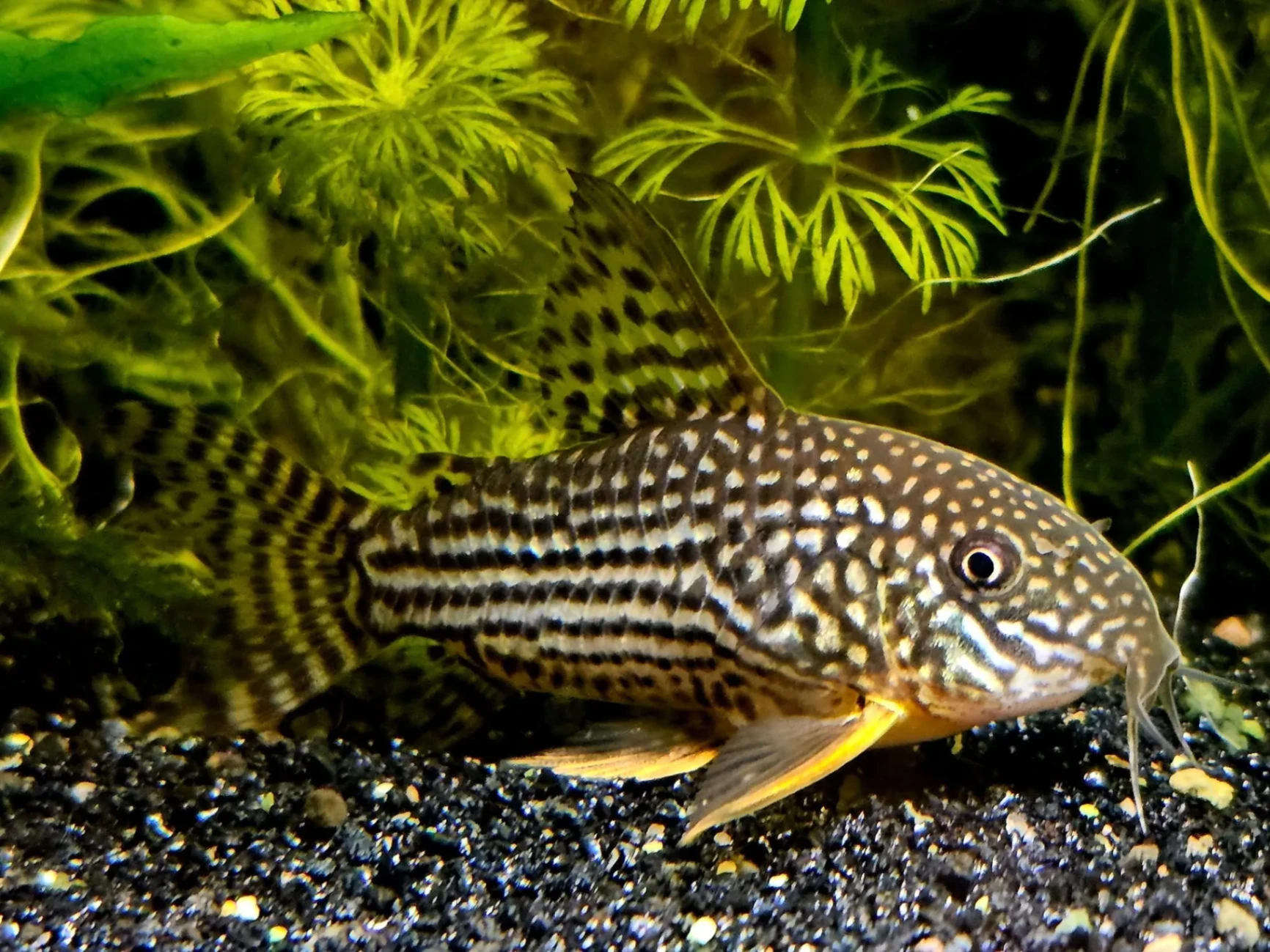
    Corydoras sterbai laying at the bottom of an aquarium near aquatic plants
    Easy

    Corydoras Sterbai

    Corydoras sterbai

    White spots on a dark body, orange pectoral fins. One of the few Corydoras that tolerates warmer water — pairs perfectly with German Blue Rams or Discus in heated tanks.

    6 cmSchool: 6-824-28°C
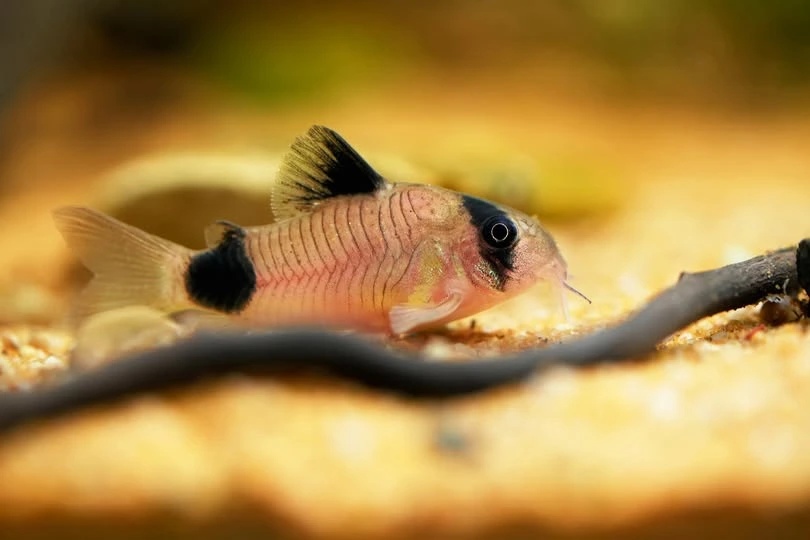
    Single panda corydoras swimming at the bottom of an aquarium
    Easy

    Panda Corydoras

    Corydoras panda

    Black patches on eyes and tail fin give them their panda look. Prefers cooler water — excellent for room-temperature tanks or pairing with cool-water species like Zebra Danios.

    5 cmSchool: 6-820-25°C
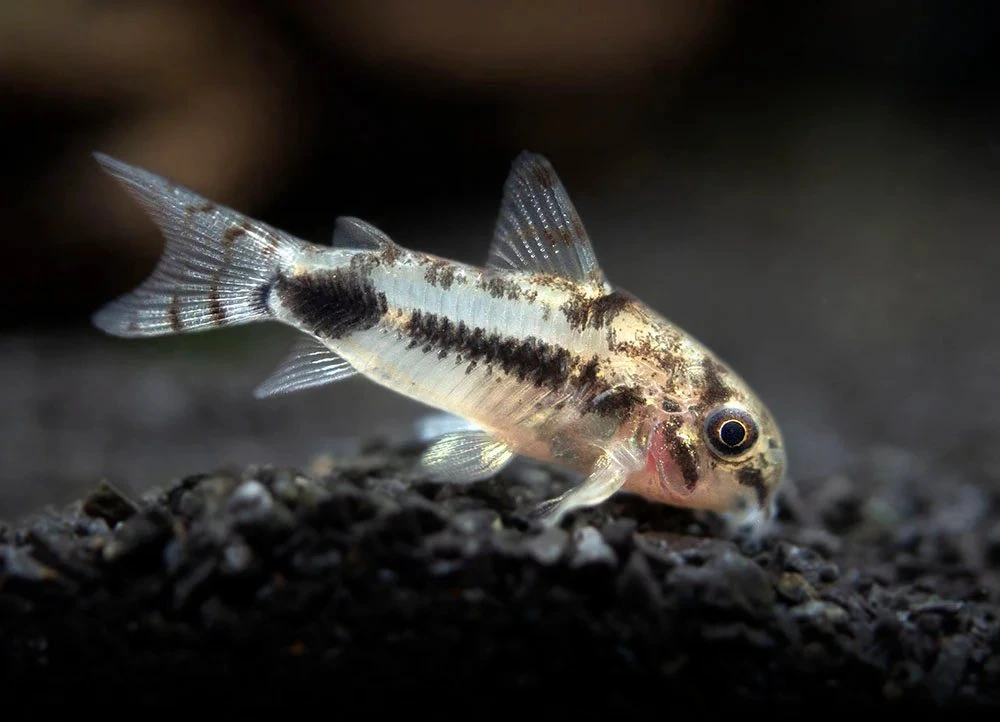
    Peppered corydora looking for food on aquarium sand
    Easy

    Peppered Corydoras

    Corydoras paleatus

    One of the hardiest and most cold-tolerant Corydoras. Excellent for unheated tanks — thrives in temperatures that stress most tropical species. Classic patterning, bulletproof care.

    7 cmSchool: 6-818-24°C
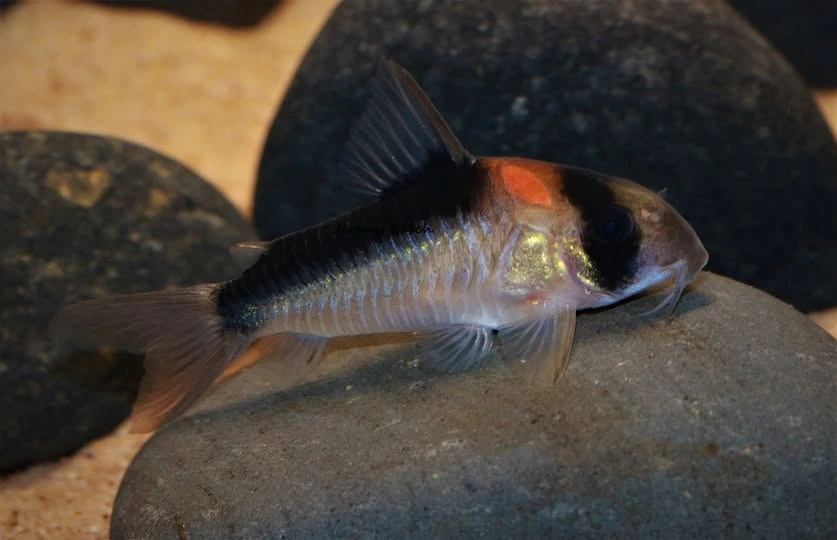
    Adolfo's corydora looking for food at the bottom of an aquarium
    Easy-Moderate

    Adolfo's Corydoras

    Corydoras adolfoi

    Distinctive orange shoulder patch and elegant coloration. Less commonly seen than Bronze or Panda but well worth seeking out for planted community tanks.

    5 cmSchool: 6-822-26°C
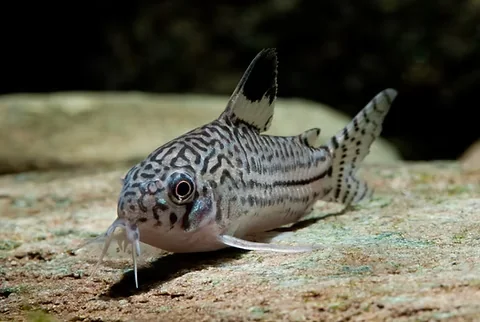
    False julii corydora laying on aquarium sand at the bottom of a fish tank
    Easy

    False Julii Corydoras

    Corydoras trilineatus

    Often sold as Julii but actually a hardier species. Beautiful reticulated pattern — connected lines rather than the true Julii's separate spots. Great community choice.

    5 cmSchool: 6-822-26°C
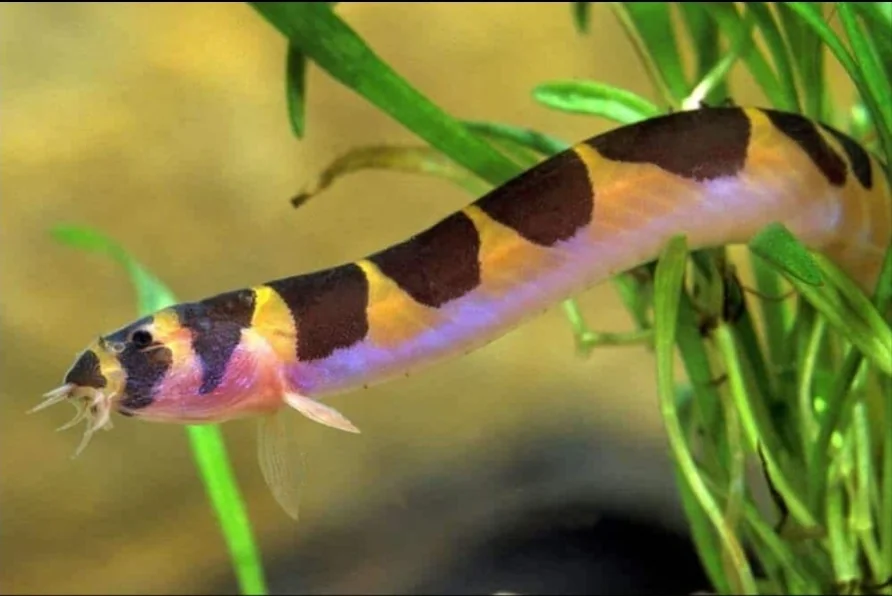
    Kuhli Loach emerging from aquarium plants
    Easy-Moderate

    Kuhli Loach

    Pangio kuhlii

    Eel-shaped, banded, and mostly nocturnal. Give them sand substrate and hiding spots, and you'll catch them squeezing through impossible gaps. A group of 6 gets bolder than a solo fish.

    10 cmSchool: 624-30°C
    Dwarf chain loach laying on white rock substrate in an aquarium
    Easy-Moderate

    Dwarf Chain Loach

    Ambastaia sidthimunki

    The most active loach you can keep — constantly swimming and playing rather than hiding. Chain-link pattern and social behavior make them a centerpiece bottom dweller.

    6 cmSchool: 6-824-28°C
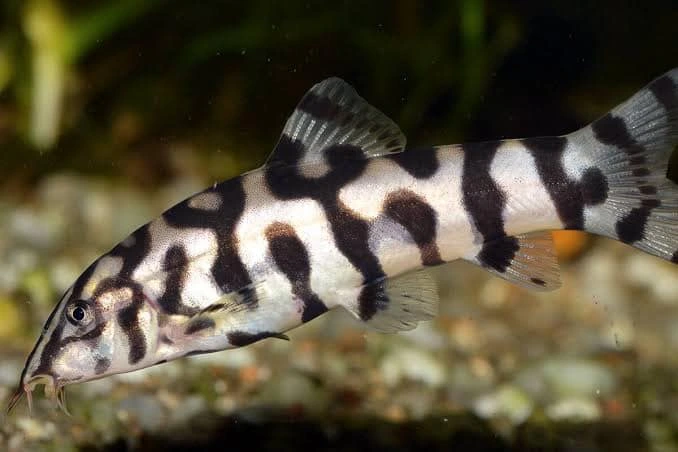
    Yoyo loach swimming in an aquarium
    Easy-Moderate

    Yoyo Loach

    Botia almorhae

    Named for the Y-O-Y-O pattern on their sides. Active during the day, personality-packed, and excellent snail control. Can be pushy — a 30 gallon gives tankmates room to escape.

    13 cmSchool: 3-524-28°C
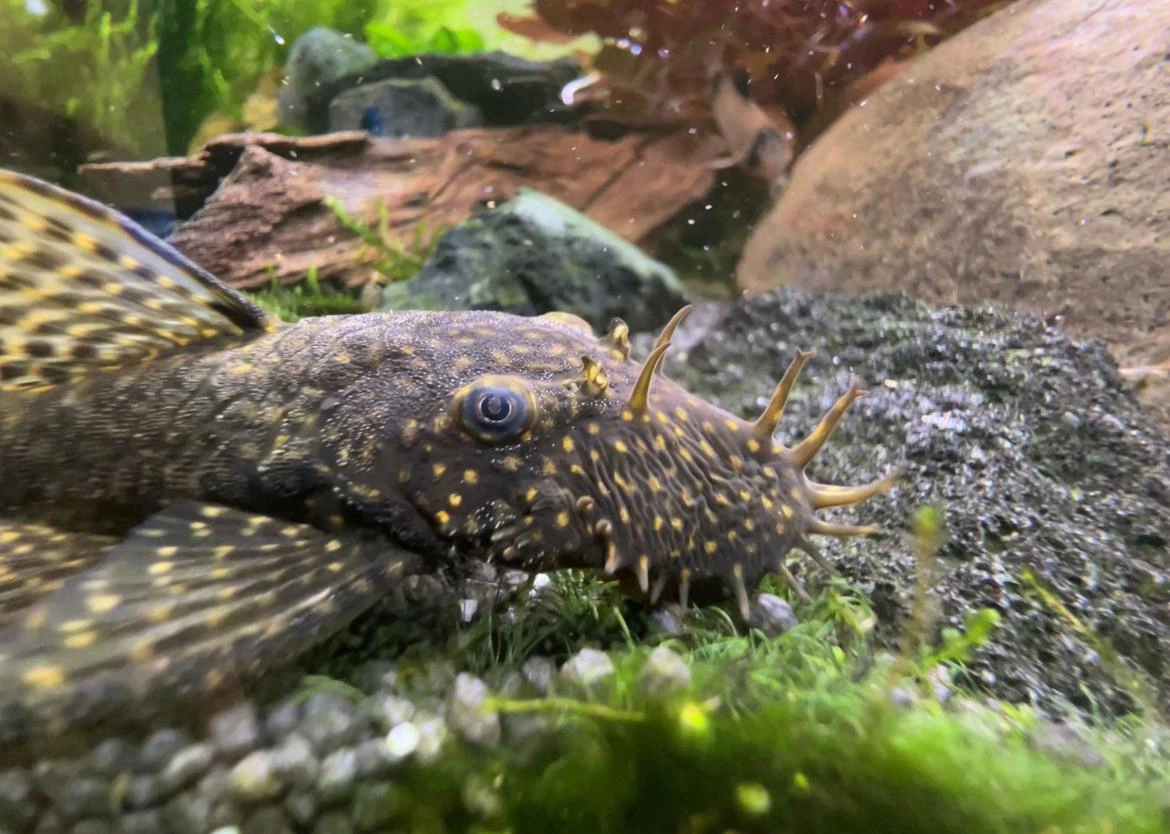
    Bristlenose pleco laying at the bottom of an aquarium
    Easy

    Bristlenose Pleco

    Ancistrus sp.

    The algae-eating pleco that stays small. Males develop distinctive bristles on the nose. One Bristlenose will keep a 30 gallon clear of algae without producing the waste a Common Pleco would.

    12 cmSchool: 123-27°C
    Clown pleco laying at the bottom of an aquarium substrate
    Easy

    Clown Pleco

    Panaqolus maccus

    A driftwood-loving pleco that stays small. Beautiful striped pattern — needs wood to rasp on for proper digestion. Lower bioload than Bristlenose but less effective at algae control.

    9 cmSchool: 123-29°C
    Rubber lip pleco sucking on a rock in an aquarium
    Easy

    Rubber Lip Pleco

    Chaetostoma sp.

    Better algae eater than most plecos and stays reasonably small. Tolerates cooler water than Bristlenose — excellent for room-temp or subtropical tanks.

    12 cmSchool: 122-26°C
    Zebra pleco laying on rocks at the bottom of a fish tank
    Moderate

    Zebra Pleco

    Hypancistrus zebra

    The holy grail of plecos — stunning black and white stripes. Expensive and not a great algae eater, but kept purely for their beauty. Needs warm water and meaty foods.

    8 cmSchool: 126-32°C
    Hillstream loach eating a piece of cucumber at the bottom of an aquarium
    Moderate

    Hillstream Loach

    Sewellia lineolata

    Flat, ray-shaped body built for clinging to rocks in fast-flowing streams. Needs high oxygen and strong flow — not for standard community tanks, but stunning in a river-style setup.

    7 cmSchool: 2-318-24°C
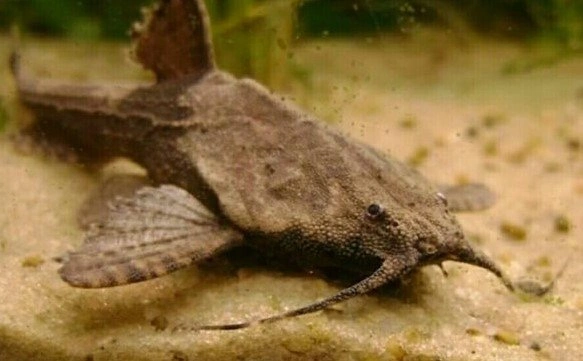
    Banjo catfish laying on sand in an aquarium
    Easy

    Banjo Catfish

    Bunocephalus coracoideus

    Flat, mottled, and shaped like a banjo — masters of disguise that burrow into substrate. Completely nocturnal and peaceful — you might forget they exist until feeding time.

    15 cmSchool: 1-222-28°C
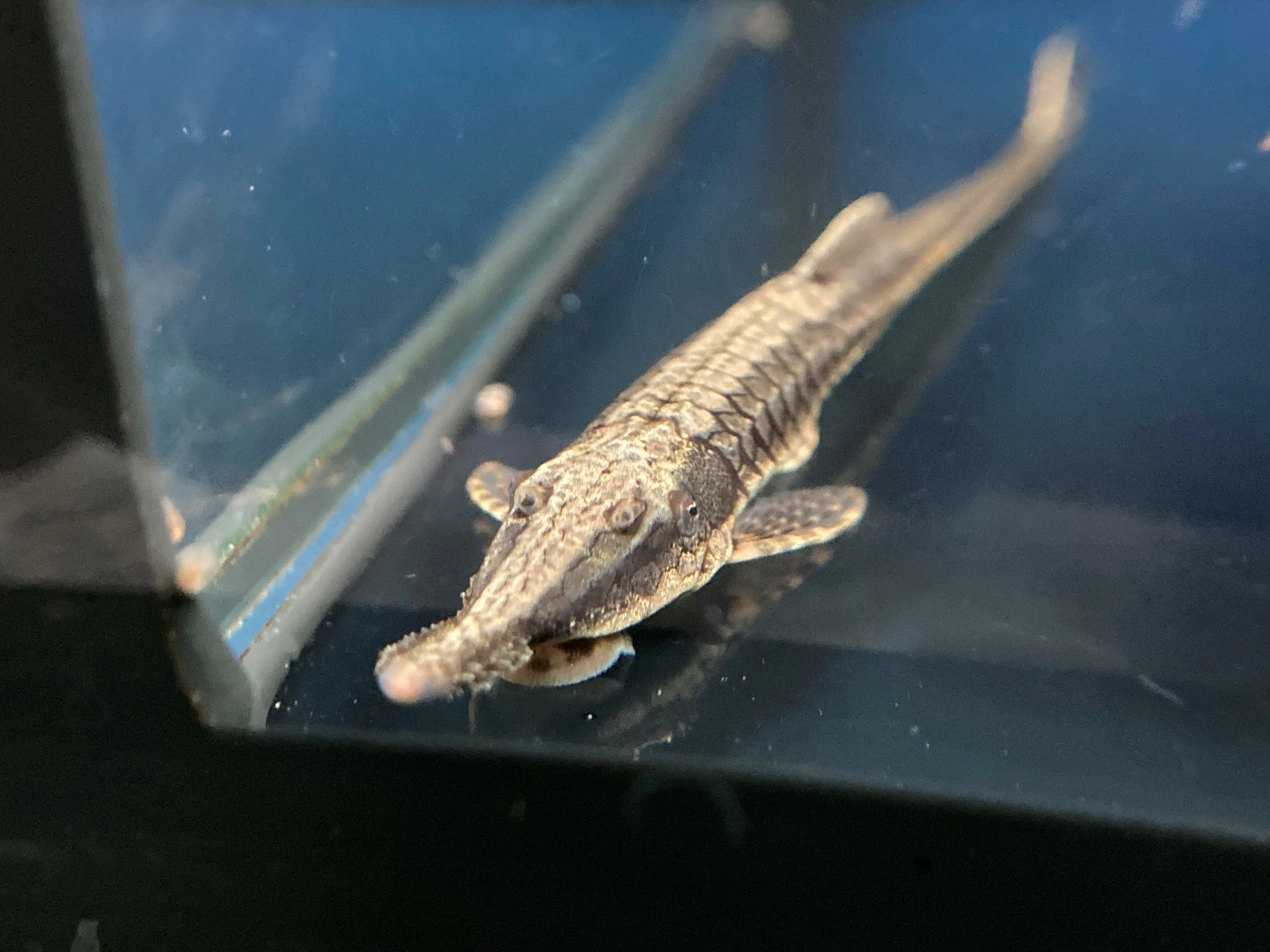
    Twig catfish laying on a bare bottom fish tank
    Moderate

    Twig Catfish

    Farlowella sp.

    Long, thin, and stick-like — perfect camouflage among driftwood and plant stems. Peaceful algae grazer but sensitive to water quality. Needs a mature, stable tank.

    15 cmSchool: 124-28°C

    Best Livebearers for a 30 Gallon Tank

    Livebearers finally have room to stretch out in a 30 gallon. Swordtails and Mollies — both too large for most smaller tanks — can swim properly and establish social hierarchies without constant stress. Expect breeding. Lots of breeding. Either keep all males or embrace the population growth.

    Red swordtail swimming in an aquarium
    Easy

    Swordtail

    Xiphophorus hellerii

    Males grow a distinctive sword-shaped tail extension. Active swimmers that need horizontal space — a 30 gallon long is ideal. Multiple males will spar, so keep one male per 2-3 females.

    12 cmSchool: 4-622-28°C
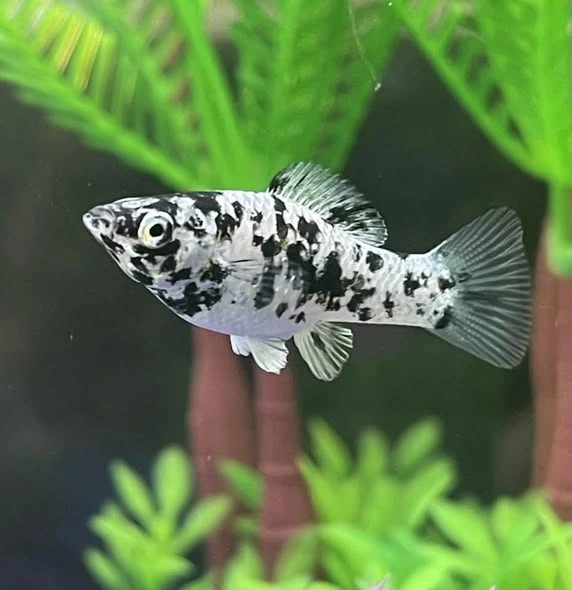
    White large molly with black spots swimming near aquarium plants
    Easy

    Molly

    Poecilia sphenops

    Larger than guppies, available in dozens of color varieties including black, dalmatian, and balloon. Tolerates brackish water and prefers harder, more alkaline conditions than most tropicals.

    10 cmSchool: 4-624-28°C
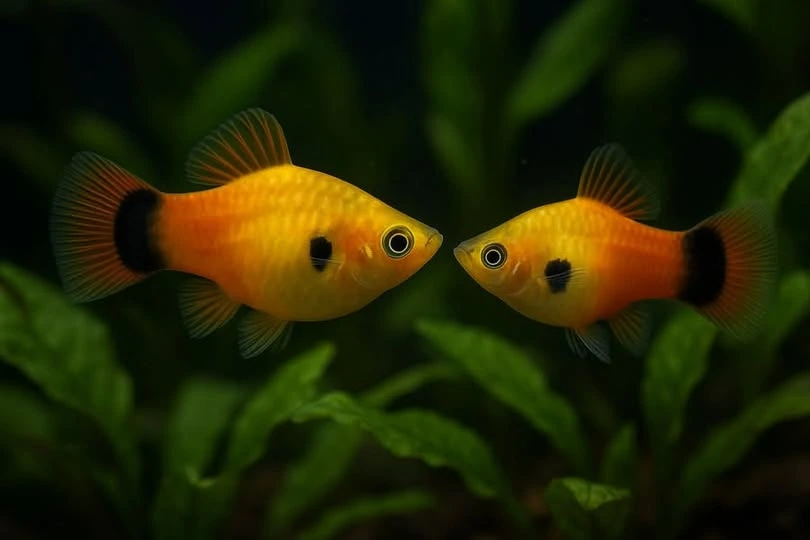
    Two orange platies swimming in aquarium plants
    Easy

    Platy

    Xiphophorus maculatus

    Chunky, colorful, and one of the hardiest fish in the hobby. Comes in more color combinations than you can count. Wide temperature tolerance makes them flexible community members.

    7 cmSchool: 6-820-26°C
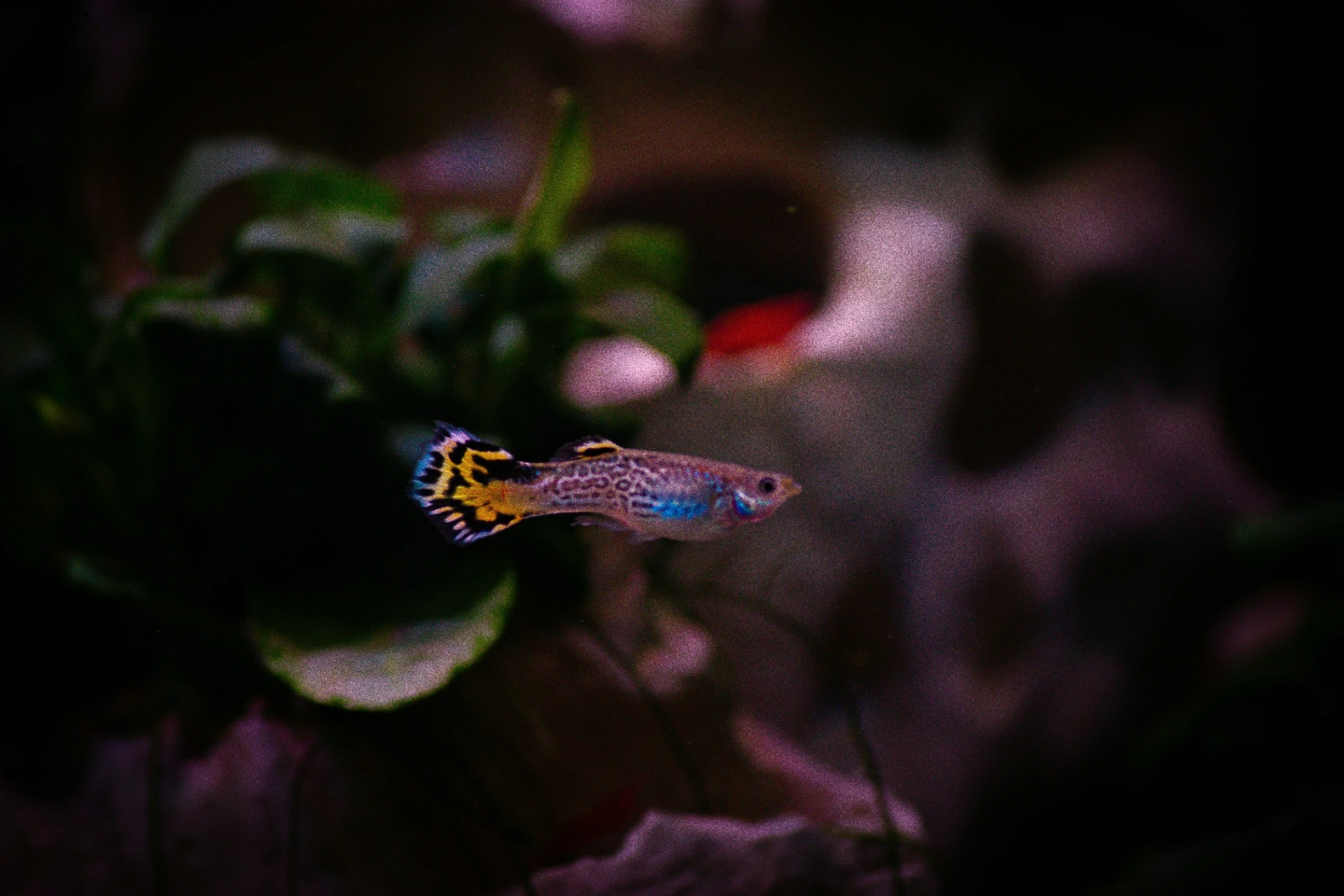
    Yellow female tiger guppy fish swimming in aquarium
    Easy

    Guppy

    Poecilia reticulata

    Endless color varieties, constantly active, breed faster than you can give them away. In a 30 gallon, avoid housing them with fin nippers like Tiger Barbs — those flowing tails are targets.

    5 cmSchool: 8-1222-28°C
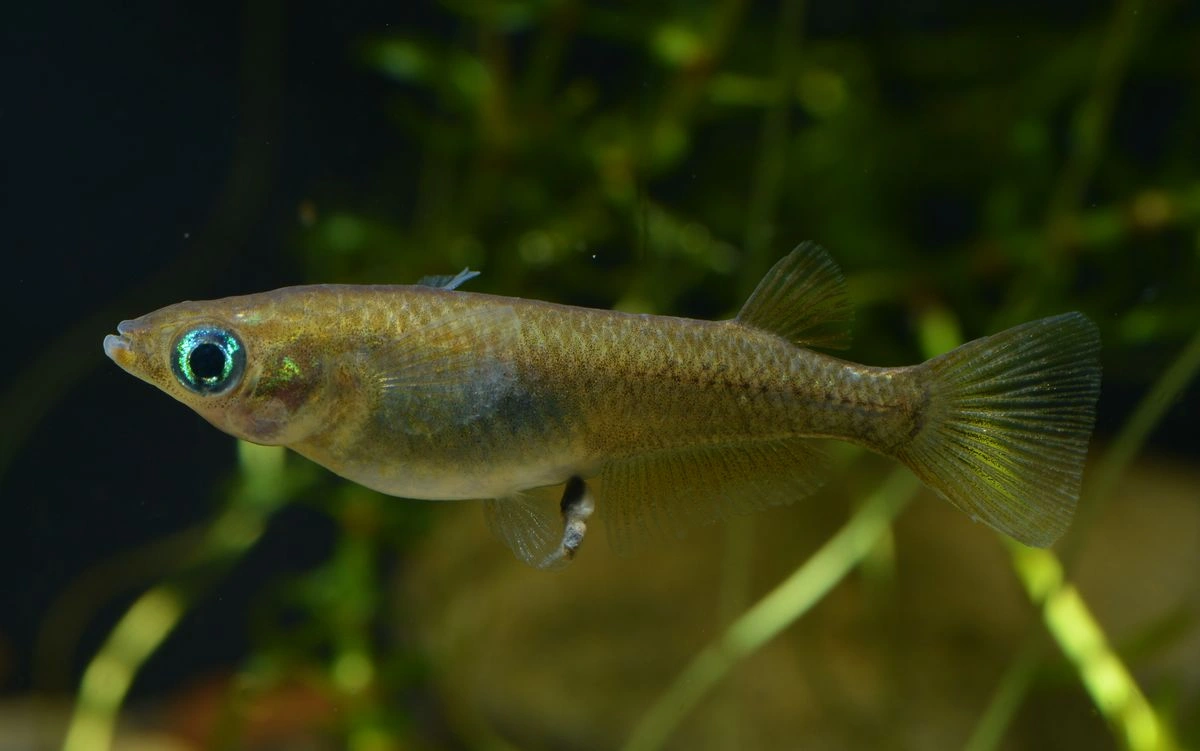
    Japanese rice fish swimming in a planted tank
    Easy

    Japanese Rice Fish

    Oryzias latipes

    Also called Medaka — popular in Japan for centuries. Tolerates a huge temperature range including unheated tanks. Surface-dwelling and incredibly hardy. Multiple color varieties available.

    4 cmSchool: 8-1018-26°C
    Wrestling halfbeak swimming in a heavily planted aquarium
    Easy-Moderate

    Wrestling Halfbeak

    Dermogenys pusilla

    Surface-dwelling livebearers with an elongated lower jaw. Males "wrestle" with locked jaws during displays. Unique, underappreciated species that adds interest to the top level of any tank.

    6 cmSchool: 4-624-28°C

    Best Invertebrates for a 30 Gallon Tank

    A 30 gallon gives you room for larger invertebrate species like Bamboo Shrimp — filter feeders that need current and space to set up feeding stations. The standard cleanup crew of Amano Shrimp and Nerite Snails still applies, and Mystery Snails add personality at this size.
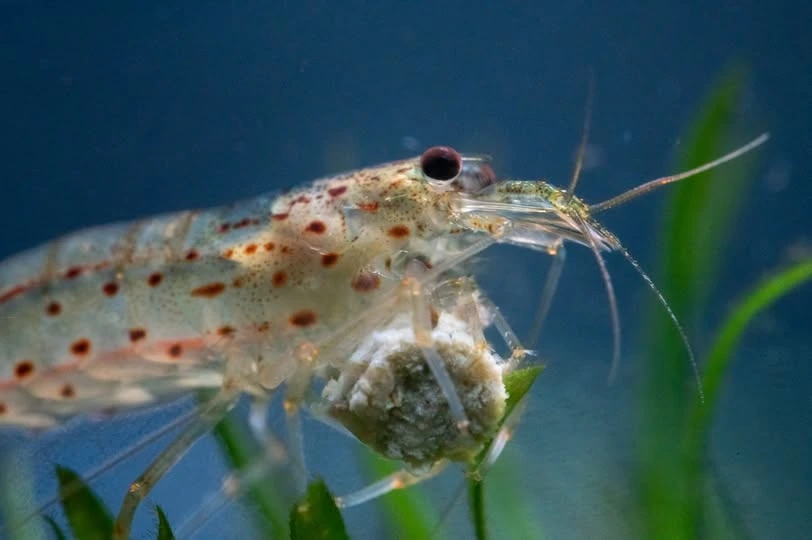
    Amano shrimp eating a piece of algae wafer at the bottom of an aquarium
    Easy

    Amano Shrimp

    Caridina multidentata

    The gold standard for algae control. Large enough that most community fish won't eat them, and they'll clear hair algae that nothing else touches. A team of 8-10 keeps a 30 gallon spotless.

    5 cmSchool: 6-1022-27°C
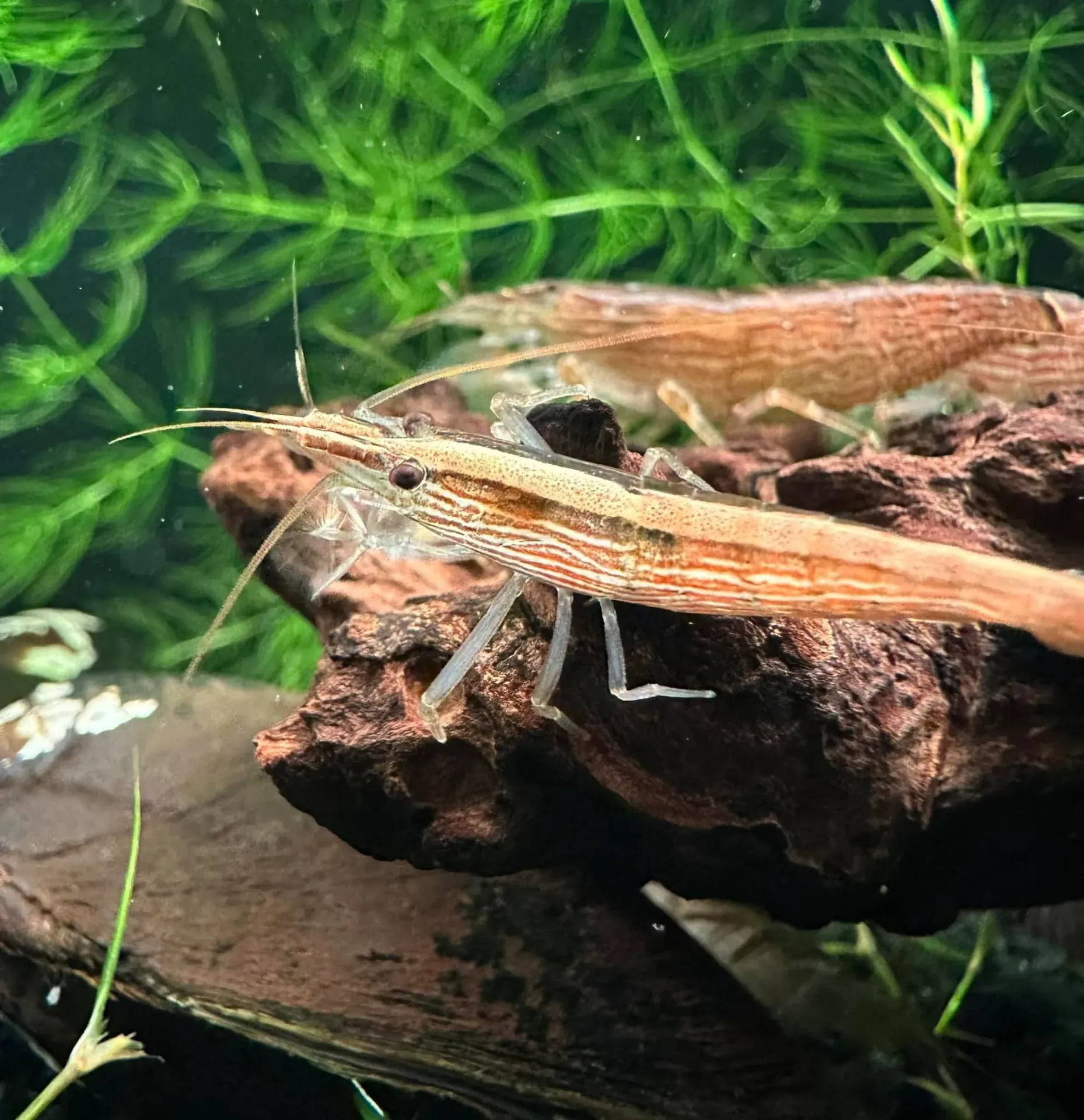
    A group of bamboo shrimp standing on aquarium driftwood
    Moderate

    Bamboo Shrimp

    Atyopsis moluccensis

    Filter feeders that fan the water to catch microparticles. Need current — they'll position themselves in the flow and spread their fans. Unique behavior you won't see from any other cleanup crew.

    8 cmSchool: 2-322-28°C
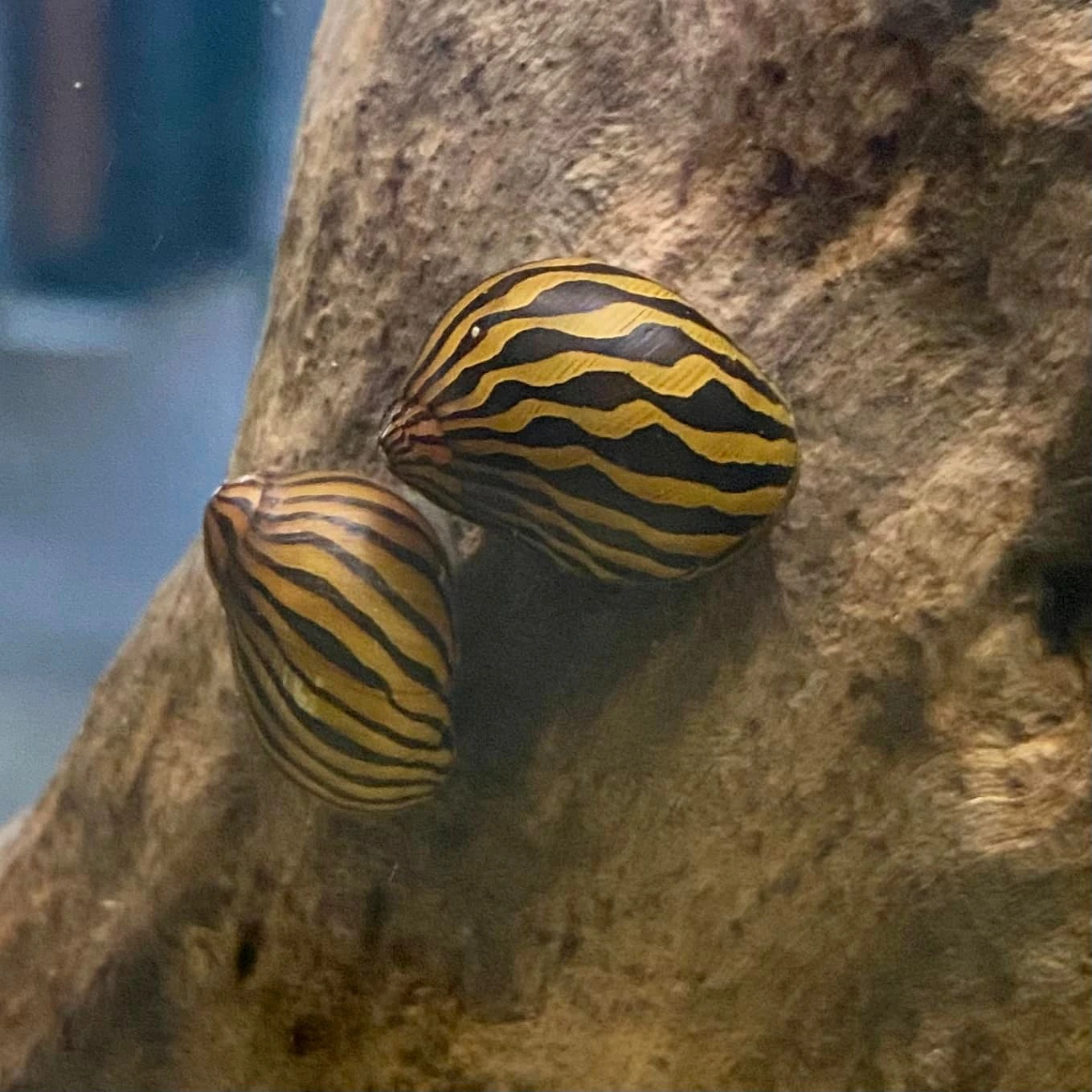
    Two nerite snails on a piece of driftwood in an aquarium
    Easy

    Nerite Snail

    Neritina sp.

    Tireless algae grazer with beautiful shell patterns. Won't reproduce in freshwater — eggs may appear on glass but won't hatch. No snail population explosions.

    2.5 cmSchool: 3-422-26°C
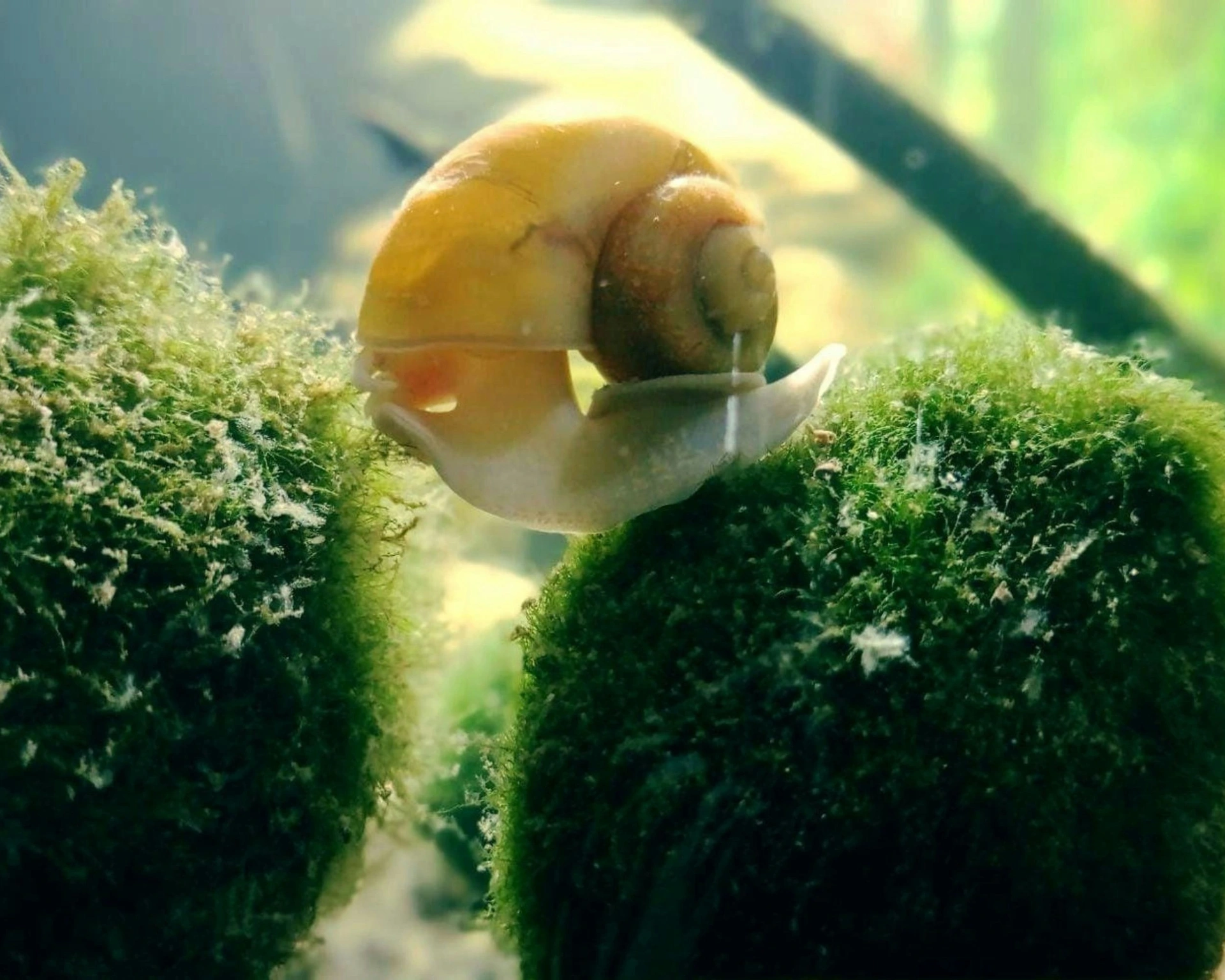
    A yellow mystery snail walking on a marimo moss ball in an aquarium
    Easy

    Mystery Snail

    Pomacea bridgesii

    The snail with personality. Available in gold, blue, purple, and ivory. Climbs to the surface to breathe, extends its siphon, and generally acts more interesting than you'd expect from a snail.

    5 cmSchool: 2-320-28°C
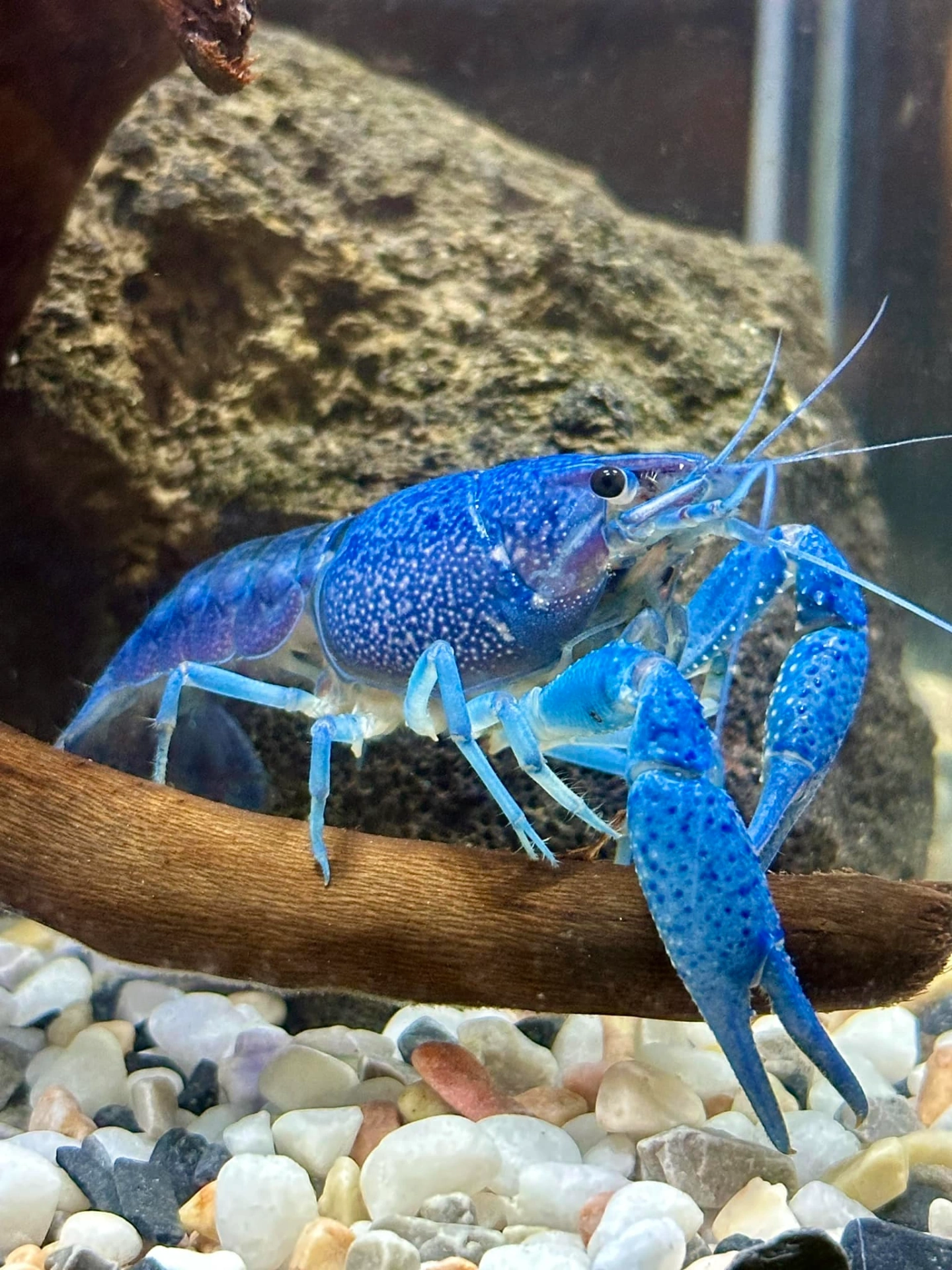
    Electric blue crayfish walking on aquarium substrate
    Easy-Moderate

    Electric Blue Crayfish

    Procambarus alleni

    Stunning electric blue color and endless personality — but keep alone or with fast top-dwelling fish. They will catch slow bottom dwellers. A species tank or careful planning required.

    12 cmSchool: 118-24°C
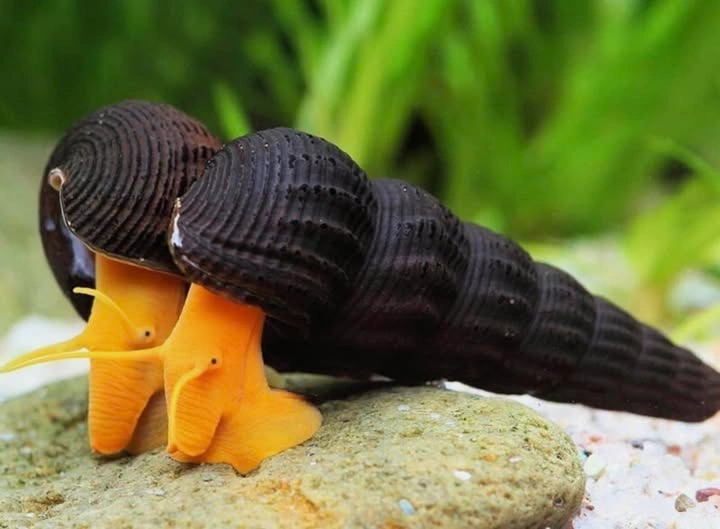
    Yellow rabbit snail with a black shell on aquarium substrate
    Easy

    Rabbit Snail

    Tylomelania sp.

    Long, elegant shells and a rabbit-like face with adorable antennae. Larger than most aquarium snails and needs warmer water. Breeds slowly — no population explosions. Beautiful and underrated.

    8 cmSchool: 2-326-30°C

    Proven Stocking Combos for a 30 Gallon Tank

    A 30 gallon gives you enough room for interesting combinations that wouldn't work in smaller tanks. These five setups are field-tested — every species is compatible by temperament, water parameters, and tank zone. Use them as starting points or plug them directly into the calculator to check the numbers.

    The Peaceful Community

    Beginner

    10 Cardinal Tetras + 6 Bronze Corydoras + 1 Pearl Gourami + 3 Nerite Snails

    Elegant and near-bulletproof. Cardinals school in the middle, Corydoras work the bottom, and the Pearl Gourami anchors everything with zero aggression risk.

    The Congo Showpiece

    Intermediate

    6 Congo Tetras + 1 Pair Bolivian Rams + 6 Corydoras Sterbai + 5 Amano Shrimp

    Built around the iridescent Congo Tetra — a fish that needs 30 gallons to develop its full finnage. The Bolivian Rams add dwarf cichlid personality without demanding perfect water.

    The Tiger Barb Tank

    Intermediate

    10 Tiger Barbs + 1 Electric Blue Acara + 5 Yoyo Loaches

    Semi-aggressive species that can hold their own. Tiger Barbs in a proper school direct their energy at each other, not the tankmates. The Acara is large enough to be left alone.

    The Livebearer Paradise

    Beginner

    6 Swordtails + 6 Platys + 1 Bristlenose Pleco + 3 Mystery Snails

    Color, movement, and constant breeding. Swordtails finally have room to swim. Watch for population growth — you'll have fry whether you want them or not.

    The Planted Tetra Tank

    Intermediate

    8 Rummy-Nose Tetras + 8 Lemon Tetras + 6 Panda Corydoras + 2 Bamboo Shrimp + 6 Amano Shrimp

    Two schooling species that occupy slightly different zones, a cool-water Corydoras species, and a unique cleanup crew. The Bamboo Shrimp fanning in the current are the conversation starter.

    ⚠️ Fish to Avoid in a 30 Gallon Tank

    A 30 gallon feels big until you put the wrong fish in it. These species are commonly sold for tanks this size — and they'll all outgrow it, become aggressive, or both. Some will survive for years in cramped conditions, which just means years of stress and stunted growth.

    OscarGrows to 30+ cm

    Grows enormous, fast. Will outgrow a 30 gallon within a year and need 280+ liters. One of the most commonly mis-sold fish in pet stores.

    Clown LoachGrows to 25+ cm

    Cute at 5 cm, massive at full size. Needs a school of 5+ and eventually 400+ liters. Grows slowly, so people think they've got time. They don't.

    Bala SharkGrows to 30+ cm

    Active schooling fish that needs open swimming space. A group needs 450+ liters minimum. The 'shark' name is a pet store marketing trick.

    Silver DollarGrows to 15 cm

    Disc-shaped schooling fish that needs groups of 5+ and 200+ liters. Will eat every plant in the tank. Not aggressive, just too big and active.

    Jack DempseyGrows to 25 cm

    Large, territorial cichlid named after the boxer for a reason. Needs 200+ liters and will kill tankmates in anything smaller.

    Green TerrorGrows to 25+ cm

    The name tells you everything. Extremely aggressive cichlid that needs 280+ liters and usually a species-only setup.

    Convict CichlidGrows to 15 cm

    Will breed constantly and defend fry aggressively against everything else in the tank. A breeding pair will terrorize a 30 gallon.

    Rainbow SharkGrows to 15 cm

    Highly territorial bottom-dweller. Claims the entire lower third of the tank and harasses anything that enters. Needs 200+ liters to coexist.

    Common PlecoGrows to 45 cm

    The most commonly regretted fish purchase. Grows enormous and produces massive waste. Get a Bristlenose instead.

    How Many Fish Can You Keep in a 30 Gallon Tank?

    The honest answer: it depends entirely on which species and how they use space. A 30 gallon can hold a school of 10-12 tetras, a school of 6-8 Corydoras, a centerpiece fish, and a cleanup crew. Or it can hold 10 Tiger Barbs and a few robust tankmates. Or a pair of Electric Blue Acaras with minimal additions.

    What it can't hold is "one of everything you like." Overstocking a 30 gallon leads to the same problems as overstocking any tank — ammonia spikes, aggression, stress, and dead fish. The extra water volume buys you stability, not infinite capacity. Use our calculator to check your specific combination before you buy.

    🐟 ~20-30

    small fish

    Typical community: 12-15 schoolers + 6-8 bottom dwellers + a centerpiece

    📏 Forget "inch per gallon"

    That rule ignores bioload

    Territory and activity level matter more

    ⚖️ Match species to space

    Species vary wildly

    6 Congo Tetras need more room than 15 Ember Tetras

    Tips for Setting Up a 30 Gallon Community Tank

    The fish you choose matter, but so does the environment you put them in. A well-set-up 30 gallon practically runs itself — a poorly set-up one becomes an endless cycle of problems.

    🔬

    Cycle the tank fully before stocking

    A 30 gallon needs 4-6 weeks to cycle. Then add species one group at a time over 3-4 weeks. Patience now prevents dead fish later.

    🌿

    Use the space for proper aquascaping

    30 gallons gives you room for a real layout — background plants, midground features, foreground carpet, hardscape. Plan the zones before adding fish.

    💧

    25% water change weekly, minimum

    More water volume means more stability, but don't get lazy. Weekly water changes are still non-negotiable — test your parameters until you know your tank.

    📐

    30 long vs 30 breeder vs 30 tall

    A 30 long (36×12×16 inches) gives more swimming room. A 30 breeder (36×18×12) has more floor space for bottom dwellers. A 30 tall looks good but limits active swimmers.

    Planning your 30 gallon community?

    Check compatibility, bioload, and tank capacity for your exact setup.