
Care Requirements
Adult Size
2.8" (7cm)
Min Tank
15 gal
Temperature
72-79°F
pH Range
6.5-7.5
Lifespan
4-5 years
Min Group
Can be kept alone
Diet
Carnivore
Swim Level
Bottom
Bioload
1/10
Hardness
5-12 dGH
About Peacock Gudgeon
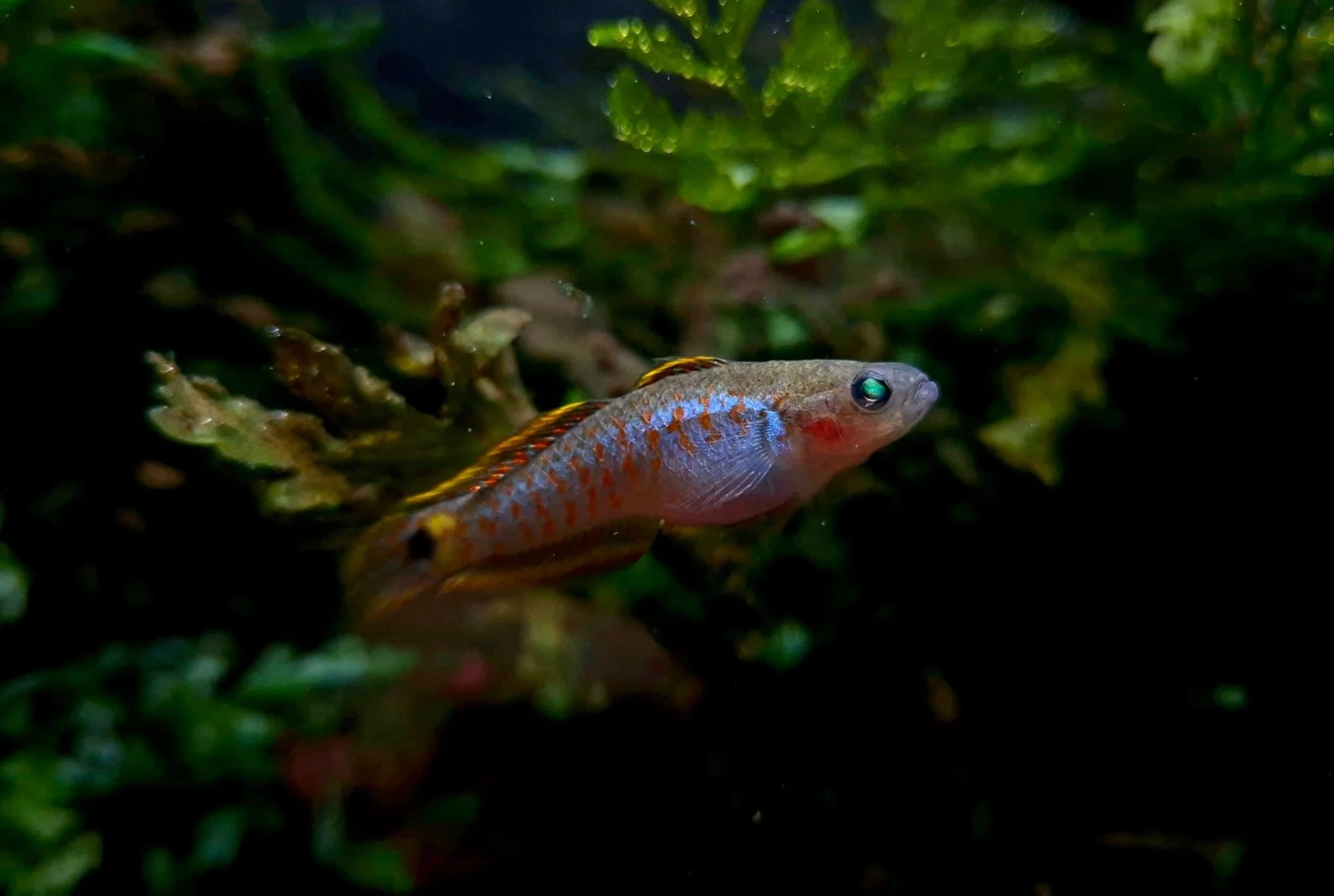
The Peacock Gudgeon is one of the most beautiful small fish available to aquarists — a kaleidoscope of iridescent blue, red, and yellow packed into a 2.5-inch body. Males display particularly stunning coloration with electric blue flanks, red-orange belly stripes, and the characteristic 'peacock eye' spot on the tail base that gives the species its name. Despite their exotic appearance, they're reasonably hardy fish that thrive in well-maintained community tanks.
Despite being called a 'gudgeon' and resembling gobies, Peacock Gudgeons are actually members of the Eleotridae family (sleeper gobies) rather than true gobies. The key difference is visible if you look closely: their pelvic fins are separate rather than fused into the suction disc that true gobies possess. This taxonomic detail matters little for care but explains why they don't cling to surfaces like gobies do.
Peacock Gudgeons are cave spawners with fascinating breeding behavior. Males claim small caves or enclosed spaces and display to attract females. After spawning, males guard the eggs devotedly, fanning them and defending the cave entrance. This parental care is endearing to observe and makes breeding achievable for intermediate hobbyists.
Their care requirements are moderate — they need clean water, appropriate foods, and peaceful tankmates, but they're not fragile fish. The main challenge is ensuring they receive adequate food, as they're somewhat shy and can be outcompeted by aggressive feeders. With attention to their needs, Peacock Gudgeons reward keepers with spectacular color and interesting behavior.
Natural Habitat & Origin
Conservation status: Vulnerable (VU)
Peacock Gudgeons originate from Papua New Guinea's eastern highlands, inhabiting clear streams, ponds, and slow-moving waterways. This tropical island environment features warm, soft to moderately hard water with abundant vegetation and structure. They're found in relatively shallow waters where they occupy bottom areas among rocks, roots, and debris.
Their native habitat includes both flowing streams and still pond environments, giving them adaptability to various aquarium conditions. The water is typically clear with moderate dissolved oxygen levels. Temperature remains consistently warm year-round in this equatorial region.
In the wild, they occupy microhabitats among structure — rocks, submerged wood, and plant roots provide hunting grounds and spawning sites. Males establish territories around suitable caves or enclosed spaces. This habitat preference translates directly to aquarium needs for caves and hiding spots.
Papua New Guinea's isolation produced unique fauna, and Peacock Gudgeons are among the more spectacular examples. Their restricted range makes habitat conservation relevant, though captive breeding supplies the aquarium trade entirely.
Native Region
Papua New Guinea — Eastern highlands
Habitat Type
Clear streams, ponds, and slow-moving waterways with structure
Wild Water Conditions
Warm (22-26°C), soft to moderately hard, clear water with good oxygen
Appearance & Varieties
Peacock Gudgeons are genuinely stunning fish that rival marine species for color intensity. Males display iridescent blue coloration covering most of the body, with red-orange stripes along the belly and lower flanks. The fins show blue, red, and yellow accents. The namesake feature is the prominent ocellus (eye spot) at the caudal fin base — a dark spot ringed with yellow that resembles a peacock feather marking.
Males are more colorful than females, with brighter blue iridescence and more pronounced markings. They also develop a distinctive nuchal hump (forehead bump) as they mature. Females are attractive but show more muted coloration — still blue and red but less intense, without the prominent hump.
Adults reach approximately 2.5-3 inches (6-7 cm), making them substantial for nano fish but still suitable for smaller tanks. Their body shape is elongated and somewhat cylindrical, with a blunt head and upturned mouth suited for picking food from surfaces.
Coloration intensifies with good conditions, quality diet, and breeding activity. Males displaying to females or defending territories show their most vibrant colors. Stressed or poorly-kept fish appear washed out.
Popular Varieties
| Variety | Description | Rarity |
|---|---|---|
| Standard/Wild-Type | Iridescent blue body with red-orange markings and peacock eye spot. The only form available — no selectively bred variants exist. Coloration intensity varies with sex, condition, and mood. | Common |
Tank Setup & Requirements
Quick Requirements Summary
Tank Size
Minimum Tank Size
15 gallons
Recommended Tank Size
20 gallons
Peacock Gudgeons require clean water, adequate hiding spots, and caves for breeding. They're not demanding fish but do best with attention to their specific preferences for structure and peaceful tankmates.
Water Parameters
Temperature 72-79°F (22-26°C) with pH 6.5-7.5 and hardness 5-12 dGH. Prefer clean, well-oxygenated water. They're not extremely sensitive but do best with consistent conditions and regular maintenance. Soft to moderately hard water suits them. Avoid extremes in either direction.
Substrate
Sand or fine gravel is ideal. They spend time on the bottom and appreciate soft substrate. Sand allows natural behavior and shows off their coloration. Dark substrates enhance their iridescent colors.
Plants & Decorations
Caves are critical — males need enclosed spaces for breeding territories. Small terracotta pots, coconut shells, PVC sections, or commercial caves work well. Provide multiple caves if keeping multiple males. Plants provide security, water quality benefits, and natural aesthetics. They won't damage plants. Dense planting with open bottom areas suits their lifestyle.
Filtration & Water Flow
Good filtration maintaining water quality is important, but avoid strong currents. They're not strong swimmers and prefer calmer water. Sponge filters work well and don't create excessive flow.
Lighting
Not particularly light-sensitive. Standard aquarium lighting shows their iridescent colors well. They may be slightly more active under subdued lighting.
Diet & Feeding Guide
Diet Type
carnivore
Feeding Frequency
Once or twice daily
Portion Size
Small amounts consumed within a few minutes. They're not aggressive feeders — ensure food reaches them, especially in community tanks with faster fish.
Peacock Gudgeons are carnivores that strongly prefer meaty foods. They can be finicky eaters, often refusing flakes and requiring live or frozen foods, especially when newly acquired. Once settled, most accept frozen foods readily, but some individuals remain challenging to wean onto prepared foods. Their somewhat shy nature means they can be outcompeted for food by aggressive tankmates. Target feeding may be necessary in community tanks to ensure they receive adequate nutrition.
Best Foods for Peacock Gudgeon
- —
- —
- —
- —
- —
- —
Foods to Avoid
- —
- —
- —
Behavior & Temperament
Peacock Gudgeons are relatively sedentary fish that spend much time resting on the substrate, plants, or decorations. They're not active swimmers, instead moving in short bursts between resting spots. This 'perching' behavior is characteristic of the species — they often sit motionless, watching their surroundings.
Males are territorial around caves and will display to rivals and potential mates. Displays involve fin flaring, intensified coloration, and positioning at cave entrances. Multiple males require adequate space and caves to establish separate territories; otherwise, weaker males will be harassed.
Despite territorial behavior toward their own species, they're peaceful toward other fish. They ignore tankmates that don't threaten their caves. Their slow movements and preference for hiding make them poor competitors — aggressive tankmates can easily outcompete them for food and space.
Breeding behavior is the species' highlight. Males court females with displays, then guard deposited eggs devotedly. The male fans eggs constantly and defends the cave entrance. This parental care continues until fry become free-swimming.
Tank Mates: Compatibility Guide
Compatible Tank Mates
Ember Tetras and similar small, peaceful tetras occupy different zones and won't compete aggressively. Good community combination.
Small rasboras are peaceful and won't outcompete Peacock Gudgeons. Different tank zones.
Pygmy Corys and similar small, peaceful bottom-dwellers coexist well. May share tank level but don't compete.
Endlers are peaceful enough to coexist. Avoid larger, more boisterous livebearers.
Peaceful algae eaters that ignore Peacock Gudgeons entirely. Different feeding strategies.
Completely compatible. No interaction.
Tank Mates to Avoid
Aggressive or boisterous fish
Peacock Gudgeons are shy and easily stressed by active, aggressive tankmates. They'll hide and may refuse food.
Fast, competitive feeders
Fish that consume food before shy Peacock Gudgeons can reach it lead to malnutrition. Target feeding becomes essential.
Large cichlids
Size difference and potential aggression make this incompatible. Peacock Gudgeons would be stressed or eaten.
Small shrimp
They may prey on small shrimp and will definitely eat shrimplets. Not shrimp-safe.
Other cave-dwelling fish
Competition for caves can stress Peacock Gudgeons. They need their own cave territories.
Peacock Gudgeons are cave spawners with devoted paternal care, making their breeding behavior fascinating to observe. They breed readily in aquariums when provided appropriate conditions and represent achievable breeding projects for intermediate hobbyists.
Males claim caves and display at entrances to attract females. When ready, females enter the cave and deposit eggs on the ceiling. Males fertilize the eggs and then take over all parental duties — the female leaves and plays no further role.
Males fan eggs constantly, maintaining water circulation and preventing fungus. They defend the cave entrance aggressively during this period. Eggs hatch in approximately 8-10 days depending on temperature. Males continue guarding newly hatched fry until they become free-swimming.
Fry are tiny and require infusoria or similar microscopic foods initially. They can graduate to baby brine shrimp after about a week. Raising fry requires dedication to water quality and appropriate-sized foods, but success rates are reasonable for those willing to invest effort.
Health Issues & Disease Prevention
Peacock Gudgeons are reasonably hardy when their needs are met but can be challenging for beginners due to feeding requirements. Most health issues stem from malnutrition (refusing prepared foods) or stress from inappropriate tankmates.
Common Diseases
| Disease | Symptoms | Treatment |
|---|---|---|
| Malnutrition/Starvation | Weight loss, sunken belly, faded coloration, lethargy. Common when fish refuse prepared foods or are outcompeted. | Offer live foods (most readily accepted). Target feed to ensure food reaches them. Remove aggressive feeders if necessary. |
| Ich (White Spot Disease) | White spots on body and fins, flashing, clamped fins. | Raise temperature to 28-30°C for 10-14 days. Commercial medications effective. Maintain water quality throughout treatment. |
| Stress-Related Issues | Faded color, hiding constantly, refusing food, general decline. | Identify and remove stressors — usually aggressive tankmates or poor water quality. Provide adequate caves. |
| Bacterial Infections | Red streaks, fin erosion, cloudy eyes, lethargy. | Improve water quality. Antibacterial medication for diagnosed infections. Usually secondary to poor conditions or injury. |
Signs of a Healthy Peacock Gudgeon
- Vibrant iridescent colors
- Active feeding response
- Good body condition
- Males claiming and defending caves
- Normal perching behavior
Prevention Tips
- Feed appropriate foods — primarily frozen/live
- Provide caves for security and breeding
- Choose peaceful, non-competitive tankmates
- Maintain clean, stable water conditions
- Target feed if necessary in community tanks
Frequently Asked Questions
They're intermediate-level fish — not extremely difficult but with specific needs. The main challenge is feeding: many individuals refuse flakes and prepared foods, requiring frozen or live foods. They're also shy and can be outcompeted for food by aggressive tankmates. With appropriate diet and peaceful companions, they're reasonably hardy.
They're carnivores strongly preferring meaty foods. Most readily accept frozen bloodworms and brine shrimp. Live foods like blackworms and daphnia trigger excellent feeding responses. Some individuals eventually accept high-quality micro pellets, but many never eat prepared foods. Budget for frozen foods as their primary diet.
Yes — caves are essential, especially if you hope to breed them. Males establish territories around caves and won't display proper behavior without them. Even non-breeding fish appreciate caves for security. Terracotta pots, coconut shells, or commercial caves all work well.
Not reliably. They're carnivores that will prey on small shrimp and definitely eat shrimplets. Large adult shrimp might survive but breeding colonies would be decimated. If shrimp-keeping is a priority, choose different fish.
Males are more colorful with brighter blue iridescence and more intense markings. They also develop a prominent nuchal hump (forehead bump) that females lack. Females are still attractive but show more muted coloration and have smooth foreheads.
Males are territorial toward other males around caves, displaying and occasionally sparring. However, they're completely peaceful toward other species. The intraspecific aggression is manageable with adequate space and multiple caves.
They're notoriously finicky, especially when newly acquired. Try live foods first — blackworms, daphnia, or baby brine shrimp usually trigger feeding responses when frozen foods are refused. Ensure they're not being outcompeted by tankmates.
Tips for Keeping Peacock Gudgeon
Pro Tips
- ✓Budget for frozen foods as a permanent diet — many never accept flakes or pellets.
- ✓Provide more caves than males to reduce territorial aggression.
- ✓Target feed in community tanks using a turkey baster or pipette.
- ✓Consider species-only setups for very shy individuals that refuse food.
Common Mistakes to Avoid
- ✗Expecting them to eat flakes — starvation and death result.
- ✗Keeping with aggressive or fast-feeding tankmates — outcompeted for food.
- ✗Not providing caves — stressed fish that can't establish territories.
- ✗Keeping with shrimp expecting coexistence — shrimp predation.
- ✗Multiple males in small tanks without adequate caves — aggression and stress.
Sources
- FishBase — Accepted scientific name, maximum size and native range for Peacock Gudgeon.
- IUCN Red List — Vulnerable conservation assessment for Tateurndina ocellicauda.
Featured in Biotope Presets
Related Species You Might Like
View All Fish →
Pearl Danio
Danio albolineatus
Clown Killifish
Epiplatys annulatus
Golden Pencilfish
Nannostomus beckfordi
Indian Glassfish
Parambassis ranga
Japanese Rice Fish
Oryzias latipes
Marbled Hatchetfish
Carnegiella strigata
Norman's Lampeye
Poropanchax normani
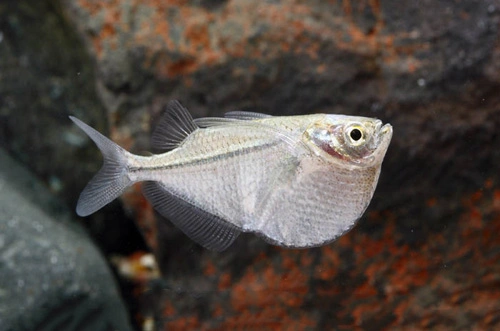
Silver Hatchetfish
Gasteropelecus sternicla
Ready to Add Peacock Gudgeon to Your Tank?
Use our free stocking calculator to check compatibility, bioload, and get personalized recommendations.