
Care Requirements
Adult Size
2.6" (6.5cm)
Min Tank
20 gal
Temperature
73-82°F
pH Range
5.5-7.5
Lifespan
3-5 years
Min Group
6+ fish
Diet
Omnivore
Swim Level
Top
Bioload
2/10
Hardness
2-15 dGH
About Silver Hatchetfish
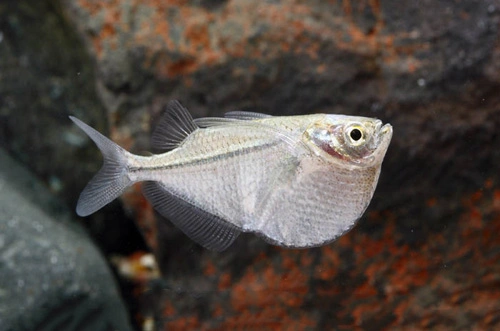
The Silver Hatchetfish is one of the most remarkable fish in the freshwater hobby — and one of the few animals on Earth capable of true powered flight. While many fish can leap from the water, hatchetfish actually beat their oversized pectoral fins like wings, propelling themselves through the air for distances of several meters. This extraordinary ability evolved as an escape mechanism from predators in their native Amazon waters.
What immediately catches the eye is their extraordinary body shape. The deep, compressed 'hatchet' profile isn't just for show — it houses the massive pectoral muscles that power their aerial escapes. These muscles account for roughly 25% of their total body weight, an astonishing proportion that makes them the bodybuilders of the fish world. Their silvery, almost mirror-like scales flash brilliantly under aquarium lighting.
In the aquarium, Silver Hatchetfish are dedicated surface dwellers. They spend virtually their entire lives within the top inch of water, hovering just below the surface film. This specialized niche means they rarely compete with mid-water or bottom-dwelling tankmates, making them excellent additions to community tanks — provided you have a very secure lid.
Keeping Silver Hatchetfish successfully requires understanding their nature as obligate surface fish and notorious jumpers. A tight-fitting lid with no gaps is absolutely non-negotiable. They're peaceful schoolers that feel most secure in groups of 8 or more, and their shimmering schools cruising just below the surface create a uniquely beautiful display that no other freshwater fish can replicate.
Natural Habitat & Origin
Silver Hatchetfish inhabit the surface waters of slow-moving rivers, flooded forests, and blackwater streams throughout the Amazon and Orinoco basins. In their natural habitat, they cruise beneath overhanging vegetation and floating plants, ready to launch into flight at the first sign of danger from below.
Their native waters are typically warm, soft, and acidic, stained dark with tannins from decomposing leaves. The dense canopy above provides shade and a constant rain of insects — their primary food source in the wild. Understanding this surface-oriented lifestyle is key to providing appropriate captive conditions.
Native Region
Amazon and Orinoco basins — Brazil, Peru, Guyana, Suriname, Venezuela
Habitat Type
Surface of slow-moving rivers, flooded forests, and blackwater streams
Wild Water Conditions
Warm (23-28°C), soft (2-15 dGH), acidic to neutral (pH 5.5-7.5), tannin-stained
Appearance & Varieties
The Silver Hatchetfish has one of the most distinctive body shapes in the freshwater hobby. Their extremely deep, laterally compressed body creates the 'hatchet' profile that gives them their name. The ventral keel is dramatically pronounced, housing the powerful pectoral muscles used for flight. Their scales are brilliantly reflective silver, creating a mirror-like sheen. A faint horizontal line runs along the midline, and the fins are largely transparent. Males and females look nearly identical, though females tend to be slightly deeper-bodied when full of eggs.
Popular Varieties
| Variety | Description | Rarity |
|---|---|---|
| Wild Type | Brilliant silver with mirror-like reflective scales and transparent fins. | common |
| Common Hatchetfish (Gasteropelecus sternicla) | The standard species in the hobby — deep body with strong silver coloration. | common |
| Spotted Silver Hatchetfish | Occasionally seen variant with faint dark spots along the lateral line. | uncommon |
Tank Setup & Requirements
Quick Requirements Summary
Tank Size
Minimum Tank Size
20 gallons
Recommended Tank Size
30 gallons
Silver Hatchetfish require a tank setup that prioritizes surface area over depth. A long, shallow tank is ideal over a tall one. The most critical element is a completely secure, tight-fitting lid with absolutely no gaps — these fish will find and exploit any opening. Floating plants provide essential security.
Water Parameters
Temperature 23-28°C (73-82°F), pH 5.5-7.5, hardness 2-15 dGH. Soft, slightly acidic water is ideal but captive-bred specimens adapt to moderate hardness. Stability matters more than hitting exact values.
Substrate
Not critical as they never visit the bottom. Choose based on tankmate needs. Dark substrates enhance their silver reflections.
Plants & Decorations
Floating plants are essential — Amazon frogbit, red root floaters, or water lettuce provide the overhead cover they need to feel secure. Tall background plants reaching the surface add additional security zones.
Filtration & Water Flow
Moderate filtration with gentle surface flow. Avoid strong surface agitation that disrupts their resting zone. A sponge filter or spray bar directed below the surface works well.
Lighting
Moderate to subdued. Floating plants naturally diffuse light. Avoid harsh overhead lighting that makes them feel exposed and stressed.
Diet & Feeding Guide
Diet Type
omnivore
Feeding Frequency
2-3 times daily in small amounts
Portion Size
What can be consumed at the surface within 1-2 minutes
Silver Hatchetfish are primarily insectivores in the wild, snatching insects from the water surface and even leaping to catch them in flight. In captivity, they feed almost exclusively at the surface and will ignore food that sinks. This surface-feeding requirement is important to understand — they need foods that float.
Best Foods for Silver Hatchetfish
- Floating micro pellets — Must stay at surface; primary staple food for daily feeding.
- Freeze-dried bloodworms — Float naturally and are eagerly accepted.
- Frozen daphnia — Thawed and dropped at surface; mimics natural insect prey.
- Live fruit flies (wingless) — Excellent enrichment; triggers natural surface-hunting behavior.
- Crushed flake food — Acceptable staple; must be fine enough to stay at surface.
Foods to Avoid
- Sinking pellets — They will not follow food below the surface — it goes uneaten and fouls water.
- Large pellets — Mouths are small; cannot consume oversized foods.
- Wafers or tablets — Bottom-dwelling foods are completely ignored by surface specialists.
Feed floating foods only. Multiple small feedings work better than one large one since surface food disperses quickly. In community tanks, ensure food reaches the surface before mid-water fish intercept it.
Behavior & Temperament
Silver Hatchetfish are peaceful, dedicated surface schoolers. They hover motionlessly just below the surface film, occasionally darting to snatch food particles. Their most dramatic behavior is jumping — triggered by fright, feeding excitement, or sometimes seemingly nothing at all. In groups of 8+, they form loose schools that drift together across the surface. They're most active during feeding times and can be quite animated when competing for floating food. They largely ignore fish occupying other water levels.
Tank Mates: Compatibility Guide
Compatible Tank Mates
Bottom dwellers that occupy completely different space — zero competition.
Peaceful mid-water schoolers in similar water parameters.
Ideal companions sharing soft, acidic water preferences.
Gentle algae eaters that stay on surfaces and glass.
Nocturnal bottom dwellers — no interaction with surface hatchetfish.
Tiny peaceful tetras occupying the mid-level.
Tank Mates to Avoid
Oscar
Large predator that would eat hatchetfish.
Tiger Barb
Boisterous and nippy; would terrify surface-dwelling hatchetfish.
Betta
Conflict at the surface level; betta aggression stresses hatchetfish.
Angelfish
May prey on smaller hatchetfish; surface feeding competition.
Common Pairing Questions
Can Silver Hatchetfish live with bettas?
Not recommended. Both are surface dwellers and bettas may show aggression toward fish in their territory. The hatchetfish would be stressed by betta displays and may jump more frequently.
How many Silver Hatchetfish should I keep?
Minimum 6, ideally 8-10+. Larger groups are more confident, display more natural behavior, and jump less frequently. Single or paired hatchetfish are extremely stressed.
Breeding Silver Hatchetfish in captivity is challenging and rarely accomplished. They're egg scatterers that release eggs among floating plant roots. Very soft, acidic water (pH below 6.0) and live food conditioning may trigger spawning. Eggs are adhesive and hatch in about 24-36 hours. Fry are extremely tiny and require infusoria as first food. Commercial breeding is uncommon; most specimens are wild-caught.
Health Issues & Disease Prevention
Silver Hatchetfish are moderately hardy once acclimated but are sensitive to water quality fluctuations and shipping stress. Newly imported wild-caught specimens are particularly vulnerable. Quarantine new arrivals for 2-4 weeks. Their most common health issue is related to stress from inadequate group sizes or open-top tanks.
Common Diseases
| Disease | Symptoms | Treatment |
|---|---|---|
| Ich (White Spot) | White spots on body and fins, flashing against objects, clamped fins. | Raise temperature to 30°C gradually, treat with ich medication. Hatchetfish are sensitive to some medications — use half doses initially. |
| Columnaris | White or grey patches, frayed fins, rapid breathing. | Antibacterial treatment, improve water quality. Often appears after shipping stress. |
| Internal parasites | Weight loss despite eating, white stringy feces, sunken belly. | Anti-parasitic food or medication. Common in wild-caught specimens — quarantine and treat prophylactically. |
| Stress-related illness | Loss of color, hiding, refusing food, erratic jumping. | Address root cause: add more floating plants, increase group size, secure lid, reduce aggressive tankmates. |
Signs of a Healthy Silver Hatchetfish
- Active surface hovering
- Bright silver coloration
- Schooling behavior
- Eager feeding at surface
- Relaxed fin posture
- Minimal jumping
Prevention Tips
- Quarantine wild-caught specimens for 2-4 weeks
- Keep in groups of 8+
- Provide extensive floating plant cover
- Maintain stable water parameters
- Ensure completely secure lid
Frequently Asked Questions
Jumping is natural escape behavior, but excessive jumping indicates stress. Common causes include: too few in the group (need 6+ minimum), lack of floating plant cover, aggressive tankmates, sudden light changes, or vibrations near the tank. Increase their group size, add more floating plants, and ensure the tank environment is calm.
Yes — they're one of very few fish capable of true powered flight, not just gliding. Their massive pectoral muscles (25% of body weight) beat their pectoral fins rapidly to generate thrust. They can fly several meters through the air. This is why a secure lid is absolutely essential — they will find any gap.
Virtually yes. They are obligate surface feeders and will not pursue food below the top half-inch of water. Any food that sinks is wasted. Use only floating foods — micro pellets, freeze-dried foods, crushed flakes, or live insects placed on the surface.
Minimum 6, but 8-10+ is strongly recommended. Larger groups are significantly more confident, color up better, display natural schooling behavior, and jump far less frequently. Solitary or paired hatchetfish are chronically stressed.
They're intermediate difficulty. The main challenges are preventing jumping (secure lid), providing appropriate floating foods, and keeping them in large enough groups. Once settled in a mature tank with floating plants and a good school, they're quite hardy and long-lived.
Tips for Keeping Silver Hatchetfish
Pro Tips
- ✓Use a piece of egg crate or mesh under a glass lid to eliminate all gaps — hatchetfish can jump through surprisingly small openings.
- ✓Feed wingless fruit flies as enrichment — it triggers spectacular natural hunting behavior at the surface.
- ✓Add Indian almond leaves to tint the water — mimics natural blackwater and reduces stress.
- ✓Keep the tank in a low-traffic area — vibrations and sudden movements trigger panic jumps.
Common Mistakes to Avoid
- ✗Open-top or gapped lid — fish will jump out and die on the floor, often within the first week.
- ✗Keeping fewer than 6 — chronic stress leads to illness, color loss, and excessive jumping.
- ✗Feeding only sinking foods — hatchetfish starve while bottom feeders eat everything.
- ✗Keeping with aggressive surface fish — competition at their only feeding zone causes chronic stress.
- ✗Harsh overhead lighting without floating plants — makes them feel exposed to aerial predators.
Sources
- FishBase — Accepted scientific name, maximum size and native range for Silver Hatchetfish.
Related Species You Might Like
View All Fish →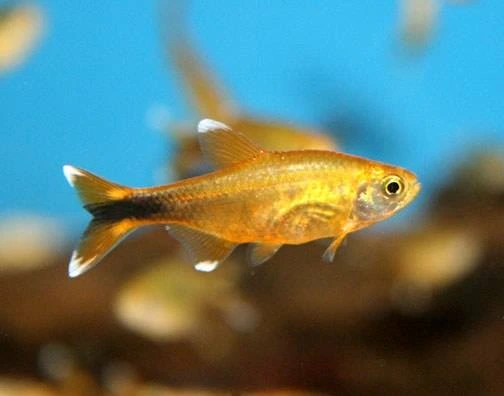
Silvertip Tetra
Hasemania nana
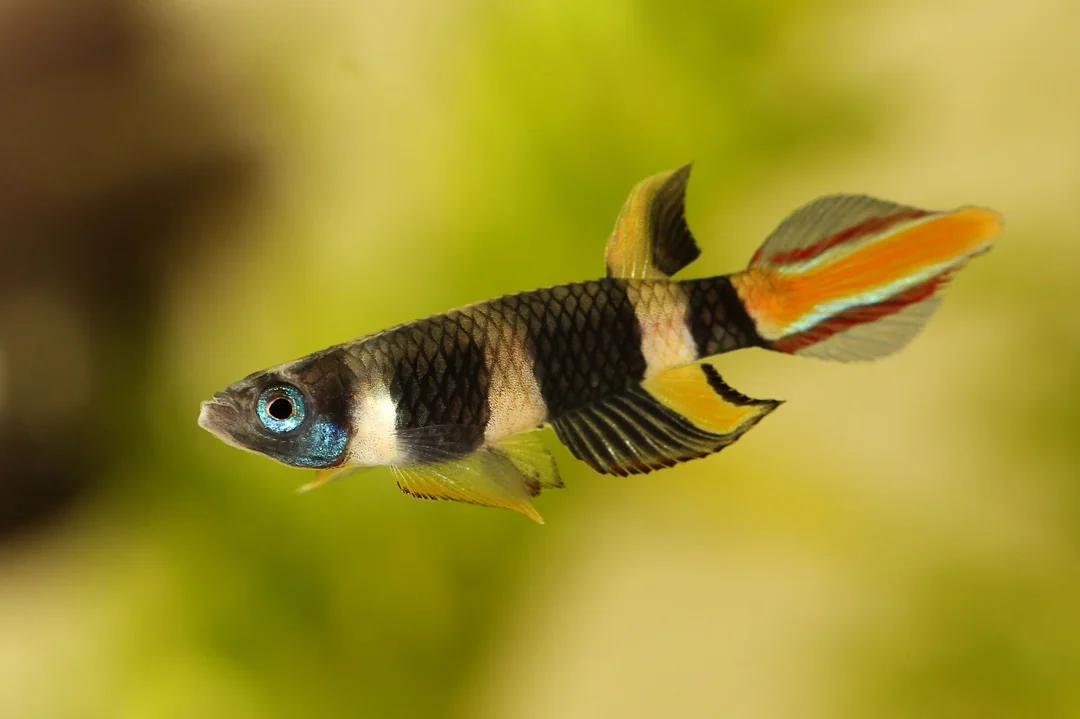
Clown Killifish
Epiplatys annulatus
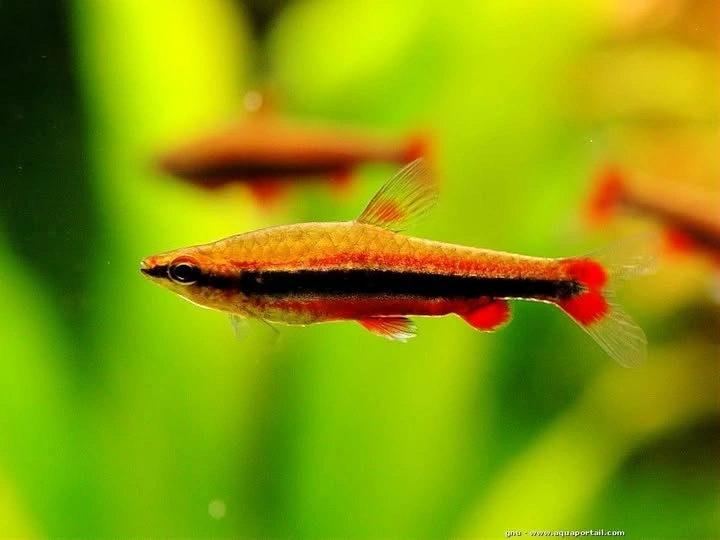
Golden Pencilfish
Nannostomus beckfordi
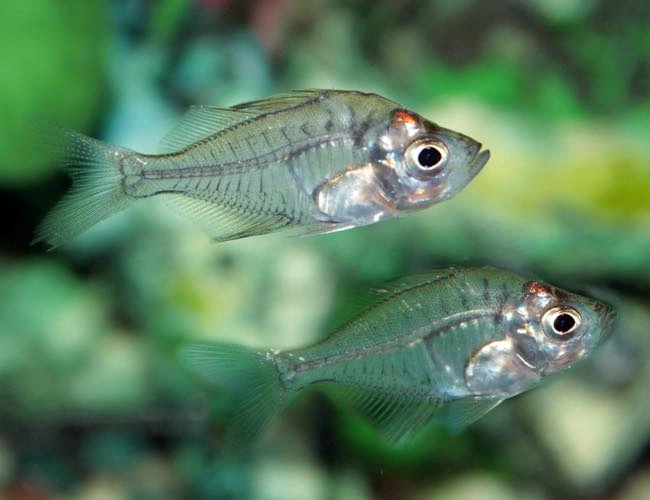
Indian Glassfish
Parambassis ranga
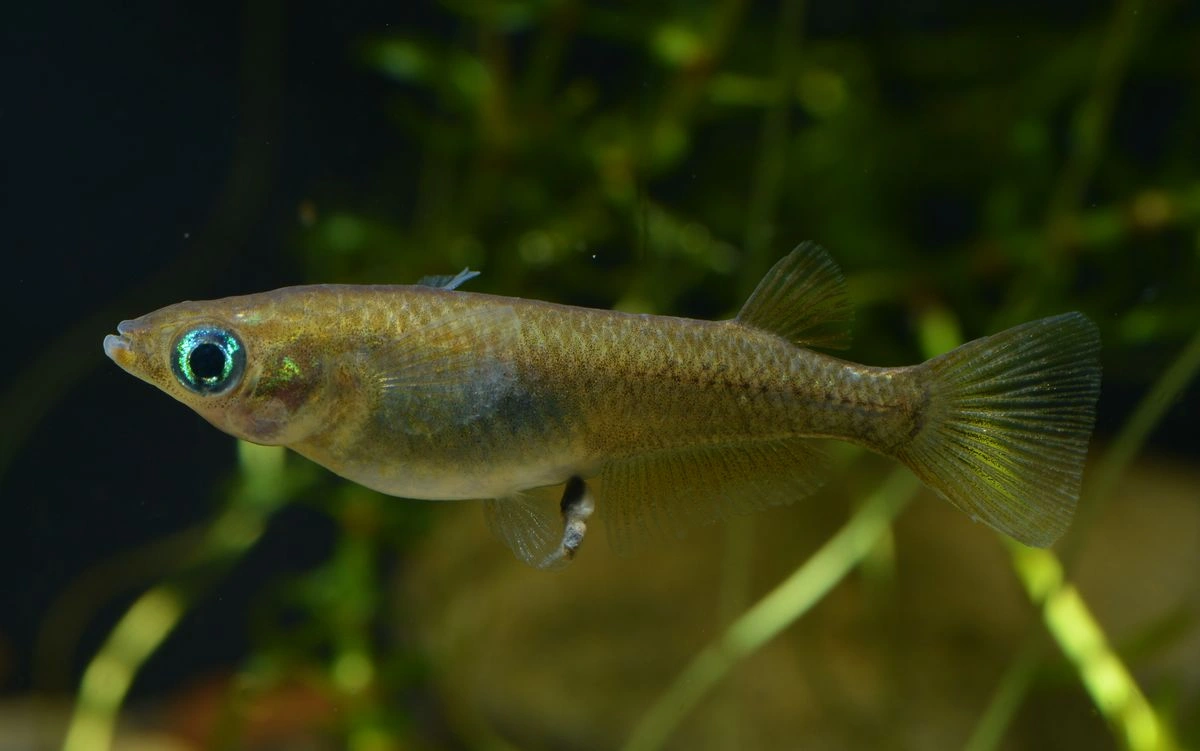
Japanese Rice Fish
Oryzias latipes
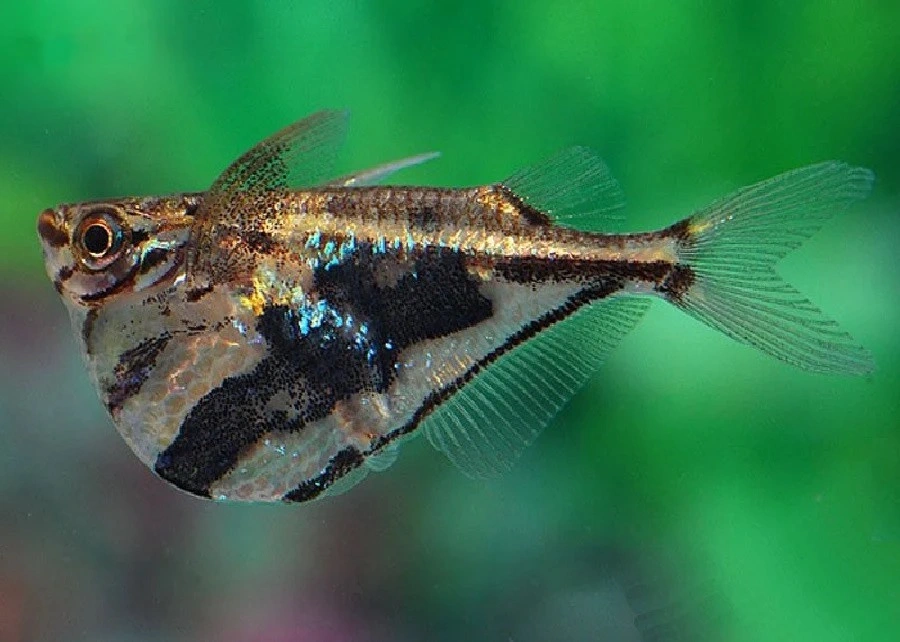
Marbled Hatchetfish
Carnegiella strigata
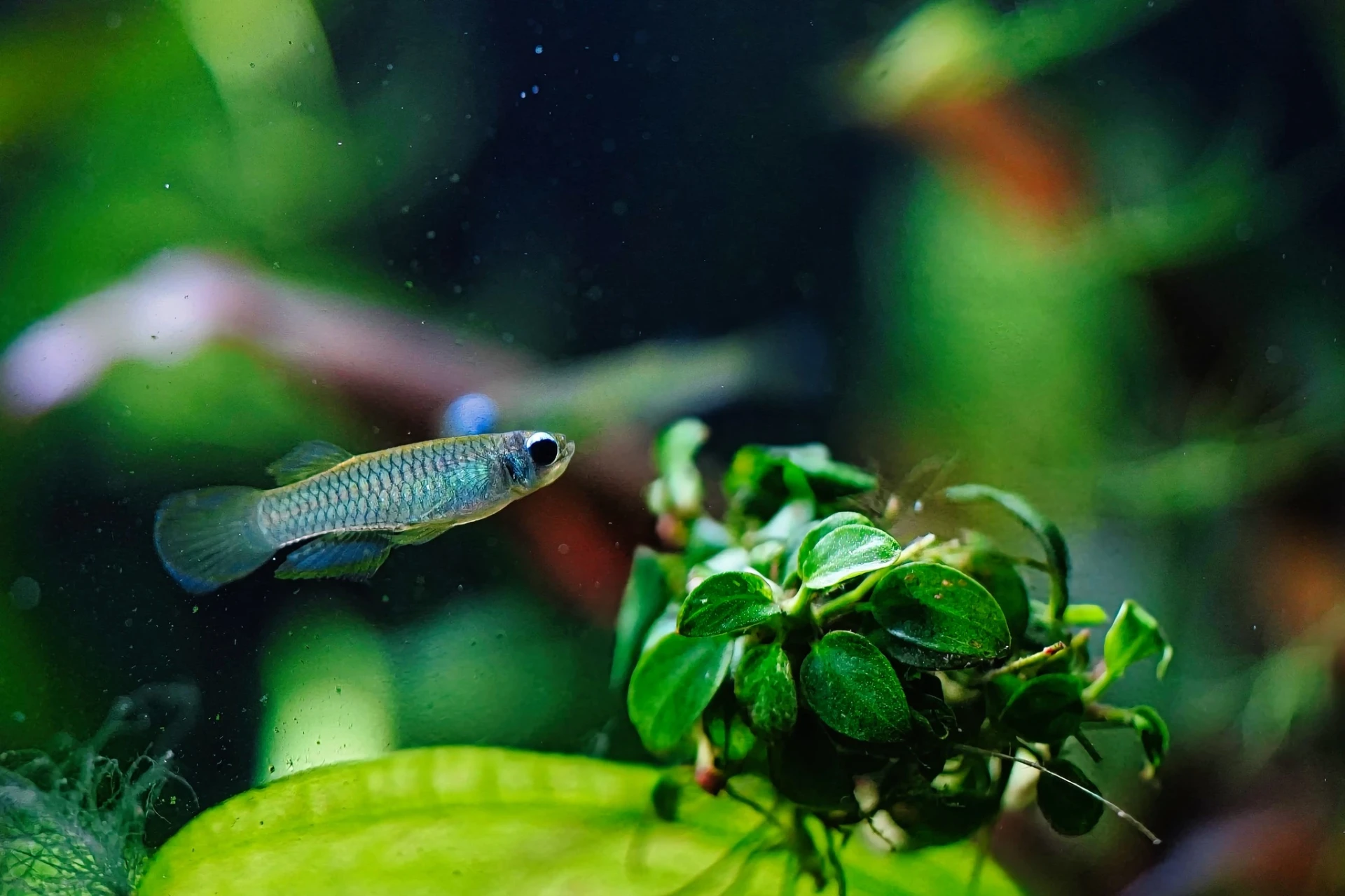
Norman's Lampeye
Poropanchax normani
Peacock Gudgeon
Tateurndina ocellicauda
Ready to Add Silver Hatchetfish to Your Tank?
Use our free stocking calculator to check compatibility, bioload, and get personalized recommendations.