
Care Requirements
Adult Size
2.0" (5cm)
Min Tank
20 gal
Temperature
72-82°F
pH Range
6-8
Lifespan
5-8 years
Min Group
8+ fish
Diet
Omnivore
Swim Level
Middle
Bioload
1/10
Hardness
5-20 dGH
About Silvertip Tetra
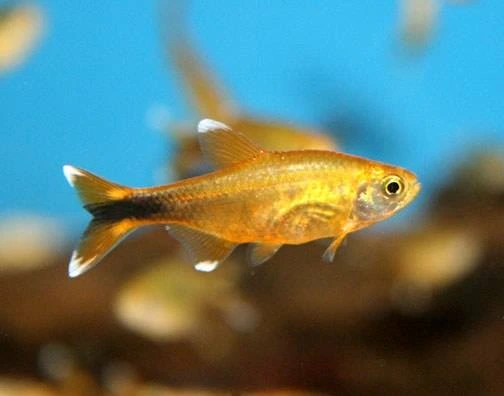
The Silvertip Tetra brings vibrant energy to any tank with its coppery-gold body and distinctive white-tipped fins that give the species its name. These active, hardy fish create dynamic movement as they constantly explore, chase, and display to each other.
However, this energy comes with a caveat — Silvertip Tetras can be nippy, particularly in insufficient numbers. Small groups often direct their activity toward harassing other fish. The solution is keeping larger groups of 8 or more, which distributes their boisterous behavior among themselves.
Interestingly, Silvertip Tetras technically aren't 'true' tetras — they lack the adipose fin that characterizes the Characidae family. They're placed in their own genus (Hasemania).
Their hardiness makes them forgiving fish for beginners willing to provide adequate group size. They tolerate a wide range of water conditions, eat readily, and resist common diseases.
Natural Habitat & Origin
Silvertip Tetras originate from Brazil's São Francisco River basin, one of South America's major river systems. The São Francisco experiences significant seasonal variation, with dramatic wet and dry seasons affecting water levels, flow rates, and chemistry.
Fish from this system evolved adaptability to changing conditions — hardness, pH, and temperature can vary considerably between seasons.
In their native waters, they occupy vegetated areas of streams and river margins, schooling in open water while using plants for cover.
Their endemic status means wild populations face habitat pressures from dam construction and agricultural development. Captive breeding supplies the aquarium trade entirely.
Native Region
Brazil — São Francisco River basin
Habitat Type
Streams and river margins with vegetation, variable seasonal conditions
Wild Water Conditions
Variable — seasonal fluctuations in temperature, hardness, and pH
Appearance & Varieties
Silvertip Tetras display attractive coppery-gold body coloration. Males develop deeper copper tones. The distinctive white (silver) tips on all fins contrast with the warm body color.
A notable anatomical quirk: they lack the adipose fin present in most tetras.
Adults reach approximately 2 inches (5 cm). Males are slimmer and more intensely colored; females are plumper.
Popular Varieties
| Variety | Description | Rarity |
|---|---|---|
| Standard/Wild-Type | Coppery-gold body with silver-white fin tips. The only form available — no selectively bred variants exist. | Common |
Tank Setup & Requirements
Quick Requirements Summary
Tank Size
Minimum Tank Size
20 gallons
Recommended Tank Size
30 gallons
Silvertip Tetras are adaptable to various setups but benefit from adequate space for their active swimming.
Water Parameters
Very adaptable. Temperature 22-28°C (72-82°F), pH 6.0-8.0, hardness 5-20 dGH.
Substrate
Any standard aquarium substrate works. Darker substrates may enhance their coppery coloration.
Plants & Decorations
Filtration & Water Flow
Appreciate some flow matching their active nature. Standard community filtration works well.
Lighting
Not sensitive to lighting levels. Standard lighting shows their coppery coloration well.
Diet & Feeding Guide
Diet Type
omnivore
Feeding Frequency
Once or twice daily
Portion Size
Amount consumed within 2-3 minutes
Silvertip Tetras are enthusiastic, unfussy eaters. They're aggressive feeders that rush toward food. Ensure food reaches other tankmates in community situations.
Best Foods for Silvertip Tetra
- Quality flake food — Staple diet. Eager surface and mid-water feeders.
- Small pellets — Floating or slow-sinking pellets readily accepted.
- Frozen bloodworms — Eagerly consumed. Feed 2-3 times weekly.
- Frozen brine shrimp — Enthusiastically accepted. Good variety.
- Frozen daphnia — Accepted without hesitation. Provides fiber.
- Live foods — Create feeding frenzies. Excellent for conditioning.
Foods to Avoid
- Very large foods — Moderate-sized mouths. Appropriately sized foods work best.
- Very slow-sinking foods in community tanks — Their aggressive feeding may prevent other fish from eating.
Ensure slower tankmates also receive food.
Behavior & Temperament
Silvertip Tetras are highly active fish that constantly swim, explore, and interact. They school but not always peacefully — there's frequent chasing and hierarchy establishment.
The key behavioral consideration is their potential for fin-nipping. In groups too small, Silvertips often harass other fish. With 8+, they focus on each other.
Males establish dominance hierarchies with frequent displays and chases that rarely result in injury.
Despite their boisterous nature, they're fascinating to watch.
Tank Mates: Compatibility Guide
Compatible Tank Mates
Similarly active, robust tetras can handle Silvertip energy.
Active barbs match Silvertip energy levels.
Different tank zone, armored against incidental nipping.
Too armored and different in lifestyle to be bothered.
Bottom-dwelling loaches avoid Silvertip interactions.
Tank Mates to Avoid
Long-finned fish
May nip flowing fins relentlessly. Bettas, fancy Guppies, and Angelfish are poor choices.
Slow, timid fish
Can be overwhelmed by Silvertip activity.
Very small fish
Tiny tankmates may be harassed.
Shrimp
May prey on shrimp, especially smaller species.
Peaceful, calm tetras
Gentle tetras like Cardinals may be stressed by Silvertip activity.
Common Pairing Questions
Can Silvertip Tetras live with Neon Tetras?
Not ideal — Neons are too peaceful and may be stressed by Silvertip energy.
How many Silvertip Tetras should I keep?
Minimum 8, ideally 10-12.
Silvertip Tetras breed readily. They're egg scatterers with no parental care. Breeding tanks should feature soft, slightly acidic water (pH 6.0-6.5), fine-leaved plants, dim lighting, and warmer temperatures (26-28°C). Eggs hatch in 24-36 hours, fry free-swimming in 3-4 days.
Health Issues & Disease Prevention
Hardy fish that rarely develop health issues under reasonable care.
Common Diseases
| Disease | Symptoms | Treatment |
|---|---|---|
| Ich (White Spot Disease) | White spots on body and fins, flashing, clamped fins. | Raise temperature to 28-30°C for 10-14 days. |
| Fin Rot | Deteriorating fin edges, loss of white fin tips. | Improve water quality. Antibacterial medication for severe cases. |
| Aggression-Related Injuries | Torn fins, scrapes. Often seen in groups too small. | Increase group size to 8+. |
| Stress from Poor Group Size | Excessive nipping of tankmates, hyperactivity directed outward. | Add more Silvertip Tetras. Groups of 10+ typically behave well. |
Signs of a Healthy Silvertip Tetra
- Vibrant coppery coloration
- Active, constant swimming
- Clear white fin tips
- Enthusiastic feeding
- Interacting with conspecifics
Prevention Tips
- Keep in groups of 8+ (10-12 ideal)
- Provide adequate swimming space
- Choose robust tankmates
- Avoid long-finned species
- Maintain good water quality
Frequently Asked Questions
They're semi-aggressive — more energetic and nippy than peaceful tetras. In adequate groups of 8+, their energy focuses on each other rather than other fish.
Minimum of 8, ideally 10-12 or more. Larger groups distribute their nippy behavior among themselves.
Not recommended. Silvertips often nip flowing fins.
They belong to genus Hasemania, which lacks the adipose fin characteristic of most tetras.
Yes, with understanding of their needs — adequate group size (8+) and avoiding inappropriate tankmates.
They can, particularly in small groups or with long-finned tankmates. Manageable through proper group size (8+) and tankmate selection.
Tips for Keeping Silvertip Tetra
Pro Tips
- ✓Larger groups are dramatically better behaved — 12 Silvertips transforms their behavior entirely.
- ✓Match them with similar-energy tankmates — Tiger Barbs, Black Skirt Tetras.
- ✓Their aggression signals understocking — adding more often solves the problem.
- ✓Check for the missing adipose fin to confirm identity.
Common Mistakes to Avoid
- ✗Keeping in groups too small — aggression toward tankmates.
- ✗Keeping with long-finned fish — constant harassment.
- ✗Expecting peaceful schooling behavior.
- ✗Blaming individual 'aggressive' fish — the problem is usually group size.
- ✗Combining with shy, timid species.
Sources
- FishBase — Accepted scientific name, maximum size and native range for Silvertip Tetra.
Related Species You Might Like
View All Fish →
Sparkling Gourami
Trichopsis pumila

Black Skirt Tetra
Gymnocorymbus ternetzi

Buenos Aires Tetra
Hyphessobrycon anisitsi
Serpae Tetra
Hyphessobrycon eques

African Clawed Frog
Xenopus laevis

Apistogramma Cacatuoides
Apistogramma cacatuoides

Bumblebee Goby
Brachygobius xanthozonus
Fiddler Crab
Uca spp.
Ready to Add Silvertip Tetra to Your Tank?
Use our free stocking calculator to check compatibility, bioload, and get personalized recommendations.