
Care Requirements
Adult Size
1.6" (4cm)
Min Tank
10 gal
Temperature
39-86°F
pH Range
6.5-8.5
Lifespan
3-5 years
Min Group
6+ fish
Diet
Omnivore
Swim Level
Top
Bioload
1/10
Hardness
5-25 dGH
About Japanese Rice Fish
The Japanese Rice Fish, known as Medaka in Japan, holds a unique position in Asian aquaculture — bred for centuries, studied by scientists, and beloved by hobbyists from children to serious breeders. Their cultural significance in Japan rivals that of goldfish and koi, with selective breeding producing dozens of color varieties from the original wild silver form. They're simultaneously scientifically important research organisms and accessible beginner fish.
Their temperature tolerance is extraordinary. Wild populations survive winter conditions near freezing and summer temperatures approaching 90°F (32°C). This range exceeds virtually all common aquarium fish, making them viable for unheated indoor tanks, outdoor tubs and ponds through temperate summers, and even year-round outdoor keeping in mild climates. Few fish offer such flexibility.
Reproductive biology is fascinating and easily observed. Females produce eggs that they carry externally — visible as a cluster attached near the anal fin — for hours before depositing them on plants. This 'egg-carrying' behavior is diagnostic of the species and endlessly entertaining. They breed readily in captivity, often requiring management to prevent overpopulation rather than encouragement to spawn.
The variety of color forms available has exploded in recent years as Japanese and international breeders continue developing new strains. Beyond the original wild-type silver, varieties include orange, gold, white, black, blue, and multicolored forms; long-finned varieties; and specialty strains with unique scale or body characteristics. This diversity makes them collector's fish despite their beginner-friendly care requirements.
Natural Habitat & Origin
Japanese Rice Fish are native to East Asia, with wild populations in Japan, Korea, and eastern China. Their common name reflects their historical association with rice paddies — the shallow, warm, vegetated water of flooded agricultural fields provides ideal habitat. They also occupy natural ponds, slow streams, ditches, and any shallow, vegetated freshwater.
Rice paddy habitat shapes their biology: shallow water with extreme temperature variation, dense vegetation, and variable water chemistry. This demanding environment selected for the remarkable adaptability that makes them such versatile aquarium fish.
Seasonally, they experience near-freezing winter temperatures when rice paddies are drained and populations retreat to permanent water bodies. They essentially hibernate during cold periods, dramatically reducing metabolism. Summer brings warm, productive conditions when breeding and growth occur rapidly.
Sadly, wild Japanese populations are declining due to habitat loss, pesticide use in rice agriculture, and competition from invasive species. The species is classified as Near Threatened in the wild even as captive populations thrive globally.
Native Region
East Asia — Japan, Korea, China
Habitat Type
Rice paddies, ponds, slow streams, ditches
Wild Water Conditions
Extreme range: 4-30°C, pH 6.5-8.5, adaptable to various hardness levels
Appearance & Varieties
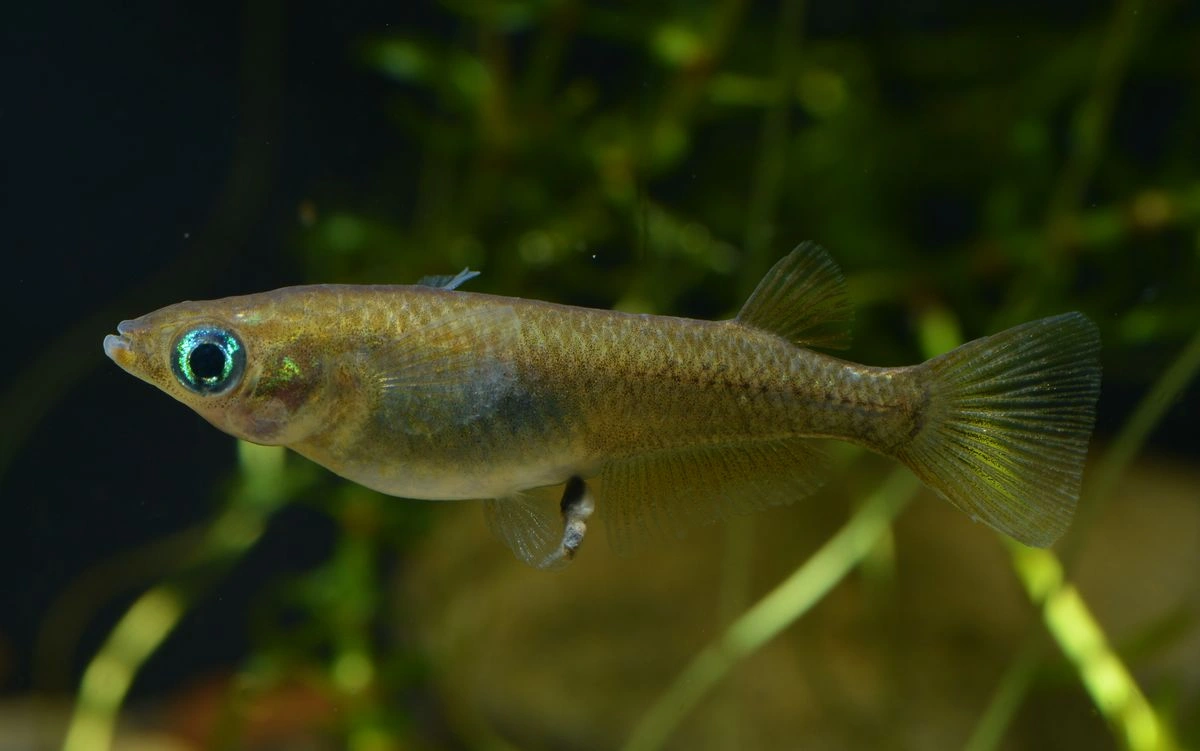
Japanese Rice Fish are small, reaching approximately 1.5 inches (4 cm), with slender, elongated bodies and distinctly upturned mouths adapted for surface feeding. Large eyes sit high on the head, and the dorsal fin is positioned far back on the body. Wild-type coloration is silvery-gray with subtle blue iridescence, but selective breeding has produced orange/gold (Himedaka), white (Shiro), black (Kuro), blue, platinum/lame metallic, long-finned, and numerous specialty varieties. Sexing is straightforward: males have larger angular fins; females develop visibly fuller bodies and carry visible egg clusters.
Popular Varieties
| Variety | Description | Rarity |
|---|---|---|
| Wild-Type (Silver) | Original silvery-gray coloration with subtle blue iridescence. Increasingly uncommon in trade. | Uncommon |
| Orange/Gold (Himedaka) | Classic orange to gold variety. Most commonly available form. Hardy and attractive. | Very Common |
| White (Shiro Medaka) | Pure white body, often with blue eyes. Striking contrast in planted tanks. | Common |
| Black (Kuro Medaka) | Deep black coloration. Shows well against light backgrounds. | Moderately Common |
| Platinum/Lame | Metallic, reflective scales creating sparkle effect. Various colors available. | Moderately Common |
| Specialty varieties | Numerous other varieties: long-finned, bicolor, pattern varieties. Japanese breeders continually develop new forms. | Varies |
Tank Setup & Requirements
Quick Requirements Summary
Tank Size
Minimum Tank Size
10 gallons
Recommended Tank Size
15 gallons
Japanese Rice Fish are remarkably adaptable, thriving in setups from simple nano tanks to outdoor ponds. Their flexibility makes setup recommendations unusually broad.
Water Parameters
The extreme temperature tolerance is real — they survive near-freezing and handle tropical warmth. For long-term keeping, moderate temperatures (65-78°F) are optimal. They tolerate hardness from soft to hard. Temperature 4-30°C (39-86°F), pH 6.5-8.5, hardness 5-25 dGH.
Substrate
No specific requirements. Dark substrates may enhance coloration of orange/gold varieties. Any standard aquarium substrate works well.
Plants & Decorations
They appreciate plant cover, especially floating plants. Dense vegetation provides egg deposition sites and fry refuge. Floating plants (duckweed, frogbit, hornwort) are particularly useful — they deposit eggs on fine-leaved plants and roots. Simple setups work as well as elaborate aquascapes.
Filtration & Water Flow
Good water quality matters but strong flow isn't needed. Sponge filters provide biological filtration without current problems. Protect filter intakes from tiny fry.
Lighting
Standard lighting works well. Natural light cycles encourage normal behavior and breeding. For outdoor keeping, natural sunlight provides ideal conditions.
Diet & Feeding Guide
Diet Type
omnivore
Feeding Frequency
1-2 times daily
Portion Size
Small amounts consumed within a few minutes. Reduce feeding in cooler temperatures when metabolism slows.
Japanese Rice Fish are unfussy omnivores accepting virtually any aquarium food. Their surface-feeding orientation should inform food selection, but they're not picky.
Best Foods for Japanese Rice Fish
- Quality flakes — Standard floating flakes are readily accepted and convenient. Crush for smaller fish or fry.
- Micro pellets — Small floating pellets work well. Match size to fish size.
- Live foods — Daphnia, brine shrimp, mosquito larvae — excellent nutrition and conditioning for breeding.
- Frozen foods — Bloodworms, brine shrimp, daphnia — readily accepted.
- Fry foods — Infusoria, powdered foods, newly-hatched brine shrimp for fry.
Foods to Avoid
- Large sinking foods only — They feed primarily at the surface. Ensure floating foods are part of the diet.
Outdoor fish in summer may benefit from more frequent feeding during peak growth/breeding season.
Behavior & Temperament
Japanese Rice Fish are peaceful, active fish spending most time in the upper water column. They're social, preferring groups and displaying loose schooling behavior. The most distinctive behavior is female egg-carrying — after fertilization, females carry egg clusters attached near the anal vent, visible as a small bunch resembling grapes. They may carry eggs for several hours before depositing them on plants.
Males compete gently for female attention through subtle displays. Aggression is minimal; they're genuinely peaceful. In outdoor settings, they display natural behavior cycles: morning/evening feeding activity, midday rest, and seasonal breeding cycles. They readily consume mosquito larvae for pest control.
Tank Mates: Compatibility Guide
Compatible Tank Mates
Similar size, temperature tolerance, and peaceful nature. Classic combination for unheated tanks.
Excellent companions — peaceful coexistence, shared water preferences.
Peaceful cleanup crew suitable for same conditions.
Similar cool-water tolerance; different tank zones.
Small peaceful species coexist well if temperature preferences overlap.
Tank Mates to Avoid
Large or predatory fish
Small size makes them prey.
Aggressive fish
Peaceful nature makes them targets.
Fish requiring very soft, acidic water
They prefer neutral to slightly alkaline conditions.
Japanese Rice Fish breed readily — arguably too readily. Females produce eggs regularly, carrying them externally for hours before depositing on fine-leaved plants. Eggs hatch in 10-14 days at warm temperatures. Fry are tiny but immediately free-swimming. Managing breeding is often the challenge — populations can explode quickly.
Health Issues & Disease Prevention
Japanese Rice Fish are exceptionally hardy — their survival of extreme temperature ranges indicates robust constitutions.
Common Diseases
| Disease | Symptoms | Treatment |
|---|---|---|
| Ich | White spots, scratching, clamped fins. | Raise temperature to 82°F. Standard ich treatment. They tolerate treatment well. |
| Fin rot | Deteriorating fin edges. | Improve water quality; antibacterial treatment for severe cases. |
| Egg binding (females) | Female appears swollen but doesn't release eggs. | Improve conditions; ensure adequate nutrition. Usually resolves naturally. |
| Columnaris | White patches, cottony growth. | Antibacterial medication. Often triggered by stress or poor conditions. |
Signs of a Healthy Japanese Rice Fish
- Active swimming
- Good appetite
- Regular egg production
- Clear fins and eyes
- Normal body condition
Prevention Tips
- Maintain reasonable water quality
- Avoid extreme temperature swings
- Provide varied diet
- Manage population to prevent overcrowding
Frequently Asked Questions
They're the same species: Oryzias latipes. 'Medaka' is the Japanese name, 'Rice Fish' is the English common name. Both refer to the same fish. In the hobby, 'Medaka' is increasingly used internationally.
Yes — they're excellent outdoor fish during warm months and can be kept year-round in frost-free climates. They tolerate temperatures from near-freezing to 86°F. Outdoor tubs, containers, and ponds all work well. They'll consume mosquito larvae for pest control.
This is normal breeding behavior — female Medaka carry fertilized eggs externally, attached near the anal vent, for several hours before depositing them on plants. The visible egg cluster looks like a tiny bunch of grapes.
Usually not — their extreme temperature tolerance means they thrive at typical room temperature. They're ideal for unheated tanks. Heaters only necessary if room temperatures drop into the 50s°F regularly.
Dozens — centuries of selective breeding have produced orange/gold, white, black, platinum, blue, albino, long-finned, metallic 'lame', bicolored, and numerous specialty strains. Japanese breeders continue developing new forms.
Wild populations are classified as Near Threatened due to habitat loss and agricultural chemicals. However, captive populations worldwide are abundant and thriving.
Tips for Keeping Japanese Rice Fish
Pro Tips
- ✓Try different color varieties together — orange, white, and black create striking combinations.
- ✓Perfect for outdoor summer tubs — minimal intervention needed.
- ✓Collect eggs for controlled breeding — remove plants with attached eggs to separate containers.
- ✓They're ideal 'first fish' — hardiness and easy breeding make them perfect starters.
Common Mistakes to Avoid
- ✗Keeping with large tankmates — predation risk due to small size.
- ✗No plan for breeding — population explosion is likely.
- ✗Leaving outdoors during freeze — bring inside before ice forms.
- ✗Only sinking foods — include floating foods for these surface feeders.
- ✗Sparse tanks without plants — reduced breeding success and fry survival.
Sources
- FishBase — Accepted scientific name, maximum size and native range for Japanese Rice Fish.
Related Species You Might Like
View All Fish →
Japanese Trapdoor Snail
Cipangopaludina japonica
Clown Killifish
Epiplatys annulatus
Golden Pencilfish
Nannostomus beckfordi
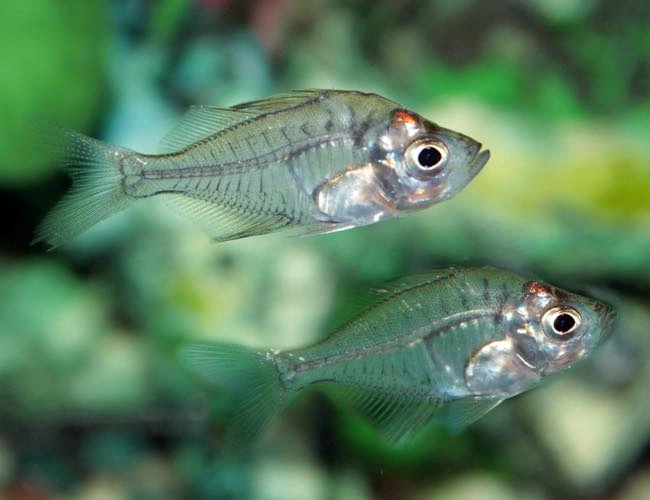
Indian Glassfish
Parambassis ranga
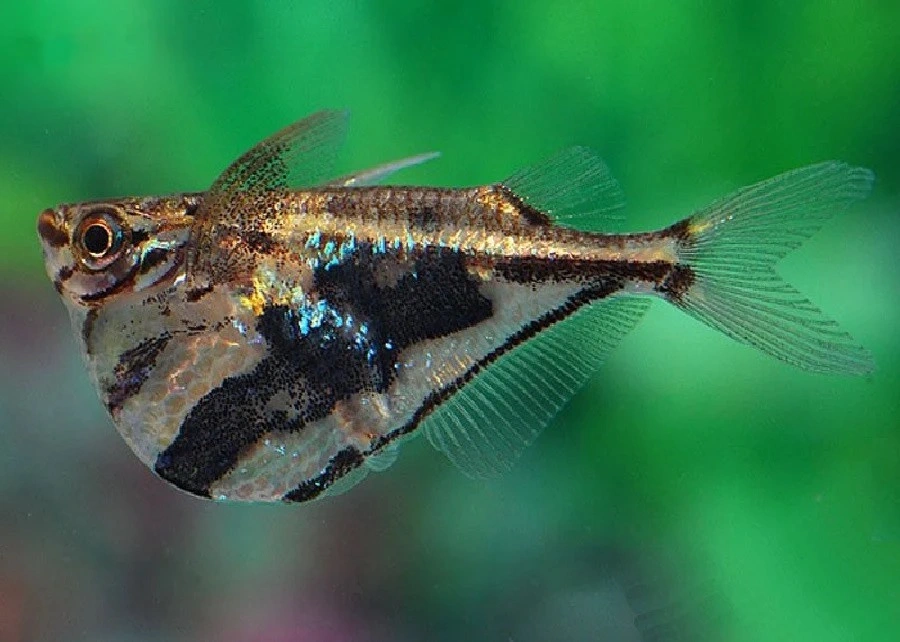
Marbled Hatchetfish
Carnegiella strigata
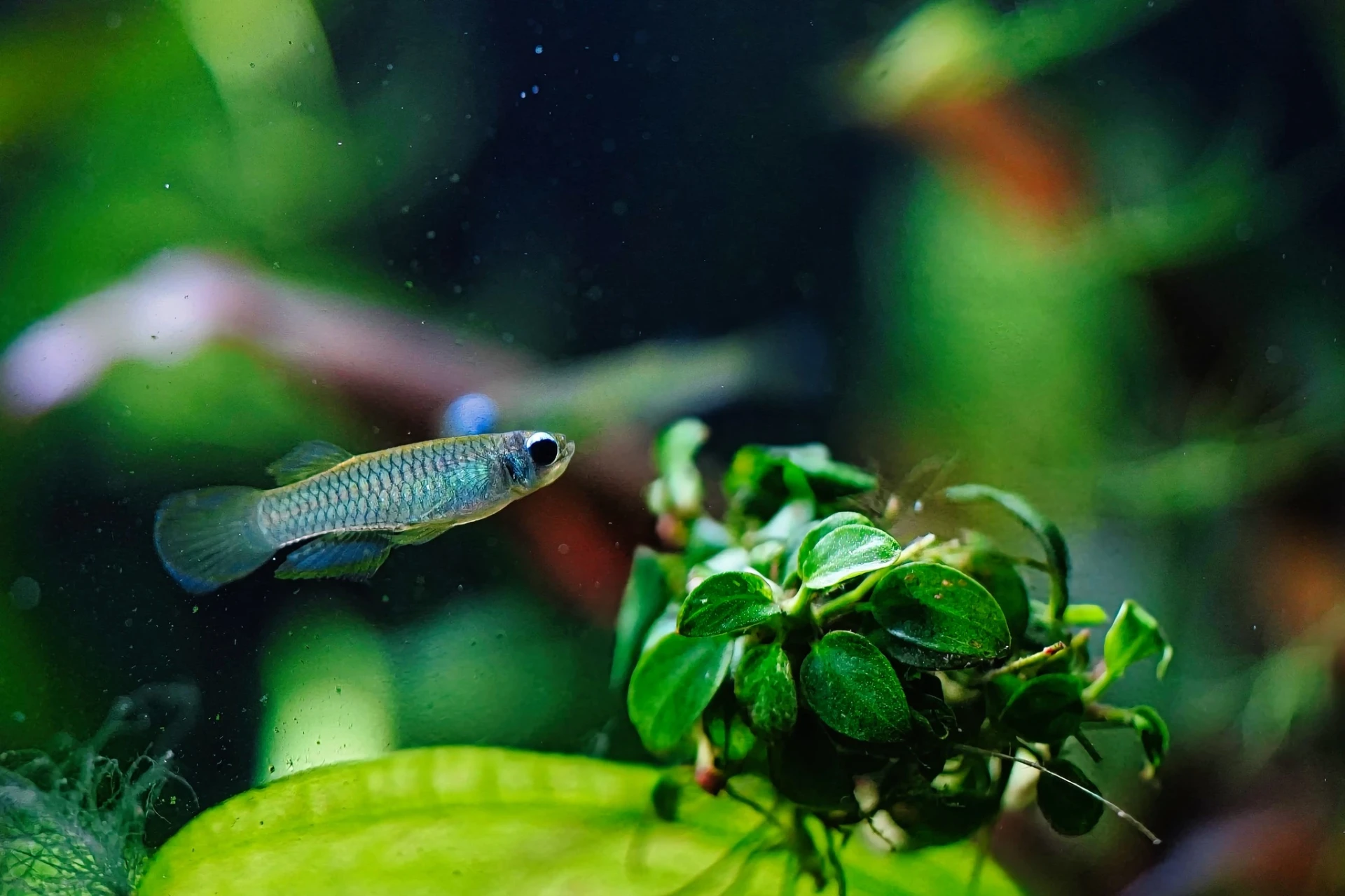
Norman's Lampeye
Poropanchax normani
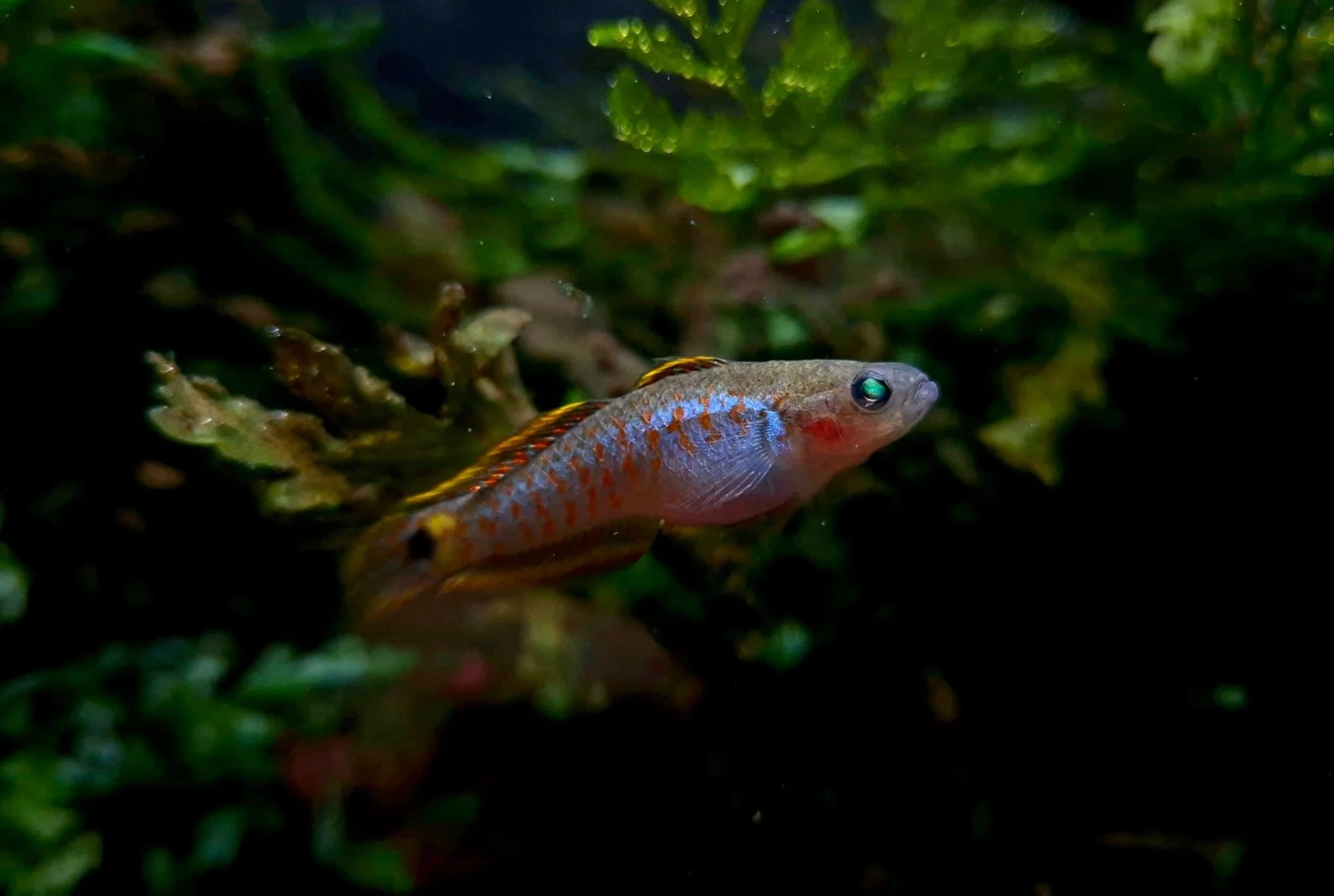
Peacock Gudgeon
Tateurndina ocellicauda
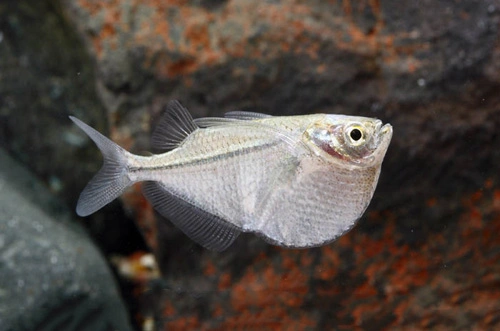
Silver Hatchetfish
Gasteropelecus sternicla
Ready to Add Japanese Rice Fish to Your Tank?
Use our free stocking calculator to check compatibility, bioload, and get personalized recommendations.