
Care Requirements
Adult Size
2.4" (6cm)
Min Tank
20 gal
Temperature
64-77°F
pH Range
6.5-7.5
Lifespan
5 years
Min Group
6+ fish
Diet
Omnivore
Swim Level
Top
Bioload
2/10
Hardness
5-15 dGH
About Pearl Danio
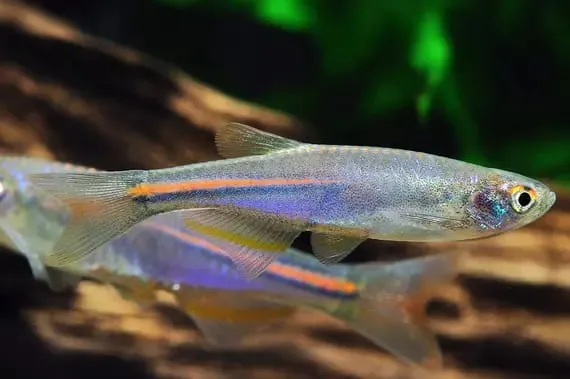
The Pearl Danio is one of the most underappreciated gems in the freshwater aquarium hobby. While their cousin the Zebra Danio gets most of the attention, Pearl Danios offer something truly special—a stunning iridescent, pearlescent sheen that catches light in a way few fish can match. Under proper lighting, a school of Pearl Danios creates a shimmering, opalescent display that rivals far more expensive species.
Native to the streams of Southeast Asia, Pearl Danios share the hardiness and easy-going nature of other danio species. They're active, peaceful schooling fish that adapt to a wide range of conditions, including cooler temperatures that would stress many tropical species. Their combination of beauty, hardiness, and peaceful temperament makes them an excellent choice for beginners and experienced aquarists alike.
What truly sets Pearl Danios apart is their coloration. The pearlescent sheen across their body, combined with a warm pink to orange flush along the belly, creates an effect that's subtle in overhead lighting but breathtaking when illuminated from the side. Discovering this hidden beauty is what converts many aquarists into lifelong Pearl Danio enthusiasts.
Natural Habitat & Origin
Pearl Danios are found across Southeast Asia, including Myanmar, Thailand, Laos, and Sumatra. They inhabit clear, fast-flowing streams, rivers, and hill streams with gravel or rocky substrates and well-oxygenated water with some vegetation along the margins.
Their natural habitat features moderately cool water with good flow—conditions that explain their hardiness and temperature tolerance in captivity. The clear, well-lit waters of their native streams are where their iridescent scales evolved to shine, making proper lighting in captivity essential to appreciate their beauty.
Native Region
Southeast Asia - Myanmar, Thailand, Laos, Sumatra
Habitat Type
Clear, fast-flowing streams, rivers, and hill streams with gravel/rocky substrates
Wild Water Conditions
Cool, well-oxygenated water (64-78°F), moderate current, clear with marginal vegetation
Appearance & Varieties
Pearl Danios reach about 2.5 inches (6 cm) in length, making them slightly larger than Zebra Danios. Their defining feature is the iridescent, pearlescent sheen that covers their body—a subtle shimmer that becomes spectacular under side-lighting or angled light.
The body has a translucent olive to blue-gray base with subtle horizontal markings. The belly displays a warm pink to orange flush that intensifies in breeding condition and well-conditioned specimens. Males are slimmer with more intense coloration, while females are rounder and deeper-bodied, especially when carrying eggs. Their fins are mostly transparent with a subtle golden tint.
Tank Setup & Requirements
Quick Requirements Summary
Tank Size
Minimum Tank Size
20 gallons
Recommended Tank Size
30 gallons
Pearl Danios need a minimum of 20 gallons (75 liters) for a school of 6, with 30 gallons (115 liters) recommended for a more comfortable community. Like all danios, horizontal swimming space is more important than tank height.
Water Parameters
Temperature is very flexible at 64-77°F (18-25°C), making them suitable for unheated tanks in most homes. pH 6.0-8.0 and hardness 5-19 dGH—they're very adaptable. Their cool temperature tolerance is one of their best features.
Substrate
Any substrate works, but dark substrate is strongly recommended—it dramatically enhances their pearlescent sheen. Black sand or dark gravel makes their shimmer far more visible than light-colored substrates.
Plants & Decorations
Plants along the back and sides with open swimming space in front and center. Natural driftwood and rocks create a river-like environment. Leave open areas for their active swimming behavior.
Filtration & Water Flow
Moderate to strong flow—they appreciate some current that mimics their stream habitat. A filter with adjustable flow or a small powerhead works well.
Lighting
This is crucial for Pearl Danios! Side-lighting or angled light shows off their iridescence beautifully. Overhead-only lighting often misses their best feature. Consider positioning tank lights to catch their pearlescent scales.
Diet & Feeding Guide
Diet Type
omnivore
Feeding Frequency
1-2x daily, small amounts
Portion Size
What they consume in 2 minutes
Pearl Danios are omnivores that naturally feed on insects, insect larvae, small crustaceans, and zooplankton from the water surface and mid-water in fast-flowing streams. They're eager, easy-to-feed fish that accept virtually everything offered.
Best Foods for Pearl Danio
- High-quality flakes — Good staple—they're eager surface feeders
- Micro pellets/granules — Easily consumed, good nutrition
- Frozen bloodworms — Excellent protein supplement
- Frozen brine shrimp — Readily accepted, good variety
- Live baby brine shrimp — Outstanding conditioning food, enhances color
- Daphnia — Natural prey, promotes foraging behavior
Foods to Avoid
- Poor quality foods — Low-quality food dulls their iridescent coloration
- Overfeeding — Small fish with small stomachs—excess pollutes water
Eager surface feeders that take food quickly. A varied diet significantly enhances their iridescent coloration—the difference between well-fed and poorly-fed Pearl Danios is dramatic. Ensure some food sinks for bottom-dwelling tankmates.
Behavior & Temperament
Pearl Danios are peaceful, active schooling fish that display fascinating social behaviors within their group. Males frequently chase and display to females with spread fins, creating entertaining interactions. While active swimmers, they're slightly calmer than Giant Danios—energetic but not frantic.
Their most captivating behavior is the shimmering display—as a school moves through the tank, light catches their pearlescent scales creating a shimmering cloud effect that's especially stunning in groups of 12 or more. Like all danios, they're confident fish whose activity helps shy tankmates feel secure (excellent dither fish).
Tank Mates: Compatibility Guide
Compatible Tank Mates
Close relative, similar activity level and requirements
Peaceful, similar size and temperament
Peaceful barb, compatible activity level
Hardy bottom dweller, different tank zone
Peaceful, occupies different level
Similar cool-water tolerance, peaceful
Peaceful, lovely color contrast
Peaceful bottom dweller, won't conflict
Tank Mates to Avoid
Betta
Danio activity may stress bettas; occasional fin nipping risk
Fancy Guppies
Slow, long-finned fish may get occasional nips
Aggressive cichlids
Will attack Pearl Danios
Very timid species
Danio activity level can overwhelm shy fish
Common Pairing Questions
Can Pearl Danios live with Zebra Danios?
Absolutely! They're close relatives with nearly identical care requirements. They may even school together loosely. A mixed danio tank with both species is attractive and easy to maintain.
Are Pearl Danios good dither fish?
Excellent dither fish. Their confident, active swimming helps shy tankmates feel secure enough to come out of hiding. Particularly useful with timid cichlids or catfish that need reassurance the environment is safe.
Pearl Danios are one of the easiest fish to breed, making them excellent for beginners learning the basics of fish breeding. They're egg scatterers with no parental care—adults will eat their own eggs eagerly.
Set up a separate breeding tank with fine-leaved plants or spawning mops and marbles or mesh on the bottom to protect falling eggs. Condition pairs separately with high-quality live and frozen foods. A slight temperature drop followed by gradual warming, or morning sunlight, often triggers spawning.
Males actively chase females, and she scatters 100-200 eggs among plants and to the bottom. Remove adults immediately after spawning. Eggs hatch in 24-36 hours. Feed infusoria for the first 3-5 days, then graduate to baby brine shrimp. Fry grow quickly with good feeding.
Health Issues & Disease Prevention
Pearl Danios are hardy, resilient fish that rarely develop health problems in properly maintained tanks. Their disease resistance is one of their strongest attributes, making them forgiving for beginners.
Common Diseases
| Disease | Symptoms | Treatment |
|---|---|---|
| Ich (White Spot Disease) | White spots on body, flashing, clamped fins, lethargy | Raise temperature gradually (if within their range), use ich medication. Pearl Danios generally recover well with prompt treatment. |
| Fin rot | Frayed, deteriorating fins | Improve water quality—often resolves without medication. Antibacterial treatment for severe cases. |
| Velvet disease | Gold/rust dust coating on body, clamped fins, rapid breathing | Darken tank, use copper-based medication, raise temperature slightly. Quarantine affected fish. |
Signs of a Healthy Pearl Danio
- Bright pearlescent sheen visible
- Active swimming and schooling
- Good appetite
- Intact, spread fins
- Pink/orange belly coloration
- Confident, non-hiding behavior
Prevention Tips
- Maintain stable water parameters—consistency matters more than perfection
- Regular weekly water changes of 25-30%
- Keep in schools of 6+ to reduce stress
- Quarantine new fish for 2 weeks before adding
- Varied diet enhances immune system and coloration
- Secure lid with no gaps—they jump like all danios
- Don't overcrowd—active fish need swimming space
Frequently Asked Questions
Pearl Danios have an iridescent, pearlescent sheen with subtle horizontal markings and pink/orange bellies. Zebra Danios have distinct blue and silver horizontal stripes. Pearl Danios are slightly larger (2.5 inches vs 2 inches) and generally calmer.
Excellent choice. They're hardy, tolerate a range of conditions, are peaceful, active, and easy to breed. One of the most forgiving fish for beginners while still being attractive.
They tolerate temperatures from 64-77°F (18-25°C), making them suitable for unheated tanks in most homes. They're subtropical rather than strictly tropical.
Their iridescence depends on lighting angle—side-lighting shows it best. Also check for stress factors: small group size, poor water quality, or aggressive tankmates. Healthy, content fish in proper lighting shimmer beautifully.
Minimum 6, ideally 8-12+. They're schooling fish that display best behavior and coloration in larger groups. Small groups lead to stressed, dull fish.
Occasionally. They're generally peaceful but their active nature can lead to minor fin nipping with very slow, long-finned fish. Not recommended with fancy bettas or fancy guppies.
Tips for Keeping Pearl Danio
Pro Tips
- ✓Side-lighting or angled light shows off their pearlescent sheen dramatically
- ✓Underrated compared to Zebra Danios—their iridescence is stunning
- ✓Dark substrate makes their shimmer more visible
- ✓Cooler temperature tolerance makes them versatile for different setups
- ✓One of the easiest fish to breed—great for beginners learning breeding
- ✓School of 12+ creates a shimmering cloud effect in proper lighting
- ✓Good dither fish—their confidence helps shy tankmates feel secure
- ✓Morning light often triggers display behaviors and chasing
Common Mistakes to Avoid
- ✗Overhead-only lighting—misses their pearlescent effect
- ✗School too small—need 6+ for natural behavior and color
- ✗No secure lid—they jump like all danios
- ✗Keeping with slow long-finned fish—occasional nipping
- ✗Overlooking them for 'flashier' fish—their shimmer is underappreciated
- ✗Light substrate—dark shows off their iridescence better
- ✗Expecting them to stay still—they're active swimmers
- ✗Tank too small—need swimming space
Sources
- FishBase — Accepted scientific name, maximum size and native range for Pearl Danio.
Related Species You Might Like
View All Fish →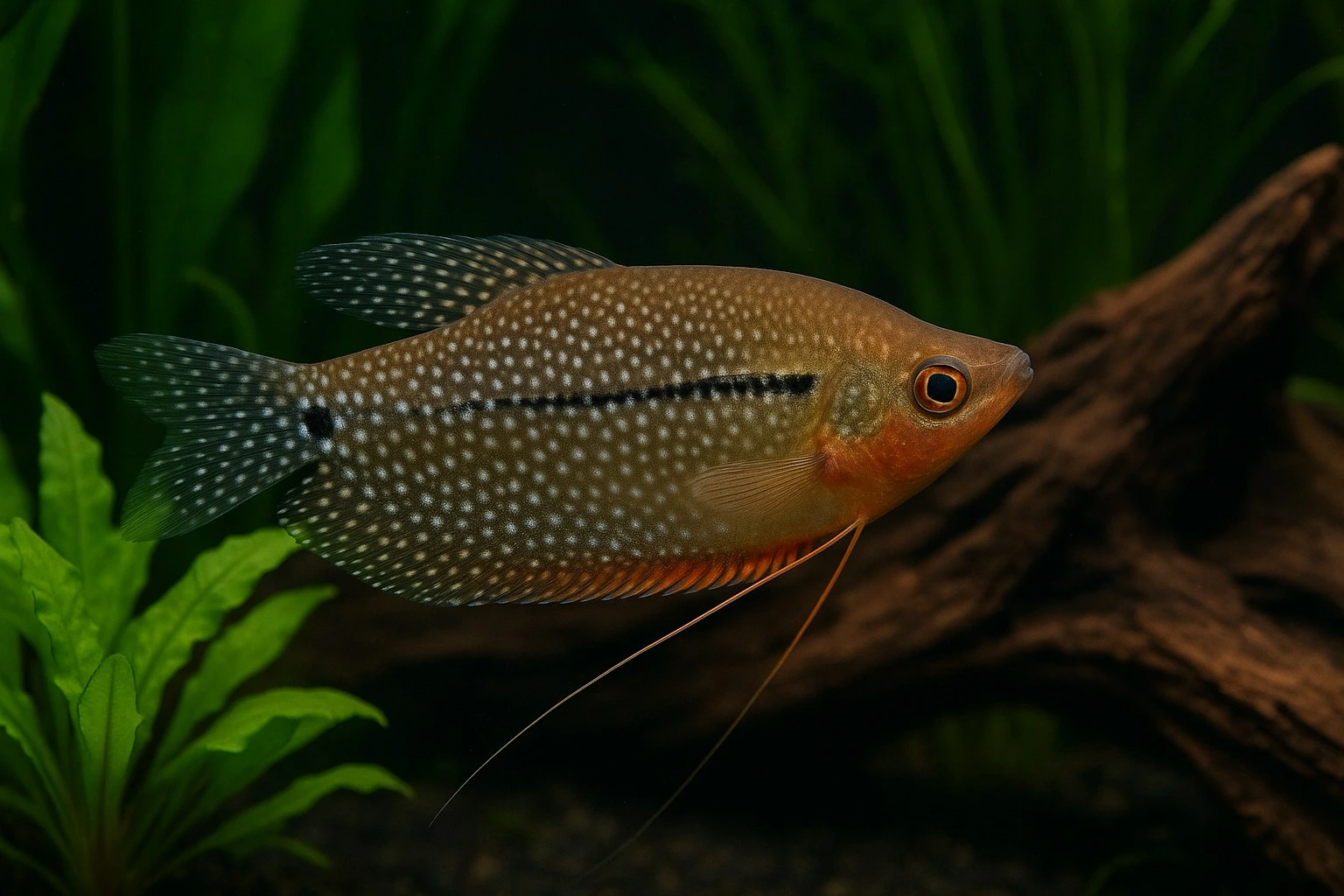
Pearl Gourami
Trichopodus leerii
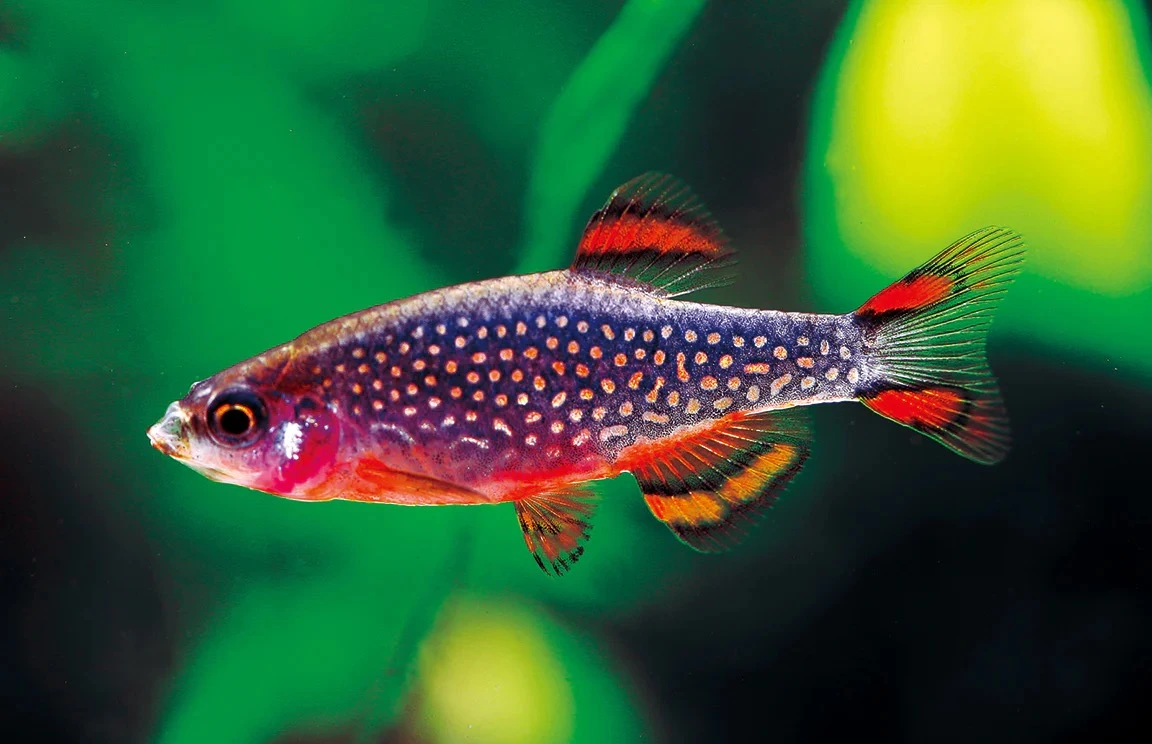
Celestial Pearl Danio
Danio margaritatus
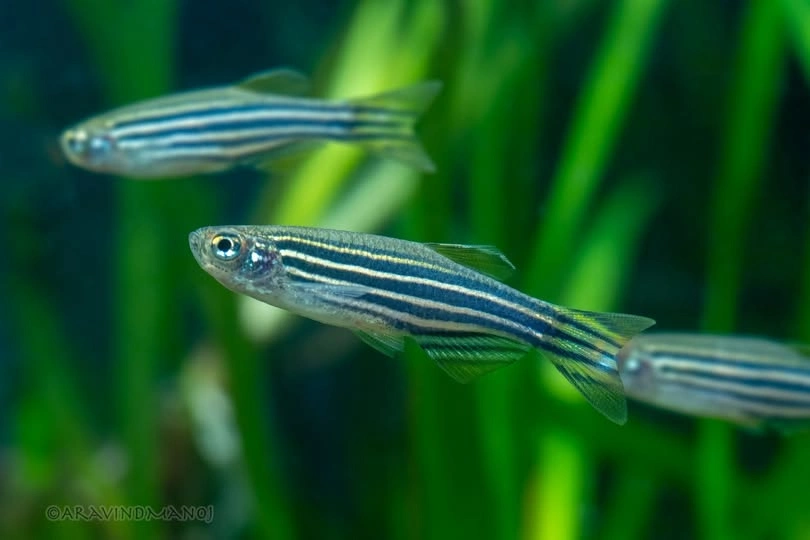
Zebra Danio
Danio rerio
Adolfo's Corydoras
Corydoras adolfoi
Assassin Snail
Clea helena
Axolotl
Ambystoma mexicanum
Bamboo Shrimp
Atyopsis moluccensis
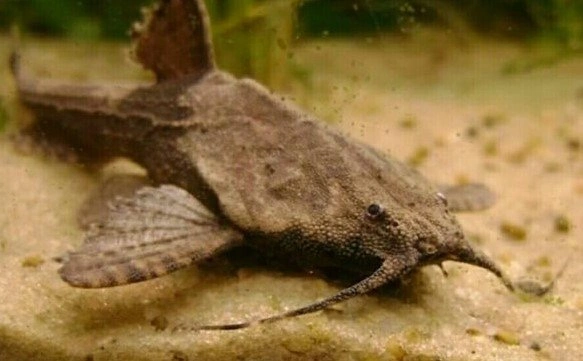
Banjo Catfish
Bunocephalus coracoideus
Ready to Add Pearl Danio to Your Tank?
Use our free stocking calculator to check compatibility, bioload, and get personalized recommendations.