
Care Requirements
Adult Size
2.0" (5cm)
Min Tank
15 gal
Temperature
72-82°F
pH Range
6-8
Lifespan
4-5 years
Min Group
6+ fish
Diet
Omnivore
Swim Level
Middle
Bioload
1/10
Hardness
4-20 dGH
About X-Ray Tetra
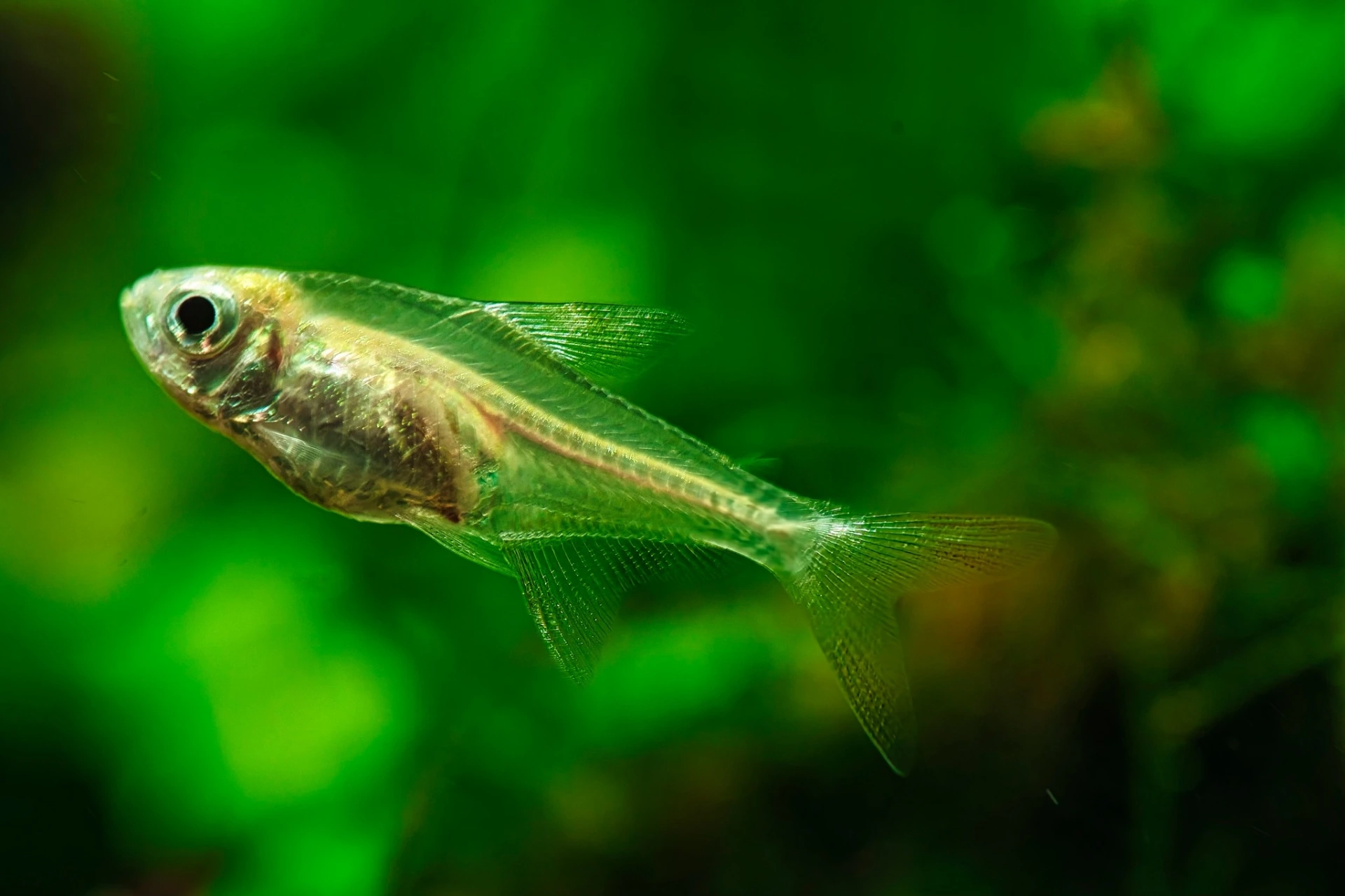
The X-Ray Tetra's name comes from its remarkable translucency — their bodies are so transparent that the silvery swim bladder and backbone are clearly visible, creating an 'x-ray' effect. This biological curiosity makes them educational favorites and endlessly fascinating to observe.
Beyond the novelty of their transparency, X-Ray Tetras are among the hardiest tetras available. Their natural habitat spans coastal drainages where water conditions vary dramatically — from fresh to brackish, soft to hard, acidic to alkaline. This environmental adaptability translates to remarkable tolerance in aquariums.
Their appearance is more attractive than 'transparent fish' might suggest. Dorsal, anal, and caudal fins display bands of yellow, black, and white that stand out against the translucent body. A school of X-Ray Tetras creates subtle, sophisticated beauty.
X-Ray Tetras have been hobby staples since the early 1900s, appreciated for over a century for their hardiness, peaceful nature, and interesting appearance.
Natural Habitat & Origin
X-Ray Tetras occupy an unusually wide geographic range along coastal South America, from Venezuela through Guyana, Suriname, and into the Brazilian Amazon delta region. This distribution includes diverse habitat types — they're found in both freshwater rivers and coastal brackish areas.
This habitat diversity is key to understanding their hardiness. Fish surviving in coastal zones experience tidal fluctuations, varying salinity, and shifting water chemistry.
In their various habitats, they typically occupy vegetated areas with slower currents — flooded meadows, vegetated stream margins, and coastal marshes.
Their ability to tolerate brackish water is notable. While they don't require salt, they can handle brackish conditions up to around SG 1.005.
Native Region
Coastal South America — Venezuela, Guyana, Suriname, Brazil (Amazon delta)
Habitat Type
Freshwater rivers, coastal streams, and brackish areas with vegetation
Wild Water Conditions
Highly variable — fresh to brackish, soft to hard, acidic to alkaline
Appearance & Varieties
The defining feature is their translucent body — skin and muscle tissue are nearly transparent, allowing clear view of the silvery swim bladder and vertebral column.
Despite the transparent body, they're not colorless. Fins display attractive banding — yellow nearest the body, then black, then white tips.
Adults reach approximately 2 inches (5 cm). A golden/albino variant exists with enhanced yellow coloration.
Popular Varieties
| Variety | Description | Rarity |
|---|---|---|
| Standard/Wild-Type | Transparent body with visible internal structures. Yellow, black, and white fin banding. Sometimes sold as 'Pristella Tetra.' | Very Common |
| Golden/Albino | Enhanced yellow pigmentation throughout body, reduced transparency. Same hardiness and care. | Uncommon |
Tank Setup & Requirements
Quick Requirements Summary
Tank Size
Minimum Tank Size
15 gallons
Recommended Tank Size
20 gallons
X-Ray Tetras are among the least demanding tetras regarding setup requirements. Their adaptability means they thrive in nearly any reasonably maintained aquarium.
Water Parameters
Remarkably adaptable — they tolerate a wider parameter range than most tetras. They can even handle mildly brackish water (SG up to 1.005). Temperature 22-28°C (72-82°F), pH 6.0-8.0, hardness 4-20 dGH.
Substrate
Any substrate works fine. Darker substrates may enhance their subtle coloration.
Plants & Decorations
Filtration & Water Flow
Any reasonable filtration maintaining water quality works.
Lighting
Not particularly sensitive to lighting. Standard aquarium lighting works perfectly.
Diet & Feeding Guide
Diet Type
omnivore
Feeding Frequency
Once or twice daily
Portion Size
Amount consumed within 2-3 minutes
X-Ray Tetras are unfussy omnivores accepting virtually any aquarium food. Among the easiest fish to feed.
Best Foods for X-Ray Tetra
- Quality flake food — Staple diet readily accepted.
- Micro pellets — Small floating or slow-sinking pellets provide variety.
- Frozen bloodworms — Eagerly consumed protein source. Feed 2-3 times weekly.
- Frozen brine shrimp — Readily accepted. Provides enrichment and variety.
- Frozen daphnia — Provides fiber and variety.
- Live foods — Trigger enthusiastic feeding. Excellent for conditioning.
Foods to Avoid
- Very large foods — Moderate-sized mouths. Oversized foods are difficult to consume.
- Monotonous diet — Variety maintains optimal health. Include frozen foods occasionally.
They're enthusiastic eaters that feed readily.
Behavior & Temperament
X-Ray Tetras are classic schooling fish that form coordinated groups. They school more tightly than some tetras, creating attractive synchronized movement. The transparent bodies moving together create a unique visual effect.
They're peaceful, active fish occupying the middle water column. Completely non-aggressive toward tankmates.
Schooling behavior is most pronounced with larger groups. Groups of 8+ display the tightest schooling.
Tank Mates: Compatibility Guide
Compatible Tank Mates
Excellent with other tetras. Their subtle appearance complements more colorful species.
Classic community combination. Different tank levels.
X-Ray Tetras' tolerance for harder water makes them better livebearer companions than soft-water tetras.
Peaceful schooling fish that complement each other.
Completely ignore each other.
Generally shrimp-safe due to peaceful nature.
Tank Mates to Avoid
Aggressive fish
Their peaceful nature makes them vulnerable to bullying.
Large predatory fish
Any fish large enough to eat them.
Highly aggressive fin nippers
Persistent nippers can cause damage and stress.
Common Pairing Questions
Can X-Ray Tetras live with Guppies?
Yes — better than most tetras. Their tolerance for harder water makes them ideal livebearer companions.
Can X-Ray Tetras live in brackish water?
Yes — one of few tetras that tolerate brackish conditions up to SG 1.005.
X-Ray Tetras breed readily. They're egg scatterers with no parental care. Females scatter 300-400 eggs among plants. Eggs hatch in 24-36 hours, fry free-swimming in 3-4 days. Fry require infusoria initially.
Health Issues & Disease Prevention
Exceptionally hardy fish that rarely develop health issues.
Common Diseases
| Disease | Symptoms | Treatment |
|---|---|---|
| Ich (White Spot Disease) | White spots on body and fins. Their transparent body makes spots particularly visible. | Raise temperature to 28-30°C for 10-14 days. |
| Fin Rot | Deteriorating fin edges, loss of distinctive fin banding. | Improve water quality. Antibacterial medication for severe cases. |
| Body Cloudiness | Loss of transparency — body appears milky or opaque. | Usually indicates bacterial infection or severe stress. Improve water quality. |
| General Stress | Faded coloration, hiding, loss of appetite. | Review and correct environmental factors. |
Signs of a Healthy X-Ray Tetra
- Clear, transparent body
- Visible spine and swim bladder
- Active schooling
- Good appetite
- Intact fins with visible banding
Prevention Tips
- Maintain reasonable water quality
- Keep in schools of 6+
- Quarantine new additions
- Feed varied diet
- Avoid aggressive tankmates
Frequently Asked Questions
Yes — they can handle salinity up to around SG 1.005, making them compatible with certain brackish species that most tetras couldn't join.
Their natural habitat includes coastal areas where conditions vary dramatically — tidal zones with shifting salinity, varying pH, and fluctuating hardness.
Excellent choice — among the best beginner tetras. Their hardiness forgives common mistakes.
Loss of transparency indicates stress, bacterial infection, or poor water quality. Check parameters and observe for other symptoms.
Yes — genuine schooling fish. Larger groups (8+) display the best schooling behavior.
Yes — better than most tetras due to their tolerance for harder, more alkaline water.
They're the same fish — Pristella maxillaris goes by both common names.
Tips for Keeping X-Ray Tetra
Pro Tips
- ✓Use them to bridge water chemistry gaps — they live with both soft-water and hard-water species.
- ✓Observe their internal anatomy as education — great for kids interested in biology.
- ✓They're emergency-proof fish — handle inconsistent care better than most.
- ✓Consider them for brackish communities — few tetras can join brackish setups.
Common Mistakes to Avoid
- ✗Assuming hardiness means no care needed.
- ✗Keeping in groups too small.
- ✗Ignoring loss of transparency — cloudy bodies indicate problems.
- ✗Overlooking them for flashier species.
Sources
- FishBase — Accepted scientific name, maximum size and native range for X-Ray Tetra.
Related Species You Might Like
View All Fish →
Yellow Lab
Labidochromis caeruleus
Black Neon Tetra
Hyphessobrycon herbertaxelrodi
Black Phantom Tetra
Hyphessobrycon megalopterus
Bleeding Heart Tetra
Hyphessobrycon erythrostigma
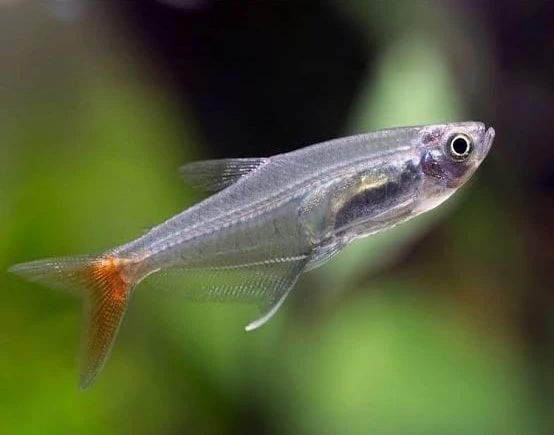
Bloodfin Tetra
Aphyocharax anisitsi
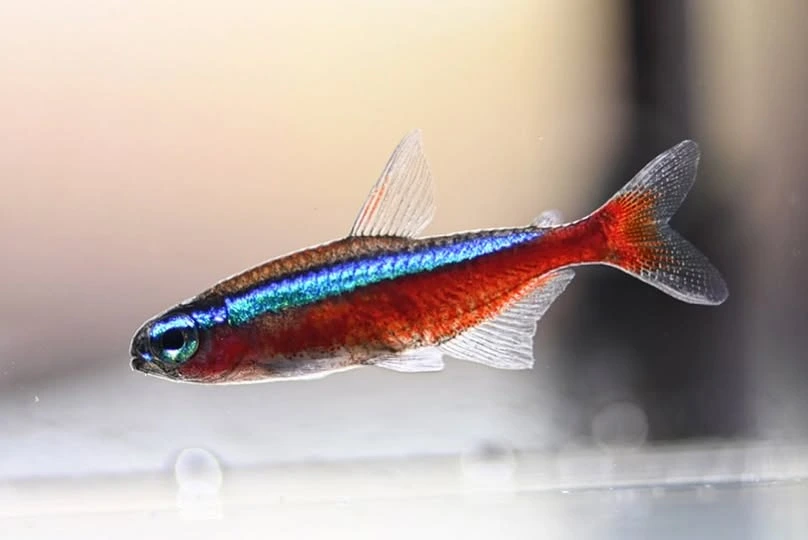
Cardinal Tetra
Paracheirodon axelrodi

Colombian Tetra
Hyphessobrycon columbianus
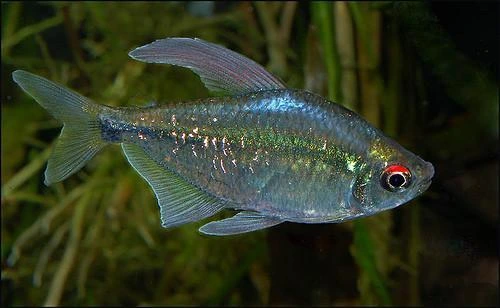
Diamond Tetra
Moenkhausia pittieri
Ready to Add X-Ray Tetra to Your Tank?
Use our free stocking calculator to check compatibility, bioload, and get personalized recommendations.