
Care Requirements
Adult Size
2.4" (6cm)
Min Tank
20 gal
Temperature
72-82°F
pH Range
6-8
Lifespan
5 years
Min Group
6+ fish
Diet
Omnivore
Swim Level
Middle
Bioload
2/10
Hardness
5-20 dGH
About Penguin Tetra
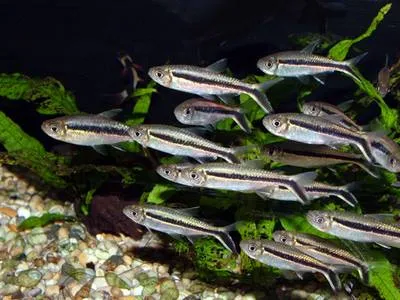
The Penguin Tetra is immediately recognizable for its unique swimming behavior—they swim with their head tilted upward at roughly 45 degrees, resembling a penguin standing upright. This distinctive posture, combined with the black stripe that curves from their gill down through the lower tail lobe (creating a 'hockey stick' pattern), makes them unmistakable.
Beyond their quirky appearance, Penguin Tetras are excellent community fish. They're hardy, peaceful, adaptable, and long-lived for a tetra. Their constant activity adds energy to any tank, and watching a school swim in synchronized head-up formation is mesmerizing.
They're also called 'Hockey Stick Tetras' due to the shape of their black stripe—it runs horizontally through the body, then curves downward into the lower lobe of the tail fin, resembling a hockey stick.
Natural Habitat & Origin
Penguin Tetras are native to the Amazon basin, specifically the Araguaia River system in Brazil and areas of Peru. They inhabit slow-moving tributaries, flooded forests, and marginal river areas with abundant vegetation.
Their natural habitat features warm, soft, slightly acidic water with dense plant cover and submerged roots. Unlike some Amazon tetras that require extreme blackwater conditions, Penguin Tetras come from more moderate environments, explaining their good adaptability in aquariums.
Native Region
Amazon basin, Araguaia River (Brazil), Peru
Habitat Type
Slow-moving tributaries, flooded forests, vegetated river margins
Wild Water Conditions
Warm (72-82°F), soft to moderately hard, slightly acidic to neutral (pH 6.0-7.5)
Appearance & Varieties
Penguin Tetras are medium-sized tetras reaching about 2.5 inches (6 cm). Their body is silver with a distinctive black horizontal stripe that runs from behind the gill, through the body, and curves downward into the lower lobe of the tail fin—the signature 'hockey stick' pattern.
What really sets them apart is their swimming posture. They swim with their head tilted upward at approximately 45 degrees, giving them a penguin-like stance. This is completely natural and healthy—if they swim horizontally, it may indicate stress or illness. Females are rounder and deeper-bodied, especially when carrying eggs.
Tank Setup & Requirements
Quick Requirements Summary
Tank Size
Minimum Tank Size
20 gallons
Recommended Tank Size
30 gallons
Penguin Tetras are adaptable and don't require specialized conditions. Their main need is adequate horizontal swimming space to display their unique synchronized schooling behavior.
Water Parameters
Temperature 72-82°F (22-28°C), pH 6.0-7.5, hardness 3-15 dGH. They're adaptable within this range and tolerate some fluctuation, making them good for beginners.
Substrate
Any substrate works—dark substrates enhance their silver body and black stripe, but they're not demanding.
Plants & Decorations
Well-planted tanks with open swimming areas. They're active swimmers that need space to school. Background plants with open middle and front areas work well. Driftwood and natural decor appreciated.
Filtration & Water Flow
Moderate flow—they can handle some current given their active nature but don't need strong flow.
Lighting
Moderate lighting works well. They're not as light-sensitive as some tetras but subdued lighting brings out best appearance.
Diet & Feeding Guide
Diet Type
omnivore
Feeding Frequency
1-2x daily
Portion Size
What they consume in 2-3 minutes
Penguin Tetras are unfussy omnivores that readily accept most aquarium foods. They feed at all levels including the surface, making feeding easy.
Best Foods for Penguin Tetra
- High-quality flakes — Readily accepted, good staple
- Small pellets/micro granules — Good variety
- Frozen bloodworms — Excellent protein source
- Frozen brine shrimp — Great variety
- Daphnia — Good natural food
- Live baby brine shrimp — Ideal treat and conditioning food
Foods to Avoid
- Large pellets — Appropriately sized food preferred
- Poor quality foods — Don't maintain health and coloration
They feed readily at all levels, including the surface. Not picky eaters. Varied diet maintains health and coloration. Their active nature means they have good appetites.
Behavior & Temperament
Penguin Tetras are peaceful, highly active fish with their signature head-up swimming posture. They school beautifully, with the entire group swimming in synchronized 45-degree angles—one of the most unique displays in the freshwater hobby.
They're constantly on the move, adding energy and life to any tank. Despite their activity, they're peaceful and don't bother tankmates. Their swimming posture is their health indicator—if they start swimming horizontally, check water quality and stress factors.
Tank Mates: Compatibility Guide
Compatible Tank Mates
Excellent companions—peaceful, similar requirements
Beautiful contrast in schooling behavior
Peaceful bottom dwellers
Peaceful, different tank level
Peaceful schooling companion
Generally safe with adult shrimp
Peaceful community companion
Tank Mates to Avoid
Large aggressive fish
Will stress or harm them
Very slow/sedentary species
Their activity level may stress calm fish
Fin nippers
Though not fin nippers themselves, they shouldn't be housed with them
Common Pairing Questions
Can Penguin Tetras live with angelfish?
Yes! They make excellent angelfish companions. Both prefer similar water conditions, Penguin Tetras are peaceful and large enough not to be eaten, and their mid-to-upper swimming level complements the angels' mid-tank presence.
Why do Penguin Tetras swim at an angle?
It's their natural swimming posture—they swim with their head tilted upward at roughly 45 degrees, resembling a standing penguin. This is completely normal and healthy. If they swim horizontally, it may indicate stress or illness.
Penguin Tetras are relatively easy to breed for a tetra. They're egg scatterers that spawn readily when conditions are right.
Set up a breeding tank with soft, slightly acidic water (pH 6.0-6.5, 4-10 dGH), fine-leaved plants or spawning mops, and dim lighting. Temperature around 78-82°F (26-28°C). Condition pair with live foods.
Spawning typically occurs in morning among plants. Eggs are scattered and fall into plants/substrate. Remove adults after spawning—they'll eat eggs. Eggs hatch in 24-36 hours, fry free-swimming in 3-4 days. Feed infusoria initially, then baby brine shrimp.
Health Issues & Disease Prevention
Penguin Tetras are hardy fish that tolerate a range of conditions. Their swimming posture is a built-in health indicator—healthy fish swim head-up; stressed or sick fish may swim horizontally.
Common Diseases
| Disease | Symptoms | Treatment |
|---|---|---|
| Ich (White Spot Disease) | White spots on body and fins, flashing, clamped fins | Raise temperature to 82-86°F, treat with ich medication |
| Fin Rot | Deteriorating fins, redness at base | Improve water quality, antibacterial medication if severe |
| Columnaris | White/gray patches, frayed fins, lethargy | Antibacterial medication, improve water quality |
Signs of a Healthy Penguin Tetra
- Swimming at 45-degree angle
- Clear black stripe
- Bright silver body
- Active schooling
- Good appetite
- Intact fins
Prevention Tips
- Maintain stable water parameters
- Quarantine new fish 2-3 weeks
- Watch for posture changes—horizontal swimming indicates problems
- Provide adequate swimming space
Frequently Asked Questions
It's their natural swimming posture—they swim with their head tilted upward at roughly 45 degrees, resembling a standing penguin. This is completely normal and healthy. If they swim horizontally, it may indicate stress or illness.
Their head-up swimming posture resembles a penguin standing upright. They're also called 'Hockey Stick Tetras' because their black stripe pattern—running from the gill through the body and curving down into the lower tail lobe—looks like a hockey stick.
No—they're peaceful and don't nip fins. They're safe with long-finned fish like angelfish, bettas, and fancy guppies. They're more focused on swimming than bothering tankmates.
Minimum 6, ideally 10-12 or more. Their synchronized head-up schooling is their most appealing feature, and larger groups display this behavior more impressively. A proper school is mesmerizing to watch.
Yes—they're one of the hardier tetras, adaptable to a range of conditions. They tolerate slightly harder water and temperature fluctuations better than many tetras. Good choice for beginners who want something unique.
Yes! They make excellent angelfish companions. Both prefer similar water conditions, Penguin Tetras are peaceful and large enough not to be eaten, and their mid-to-upper swimming level complements the angels' mid-tank presence.
Tips for Keeping Penguin Tetra
Pro Tips
- ✓Their synchronized head-up schooling is unique—larger groups are more impressive
- ✓One of the most distinctive tetras due to their swimming posture
- ✓Great for community tanks—active without being aggressive
- ✓Hardy and adaptable—good for beginners wanting something unusual
- ✓If they're swimming horizontally, check water quality and stress factors
- ✓The 'hockey stick' stripe pattern makes them easy to identify
- ✓Excellent mid-level activity for tanks with bottom dwellers and surface fish
- ✓Long-lived for a tetra—5-6 years with proper care
Common Mistakes to Avoid
- ✗Tank too small—they're active and need swimming space
- ✗Group too small—their signature schooling needs numbers
- ✗Not noticing posture changes—horizontal swimming indicates problems
- ✗Overcrowding—despite being hardy, they need space to display behavior
- ✗Very slow tankmates—their activity level may stress sedentary fish
- ✗No open swimming space—they need room for their active schooling
- ✗Ignoring them for flashier tetras—their behavior is their attraction
- ✗Strong current—despite being active, they prefer moderate flow
Sources
- FishBase — Accepted scientific name, maximum size and native range for Penguin Tetra.
Related Species You Might Like
View All Fish →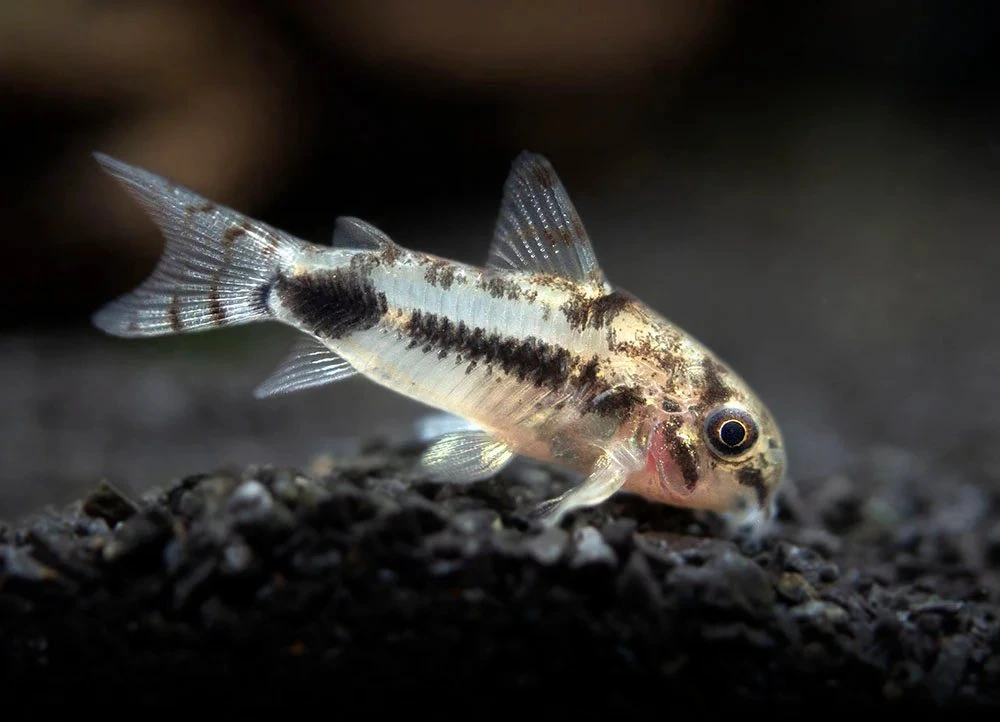
Peppered Corydoras
Corydoras paleatus
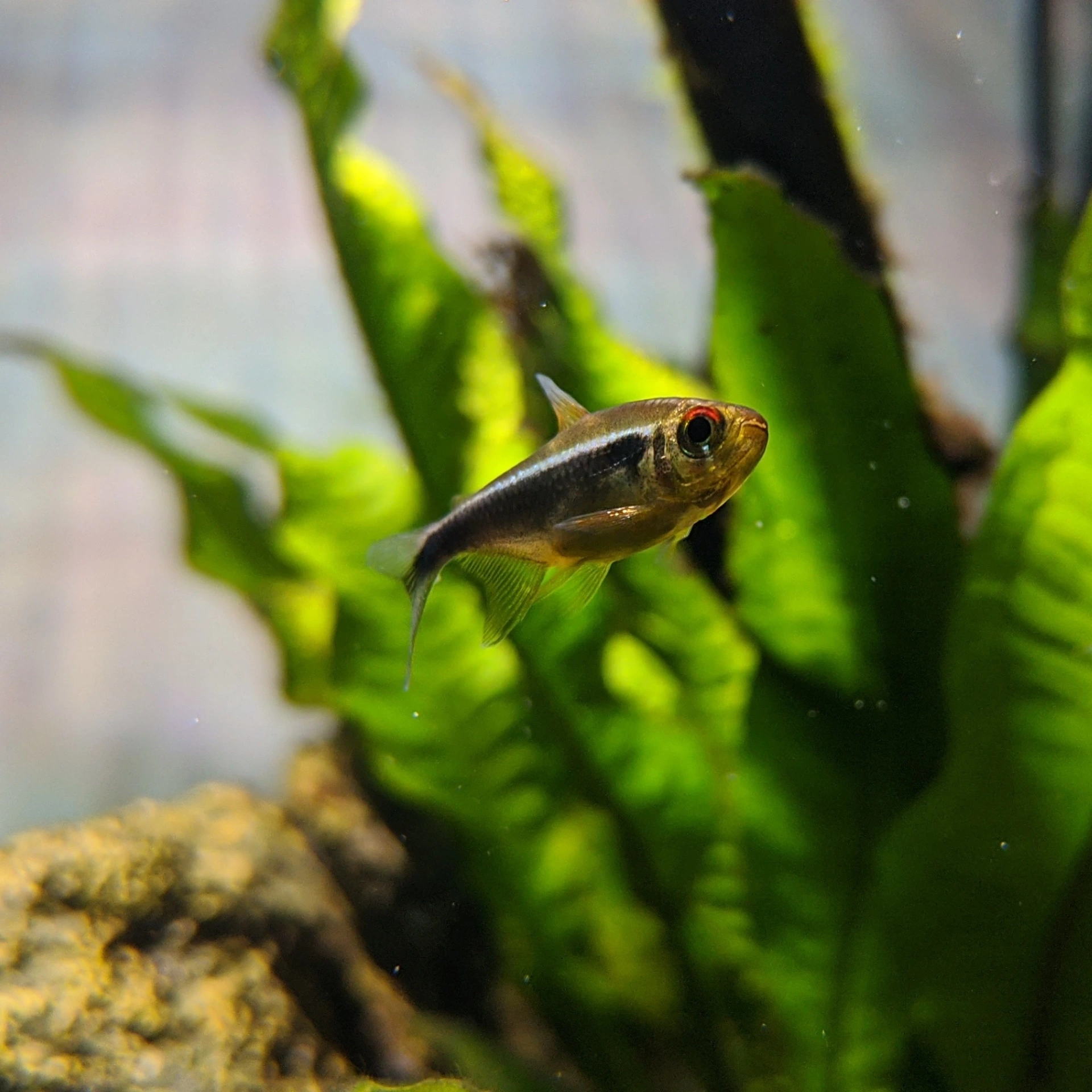
Black Neon Tetra
Hyphessobrycon herbertaxelrodi
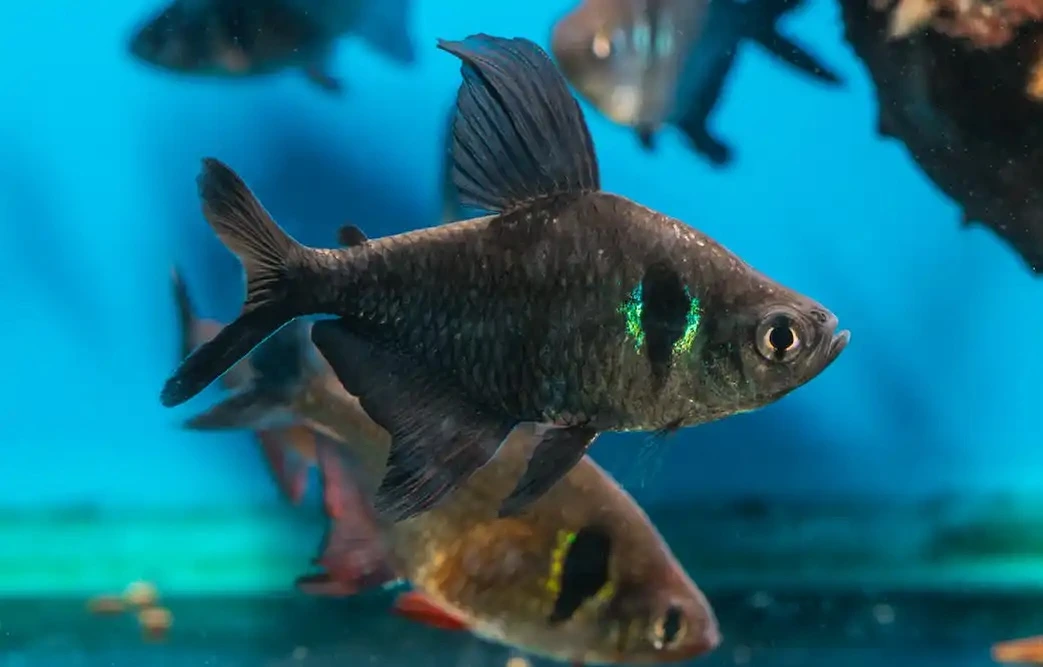
Black Phantom Tetra
Hyphessobrycon megalopterus
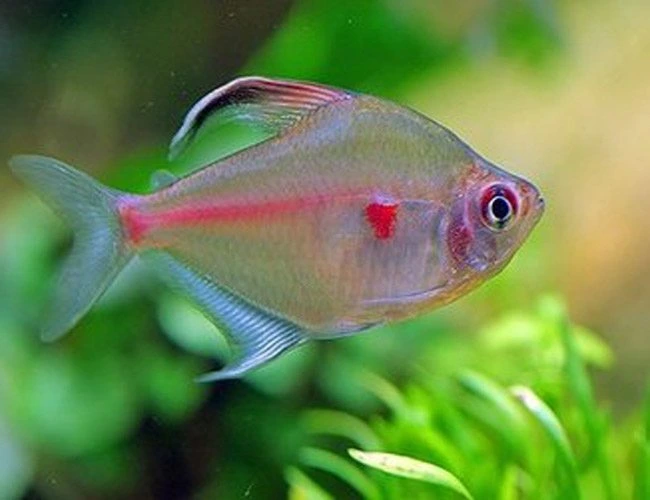
Bleeding Heart Tetra
Hyphessobrycon erythrostigma
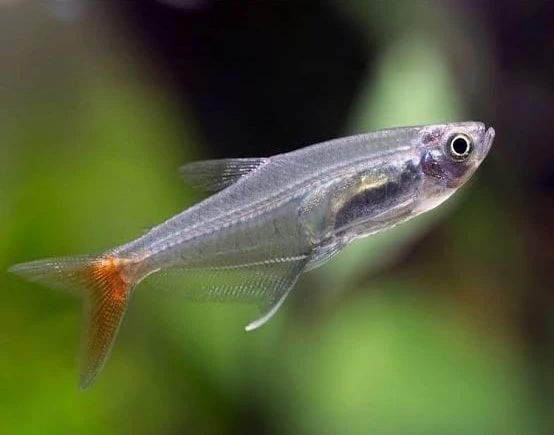
Bloodfin Tetra
Aphyocharax anisitsi
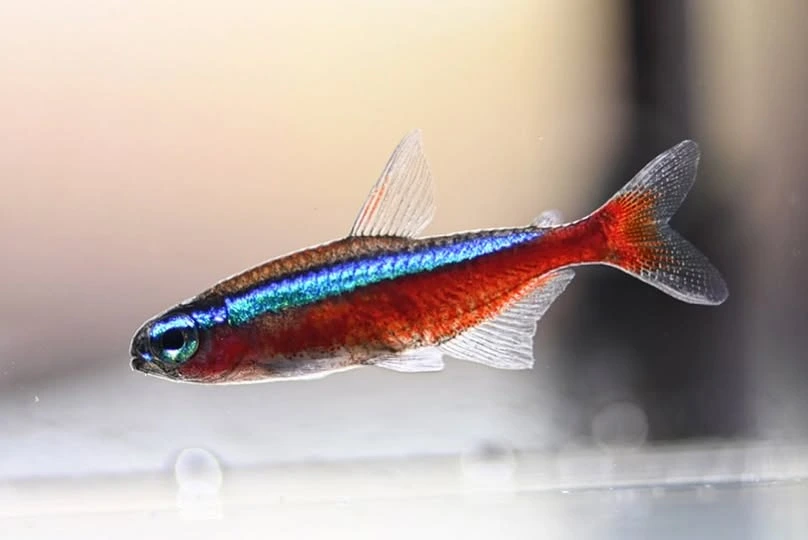
Cardinal Tetra
Paracheirodon axelrodi

Colombian Tetra
Hyphessobrycon columbianus
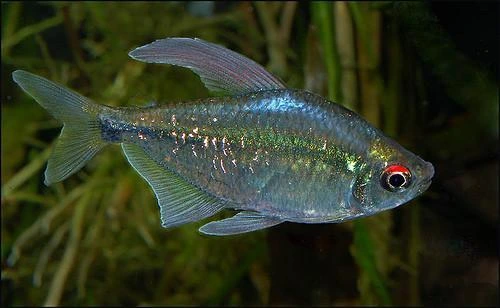
Diamond Tetra
Moenkhausia pittieri
Ready to Add Penguin Tetra to Your Tank?
Use our free stocking calculator to check compatibility, bioload, and get personalized recommendations.