Stocking Guide
    8 min read

    Best Fish for a 20 Gallon Tank

    30 species that genuinely thrive in a 20 gallon — from schooling fish to centerpiece options. Honest picks based on adult size, bioload, and temperament.

    A 20 gallon tank is the sweet spot for freshwater fishkeeping. It's large enough for proper schools, real centerpiece fish, and multi-species communities — but small enough to fit on most furniture and stay manageable for beginners.

    The extra water volume compared to a 10 gallon means more stability, more stocking options, and room for species that actually need swimming space. But "more options" doesn't mean "anything goes." We selected every fish on this list for adult size under the tank's limits, reasonable bioload, compatible temperament, and a real track record in 20 gallon setups. We also kept a Fish to Avoid section — because pet stores will happily sell you fish that have no business in a tank this size.

    Best Schooling Fish for a 20 Gallon Tank

    A 20 gallon gives you something a 10 gallon can't: a full-sized school that actually looks like a school. You can keep 10-15 tetras or rasboras and still have room for other species. The fish below range from classic community staples to nano gems that look incredible in planted setups.
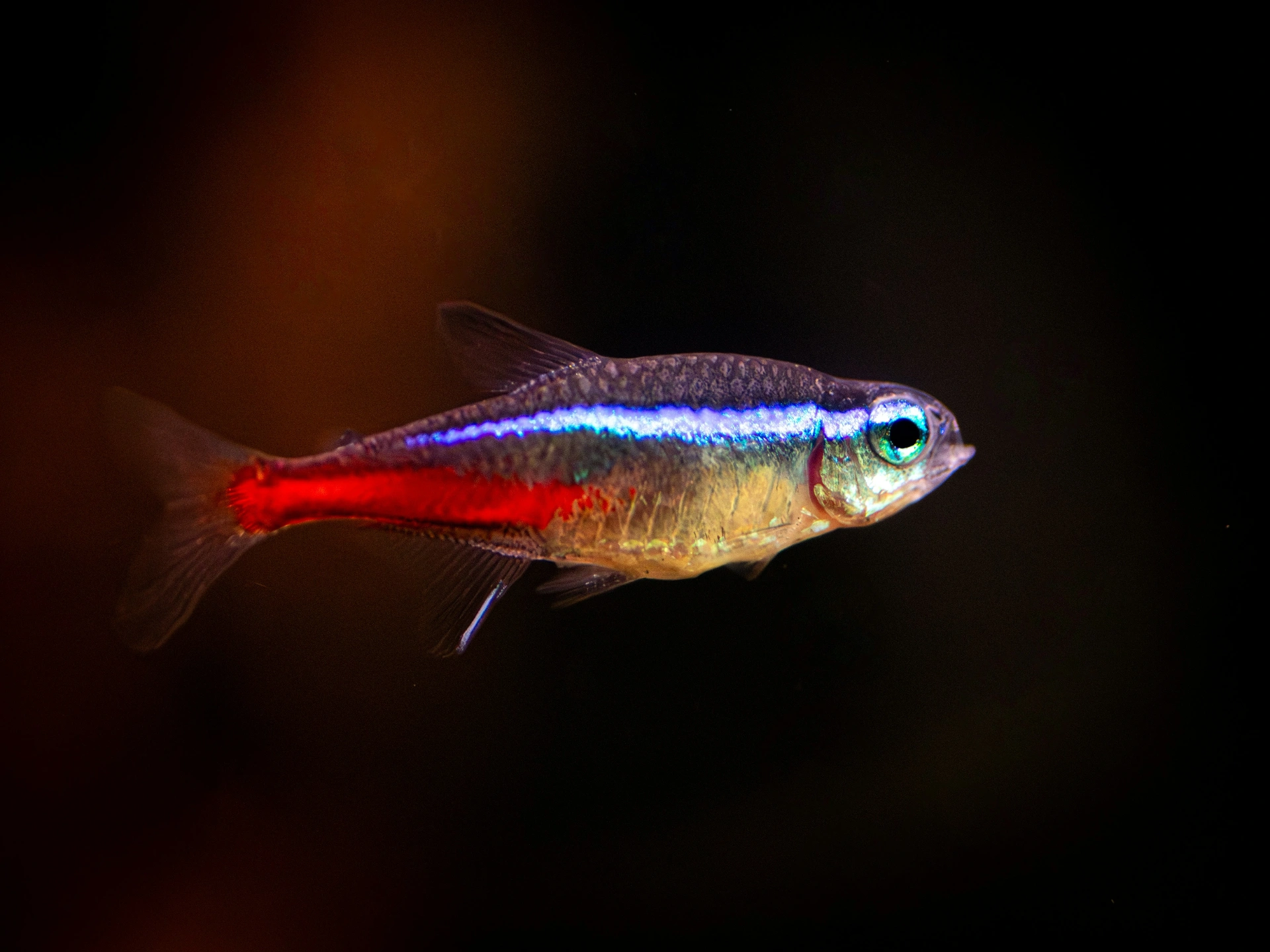
    Single neon tetra swimming in a dark aquarium
    Easy

    Neon Tetra

    Paracheirodon innesi

    The most recognizable freshwater fish for a reason. A school of 12+ in a planted 20 gallon is one of the best sights in the hobby.

    3 cmSchool: 10-1520-26°C
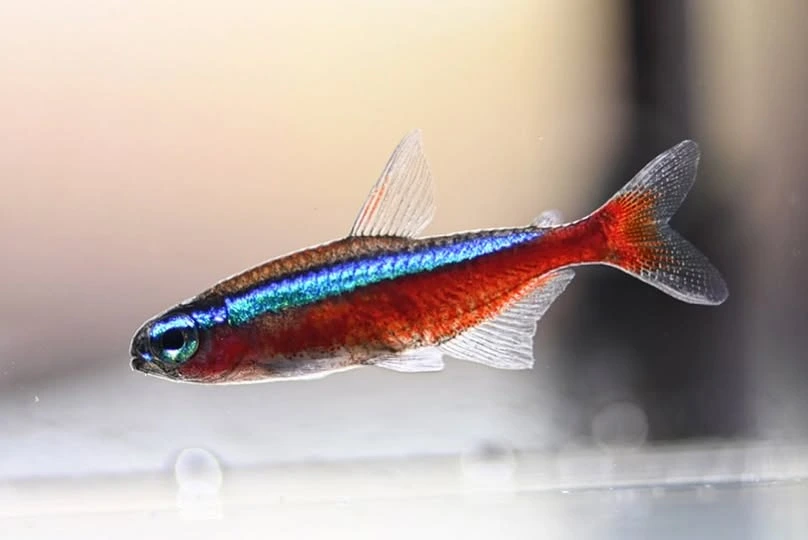
    Single cardinal tetra swimming in an aquarium
    Easy-Moderate

    Cardinal Tetra

    Paracheirodon axelrodi

    Like neons but better — the full red stripe runs the entire body. Prefers slightly warmer water.

    5 cmSchool: 8-1224-30°C
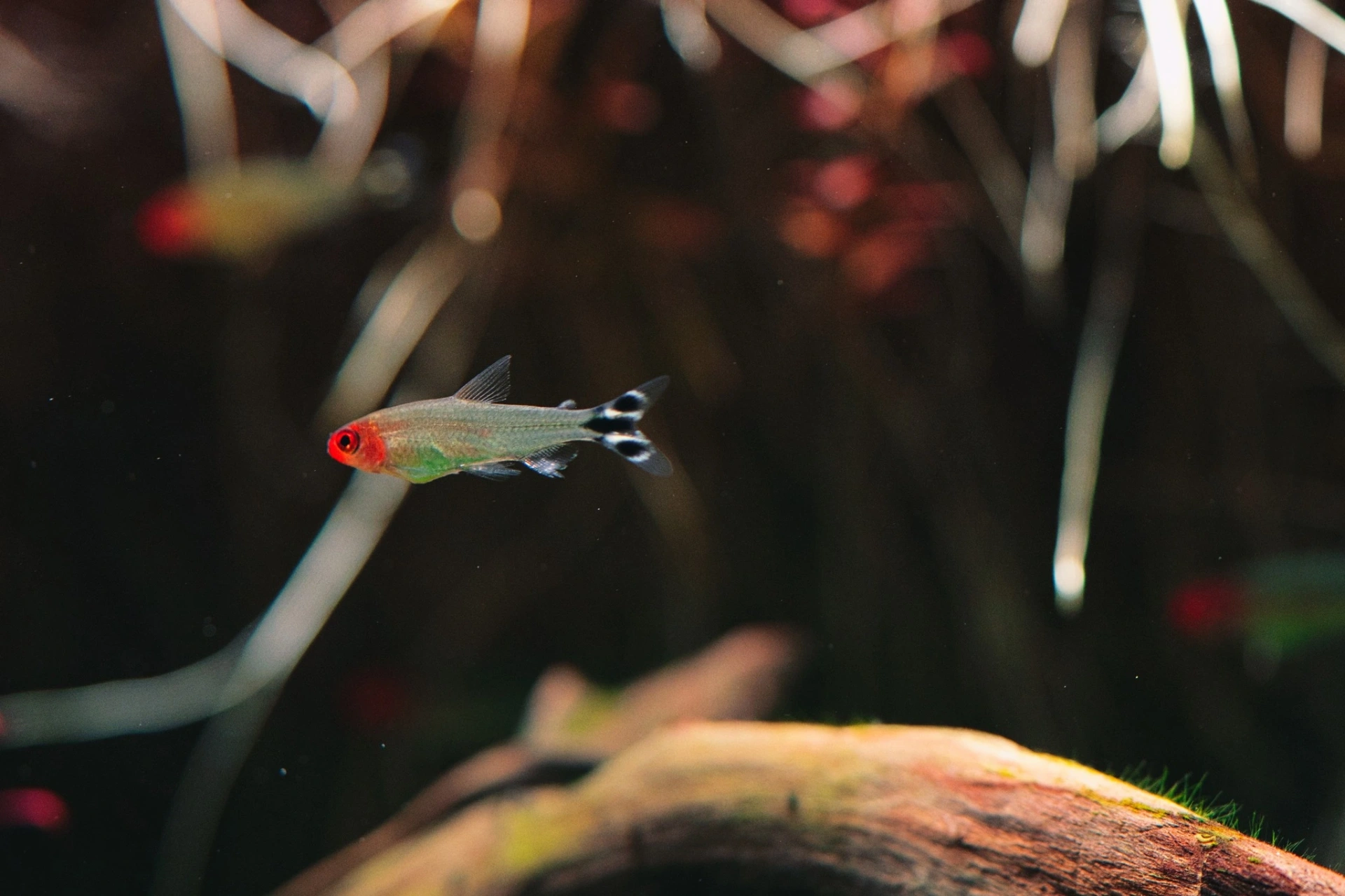
    Rummy nose tetra swimming in an aquarium
    Moderate

    Rummy-Nose Tetra

    Hemigrammus rhodostomus

    The tightest schooling behavior of any tetra. When they move in unison, it's mesmerizing. Their red nose also doubles as a water quality indicator.

    5 cmSchool: 8-1224-28°C
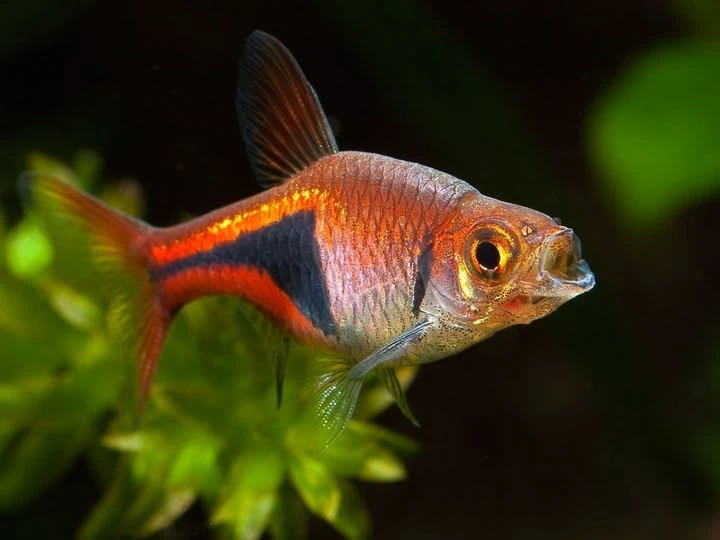
    Harlequin Rasbora swimming in the middle of an aquarium
    Easy

    Harlequin Rasbora

    Trigonostigma heteromorpha

    Copper body, bold black triangle, zero drama. The set-and-forget schooling fish that works with practically everything.

    4.5 cmSchool: 8-1222-28°C
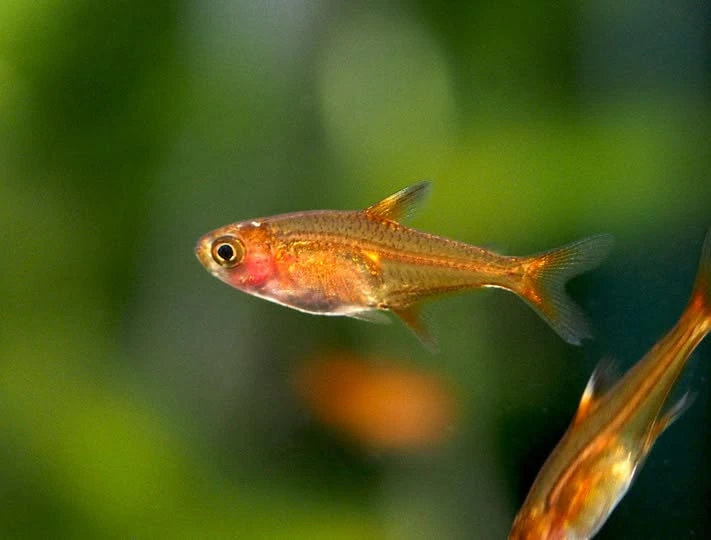
    Orange ember tetra swimming in an aquarium
    Easy

    Ember Tetra

    Hyphessobrycon amandae

    Tiny, amber-orange, and practically zero bioload. A big school in a planted 20 gallon looks like floating embers.

    2 cmSchool: 10-1523-29°C
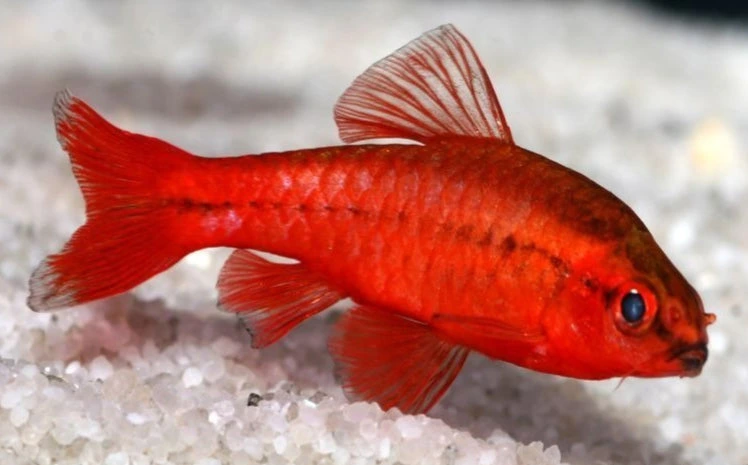
    Cherry Barb swimming at the bottom of an aquarium
    Easy

    Cherry Barb

    Puntius titteya

    Males turn deep crimson when displaying. Unlike most barbs, completely peaceful — one of the most underrated community fish.

    5 cmSchool: 6-822-27°C
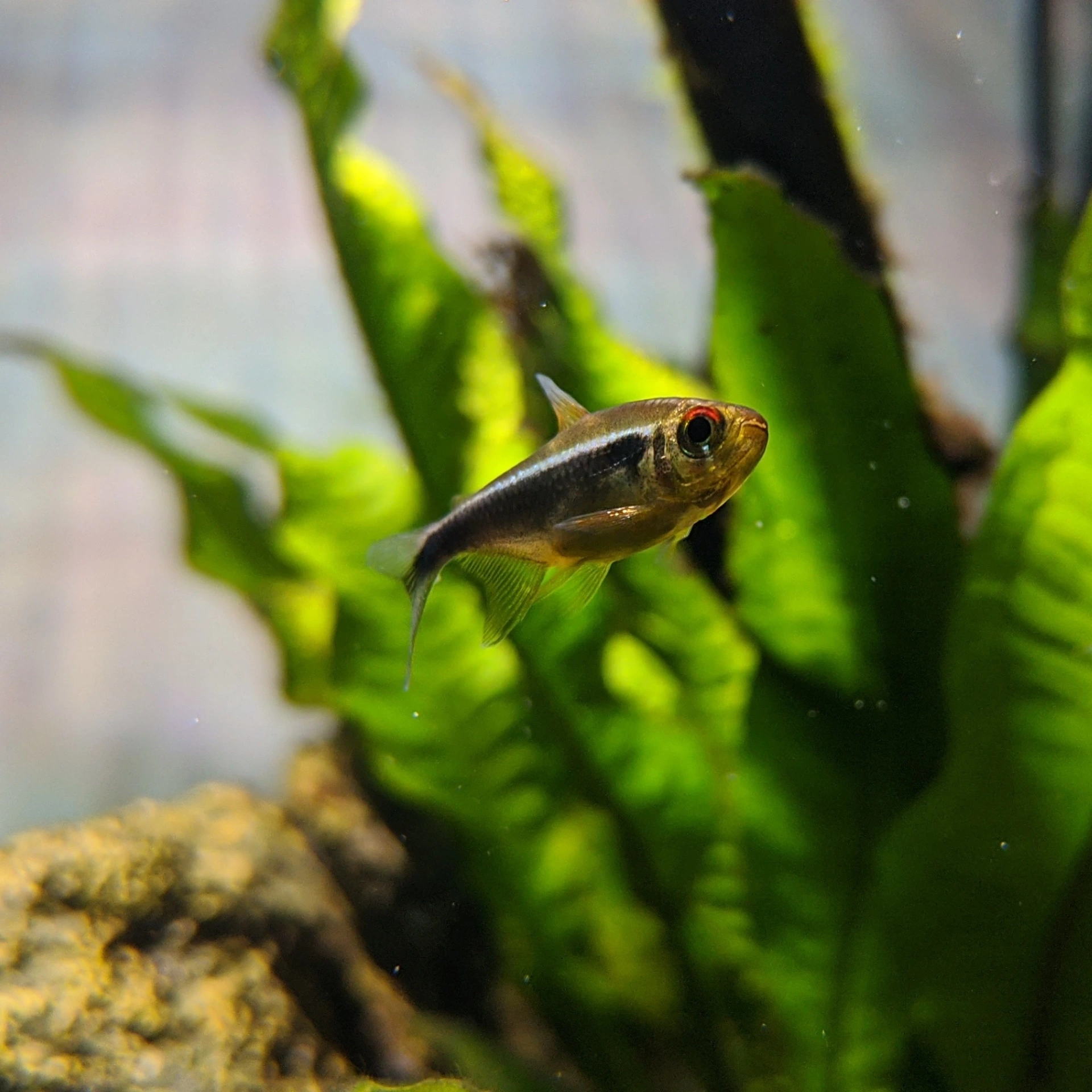
    A single black neon tetra swimming in the middle of an aquarium
    Easy

    Black Neon Tetra

    Hyphessobrycon herbertaxelrodi

    Black horizontal stripe with an iridescent green line above it. Understated elegance that gets more impressive as the school grows.

    4 cmSchool: 8-1222-28°C
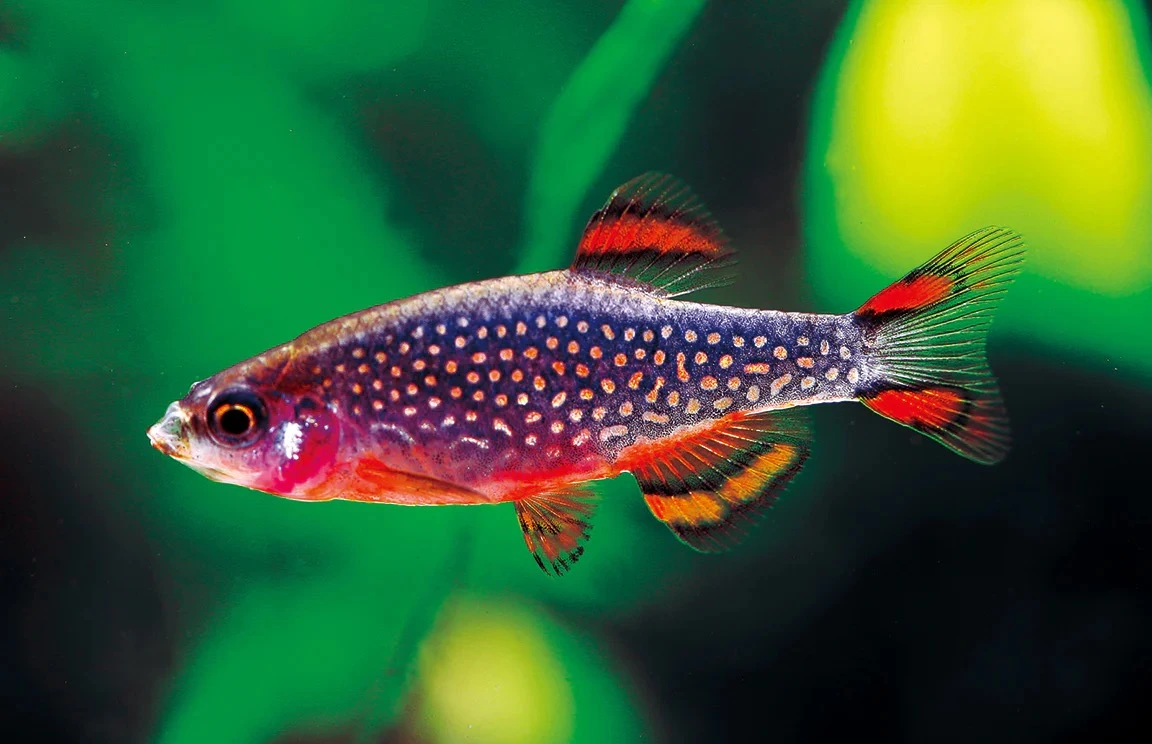
    Celestial pearl danio swimming in an aquarium
    Easy-Moderate

    Celestial Pearl Danio

    Danio margaritatus

    Deep blue body scattered with pearl-white spots — like looking at a tiny galaxy. Shy at first, but a planted 20 gallon gives them confidence.

    2.5 cmSchool: 8-1220-26°C
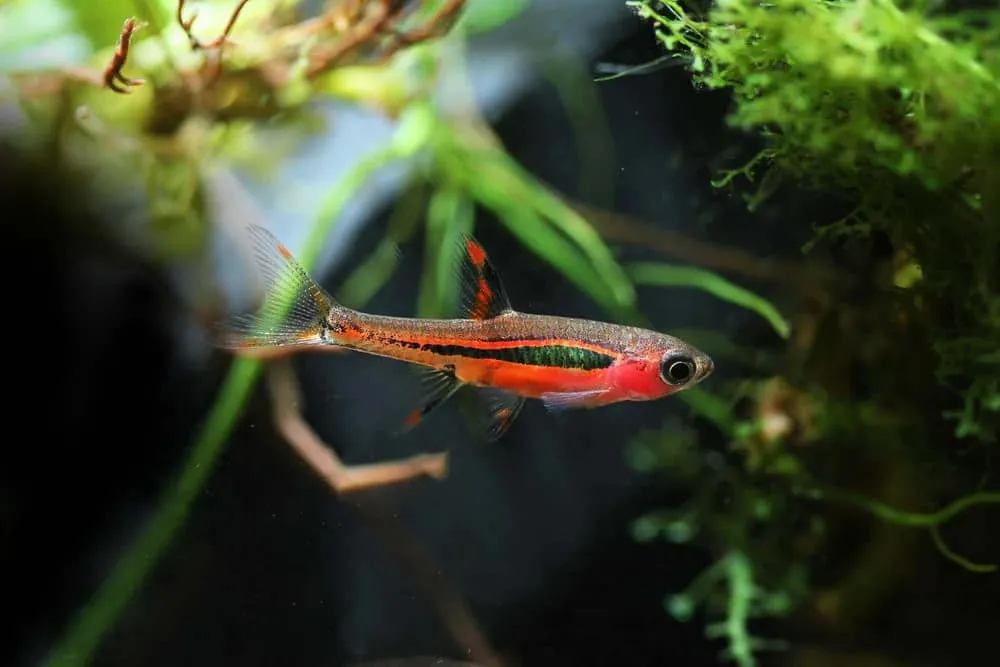
    A single chili rasbora swimming in an aquarium
    Easy-Moderate

    Chili Rasbora

    Boraras brigittae

    Maximum color in minimum space. A big school of 15 in a planted 20 gallon creates a stunning cloud of fiery red — especially against dark substrate.

    2 cmSchool: 12-1523-28°C
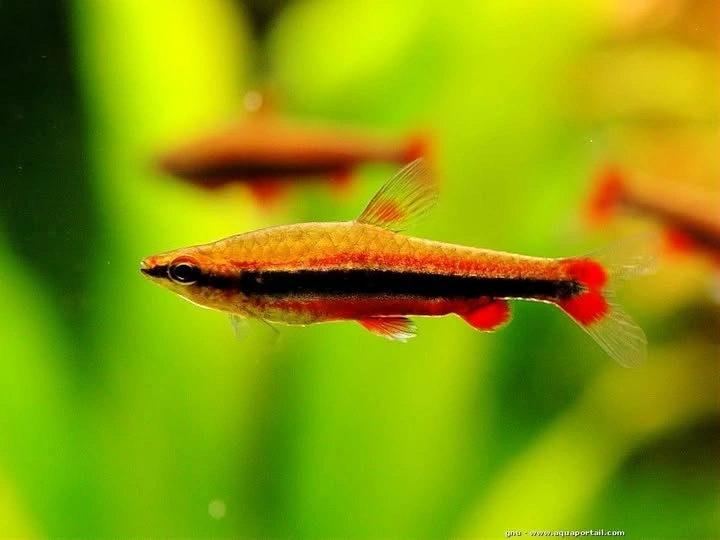
    Two golden pencilfish swimming in a planted fish tank
    Easy-Moderate

    Golden Pencilfish

    Nannostomus beckfordi

    Elegant torpedo-shaped fish that hover in place like tiny submarines. Golden body with a dark lateral stripe — they intensify in color under subdued lighting.

    6 cmSchool: 6-824-28°C
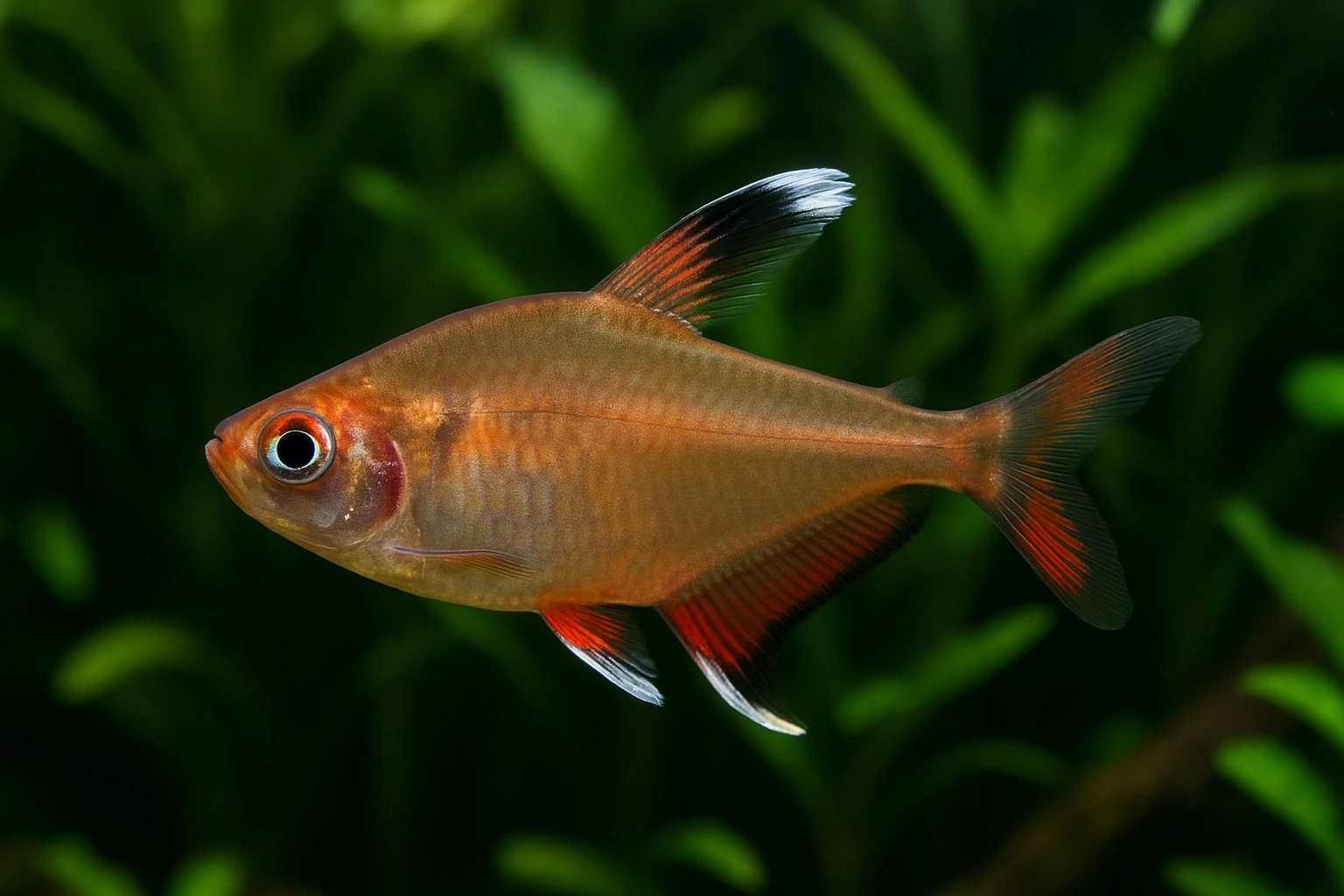
    Rosy tetra swimming in an aquarium
    Easy

    Rosy Tetra

    Hyphessobrycon rosaceus

    Soft pink body with dramatic dorsal fins that males display constantly. Hardy, peaceful, and often overlooked in favor of flashier tetras — but they hold their own.

    4 cmSchool: 8-1024-28°C

    Best Centerpiece Fish for a 20 Gallon Tank

    A centerpiece fish is the visual anchor of your tank — one species (or a pair) that draws the eye. A 20 gallon opens up options that simply don't fit in smaller tanks, including dwarf cichlids that bring real personality and interaction with their keeper.
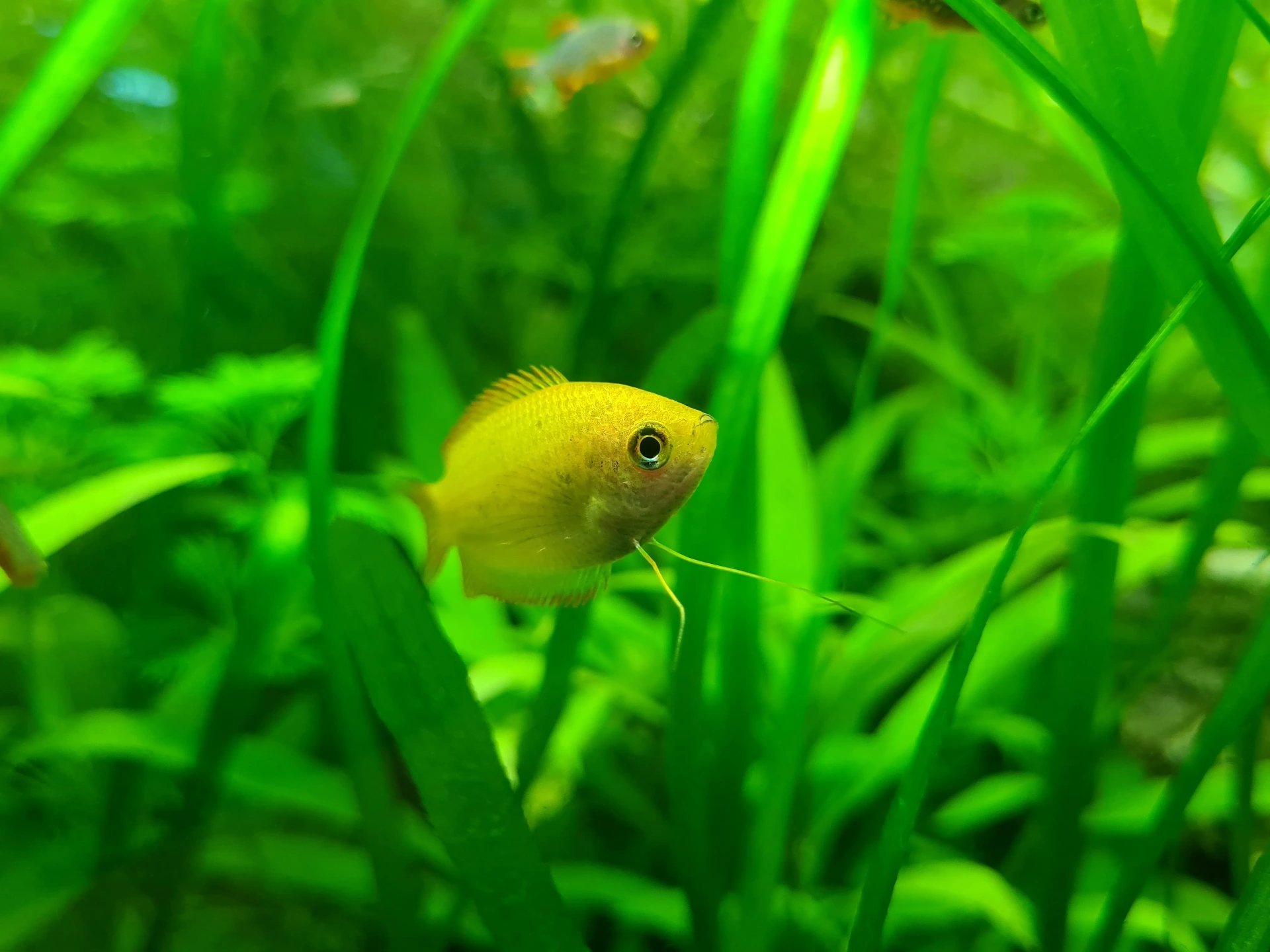
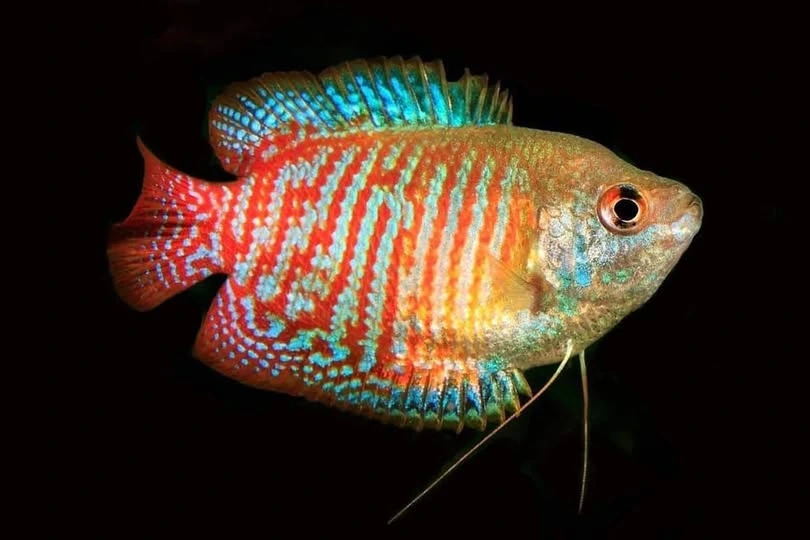
    Small yellow honey gourami swimming in aquarium plants
    Easy

    Honey Gourami

    Trichogaster chuna

    Warm golden color, peaceful temperament, and unlike Dwarf Gouramis, not plagued by Iridovirus. The safest gourami pick for a community tank.

    5 cmSchool: 1-222-28°C
    Dwarf Gourami swimming slowly in an aquarium
    Moderate

    Dwarf Gourami

    Trichogaster lalius

    Vibrant flame-red and electric blue make it one of the most beautiful freshwater fish — but buy from a reputable source. Iridovirus from mass breeding is a real risk.

    8 cmSchool: 122-28°C
    German Blue Ram swimming at the bottom of an aquarium
    Moderate

    German Blue Ram

    Mikrogeophagus ramirezi

    Arguably the most stunning dwarf cichlid available. Electric blue with orange and black markings. Needs warm, soft water and a mature tank.

    6 cmSchool: 1 pair25-30°C
    Colorful bolivian ram swimming in an aquarium
    Easy-Moderate

    Bolivian Ram

    Mikrogeophagus altispinosus

    The hardier, more forgiving Ram. Tolerates cooler temps and harder water. Less flashy than the German Blue but much easier to keep alive.

    8 cmSchool: 1 pair22-27°C
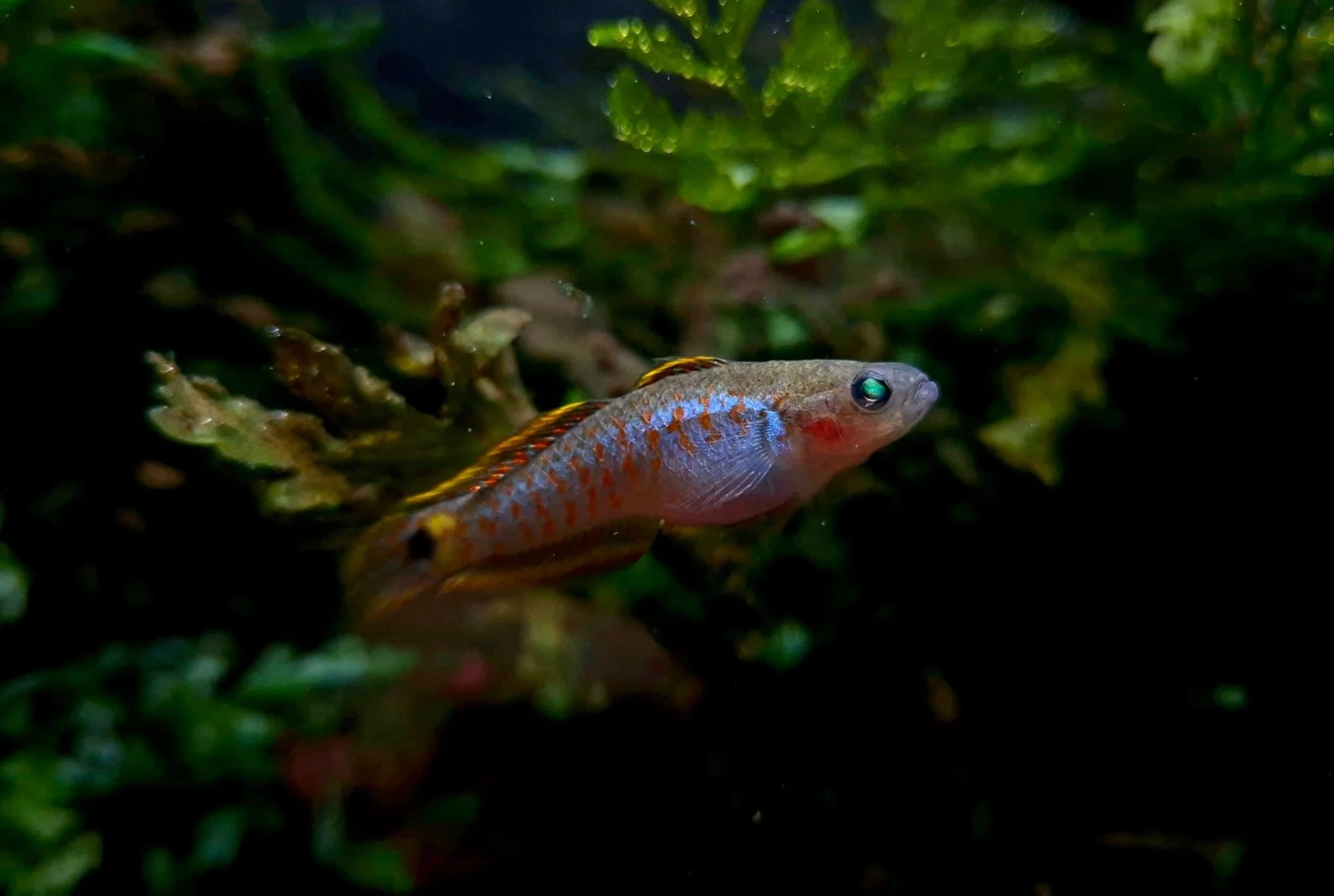
    Peacock gudgeon swimming near aquarium moss
    Easy-Moderate

    Peacock Gudgeon

    Tateurndina ocellicauda

    Electric blue body with red-spotted fins and a distinctive head bump on males. One of the most colorful small fish available — peaceful and breeds readily in caves.

    7 cmSchool: 1 pair22-26°C
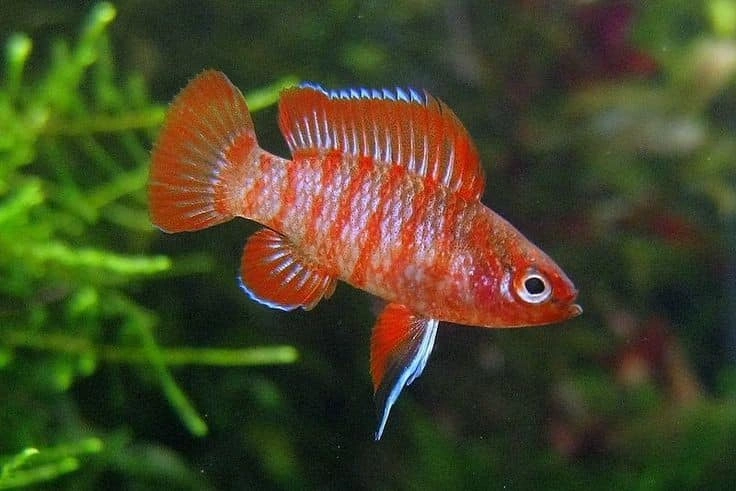
    Scarlet badis swimming slowly in a fish tank
    Moderate

    Scarlet Badis

    Dario dario

    Micro predators with incredible red-blue iridescence. In a 20 gallon you can keep a small group with multiple territories — just ensure plenty of plants and line-of-sight breaks.

    2 cmSchool: 2-318-26°C
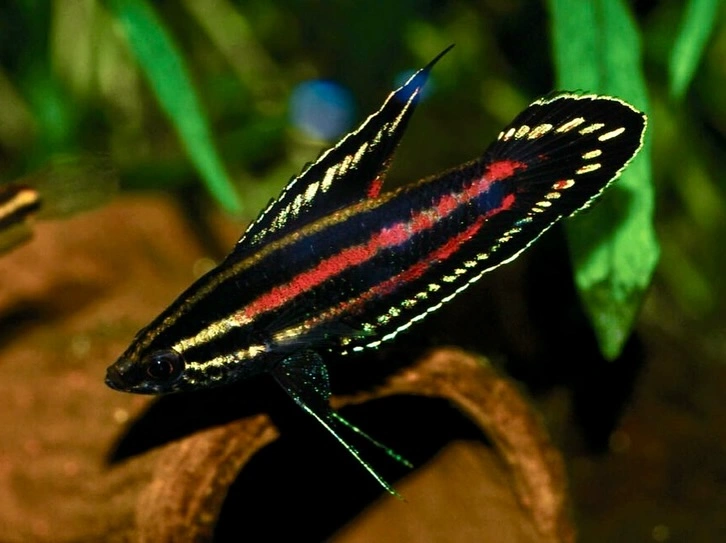
    Licorice gourami swimming near aquarium rocks and plants in a fish tank
    Moderate

    Licorice Gourami

    Parosphromenus sp.

    A blackwater specialist with stunning fin displays — males flash iridescent blue and red during courtship. Needs soft, acidic water and tannin-stained conditions to thrive.

    4 cmSchool: 1 pair22-28°C

    Best Bottom Dwellers for a 20 Gallon Tank

    This is where a 20 gallon really shines over smaller tanks. You can finally keep proper Corydoras species in proper groups — not just the pygmy species. Add a Bristlenose Pleco for algae duty and you've got a fully occupied bottom zone. Kuhli and rosy loaches both work here in groups of six; if you're weighing them up against the rest of the family, see all types of loaches and their group and flow requirements.
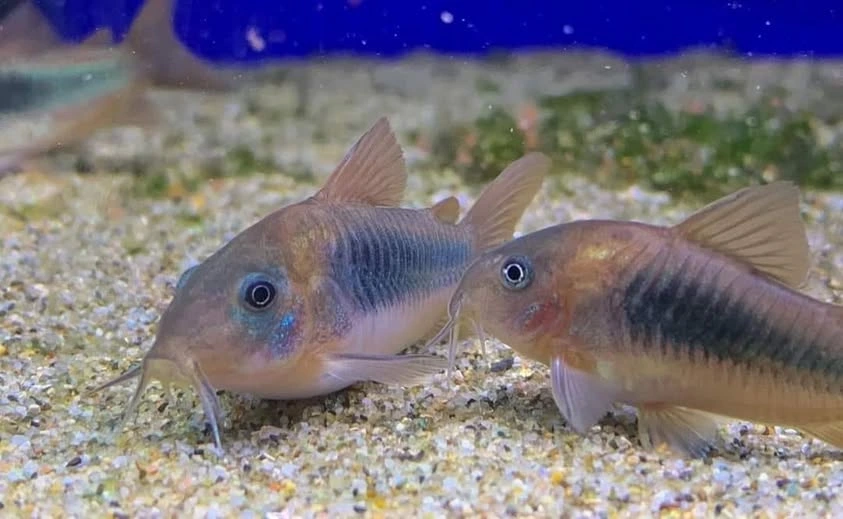
    Two bronze corydoras swimming at the bottom of an aquarium
    Easy

    Bronze Corydoras

    Corydoras aeneus

    The original community catfish. Constantly foraging, endlessly social. A 20 gallon finally gives you room for a proper group of 6.

    7 cmSchool: 622-26°C
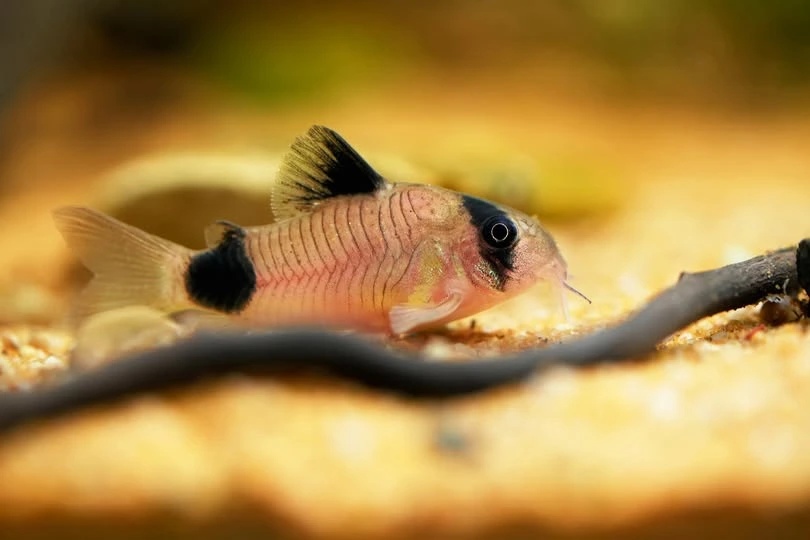
    Single panda corydoras swimming at the bottom of an aquarium
    Easy

    Panda Corydoras

    Corydoras panda

    Black-and-white panda markings make them instantly recognizable. Prefers slightly cooler water — great for unheated or room-temp setups.

    5 cmSchool: 6-820-25°C
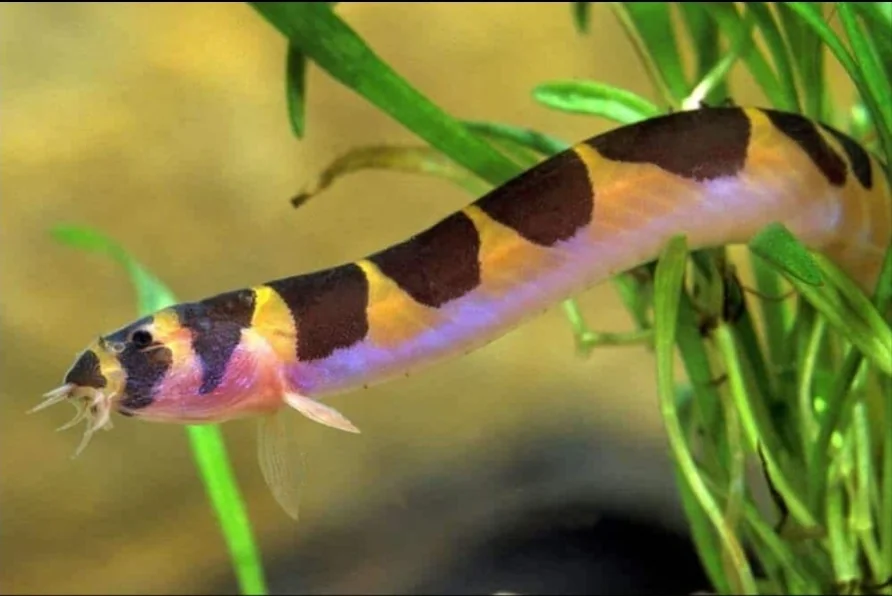
    Kuhli Loach emerging from aquarium plants
    Easy-Moderate

    Kuhli Loach

    Pangio kuhlii

    Eel-shaped, striped, mostly nocturnal. Give them hiding spots and you'll catch them squeezing through the most unexpected gaps.

    10 cmSchool: 5-624-30°C
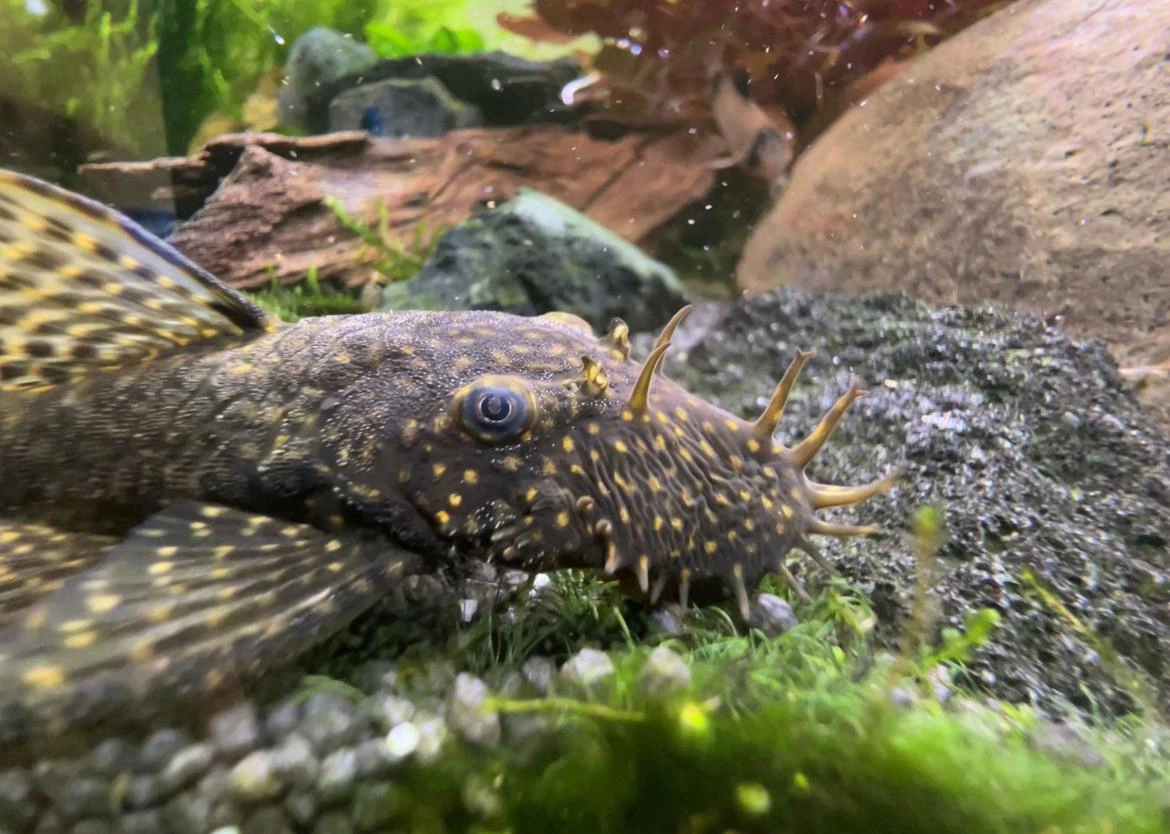
    Bristlenose pleco laying at the bottom of an aquarium
    Easy

    Bristlenose Pleco

    Ancistrus sp.

    The only pleco that belongs in a 20 gallon. Stays small enough, eats algae tirelessly, and develops those signature bristles on the nose.

    12 cmSchool: 123-27°C
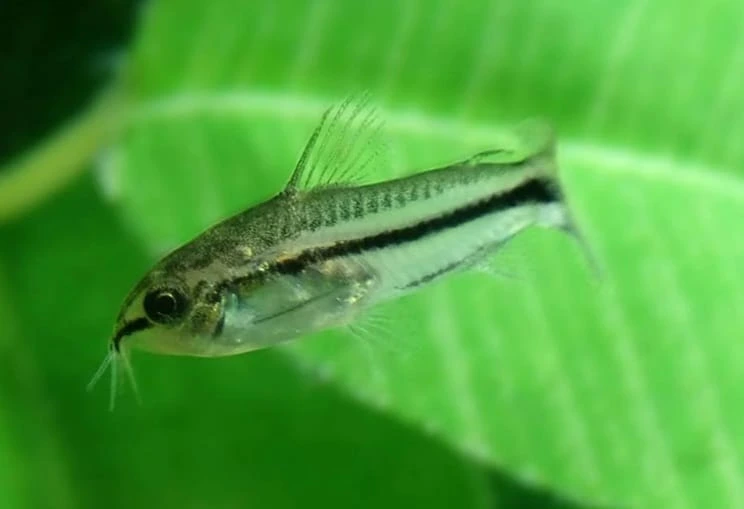
    Single pygmy corydora swimming in an aquarium
    Easy-Moderate

    Pygmy Corydoras

    Corydoras pygmaeus

    The smallest cory — uniquely hovers mid-water and rests on plant leaves. Perfect if you want bottom-dweller personality in the middle column.

    2.5 cmSchool: 8-1022-26°C
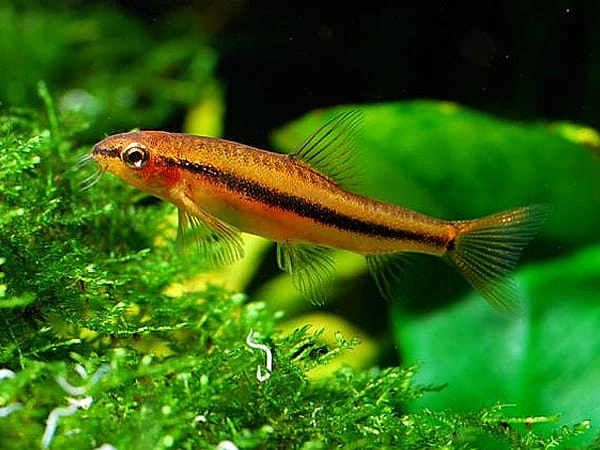
    Rosy loach swimming near some aquatic moss in a fish tank
    Easy-Moderate

    Rosy Loach

    Petruichthys sp. rosy

    Tiny pink-rose loach that's always foraging. Low bioload and constant activity make them a perfect addition to the bottom level without crowding out larger corydoras.

    2.5 cmSchool: 6-820-25°C
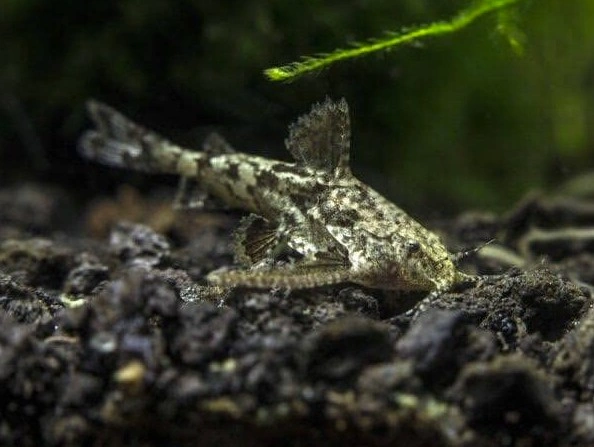
    Asian stone catfish laying at the bottom of an aquarium
    Moderate

    Asian Stone Catfish

    Hara jerdoni

    Pebble-mimicking catfish that are nearly invisible until they move. Nocturnal, incredibly peaceful, and almost zero bioload — a hidden gem for planted setups.

    3 cmSchool: 3-518-24°C
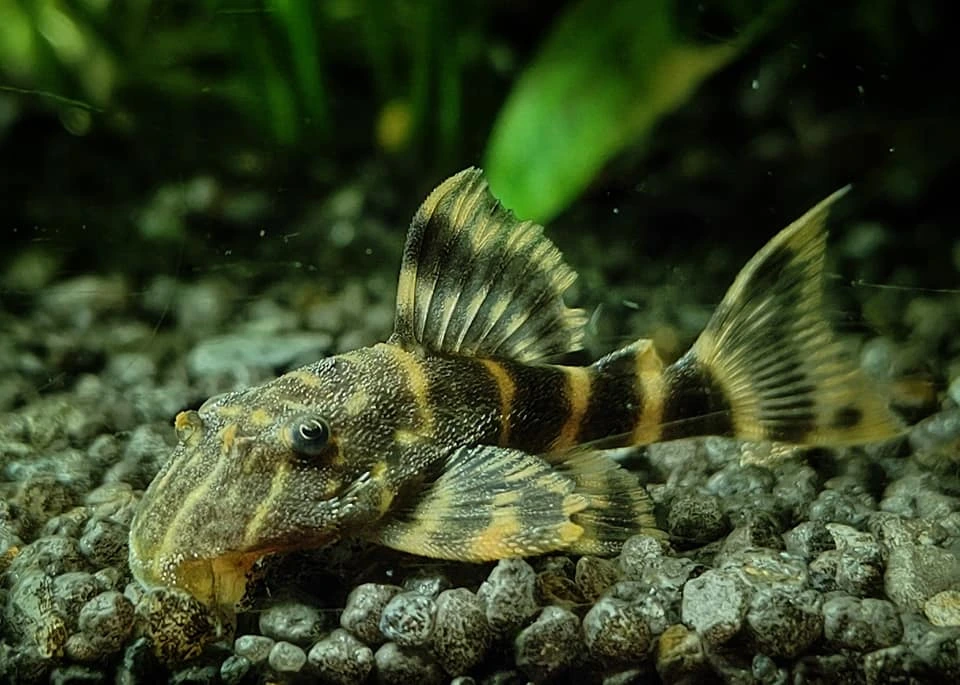
    Clown pleco laying at the bottom of an aquarium substrate
    Easy

    Clown Pleco

    Panaqolus maccus

    A driftwood-loving pleco that stays small. Beautiful striped pattern and much less demanding than Bristlenose — needs wood to rasp on for digestion.

    9 cmSchool: 123-29°C

    Best Livebearers for a 20 Gallon Tank

    Livebearers are the ultimate beginner fish — colorful, active, and nearly impossible to kill. In a 20 gallon, you can keep proper groups with room for the fry (babies) they'll inevitably produce. Keep all males to prevent population explosions, or embrace the breeding and watch natural selection play out.
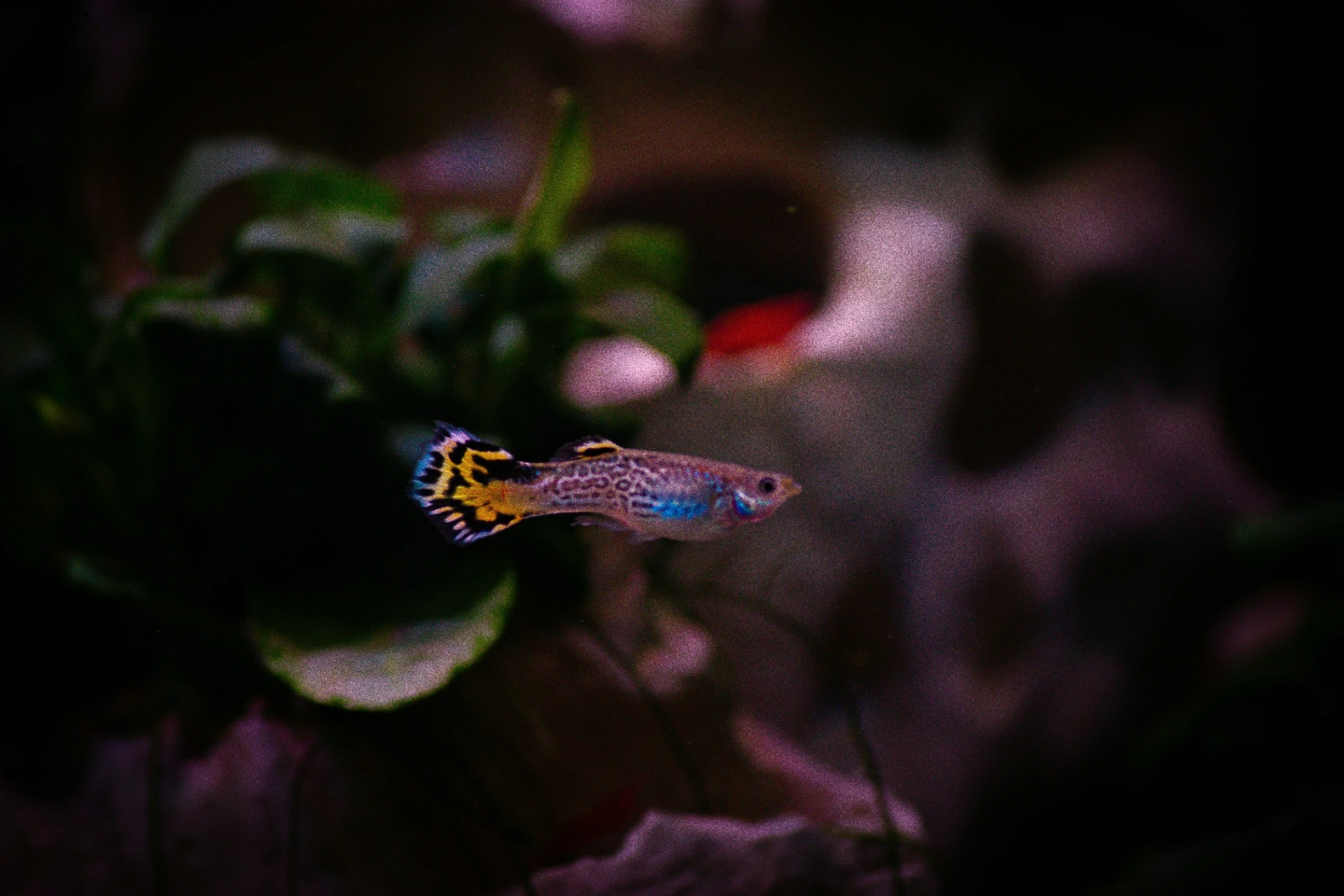
    Yellow female tiger guppy fish swimming in aquarium
    Easy

    Guppy

    Poecilia reticulata

    Endless color variety, constantly active, breed like crazy. A 20 gallon gives you room for a real colony — just decide in advance whether you want males only or a mixed group.

    5 cmSchool: 6-1022-28°C
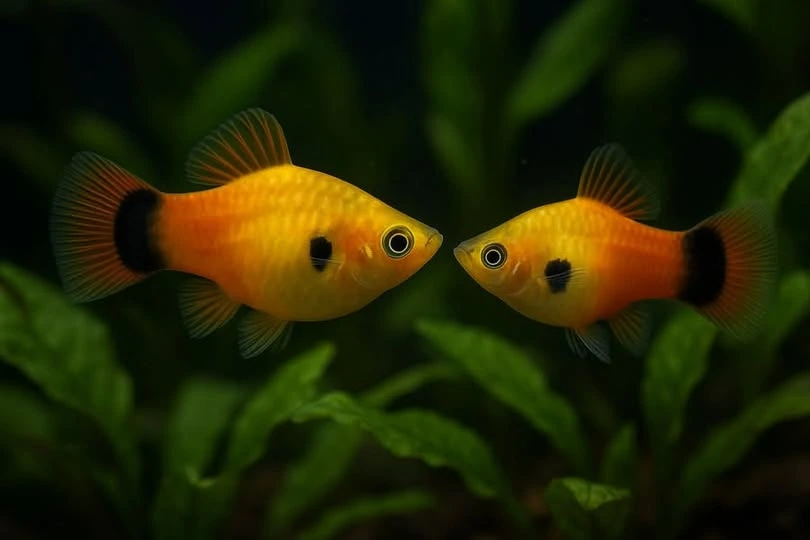
    Two orange platies swimming in aquarium plants
    Easy

    Platy

    Xiphophorus maculatus

    Chunky, colorful, and available in dozens of color morphs. One of the widest temperature ranges of any tropical fish.

    7 cmSchool: 5-820-26°C
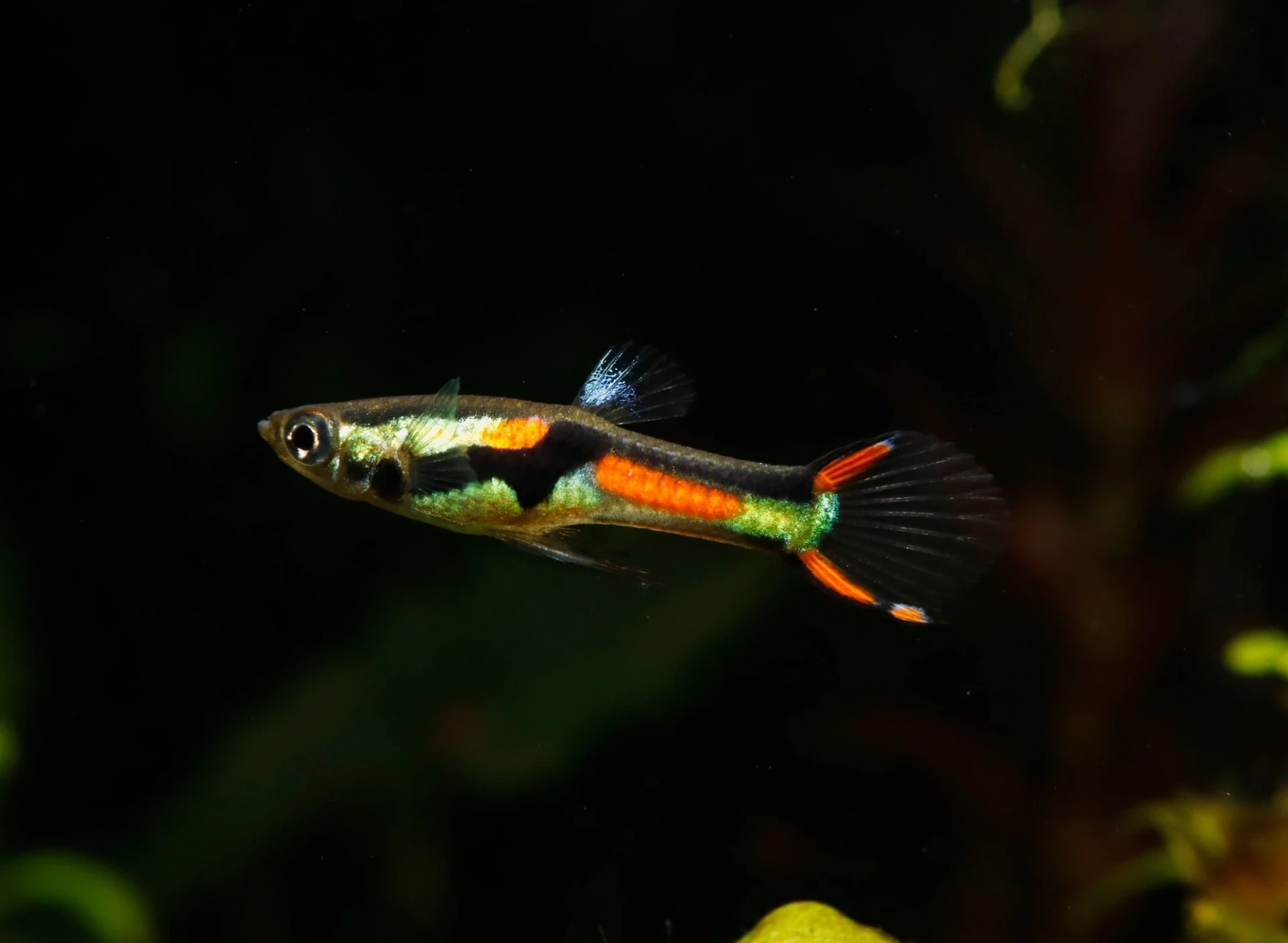
    Endler's livebearer swimming in an aquarium
    Easy

    Endler's Livebearer

    Poecilia wingei

    Like guppies but smaller and wilder-looking. Males are tiny, hyperactive, and covered in neon metallic patterns. Much lower bioload per fish.

    3 cmSchool: 8-1224-30°C

    Best Invertebrates for a 20 Gallon Tank

    Shrimp and snails are the unsung heroes of any aquarium. They handle cleanup that fish won't touch, add visual interest in different ways, and barely register on the bioload scale. In a 20 gallon community, they work alongside your fish rather than competing with them.
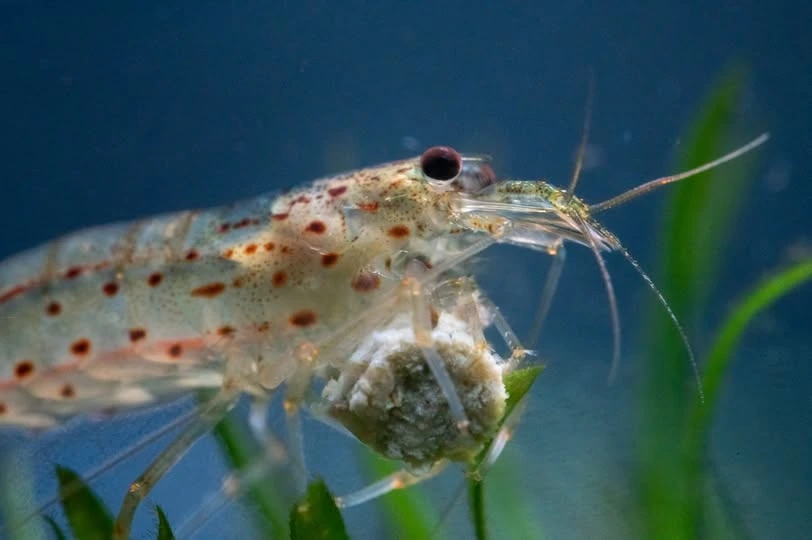
    Amano shrimp eating a piece of algae wafer at the bottom of an aquarium
    Easy

    Amano Shrimp

    Caridina multidentata

    The best algae-eating shrimp available. Big enough that most community fish won't eat them. They'll clear hair algae that nothing else touches.

    5 cmSchool: 5-822-27°C
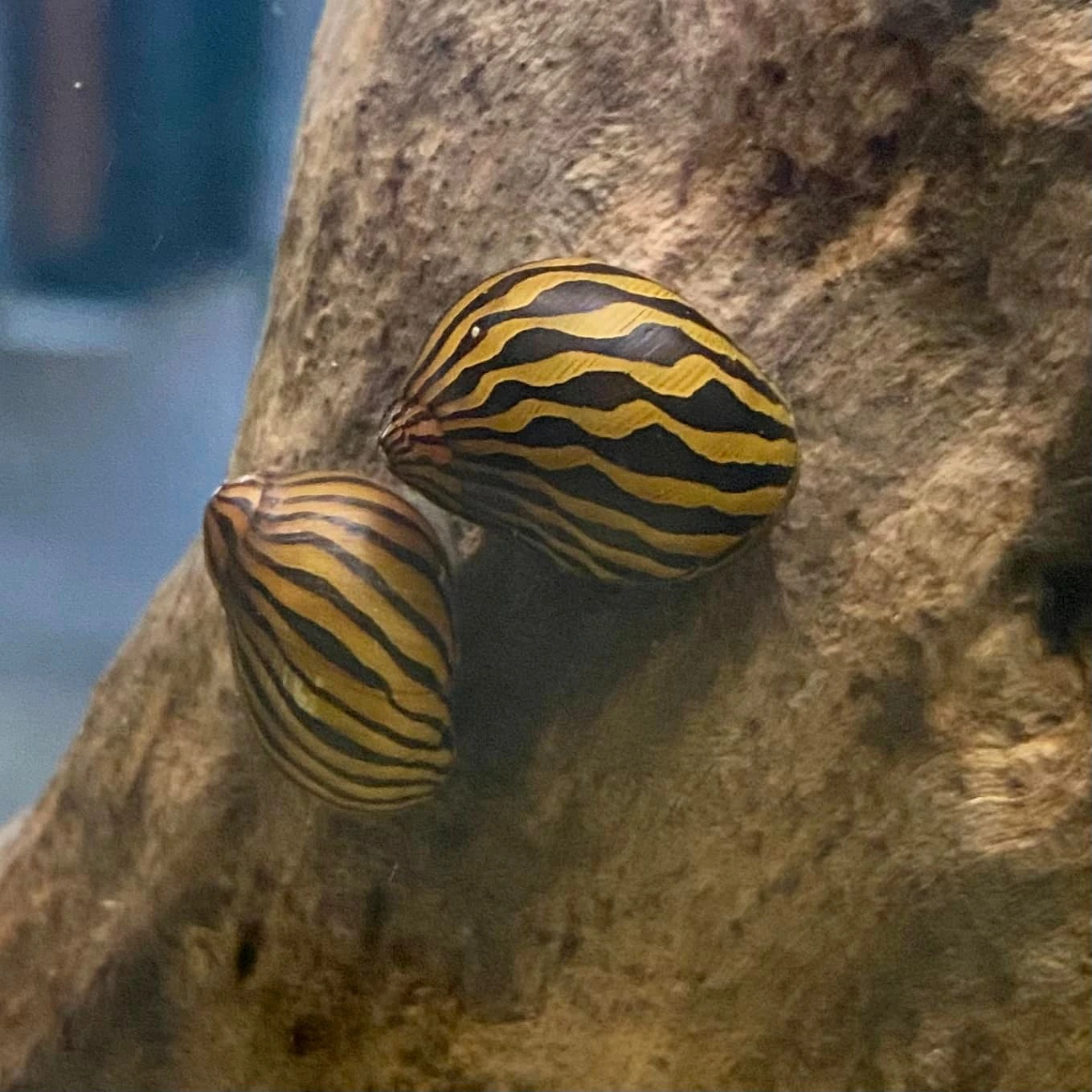
    Two nerite snails on a piece of driftwood in an aquarium
    Easy

    Nerite Snail

    Neritina sp.

    Tireless algae grazer with beautiful shell patterns. Won't reproduce in freshwater — so no snail population explosions.

    2.5 cmSchool: 2-322-26°C
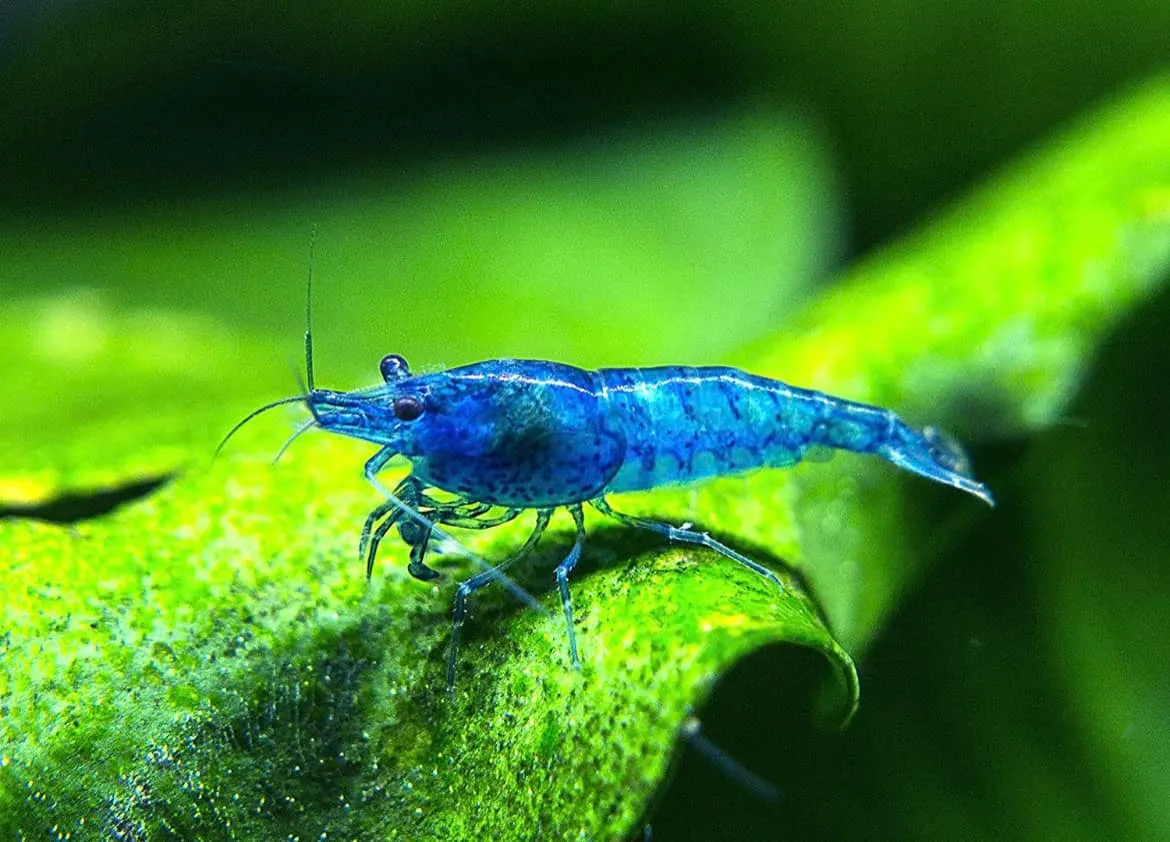
    Blue velvet shrimp on an aquatic plant leaf in an aquarium
    Easy

    Blue Velvet Shrimp

    Neocaridina davidi var. blue

    Deep blue against dark substrate is stunning. A 20 gallon gives you room for a thriving colony — just avoid mixing with Cherry Shrimp or offspring revert to brown.

    3 cmSchool: 10-2018-28°C
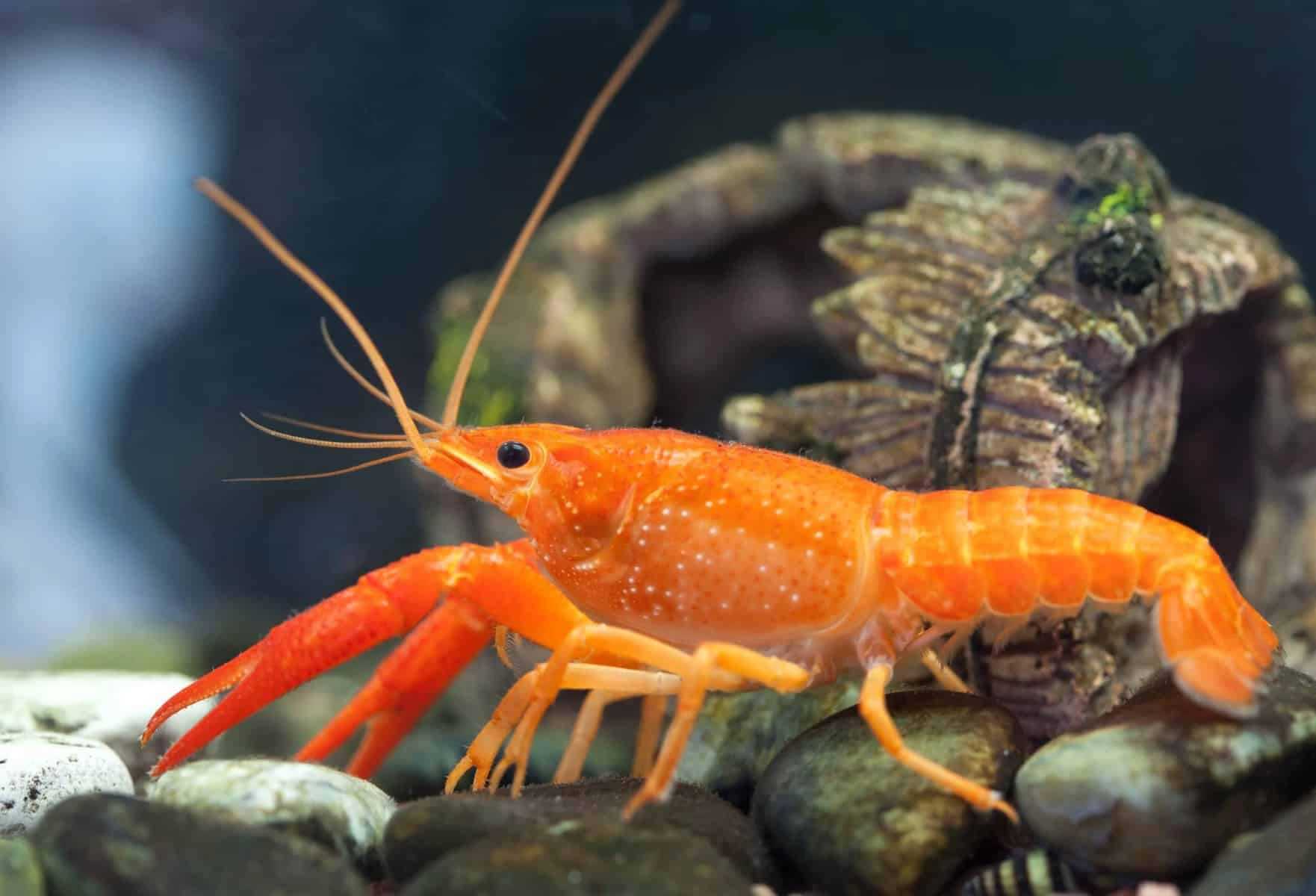
    Mexican dwarf crayfish looking for food at the bottom of a fish tank
    Easy

    Mexican Dwarf Crayfish

    Cambarellus patzcuarensis

    All the personality of a full-sized crayfish in a shrimp-safe package. Bold orange, endlessly curious, and compatible with most peaceful community fish.

    4 cmSchool: 2-418-25°C

    Proven Stocking Combos for a 20 Gallon Tank

    Picking individual species is one thing — combining them into a balanced community is another. These four combinations are field-tested setups where every species is compatible by temperament, water parameters, and tank zone. Use them as-is or as starting points for your own plan.

    The Classic Community

    Beginner

    10 Neon Tetras + 6 Bronze Corydoras + 1 Honey Gourami + 2 Nerite Snails

    The setup every guide recommends — because it works. Color at every level, near-zero aggression risk, and easy enough for your first tank.

    The Planted Showpiece

    Intermediate

    8 Rummy-Nose Tetras + 1 Pair German Blue Rams + 6 Pygmy Corydoras + 5 Amano Shrimp

    Tight schooling, stunning centerpiece pair, and a cleanup crew that keeps the tank spotless. Needs a mature, planted tank with stable parameters.

    The Livebearer Garden

    Beginner

    8 Endler's Livebearers + 6 Panda Corydoras + 1 Bristlenose Pleco

    Nonstop color and activity. Endlers are constantly displaying, Pandas forage the bottom, and the Bristlenose handles algae. Low-stress, high-reward.

    The Nano Species Tank

    Intermediate

    12 Ember Tetras + 10 Celestial Pearl Danios + 8 Pygmy Corydoras + 5 Amano Shrimp

    Maximum visual density with minimum bioload. All small species — the tank feels packed with life without being overstocked. Needs dense planting.

    Blackwater Nano

    Intermediate

    1 Pair Licorice Gouramis + 12 Chili Rasboras + 6 Rosy Loaches

    Tannin-stained water, soft and acidic. The gouramis display constantly, chilis glow red, and rosy loaches keep the bottom active. A specialist's dream.

    ⚠️ Fish to Avoid in a 20 Gallon Tank

    Pet stores will happily sell you any of these fish for a 20 gallon tank. Don't buy them. Some grow too large, some are too aggressive, and some need far more swimming room than 20 gallons provides. Returning fish is harder than choosing the right ones upfront.

    OscarGrows to 30+ cm

    Grows enormous, needs 200+ liters. Will outgrow a 20 gallon in months.

    Bala SharkGrows to 25-35 cm

    Active open-water swimmer that needs 100+ gallons. The name 'shark' is misleading — it's a massive schooling fish.

    Clown LoachGrows to 20-30 cm

    Grows slowly but eventually huge. Needs a school of 5+ and a 100+ gallon tank.

    Common PlecoGrows to 30-45 cm

    The #1 fish people regret buying. Gets massive and produces enormous amounts of waste. The Bristlenose is what you want.

    Silver DollarGrows to 15 cm

    Active schooling fish that needs 55+ gallons. Will eat every live plant in the tank.

    Rainbow SharkGrows to 15 cm

    Extremely territorial. Claims the entire bottom of the tank and harasses everything else. Needs 55+ gallons.

    Red-Tail SharkGrows to 15 cm

    Same problem as Rainbow Sharks — aggressive territory defender. One fish can terrorize a 20 gallon community.

    Chinese Algae EaterGrows to 25 cm

    Peaceful as a juvenile, aggressive as an adult. Attaches to the sides of larger fish and feeds on their slime coat.

    AngelfishGrows to 15 cm tall

    The most controversial pick. Technically can survive in a 20, but their height, aggression during breeding, and need for vertical space means a 29 gallon tall is the real minimum.

    Tiger BarbGrows to 7 cm

    Relentless fin nippers in groups under 10. A 20 gallon doesn't give enough room for a school large enough to keep nipping in check.

    How Many Fish Can You Keep in a 20 Gallon Tank?

    The honest answer: it depends entirely on which species. A 20 gallon can comfortably hold a school of 10-12 small tetras, 6 Corydoras, and a centerpiece fish. Or it can hold a colony of 15+ Endler's Livebearers. Or a pair of German Blue Rams with a small cleanup crew.

    What it can't hold is "one of everything." Overstocking a 20 gallon leads to ammonia spikes, stress, aggression, and dead fish. Use our calculator to check your specific combination before you buy.

    🐟 ~15-20

    small fish

    Typical community: school + bottom dwellers + centerpiece

    📏 Not "inch per gallon"

    That rule ignores bioload

    Activity level and territory needs matter more

    ⚖️ Bioload matters

    Species vary wildly

    10 Ember Tetras have less impact than 3 Platys

    Tips for Setting Up a 20 Gallon Community Tank

    The fish you choose matter, but so does the environment you put them in. A well-set-up 20 gallon practically runs itself — a poorly set-up one becomes an endless cycle of problems.

    🔬

    Cycle first, stock slowly

    A 20 gallon needs to be fully cycled before adding fish (4-6 weeks). Then add species one group at a time over 2-3 weeks, not everything at once.

    🌿

    Plants make everything easier

    Live plants absorb nitrates, provide shelter, reduce aggression, and make the tank more stable. Java Fern, Anubias, Amazon Sword, and Vallisneria are near-impossible to kill.

    💧

    20-25% water change weekly

    More water volume means more stability than a 10 gallon, but don't get complacent. Weekly water changes are still non-negotiable.

    🐠

    20 long > 20 high

    A 20 gallon long (30×12×12 inches) gives more swimming room and surface area than a 20 high (24×12×16). Most fish prefer the extra horizontal space.

    Planning your 20 gallon community?

    Check compatibility, bioload, and tank capacity for your exact setup.