
Care Requirements
Adult Size
1.4" (3.5cm)
Min Tank
10 gal
Temperature
72-82°F
pH Range
3.5-6.5
Lifespan
3-5 years
Min Group
2+ fish
Diet
Carnivore
Swim Level
Bottom
Bioload
1/10
Hardness
0-5 dGH
About Licorice Gourami
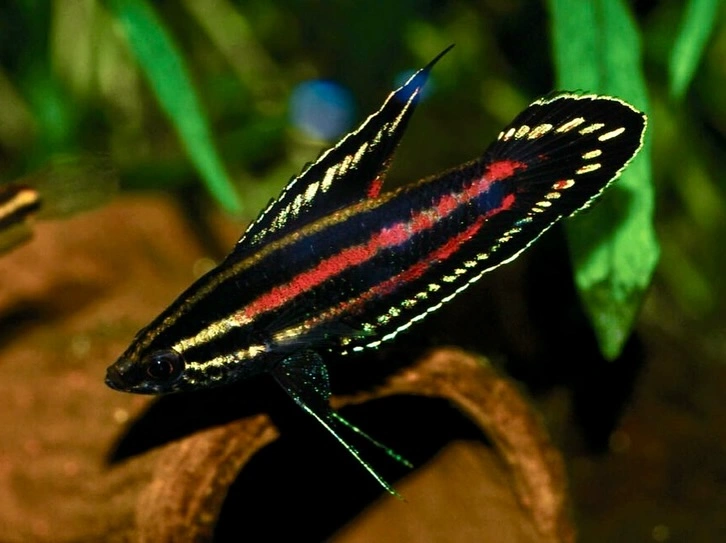
The Licorice Gourami is arguably the most beautiful fish most aquarists have never seen. Belonging to the genus Parosphromenus, these tiny labyrinth fish from Southeast Asian peat swamps display some of the most stunning coloration in the freshwater hobby — males flash iridescent bands of electric blue, deep red, and black during courtship displays that rival any marine fish for sheer visual impact.
What makes Licorice Gouramis truly special — and truly challenging — is their extreme water parameter requirements. They evolved in peat swamp forests where the water is stained nearly black with tannins, has a pH as low as 3.5, and contains virtually zero mineral content. Replicating these conditions in captivity requires dedication, specialized equipment, and a deep understanding of water chemistry.
Beyond their beauty and challenge, Licorice Gouramis carry a conservation urgency. Their peat swamp forest habitat is being destroyed at an alarming rate across Southeast Asia for palm oil plantations and development. Several Parosphromenus species are endangered, and captive breeding programs are considered vital for species survival. Keeping and breeding these fish responsibly is a genuine conservation contribution.
Licorice Gouramis are best kept in species-only nano tanks designed specifically around their needs. They're shy, slow, and easily outcompeted for food by virtually any other fish. Their extreme water requirements make them incompatible with most common aquarium fish. But for advanced aquarists willing to provide the specialized care they need, few fish are as rewarding.
Natural Habitat & Origin
Conservation status: Endangered (EN)
Licorice Gouramis inhabit the peat swamp forests of Bangka Island, Sumatra, and Borneo in Indonesia and Malaysia. These extraordinary ecosystems feature water stained nearly black by decomposing plant matter, with pH values as low as 3.0 — more acidic than vinegar. The water contains virtually no dissolved minerals.
The swamp forests are dark, still, and shallow, with thick layers of leaf litter covering the bottom. Light barely penetrates the tannin-stained water and dense canopy. Licorice Gouramis live among the leaf litter and submerged roots, hunting tiny invertebrates. Tragically, these peat swamp habitats are being rapidly destroyed for palm oil plantations, making captive populations increasingly important.
Native Region
Bangka Island, Sumatra, Borneo — Indonesia and Malaysia
Habitat Type
Peat swamp forests with extremely acidic blackwater
Wild Water Conditions
Extremely soft (0-5 dGH), highly acidic (pH 3.5-6.5), warm (22-28°C), tannin-stained blackwater
Appearance & Varieties
At rest, Licorice Gouramis appear relatively plain — dark brown to black with subtle horizontal stripes. But when males display, they undergo a breathtaking transformation. The body bands ignite with iridescent electric blue, the central stripe glows deep crimson red, and the fins spread to reveal elaborate patterns of blue, red, and black. This display coloration is among the most spectacular of any freshwater fish. Females are smaller and lack the display colors but share the elegant body shape. Both sexes rarely exceed 3.5cm.
Popular Varieties
| Variety | Description | Rarity |
|---|---|---|
| Parosphromenus deissneri | The type species — dark body with brilliant blue and red display colors. From Bangka Island. | uncommon |
| Parosphromenus nagyi | Slightly larger species with broader blue bands and red central stripe. | rare |
| Parosphromenus harveyi | Features more pronounced red coloration in the unpaired fins. | rare |
| Parosphromenus linkei | Distinctive with turquoise-blue bands and contrasting dark body. | rare |
Tank Setup & Requirements
Quick Requirements Summary
Tank Size
Minimum Tank Size
10 gallons
Recommended Tank Size
15 gallons
Licorice Gouramis require a specialized blackwater setup that replicates their peat swamp origins. A nano tank of 10-15 gallons is ideal for a pair or small group. The key challenge is achieving and maintaining extremely soft, acidic water — this requires RO (reverse osmosis) water and generous amounts of botanicals.
Water Parameters
Temperature 22-28°C (72-82°F), pH 3.5-6.5, hardness 0-5 dGH. RO or distilled water is essential — tap water is almost never suitable. Use Indian almond leaves, peat, and alder cones to acidify naturally. TDS should be under 50 ppm ideally.
Substrate
Dark, fine-grained substrate covered with a thick layer of leaf litter (Indian almond, oak, or beech leaves). The leaf litter is not decorative — it's essential habitat and a food source for the microfauna they eat.
Plants & Decorations
Low-light plants that tolerate acidic conditions: Java moss, Java fern, Bucephalandra. Driftwood and botanicals (seed pods, bark) are essential for tannin release. Create dense hiding spots with coconut shells or small clay pots for spawning caves.
Filtration & Water Flow
Very gentle — a small sponge filter or air-driven filter. Zero current is ideal; these fish come from completely still water. Strong filtration will stress them and blow them around the tank.
Lighting
Very dim to moderate. Their natural habitat is deeply shaded. Floating plants (Salvinia, duckweed) help diffuse light. Too much light washes out their colors and stresses them.
Diet & Feeding Guide
Diet Type
carnivore
Feeding Frequency
2 times daily in very small amounts
Portion Size
Tiny portions — a few items per fish per feeding
Licorice Gouramis are micro-predators that feed on tiny invertebrates in the wild. In captivity, they are notoriously picky eaters and many individuals refuse all prepared foods. Live and frozen foods are essential, especially during the initial acclimation period. Some individuals may never accept dry food.
Best Foods for Licorice Gourami
- Live baby brine shrimp — The most reliable food — rarely refused even by wild-caught specimens.
- Live micro worms — Excellent staple; easy to culture at home.
- Frozen cyclops — Small enough for their tiny mouths; good frozen option.
- Live daphnia (small) — Natural prey item eagerly hunted.
- Frozen baby brine shrimp — Accepted by most acclimated specimens.
Foods to Avoid
- Flake food — Almost universally refused; wrong size and movement pattern.
- Large pellets — Far too large for their tiny mouths.
- Freeze-dried foods — Typically ignored; wrong texture and movement.
Many Licorice Gouramis will only accept live foods, at least initially. Having baby brine shrimp and micro worm cultures running before acquiring these fish is strongly recommended. They hunt by sight in dim conditions, stalking individual prey items. In community tanks (not recommended), they will be outcompeted for food by virtually any other fish.
Behavior & Temperament
Licorice Gouramis are shy, slow-moving fish that spend most of their time hovering among leaf litter and botanical debris near the bottom. Males are territorial toward other males but not aggressively so — they display rather than fight. The courtship display is the highlight: males darken their body color and flash brilliant iridescent bands while performing a slow, deliberate dance for the female. They're cave spawners, with males guarding eggs in small cavities. Outside of breeding, they're largely sedentary and easily spooked.
Tank Mates: Compatibility Guide
Compatible Tank Mates
Only in very soft water; shrimp tolerate wider range than commonly believed. No predation risk.
Small, peaceful bottom dweller if water parameters overlap.
Tiny, peaceful, and tolerates similar soft acidic conditions.
Tank Mates to Avoid
Neon Tetra
Too active; will outcompete for food and create too much movement.
Dwarf Gourami
Far too large and boisterous; would bully and stress licorice gouramis.
Betta
Territorial aggression and size difference make cohabitation impossible.
Any cichlid
Too aggressive, too large, wrong water parameters.
Common Pairing Questions
Can Licorice Gouramis live in a community tank?
Strongly discouraged. They're too shy, too slow, and too picky about food to compete with any common community fish. They require extreme water parameters (pH 3.5-6.5, near-zero hardness) that most fish can't tolerate. Species-only tanks produce the best results by far.
Can I keep multiple pairs of Licorice Gouramis?
Yes, in tanks of 15+ gallons with plenty of visual barriers and multiple cave options. Males will display to each other but serious aggression is rare. Each pair needs their own potential spawning cave.
Licorice Gouramis are cave spawners. Males court females with spectacular display coloration, luring them into a small cave (coconut shell, clay pot, or film canister). Eggs are deposited on the cave ceiling and guarded exclusively by the male. Clutches are small (20-50 eggs). Fry are tiny and require infusoria or paramecium as first food, graduating to baby brine shrimp after about a week. Breeding is considered a conservation achievement given their endangered status.
Health Issues & Disease Prevention
Licorice Gouramis are delicate fish that are highly sensitive to water quality changes, medication, and stress. Their extreme water parameter requirements mean that even small fluctuations can cause health issues. Prevention through stable conditions is far more effective than treatment — most medications are poorly tolerated in the ultra-soft, acidic water they require.
Common Diseases
| Disease | Symptoms | Treatment |
|---|---|---|
| Velvet (Oodinium) | Gold dust-like coating on body, rapid breathing, clamped fins, lethargy. | Dim lights completely (parasite is photosynthetic), raise temperature slightly. Medication must be used at reduced doses in soft water. |
| Bacterial infections | Redness, fin erosion, bloating, loss of appetite. | Improve water quality first. Indian almond leaves have mild antibacterial properties. Medication at half doses — full doses are toxic in extremely soft water. |
| Internal parasites | Wasting, white feces, refusal to eat. | Anti-parasitic food if they'll eat it. More common in wild-caught specimens. |
| Stress-related illness | Permanent drab coloration, hiding, refusing food, gasping. | Check water parameters — pH, hardness, temperature. Remove stressors. These fish are sensitive to vibrations, bright light, and active tankmates. |
Signs of a Healthy Licorice Gourami
- Male display coloration
- Active hunting behavior
- Interest in live foods
- Exploring leaf litter
- Spawning behavior
- Clear eyes and fins
Prevention Tips
- Maintain extremely stable water parameters
- Use RO water exclusively
- Keep in species-only tanks
- Provide dim lighting and dense cover
- Culture live foods before acquiring fish
Frequently Asked Questions
Their peat swamp forest habitat in Southeast Asia is being destroyed at catastrophic rates for palm oil plantations, logging, and development. These irreplaceable ecosystems take thousands of years to form and support unique biodiversity found nowhere else. Several Parosphromenus species have lost over 80% of their habitat. Captive breeding is considered vital for species survival.
They can tolerate pH up to about 6.5, but they show their best colors, breed most readily, and live longest in pH 4.0-5.5. The extremely low pH also suppresses bacterial and parasitic infections. RO water with botanical additions naturally achieves these values.
Almost certainly not. They're micro-predators that hunt tiny live prey by sight. Most specimens refuse all dry foods permanently. You need to commit to feeding live and frozen foods — baby brine shrimp, micro worms, and frozen cyclops are the primary diet. Culture live foods before buying these fish.
No — these are strictly advanced-level fish. The extreme water parameter requirements (RO water, pH below 6.5, near-zero hardness), live food needs, and sensitivity to environmental changes make them unsuitable for anyone without significant fishkeeping experience and specialized equipment.
Males display their brilliant colors during courtship and territorial interactions. Keep a pair or small group in proper conditions with spawning caves available. Dim lighting, dark substrate, and excellent water quality encourage displays. Males may also display when they see their reflection or when a rival male is visible.
Tips for Keeping Licorice Gourami
Pro Tips
- ✓Start culturing baby brine shrimp and micro worms BEFORE acquiring these fish — they will not eat dry foods.
- ✓Use 100% RO water remineralized with only a trace of minerals — tap water is never suitable.
- ✓Add generous amounts of Indian almond leaves, alder cones, and peat to naturally acidify water and provide tannins.
- ✓Film canisters make perfect spawning caves — dark, small, and exactly the right size.
Common Mistakes to Avoid
- ✗Using tap water — mineral content is almost always too high, pH too alkaline.
- ✗Keeping in community tanks — outcompeted for food by literally everything, stressed by active tankmates.
- ✗Not having live food cultures ready — fish arrive and refuse all offered foods, leading to starvation.
- ✗Too much light — washes out colors and stresses fish from peat swamp darkness.
- ✗Using standard medication doses — ultra-soft water makes medications far more potent and toxic.
Sources
- FishBase — Accepted scientific name, maximum size and native range for Licorice Gourami.
- IUCN Red List — Endangered conservation assessment for Parosphromenus deissneri.
Related Species You Might Like
View All Fish →
Livingstoni Cichlid
Nimbochromis livingstonii
Chocolate Gourami
Sphaerichthys osphromenoides
Adolfo's Corydoras
Corydoras adolfoi
Assassin Snail
Clea helena
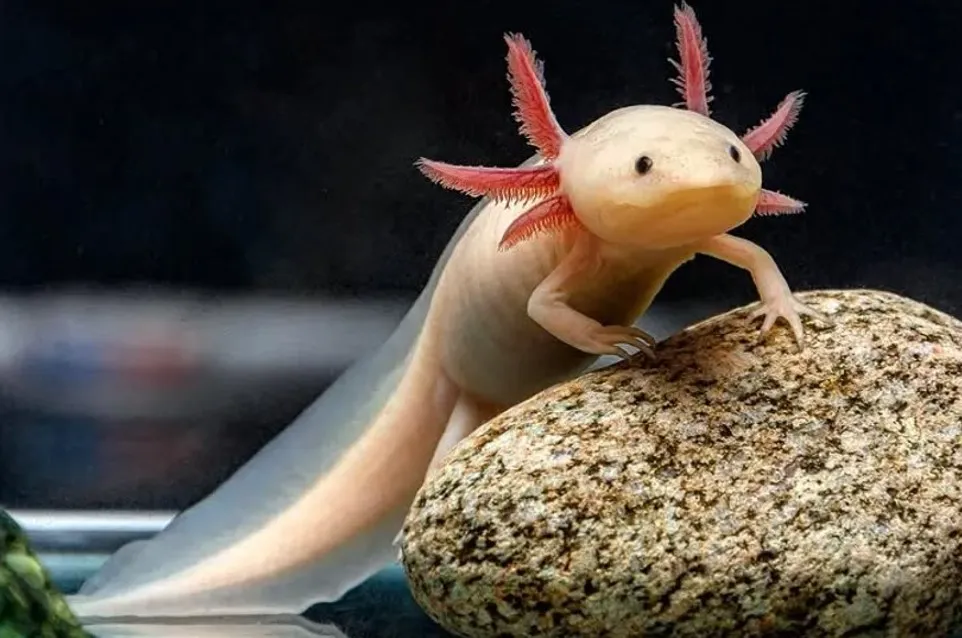
Axolotl
Ambystoma mexicanum
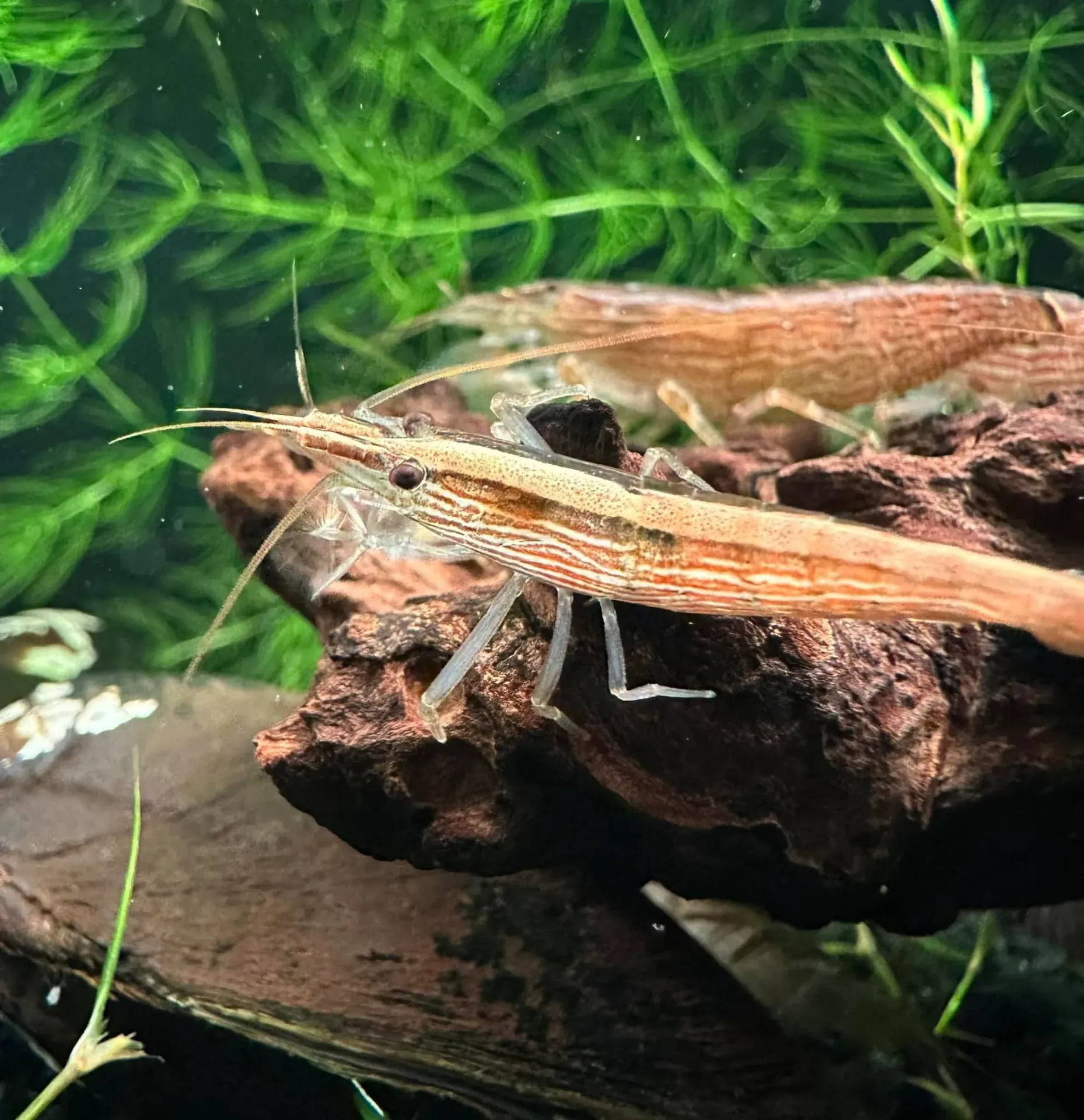
Bamboo Shrimp
Atyopsis moluccensis
Banjo Catfish
Bunocephalus coracoideus
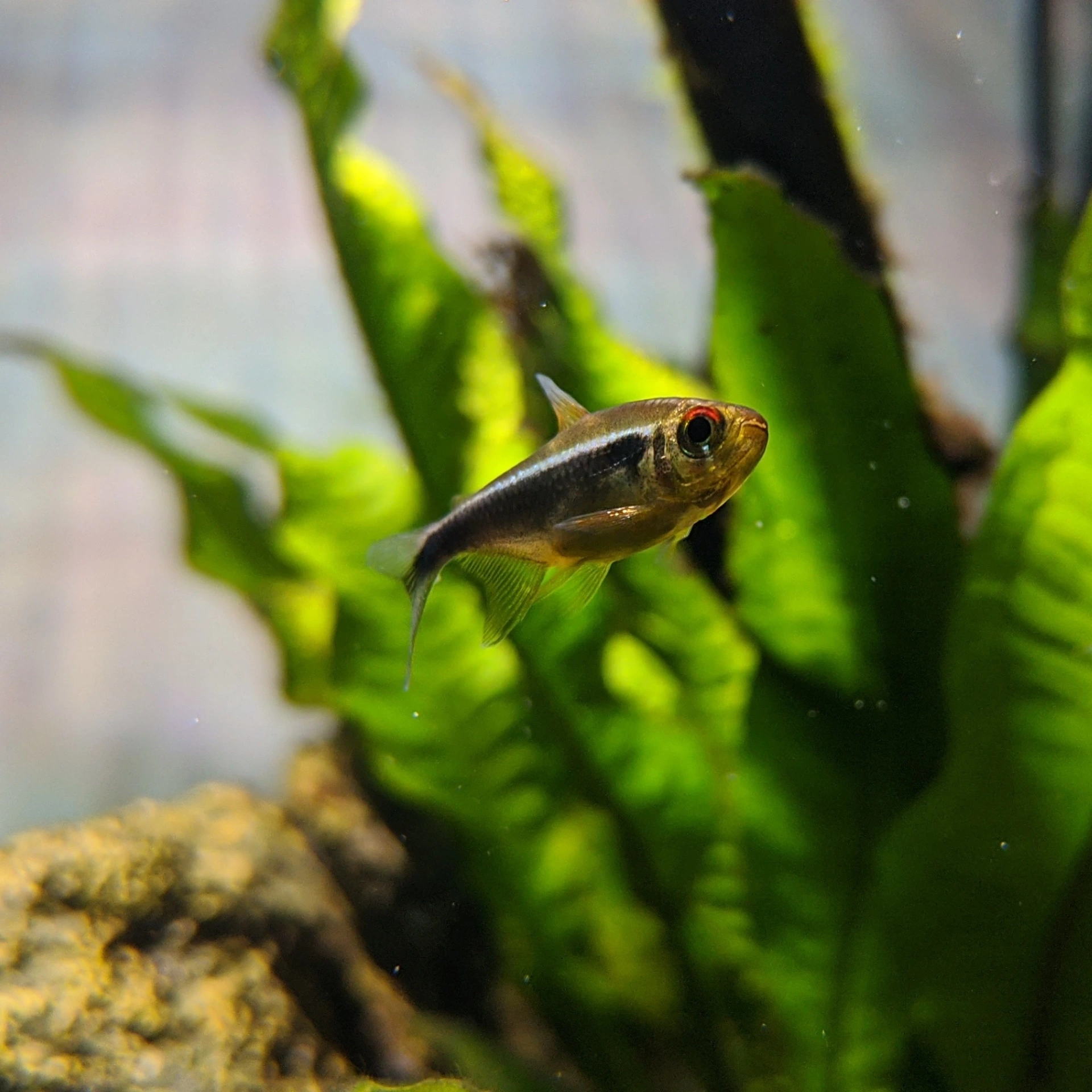
Black Neon Tetra
Hyphessobrycon herbertaxelrodi
Ready to Add Licorice Gourami to Your Tank?
Use our free stocking calculator to check compatibility, bioload, and get personalized recommendations.