
Care Requirements
Adult Size
2.4" (6cm)
Min Tank
20 gal
Temperature
75-86°F
pH Range
4-6.5
Lifespan
5-8 years
Min Group
4+ fish
Diet
Omnivore
Swim Level
Middle
Bioload
1/10
Hardness
0-4 dGH
About Chocolate Gourami
The Chocolate Gourami's reputation precedes it: stunningly beautiful, notoriously difficult, and responsible for more fishkeeping frustration than perhaps any other commonly-sold species. Their demanding requirements aren't marketing hyperbole — they genuinely require conditions most aquarists can't or won't provide.
They originate from peat swamps and blackwater habitats where water is extremely soft (near-zero hardness), highly acidic (pH 4.0-5.5), and stained dark with tannins. Replicating these conditions challenges typical aquarium practices. Standard tap water is usually unsuitable; even 'soft' water by normal standards may be too hard. RO water, extensive botanicals, and careful monitoring are typically necessary.
Beyond water chemistry, they're sensitive to bacterial and parasitic infections that hardier fish shrug off. Poor-quality specimens (stressed during collection and shipping) may arrive already compromised. Quarantine doesn't help much if your main tank lacks the precise conditions they need.
For keepers who can provide appropriate conditions, Chocolate Gouramis reward effort with fascinating behavior including mouthbrooding (females incubate eggs in their mouths) and complex social dynamics. Their chocolate-brown coloration with cream vertical bars is genuinely beautiful. But understand clearly: these are expert-level fish that humble overconfident keepers.
Natural Habitat & Origin
Chocolate Gouramis inhabit peat swamps and blackwater streams across the Malay Peninsula, Sumatra, and Borneo. These environments define their care requirements — water stained black with humic acids, virtually no mineral content, and pH values that would kill most aquarium fish.
Peat swamp water is created by decomposing leaf litter and vegetation releasing tannins and humic substances. The resulting water is tea-colored to nearly opaque, extremely soft, and highly acidic. Dissolved oxygen is often low, but labyrinth breathing allows survival.
Natural habitat features dense vegetation, submerged roots, and deep leaf litter providing cover and foraging opportunities. Light penetration is limited by tannin staining. Temperature remains warm and stable year-round.
Their ecological niche involves foraging for small invertebrates and organic particles among vegetation and leaf litter. They're not aggressive feeders, preferring calm gleaning over competitive scrambling.
Native Region
Southeast Asia — Malay Peninsula, Sumatra, Borneo
Habitat Type
Peat swamps, blackwater streams
Wild Water Conditions
Very warm (26-30°C), extremely soft (0-4 dGH), highly acidic (pH 4.0-6.0), tannin-stained
Appearance & Varieties
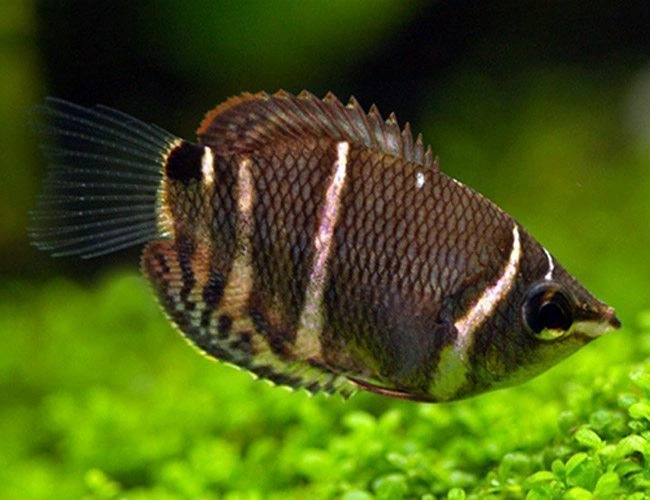
Chocolate Gouramis display rich chocolate-brown base coloration crossed by 3-5 cream to pale yellow vertical bars. This distinctive pattern gives them their common name. Fin edges often show yellow or greenish tinting.
Body shape is smaller and more elongated than typical gouramis — adults reach only 2-2.5 inches (5-6 cm). Despite small stature, their coloration makes significant visual impact.
Sexing is possible with practice: males typically show more angular head profiles with straighter lower jaw lines, while females display rounder profiles. Females carrying eggs in their mouths display noticeably distended throat areas.
Color intensity varies with mood, health, and conditions. Stressed or poorly-kept fish fade to washed-out brown. Optimal conditions bring out rich chocolate tones.
Popular Varieties
| Variety | Description | Rarity |
|---|---|---|
| Standard (Wild-Type) | Chocolate-brown body with cream vertical bars. Some variation in bar intensity and brown depth. The only form available — no selectively bred variants exist. | Uncommon to Moderately Common |
Tank Setup & Requirements
Quick Requirements Summary
Tank Size
Minimum Tank Size
20 gallons
Recommended Tank Size
30 gallons
Chocolate Gourami tank setup is essentially blackwater biotope creation. Their requirements are specific and non-negotiable — success depends on accurately replicating their extreme native conditions.
Water Parameters
These parameters are why Chocolate Gouramis are difficult. The extreme acidity and near-zero hardness exceed what most aquarists can achieve with tap water. RO or distilled water is typically essential. Botanicals (leaves, cones, pods) acidify water and add tannins. pH buffers are counterproductive — the goal is soft, unbuffered, acidic water.
Substrate
Dark substrates complement their appearance and simulate blackwater conditions. Inert substrates (pool filter sand, for example) don't affect water chemistry — important when targeting specific parameters.
Plants & Decorations
BOTANICALS ARE ESSENTIAL, not decorative. Indian almond leaves, oak leaves, alder cones release tannins that acidify water and create blackwater conditions. Deep leaf litter provides security and foraging. Cryptocorynes from similar habitats work well. Java Fern and Anubias tolerate wide pH ranges.
Filtration & Water Flow
Gentle filtration maintains water quality without creating current. Sponge filters are perfect — effective biological filtration with minimal flow. Avoid filter media that buffers pH. Chemical filtration that removes tannins defeats the purpose.
Lighting
Subdued lighting replicates tannin-stained waters where light penetration is limited. They're shy under bright lights. Floating plants can naturally reduce intensity.
Diet & Feeding Guide
Diet Type
omnivore
Feeding Frequency
Small amounts 2-3 times daily
Portion Size
Tiny portions — they're small fish that don't eat much. Multiple small feedings work better than single large ones. Watch for uneaten food fouling water in their sensitive environment.
Chocolate Gouramis are not aggressive eaters and may refuse unfamiliar foods initially. Variety and patience are essential, particularly with newly acquired specimens.
Best Foods for Chocolate Gourami
- Live foods — Daphnia, baby brine shrimp, micro worms, grindal worms — often essential for conditioning new specimens and encouraging feeding.
- Frozen bloodworms — Usually accepted once settled. Good staple protein source.
- Frozen brine shrimp — Well-accepted frozen food providing variety.
- Frozen daphnia — Excellent for digestion and readily accepted.
- Quality micro pellets — Some specimens accept small sinking pellets once established. May require training.
- Crushed flakes — May be accepted by established fish but often ignored initially.
Foods to Avoid
- Large foods — Their small mouths require appropriately-sized offerings.
- Solely dried foods — Many specimens refuse or struggle with dried foods. Live and frozen options are usually necessary.
New specimens often refuse food initially. Live foods are most likely to trigger feeding response. Extreme patience is required.
Behavior & Temperament
Chocolate Gouramis are shy, peaceful fish that function best in groups. Solitary specimens or pairs often remain hidden and stressed; groups of 6+ display more natural behavior with visible social hierarchies and interaction.
Unlike most gouramis, females are the mouthbrooders — after spawning, the female carries fertilized eggs in her mouth for approximately 2 weeks until fry are released. During this period, she doesn't eat.
Their activity level is low — expect calm swimming and foraging rather than active displays. This sedentary nature isn't lethargy but natural behavior.
Dominance hierarchies establish within groups, visible through coloration changes and positioning. Subordinate fish may show paler colors and remain peripheral.
Tank Mates: Compatibility Guide
Compatible Tank Mates
Tank Mates to Avoid
Active, boisterous fish
Their shy nature is overwhelmed by active tankmates. They'll hide constantly and fail to feed.
Hard water species
Most common aquarium fish require harder water than Chocolate Gouramis tolerate. Livebearers, African cichlids are incompatible.
Competitive feeders
They're timid feeders that lose out to aggressive eaters. Food competition leads to starvation.
Large fish
Intimidated by size difference. Stress leads to disease and death in these sensitive fish.
Fish requiring high pH
The acidic conditions required are incompatible with alkaline-preferring species.
Common Pairing Questions
Can Chocolate Gouramis live in a community tank?
Only with very carefully selected tankmates that tolerate the same extreme conditions — tiny rasboras, Sparkling Gouramis, Kuhli Loaches.
How many Chocolate Gouramis should I keep?
Groups of 6+ are strongly recommended. Solitary specimens or pairs often remain stressed and hidden.
Chocolate Gourami breeding is achievable — a rewarding challenge for experienced keepers. The maternal mouthbrooding behavior is fascinating to observe.
Sexing: Males typically show straighter jaw lines and more angular heads; females have rounder profiles. Males may display more yellow throat coloration.
The brooding female carries eggs for approximately 14 days without eating. Don't mistake her withdrawn appearance for disease.
Fry are released as miniature adults, relatively large for gourami fry. They accept newly-hatched brine shrimp immediately. Raising fry requires continued attention to water chemistry.
Health Issues & Disease Prevention
Chocolate Gouramis are infamously prone to health problems when conditions aren't optimal. Prevention through perfect husbandry is the only reliable approach.
Common Diseases
| Disease | Symptoms | Treatment |
|---|---|---|
| Bacterial infections | Fin rot, body sores, lethargy, loss of color, rapid death. | Improve water quality. Antibacterial medication. Prevention is critical — treatment is often unsuccessful. |
| Velvet disease | Gold-dust appearance, clamped fins, scratching, rapid breathing. | Copper-based medication (carefully dosed), raised temperature, dim lighting. Often fatal before treatment can work. |
| Ich (White Spot) | White spots on body, scratching, clamped fins. | Raised temperature and salt can work. Standard ich medications at reduced doses. They're medication-sensitive. |
| Columnaris | White or gray patches, frayed fins, rapid progression. | Antibacterial medication. Highly contagious and often fatal. Quarantine immediately. |
| Mystery deaths | Apparently healthy fish found dead or dying rapidly. | None — review husbandry. Water chemistry issues, stress, or underlying conditions often responsible. |
Signs of a Healthy Chocolate Gourami
- Rich chocolate coloration
- Active (though calm) behavior
- Good appetite
- Clear eyes and intact fins
- Social interaction within group
Prevention Tips
- Maintain perfect water chemistry (soft, acidic)
- Quarantine new additions extensively
- Source from reputable suppliers
- Avoid stressors (bright lights, aggressive tankmates)
- Feed varied diet including live foods
- Keep in groups for psychological health
Frequently Asked Questions
They require extreme water conditions — pH 4.0-6.0, near-zero hardness — that most aquarists can't provide with standard tap water. They're also highly sensitive to bacteria and parasites.
pH 4.0-6.5, ideally 4.5-5.5. This extreme acidity is the primary care challenge. RO or distilled water is typically essential.
Only with very carefully selected tankmates that tolerate the same extreme conditions. Most common aquarium fish require harder, more alkaline water.
New specimens often refuse food due to shipping stress. Live foods (daphnia, baby brine shrimp) are most likely to trigger feeding response. Extreme patience is required.
No — unlike most gouramis, they're mouthbrooders. Females carry fertilized eggs in their mouths for about 2 weeks.
Groups of 6+ are strongly recommended. Solitary specimens often remain stressed and hidden. Groups allow natural social hierarchies.
Tips for Keeping Chocolate Gourami
Pro Tips
- ✓Source matters enormously — seek captive-bred fish or specimens established at a reputable store for weeks.
- ✓Botanicals aren't decoration — they're infrastructure for creating the acidic, antibacterial conditions these fish need.
- ✓RO water is usually essential — unless your tap water is already extremely soft and acidic.
- ✓Accept that some loss may occur — even experienced keepers lose Chocolate Gouramis.
Common Mistakes to Avoid
- ✗Keeping in standard community conditions — death. They cannot survive typical aquarium water chemistry.
- ✗Purchasing on impulse without research — dead fish and frustration.
- ✗Keeping singly or in pairs — perpetual hiding and stress.
- ✗Offering only dry foods — starvation.
- ✗Using pH buffers — counterproductive, they resist the low pH needed.
- ✗Bright lighting, sparse setup — chronic stress.
Sources
- FishBase — Accepted scientific name, maximum size and native range for Chocolate Gourami.
Featured in Biotope Presets
Related Species You Might Like
View All Fish →
Clown Killifish
Epiplatys annulatus
Licorice Gourami
Parosphromenus deissneri
Adolfo's Corydoras
Corydoras adolfoi
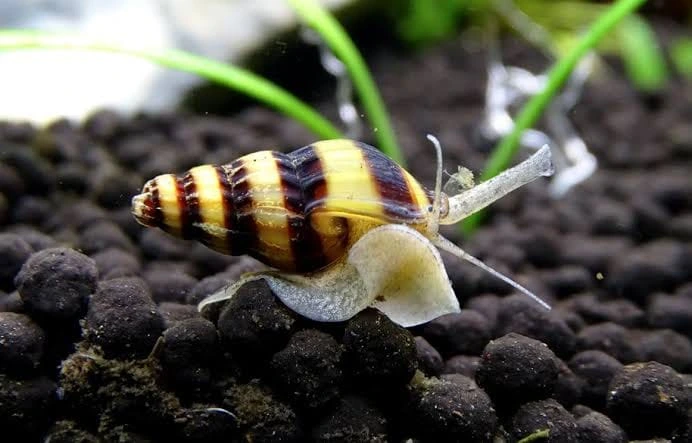
Assassin Snail
Clea helena
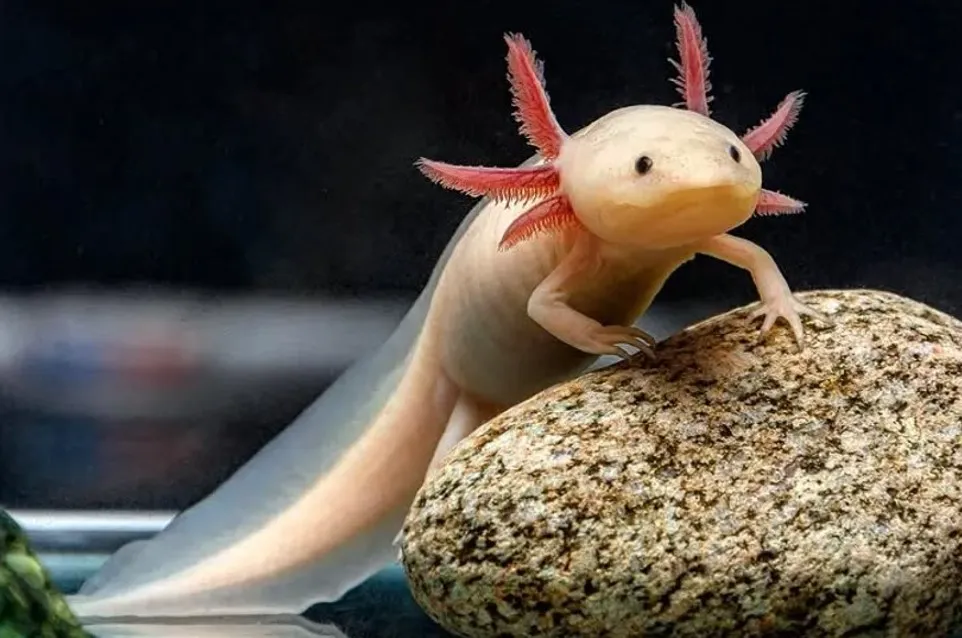
Axolotl
Ambystoma mexicanum
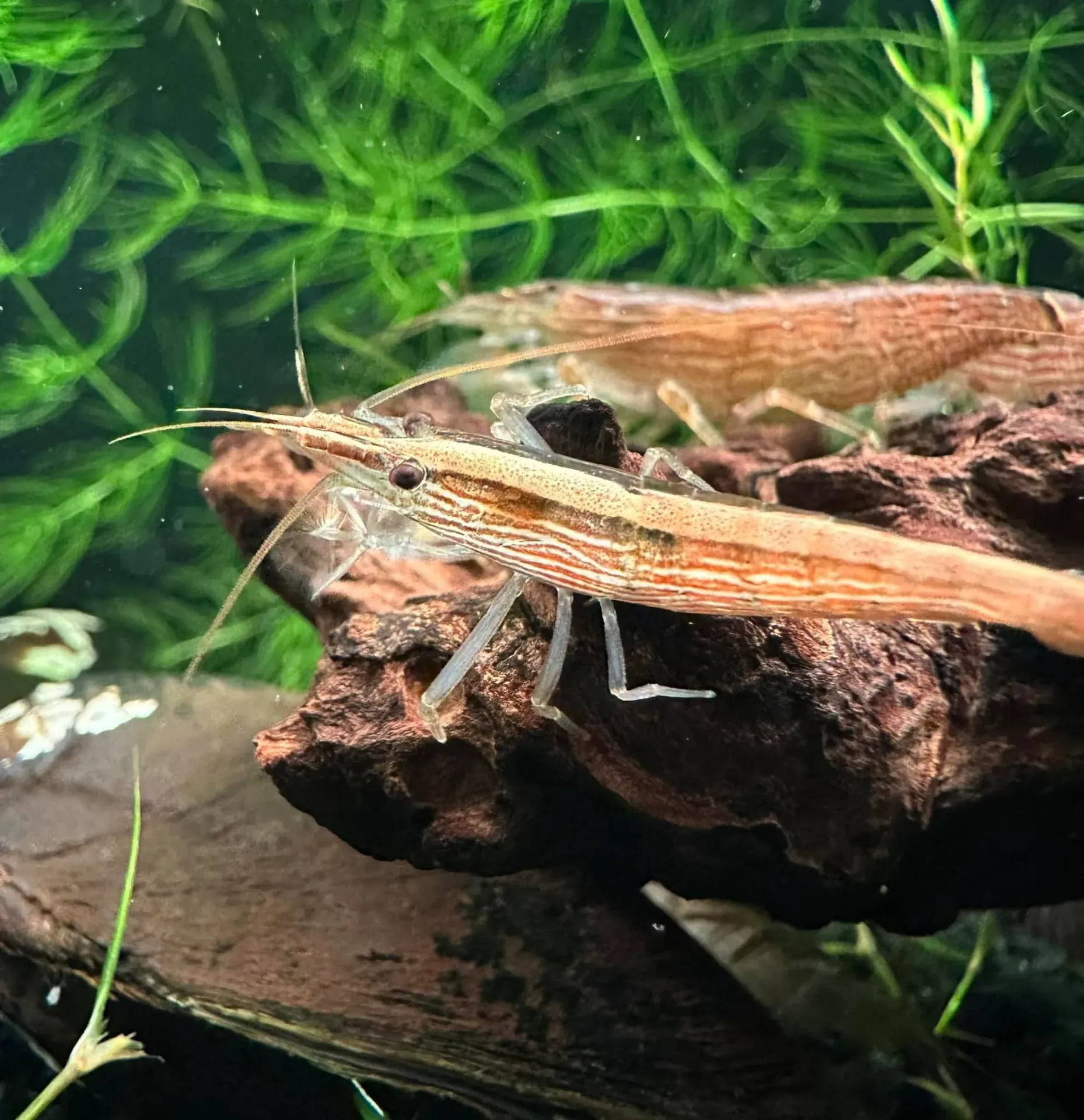
Bamboo Shrimp
Atyopsis moluccensis
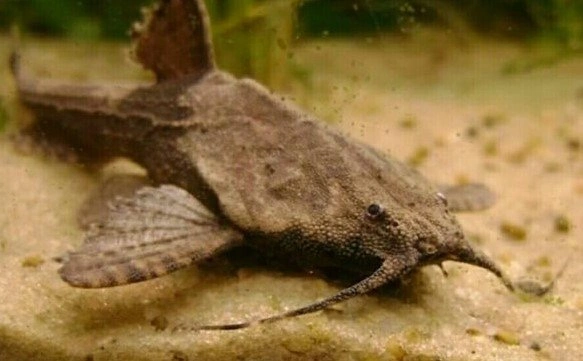
Banjo Catfish
Bunocephalus coracoideus
Black Neon Tetra
Hyphessobrycon herbertaxelrodi
Ready to Add Chocolate Gourami to Your Tank?
Use our free stocking calculator to check compatibility, bioload, and get personalized recommendations.