
Care Requirements
Adult Size
4.7" (12cm)
Min Tank
40 gal
Temperature
68-79°F
pH Range
6-8
Lifespan
5-7 years
Min Group
6+ fish
Diet
Omnivore
Swim Level
Top
Bioload
4/10
Hardness
5-20 dGH
About Giant Danio
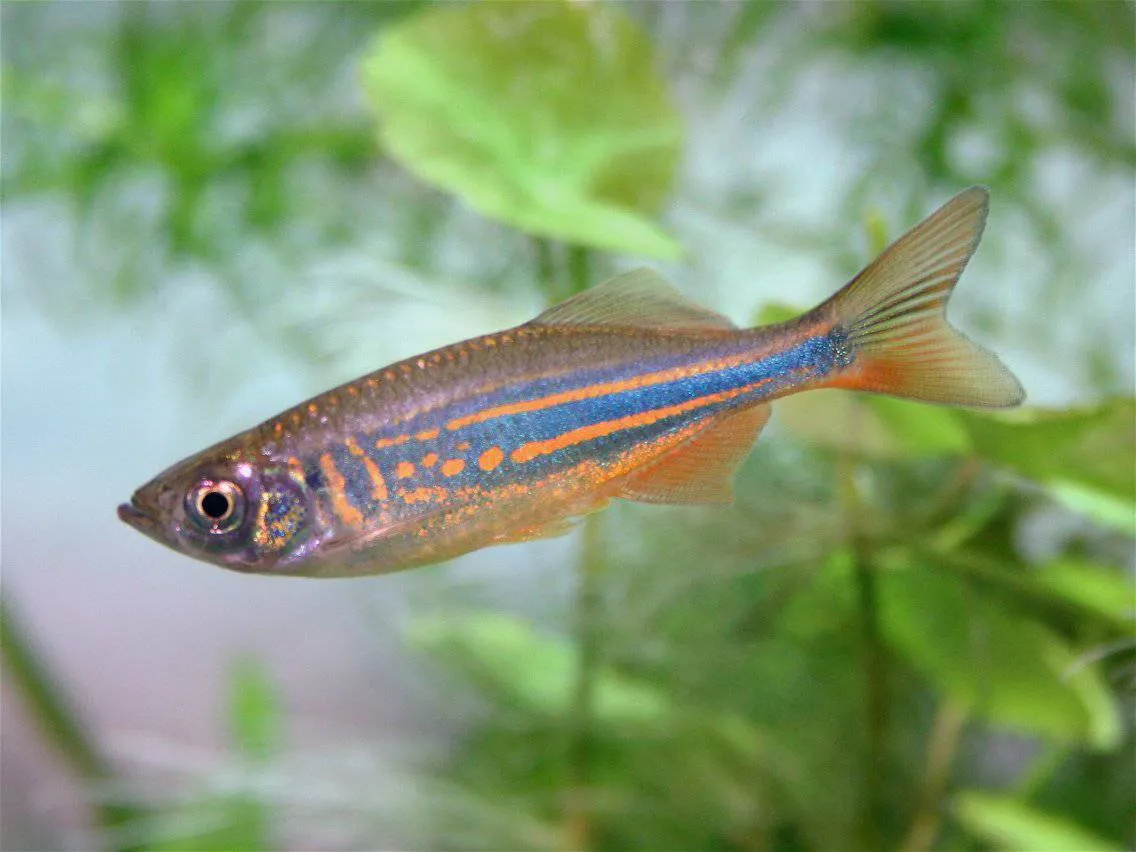
The Giant Danio is one of the most energetic and active fish available in the freshwater aquarium hobby. Growing to an impressive 5 inches (12 cm), they're significantly larger than their popular cousin the Zebra Danio, and their constant, rapid swimming brings unmatched dynamism to any large community tank.
Native to the fast-flowing streams and rivers of South and Southeast Asia, Giant Danios are built for speed. Their torpedo-shaped bodies, powerful tails, and tireless energy mean they're almost never still. A school of Giant Danios creates a mesmerizing display of coordinated movement, with iridescent blue and gold flashes catching the light as they dart through the tank.
Despite their size and activity, Giant Danios are peaceful fish that rarely cause problems with appropriately sized tankmates. Their main compatibility concern isn't aggression—it's their sheer energy level, which can stress slow-moving or timid species. They're excellent community fish for tanks with similarly robust, active inhabitants.
Natural Habitat & Origin
Giant Danios are found across a wide range in South and Southeast Asia, from India and Nepal through Bangladesh, Myanmar, Sri Lanka, and into Thailand. They inhabit fast-flowing streams, rivers, and hill streams with rocky substrates and well-oxygenated, clear water.
Their natural habitat features moderate currents, rocky bottoms, and relatively cool water compared to many tropical fish. This explains their tolerance for cooler temperatures and their need for strong water movement in captivity. Understanding their stream-dwelling origins is key to providing an appropriate tank setup with adequate flow and swimming space.
Native Region
South and Southeast Asia - India, Nepal, Bangladesh, Myanmar, Sri Lanka, Thailand
Habitat Type
Fast-flowing streams, rivers, and hill streams with rocky substrates
Wild Water Conditions
Clear, well-oxygenated water with moderate current, cooler temperatures (64-78°F)
Appearance & Varieties
Giant Danios are sleek, torpedo-shaped fish reaching up to 5 inches (12 cm) in length—much larger than most other danio species. They display beautiful iridescent blue and gold coloration along their flanks, with horizontal stripes that shimmer as they move through the water.
Females are noticeably rounder and deeper-bodied than males, especially when carrying eggs. Males are slimmer with more intense blue and gold iridescence. Both sexes have transparent fins and a slightly forked tail designed for powerful swimming. Don't be fooled by small juveniles at the store—they grow significantly.
Tank Setup & Requirements
Quick Requirements Summary
Tank Size
Minimum Tank Size
40 gallons
Recommended Tank Size
55 gallons
Giant Danios require a minimum of 50 gallons (190 liters), with 75 gallons (285 liters) recommended for a comfortable school. Long tanks are essential—horizontal swimming space matters far more than tank height for these active swimmers.
Water Parameters
Temperature is flexible between 68-79°F (20-26°C), making them suitable for unheated tanks in most homes. pH 6.0-8.0 and hardness 5-20 dGH—they're very adaptable. Stability matters more than exact values.
Substrate
Any substrate works—they don't interact much with the bottom. Gravel, sand, or bare bottom are all fine.
Plants & Decorations
Hardy plants along the edges that tolerate current. Leave large open swimming areas in the center—they need space to swim at speed. Rocks and driftwood around the perimeter mimic their natural river environment.
Filtration & Water Flow
Strong filtration with good flow is ideal—they come from fast-flowing streams and appreciate current. A powerhead or strong filter output mimics their natural habitat and keeps them active.
Lighting
Moderate lighting—not demanding. They're not light-sensitive and will be active under any reasonable lighting.
Diet & Feeding Guide
Diet Type
omnivore
Feeding Frequency
1-2x daily
Portion Size
What they consume in 2-3 minutes
Giant Danios are voracious omnivores with high metabolisms driven by their constant activity. In the wild, they feed on insects, insect larvae, small crustaceans, worms, and plant matter in fast-flowing streams. They're enthusiastic, competitive eaters that will consume almost anything offered.
Best Foods for Giant Danio
- High-quality flakes — Good staple diet—they feed eagerly at the surface
- Pellets/granules — Sinking and floating varieties both accepted
- Frozen bloodworms — Excellent protein supplement
- Frozen brine shrimp — Readily accepted, good variety
- Live insects/mosquito larvae — Natural prey, great conditioning food
- Blanched vegetables — Occasional variety for balanced nutrition
Foods to Avoid
- Exclusively dry food — Variety improves health and coloration
- Overfeeding — Their eagerness can lead to overfeeding—portion control important
Giant Danios are voracious, competitive eaters—ensure slower tankmates get food too. They'll eagerly eat at the surface and mid-water. Their high metabolism from constant activity requires regular feeding. Scatter food across the tank surface to reduce competition.
Behavior & Temperament
Giant Danios are among the most active common aquarium fish—their constant, rapid swimming is their defining characteristic. A school moves in coordinated patterns throughout the tank, creating an energetic, dynamic display that's impossible to ignore.
They're peaceful but boisterous—their activity level can stress timid or slow-moving species. They're excellent jumpers, so a secure lid with no gaps is absolutely mandatory. Males chase females constantly when in breeding condition, adding even more activity. Their confidence makes them excellent dither fish for larger, shy species like cichlids.
Tank Mates: Compatibility Guide
Compatible Tank Mates
Similarly active, robust enough to handle the energy
Active, similarly sized, beautiful community
Large enough to not be intimidated
Robust gourami that handles active tanks
Large, active bottom dweller—good complement
Hardy catfish, different tank zone
Unperturbed by active swimmers above
Tank Mates to Avoid
Betta
Too much activity will stress bettas severely
Celestial Pearl Danio
Too small, will be intimidated and outcompeted for food
Sparkling Gourami
Too timid and small for the activity level
Very small fish
Can intimidate or potentially eat very small species
Common Pairing Questions
Can Giant Danios live with goldfish?
Yes, in appropriately sized tanks. Both tolerate cooler temperatures, and Giant Danios are large enough to not be bothered by goldfish. Use a 75+ gallon tank and ensure both get adequate food. The Giant Danios' activity complements goldfish nicely.
Can Giant Danios live with small tetras?
Not ideal. While not predatory, Giant Danios are large and fast enough to intimidate small tetras. Very small species could potentially be eaten. Stick with medium to large tankmates that can handle the energy level.
Giant Danios are one of the easier fish to breed, spawning readily in captivity. They're egg scatterers with no parental care—adults will eat eggs immediately if given the chance.
To breed, set up a large tank with fine-leaved plants or spawning mops. Condition males and females separately with high-quality foods. A slightly cooler water change or morning sunlight often triggers spawning behavior—males chase females vigorously as she scatters 200-300 eggs among plants.
Remove adults immediately after spawning or use a spawning grate to protect eggs. Eggs hatch in just 24-36 hours, and fry become free-swimming shortly after. Feed infusoria for the first few days, then graduate to baby brine shrimp. Fry grow quickly with good feeding and can reach sellable size within a few months.
Health Issues & Disease Prevention
Giant Danios are hardy, resilient fish that rarely develop health problems when given adequate space and clean water. Their main health risks come from jumping injuries (secure your lid!) and stress from cramped conditions.
Common Diseases
| Disease | Symptoms | Treatment |
|---|---|---|
| Ich (White Spot Disease) | White spots on body, flashing against objects, clamped fins | Raise temperature gradually, use ich medication. Giant Danios tolerate treatment well due to their hardiness. |
| Mycobacteriosis | Wasting, curved spine, ulcers, lethargy | Difficult to treat. Improve nutrition and water quality. Severely affected fish should be removed. |
| Fin rot | Frayed or deteriorating fins | Improve water quality, antibacterial medication if needed. Usually resolves with clean water. |
Signs of a Healthy Giant Danio
- Constant active swimming
- Bright iridescent coloration
- Good appetite and competitive feeding
- Schooling behavior with group
- Intact, spread fins
- Full, healthy body condition
Prevention Tips
- Secure lid with absolutely no gaps—they will find any opening
- Provide adequate swimming space—cramped tanks cause stress
- Maintain good water quality with regular changes
- Keep in schools of 6+—solitary fish become stressed and nippy
- Quarantine new fish for 2 weeks
- Provide swimming space even in quarantine tanks
- Avoid overcrowding—their activity level demands space
Frequently Asked Questions
Up to 5 inches (12cm)—much larger than the common Zebra Danio (2 inches). Don't be fooled by small juveniles at the store. They need a 50+ gallon tank as adults.
Not aggressive, but very boisterous and active. Their constant rapid swimming can stress slow-moving or timid fish. Best kept with similarly active or robust species.
They tolerate a wide range (64-78°F / 18-26°C) and can live in unheated tanks in most homes. They're subtropical rather than strictly tropical, making them versatile.
They're naturally excellent jumpers—it's instinctive, not a sign of problems. Any gap in the lid is an escape route. Ensure complete coverage with no openings around filters or heaters.
Minimum 6, ideally 8-10+. They're schooling fish and single specimens or pairs become stressed and may become nippy. A proper school is active and entertaining.
Not ideal. While not predatory, they're large and fast enough to intimidate small fish. Very small fish could be eaten. Best with medium to large tankmates.
Tips for Keeping Giant Danio
Pro Tips
- ✓One of the most active fish available—tank will never look still
- ✓Excellent dither fish for large shy cichlids—their confidence is contagious
- ✓Temperature tolerance makes them versatile for subtropical setups
- ✓Long tanks (not tall) are essential—they swim horizontally
- ✓Great for filling the upper/middle zones of large community tanks
- ✓Strong current from filters mimics their natural habitat
- ✓Their activity level actually helps distribute food throughout the tank
- ✓Can be kept with goldfish in appropriately sized, cooler tanks
Common Mistakes to Avoid
- ✗Tank too small—they need 50+ gallons minimum
- ✗No secure lid—they WILL jump out
- ✗Keeping with slow, timid fish—their activity stresses them
- ✗Underestimating adult size—they grow to 5 inches
- ✗School too small—need 6+ for natural behavior
- ✗No swimming space—they need open horizontal areas
- ✗Expecting them to stay still—constant motion is normal
- ✗Mixing with very small fish—can intimidate or eat them
Sources
- FishBase — Accepted scientific name, maximum size and native range for Giant Danio.
Related Species You Might Like
View All Fish →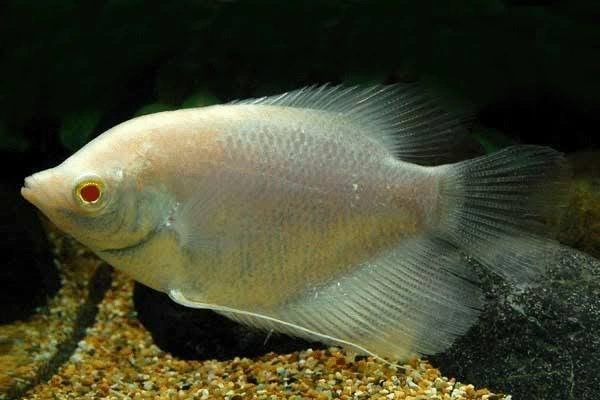
Giant Gourami
Osphronemus goramy

Australian Rainbowfish
Melanotaenia splendida
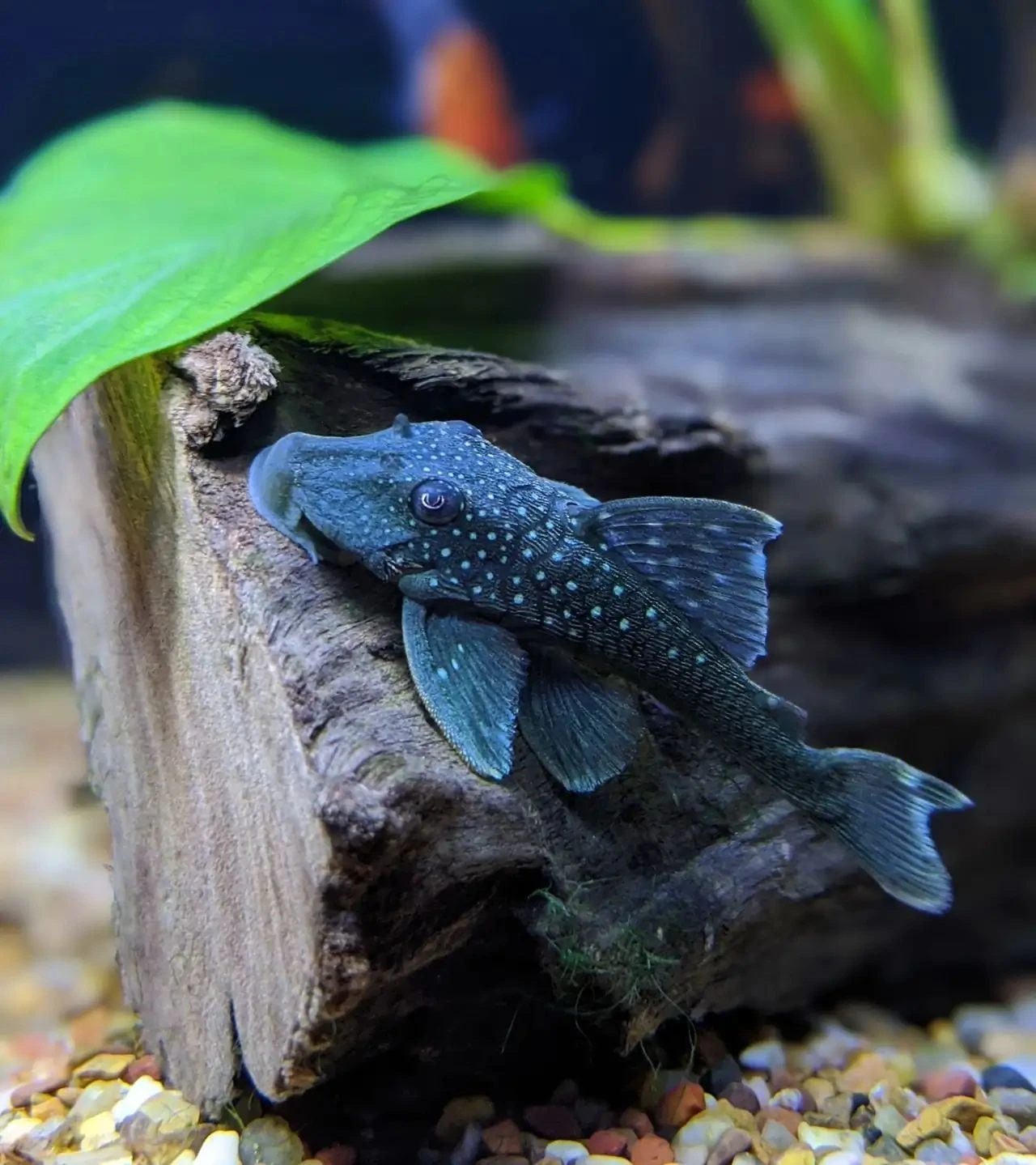
Blue Phantom Pleco
Hemiancistrus sp.
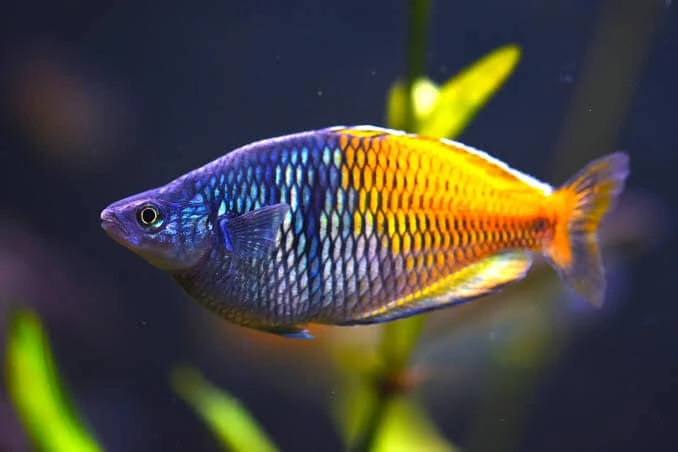
Boesemani Rainbowfish
Melanotaenia boesemani
Bristlenose Pleco
Ancistrus sp.
Celebes Rainbowfish
Marosatherina ladigesi

Congo Tetra
Phenacogrammus interruptus
Denison Barb
Sahyadria denisonii
Ready to Add Giant Danio to Your Tank?
Use our free stocking calculator to check compatibility, bioload, and get personalized recommendations.