

Care Requirements
Adult Size
4.7" (12cm)
Min Tank
40 gal
Temperature
72-86°F
pH Range
6.5-8.5
Lifespan
5-8 years
Min Group
6+ fish
Diet
Omnivore
Swim Level
Middle
Bioload
3/10
Hardness
5-25 dGH
About Australian Rainbowfish
The Australian Rainbowfish represents a species complex — multiple subspecies and regional variants with varying appearances unified under one scientific name. This diversity means 'Australian Rainbowfish' can describe fish ranging from predominantly silver-blue to brilliant orange-red depending on origin.
Their hardiness is legendary. Australian Rainbowfish tolerate conditions that would stress many tropical fish — temperature swings, varying pH, and different hardness levels. Their native range spans diverse habitats from cool highland streams to warm lowland rivers, producing adaptability that translates to aquarium resilience.
The various subspecies offer different color options within the same basic care framework. Melanotaenia splendida splendida, M. s. inornata, M. s. rubrostriata, and others each bring distinct appearances.
Australian Rainbowfish have been aquarium staples since the 1920s. They combine beauty, activity, peaceful nature, and exceptional hardiness into an accessible package.
Natural Habitat & Origin
Australian Rainbowfish occupy one of the widest natural ranges of any rainbowfish species, found throughout northern Australia and into southern New Guinea. This enormous distribution encompasses dramatically different habitats — from cool highland streams to warm lowland billabongs, clear rivers to turbid pools.
This habitat diversity explains their remarkable adaptability. Within their range, they typically inhabit vegetated areas of rivers, streams, and still waters.
Wild populations remain healthy throughout most of their range. Unlike some endemic rainbowfish species, Australian Rainbowfish are widespread and secure.
Native Region
Northern Australia and southern New Guinea — Multiple river systems
Habitat Type
Diverse — rivers, streams, billabongs, and estuaries with vegetation
Wild Water Conditions
Highly variable — temperature (20-30°C), pH (6.5-8.5), hardness (soft to hard)
Appearance & Varieties
Australian Rainbowfish appearance varies significantly between subspecies. The nominate form shows blue-green iridescence with silver base coloration. Other subspecies display orange, red striping, or various blue-green combinations.
All share typical rainbowfish body shape — deep-bodied, laterally compressed, with two dorsal fins. Males are more colorful and deeper-bodied than females. Adults reach 4-5 inches (10-12 cm).
Popular Varieties
| Variety | Description | Rarity |
|---|---|---|
| Eastern Rainbowfish (M. s. splendida) | Blue-green iridescence on silver base. The most commonly sold form. | Common |
| Checkered Rainbowfish (M. s. inornata) | Darker overall appearance with checkered scale pattern. | Uncommon |
| Red-striped Rainbowfish (M. s. rubrostriata) | Orange-red coloration with horizontal striping. Males particularly striking. | Uncommon |
| Various regional forms | Multiple other regional variants with intermediate characteristics. | Varies |
Tank Setup & Requirements
Quick Requirements Summary
Tank Size
Minimum Tank Size
40 gallons
Recommended Tank Size
60 gallons
Australian Rainbowfish are undemanding regarding setup, thriving across a wide range of conditions. The main requirement is adequate space for their active swimming nature.
Water Parameters
Exceptionally adaptable — temperature 72-86°F (22-30°C), pH 6.5-8.5, hardness 5-25 dGH. Match your local tap water conditions rather than targeting specific parameters. This flexibility makes them easier than almost any other rainbowfish.
Substrate
Not particular. Sand, gravel, or planted substrates all work well.
Plants & Decorations
Prioritize open swimming space while providing plants and decor around edges for interest and security. Any plants matching your water conditions work well.
Filtration & Water Flow
Standard community filtration handles their needs. Some current is appreciated.
Lighting
Standard aquarium lighting works well and shows their coloration.
Diet & Feeding Guide
Diet Type
omnivore
Feeding Frequency
Once or twice daily
Portion Size
Amount consumed within 2-3 minutes.
Australian Rainbowfish are true omnivores accepting virtually any aquarium food. They're enthusiastic, unfussy feeders.
Best Foods for Australian Rainbowfish
- Quality flake food — Staple diet readily accepted.
- Color-enhancing foods — Foods with carotenoids and spirulina enhance coloration.
- Floating pellets — Quality pellets provide varied nutrition.
- Frozen bloodworms — Excellent protein source. Feed several times weekly.
- Frozen brine shrimp — Readily accepted. Good variety food.
- Live foods — Eagerly consumed. Excellent for conditioning.
- Vegetable matter — Spirulina flakes, blanched vegetables accepted readily.
Foods to Avoid
- Single food type only — Variety maintains health and coloration.
They're unfussy feeders that accept virtually anything. Variety enhances coloration across all variants.
Behavior & Temperament
Australian Rainbowfish are active, schooling fish constantly cruising through mid-water. Males display to each other and females with intensified coloration. Morning displays are typically most impressive.
They're peaceful fish that work well in communities with appropriately sized tankmates. Schooling is best in groups of 6+.
Tank Mates: Compatibility Guide
Compatible Tank Mates
Different rainbowfish species create spectacular mixed displays.
Appropriately sized and peaceful.
Active barbs match their energy level.
Different zones, peaceful coexistence.
Different zones and feeding strategies.
Peaceful cichlids can share large tanks.
Parameter flexibility accommodates livebearer preferences.
Tank Mates to Avoid
Very small fish
May consume very small tankmates.
Aggressive species
Peaceful rainbowfish can be bullied.
Very shy, delicate species
Active rainbowfish may stress extremely timid tankmates.
Australian Rainbowfish breed readily using typical rainbowfish methodology. They're among the easier rainbowfish to spawn. Eggs hatch in 7-10 days. Fry require infusoria initially, graduating to baby brine shrimp.
Health Issues & Disease Prevention
Australian Rainbowfish are exceptionally hardy, rarely developing problems. Their adaptability provides resilience against most common issues.
Common Diseases
| Disease | Symptoms | Treatment |
|---|---|---|
| Ich | White spots, flashing, clamped fins. | Raise temperature, commercial medications. They tolerate treatment well. |
| Columnaris | White patches, frayed fins. | Antibacterial medication. Improve water quality. |
| General Illness | Given their hardiness, any sign of illness warrants investigation. | Review water quality, temperature, and stressors. These tough fish rarely get sick without cause. |
Signs of a Healthy Australian Rainbowfish
- Good coloration for variant type
- Active swimming
- Regular feeding
- Displaying behavior
- Clear eyes and intact fins
Prevention Tips
- Provide adequate swimming space
- Maintain reasonable water quality
- Feed varied diet
- Keep in groups of 6+
- Quarantine new additions
Frequently Asked Questions
Appearance varies significantly: Eastern Rainbowfish show blue-green iridescence on silver; Checkered Rainbowfish are darker with checkered scales; Red-striped Rainbowfish display orange-red coloration with striping.
Among the hardiest — possibly the most adaptable commonly available species. Their enormous natural range spanning diverse habitats produced exceptional tolerance.
They're remarkably flexible — temperature 72-86°F, pH 6.5-8.5, hardness soft to hard. They adapt to most reasonable tap water.
Adults reach 4-5 inches (10-12 cm). They need 40+ gallon tanks to accommodate their size and active swimming.
Yes — their flexibility allows compatibility with species that more demanding rainbowfish couldn't join.
Tips for Keeping Australian Rainbowfish
Pro Tips
- ✓Match your tap water rather than targeting specific parameters.
- ✓Collect different subspecies for variety within one care framework.
- ✓Use them as 'starter rainbowfish' before attempting more demanding options.
- ✓Their parameter flexibility allows combinations impossible with more specific species.
Common Mistakes to Avoid
- ✗Tank too small — need 40+ gallons.
- ✗Keeping alone or in pairs — need 6+.
- ✗Overcomplicating water chemistry — they adapt to most tap water.
- ✗Mixing with very small fish that may be eaten.
Sources
- FishBase — Accepted scientific name, maximum size and native range for Australian Rainbowfish.
Related Species You Might Like
View All Fish →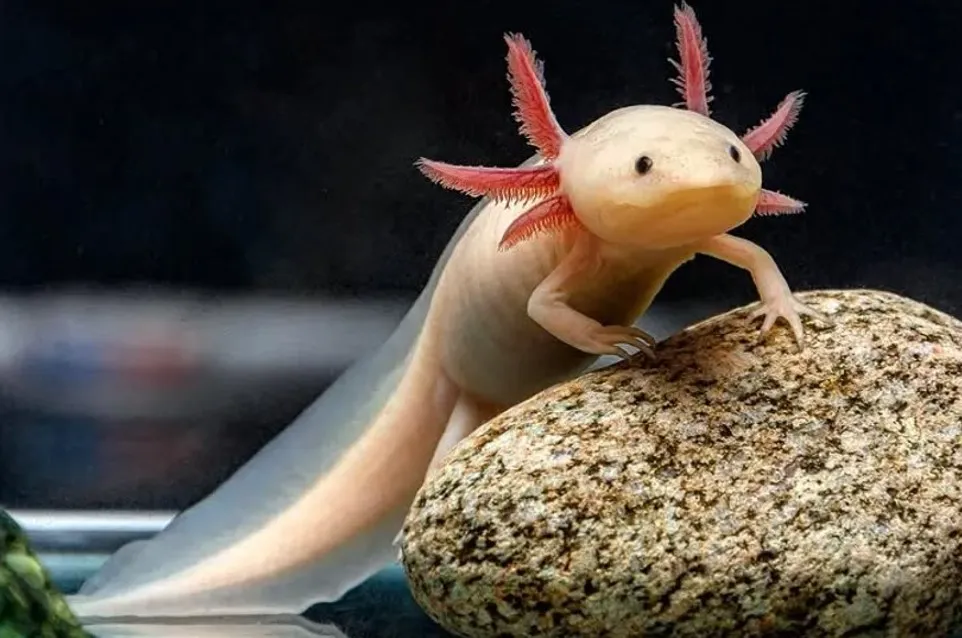
Axolotl
Ambystoma mexicanum
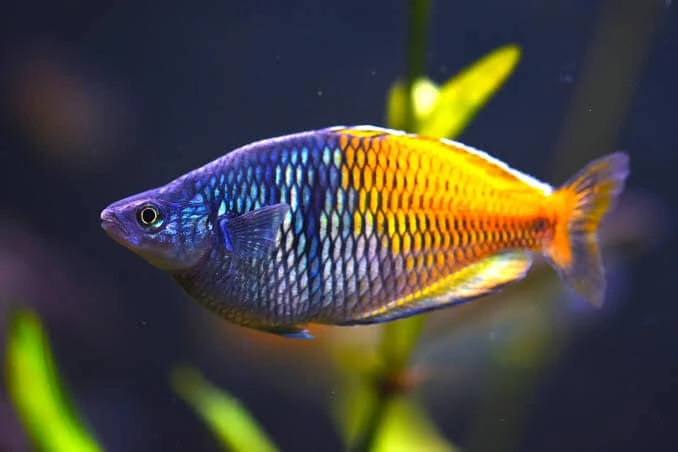
Boesemani Rainbowfish
Melanotaenia boesemani
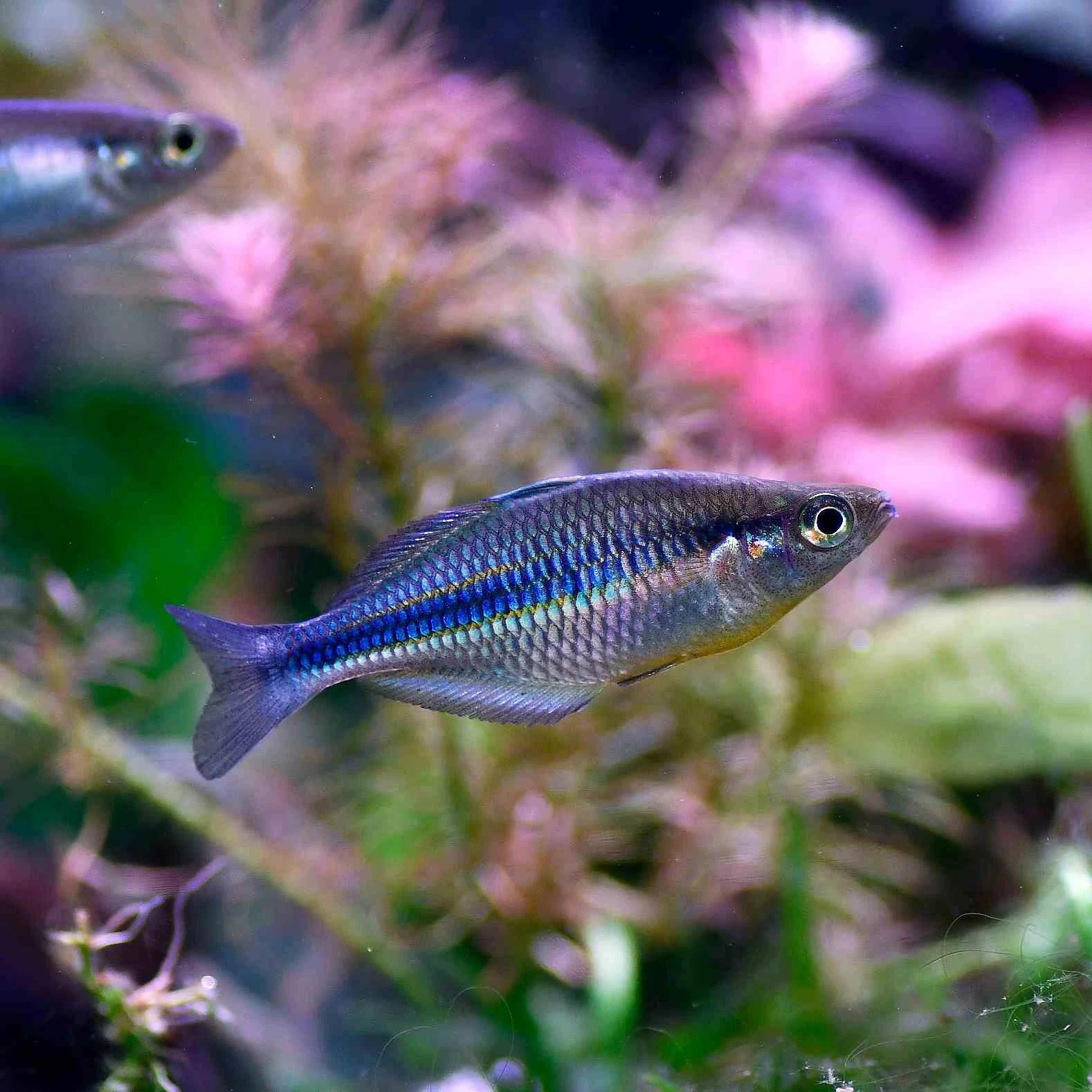
Turquoise Rainbowfish
Melanotaenia lacustris
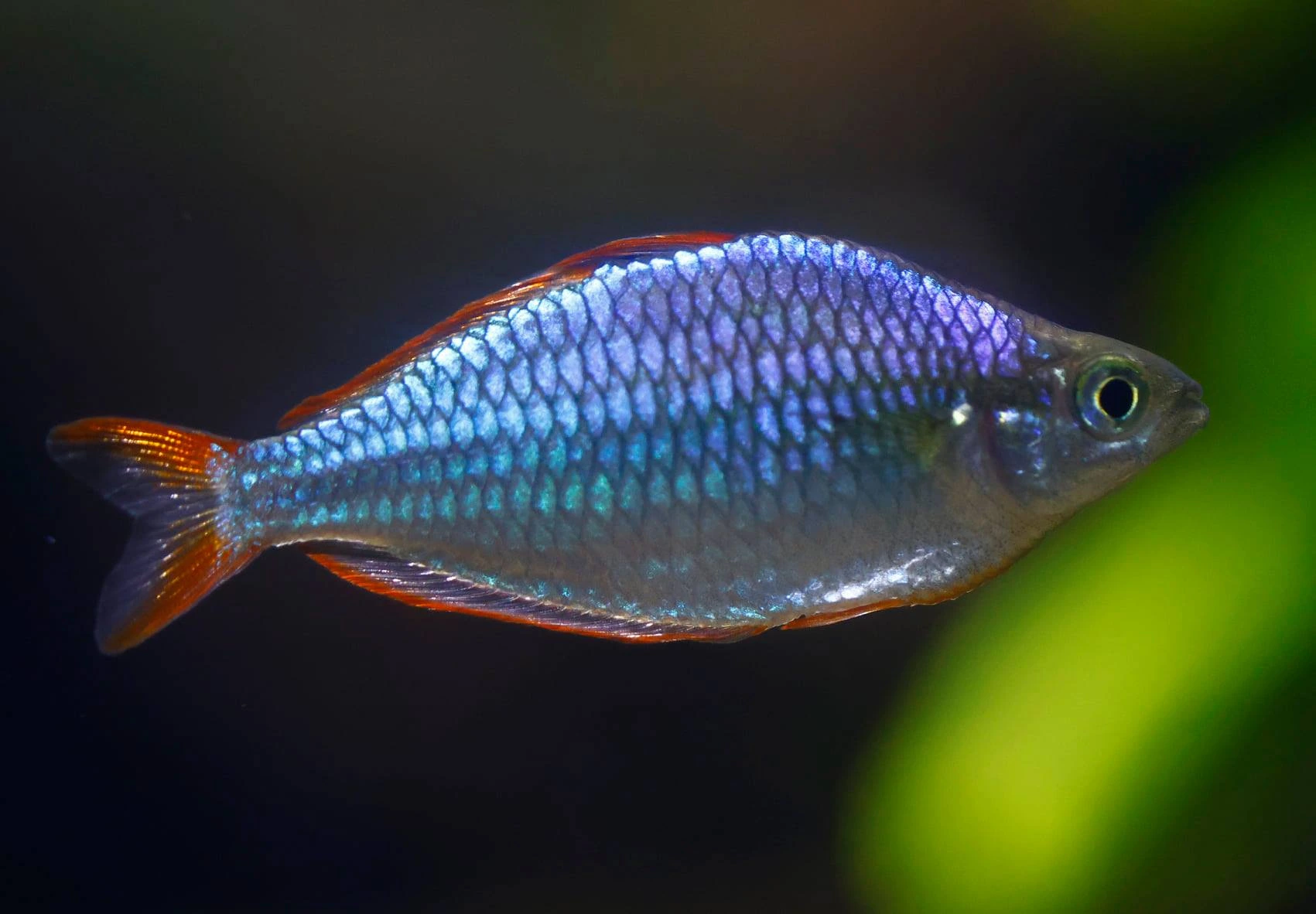
Dwarf Neon Rainbowfish
Melanotaenia praecox
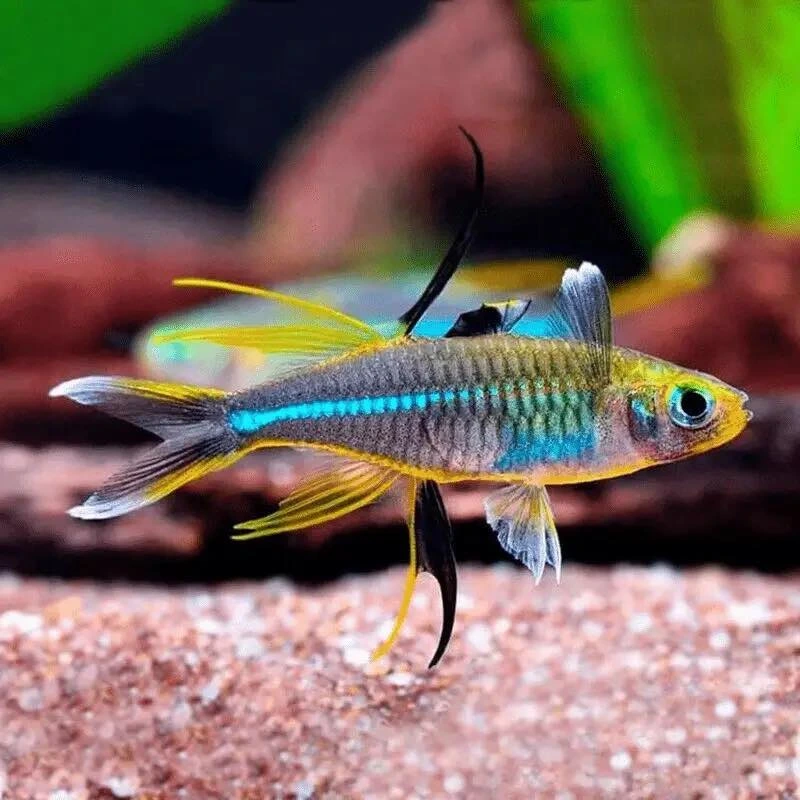
Celebes Rainbowfish
Marosatherina ladigesi
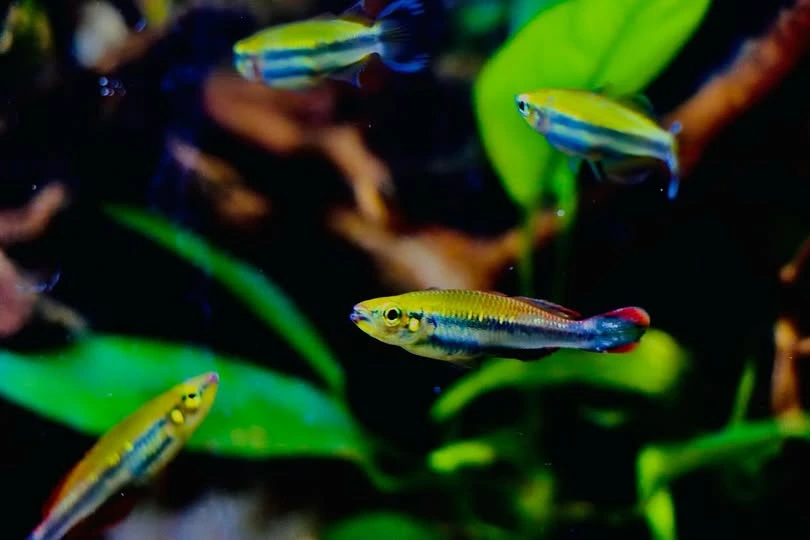
Madagascar Rainbowfish
Bedotia madagascariensis
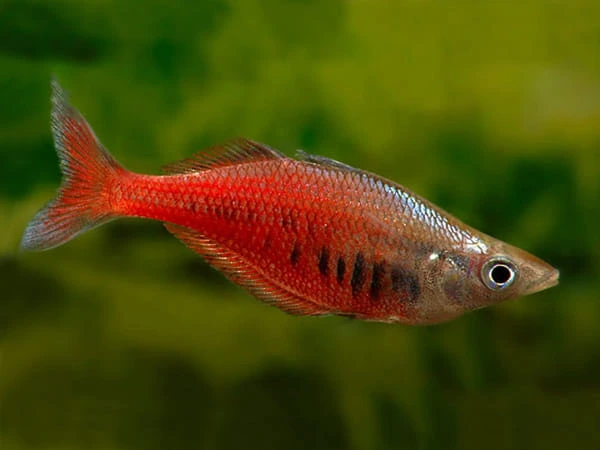
Red Rainbowfish
Glossolepis incisus
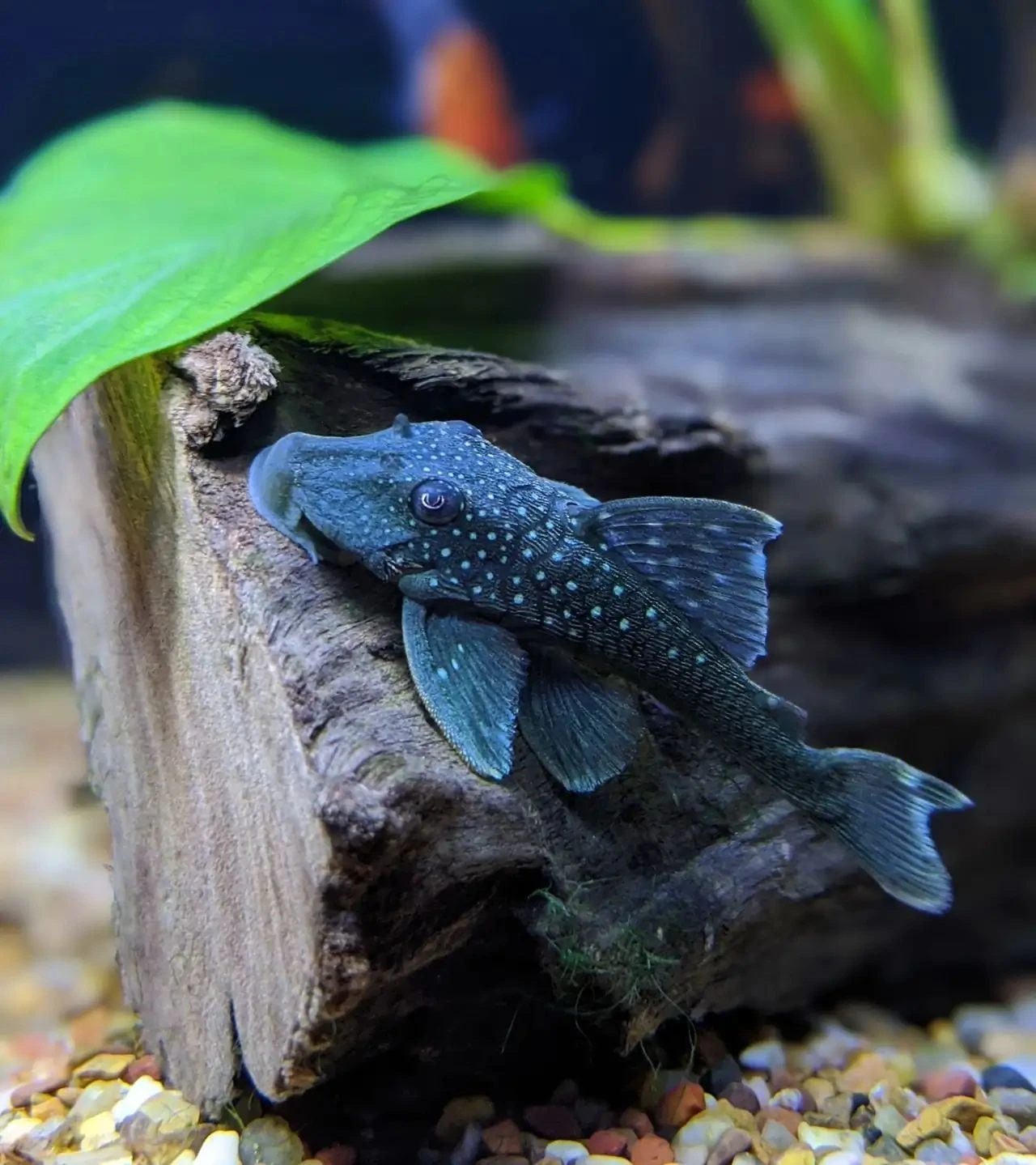
Blue Phantom Pleco
Hemiancistrus sp.
Ready to Add Australian Rainbowfish to Your Tank?
Use our free stocking calculator to check compatibility, bioload, and get personalized recommendations.