Compatibility Guide
    8 min read

    Peacock Eel Tank Mates: 7 Compatible Species (and 7 to Avoid)

    Two facts govern every stocking decision around a Peacock Eel, and they pull in opposite directions. It reaches 30 cm and will swallow any fish that fits in its mouth after dark. It is also shy, slow to feed and easily beaten to food by anything brisk, so a tank stocked purely with fish too big to eat can starve it. Add the third requirement — fine sand deep enough to bury in, non-negotiable for a spiny eel — and the tank builds itself in a particular order: substrate first, then eel, then mid-water fish large enough to survive the night.

    Reviewed by the AquariumStocking team · Updated

    The tank size that makes this work

    Floor length is the useful measurement, not depth. A spiny eel rests buried and spends its active hours running the length of the substrate, so a long, sand-bottomed tank matters more than tall water — 150 litres, around 40 gallons, is where that becomes possible. Our database puts the peacock eel minimum at 40 gallons.

    40 gallons

    One eel, five centimetres of soft sand, a few pieces of wood laid flat and a single group of mid-water fish over 6 cm. Keep the stocking light: the eel needs uncluttered sand to bury in, and hardscape that reaches the glass on all sides leaves nowhere to do it. Target feeding is realistic in a tank this size, which is the main argument for starting here.

    Best fish for a 40 gallon tank

    55 gallons

    Comfortable for a full-grown eel with two mid-water groups above it and an algae grazer on the wood. The extra length means you can feed the eel at one end with tongs while the community is distracted at the other, which is the practical solution to its feeding problem. Also room for a proper open sand run rather than a strip between decorations.

    Best fish for a 55 gallon tank

    75 gallons

    Where the eel can live alongside larger, more interesting company — a rainbowfish group, a medium cichlid, a big pleco — without the tank feeling stocked to the edge. It also allows a second spiny eel with enough separation for both, which is a genuine option in this footprint and a bad idea in a smaller one. Lid weight matters more here, not less.

    Best fish for a 75 gallon tank

    How to choose tank mates for a peacock eel

    Sand comes before the stocking list

    A peacock eel buries itself, and gravel makes that impossible while abrading the scaleless skin it tries with. Five centimetres of soft sand is the requirement, and it rules out tank mates that need a different substrate as surely as it rules out the wrong water. An eel kept on gravel hides behind the filter permanently and is usually described as never seen.

    Measure tank mates against the mouth, not the temperament

    Anything under about 6 cm is prey once the lights go out, no matter how peaceful both fish are during the day. Neon tetras, guppies and dwarf shrimp are not bullied here; they are eaten, quietly, one at a time. Pick species that reach a solid adult size and buy them at that size rather than growing them on in the same tank.

    Do not let the tank out-eat it

    The eel emerges at dusk and works by scent, taking food slowly off the sand. Fast surface feeders and greedy bottom fish clear it long before then, and the eel loses condition over months without any visible drama. Feed frozen bloodworm, blackworm or chopped prawn after lights-out, preferably with tongs at a fixed spot the eel learns.

    Avoid competition on the substrate itself

    Corydoras groups, active loaches and other sand-sifters occupy exactly the space the eel needs and reach food first. They are not in danger from it — most are too large and too armoured — but the eel loses. If you want a bottom crew, choose a wood grazer that works vertical surfaces rather than the sand.

    Assume it will try to leave

    Spiny eels escape. They probe every seam of the lid and get through openings that look impossible, and a fish found dry on the floor is the commonest way keepers lose them. Seal the filter cut-outs, weight the lid and check it after maintenance. This is a housekeeping matter, but it costs more eels than tank mates do.

    Give it darkness and it stops being invisible

    Floating plants, shaded wood and a length of PVC pipe on the sand let the eel settle in weeks rather than months, and a settled eel comes out in the evening with the lights still on. Tank mates that demand bright, open, brightly planted layouts work against that. A dim, sand-floored tank suits everything on the compatible list below.

    Compatible species, ranked by fit

    Seven species too large to be eaten, calm enough not to strip the tank at feeding time, and comfortable in a dim, sand-floored setup.

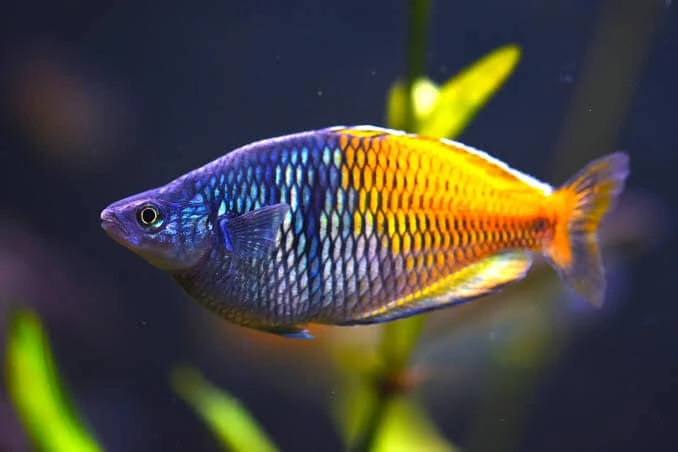
    Boesemani rainbow fish swimming in an aquarium slowly

    Boesemani Rainbowfish

    Melanotaenia boesemani

    An 11 cm mid-water shoal that lives in the upper half of the tank and has no business on the sand, which is the ideal profile here. Adults are far beyond the eel's mouth and quick enough that a nocturnal ambush is not a realistic risk. They feed enthusiastically at the surface, so they take flake and pellet during the day and leave the eel's frozen food alone at night. Five or more, in a tank with open swimming length.

    Min tank 40 gallons+
    75-82°F
    pH 78
    11 cm (4.3")
    Peaceful
    Beginner
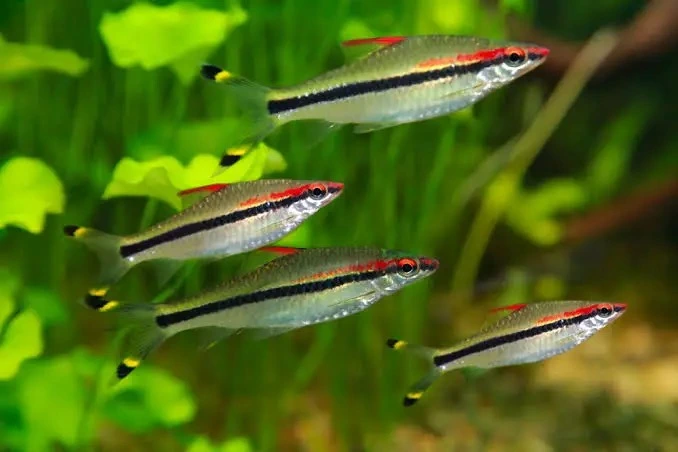
    A group of denison barbs swimming in an aquarium

    Denison Barb

    Sahyadria denisonii

    A 15 cm barb that no spiny eel will ever attempt, and one that patrols midwater rather than grubbing about on the substrate. It wants moving, well-oxygenated water, which suits the eel's tank as long as one end stays calmer for feeding. Six or more, and this is a 75 gallon fish rather than a 40 gallon one. It also ignores the eel entirely, which is more than can be said of most large barbs.

    Min tank 55 gallons+
    64-77°F
    pH 6.57.8
    15 cm (5.9")
    Peaceful
    Intermediate
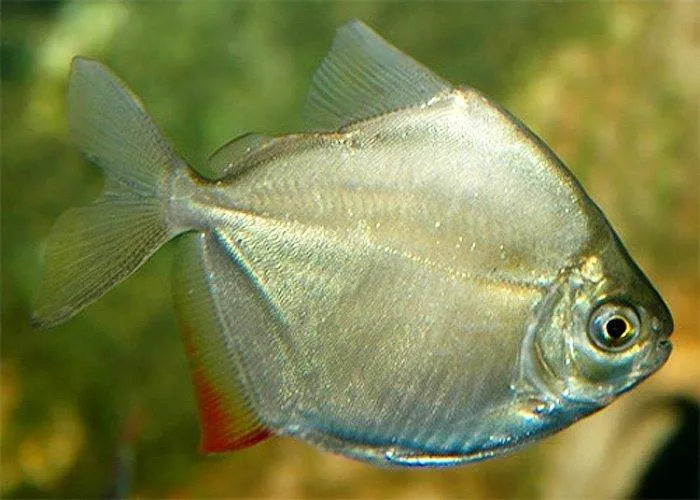
    Silver dollar fish swimming in an aquarium

    Silver Dollar

    Metynnis argenteus

    Deep-bodied, herbivorous and completely uninterested in anything happening on the sand — a shoal of them fills the upper tank without ever entering the eel's space. Their size makes predation impossible in either direction, and their vegetarian diet means they do not compete for the protein food the eel needs. They will eat live plants comprehensively, so this is a hardscape tank. Keep five or more; kept in twos they are skittish and crash into the glass.

    Min tank 75 gallons+
    75-82°F
    pH 5.57.5
    15 cm (5.9")
    Peaceful
    Intermediate
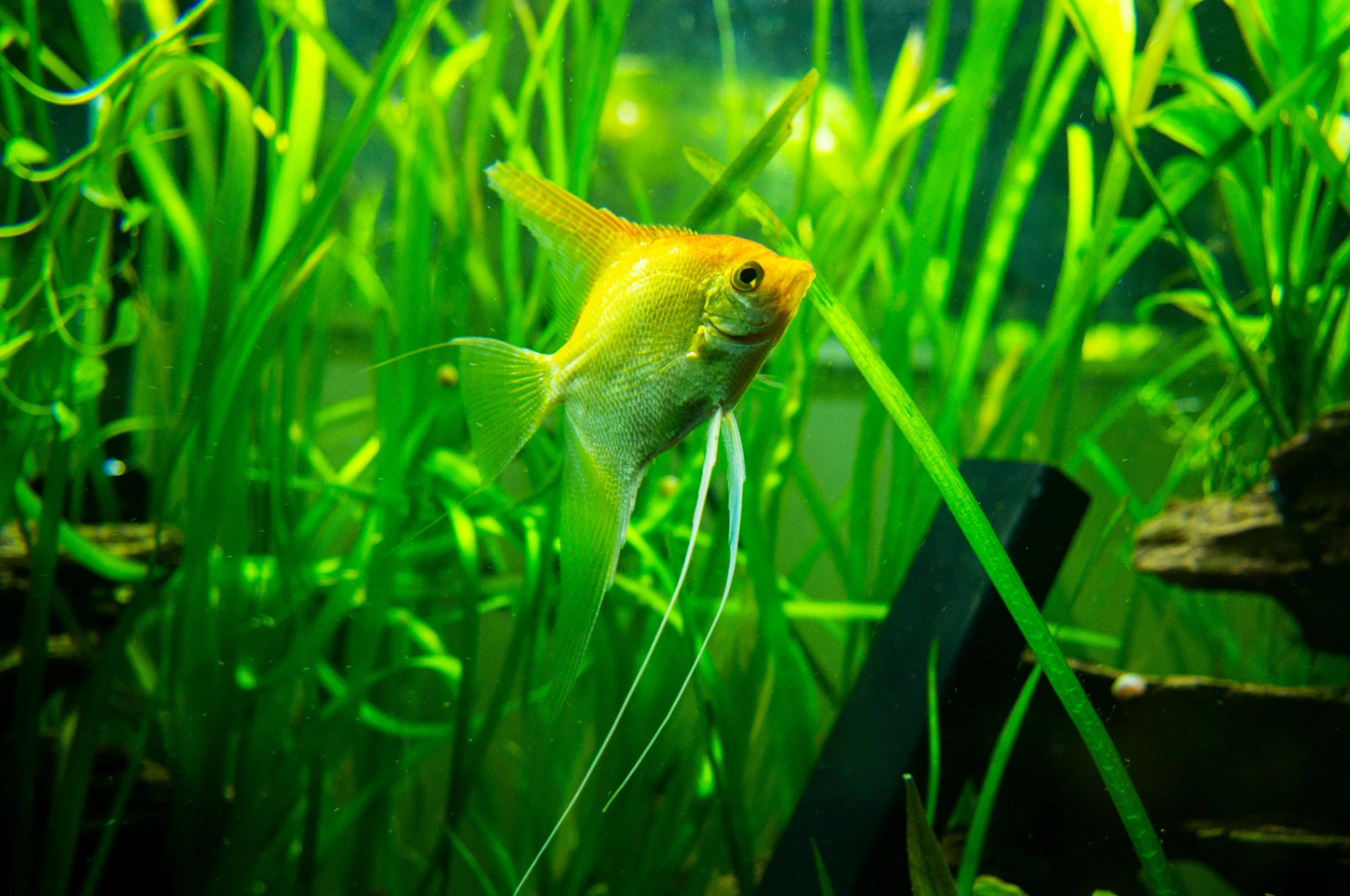
    Yellow Angelfish swimming near the surface among aquatic plants

    Angelfish

    Pterophyllum scalare

    A tall, slow, mid-water cichlid that occupies the vertical space the eel never uses, and adults at 15 cm are safely beyond its mouth. It is deliberate at feeding time rather than frantic, so it does not strip the tank the way a barb shoal can. Buy adults or near-adults — juvenile angels are eel-sized. Expect a territorial phase if a pair forms, though it plays out on plants and slate well above the sand.

    Min tank 40 gallons+
    75-86°F
    pH 67.5
    15 cm (5.9")
    Semi-aggressive
    Intermediate
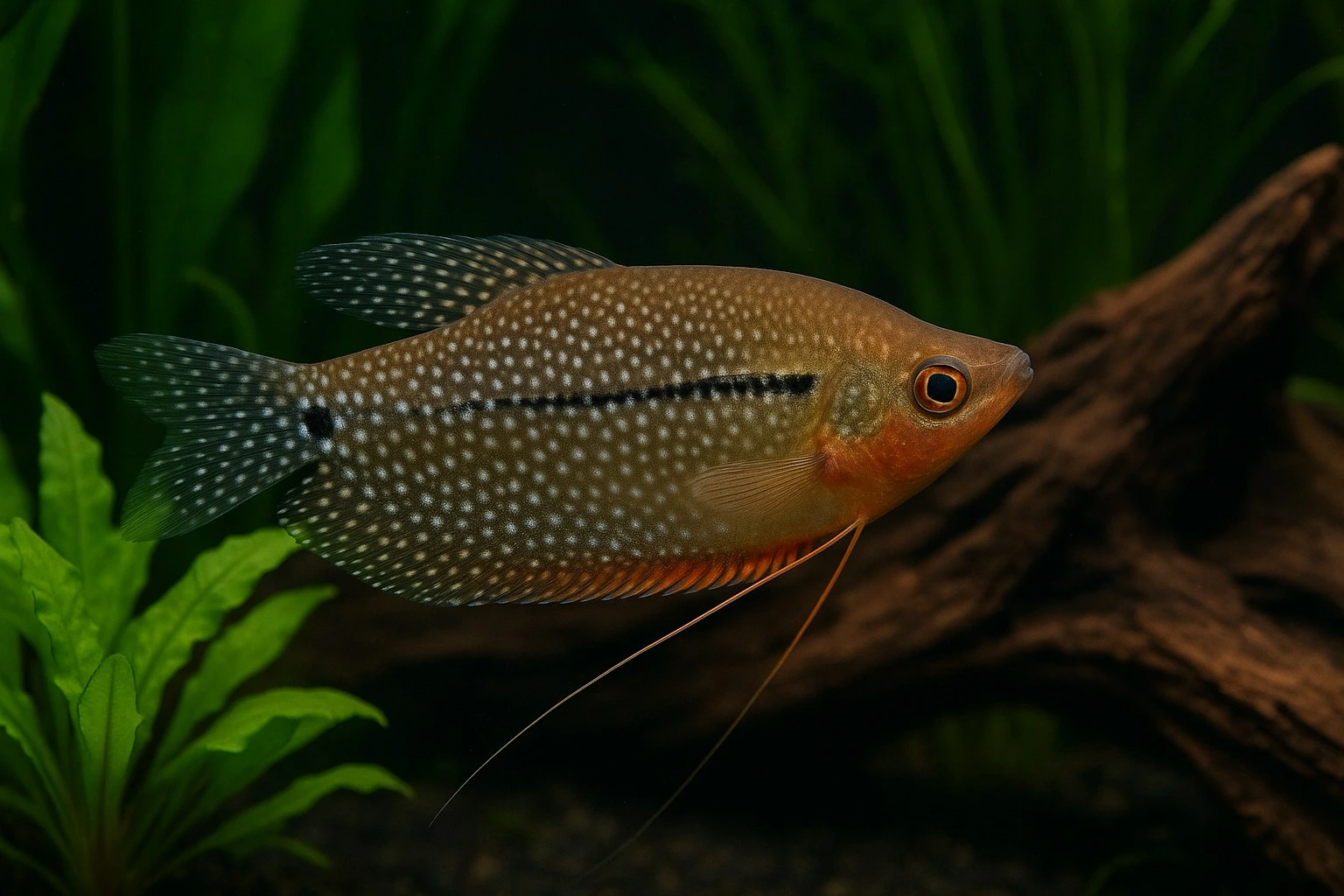
    Pearl Gourami swimming in the middle of an aquarium

    Pearl Gourami

    Trichopodus leerii

    Sits at the surface among floating plants, which is both the far corner from the eel and the source of the shade a spiny eel wants. At 12 cm it is out of range, and its slow, thoughtful feeding leaves plenty on the substrate. It prefers still water, so aim the flow along the sand where the eel benefits from it and leave one end of the surface calm. A male and two females is the usual arrangement.

    Min tank 30 gallons+
    75-82°F
    pH 67.5
    12 cm (4.7")
    Peaceful
    Beginner
    Bristlenose pleco laying at the bottom of an aquarium

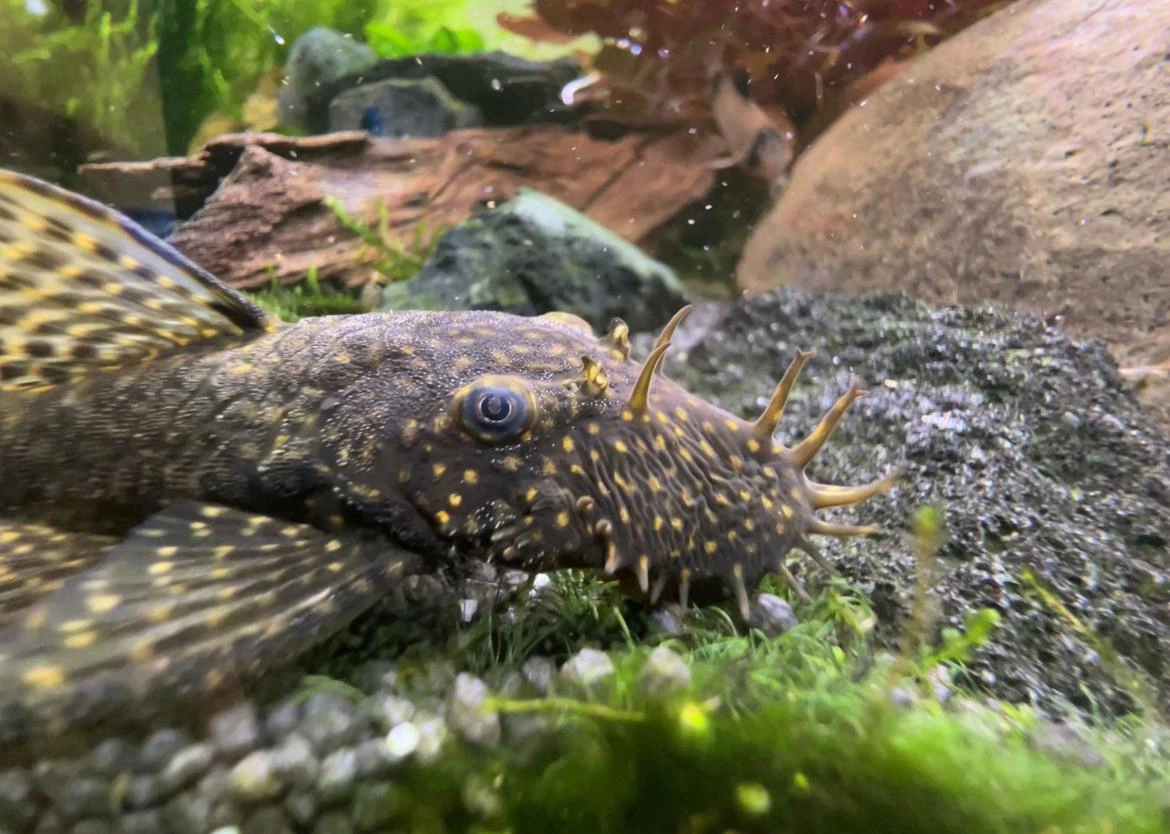
    Bristlenose Pleco

    Ancistrus sp.

    Works wood and glass rather than sand, so it shares the lower tank without taking anything the eel is looking for. Armoured, nocturnal and placid, it is neither a threat nor at risk, and the two often feed within centimetres of each other. Give it wood to rasp and drop an algae wafer well away from the eel's feeding spot. The bioload is significant, so pair it with sound filtration rather than heavier feeding.

    Min tank 30 gallons+
    73-81°F
    pH 67.5
    12 cm (4.7")
    Peaceful
    Beginner
    A single giant danio swimming in an aquarium

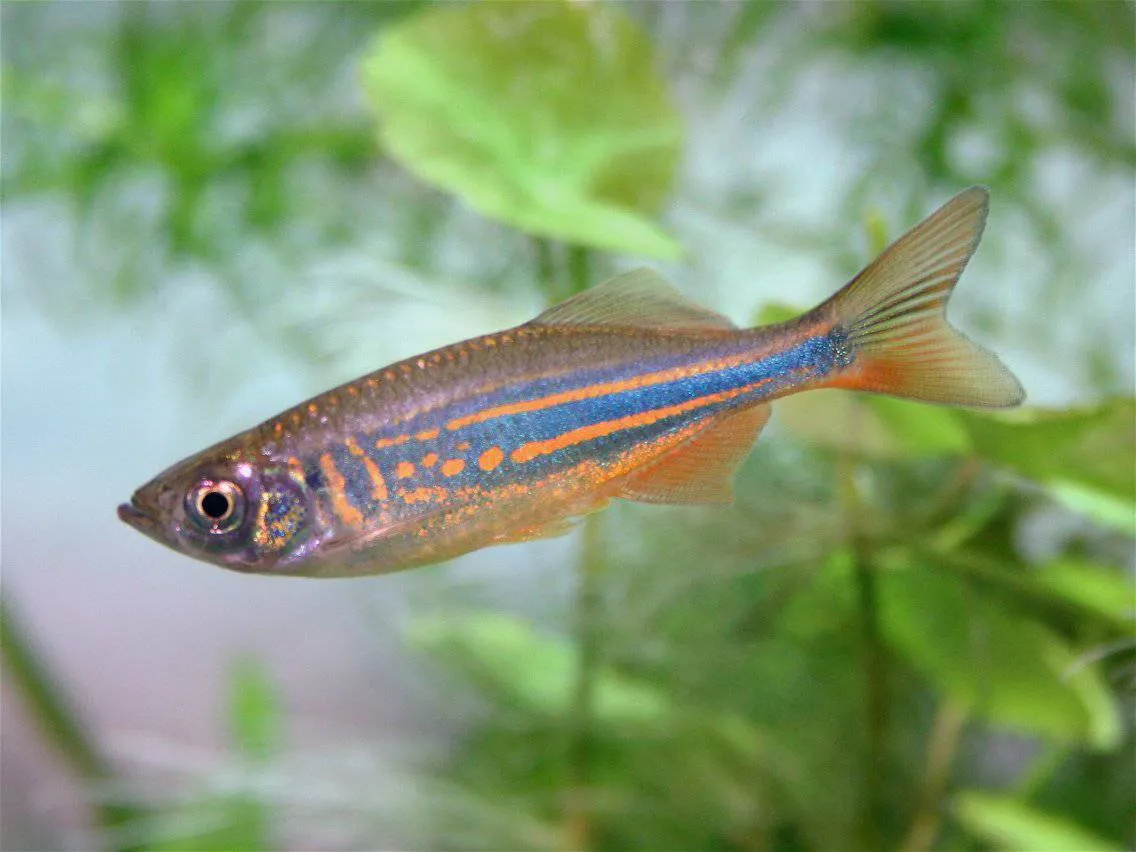
    Giant Danio

    Devario aequipinnatus

    Ten centimetres, fast, and permanently near the surface — impossible for an ambush predator on the sand to reach, and confident enough to draw a shy eel out by simply being calm overhead. It is also the fish most likely to eat everything you drop, so feed the eel separately after dark and this pairing is straightforward. Six or more, and a tight lid, since danios jump as readily as eels do. Prefers the same warm, moving water.

    Min tank 40 gallons+
    68-79°F
    pH 68
    12 cm (4.7")
    Peaceful
    Beginner

    Species to avoid

    Single neon tetra swimming in a dark aquarium

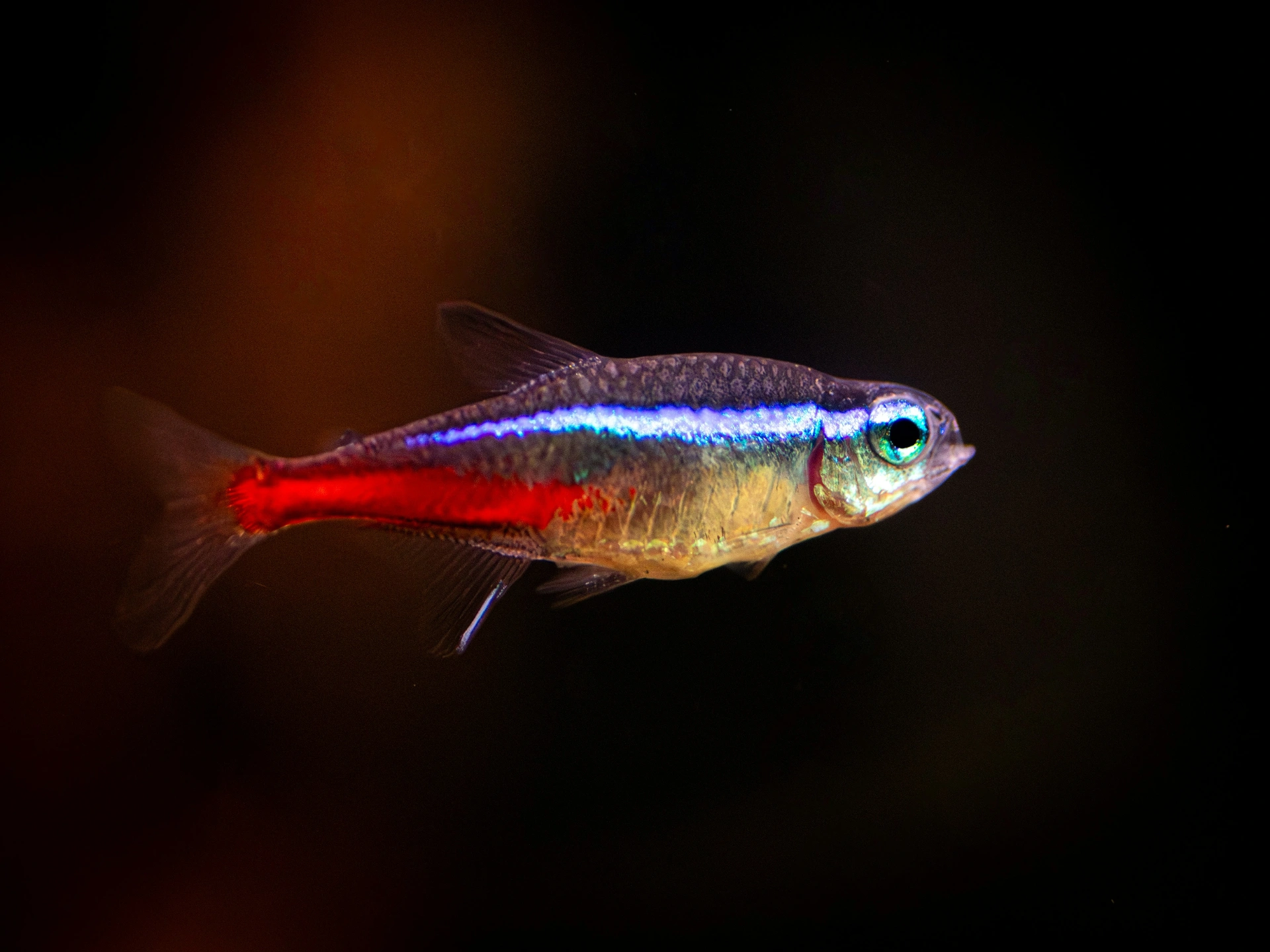
    Neon Tetra

    Paracheirodon innesi

    Avoid — will be eaten

    Three centimetres, and it sleeps in open water at night, which is when the eel hunts. This is not a behavioural risk to manage but an outcome to expect: the group thins by one or two a week until it is gone. Keepers frequently report the losses without ever seeing the eel take a fish.

    Min tank 10 gallons+
    68-79°F
    pH 57
    3 cm (1.2")
    Peaceful
    Beginner
    Yellow female tiger guppy fish swimming in aquarium

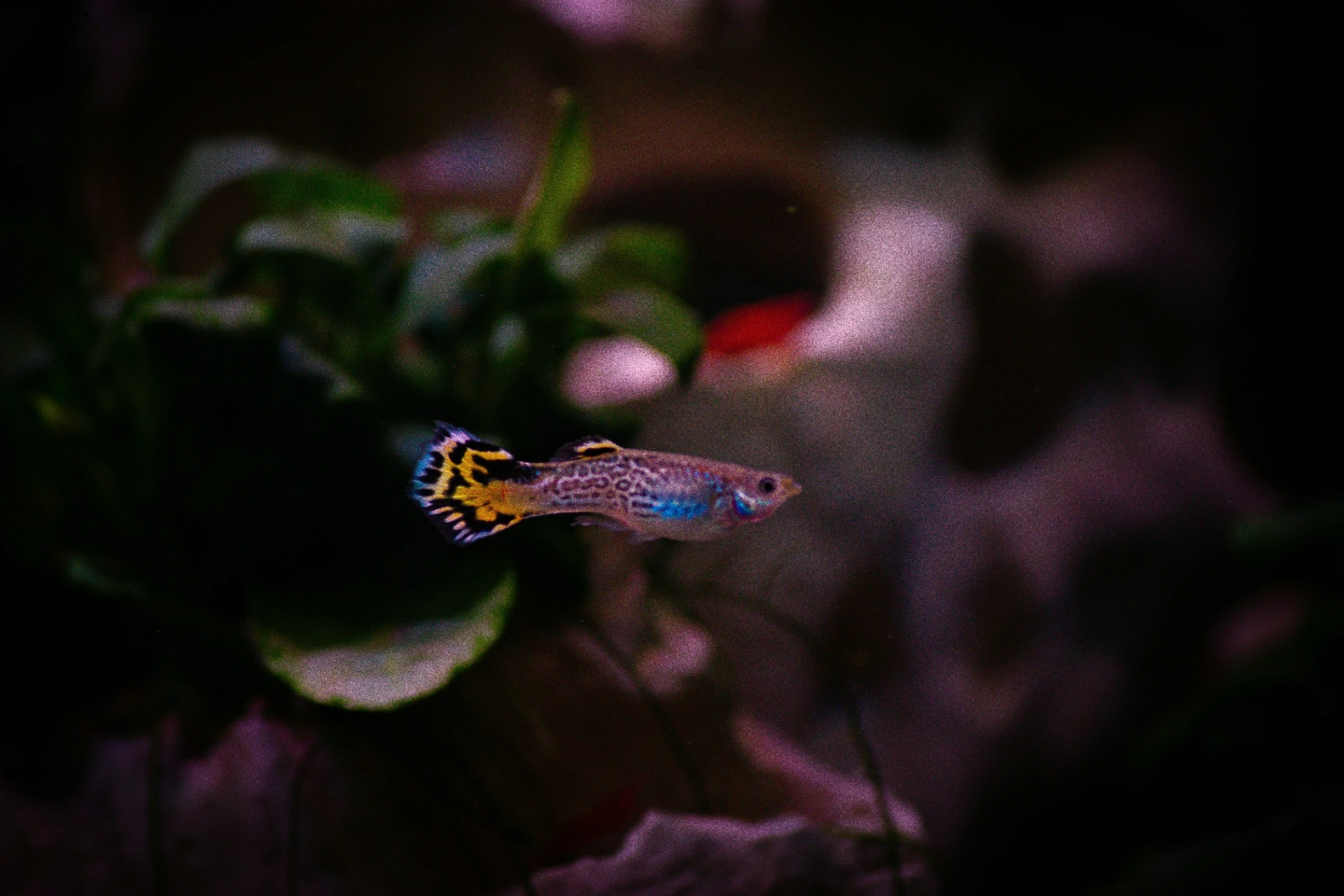
    Guppy

    Poecilia reticulata

    Avoid — will be eaten

    Small, slow and trailing a conspicuous tail, and breeding constantly so the tank is always full of even smaller fish. An eel will take the adults and every fry it finds. The only way this arrangement makes sense is deliberately, as a feeder colony, which is a different decision from stocking tank mates.

    Min tank 10 gallons+
    72-82°F
    pH 78.5
    5 cm (2")
    Peaceful
    Beginner
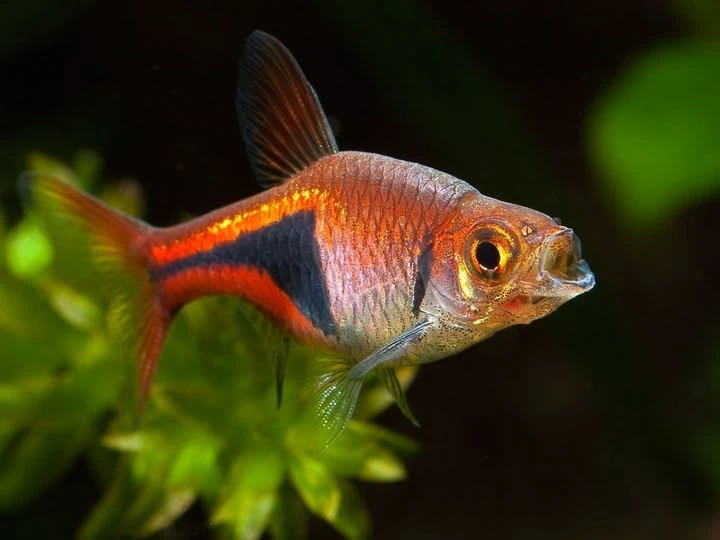
    Harlequin Rasbora swimming in the middle of an aquarium

    Harlequin Rasbora

    Trigonostigma heteromorpha

    Avoid — will be eaten

    Four centimetres and mid-water at rest, which is well within reach of a 30 cm ambush feeder after dark. It is an excellent community fish and simply the wrong size for this tank. Anything you would describe as a small shoaling fish belongs in a tank without a spiny eel.

    Min tank 15 gallons+
    72-81°F
    pH 67.5
    4 cm (1.6")
    Peaceful
    Beginner
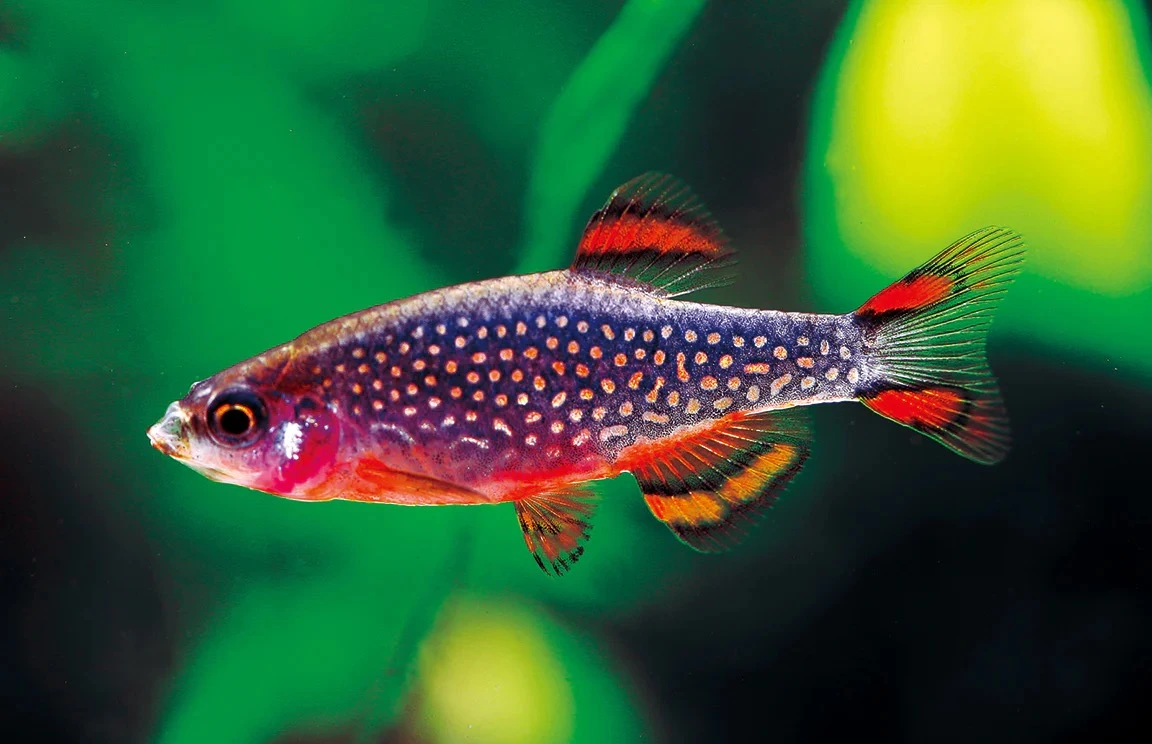
    Celestial pearl danio swimming in an aquarium

    Celestial Pearl Danio

    Danio margaritatus

    Avoid — far too small

    A 2.5 cm nano fish that shelters low among plants and hardscape overnight — the worst possible place to sleep in this tank. It also wants a quiet, densely planted nano setup rather than a big sand-floored eel tank. Nothing about the pairing works.

    Min tank 15 gallons+
    68-79°F
    pH 6.57.5
    2.5 cm (1")
    Peaceful
    Intermediate
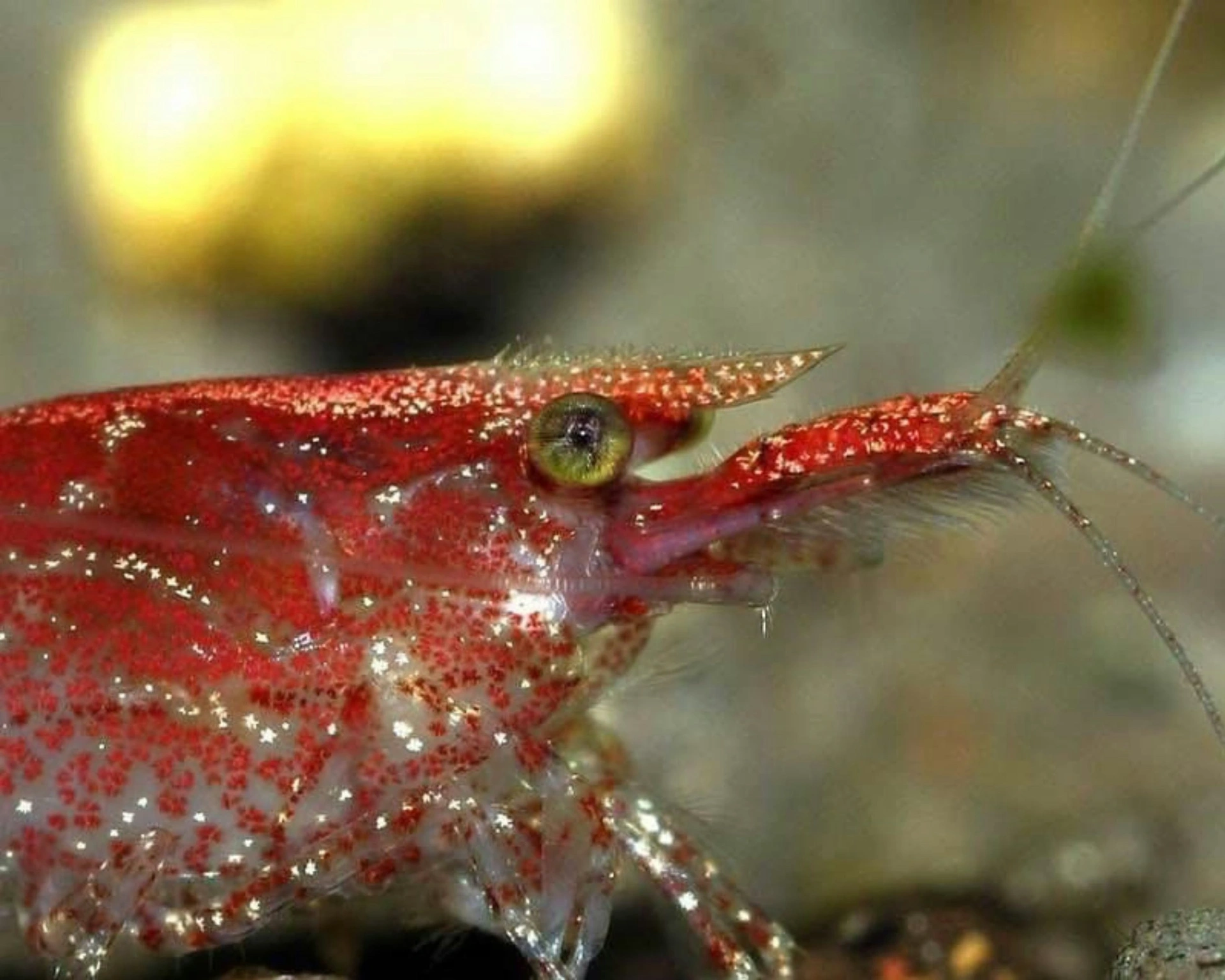
    Close up of cherry shrimp at the bottom of an aquarium

    Cherry Shrimp

    Neocaridina davidi

    Avoid — will be eaten

    Dwarf shrimp are a natural food item for a spiny eel and live exactly where it hunts. A colony disappears within weeks and is generally never seen being taken. If you want an invertebrate cleanup crew in this tank, snails are the only realistic option.

    Min tank 5 gallons+
    64-82°F
    pH 6.58
    3 cm (1.2")
    Peaceful
    Beginner
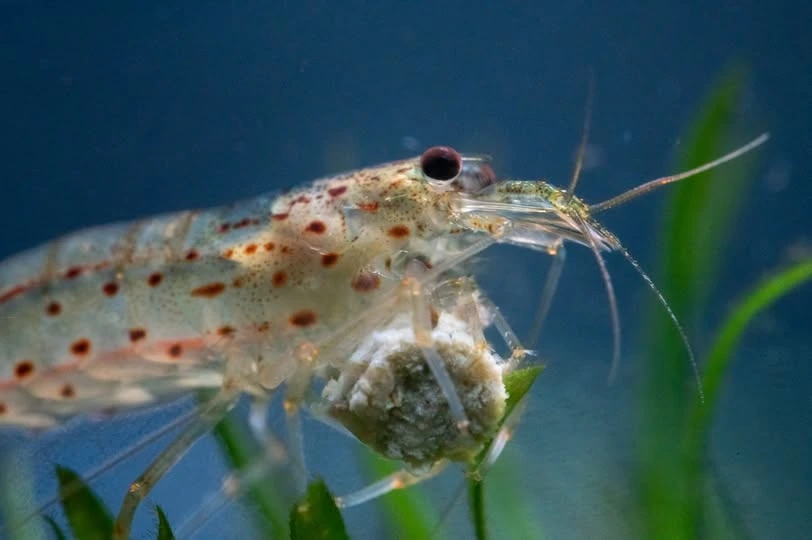
    Amano shrimp eating a piece of algae wafer at the bottom of an aquarium

    Amano Shrimp

    Caridina multidentata

    Avoid — will be eaten

    Larger than a cherry shrimp and still comfortably inside the mouth of an adult peacock eel, and a moulting amano is defenceless. They are also nocturnal foragers on the substrate, which puts them in the eel's path every single night. Their algae-eating value does not survive the arithmetic.

    Min tank 5 gallons+
    68-79°F
    pH 6.57.5
    5 cm (2")
    Peaceful
    Beginner
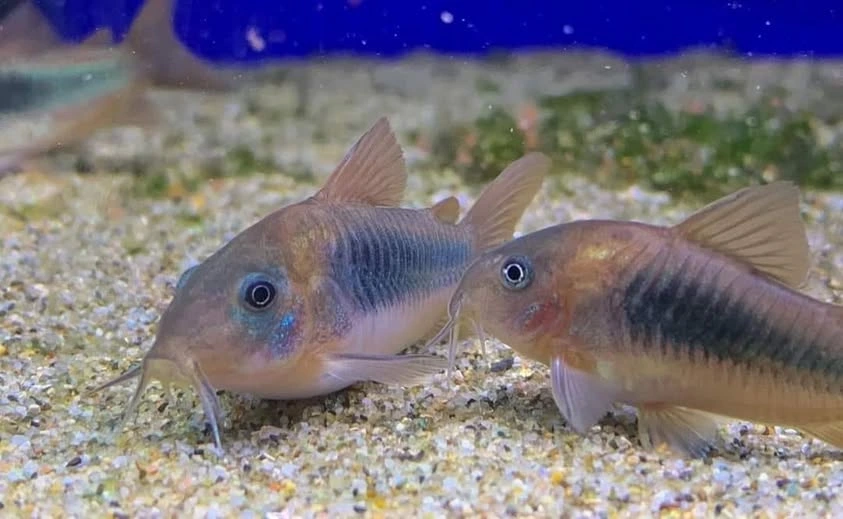
    Two bronze corydoras swimming at the bottom of an aquarium

    Bronze Corydoras

    Corydoras aeneus

    Avoid — competes on the sand

    Too big to be eaten and, unusually for this list, a problem in the other direction. A group of corydoras sifting sand all day locates sinking food immediately and leaves nothing for a fish that only starts looking at dusk. The eel loses weight slowly while the corydoras thrive, and the cause is rarely spotted in time.

    Min tank 20 gallons+
    72-79°F
    pH 67.5
    7 cm (2.8")
    Peaceful
    Beginner

    Depends on the individual

    Two that depend on how the floor of your tank is arranged.

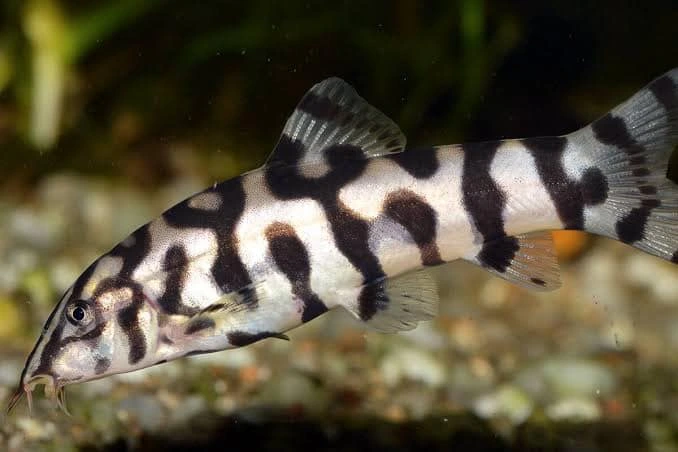
    Yoyo loach swimming in an aquarium

    Yoyo Loach

    Botia almorhae

    Condition: Only from 75 gallons, on sand, with separate feeding spots

    Neither fish threatens the other — a yoyo loach is too large to swallow and too armoured to bother — so the question is purely about the substrate. A group of five busy botiids works the sand continuously and finds sinking food long before an eel emerges. In a long tank you can feed the loaches at one end and the eel at the other and both do well. In a short one the eel quietly loses every night.

    Min tank 40 gallons+
    75-82°F
    pH 67.5
    13 cm (5.1")
    Semi-aggressive
    Intermediate
    Kribensis swimming in an aquarium

    Kribensis

    Pelvicachromis pulcher

    Condition: Only if the eel has open sand well away from the cave

    A 10 cm dwarf cichlid that is safe from the eel and safe for it, right up until it spawns. A breeding pair claims a cave and the surrounding floor and will drive a much larger fish off it, and the eel has no interest in a fight it did not start. In a 55 gallon or larger tank with sand at both ends this resolves itself. In a smaller one the eel ends up wedged behind the filter for the duration.

    Min tank 20 gallons+
    75-82°F
    pH 67.5
    10 cm (3.9")
    Semi-aggressive
    Beginner

    Compare at a glance

    Boesemani Rainbowfish40 gallons75-82°F7811 cm (4.3")BeginnerPeacefulGood
    Denison Barb55 gallons64-77°F6.57.815 cm (5.9")IntermediatePeacefulGood
    Silver Dollar75 gallons75-82°F5.57.515 cm (5.9")IntermediatePeacefulGood
    Angelfish40 gallons75-86°F67.515 cm (5.9")IntermediateSemi-aggressiveGood
    Pearl Gourami30 gallons75-82°F67.512 cm (4.7")BeginnerPeacefulGood
    Bristlenose Pleco30 gallons73-81°F67.512 cm (4.7")BeginnerPeacefulGood
    Giant Danio40 gallons68-79°F6812 cm (4.7")BeginnerPeacefulGood
    Yoyo Loach40 gallons75-82°F67.513 cm (5.1")IntermediateSemi-aggressiveConditional
    Kribensis20 gallons75-82°F67.510 cm (3.9")BeginnerSemi-aggressiveConditional
    Neon Tetra10 gallons68-79°F573 cm (1.2")BeginnerPeacefulAvoid
    Guppy10 gallons72-82°F78.55 cm (2")BeginnerPeacefulAvoid
    Harlequin Rasbora15 gallons72-81°F67.54 cm (1.6")BeginnerPeacefulAvoid
    Celestial Pearl Danio15 gallons68-79°F6.57.52.5 cm (1")IntermediatePeacefulAvoid
    Cherry Shrimp5 gallons64-82°F6.583 cm (1.2")BeginnerPeacefulAvoid
    Amano Shrimp5 gallons68-79°F6.57.55 cm (2")BeginnerPeacefulAvoid
    Bronze Corydoras20 gallons72-79°F67.57 cm (2.8")BeginnerPeacefulAvoid

    Not sure if your combination works?

    Drop your tank size and shortlist into the stocking calculator to check bioload, swim-level balance and compatibility flags.

    Frequently asked questions

    What fish can live with a peacock eel?

    Mid-water and surface fish over about 6 cm that will not strip the tank at feeding time: boesemani rainbowfish, denison barbs, silver dollars, angelfish, pearl gouramis, giant danios and a bristlenose pleco on the wood. Everything smaller becomes food after dark.

    Do peacock eels eat other fish?

    Yes, anything that fits in their mouth. They hunt at night by scent and take small tetras, rasboras, guppies, fry and dwarf shrimp without any visible drama during the day. A peaceful reputation refers to how they treat fish they cannot swallow.

    Do peacock eels need sand?

    Yes, and this is not negotiable. They bury themselves to rest, and gravel both prevents that and abrades their scaleless skin. Five centimetres of soft sand is the target; on gravel the eel hides permanently behind equipment.

    How do I feed a peacock eel in a community tank?

    Target feed after lights-out with tongs or a pipette at a fixed spot — frozen bloodworm, blackworm or chopped prawn. Fast community fish clear anything dropped in during the day well before the eel emerges, and slow starvation is the most common cause of losing one.

    What size tank does a peacock eel need?

    Our database sets the minimum at 150 litres, about 40 gallons, and floor length matters more than depth. A long tank gives the eel an open sand run and lets you feed it at one end while the community feeds at the other.

    Can you keep two peacock eels together?

    In a 75 gallon or larger tank with several separated burrowing areas, usually yes — they tolerate each other far better than most predatory oddballs. In a 40 gallon there is one good stretch of sand and the smaller fish is displaced from it. Add them at the same time rather than one after the other.

    Why does my peacock eel keep escaping?

    Because it is a spiny eel and that is what they do. They probe every gap in the hood and squeeze through filter cut-outs that look far too small. Seal the openings, weight the lid, and re-check it after every water change — escape kills more of these fish than any tank mate.