

Care Requirements
Adult Size
13.8" (35cm)
Min Tank
125 gal
Temperature
75-82°F
pH Range
7.8-9
Lifespan
15-25 years
Min Group
4+ fish
Diet
Carnivore
Swim Level
Middle
Bioload
5/10
Hardness
12-20 dGH
About Frontosa
The Frontosa is often called the 'King of Tanganyika' — and the title is well-earned. These majestic cichlids grow large, develop impressive cranial humps, display dignified behavior unlike any other cichlid, and can live for 25+ years in captivity. They represent the pinnacle of African cichlid keeping for many hobbyists, commanding respect and requiring commitment.
Unlike the frenetic activity of mbuna or the moderate bustle of Peacocks, Frontosas move with deliberate, almost stately grace. They're slow swimmers that don't rush anything — not eating, not territorial disputes, not anything. This calm demeanor belies their predatory nature; in the wild, Frontosas are efficient hunters that ambush smaller fish in the dim light of dawn. They rise from deep water to catch sleeping cichlids before they fully awaken.
The species' signature feature is the nuchal hump — a pronounced forehead bulge that develops primarily in males as they mature. A mature male Frontosa with a fully developed hump is an impressive sight, though reaching this stage requires years of patience. These fish grow slowly and mature slowly; expecting instant gratification from Frontosas is a recipe for disappointment.
Frontosas require serious commitment. Their eventual size (12-14 inches for males), long lifespan (potentially your companion for decades), and need for large aquariums means they're not casual additions to a fish room. Those willing to provide appropriate care are rewarded with a truly special fish — intelligent, interactive, and unlike anything else in freshwater aquarium keeping.
Natural Habitat & Origin
Conservation status: Near Threatened (NT)
Frontosas hail from Lake Tanganyika, the second deepest lake in the world and the second largest by volume. This ancient African Rift Lake has been isolated for millions of years, developing unique water chemistry and endemic species found nowhere else. Frontosas inhabit deep water — typically between 30-50 meters (100-165 feet) — far deeper than most aquarium fish.
This deep-water habitat shapes their unique characteristics. The dim light at depth explains their subdued coloration (bold black and white rather than bright colors), their calm demeanor (less predation pressure than shallow zones), and their slow metabolism (cooler temperatures, less available food). They rise to shallower water at dawn to hunt, returning to depth during full daylight.
Lake Tanganyika's water differs significantly from Lake Malawi — it's even harder and more alkaline, with pH often exceeding 8.5 and extreme hardness. The lake's stability is remarkable; conditions have remained essentially unchanged for millions of years. Frontosas have zero tolerance for parameter fluctuations or inappropriate chemistry.
Native Region
Lake Tanganyika, East Africa (various locations around the lake)
Habitat Type
Deep rocky zones, 30-50+ meters depth
Wild Water Conditions
Very hard, alkaline water (pH 8.0-9.0+), extremely stable parameters, cooler than shallow zones
Appearance & Varieties
Frontosas display a striking black-and-white banded pattern that's instantly recognizable. The body is whitish or light blue-gray with 5-7 bold black vertical bands — the exact pattern varies by geographic variant. This high-contrast coloration is effective camouflage in the dim light of deep water.
The defining feature is the nuchal hump — a pronounced bulge on the forehead that develops primarily in males. Hump development takes years and varies by individual genetics, diet, and dominance status. A fully developed hump on a mature male is impressive, extending significantly forward of the eye line. Females can develop smaller humps but never approach male development.
Several geographic variants exist, each with slightly different band patterns, hump development tendencies, and coloring. The 'Burundi' variant is most famous for pronounced humps; 'Zaire Blue' shows more blue between bands; 'Kipili' and 'Kigoma' have different band counts. Serious keepers often specialize in specific variants.
Popular Varieties
| Variety | Description | Rarity |
|---|---|---|
| Burundi (Six-Stripe) | The most popular variant, known for impressive hump development. Six bold black bands on a white-blue body. Widely available. | Common |
| Zaire Blue | Features more pronounced blue coloration between the black bands. Six bands, good hump development. | Uncommon |
| Kipili (Seven-Stripe) | Seven bands rather than six, with blue highlights. From the Kipili region of Tanzania. | Uncommon |
| Kigoma (Seven-Stripe) | Another seven-stripe variant. Often shows yellow or gold highlights in the fins and between bands. Considered particularly attractive by collectors. | Rare |
| Mpimbwe Blue | From the Mpimbwe region, featuring strong blue coloration and good hump potential. Six bands. | Uncommon |
| Samazi Blue | Southern variant with strong blue color. Less common in the hobby but sought after by collectors. | Rare |
Tank Setup & Requirements
Quick Requirements Summary
Tank Size
Minimum Tank Size
125 gallons
Recommended Tank Size
150 gallons
Frontosa tanks must accommodate eventual large size, group dynamics, and the substantial bioload of big predatory fish. While Frontosas aren't hyperactive swimmers, they need volume — both for water quality stability and appropriate social dynamics. This isn't a species for standard community tanks.
Water Parameters
Lake Tanganyika chemistry is even more extreme than Lake Malawi — very hard, very alkaline. Use aragonite substrate, limestone, crushed coral, or commercial Tanganyikan buffer. Temperature 24-28°C (75-82°F), pH 7.8-9.0, Hardness 12-20+ dGH. Stability is crucial. Zero ammonia and nitrite; nitrates below 20 ppm.
Substrate
Fine sand substrate is appropriate. Aragonite sand provides chemistry buffering while looking natural. Some keepers use bare-bottom tanks for easier cleaning given the high bioload.
Plants & Decorations
Create substantial rock formations with caves large enough to shelter foot-long fish. Large pieces of slate, limestone, or Texas holey rock work well. Ensure structures are extremely stable — these heavy fish can dislodge poorly secured rocks. Live plants are rarely used in Tanganyikan setups.
Filtration & Water Flow
Non-negotiable heavy-duty filtration. Aim for 8-10x tank volume turnover per hour. Large canister filters or sump systems are standard. Excellent biological filtration is essential given the bioload. High oxygenation matters.
Lighting
Subdued/dim lighting. Frontosas come from deep water with minimal light penetration. Bright lighting can stress them and wash out their coloration. Dawn/dusk simulation can be interesting — this is when they hunt in the wild.
Diet & Feeding Guide
Diet Type
carnivore
Feeding Frequency
Once daily for adults, or every other day. Juveniles can be fed daily.
Portion Size
Moderate — these fish have slow metabolisms. They should finish food within 3-5 minutes. Many experienced keepers feed adults every other day.
Frontosas are carnivores and piscivores — fish eaters. In the wild, they hunt sleeping cichlids at dawn, ambushing prey before it fully awakens. Their slow metabolism means they don't need heavy feeding, and overfeeding is a common mistake. Quality over quantity applies strongly to Frontosa nutrition.
Best Foods for Frontosa
- High-quality large cichlid pellets — Should form the staple diet. Hikari Cichlid Gold, New Life Spectrum Large Fish, and similar quality brands. Pellets provide balanced nutrition without disease risk.
- Frozen silversides — Whole small fish that closely mimic natural prey. Excellent for variety and conditioning. Feed 1-2 times weekly.
- Frozen krill — Large crustaceans readily accepted. High in protein and carotenoids. Good occasional food.
- Frozen prawns/shrimp — Shell-on prawns provide excellent nutrition. Can be offered whole or chopped. Feed 1-2 times weekly.
- Frozen fish fillets — Tilapia, cod, or other white fish. Good protein source without disease risk of feeder fish. Occasional treat.
Foods to Avoid
- Feeder fish (goldfish, minnows) — Serious disease risks regardless of source. Goldfish also contain thiaminase which destroys vitamin B1. Not worth the risk.
- Beef heart and mammalian proteins — Fish cannot properly digest mammalian fats. These accumulate internally and cause long-term organ damage.
- Overfeeding anything — Slow metabolisms mean less food needed than their size suggests. Overfeeding leads to obesity and water quality problems.
- Low-quality foods — Given their 25+ year potential lifespan, investing in quality food is essential for long-term health.
Feed conservatively — Frontosas have slow metabolisms and are prone to health issues from overfeeding. Every-other-day feeding is appropriate for adults. Quality over quantity is the guiding principle.
Behavior & Temperament
Frontosa behavior is unlike any other commonly kept cichlid. They move with deliberate, almost stately slowness — no frantic dashing, no constant squabbling. This calm demeanor is part of their appeal; watching Frontosas glide through an aquarium is meditative rather than stimulating.
Despite their peaceful appearance, Frontosas are efficient predators. In aquariums, any fish small enough to fit in their substantial mouths will eventually become food. This isn't aggression — it's simply what predators do. The ambush hunting style means they may coexist with potential prey for extended periods before striking.
Social dynamics in Frontosa groups are subtle but present. A dominant male emerges and develops the most impressive hump and coloration. Subdominant males remain smaller and less developed. Unlike aggressive cichlid species, this hierarchy is maintained without serious fighting in appropriately sized tanks. Groups of 4-6+ with one male and multiple females work best.
Tank Mates: Compatibility Guide
Compatible Tank Mates
Classic Tanganyikan companion. Large enough to avoid predation, armored against cichlid aggression, identical water requirements.
Other Tanganyikan cichlids (large species)
Large species like adult Calvus and Compressiceps can work in very large tanks. Must be too large to be eaten.
Featherfin Catfish (Synodontis eupterus)
Large, hardy African catfish. Bottom-dwelling nature keeps it out of the way. Provides activity contrast.
Other Frontosa variants (with caution)
Different variants can be kept together, though purists keep bloodlines separate. Multiple males require 200+ gallons.
Tank Mates to Avoid
Small fish (any species)
Will be eaten. Frontosas are piscivores with large mouths. Don't be fooled by temporary compatibility.
Aggressive mbuna
Fast, aggressive mbuna will harass the slow-moving Frontosa constantly. Also different lake — wrong water chemistry.
Fast, nippy fish
Quick fish that nip fins will damage finnage before the Frontosa can respond.
Lake Malawi cichlids
Mixing lakes isn't ideal. Malawi species are often too aggressive, and there are subtle water chemistry differences.
Fish requiring different water chemistry
South American cichlids, most tetras, and soft-water species cannot tolerate Tanganyikan chemistry.
Common Pairing Questions
Can Frontosas live with other cichlids?
Yes — other large Tanganyikan cichlids work best. Avoid aggressive mbuna from Lake Malawi. Synodontis catfish are ideal companions.
Are Frontosas aggressive?
No — they're slow-moving and peaceful. However, they ARE predatory and will eat any fish small enough to swallow. This isn't aggression; it's predation.
Can I mix Lake Malawi and Lake Tanganyika fish?
Not ideal. Subtle water chemistry differences and aggression mismatches make mixing lakes problematic. Keep Tanganyikan fish with Tanganyikan fish.
Frontosa breeding requires patience — potentially years of patience. These fish mature slowly, typically reaching breeding condition around 3-4 years of age. Rushing this process isn't possible; Frontosas operate on their own timeline.
Like other African cichlids, Frontosas are maternal mouthbrooders. However, their breeding cycle differs in notable ways. Spawning is often inconspicuous. The spawns are relatively small (20-50 eggs typically), and the incubation period is exceptionally long: 4-6 weeks, significantly longer than Lake Malawi species.
Females become reclusive when holding, often hiding in caves. The extended holding period means they go without food for over a month. Some breeders strip eggs around day 14-21 and tumble them artificially to reduce stress on females.
Fry are large when released — large enough to accept baby brine shrimp and crushed flake immediately. Growth is slow, reflecting the species' overall slow metabolism.
Health Issues & Disease Prevention
Frontosas are hardy, long-lived fish when their specific needs are met. Their slow metabolism works in their favor — they're less prone to some conditions that affect faster-living species. However, their size, bioload, and water chemistry requirements create specific vulnerabilities.
Common Diseases
| Disease | Symptoms | Treatment |
|---|---|---|
| Bloat | Swollen abdomen, loss of appetite, white stringy feces, lethargy. May progress rapidly once visible. | Isolate immediately. Stop feeding. Treat with Metronidazole. Epsom salt baths may help. Prevention through proper diet and excellent water quality is far more effective. |
| Ich (White Spot Disease) | Small white spots on body and fins. Flashing against objects, clamped fins, lethargy. | Raise temperature gradually to 30°C (86°F) for 10-14 days. Add aquarium salt. Use medication for severe cases. Frontosas' slow metabolism may mean longer treatment. |
| HITH (Hole in the Head) | Small pits or holes on head and lateral line, often starting near eyes. Faded coloration, gradual weight loss. | Strongly linked to poor water quality (especially high nitrates) and nutritional deficiency. Improve water quality dramatically, improve diet variety. Metronidazole for active cases. |
| Bacterial Infections | Varies — fin rot, cloudy eyes, skin ulcers, reddening at fin bases. Often secondary to stress or injury. | Improve water quality. Antibacterial medication. Address underlying cause. |
| Pop-Eye (Exophthalmia) | One or both eyes protruding abnormally. May be cloudy. | Often caused by bacterial infection secondary to water quality issues. Improve water quality, treat with broad-spectrum antibiotics. |
Signs of a Healthy Frontosa
- Bold, high-contrast band coloration
- Healthy hump development in males (develops over years)
- Calm, confident presence — not hiding constantly
- Good appetite without frantic feeding
- Clear eyes without cloudiness or protrusion
- Intact fins with no erosion or damage
- Normal body condition — not emaciated or bloated
- Slow, deliberate movement pattern (normal for species)
Prevention Tips
- Maintain pristine water quality — Frontosas produce substantial waste
- Keep nitrates below 20 ppm, ideally below 10 ppm
- Don't overfeed — slow metabolism means less food needed than you'd expect
- Provide appropriately sized tank from the start — plan for adult size
- Ensure extremely stable water parameters — no fluctuations
- Keep in groups (4-6+) for proper social dynamics
- Quarantine new fish for 6+ weeks — Frontosas are too valuable to risk
- Subdued lighting reduces stress and mimics natural habitat
Frequently Asked Questions
Males typically reach 12-14 inches (30-35 cm) in aquariums, occasionally larger. Females stay somewhat smaller at 10-12 inches. Plan tank size accordingly.
15-25+ years with proper care — potentially longer. A serious long-term commitment comparable to keeping a dog.
No, not in the typical cichlid sense. They're slow-moving and don't relentlessly chase tankmates. However, they ARE predatory — any fish small enough to eat will eventually be eaten.
Minimum 125 gallons (475 liters) for a small group, with 150-180+ gallons recommended. Plan for adult size from day one.
Single specimens can survive, but Frontosas are social fish that show better behavior and coloration in groups. One male with 4-5 females is recommended.
Hump development takes years and depends on genetics, diet, age, and dominance status. Females rarely develop significant humps. Even mature males vary. Patience and good care are your only options.
Once daily is sufficient for adults, and many experienced keepers feed every other day. Overfeeding is a common mistake. Juveniles can be fed daily.
Geographic variants differ in band count (6 vs 7), color intensity between bands, hump development tendency, and subtle body shape. Burundi (6-stripe) is most common; Kipili and Kigoma (7-stripe) are less common.
Tips for Keeping Frontosa
Pro Tips
- ✓Subdued lighting mimics deep-water habitat and reduces stress — bright lights wash out coloration
- ✓Patience is essential — growth and maturation takes years, enjoy the journey
- ✓Keep different geographic variants separate if breeding to maintain genetic integrity
- ✓Floor support may be necessary for large tanks — 150+ gallons weighs over 1,500 pounds
- ✓Quarantine new Frontosas for 6+ weeks — introducing disease to an established colony would be devastating
Common Mistakes to Avoid
- ✗Underestimating adult size — plan for 12-14 inch fish from the start
- ✗Tank too small for the group — Frontosas need volume for water quality and social dynamics
- ✗Overfeeding — slow metabolisms mean less food than their size suggests
- ✗Keeping with small fish 'temporarily' — patient predators will eventually eat them
- ✗Bright lighting — deep-water fish adapted to dim conditions
- ✗Impatience with hump/color development — takes years, not months
- ✗Mixing lake fish — Malawi fish are often too aggressive, subtle water chemistry conflicts
Sources
- FishBase — Accepted scientific name, maximum size and native range for Frontosa.
- IUCN Red List — Near Threatened conservation assessment for Cyphotilapia frontosa.
Related Species You Might Like
View All Fish →
German Blue Ram
Mikrogeophagus ramirezi
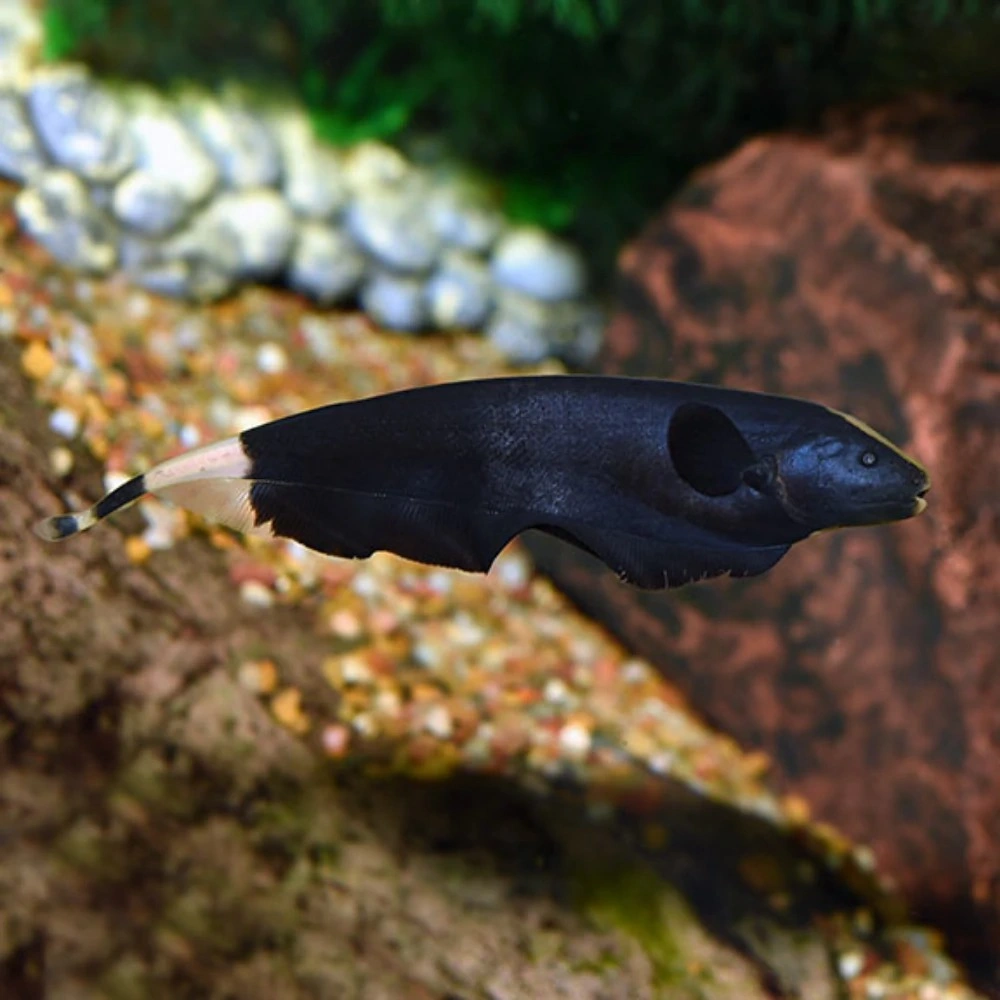
Black Ghost Knifefish
Apteronotus albifrons
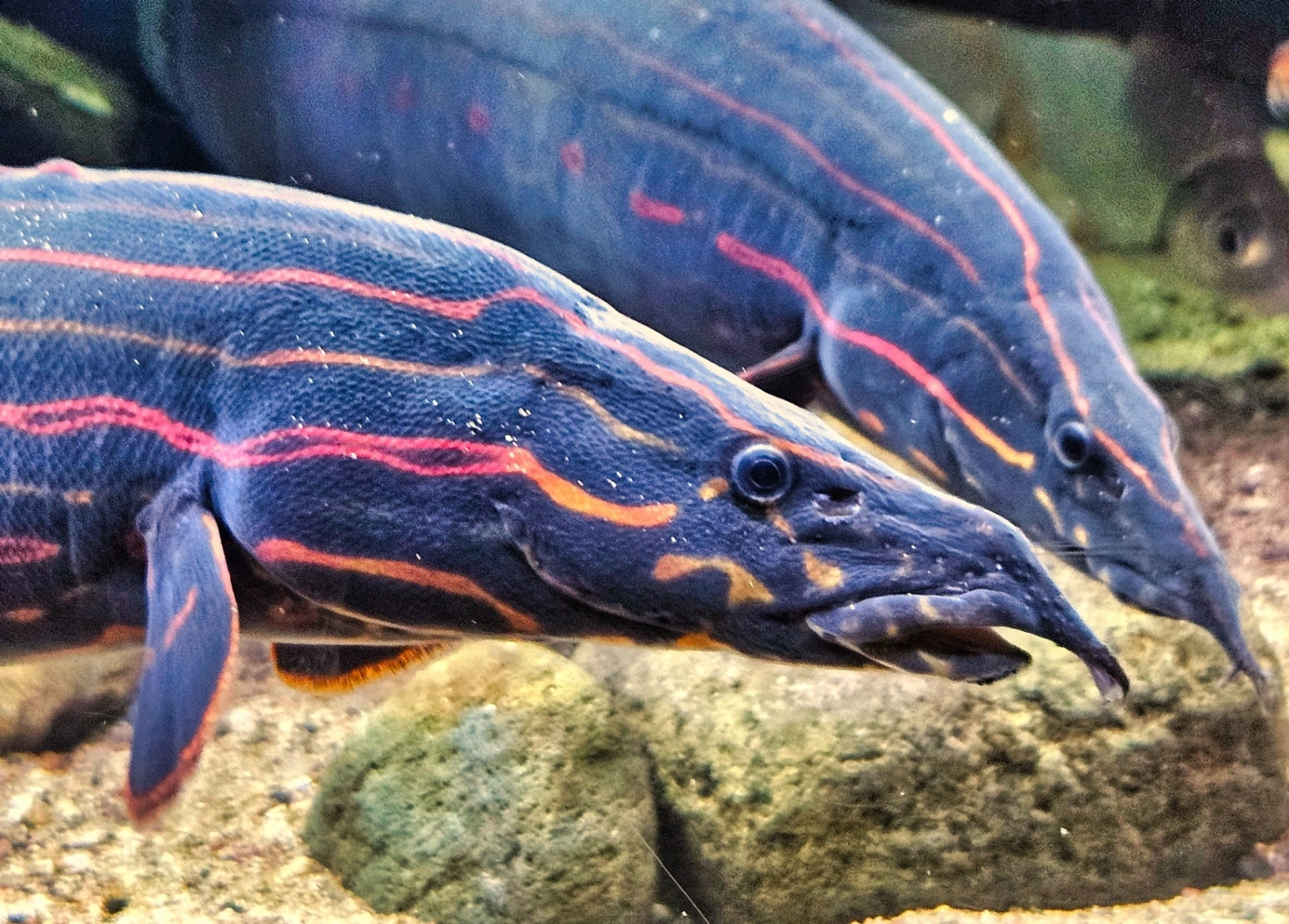
Fire Eel
Mastacembelus erythrotaenia
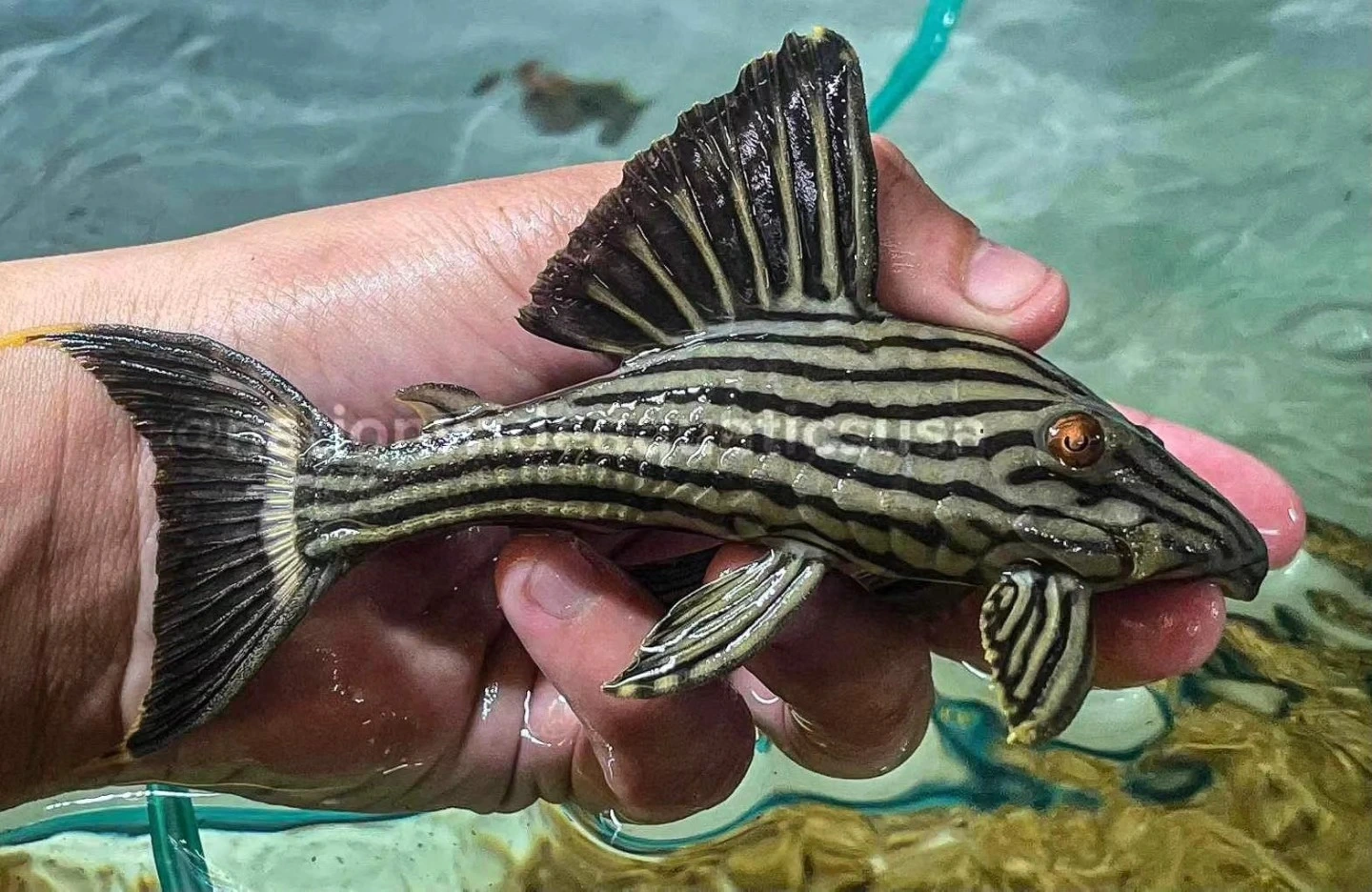
Royal Pleco
Panaque nigrolineatus

Livingstoni Cichlid
Nimbochromis livingstonii

Venustus Cichlid
Nimbochromis venustus

Bala Shark
Balantiocheilos melanopterus
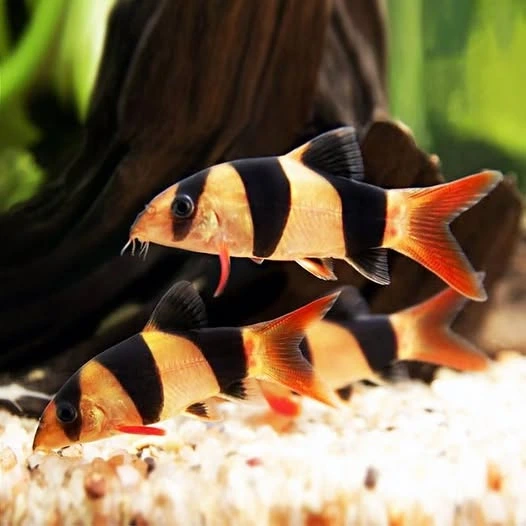
Clown Loach
Chromobotia macracanthus
Ready to Add Frontosa to Your Tank?
Use our free stocking calculator to check compatibility, bioload, and get personalized recommendations.