
Care Requirements
Adult Size
39.4" (100cm)
Min Tank
125 gal
Temperature
75-82°F
pH Range
6.5-7.5
Lifespan
10-20 years
Min Group
Can be kept alone
Diet
Carnivore
Swim Level
Bottom
Bioload
4/10
Hardness
5-15 dGH
About Fire Eel
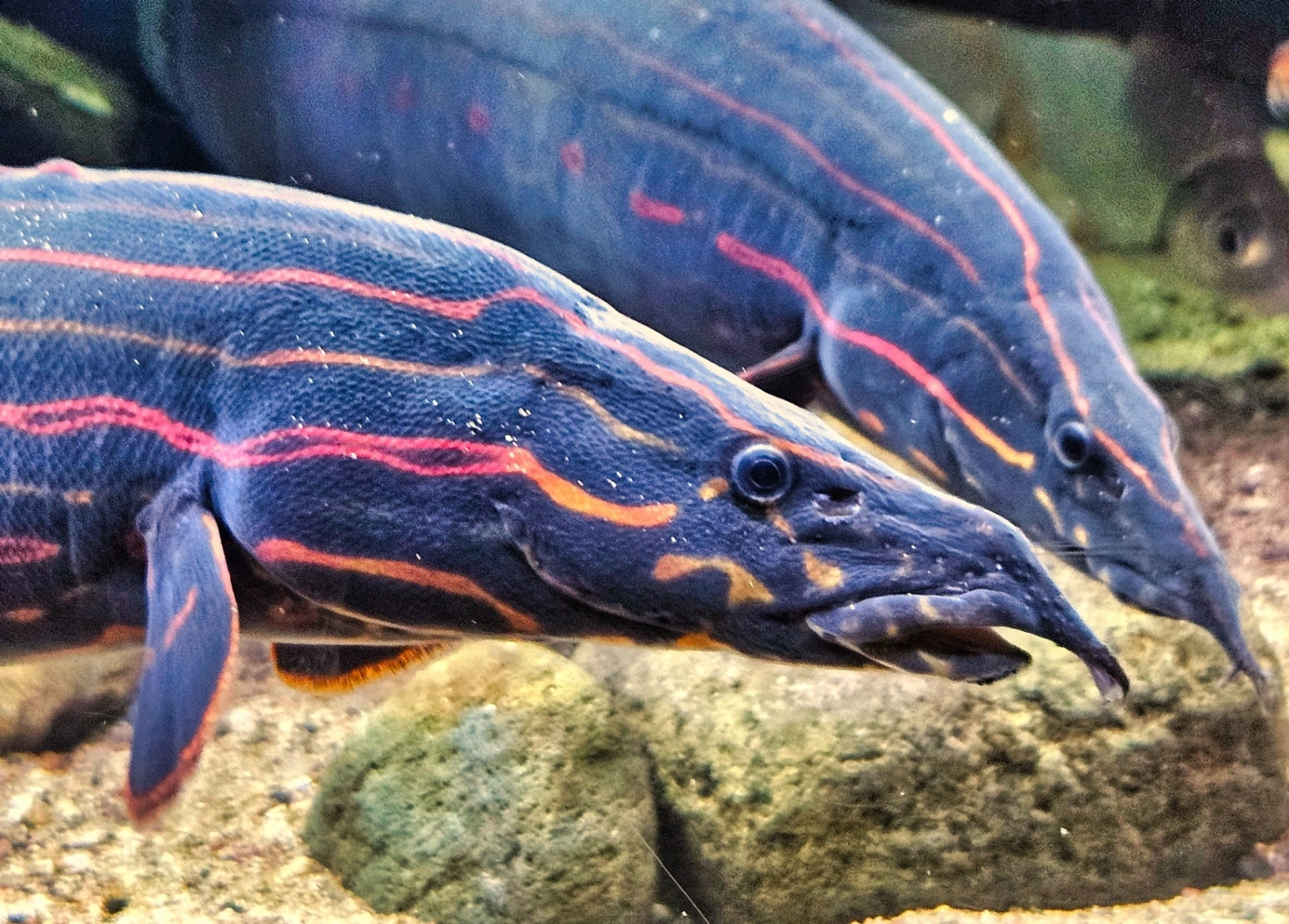
The Fire Eel is the crown jewel of the spiny eel family — a stunning, dramatic fish reaching over 3 feet in length with vivid red-orange markings on a dark body. They're not true eels but elongated freshwater fish with pointed snouts and undulating movement that earn the name. For keepers willing to accommodate their substantial needs, they provide unique, rewarding fishkeeping unlike anything conventional species offer.
Their care requirements are significant: very large tanks (125+ gallons), mandatory sand substrate for burrowing, patient feeding approach, and escape-proof lids. They're nocturnal predators that spend daylight hours buried in sand, emerging at night to hunt. This lifestyle means keepers must adjust expectations — Fire Eels aren't 'display' fish in the traditional sense; their beauty reveals itself on their schedule.
The biggest challenge for new keepers is feeding. Fire Eels are often reluctant feeders initially, sometimes refusing food for weeks after purchase. This isn't unusual and requires patience rather than panic. Live earthworms offered near their hiding spots after dark are usually the key to establishing feeding. Once eating regularly, they gradually accept a wider diet.
With time and consistent care, Fire Eels develop remarkable trust with their keepers. Hand-feeding relationships are achievable and represent one of the most rewarding experiences in the hobby. A 3-foot eel approaching your hand for food creates a connection impossible with conventional aquarium fish.
Natural Habitat & Origin
Fire Eels are native to Southeast Asia, found across Thailand, Myanmar, Vietnam, Indonesia, and Malaysia. They inhabit rivers, lakes, and flooded areas with soft substrates — mud, silt, and fine sand that allow their burrowing lifestyle.
In the wild, they're nocturnal bottom dwellers that spend days hidden in substrate and emerge at dusk to hunt. Their elongated body and pointed snout are adaptations for navigating through substrate and probing for food — worms, insect larvae, and small fish hiding in bottom material.
Their natural habitat features warm, slightly acidic to neutral water with moderate to soft hardness. Current is typically gentle to moderate. The bottom composition is critically important — they evolved for soft substrates, and hard or sharp materials damage their sensitive skin.
Fire Eels in the wild can reach impressive sizes, occasionally exceeding the 3-foot typical aquarium maximum. Their dramatic coloration serves as warning — the prominent spines on their dorsal fin deliver painful stings. Handle with extreme care.
Native Region
Southeast Asia — Thailand, Myanmar, Vietnam, Indonesia, Malaysia
Habitat Type
Rivers, lakes, flooded areas with soft substrates
Wild Water Conditions
Warm (24-28°C), slightly acidic to neutral, soft to moderate hardness
Appearance & Varieties
Fire Eels are visually stunning — dark brown to black body adorned with vivid red-orange to yellow lateral stripes and spots. The pattern varies individually but typically includes horizontal lines along the body that intensify with age and good care. Coloration becomes more vivid as they mature.
The body is elongated and laterally compressed, with a distinctive pointed snout used for probing substrate. A row of small dorsal spines gives the family its 'spiny eel' name — these can inflict painful punctures. The anal fin is long and confluent with the caudal fin, creating the undulating swimming motion.
Adults reach 3 feet (90-100 cm) in aquariums, occasionally larger. Juveniles sold in stores at 4-6 inches give little indication of adult size. The body is muscular and flexible, allowing them to navigate tight spaces and burrow efficiently.
Sexing is difficult. Females may appear plumper when mature, but reliable determination isn't possible outside breeding conditions.
Popular Varieties
| Variety | Description | Rarity |
|---|---|---|
| Standard/Wild-Type | Dark body with red-orange lateral markings. Pattern intensity varies individually. The only form available in the trade. | Uncommon |
| High-Color Specimens | Individuals with particularly vivid red or orange markings. Same species, just exceptional coloration from genetics and care. | Rare |
Tank Setup & Requirements
Quick Requirements Summary
Tank Size
Minimum Tank Size
125 gallons
Recommended Tank Size
180 gallons
Fire Eels require large tanks with sand substrate, secure lids, and patient keepers. Their specific needs are non-negotiable — without sand and security, they'll suffer or escape.
Water Parameters
Warm, slightly acidic to neutral water suits them best. Stable parameters are more important than exact values. Temperature: 24-28°C (75-82°F), pH: 6.5-7.5, Hardness: 5-15 dGH. Good water quality is essential — maintain regular water changes.
Substrate
Sand is MANDATORY — not recommended, required. Fire Eels are burrowers that spend most time partially buried. Without sand, they cannot exhibit natural behavior, become stressed, and may develop skin damage from attempting to burrow in gravel. Fine, soft sand allows safe burrowing. This is non-negotiable.
Plants & Decorations
Provide multiple hiding spots using driftwood, PVC pipes, and rock caves. Plants in sand can work but may be uprooted. Hardy plants like Anubias attached to décor survive best. Dark hiding spots where they feel secure during the day are essential.
Filtration & Water Flow
Strong filtration with covered intakes is important. Sponge prefilters on all intakes prevent them from entering filter systems where they can become trapped. Canister filters provide good mechanical and biological filtration for their waste output.
Lighting
Dim to moderate lighting preferred. Bright lights may discourage daytime emergence. Moonlight LEDs allow observation of nighttime activity without disturbing natural behavior.
Diet & Feeding Guide
Diet Type
carnivore
Feeding Frequency
Every 2-3 days for adults, daily for juveniles
Portion Size
Moderate amounts. Target feed near their hiding spots, especially after lights out. New specimens may take weeks to feed — patience is essential.
Fire Eels are carnivorous predators requiring meaty foods. The main challenge is establishing feeding in new specimens — they're often reluctant feeders initially. Live foods usually break through feeding reluctance.
Best Foods for Fire Eel
- Live earthworms/nightcrawlers — Often the most reliable food for establishing feeding. Movement and scent attract reluctant feeders. Can be offered by hand once trust develops.
- Live blackworms — Excellent food eagerly consumed. Can be buried in sand where Fire Eels will find them naturally.
- Frozen bloodworms — Usually accepted once feeding is established. Sinking varieties reach them on the bottom.
- Frozen shrimp/prawns — Larger specimens accept shrimp pieces. Cut appropriately. Good protein source.
- Sinking carnivore pellets — Some specimens accept pellets (Hikari Carnivore, Massivore). Often requires patience to train onto prepared foods.
Foods to Avoid
- Flakes — Inappropriate — they're carnivores requiring substantial meaty foods.
- Floating foods — Bottom dwellers that won't pursue surface foods. All foods should sink.
- Unquarantined feeder fish — Disease transmission risk is high with feeders.
New specimens may refuse food for weeks — patience is essential. Live earthworms near hiding spots after dark are usually the breakthrough food.
Behavior & Temperament
Fire Eels are nocturnal burrowers that spend daylight hours hidden, emerging at night to hunt. Expect to see them most during evening hours or when food is offered. Their apparent inactivity during the day is normal, not a sign of illness.
Despite their size and predatory nature, they're relatively peaceful toward fish too large to eat. They're not territorial aggressors — they simply consume anything that fits in their mouths when it ventures near. This makes them compatible with appropriately-sized tankmates.
The burrowing behavior is fascinating to observe — they disappear into sand with remarkable speed, leaving only their pointed snout visible. This isn't hiding from danger but rather their preferred resting position. Tanks without sand deny them this essential behavior.
With time and regular feeding, many Fire Eels become remarkably tame, accepting hand-feeding and approaching their keepers. This interactive potential makes them engaging long-term pets rather than fish that simply exist in tanks.
Tank Mates: Compatibility Guide
Compatible Tank Mates
Too large to eat, occupy different zones. Severums and similar work well.
Bottom dwellers too large and armored for predation.
Similar nocturnal, bottom-dwelling lifestyle. Armored, appropriate size.
Fast, appropriately sized. Occupy different activity periods and zones.
Too fast and large for predation. Mid-water swimmers avoiding eel territory.
Tank Mates to Avoid
Small fish
Food. Anything mouth-sized will eventually be eaten.
Dwarf shrimp
Prime prey — will be hunted and consumed.
Small bottom dwellers
Share habitat and are small enough to eat.
Aggressive cichlids
May harass and injure Fire Eels. Their peaceful nature makes them poor matches for aggressive tankmates.
Common Pairing Questions
Can Fire Eels live with other fish?
Yes, with appropriately-sized tankmates. They eat anything mouth-sized but are peaceful toward larger fish.
Can I keep multiple Fire Eels?
Possible in very large tanks with adequate hiding spots for each. Monitor for aggression.
Fire Eel breeding in home aquariums is extremely rare — successful spawnings are nearly unknown outside commercial facilities. Sexing is difficult. All specimens in the trade are wild-caught or commercially bred overseas.
Health Issues & Disease Prevention
Fire Eels are moderately hardy when their specific needs are met — appropriate substrate, water quality, and diet. Most health issues relate to substrate problems, escape injuries, or feeding difficulties.
Common Diseases
| Disease | Symptoms | Treatment |
|---|---|---|
| Skin damage (from inappropriate substrate) | Abrasions, wounds, secondary infections from burrowing in gravel. | Provide sand immediately. Treat wounds with salt and antibacterial medication. |
| Ich | White spots on body. | Raise temperature. Salt treatment effective. Standard ich medication works. |
| Escape injuries | Physical damage from leaving tank or entering filter systems. | Return to water. Treat injuries. Prevent with secure lids and covered intakes. |
| Starvation (feeding refusal) | Emaciation, visible spine, lethargy. | Offer highly attractive live foods (earthworms, blackworms) near hiding spot. Patience required. |
| Bacterial infections | Redness, ulcers, fin deterioration. | Improve water quality. Antibacterial medication. |
Signs of a Healthy Fire Eel
- Partially buried in sand with snout visible
- Active hunting at night
- Strong feeding response
- Bright, vivid markings
- Clear eyes
- Smooth, intact skin
Prevention Tips
- Provide sand substrate — essential
- Secure all potential escape routes
- Cover filter intakes with sponge
- Feed appropriate live/frozen foods
- Maintain good water quality
Frequently Asked Questions
Fire Eels reach 3 feet (90-100 cm) in aquariums, occasionally larger. This makes them the largest commonly kept spiny eel species. Plan for 125+ gallon tanks with 6+ foot length to accommodate adults properly.
New Fire Eels often refuse food for days to weeks — this is common and requires patience. Offer highly attractive live foods (earthworms, blackworms) near their hiding spot after lights out. Don't give up; most eventually accept food.
YES — sand is essential, not optional. Fire Eels are burrowers that spend most time partially buried. Without sand, they cannot exhibit natural behavior, become stressed, and may develop skin damage.
That's normal — they're nocturnal burrowers. Daytime hiding is natural, healthy behavior. They emerge to hunt at night. Dim lighting during evening hours shows their activity.
Absolutely — they're notorious escape artists. Their flexible bodies squeeze through surprisingly small gaps. Every potential exit must be sealed. Use weighted lids and cover filter intakes.
No — they're spiny eels (family Mastacembelidae), more closely related to perches than true eels. The elongated body earns the name, but the spiny dorsal fin distinguishes them.
Tips for Keeping Fire Eel
Pro Tips
- ✓Earthworms establish reluctant feeders — live earthworms are often the key to getting new Fire Eels eating.
- ✓Sponge prefilters on all intakes — prevents them from entering filter systems where they can become trapped.
- ✓Feed after lights out initially — nocturnal feeders are most responsive at night.
- ✓Hand-feeding builds remarkable trust — patient keepers can develop hand-feeding relationships over months.
Common Mistakes to Avoid
- ✗Using gravel instead of sand — stress, inability to burrow, potential skin damage.
- ✗Inadequate lid security — escaped eel found dead. They exploit any gap.
- ✗Giving up on feeding too quickly — starved eel. New specimens need weeks to start eating.
- ✗Underestimating adult size — inadequate tank for 3-foot fish.
- ✗Small tankmates — expensive fish become expensive food.
Sources
- FishBase — Accepted scientific name, maximum size and native range for Fire Eel.
Related Species You Might Like
View All Fish →
Firemouth Cichlid
Thorichthys meeki
Black Ghost Knifefish
Apteronotus albifrons

Frontosa
Cyphotilapia frontosa
Royal Pleco
Panaque nigrolineatus
Pacu
Colossoma macropomum

Red-Bellied Piranha
Pygocentrus nattereri

Red Tail Catfish
Phractocephalus hemioliopterus

Silver Arowana
Osteoglossum bicirrhosum
Ready to Add Fire Eel to Your Tank?
Use our free stocking calculator to check compatibility, bioload, and get personalized recommendations.