
Care Requirements
Adult Size
39.4" (100cm)
Min Tank
1200 gal
Temperature
75-86°F
pH Range
6-7.5
Lifespan
20-25 years
Min Group
Can be kept alone
Diet
Herbivore
Swim Level
All
Bioload
5/10
Hardness
2-15 dGH
About Pacu
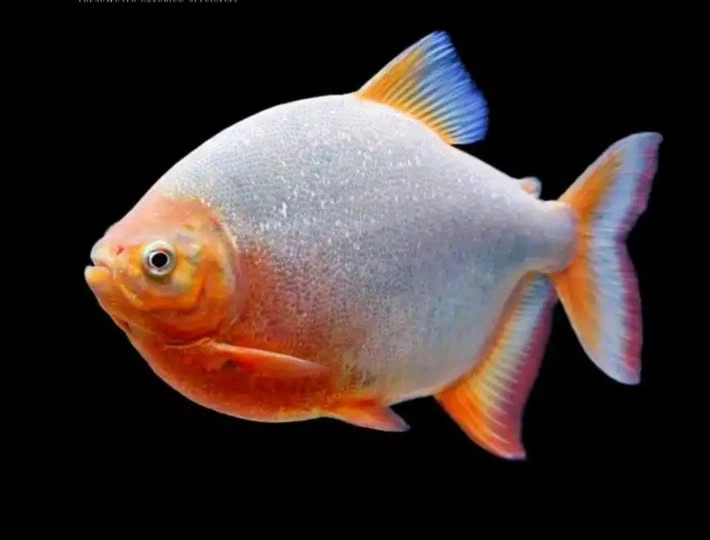
The Pacu is fishkeeping's most frequently regretted purchase — sold as a 2-inch 'vegetarian piranha' to unsuspecting customers who discover, months later, that their 'cute little fish' becomes a 3+ foot, 55+ pound monster requiring swimming pool-scale housing. No aquarium commonly available to hobbyists can adequately house an adult Pacu. Yet they continue to be sold with no size warnings, creating an ongoing welfare crisis.
Their resemblance to piranhas (close relatives) drives sales appeal. The marketing angle is seductive: 'all the cool piranha look, but vegetarian and safe!' What's omitted is that this 'vegetarian' outgrows piranhas dramatically. Adult Pacu are among the largest fish in the Amazon basin, reaching weights exceeding 55 pounds (25 kg) and lengths over 3 feet (100 cm).
Pacu appearing in local news as 'piranhas caught in lakes and rivers' are invariably released pets. Unable to house them, owners dump Pacu into local waterways where they become invasive species or die when winter arrives.
For the rare keeper who can provide appropriate housing (essentially heated indoor ponds), Pacu are intelligent, personable fish that recognize their owners, hand-feed enthusiastically, and live 20-25 years. They're genuinely interesting animals — but only for those with genuinely exceptional facilities.
Natural Habitat & Origin
Conservation status: Near Threatened (NT)
Pacu inhabit the Amazon and Orinoco River basins across Brazil, Peru, Colombia, and Venezuela. They occupy floodplain environments where seasonal flooding connects rivers with vast forested areas — these flooded forests provide their primary food source.
Their natural diet is heavily frugivorous — fruits, nuts, and seeds falling from flooded forest trees constitute major nutrition. Their teeth, flat and molar-like, evolved for crushing hard fruits and nuts.
Wild Pacu migrate seasonally following flooding patterns and food availability. They're important seed dispersers for Amazonian trees. This ecological role makes them keystone species in their native habitat.
As food fish, Pacu support significant aquaculture in South America. Most aquarium specimens are bred for this food market, with colorful juveniles diverted to the pet trade.
Native Region
South America — Amazon and Orinoco River basins
Habitat Type
Rivers, flooded forests, floodplains
Wild Water Conditions
Warm (24-30°C), soft, slightly acidic to neutral
Appearance & Varieties
Pacu display the characteristic compressed body shape of their piranha relatives — deep-bodied and laterally flattened. Juveniles show silvery coloration with darker spots or bars, resembling young piranhas.
Adults transform dramatically. Coloration shifts to olive-gray, brownish, or near-black. Body depth increases proportionally, creating an impressive profile. Adults reach 3+ feet (100+ cm) and weights exceeding 55 pounds (25+ kg).
Their teeth are the famous feature — flat, molar-like, and eerily resembling human dentition. These teeth crush fruits, nuts, and seeds in the wild.
Sexing is difficult without examining internal anatomy. Males may be slimmer, but reliable external differences don't exist for hobbyist determination.
Popular Varieties
| Variety | Description | Rarity |
|---|---|---|
| Red-Bellied Pacu (hybrid) | Hybrid showing orange-red coloration on lower body. Most commonly sold 'Pacu' in trade. | Very Common in trade |
| Black Pacu (Colossoma macropomum) | True species reaching largest sizes. Adults very dark, nearly black. | Uncommon in trade |
| Red-Bellied Pacu (Piaractus brachypomus) | Related species with orange-red belly. 'Only' reaches 2-3 feet. | Common in trade |
Tank Setup & Requirements
Quick Requirements Summary
Tank Size
Minimum Tank Size
1200 gallons
Recommended Tank Size
2000 gallons
Pacu cannot be kept in normal aquariums. This section describes requirements that exceed what virtually all hobbyists can provide.
Water Parameters
Temperature: 24-30°C (75-86°F). pH: 6.0-7.5. Hardness: 2-15 dGH. South American warm, soft water conditions. Temperature must be maintained year-round. They're adaptable within tropical ranges but can't tolerate cold.
Substrate
Any in appropriate facilities. Substrate choice matters little when housing requirements make the species inappropriate for virtually everyone.
Plants & Decorations
Large, secure items only. Their size means anything not secured will be moved. Their power can break decorations. Plants will be eaten — they're herbivores.
Filtration & Water Flow
MASSIVE — pond-scale systems. Their waste production requires commercial or pond-grade filtration. Standard aquarium filters cannot handle the bioload.
Lighting
No special requirements. Whatever enables observation in their facility.
Diet & Feeding Guide
Diet Type
herbivore
Feeding Frequency
Once daily for adults
Portion Size
Substantial but appropriate to size. Large adults require significant food volume but don't overfeed.
Pacu are primarily herbivorous/frugivorous — one of their few manageable characteristics. Their diet is relatively inexpensive compared to their size.
Best Foods for Pacu
- Fruits and vegetables — Natural diet includes fruits, nuts, vegetation. Offer grapes, banana, apple, melons, lettuce, spinach, peas.
- Quality pellets — Large herbivore/omnivore pellets provide nutrition. Koi pellets work. Significant quantities required.
- Nuts (shelled) — Their teeth evolved to crush nuts. Brazil nuts, almonds, walnuts provide enrichment.
- Aquatic plants — If available, they consume plant material readily.
Foods to Avoid
- Feeder fish — Despite piranha appearance, they're not piscivores. Fish aren't appropriate diet.
- High-protein diets — They're herbivores; excessive protein isn't natural or healthy long-term.
One of their few manageable characteristics. Herbivorous diet is relatively inexpensive. Monitor body condition — they can become obese.
Behavior & Temperament
Pacu are intelligent fish displaying behaviors that make them engaging — if you could actually house them appropriately. They recognize individual keepers, respond to presence, hand-feed enthusiastically, and display distinct personalities.
Despite piranha ancestry, they're generally peaceful. Aggression is uncommon outside competition for food. However, their size makes them dangerous unintentionally — they can injure handlers through thrashing.
Their 'friendly' behavior contributes to the problem — cute, interactive juveniles don't hint at the monstrous adults they become.
They're surprisingly athletic swimmers despite bulk, capable of powerful bursts and jumps.
Tank Mates: Compatibility Guide
Compatible Tank Mates
Other large South American fish (in appropriate facilities)
Can coexist with Arowana, large catfish in facilities capable of housing multiple monster fish.
Large armored catfish
Plecostomus and similar large catfish survive with Pacu given adequate space.
Tank Mates to Avoid
Everything normal aquarists keep
Any fish you can house, a Pacu cannot live with because you can't house the Pacu.
Small to medium fish
May be eaten accidentally or stressed by presence of huge fish.
Common Pairing Questions
Can Pacu live with piranhas?
Not recommended. Different temperaments and potential aggression from piranhas. Also, you can't house the Pacu anyway.
Can Pacu live in a community tank?
No — they outgrow any standard community setup. They need thousands of gallons.
Pacu breeding is commercially practiced in South American aquaculture but unrealistic in home settings. Commercial breeding involves large ponds, hormonal induction of spawning, and collection of eggs. Home breeding is impossible because home housing is impossible.
Health Issues & Disease Prevention
Pacu are hardy fish when conditions are appropriate. Most health issues relate to inadequate housing.
Common Diseases
| Disease | Symptoms | Treatment |
|---|---|---|
| Ich (in stressed/new fish) | White spots on body and fins. | Raise temperature, salt treatment. They tolerate treatment well if caught early. |
| Bacterial infections | Fin rot, ulcers, redness. | Improve water quality, antibacterial medication. Often secondary to inadequate housing stress. |
| Stunting-related issues | Deformed body, shortened lifespan, organ problems. | None — result of inadequate housing. Prevention only. |
| Nutritional problems | Poor coloration, lethargy, deformity. | Improve diet quality and variety. |
Signs of a Healthy Pacu
- Active behavior
- Good appetite
- Clear eyes
- Proportional body shape
- Good coloration
- Interactive behavior
Prevention Tips
- Provide adequate housing (which you can't, so don't buy them)
- Feed appropriate herbivorous diet
- Maintain water quality
Frequently Asked Questions
Over 3 feet (100 cm) and 55+ pounds (25+ kg). This is not exaggeration. The 2-inch juvenile becomes a fish larger than many children. There is no way to prevent this growth except through stunting, which is cruelty.
No. Even 'large' aquariums (200-300 gallons) are completely inadequate. They need thousands of gallons — essentially heated indoor ponds.
They're not aggressive like piranhas, but their bite force is substantial. The viral 'testicle-biting' story was a hoax. Actual bites are rare and usually occur during feeding.
Profit and ignorance. Colorful juveniles sell well when marketed as 'vegetarian piranhas.' There's no legal requirement to disclose adult size.
Contact public aquariums, Koi/pond stores, or species-specific rescues. DO NOT release into local waterways. Humane euthanasia may be the responsible option if rehoming fails.
Yes — same family (Serrasalmidae). Juveniles look similar. But Pacu evolved herbivorous diets with flat, crushing teeth while piranhas have sharp, cutting teeth. Pacu also grow much larger.
Tips for Keeping Pacu
Pro Tips
- ✓DO NOT BUY THIS FISH — unless you operate a public aquarium or can build a heated indoor pond.
- ✓If you already have one, rehome immediately — the longer you wait, the harder it gets.
- ✓Don't trust pet store sizing advice — research independently.
- ✓Consider Red-Bellied Piranhas or Silver Dollars as house-able alternatives with similar appearance.
Common Mistakes to Avoid
- ✗Buying them — the fundamental mistake.
- ✗Believing 'grows to tank size' — they become stunted and unhealthy.
- ✗Planning to 'upgrade later' — you won't build a 2,000-gallon heated pond.
- ✗Releasing into local waterways — illegal and environmentally harmful.
- ✗Keeping in 'large' aquariums — even 300-gallon tanks are inadequate.
Sources
- FishBase — Accepted scientific name, maximum size and native range for Pacu.
- IUCN Red List — Near Threatened conservation assessment for Colossoma macropomum.
Related Species You Might Like
View All Fish →
Panda Corydoras
Corydoras panda

Bala Shark
Balantiocheilos melanopterus
Clown Loach
Chromobotia macracanthus
Giant Gourami
Osphronemus goramy
Iridescent Shark
Pangasianodon hypophthalmus
Koi
Cyprinus rubrofuscus
Sailfin Pleco
Pterygoplichthys gibbiceps
Black Ghost Knifefish
Apteronotus albifrons
Ready to Add Pacu to Your Tank?
Use our free stocking calculator to check compatibility, bioload, and get personalized recommendations.