
Care Requirements
Adult Size
51.2" (130cm)
Min Tank
2000 gal
Temperature
72-82°F
pH Range
6.5-7.5
Lifespan
15-20 years
Min Group
Can be kept alone
Diet
Omnivore
Swim Level
Middle
Bioload
5/10
Hardness
2-20 dGH
About Iridescent Shark
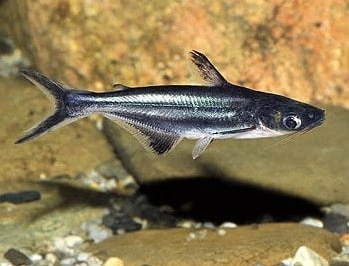
The Iridescent Shark competes with Pacu for the title of 'most irresponsibly sold aquarium fish.' These catfish — not actually sharks — reach over 4 feet (130 cm) and 100+ pounds in appropriate conditions. They're sold as shimmering 3-4 inch juveniles to customers who have no possibility of housing the resulting monster.
Their 'shark' name comes from the body shape and dorsal fin profile resembling marine sharks. The 'iridescent' refers to the silvery, reflective quality of juvenile scales that fades with age. Neither characteristic persists in adults — they become dark, massive catfish.
Beyond size, their nervous temperament makes them especially problematic. They panic easily, thrashing against glass and decorations, injuring themselves and potentially breaking equipment. This sensitivity never fully subsides.
In their native range (Mekong and Chao Phraya basins), wild populations are Endangered due to overfishing, dam construction, and habitat degradation. Ironically, they're massively farmed as food fish — the pangasius/basa sold in supermarkets is this species.
Natural Habitat & Origin
Conservation status: Endangered (EN)
Iridescent Sharks inhabit the great rivers of Southeast Asia — the Mekong and Chao Phraya basins spanning Thailand, Vietnam, Cambodia, and Laos. They're migratory fish traveling vast distances seasonally.
Their native habitat comprises large, deep river channels — environments that cannot be replicated in home aquariums. During flood seasons, they move into flooded forests and floodplains for feeding.
Wild diet is omnivorous — fish, crustaceans, plant matter, and whatever they encounter during migrations. Juveniles eat more invertebrates; adults consume more plant material.
Wild populations face severe pressure from overfishing, dam construction fragmenting migration routes, and habitat degradation. Aquarium specimens come from farms.
Native Region
Southeast Asia — Mekong and Chao Phraya River basins
Habitat Type
Large river channels, seasonally flooded areas
Wild Water Conditions
Warm (22-28°C), variable depending on season and location
Appearance & Varieties
Juvenile Iridescent Sharks display silvery, iridescent bodies with dark fins and a shark-like profile. The dorsal fin stands tall like a marine shark's. Young fish are undeniably attractive.
Adults lose this appeal entirely. Coloration shifts from shimmering silver to dull gray or near-black. Body shape becomes heavy and catfish-like. The transformation is dramatic.
Size is the defining characteristic. Adults reach 4+ feet (130 cm) and weights exceeding 100 pounds (44 kg). Even in constrained conditions, they grow large — they cannot be kept small.
They possess typical catfish features — barbels, adipose fin, and scaleless skin. Their eyesight is poor, contributing to their skittish behavior.
Popular Varieties
| Variety | Description | Rarity |
|---|---|---|
| Standard/Wild-Type | Silvery iridescent juveniles maturing to dark gray/black adults. The normal form sold in trade. | Very Common |
| Albino | White/cream coloration lacking dark pigmentation. Eyes may be pink. Same size and care requirements. | Uncommon |
Tank Setup & Requirements
Quick Requirements Summary
Tank Size
Minimum Tank Size
2000 gallons
Recommended Tank Size
3200 gallons
Iridescent Sharks cannot be kept in home aquariums. This section documents why standard approaches fail.
Water Parameters
Temperature: 22-28°C (72-82°F). pH: 6.5-7.5. Hardness: 2-20 dGH. Adaptable to various conditions — parameters are not the limiting factor. The problem is space, not chemistry.
Substrate
In appropriate facilities, soft substrate reduces injury risk during panic episodes. They don't interact specifically with substrate beyond potential collision.
Plants & Decorations
MINIMAL — they injure themselves. Panic behavior means decorations become hazards. They thrash into objects when startled. Plants cannot survive their behavior regardless of species.
Filtration & Water Flow
MASSIVE — commercial/pond scale. Enormous bioload from enormous fish. Thousands of gallons require commercial-grade filtration beyond hobby equipment.
Lighting
Subdued — reduces startling. Dim lighting reduces visual stimuli that trigger panic. Sudden light changes startle them.
Diet & Feeding Guide
Diet Type
omnivore
Feeding Frequency
Once daily for adults, multiple times for growing juveniles
Portion Size
Appropriate to size — large adults require significant food volume. They're not picky and eat enthusiastically when not stressed.
Iridescent Sharks are omnivorous and not picky eaters. Diet is one of the few aspects of their care that isn't impossibly difficult.
Best Foods for Iridescent Shark
- Large pellets — Catfish pellets, large cichlid pellets, or trout/pond pellets. Quantity matches size.
- Frozen foods — Shrimp, fish pieces, bloodworms (for juveniles). Accepted readily.
- Fresh seafood — Market shrimp, fish fillets. Economical for large specimens.
- Vegetables — Accept plant matter, especially as adults. Lettuce, zucchini, peas.
Foods to Avoid
- Live feeder fish — Disease transmission risk. Unnecessary given ready acceptance of prepared foods.
Diet is one of the few manageable aspects of their care. They eat enthusiastically when not stressed.
Behavior & Temperament
Iridescent Shark behavior is defined by their nervous, panic-prone temperament. They startle at shadows, sudden movements, water changes, maintenance activities, and essentially any environmental change. Their panic response is violent — thrashing, crashing into obstacles, and jumping.
This panic behavior causes practical problems. They injure themselves against glass, decorations, and equipment. They can crack aquarium glass. They jump from tanks. In confined spaces, panic episodes become recurring injuries.
Their poor eyesight contributes to the problem. They can't assess threats visually, so they respond to any change as potential danger.
In theoretical appropriate housing, they're active swimmers covering significant distance daily. They're social and may school together. They're not aggressive toward tankmates.
Tank Mates: Compatibility Guide
Compatible Tank Mates
Large, calm fish (in appropriate facilities)
Only in facilities capable of housing monster fish can tankmates be considered.
Other Iridescent Sharks
Social species that may school together. Groups of panicking giant catfish are worse than individuals, however.
Tank Mates to Avoid
Everything in a home aquarium
Since you can't house the Iridescent Shark, tankmate compatibility is meaningless.
Small or slow fish
May be accidentally injured or eaten.
Aggressive fish
Aggression triggers panic. They injure themselves fleeing.
Common Pairing Questions
Can Iridescent Sharks live with other fish?
Only in facilities of thousands of gallons. In home aquariums, tankmate compatibility is irrelevant because you can't house the shark itself.
Are Iridescent Sharks aggressive?
No — they're peaceful but nervous. Their danger is to themselves through panic injuries, not to tankmates through aggression.
Iridescent Shark breeding occurs in commercial aquaculture using hormonal induction in large pond facilities. Home breeding is impossible because home keeping is impossible. They become sexually mature at approximately 3-4 years, by which point they're already too large for home aquariums.
Health Issues & Disease Prevention
Iridescent Sharks are hardy regarding disease resistance. Health problems in home settings relate almost entirely to inadequate housing and self-inflicted injuries.
Common Diseases
| Disease | Symptoms | Treatment |
|---|---|---|
| Panic injuries | Skin abrasions, split fins, bruising, broken noses from hitting glass. | Clean water and time. Salt may prevent secondary infection. Root cause is inadequate housing. |
| Ich (juveniles and stressed fish) | White spots, scratching. | Standard ich treatment with temperature increase and medication. |
| Bacterial infections | Fin rot, ulcers, secondary infection of wounds. | Antibacterials, improved water quality. Often secondary to injuries. |
| Stunting and organ damage | Deformed body, shortened lifespan, failure to thrive. | None — result of inadequate housing. Prevention only. |
Signs of a Healthy Iridescent Shark
- Intact skin without injuries
- Active swimming
- Good appetite
- Proportional body shape
Prevention Tips
- Do not purchase this species
- If keeping: minimize environmental changes
- Cover all sharp edges
- Maintain consistent lighting and routine
Frequently Asked Questions
Over 4 feet (130 cm) and 100+ pounds (44 kg). The shimmering 3-4 inch juvenile becomes a massive, dark catfish. This is normal adult size. Do not purchase expecting manageable growth.
No. Even very large aquariums (300+ gallons) are completely inadequate for a 4-foot fish with panic-prone behavior. They need thousands of gallons.
It's their nature — nervous fish with poor eyesight that respond to stimuli by fleeing. In confined space, fleeing means crashing. This behavior never fully resolves.
Yes — the fish on your dinner plate and the fish in pet stores are the same species. Farmed by millions as food fish.
Contact public aquariums, specialty retailers, or rescues. DO NOT release into local waterways. Humane euthanasia may be the responsible choice. Prevention — not buying them — is the only good answer.
Wild populations are Endangered due to overfishing, dams, and habitat loss. However, captive aquaculture produces millions annually. Aquarium specimens come from farms, not wild collection.
Tips for Keeping Iridescent Shark
Pro Tips
- ✓DO NOT BUY THIS FISH — unless you operate a public aquarium facility.
- ✓Their sale should be illegal but isn't — responsible fishkeeping means refusing to participate.
- ✓If rehoming, do it NOW — the longer you wait, the larger and harder to place.
- ✓Consider Bala Sharks instead — they reach 'only' 12-14 inches, still large but house-able in 125+ gallons.
Common Mistakes to Avoid
- ✗Buying them — the fundamental error.
- ✗Believing small tank will keep them small — they become stunted but still grow large.
- ✗Adding decorations for 'enrichment' — more objects to injure themselves on.
- ✗Keeping with active/aggressive tankmates — constant triggering of panic.
- ✗Releasing into local waters — illegal and environmentally harmful.
Sources
- FishBase — Accepted scientific name, maximum size and native range for Iridescent Shark.
- IUCN Red List — Endangered conservation assessment for Pangasianodon hypophthalmus.
Related Species You Might Like
View All Fish →
Jack Dempsey
Rocio octofasciata
Sailfin Pleco
Pterygoplichthys gibbiceps

Bala Shark
Balantiocheilos melanopterus
Clown Loach
Chromobotia macracanthus
Giant Gourami
Osphronemus goramy
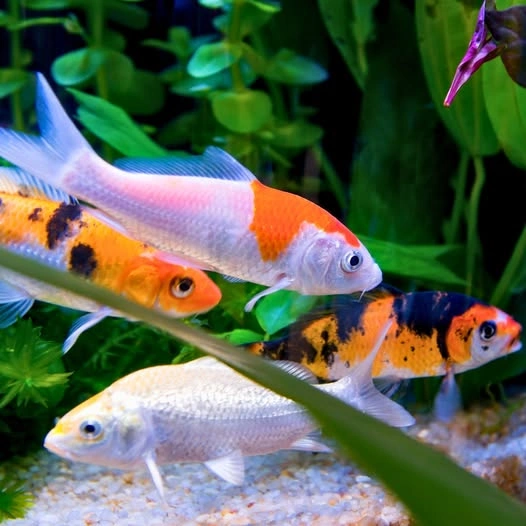
Koi
Cyprinus rubrofuscus
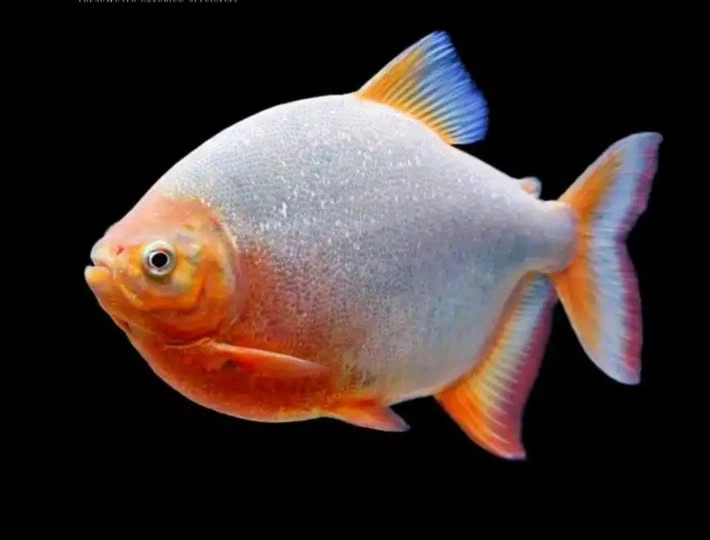
Pacu
Colossoma macropomum
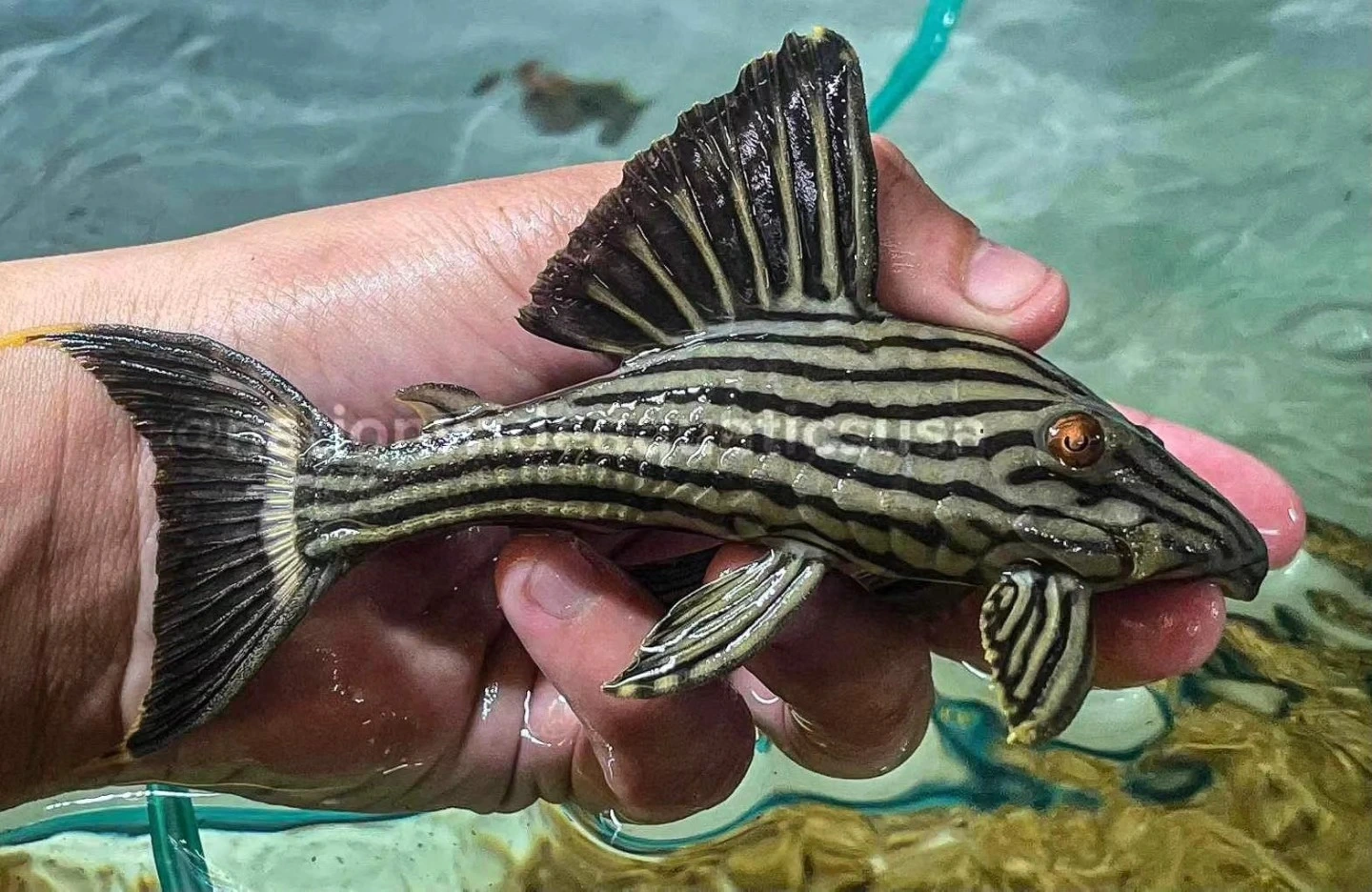
Royal Pleco
Panaque nigrolineatus
Ready to Add Iridescent Shark to Your Tank?
Use our free stocking calculator to check compatibility, bioload, and get personalized recommendations.