
Care Requirements
Adult Size
19.7" (50cm)
Min Tank
125 gal
Temperature
73-82°F
pH Range
6-8
Lifespan
10-15 years
Min Group
Can be kept alone
Diet
Carnivore
Swim Level
Bottom
Bioload
4/10
Hardness
5-19 dGH
About Black Ghost Knifefish
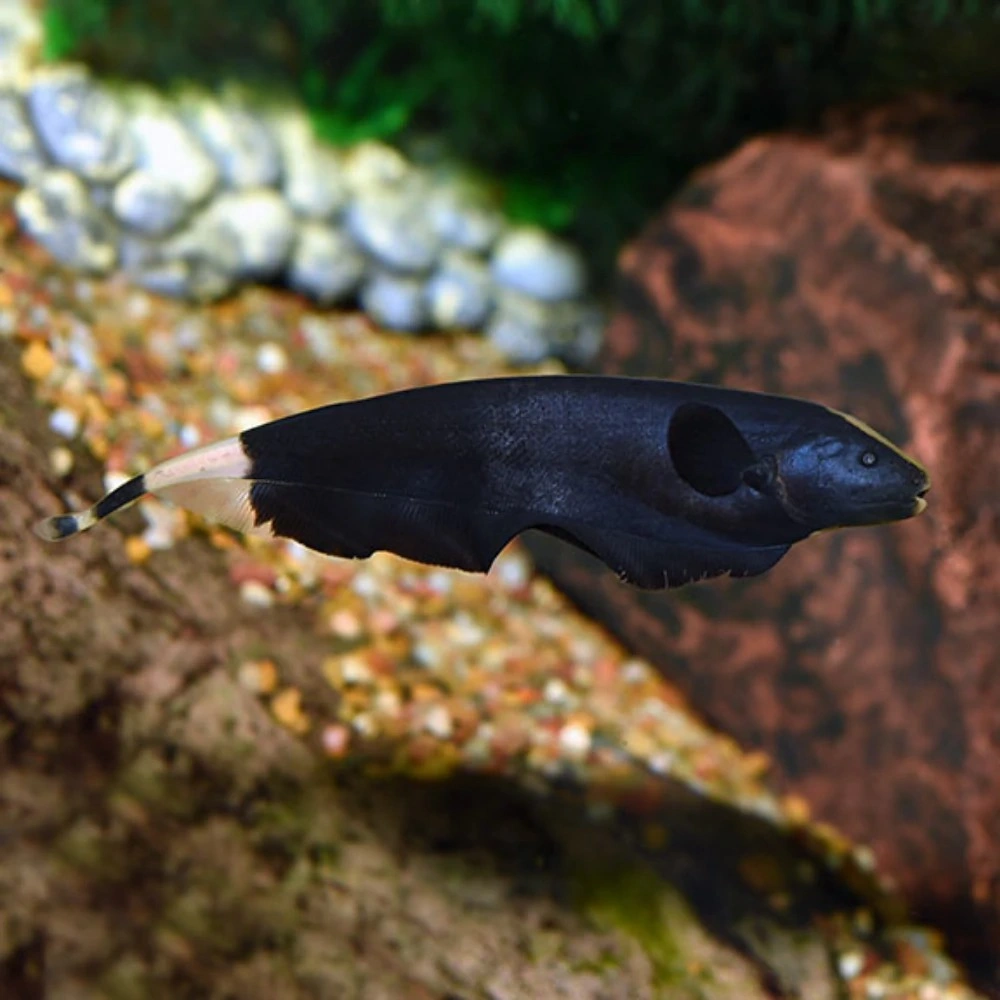
The Black Ghost Knifefish captivates aquarists with its elegant jet-black body, ghostly movement, and remarkable electric sense. Named for South American indigenous beliefs that the ghosts of the departed inhabit these fish, they glide through aquariums with an otherworldly grace that few fish can match. Their ribbon-like anal fin undulates continuously, propelling them forward, backward, and even hovering in place with precision impossible for conventionally-finned fish.
What makes them truly extraordinary is their electrosensory system. Black Ghosts generate weak electric fields from specialized organs and detect distortions in these fields caused by nearby objects, prey, or other fish. This biological sonar operates constantly, allowing them to navigate and hunt in complete darkness — their natural habitat of murky, debris-filled Amazonian waters where vision is nearly useless.
Despite their somewhat intimidating appearance and predatory nature, Black Ghosts are surprisingly peaceful toward fish too large to eat. They're shy, nocturnal fish that spend daylight hours hidden in tubes or caves, emerging at night to hunt. Their timid nature contrasts sharply with their impressive adult size — reaching 18-20 inches, they require substantial tanks that many purchasers of small juveniles don't anticipate.
They're sensitive fish requiring stable, clean water and appropriate diet. Medications containing copper are often fatal — their scaleless skin absorbs chemicals readily. For keepers willing to meet their needs, Black Ghosts offer decades of fascinating behavior and undeniable presence that ordinary fish simply can't provide.
Natural Habitat & Origin
Black Ghost Knifefish inhabit the Amazon Basin and connected river systems across Brazil, Peru, Venezuela, Paraguay, and Argentina. They occupy slow-moving tributaries, flooded forests, and vegetated margins where murky water and dense debris create the dark environment their electrosensory system evolved to navigate.
Their native waters are typically soft and acidic, stained dark with tannins from decomposing vegetation. During seasonal floods, they move into flooded forest areas hunting among submerged roots and leaf litter. The darkness and complexity of these environments make their electric sense invaluable — conventional vision would be nearly useless.
They're strictly nocturnal, spending daylight hours wedged into tight hiding spots — hollow logs, dense root tangles, and crevices. This behavior is hardwired; even in aquariums, they require hiding tubes or caves to feel secure. Without appropriate refuge, they remain stressed and may refuse food or develop health problems.
Wild diet consists of insects, worms, small crustaceans, and small fish — whatever their electric sense and surprisingly fast strikes can capture in the darkness. They're not active hunters pursuing prey but rather patient ambush predators detecting prey through electrical disturbances.
Native Region
South America — Amazon Basin, Paraguay, Paraná systems
Habitat Type
Slow-moving tributaries, flooded forests, vegetated dark waters
Wild Water Conditions
Warm (24-28°C), soft, acidic, tannin-stained, low visibility
Appearance & Varieties
Black Ghost Knifefish possess one of the hobby's most distinctive silhouettes — an elongated, laterally compressed body that tapers to a point, entirely lacking dorsal and caudal fins. The single continuous anal fin runs the entire length of the underside, undulating in hypnotic waves that provide remarkably precise movement in any direction.
Coloration is jet black with two white rings on the tail and a white blaze on the head — markings that give them their spectral common name. The skin is scaleless and somewhat translucent when light catches it. The head features small eyes (relatively useless given their nocturnal, murky habitat) and a somewhat flattened snout.
Adults reach impressive sizes — 18-20 inches (45-50 cm) is typical in aquariums, with exceptional specimens reaching larger. Growth is steady but not rapid; reaching full size takes several years. Juveniles sold at 3-4 inches give little indication of eventual adult proportions.
Sexual dimorphism is minimal. Males may be slightly slimmer and smaller than females, but reliable sexing is difficult without observing breeding behavior or internal examination.
Popular Varieties
| Variety | Description | Rarity |
|---|---|---|
| Standard/Wild-Type | Jet black body with white tail rings and head blaze. The only form available — no selectively bred variants exist. All specimens display the same basic coloration with minor individual variation in white marking intensity. | Common |
Tank Setup & Requirements
Quick Requirements Summary
Tank Size
Minimum Tank Size
125 gallons
Recommended Tank Size
150 gallons
Black Ghost Knifefish require spacious tanks with appropriate hiding spots and excellent water quality. Their adult size, sensitivity to water conditions, and need for refuge make setup critical to long-term success.
Water Parameters
While adaptable to various parameters, they're sensitive to water quality — ammonia, nitrite, and high nitrates cause stress and health problems. Soft, slightly acidic water (pH 6.5-7.5) mimics natural habitat and often produces healthiest specimens. Excellent filtration and regular water changes are essential. They're particularly sensitive to medications and chemicals — their scaleless skin absorbs substances readily.
Substrate
Fine sand is ideal — they occasionally rest on the bottom and may investigate substrate. Avoid sharp substrates that could injure their scaleless skin. Dark substrates complement their coloration and reduce perceived brightness. Bare bottom works functionally but doesn't showcase natural behavior.
Plants & Decorations
PVC tubes, ghost tubes (clear acrylic), or similar enclosed hiding spots are essential — not optional. They need refuge fitting their body where they spend daylight hours. Provide tubes appropriately sized for their current size, upgrading as they grow. Plants provide additional cover — Java Fern, Anubias, Cryptocorynes, and Java Moss thrive in similar dim lighting. Floating plants help dim lighting naturally.
Filtration & Water Flow
Powerful filtration maintaining pristine water quality is crucial — they're sensitive to poor conditions. Canister filters are ideal, providing strong biological filtration. Target 8-10x tank volume turnover. They tolerate moderate current but appreciate calmer areas for resting. Weekly water changes of 25-30% minimum.
Lighting
As nocturnal fish, they're most comfortable under dim lighting. Bright lights keep them hidden constantly. Subdued lighting, floating plant cover, or moonlight settings allow daytime viewing while respecting their nature. Blue/moonlight LEDs are excellent for nighttime viewing when they're most active.
Diet & Feeding Guide
Diet Type
carnivore
Feeding Frequency
Daily for juveniles, every other day for adults
Portion Size
Moderate amounts — what they'll consume in 5-10 minutes. Feed after lights out when they're naturally active.
Black Ghost Knifefish are carnivores requiring meaty foods. They use their electric sense to locate food, often feeding most readily at night. Many specimens are initially reluctant to accept non-living foods.
Best Foods for Black Ghost Knifefish
- Frozen bloodworms — Usually the first food accepted by new specimens. Highly attractive and appropriate size. A staple food for most keepers.
- Frozen or live blackworms — Excellent food eagerly consumed. Live blackworms trigger strong feeding response. Can be used to train reluctant feeders.
- Frozen brine shrimp — Good variety food typically accepted. Less nutritious than bloodworms as staple but useful for diet diversity.
- Earthworms/nightcrawlers — Excellent nutrition, eagerly consumed. Cut to appropriate size for smaller specimens. One of the best conditioning foods.
- Frozen krill and mysis — Good protein sources usually accepted. Appropriate for larger specimens.
- Quality sinking pellets — Many specimens can be trained onto high-quality carnivore pellets. More convenient than frozen but requires patience to establish.
Foods to Avoid
- Flakes — Inappropriate food — they're carnivores requiring substantial meaty foods, not flakes.
- Plant-based foods — Obligate carnivores that don't digest plant matter. Avoid herbivore formulas.
- Unquarantined live fish — Disease transmission risk is significant given their medication sensitivity. Avoid feeder fish or quarantine thoroughly.
Feed after lights out for best response. New specimens may require target feeding near their hiding spots. Patient, consistent feeding establishes routines over time.
Behavior & Temperament
Black Ghost Knifefish are nocturnal hunters that spend daylight hours hidden and emerge after dark to patrol their territory and hunt. Their movement is mesmerizing — the undulating anal fin allows them to glide forward, backward, and hover with precision no conventionally-finned fish can match.
They're territorial toward conspecifics and similar knifefish — their electric fields interfere with each other, creating sensory confusion and stress. Single specimens are generally recommended unless tanks are very large with multiple separated territories.
Their electric sense deserves appreciation. They constantly emit weak electrical pulses (not harmful) and detect minute distortions in this field. This sense locates food, navigates obstacles, and communicates with other electric fish.
Despite shy, retiring nature, they can become surprisingly interactive with keepers over time. Many learn feeding schedules and emerge to greet their owners. Hand-feeding is possible with patient specimens.
Tank Mates: Compatibility Guide
Compatible Tank Mates
Too large to eat, peaceful enough to coexist.
Bottom dwellers too large and armored to be prey. Share nocturnal habits.
Adults too large and fast to be easy prey. Occupy different zones.
Too fast and large to prey upon. Active daytime fish.
Similar size, different hunting styles, both nocturnal.
Too large to eat, peaceful temperament.
Tank Mates to Avoid
Other knifefish
Electric field interference causes stress.
Small fish
Anything fitting in their large mouth becomes food.
Dwarf shrimp
Natural prey, will be consumed.
Aggressive cichlids
Their shy nature makes them vulnerable to aggression.
Fin nippers
Their flowing anal fin can attract nippers.
Common Pairing Questions
Can Black Ghost Knifefish live with other electric fish?
Generally not recommended — electric fields interfere with each other, causing sensory confusion and stress for both species.
Will they eat my Corydoras?
Yes — small bottom dwellers like Corydoras are at risk. They occupy the same zone and are small enough to eat.
Breeding Black Ghost Knifefish in aquariums is extremely rare — successful spawnings are exceptional events requiring massive tanks, mature pairs, and specific conditions. Most specimens in the trade are wild-caught. For nearly all hobbyists, breeding remains unrealistic.
Health Issues & Disease Prevention
Black Ghost Knifefish are sensitive fish requiring pristine water quality and careful treatment. Their scaleless skin makes them vulnerable to water quality issues and particularly sensitive to medications.
Common Diseases
| Disease | Symptoms | Treatment |
|---|---|---|
| Ich (White Spot) | White spots visible on black body — very obvious on their coloration. | Raise temperature to 30°C. Use half-dose medication or salt treatment — they're medication-sensitive. |
| Skin infections | Cloudy patches, redness, ulcers on scaleless skin. | Pristine water quality is crucial. Mild salt treatment. Avoid harsh medications. |
| Medication poisoning | Lethargy, loss of appetite, abnormal swimming following medication use. | Water changes to remove medication. Activated carbon in filter. Always use reduced doses. |
| Stress-related illness | Refusing food, hiding constantly, pale color, weight loss. | Address stressors — provide adequate hiding spots, reduce lighting, remove aggressive tankmates. |
| Internal parasites | Weight loss despite eating, white stringy feces. | Anti-parasitic medication at reduced dose. More common in wild-caught specimens. |
Signs of a Healthy Black Ghost Knifefish
- Smooth, jet-black skin
- Active nighttime exploration
- Good appetite
- Calm daytime hiding
- Clear, undamaged fins
- Alert response to food
- Good body weight
Prevention Tips
- Maintain pristine water quality
- Provide appropriate hiding tubes
- Avoid copper-based medications
- Use half-dose or heat treatment for diseases
- Keep with appropriate peaceful tankmates
- Feed quality varied diet
- Quarantine new additions carefully
Frequently Asked Questions
They reach 18-20 inches (45-50 cm) in aquariums — sometimes larger. The small 3-4 inch juveniles commonly sold give no indication of adult size. Plan for a 125+ gallon tank from the start rather than hoping to upgrade later. Their 10-15 year lifespan means decades at full size.
Yes — they generate weak electric fields for navigation and prey detection (electrolocation), not for stunning prey or defense. The electric organ discharge is far too weak to feel. They constantly emit pulses and detect distortions caused by nearby objects.
Generally not recommended. Their electric fields interfere with each other, causing sensory confusion and stress. In very large tanks (300+ gallons) with multiple separated territories, it's sometimes possible, but single specimens are much easier to keep successfully.
That's normal — they're strictly nocturnal. Expect hiding during daylight hours. They emerge after lights out to hunt and explore. If you never see them even at night, check that hiding spots are adequate and that more aggressive tankmates aren't confining them.
Their scaleless skin absorbs chemicals from water much more readily than scaled fish. Medications — particularly copper-based treatments — can reach toxic levels in their tissue. Always use half-doses or less, prefer heat treatment for ich, and avoid copper entirely.
Absolutely — this is essential, not optional. In the wild, they spend daylight wedged into tight crevices. Without enclosed hiding spots, they remain perpetually stressed, often refuse food, and develop health problems.
Tips for Keeping Black Ghost Knifefish
Pro Tips
- ✓Ghost tubes (clear acrylic) let you observe them hiding without disturbing them.
- ✓Feed after lights out for best feeding response.
- ✓Raise temperature for ich instead of medication — safest approach for scaleless fish.
- ✓Upgrade hiding tubes as they grow — they like snug-fitting refuges.
Common Mistakes to Avoid
- ✗Underestimating adult size — 20-inch fish need 125+ gallon tanks.
- ✗No hiding tubes provided — causes perpetual stress and food refusal.
- ✗Using full-dose medications — poisoning from chemical absorption through scaleless skin.
- ✗Keeping with small fish — expensive 'friends' become expensive food.
- ✗Keeping multiple knifefish together — electric field interference and territorial stress.
Sources
- FishBase — Accepted scientific name, maximum size and native range for Black Ghost Knifefish.
Related Species You Might Like
View All Fish →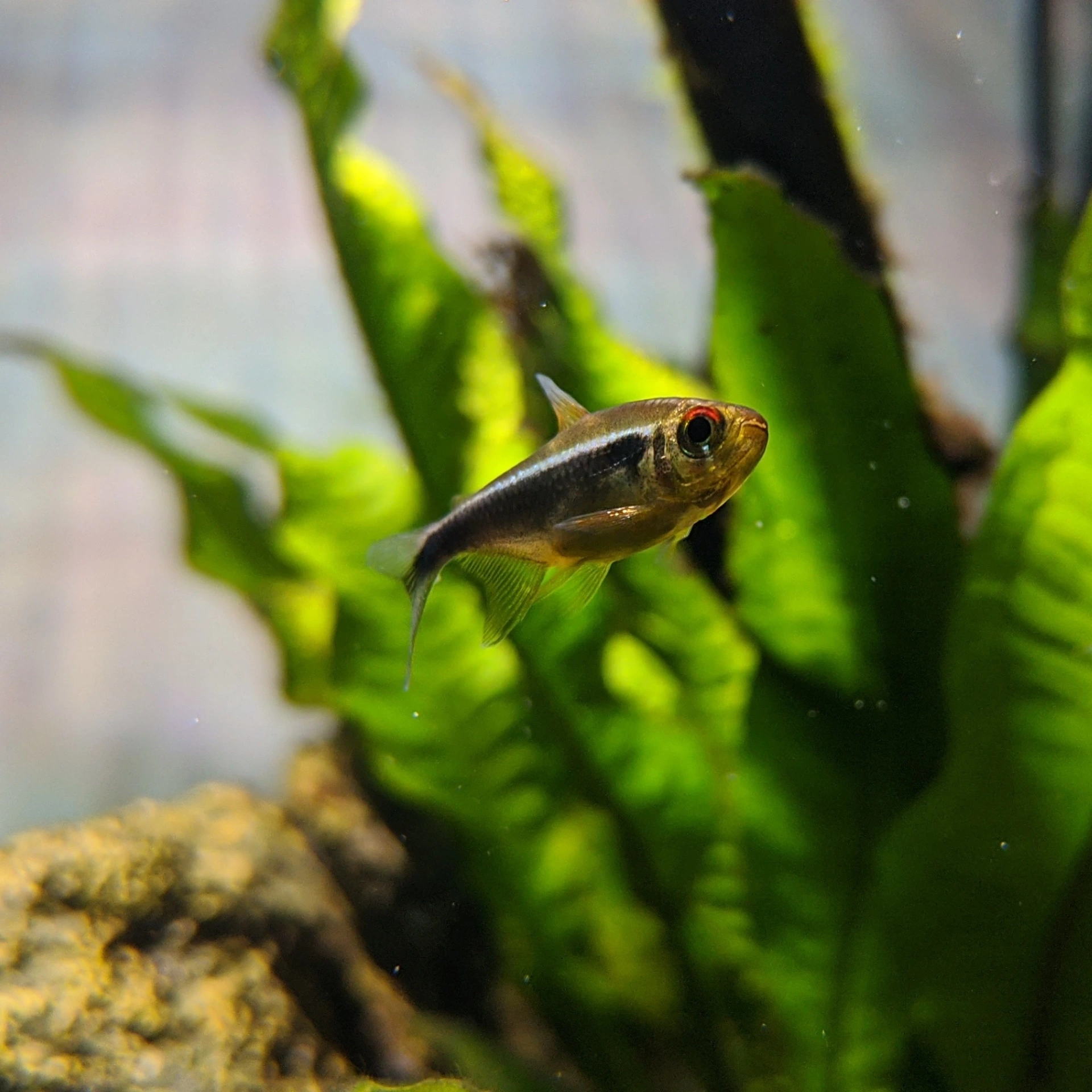
Black Neon Tetra
Hyphessobrycon herbertaxelrodi
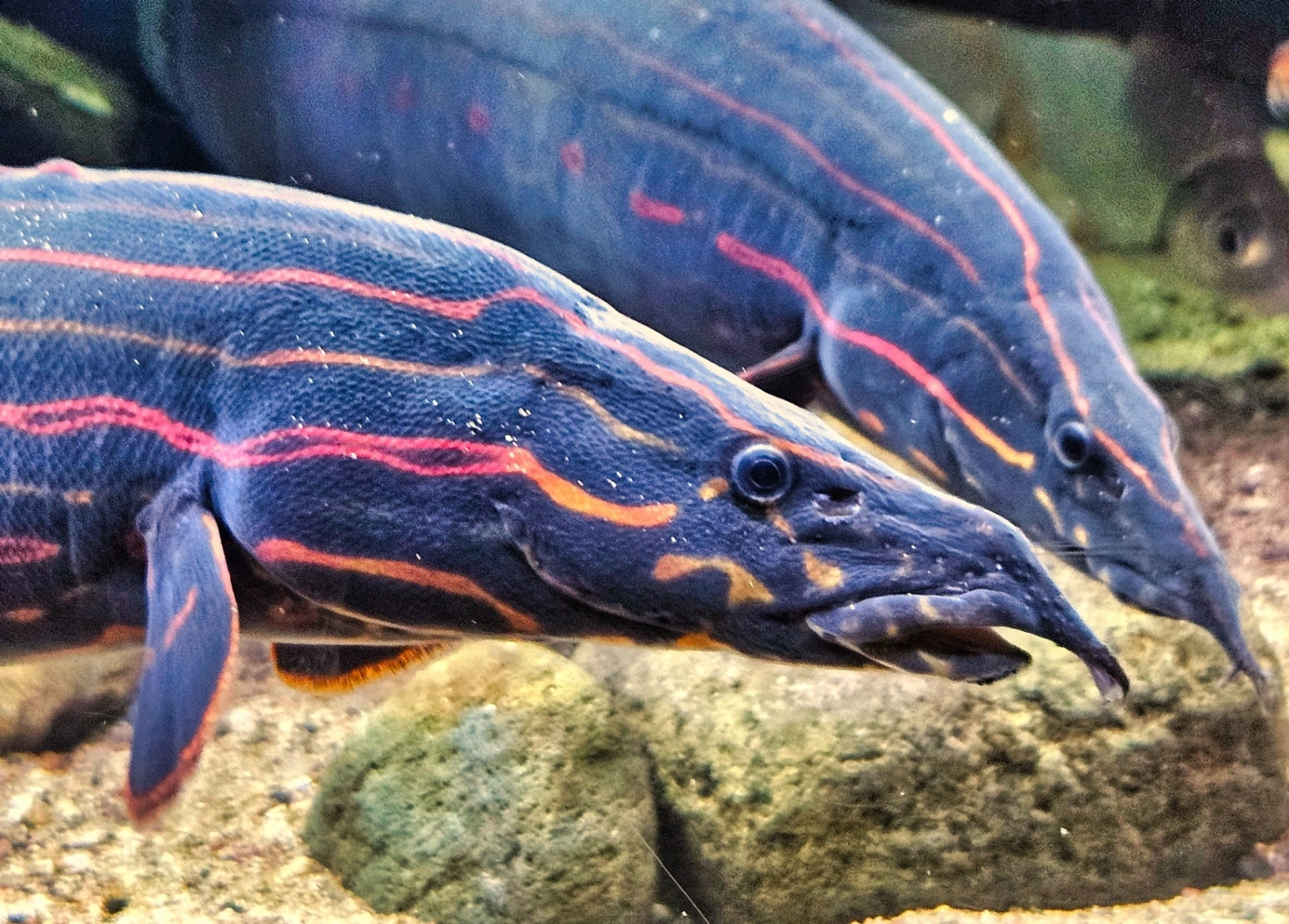
Fire Eel
Mastacembelus erythrotaenia

Frontosa
Cyphotilapia frontosa
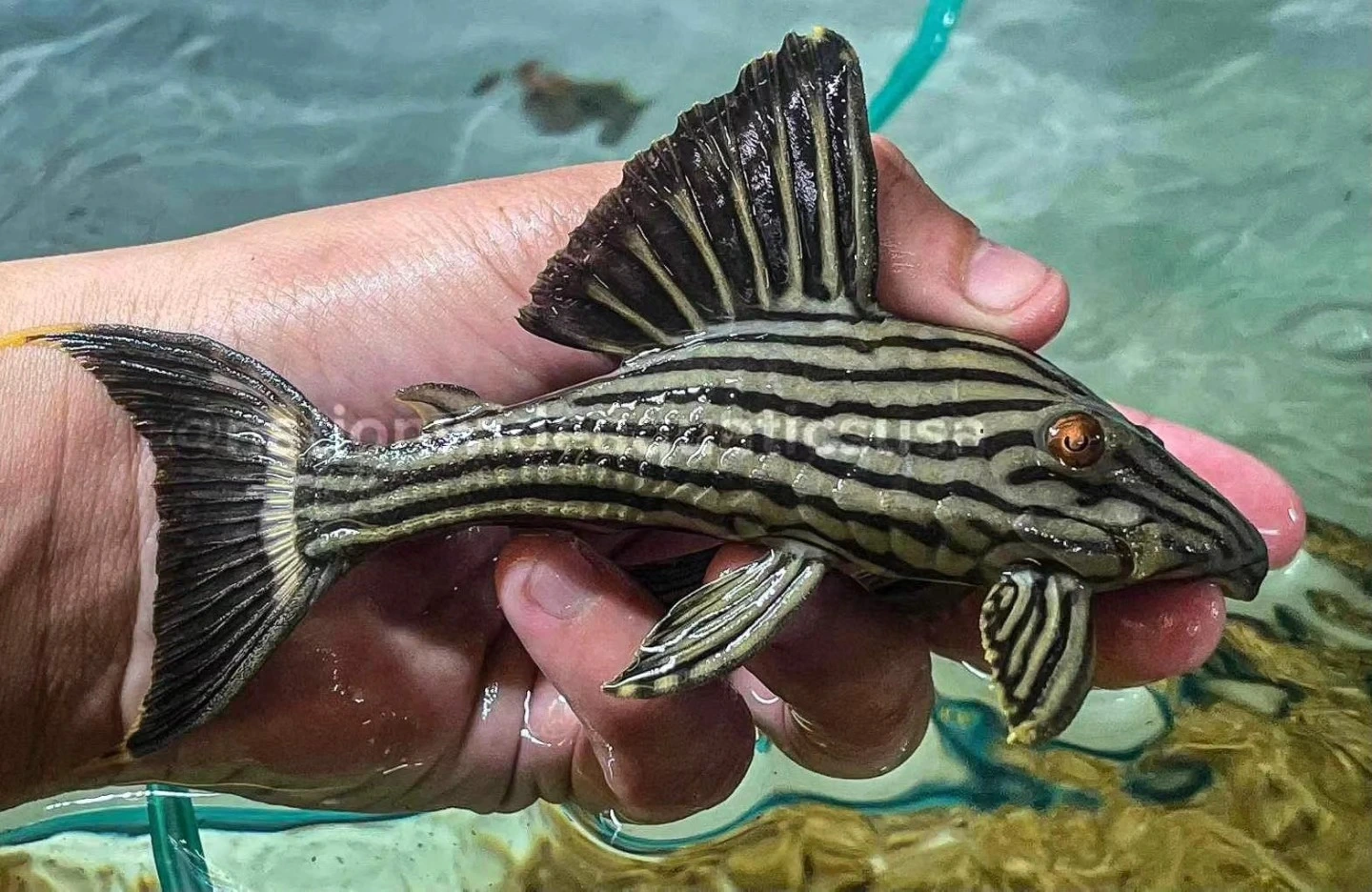
Royal Pleco
Panaque nigrolineatus
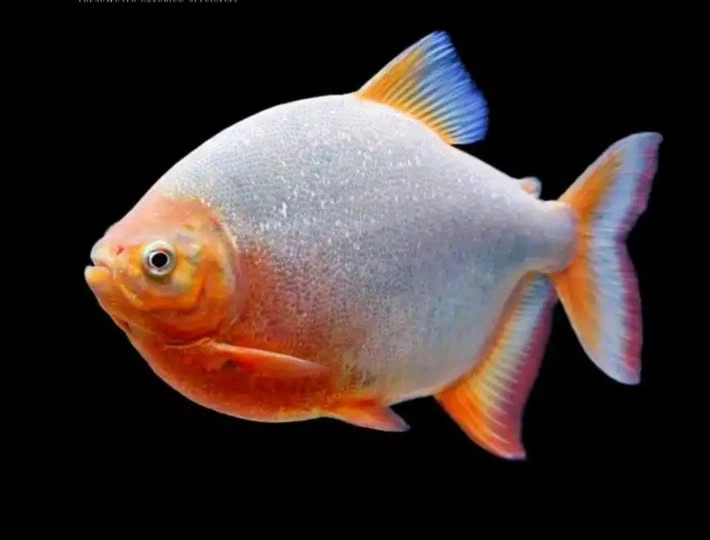
Pacu
Colossoma macropomum

Red-Bellied Piranha
Pygocentrus nattereri

Red Tail Catfish
Phractocephalus hemioliopterus

Silver Arowana
Osteoglossum bicirrhosum
Ready to Add Black Ghost Knifefish to Your Tank?
Use our free stocking calculator to check compatibility, bioload, and get personalized recommendations.