Species Guide
    12 min read

    Types of Tetras: 26 Species Compared

    Tetras are the small, schooling characins that anchor most planted community tanks — but "tetra" covers everything from the 1.5 cm chili-red ember to the 8 cm fin-nipping Buenos Aires. This guide compares the 26 species in our database side by side so you can pick the right schooling group for your tank size, water and tankmates.

    Reviewed by the AquariumStocking team

    Collage of popular tetra species: neon tetra, cardinal tetra, ember tetra and rummy-nose tetra

    How to choose

    Match the water, not just the fish

    Most classic South American tetras (neon, cardinal, rummy-nose, ember) prefer soft, acidic water in the 5.5–7.0 pH range. Buenos Aires, black skirt and Colombian tetras are much more forgiving and do well in the neutral-to-hard tap water most people actually keep. If you have hard, alkaline water and don't want to run RO or peat, skip the wild-caught blackwater species and pick from the hardy group — you'll get better colour and a longer lifespan.

    School size beats species count

    One of the biggest tetra mistakes is buying six of four different species instead of fifteen of one. Every tetra in this guide has a schooling minimum in our database, and none of them are truly happy below six — most look and behave dramatically better at 10–15+. A single dense school of neons is more impressive (and less stressed) than a scattered "rainbow" of half-schools.

    Fin-nippers vs long-finned tankmates

    Serpae, black skirt, red-eye and Buenos Aires tetras are chronic fin-nippers — they will shred bettas, angelfish trailers, guppies and slow gouramis regardless of how large the school is. Emperor, rummy-nose, cardinal, glowlight and rasbora-adjacent tetras (ember, green neon) are safe with long-finned tankmates. Check the temperament column in the table before adding tetras to an existing display.

    Size the tank around the adult school

    Tank minimums in this guide are for a proper school, not a solo specimen. A 40-litre nano can hold a group of 8 chili rasboras or 10 embers; a full congo or Colombian school needs 150 L / 40 US gallons with real swimming length, not just volume. When in doubt, footprint (length × width) matters more than raw gallons — active mid-water schoolers need horizontal room to cruise.

    Colour comes from diet, light and substrate

    A cardinal tetra over pale gravel under a bright reef bulb will look washed out no matter how expensive it was. Dark substrate, tannin-stained water (a piece of driftwood or catappa leaves), floating plants filtering the light, and a varied diet with colour-enhancing frozen foods (bloodworms, daphnia, cyclops) will unlock two or three levels of colour that most keepers never see.

    The species, ranked by fit

    Every parameter below is pulled live from our species database.

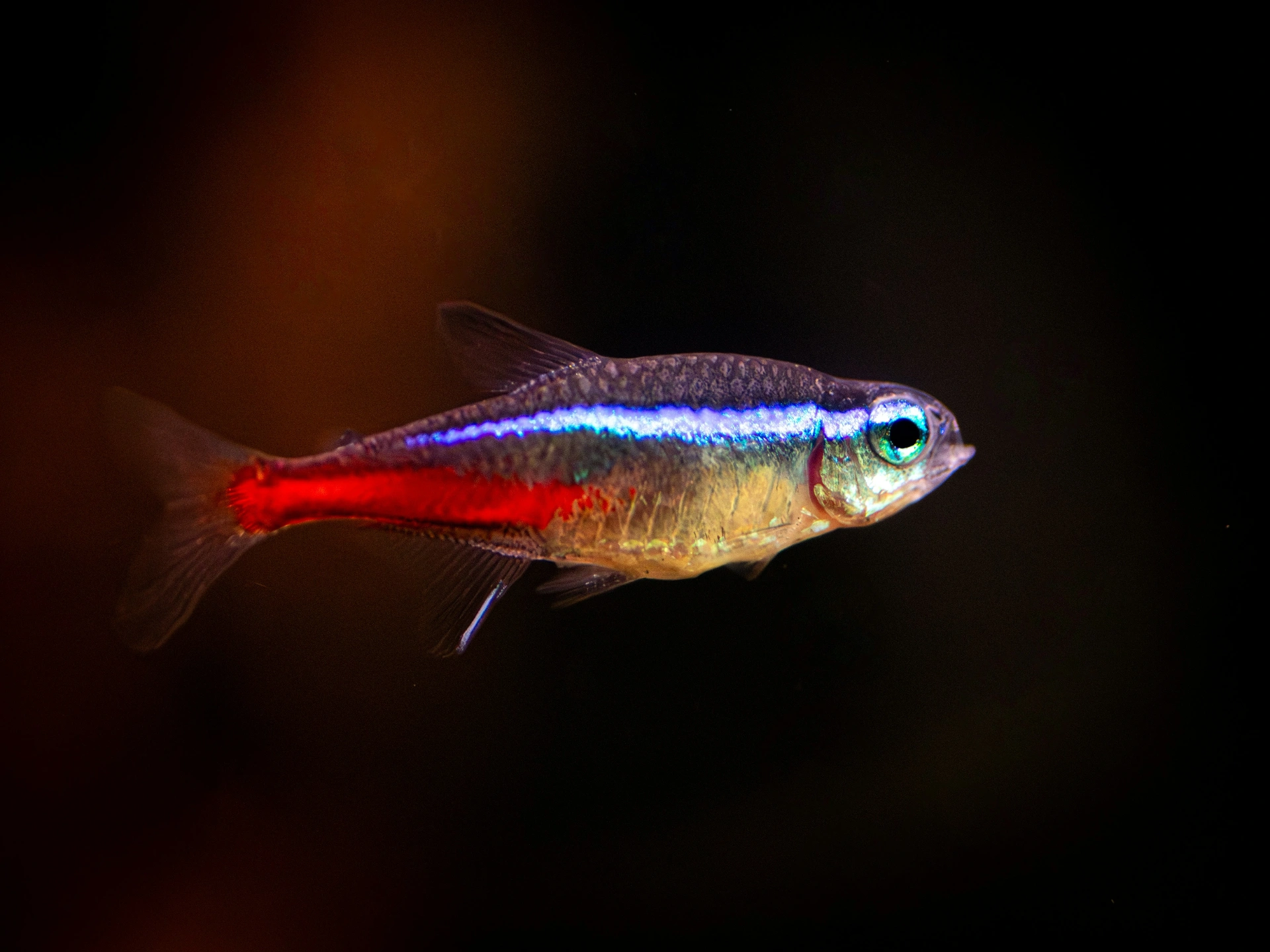
    Single neon tetra swimming in a dark aquarium

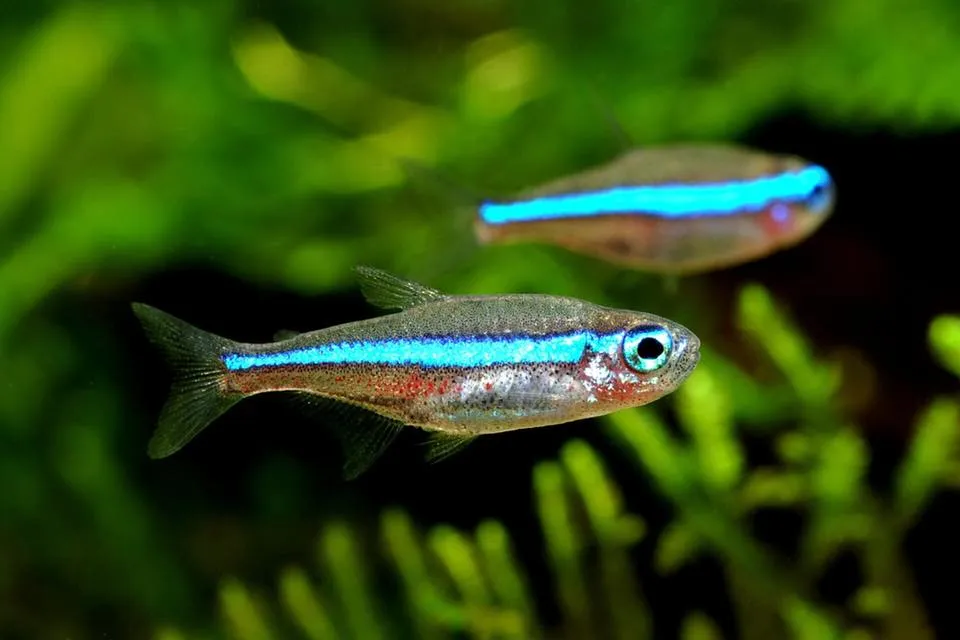
    Neon Tetra

    Paracheirodon innesi

    The default tetra for a reason: cheap, hardy, unmistakable blue-and-red stripe, and a rock-solid schooler once acclimatised. Pick these if you want the classic planted-tank look on a modest budget and are running fairly clean, slightly soft water. Skip if you already run hard alkaline water — cardinals hold up better long-term.

    Min tank 10 gallons+
    68-79°F
    pH 57
    3 cm (1.2")
    Peaceful
    Beginner
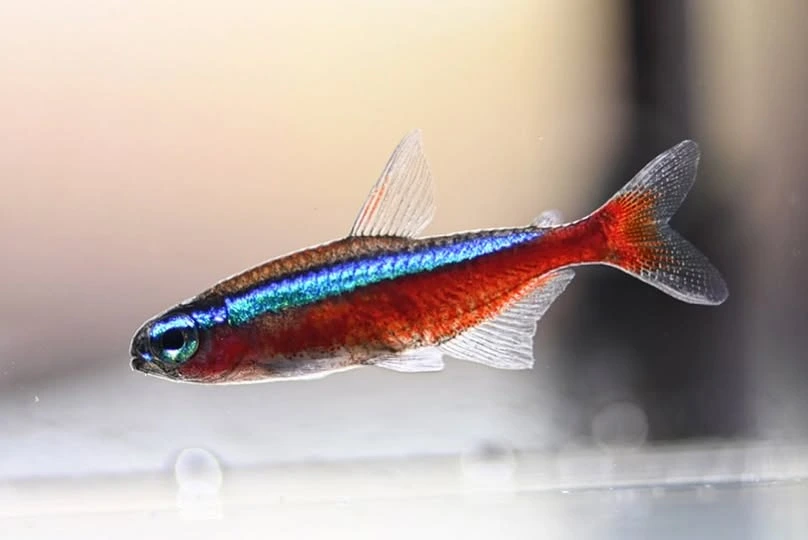
    Single cardinal tetra swimming in an aquarium

    Cardinal Tetra

    Paracheirodon axelrodi

    Neon's bigger, brighter cousin — the red stripe runs the full length of the body, and adult colour is noticeably more intense. They need warmer, softer water than neons, so they suit true blackwater and Amazon biotope tanks. A cardinal school over dark substrate with dim, tannin-stained water is one of the most iconic looks in the hobby.

    Min tank 15 gallons+
    73-81°F
    pH 4.56.5
    4 cm (1.6")
    Peaceful
    Intermediate
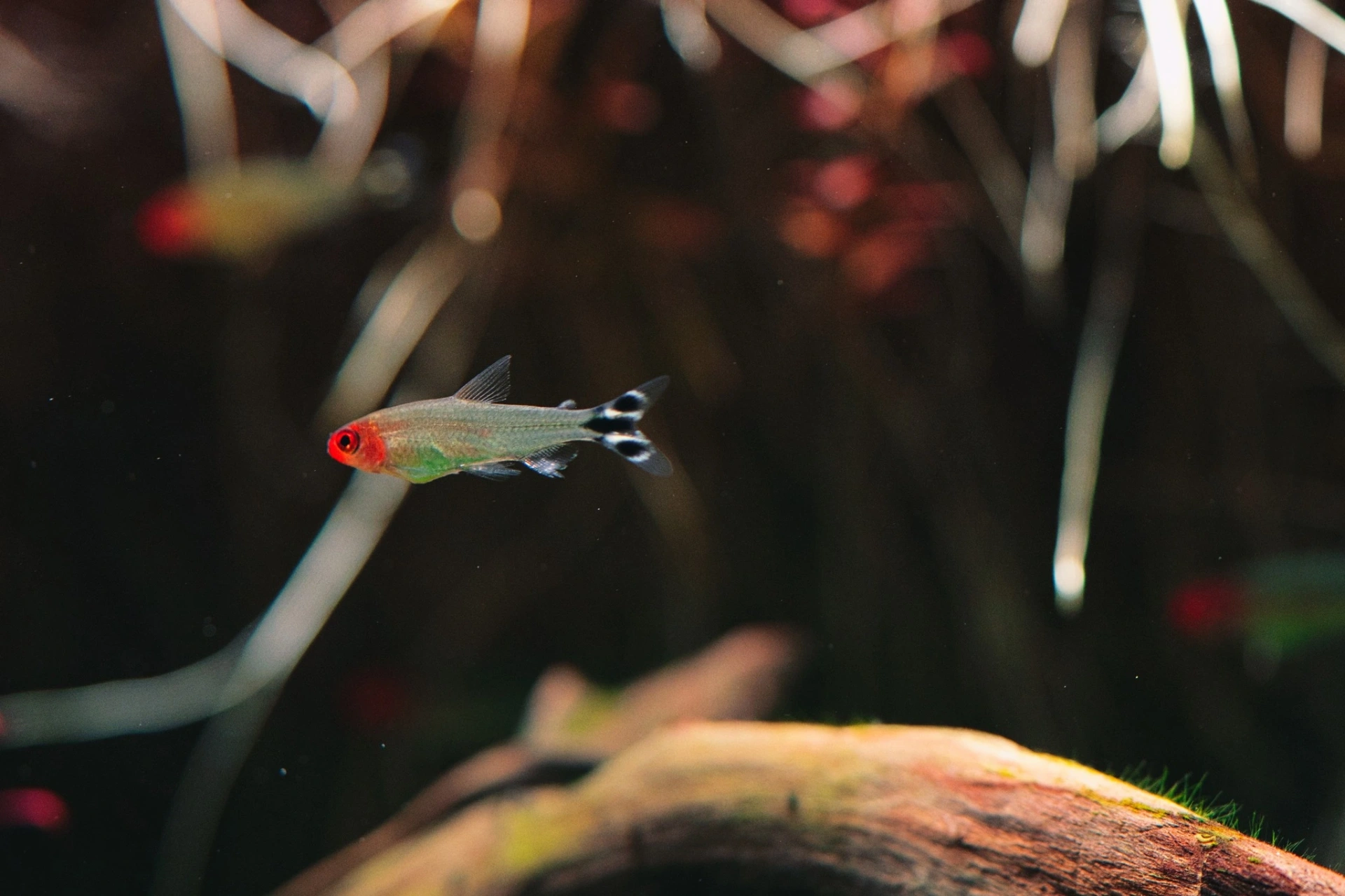
    Rummy nose tetra swimming in an aquarium

    Rummy Nose Tetra

    Hemigrammus rhodostomus

    The most tightly-schooling tetra in the hobby — a group of 12+ moves as one organism, which no other species really matches. The bright red "nose" is also a live health indicator: it fades fast when water quality slips. Pick these if you want dramatic group behaviour and are willing to keep parameters stable.

    Min tank 20 gallons+
    75-82°F
    pH 5.57
    5 cm (2")
    Peaceful
    Intermediate
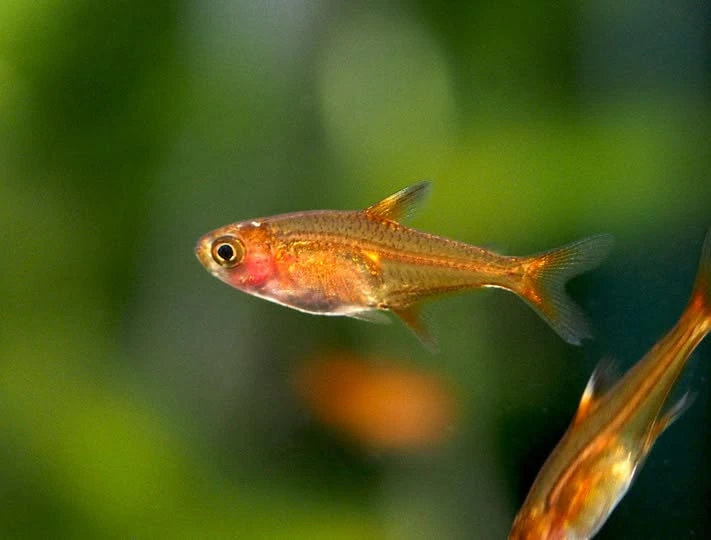
    Orange ember tetra swimming in an aquarium

    Ember Tetra

    Hyphessobrycon amandae

    A true nano tetra — tiny, glowing orange, and genuinely peaceful. Perfect for planted 40-litre / 10-gallon tanks alongside shrimp, snails or a peaceful betta. Their small mouths keep them safe with adult shrimp, and their calm temperament makes them one of the few tetras suitable for shrimp tanks.

    Min tank 10 gallons+
    73-84°F
    pH 5.57
    2 cm (0.8")
    Peaceful
    Beginner
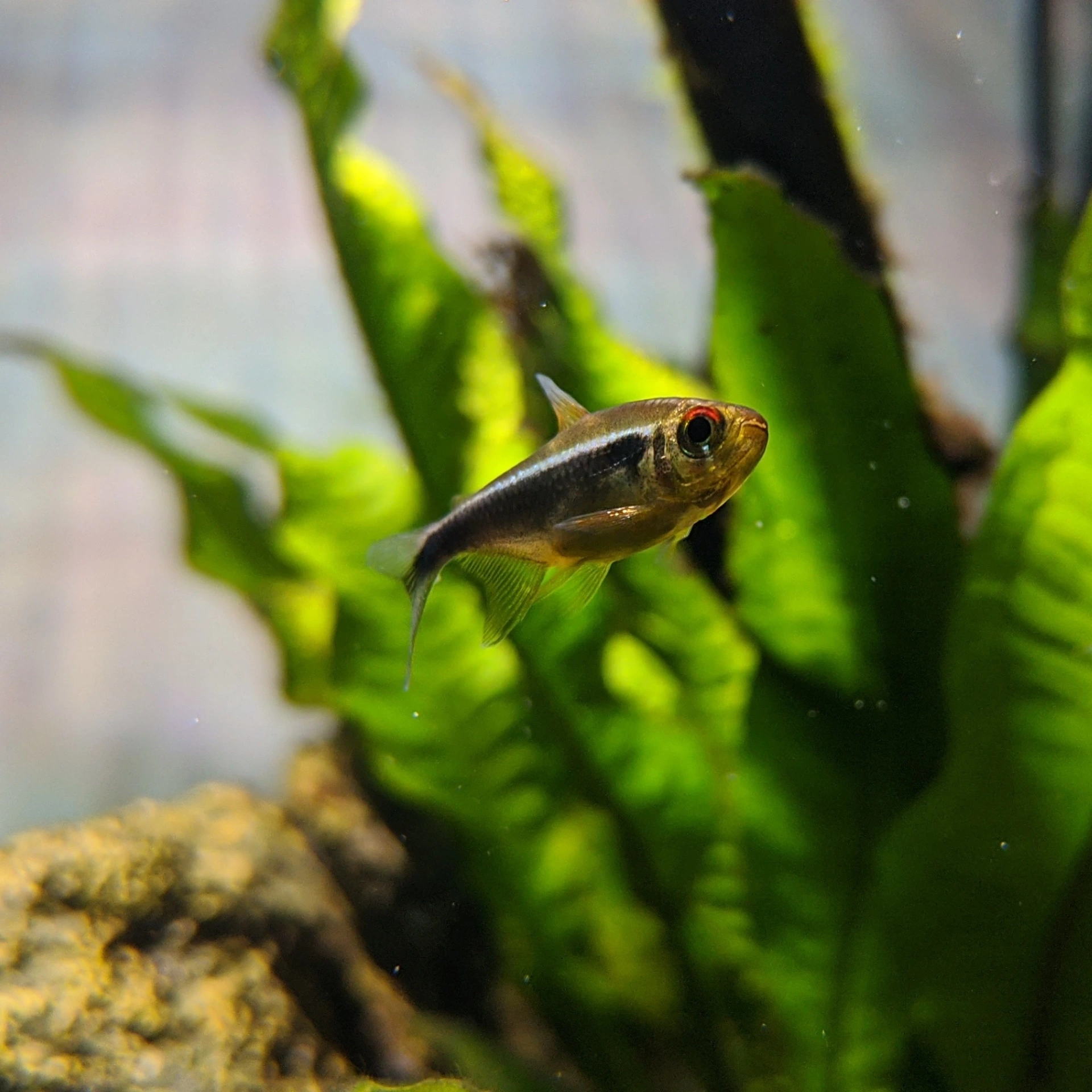
    A single black neon tetra swimming in the middle of an aquarium

    Black Neon Tetra

    Hyphessobrycon herbertaxelrodi

    The tough, tap-water alternative to the neon tetra. Neutral pH, moderate hardness and standard community temps are all fine, and the silvery-black horizontal stripe pops under any lighting. Great pick for beginners who liked the look of neons but have hard water.

    Min tank 15 gallons+
    73-81°F
    pH 5.57.5
    4 cm (1.6")
    Peaceful
    Beginner
    Two green neon tetras swimming together in an aquarium

    Green Neon Tetra

    Paracheirodon simulans

    Smaller and more delicate than the neon, with a solid electric-green line and no red. A pure blackwater species: soft, acidic, warm water is non-negotiable. Best in nano biotope setups with cardinals or embers rather than mixed community tanks.

    Min tank 15 gallons+
    75-86°F
    pH 4.56.5
    2.5 cm (1")
    Peaceful
    Intermediate
    Red glowlight tetra swimming in an aquarium

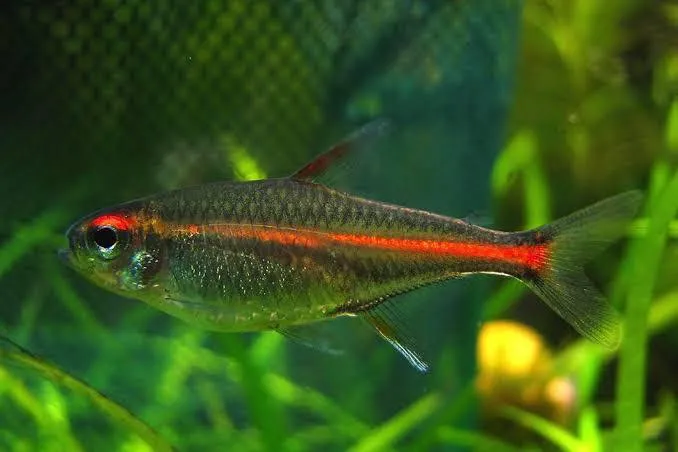
    Glowlight Tetra

    Hemigrammus erythrozonus

    An underrated peaceful tetra — pale body with a neon-orange stripe that lights up under subdued lighting. Very tolerant of water conditions and completely safe with long-finned tankmates. A quiet, elegant choice when you don't want the visual noise of neons or cardinals.

    Min tank 15 gallons+
    75-82°F
    pH 5.57
    4 cm (1.6")
    Peaceful
    Beginner
    A school of lemon tetras swimming near the aquarium substrate

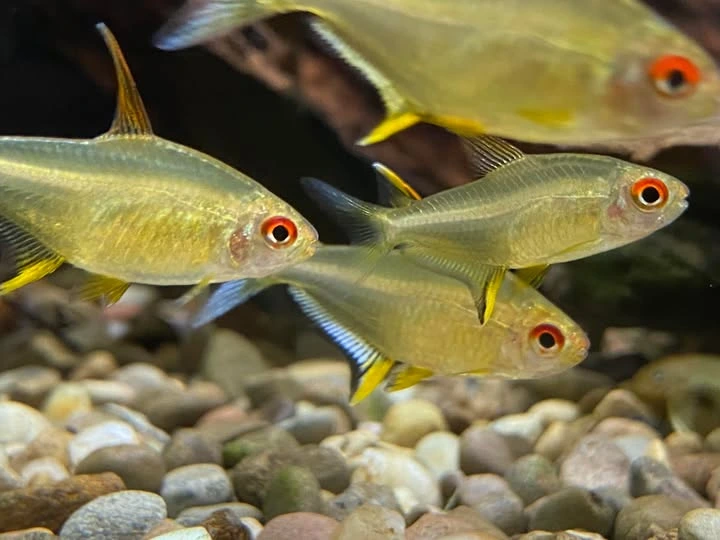
    Lemon Tetra

    Hyphessobrycon pulchripinnis

    A subtle species that rewards patience: dull grey in the shop, but a mature school in a planted tank glows soft yellow with black-and-yellow fin edges. Peaceful, forgiving of water, and one of the better tetras for beginners who want something less common than a neon.

    Min tank 20 gallons+
    73-82°F
    pH 5.57.5
    4 cm (1.6")
    Peaceful
    Beginner
    A school of black skirt tetras swimming in an aquarium

    Black Skirt Tetra

    Gymnocorymbus ternetzi

    Bold, easy and cheap — but a confirmed fin-nipper. Great as a dither fish for cichlid tanks and in monotype schools, but never combine with bettas, guppies, angelfish or slow gouramis. Long-finned "widow" morphs are more likely to be nipped themselves.

    Min tank 20 gallons+
    68-79°F
    pH 67.5
    6 cm (2.4")
    Semi-aggressive
    Beginner
    Serpae tetra swimming in an aquarium

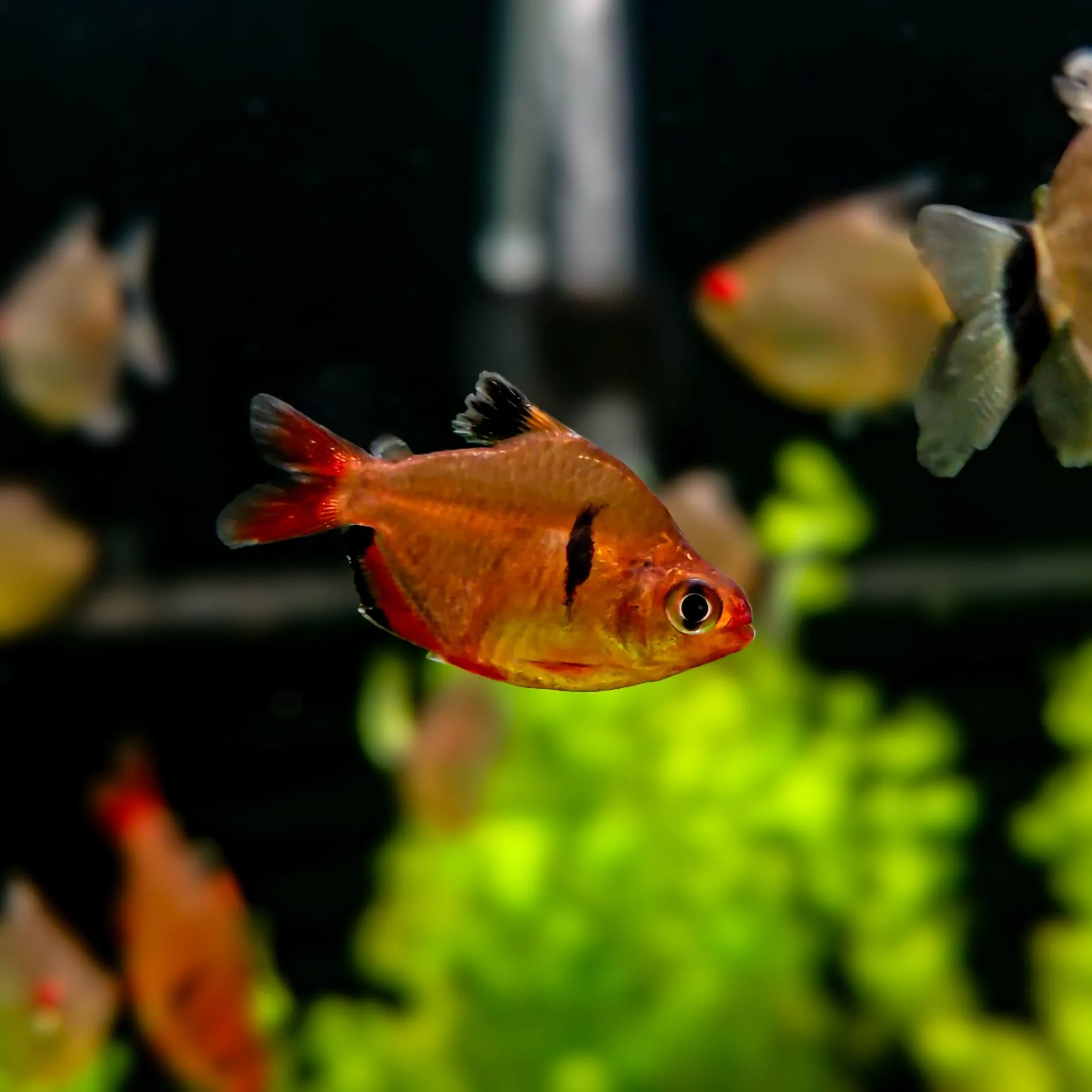
    Serpae Tetra

    Hyphessobrycon eques

    One of the most colourful characins available, deep blood-red with black markings — and one of the worst-behaved. Keep in a large single-species school (10+) in a species-appropriate tank and pair only with fast, similarly-sized fish. Not a community tetra despite being sold as one.

    Min tank 20 gallons+
    72-79°F
    pH 5.57.5
    4 cm (1.6")
    Semi-aggressive
    Beginner
    Congo tetra swimming in an aquarium

    Congo Tetra

    Phenacogrammus interruptus

    The showpiece African tetra: iridescent blue-orange body with long, flowing dorsal and caudal fins on mature males. Needs a long tank (min 100 cm / 40" footprint) and a group of 6+ to look right. Peaceful despite the size, and stunning under warm-white lighting.

    Min tank 30 gallons+
    73-82°F
    pH 67.5
    8 cm (3.1")
    Peaceful
    Intermediate
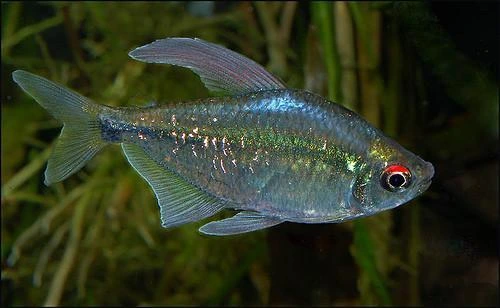
    A diamond tetra swimming at the bottom of an aquarium

    Diamond Tetra

    Moenkhausia pittieri

    Silver body that flashes rainbow scales under side lighting; the males grow long, trailing fins with age. Peaceful in a school of 8+ but individual males can bicker — group size dilutes it. A great "grown-up" alternative to neons for medium community tanks.

    Min tank 20 gallons+
    75-82°F
    pH 67.5
    6 cm (2.4")
    Peaceful
    Beginner
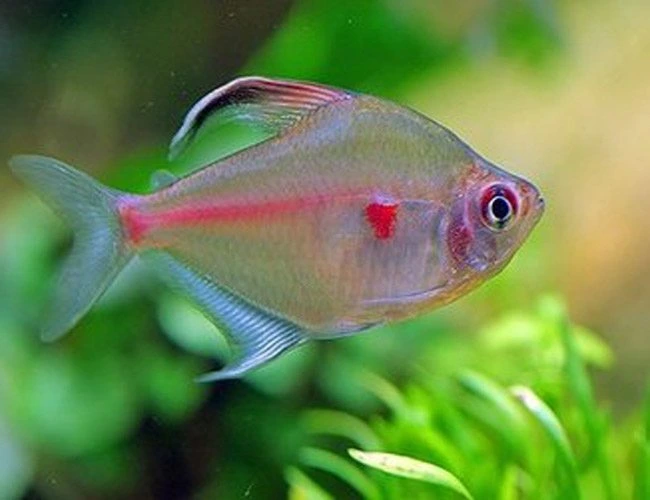
    Bleeding heart tetra swimming in an aquarium

    Bleeding Heart Tetra

    Hyphessobrycon erythrostigma

    Larger, deeper-bodied tetra with a distinctive red "heart" spot behind the gill. Peaceful, hardy and long-lived, but the males can chase each other — keep a proper school. Best in tanks with driftwood, tannins and dim overhead lighting to show off the colour.

    Min tank 20 gallons+
    73-82°F
    pH 67.5
    7 cm (2.8")
    Peaceful
    Intermediate
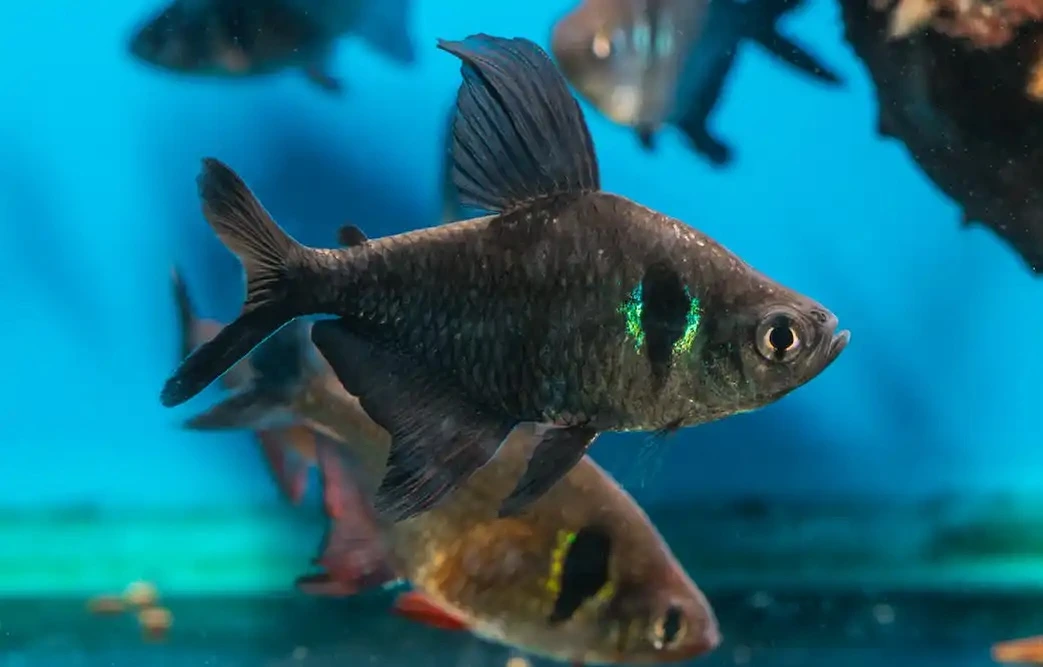
    A group of black skirt tetras swimming in an aquarium

    Black Phantom Tetra

    Hyphessobrycon megalopterus

    Smoky-grey body with dramatic black finnage and males that display at each other constantly without ever doing damage. One of the most interesting behavioural tetras — a mixed-sex school of 8+ turns into a slow-motion sparring match all day. Excellent community fish.

    Min tank 20 gallons+
    72-82°F
    pH 67.5
    4.5 cm (1.8")
    Peaceful
    Beginner
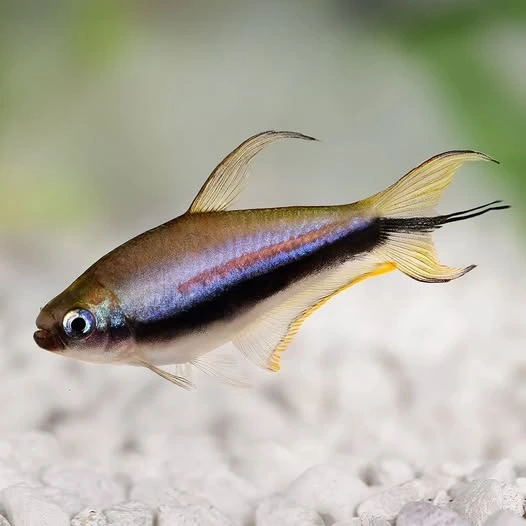
    Emperor tetra looking for food near aquarium substrate

    Emperor Tetra

    Nematobrycon palmeri

    One of the best all-round tetras: peaceful, mid-sized, hardy, and males develop a dramatic sword-tail extension. Blue and purple iridescence over a black horizontal stripe. Pair well with rams, apistos and other peaceful South Americans in planted setups.

    Min tank 20 gallons+
    73-81°F
    pH 5.57.5
    5 cm (2")
    Peaceful
    Beginner
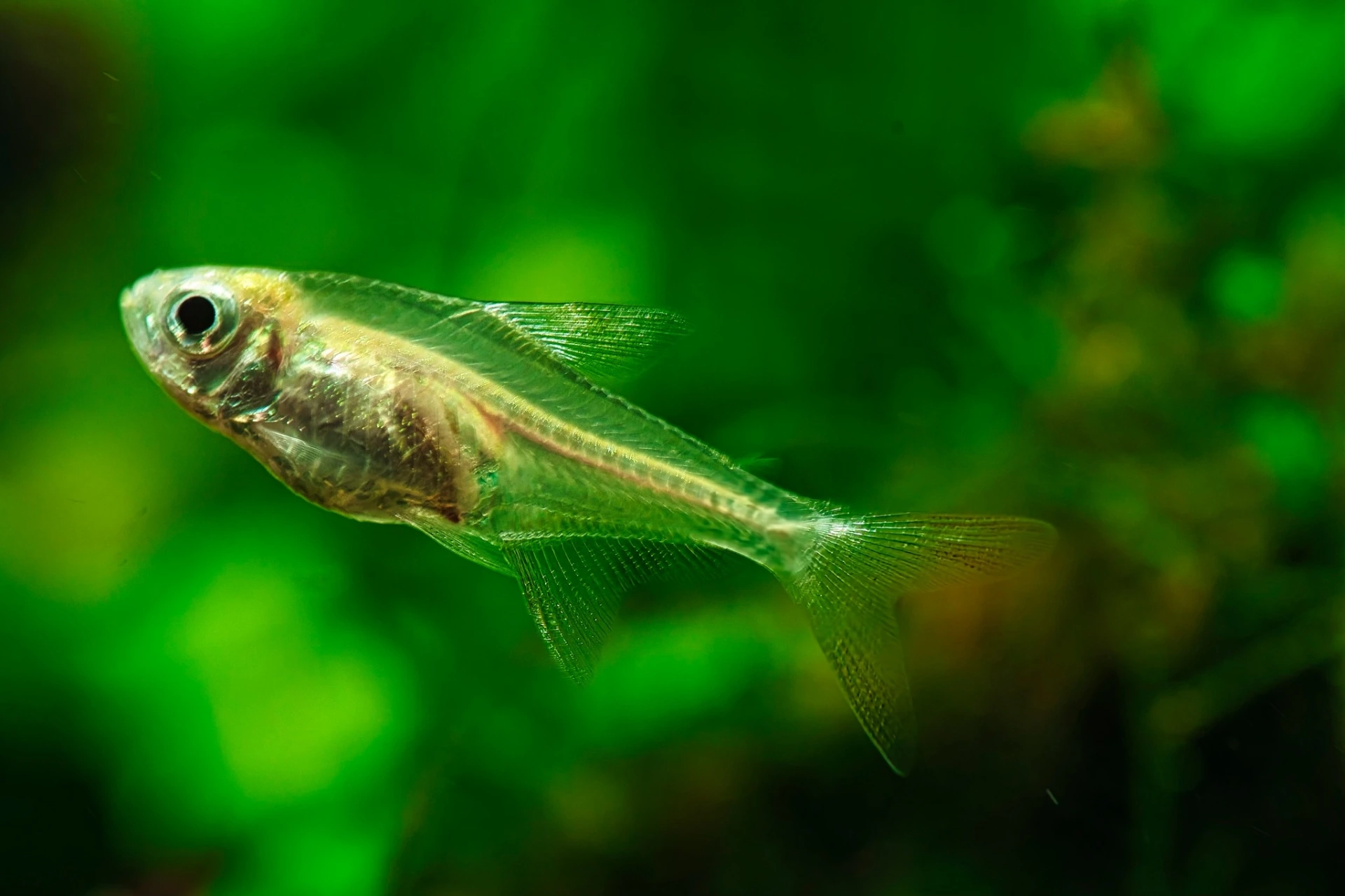
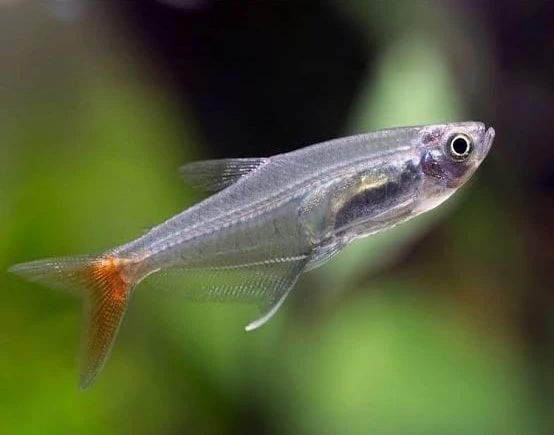
    X-ray tetra swimming in an aquarium

    X-Ray Tetra

    Pristella maxillaris

    The "pristella" — near-transparent body with a black-white-yellow flag on the dorsal and anal fins. Hardy, brackish-tolerant, extremely peaceful, and one of the few tetras that will happily use the top half of the tank. Great pick for beginners with slightly harder water.

    Min tank 15 gallons+
    72-82°F
    pH 68
    5 cm (2")
    Peaceful
    Beginner
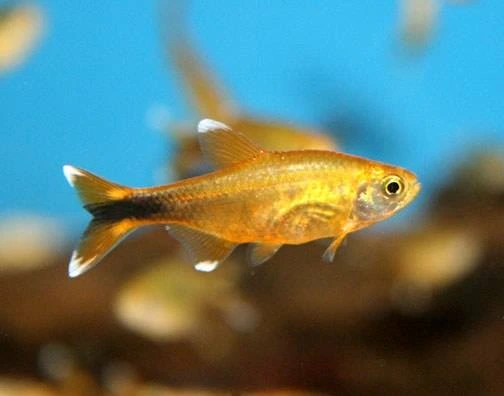
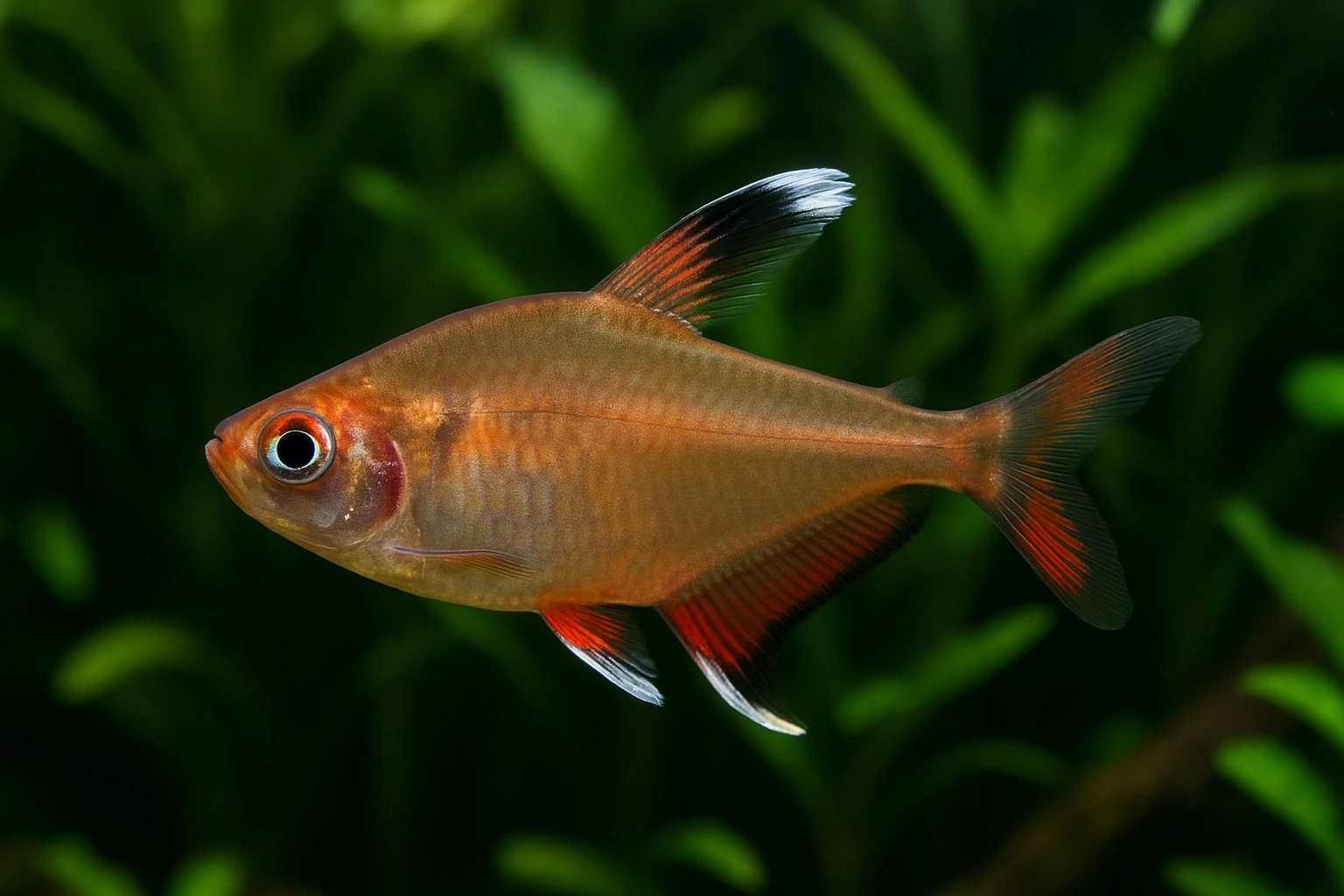
    Orange silvertip tetra swimming in a fish tank

    Silvertip Tetra

    Hasemania nana

    Coppery-orange body with bright white fin tips — a school of 10+ under moderate lighting looks like a school of animated brass. Active and mildly nippy toward slower tankmates, so keep the group large and skip pairing with bettas or angels.

    Min tank 20 gallons+
    72-82°F
    pH 68
    5 cm (2")
    Semi-aggressive
    Beginner
    Bloodfin tetra swimming peacefully in an aquarium

    Bloodfin Tetra

    Aphyocharax anisitsi

    Silver body, blood-red fins, extremely active swimmer. Tolerates cooler temperatures than most tetras (down to 18 °C / 64 °F), which makes it one of the few characins that plays nicely in unheated or lightly-heated tanks. A large school of these in a long tank is constant motion.

    Min tank 15 gallons+
    64-82°F
    pH 68
    5 cm (2")
    Peaceful
    Beginner
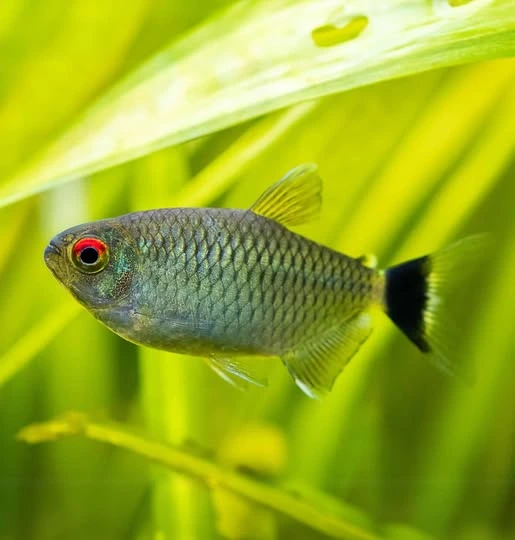
    A single red eye tetra swimming near aquarium plants

    Red Eye Tetra

    Moenkhausia sanctaefilomenae

    Chrome-silver body, black tail base and a striking red iris. Very hardy but a persistent fin-nipper — treat it like a black skirt: species tank or robust community with fast tankmates only. Great dither fish for medium South American cichlid setups.

    Min tank 20 gallons+
    72-82°F
    pH 68
    7 cm (2.8")
    Peaceful
    Beginner
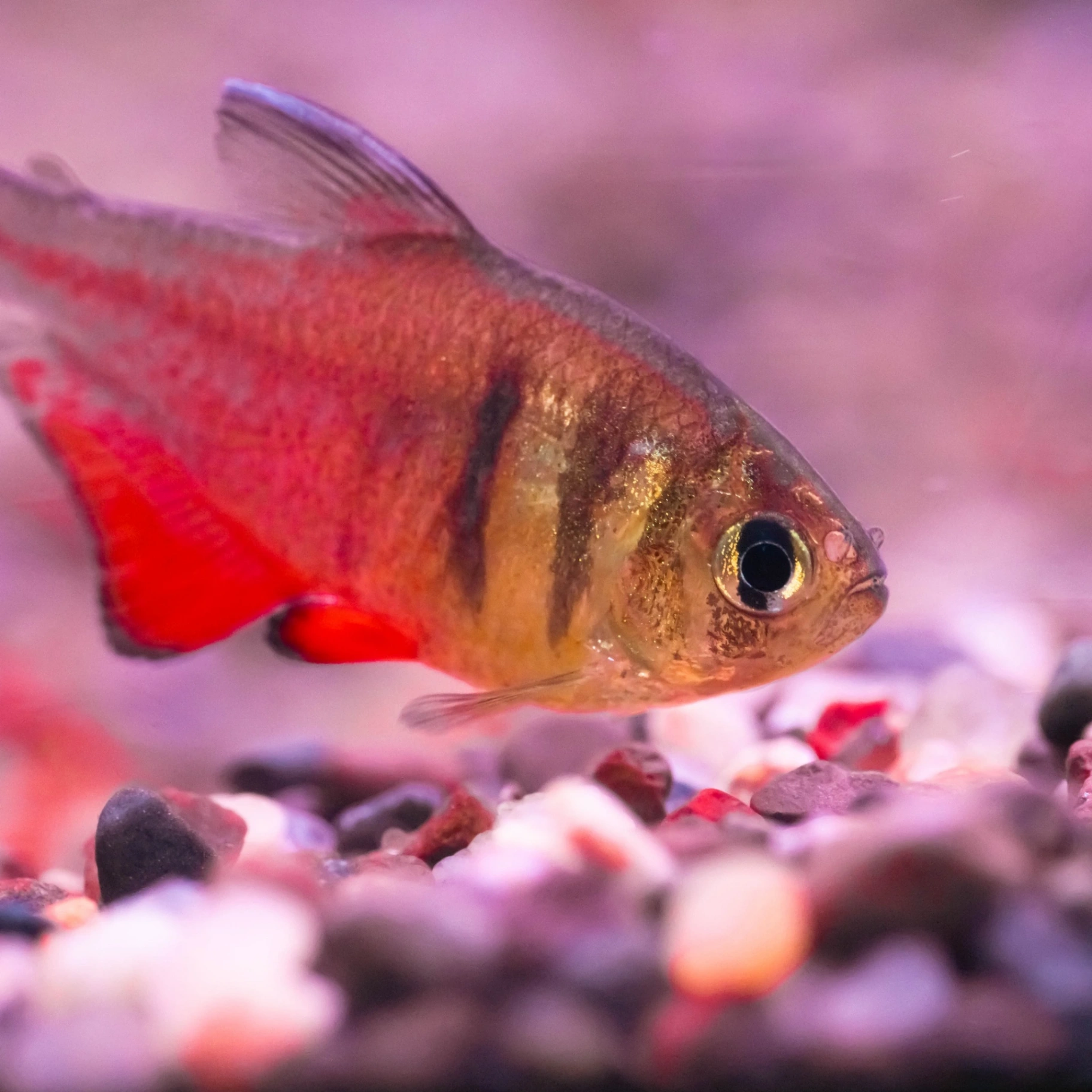
    A flame tetra looking for food at the bottom of an aquarium

    Flame Tetra

    Hyphessobrycon flammeus

    The "Rio tetra" — deep red-orange rear half, silvery-gold front. Peaceful, hardy, tolerant of cooler temperatures, and one of the easier tetras to breed at home. Underappreciated because it looks plain in shop bags; a mature school in a planted tank is anything but.

    Min tank 10 gallons+
    72-82°F
    pH 5.57.5
    4 cm (1.6")
    Peaceful
    Beginner
    A single Colombian tetra swimming peacefully in a planted fish tank

    Colombian Tetra

    Hyphessobrycon columbianus

    Big, muscular, silvery-blue tetra with fiery red fins — the "muscle car" of the tetra world. Peaceful with tankmates of its own size but too boisterous for tiny or long-finned fish. Needs a 150 L / 40-gallon tank minimum for a proper school.

    Min tank 20 gallons+
    73-82°F
    pH 67.5
    7 cm (2.8")
    Peaceful
    Beginner
    Rosy tetra swimming in an aquarium

    Rosy Tetra

    Hyphessobrycon rosaceus

    Soft pink body with white-tipped black finnage; the males grow into elegant, sail-finned adults. Peaceful, moderate size, and one of the prettier "grown-up" tetras for planted community tanks. Sometimes sold under the trade name Ornate Tetra.

    Min tank 15 gallons+
    75-82°F
    pH 5.57.5
    4.5 cm (1.8")
    Peaceful
    Beginner
    Buenos Aires tetra swimming at the bottom of an aquarium

    Buenos Aires Tetra

    Hyphessobrycon anisitsi

    Tough as nails, tolerant of cool water (16–28 °C), and will happily live in tap water most delicate tetras hate. The tradeoff: it's a plant-shredder and a serious fin-nipper. Great school for a hardy, hard-water community with fast tankmates and plastic or tough plants (Anubias, Java fern).

    Min tank 20 gallons+
    64-82°F
    pH 68
    7 cm (2.8")
    Semi-aggressive
    Beginner
    A large school of penguin tetras swimming together in an aquarium

    Penguin Tetra

    Thayeria boehlkei

    Named for the black wedge that runs down the tail; swims at a slight head-up angle. Very active in the mid-water, peaceful with similarly-sized fish, and a good choice for beginners who want unusual behaviour without demanding parameters.

    Min tank 20 gallons+
    72-82°F
    pH 68
    6 cm (2.4")
    Peaceful
    Beginner
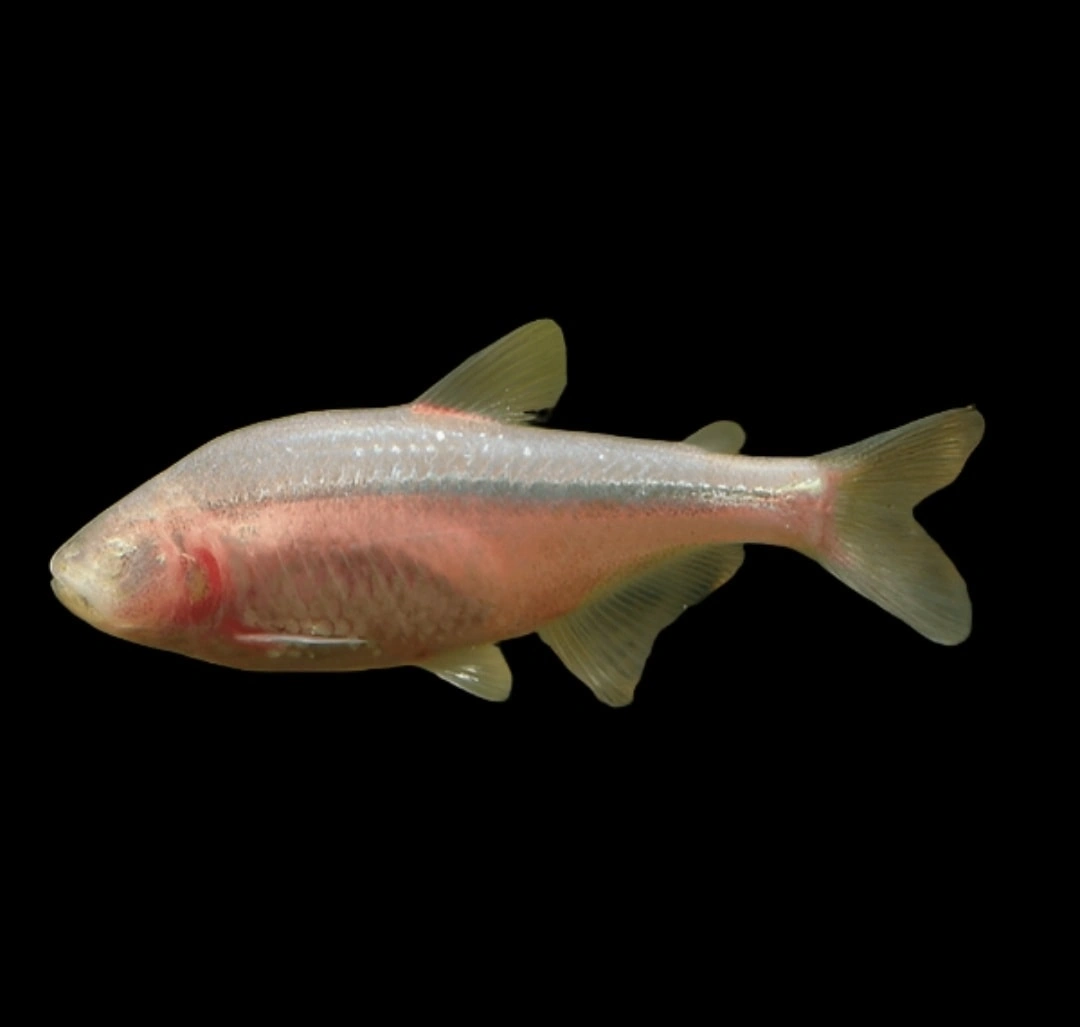
    Mexican tetra swimming in an empty aquarium with black background

    Mexican Tetra

    Astyanax mexicanus

    The wild form of the famous blind cave tetra — hardy, temperature-flexible (18–25 °C) and a strong schooler in a long tank. Best kept as a species-only display or with fast, similarly-sized cool-water fish; too active and mouthy for a nano community.

    Min tank 30 gallons+
    68-82°F
    pH 6.58
    12 cm (4.7")
    Semi-aggressive
    Beginner
    Two splash tetras swimming in an aquarium

    Splash Tetra

    Copella arnoldi

    The "spraying characin" — an oddball that jumps out of the water to lay eggs on overhanging leaves, with the male fanning the clutch afterwards. Kept for the behaviour, not the colour. Needs a tightly-covered tank with floating plants or overhangs and a small peaceful group.

    Min tank 20 gallons+
    75-84°F
    pH 5.57.5
    8 cm (3.1")
    Peaceful
    Intermediate

    Compare at a glance

    Sort by any column — tap a header to reorder.

    Neon Tetra10 gallons68-79°F573 cm (1.2")BeginnerPeaceful
    Ember Tetra10 gallons73-84°F5.572 cm (0.8")BeginnerPeaceful
    Flame Tetra10 gallons72-82°F5.57.54 cm (1.6")BeginnerPeaceful
    Cardinal Tetra15 gallons73-81°F4.56.54 cm (1.6")IntermediatePeaceful
    Black Neon Tetra15 gallons73-81°F5.57.54 cm (1.6")BeginnerPeaceful
    Green Neon Tetra15 gallons75-86°F4.56.52.5 cm (1")IntermediatePeaceful
    Glowlight Tetra15 gallons75-82°F5.574 cm (1.6")BeginnerPeaceful
    X-Ray Tetra15 gallons72-82°F685 cm (2")BeginnerPeaceful
    Bloodfin Tetra15 gallons64-82°F685 cm (2")BeginnerPeaceful
    Rosy Tetra15 gallons75-82°F5.57.54.5 cm (1.8")BeginnerPeaceful
    Rummy Nose Tetra20 gallons75-82°F5.575 cm (2")IntermediatePeaceful
    Lemon Tetra20 gallons73-82°F5.57.54 cm (1.6")BeginnerPeaceful
    Black Skirt Tetra20 gallons68-79°F67.56 cm (2.4")BeginnerSemi-aggressive
    Serpae Tetra20 gallons72-79°F5.57.54 cm (1.6")BeginnerSemi-aggressive
    Diamond Tetra20 gallons75-82°F67.56 cm (2.4")BeginnerPeaceful
    Bleeding Heart Tetra20 gallons73-82°F67.57 cm (2.8")IntermediatePeaceful
    Black Phantom Tetra20 gallons72-82°F67.54.5 cm (1.8")BeginnerPeaceful
    Emperor Tetra20 gallons73-81°F5.57.55 cm (2")BeginnerPeaceful
    Silvertip Tetra20 gallons72-82°F685 cm (2")BeginnerSemi-aggressive
    Red Eye Tetra20 gallons72-82°F687 cm (2.8")BeginnerPeaceful
    Colombian Tetra20 gallons73-82°F67.57 cm (2.8")BeginnerPeaceful
    Buenos Aires Tetra20 gallons64-82°F687 cm (2.8")BeginnerSemi-aggressive
    Penguin Tetra20 gallons72-82°F686 cm (2.4")BeginnerPeaceful
    Splash Tetra20 gallons75-84°F5.57.58 cm (3.1")IntermediatePeaceful
    Congo Tetra30 gallons73-82°F67.58 cm (3.1")IntermediatePeaceful
    Mexican Tetra30 gallons68-82°F6.5812 cm (4.7")BeginnerSemi-aggressive

    Not sure how many will fit?

    Drop your tank size and shortlist into the stocking calculator to see real bioload, swim-level balance, and compatibility flags.

    Frequently asked questions

    What is the most peaceful tetra for a community tank?

    Rummy-nose, cardinal, ember, glowlight, lemon and emperor tetras are the safest picks for mixed community tanks with long-finned or slow tankmates. Avoid serpae, black skirt, Buenos Aires, red-eye and silvertip tetras with bettas, angelfish, guppies or gouramis — all of them are confirmed fin-nippers.

    How many tetras should be kept together?

    Six is the absolute minimum for schooling behaviour, but 10–15 of a single species is where you start seeing real group cohesion, dampened aggression and full colour. Buying six of four different species almost always results in four unhappy half-schools — pick one or two species and go deep.

    What is the smallest tetra species?

    The ember tetra (around 2 cm / 0.8" adult) and green neon tetra (around 2.5 cm / 1") are the smallest true tetras in the hobby. Both suit nano tanks from 40 L / 10 US gallons and are safe with adult shrimp.

    Can different tetra species school together?

    No — schooling is species-specific. Different tetras will loosely group when threatened but revert to their own kind under normal conditions. A single dense school of one species always looks and behaves better than a mixed group.

    What water parameters do tetras need?

    Most South American tetras prefer soft, slightly acidic water (pH 5.5–7.0, low hardness) and warm temperatures around 24–26 °C. Hardy exceptions — black skirt, Buenos Aires, X-ray, black neon, bloodfin — tolerate neutral to slightly hard tap water. Check the individual profile for exact ranges before buying.