Guppy Tank Mates: 7 Compatible Species (and 7 to Avoid)
When a Guppy community goes wrong the guppy is almost never the cause. It is a 5 cm fish carrying a tail two-thirds of its body length, coloured to be conspicuous, and it swims slowly enough to be caught by most things in the tank. Two further facts shape the list: it wants hard, alkaline water that half the popular community fish do not, and it produces a batch of live fry every month whether you planned for it or not. Whether that fry is a nuisance or a food source is a stocking decision, so it is treated as one here.
Reviewed by the AquariumStocking team · Updated
The tank size that makes this work
Tank size rarely limits guppies themselves — it limits how much breeding the tank can absorb before the numbers get away from you. Forty litres, roughly 10 gallons, covers a trio comfortably; what you do about the fry decides whether it stays comfortable. Our database puts the guppy minimum at 10 gallons.
10 gallons
One male and two or three females, or a group of males only if you would rather not deal with fry. There is room for a small clean-up crew — a few snails, or half a dozen pygmy corydoras — and not much beyond that. Left to breed, a trio fills this tank within four months, so plan where the young are going before the first batch arrives.
The size where a guppy tank becomes a community rather than a breeding box. Six to eight guppies, a bottom group and a small algae crew, with enough volume that a fry boom does not wreck the water chemistry. It is also the point at which adding a mid-water shoal stops crowding the guppies against the glass.
A full hard-water community — guppies with platies and mollies, a corydoras group, snails and an algae eater, all wanting the same alkaline parameters. The extra footprint lets you plant heavily enough that some fry survive naturally, which is how most people end up with a self-sustaining colony. Watch the male-to-female ratio rather than the total number.
Guppies want pH 7.0–8.5 and moderately hard water, which puts cardinal tetras, chocolate gouramis, most wild bettas and the soft-water dwarf cichlids outside the range they should live in, however gentle they are. Chasing a compromise pH means keeping both species slightly wrong. Start with the hard-water fish — livebearers, most rainbowfish, many rasboras and corydoras — and pick from there.
Decide about fry before you stock
A female drops twenty to fifty young a month, and every tank mate on this page will eat some of them. If you want the colony to grow, plant thickly and add nothing that hunts efficiently. If you would rather it did not, a few larger mid-water fish will keep the numbers flat without you doing anything. Both are valid; drifting between them is what produces an overstocked tank.
Long fins draw attention from otherwise fine fish
The trailing tail is the reason a serpae tetra or a barb becomes a problem in a guppy tank when it causes no trouble elsewhere. Species with a nipping habit are excluded even when they are described as community-safe, because the target here is unusually tempting. Short-finned tank mates of any species are safer than long-finned ones.
Anything that can swallow a guppy eventually will
An adult male guppy is about 3 cm of body plus fin, which fits inside an angelfish, a medium cichlid or a large gourami without difficulty. Predation on adults is often intermittent — nothing happens for two months and then the numbers drop — so a fish that has behaved so far is not evidence the pairing works. Keep the size gap modest.
Watch the male-to-female ratio, not just the total
Males pursue females continuously, and in a tank with one female and three males she spends the day being chased and stops feeding properly. Two or three females per male spreads the attention. This is an internal stocking problem rather than a tank mate one, but it causes losses that get blamed on tank mates.
Guppies are not the hardy fish they used to be
Decades of selective breeding for colour and fin size have left mass-produced stock prone to bacterial infections and sudden losses in the first month. Buy from a local breeder where you can, quarantine, and avoid stocking a brand-new tank with them. A weakened guppy is far more likely to be harassed than a healthy one.
Compatible species, ranked by fit
Seven species that want the same hard water, stay off the fins, and are too small to treat an adult guppy as food.
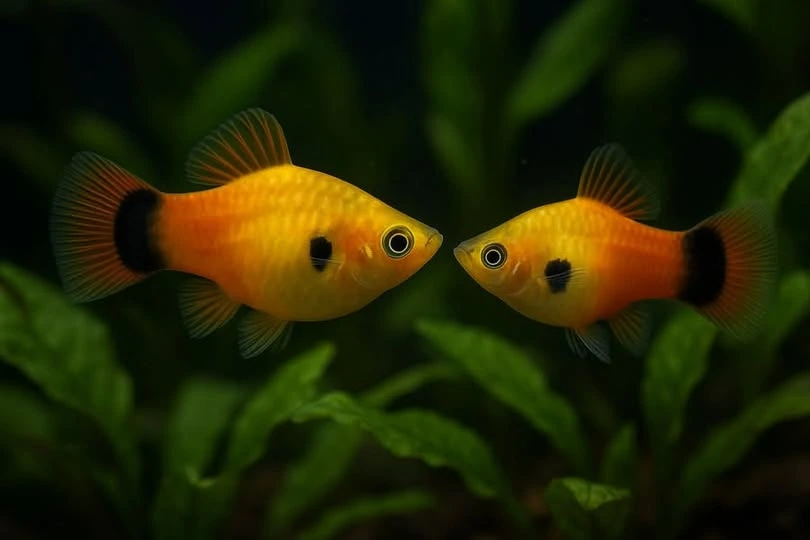
Platy
Xiphophorus maculatus
The natural companion: another livebearer wanting the same hard, alkaline, warm water, with the same feeding habits and none of the fin length that causes trouble. Platies are stockier and slightly bolder, so they take the pressure off guppies at feeding time rather than adding to it. They will eat guppy fry as readily as their own, which is worth knowing either way. Keep the same two-females-per-male ratio or the breeding pressure doubles.
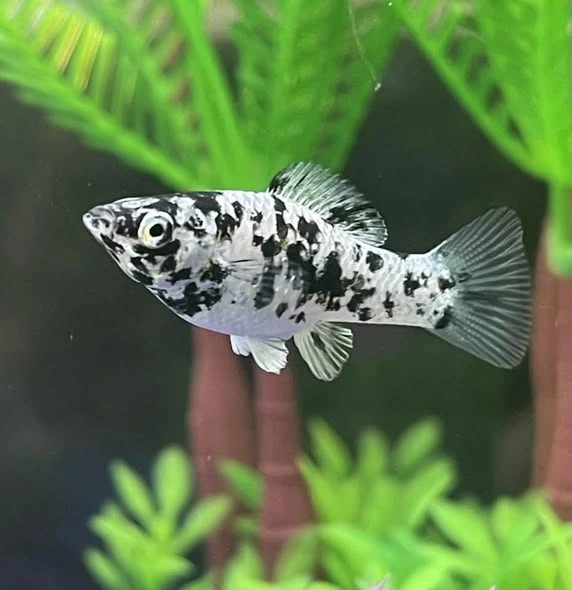
A larger livebearer, up to 10 cm in some varieties, that thrives in exactly the hard alkaline water guppies want and grazes algae off surfaces as a bonus. The size difference is enough that mollies dominate at feeding time in a small tank, so this works best from 20 gallons up. They are heavier waste producers than their size suggests and appreciate a little salt tolerance range that guppies share. Sailfin varieties need a longer tank than most people give them.
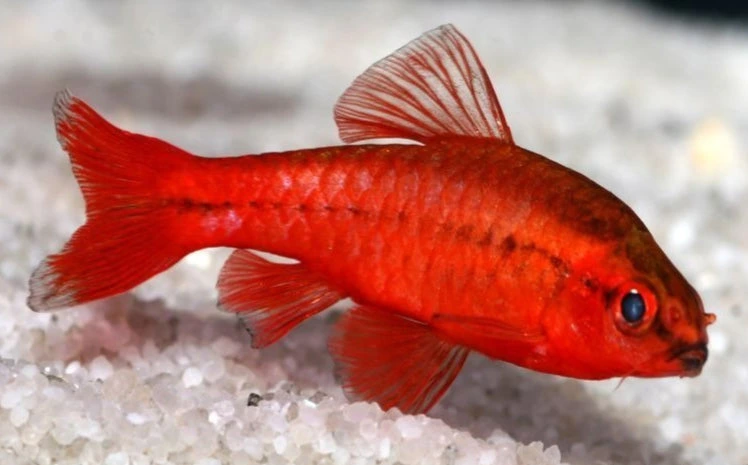
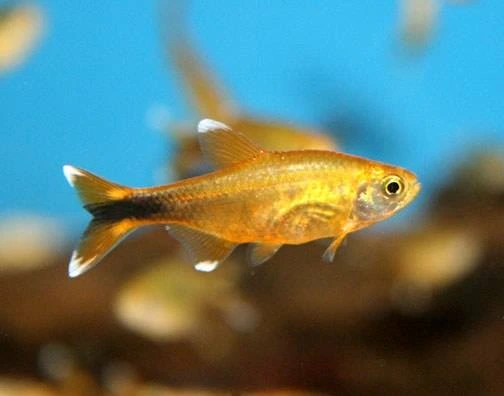
Slim, calm and entirely without the nipping habit that excludes the rest of the barb family, which makes it one of the few barbs that belongs near trailing fins. It shoals loosely in the lower half of the tank, leaving the guppies the upper water they prefer. Keep six or more with a female bias so the males display to each other rather than pestering anything else. It tolerates the harder end of the water range comfortably.
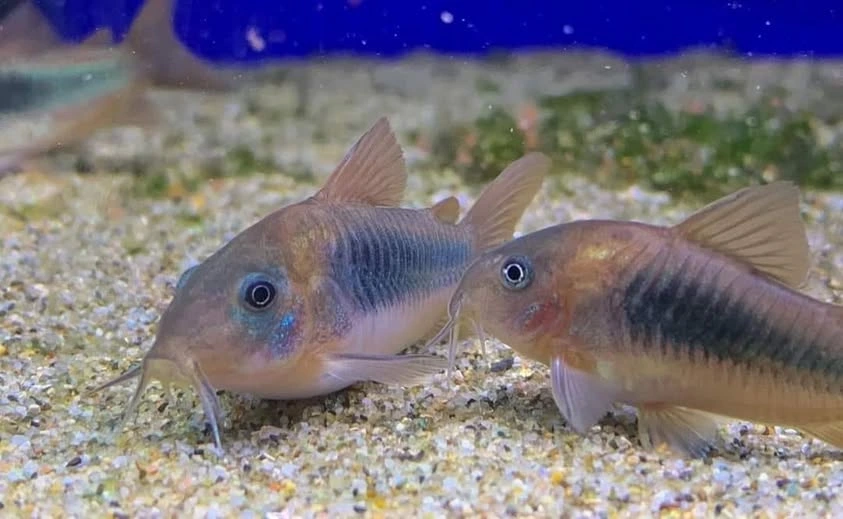
A bottom group that eats what the guppies drop, tolerates hard water without complaint, and has no interest in fins or fry beyond the occasional accident while foraging. Six of them turning over sand keeps the substrate from souring in a tank that gets fed as often as a guppy tank does. Use soft sand rather than gravel to protect their barbels. Sinking wafers, or they live on leftovers alone.
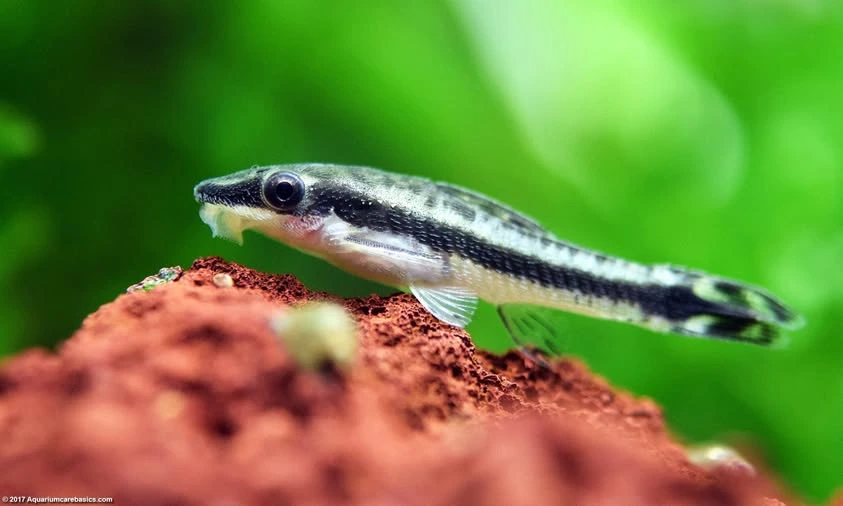
A small grazing catfish that clings to leaves and glass and does the algae work in a brightly lit livebearer tank. It is too small and too preoccupied to bother a guppy, and it holds position rather than moving through the tank. It needs an established tank with real algae — adding otocinclus to a new setup is the usual way to lose them. A group of six, with blanched courgette when the glass gets clean.
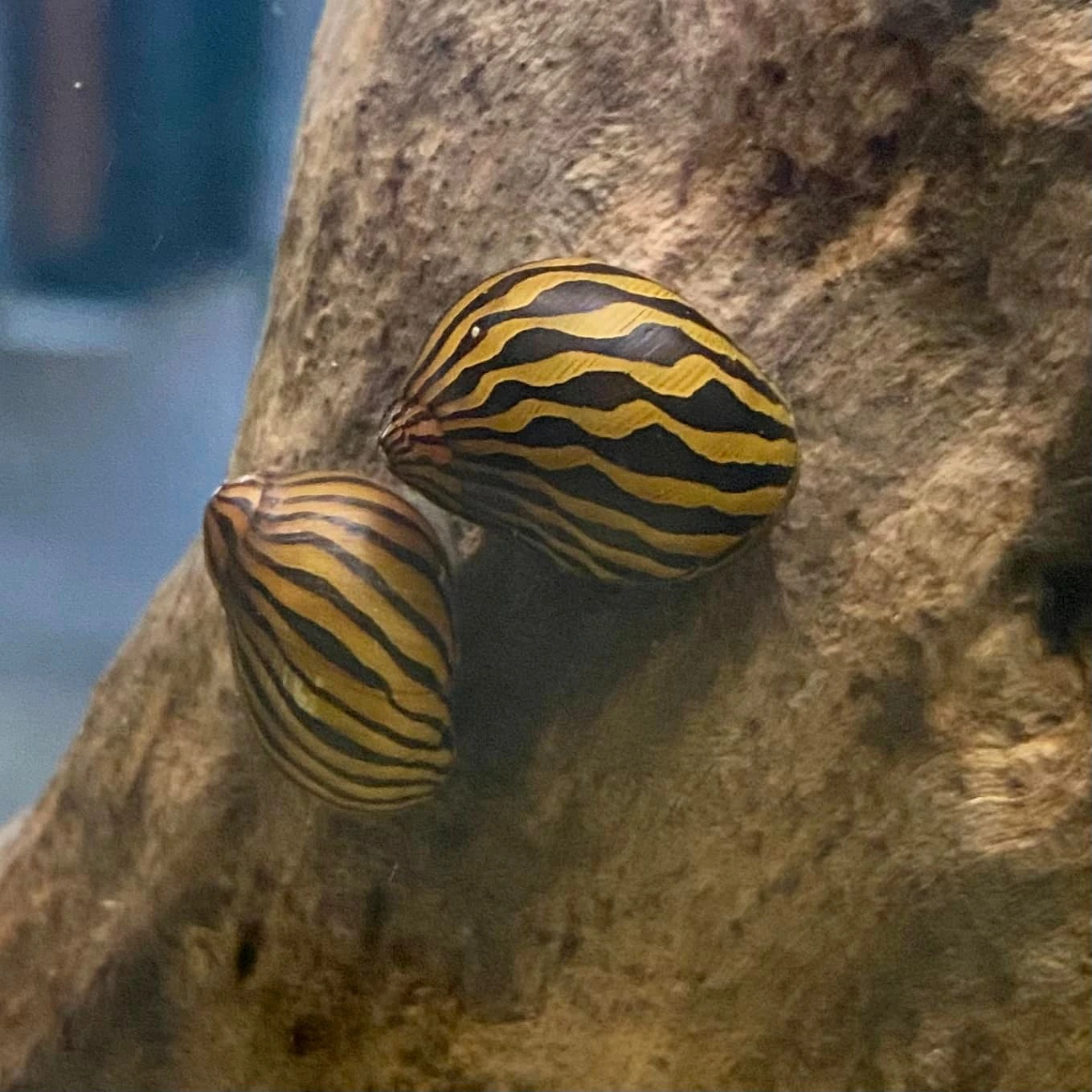
The most efficient algae eater available for a hard-water tank, and hard water is what its shell needs to stay intact. It adds essentially no bioload and lays eggs that will not hatch in freshwater, so the population never runs away from you. Guppies ignore snails entirely. The white egg specks on driftwood are the only downside and they are cosmetic.
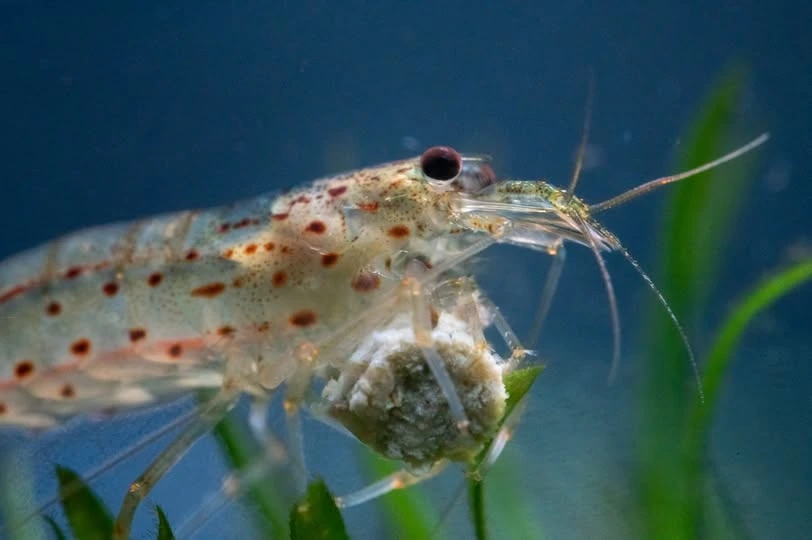
At 5 cm it is too large for a guppy to swallow and too fast for one to catch, which makes it the shrimp to choose here rather than cherry shrimp. It works the plants and substrate clearing algae and uneaten food, which matters in a tank fed heavily for fry. Guppies will pick at a freshly moulted shrimp, so provide moss and caves to shelter in. It wants the same warm range and tolerates hard water well.
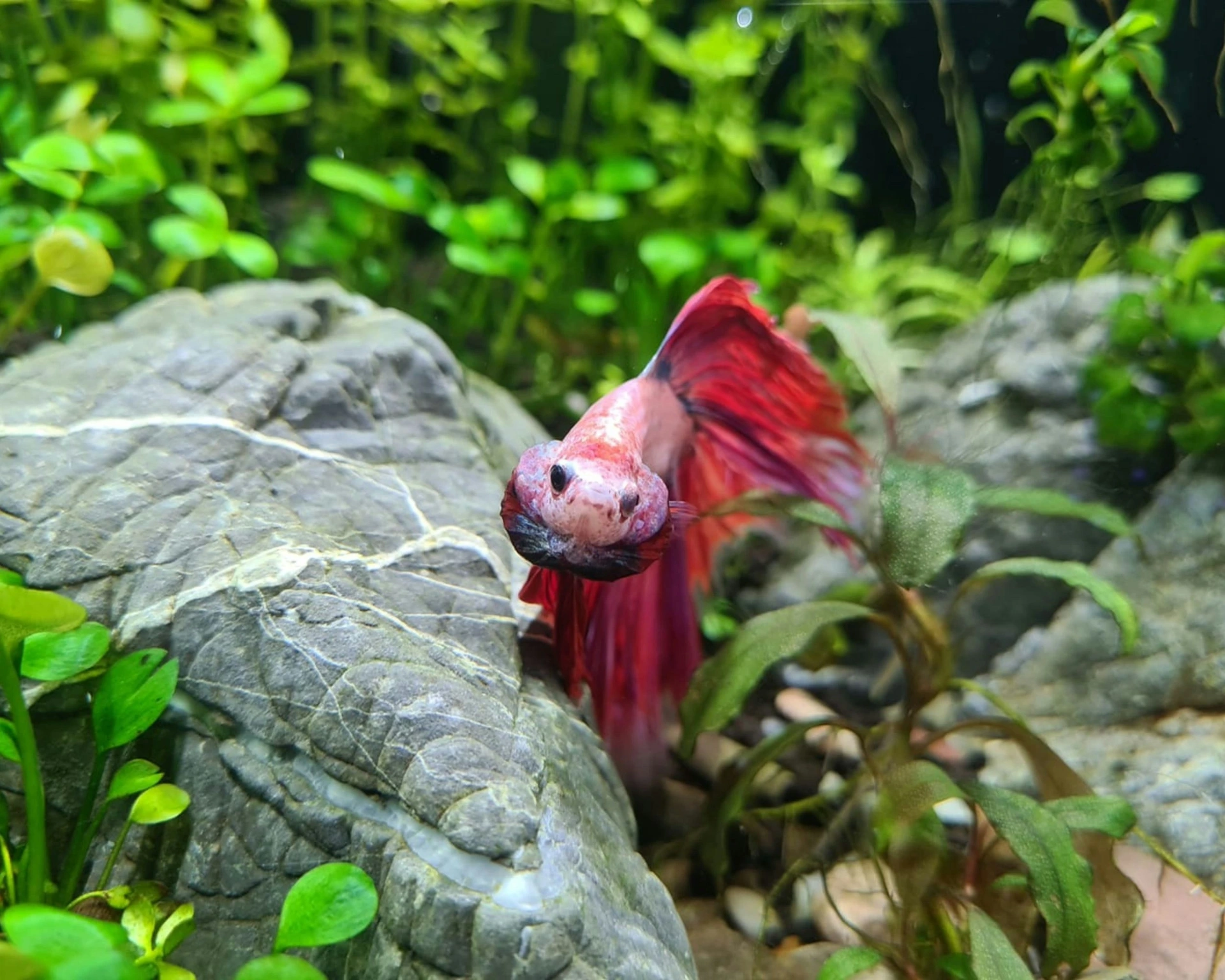
The pairing sold more often than any other, and the one with the most predictable failure. A male betta reads a male guppy's coloured tail as a rival display and attacks it, and the guppy cannot outswim him in the confined tanks these two are usually put in. Some individual bettas tolerate guppies for months, which is what keeps the myth alive. The risk is not worth a fish that cannot escape.
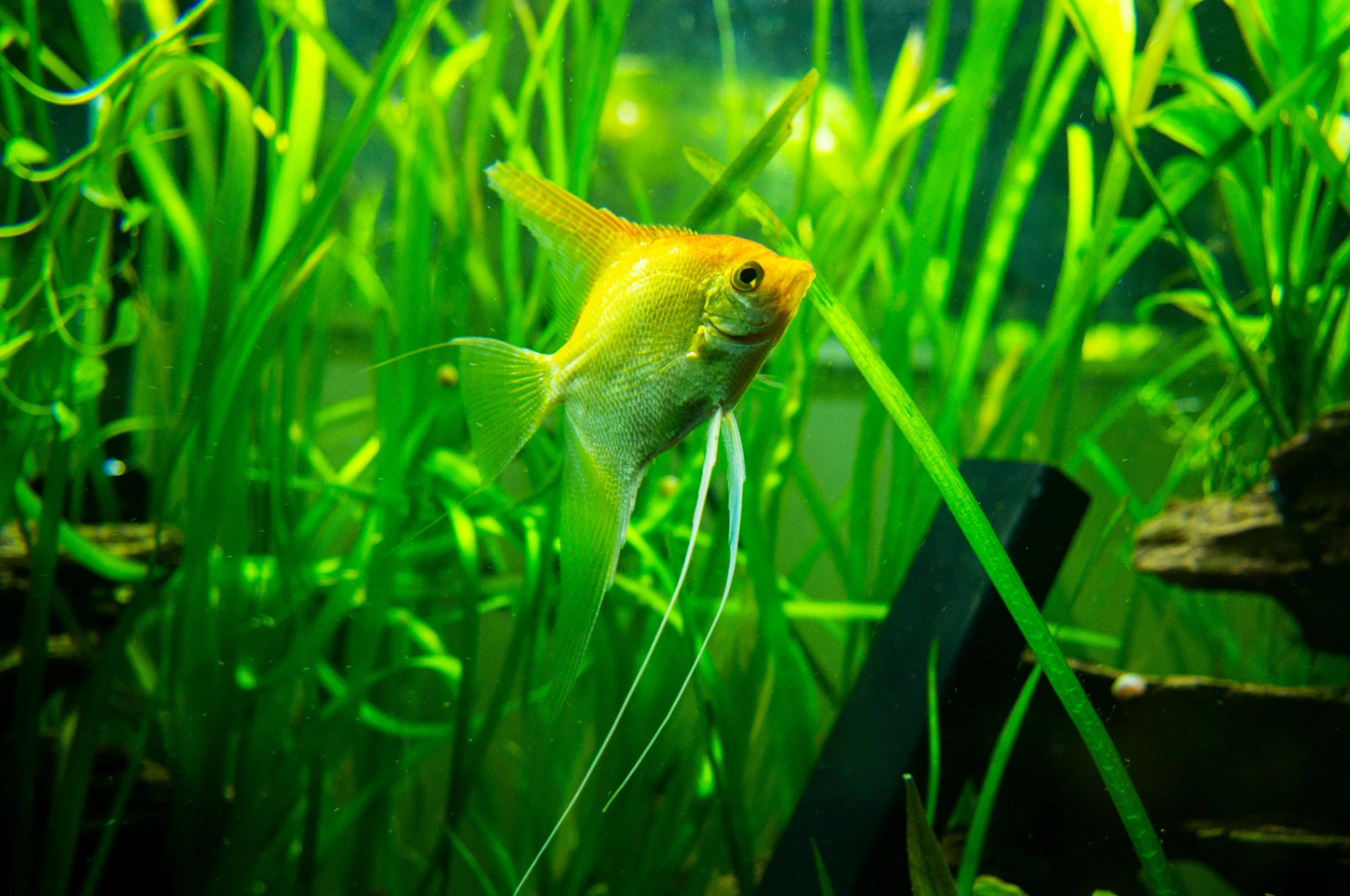
An adult angelfish is 15 cm with a mouth wide enough for a guppy, and it hunts slow bright targets in open water by nature. It also wants soft, acidic water at the warm end, which is the opposite of what guppies want. Juvenile angelfish coexist with guppies for a while, which is how most people end up discovering this.
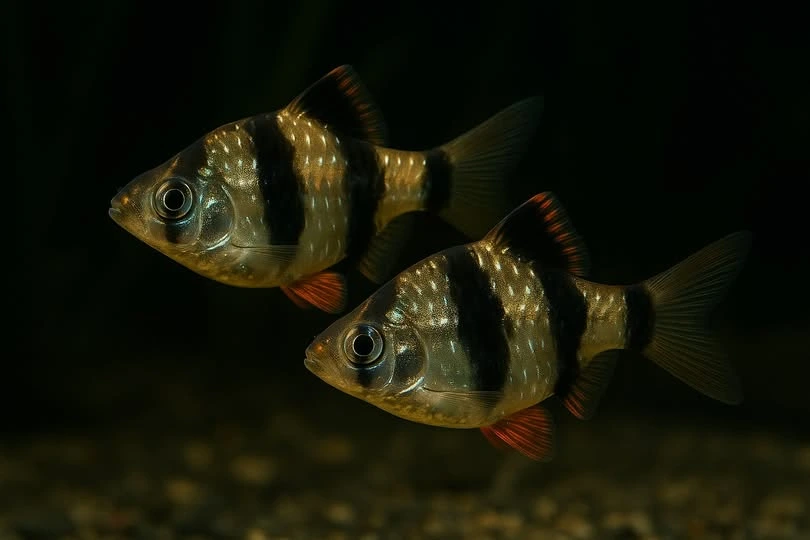
A barb shoal strips a guppy tail within days, and unlike most nipping problems this one does not depend on group size or tank layout. The guppy is slower than the barbs, brighter than everything else in the tank, and has the longest fins in it. There is no version of this tank that works.
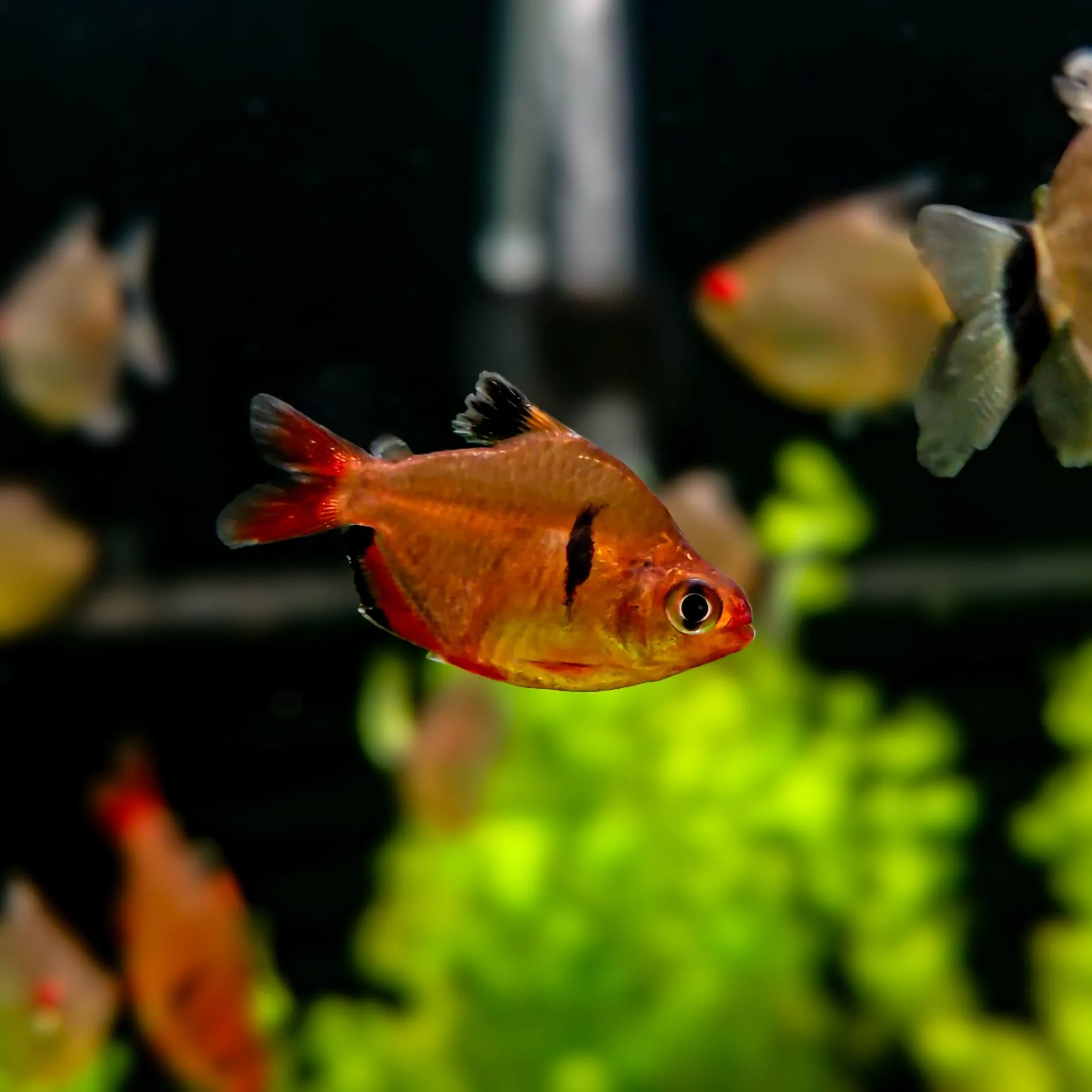
Sold as a peaceful community tetra and one of the most persistent nippers in the hobby, particularly towards anything with flowing fins. Damage is gradual — a ragged edge that gets blamed on fin rot before anyone watches the tank long enough to see what is causing it. Larger shoals reduce but do not eliminate it.
A small, fast, food-motivated tetra that pursues anything slower than itself, and a guppy in full fin is a slow target. It also feeds aggressively enough that guppies end up eating second in a small tank. It is a good fish in the right community, but not one that includes trailing fins.
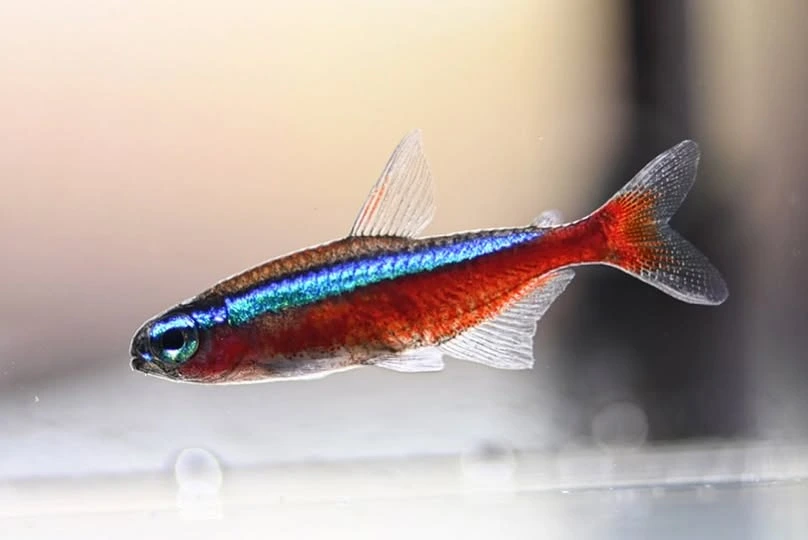
No behavioural problem at all — the two would ignore each other happily. The obstacle is chemistry: cardinals want soft, acidic blackwater around pH 5.5–7.0 while guppies want pH 7.0–8.5 and hardness to match. Keeping both means keeping one of them permanently at the wrong end of its range, and cardinals are the ones that show it first.
A 3 cm fish that is nonetheless a determined, beaked predator, and long guppy fins are exactly the sort of thing it investigates. Pea puffers also want a species-only tank with hunting space and live food, and a busy livebearer community is close to the worst environment for them. Both fish do better apart.
Two that come down to what you want to happen to the fry.
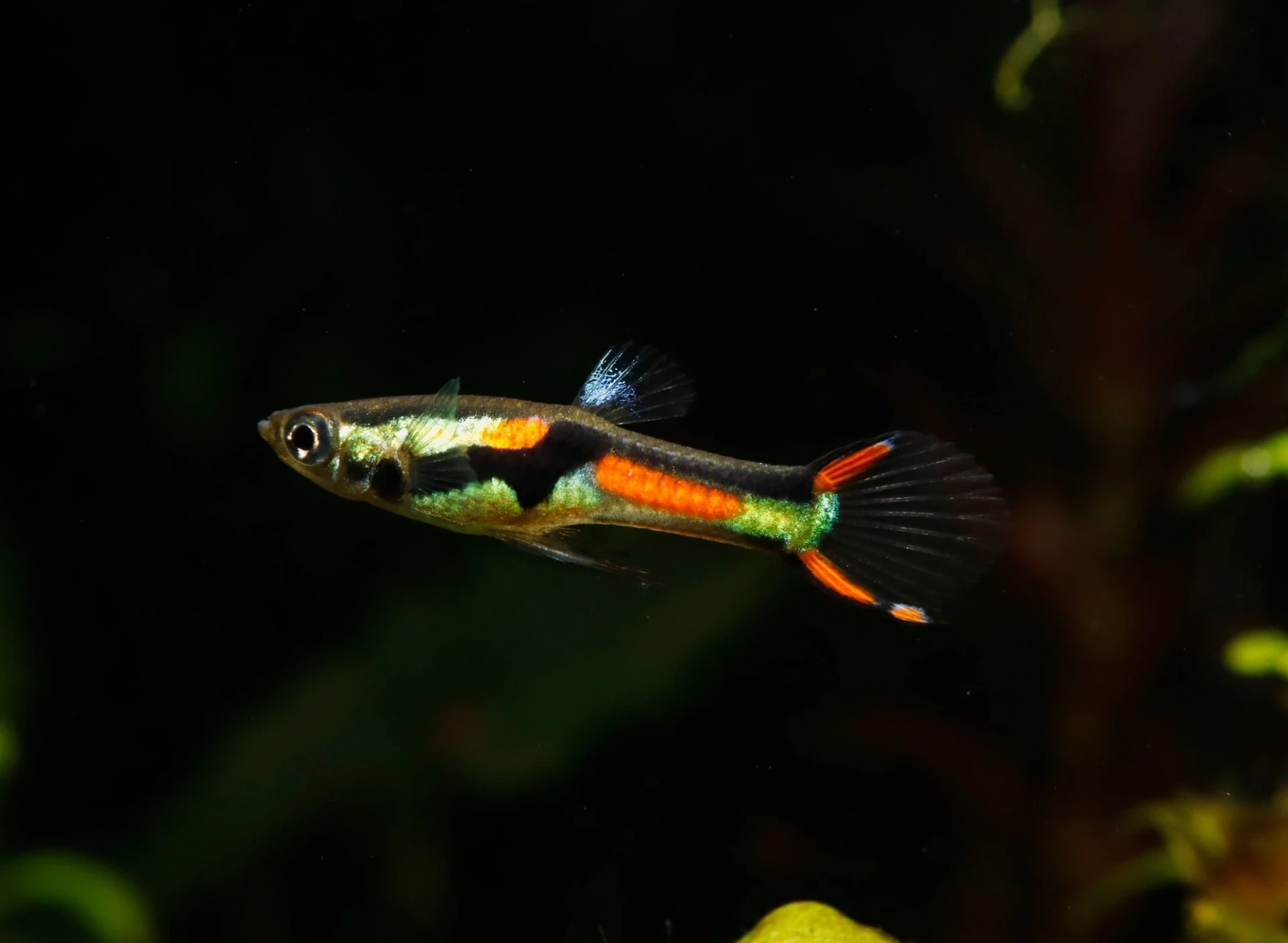
Endlers Livebearer
Poecilia wingei
Condition: Only if you accept hybrid offspring
Endlers are close enough to guppies that they interbreed freely, and the young are fertile, so within two generations you have neither pure line left. As a tank mate the fish is ideal — same water, same size, same feeding, no aggression. Keep the two together only if you are happy with a mixed colony, or keep males of one and females of the other. Serious keepers of either strain house them separately.
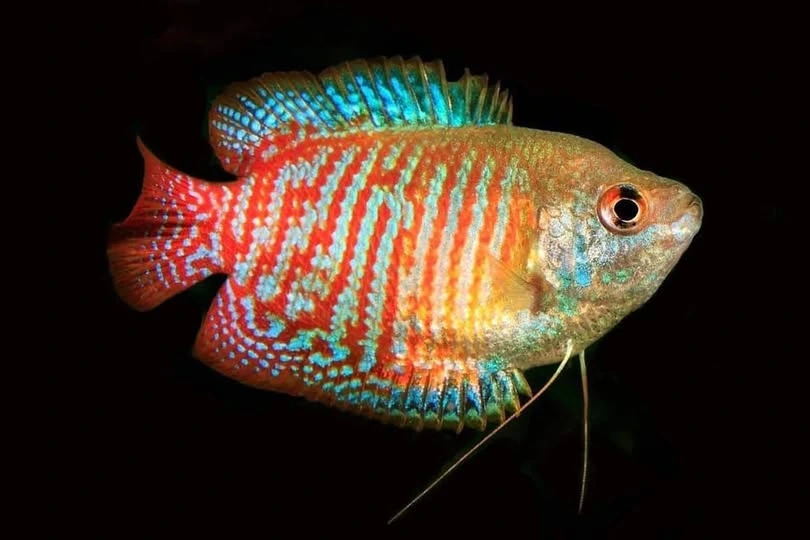
Condition: Only in a 20 gallon or larger, and expect fry losses
The parameters overlap and an adult guppy is safe from a dwarf gourami, so the pairing is sound for the fish you bought. It is not sound for the ones that get born — a gourami patrols the surface and the plant tops, which is precisely where newborn fry shelter. In a large planted tank some fry still get through. In a small one the gourami effectively becomes your population control.
Drop your tank size and shortlist into the stocking calculator to check bioload, swim-level balance and compatibility flags.
Frequently asked questions
What fish can live with guppies?
Hard-water fish without a nipping habit and without a mouth big enough to swallow one. Platies, mollies, cherry barbs, corydoras, otocinclus, nerite snails and amano shrimp all qualify. Match the water chemistry before the temperament — that is where most guppy community lists go wrong.
Can guppies and bettas live together?
Not reliably. A male betta frequently reads a male guppy's coloured tail as a rival and attacks it, and the guppy has no way to escape in a typical tank. Individual bettas do tolerate guppies, but you cannot know which one you have until the damage is done.
Will other fish eat guppy fry?
Almost all of them, including the adult guppies. If you want fry to survive you need dense floating plants, moss, or a separate breeding setup. If you would rather keep the numbers flat, a mid-water fish or two will do the job on its own.
How many guppies should be kept together?
At least three, and with two or three females per male. Males chase constantly, and a single female in a tank of males is harassed to the point that she stops feeding. A male-only group is a legitimate option if you do not want fry at all.
What water do guppies need?
Hard, alkaline water at pH 7.0–8.5 and 22–28 °C. Most tap water in hard-water regions suits them straight from the tap. This requirement, rather than temperament, is what rules out cardinal tetras, chocolate gouramis and the soft-water dwarf cichlids.
Can guppies live with shrimp?
Amano shrimp yes, dwarf shrimp partly. Amanos are too big to be eaten, while cherry shrimp adults are usually left alone but their young are not, so a colony stays small rather than growing. Heavy moss cover improves the odds considerably.
Why do my guppies keep dying?
Most often it is stock quality rather than the tank. Mass-bred guppies have been selected for colour and fin at the cost of resilience, and losses in the first few weeks after purchase are common. Buying from a local breeder, quarantining new fish, and avoiding a brand-new uncycled tank make more difference than any change to the tank mate list.