

Care Requirements
Adult Size
17.7" (45cm)
Min Tank
125 gal
Temperature
75-82°F
pH Range
7-8
Lifespan
10-15 years
Min Group
Can be kept alone
Diet
Carnivore
Swim Level
Middle
Bioload
5/10
Hardness
10-20 dGH
About Fahaka Puffer
The Fahaka Puffer is a true monster fish — reaching 18 inches (45cm) of pure predatory intelligence. Also known as the Nile Puffer or Lineatus Puffer, this African giant is among the most aggressive freshwater fish available, capable of killing any tankmate and delivering serious bites to unwary keepers. They're not fish for casual hobbyists.
Despite their danger, Fahaka Puffers are remarkably intelligent and develop strong bonds with their owners. They recognize individual people, beg for food, and display complex behaviors that make them feel more like pets than typical fish. Many keepers describe them as having dog-like personalities — eager, attentive, and genuinely interactive.
This intelligence comes with downsides. Fahaka Puffers get bored, stressed by inadequate environments, and can become destructive when under-stimulated. They need not just space but enrichment — things to investigate, varied feeding methods, and environmental changes to keep them engaged.
Their care requirements are significant: massive tanks, solo housing (they'll kill anything), powerful filtration for substantial waste production, and a lifetime supply of hard-shelled foods for dental maintenance. They're 10-15 year commitments requiring dedicated resources. But for keepers who can provide proper care, Fahaka Puffers offer a uniquely rewarding fishkeeping experience with a genuine pet-like bond.
Natural Habitat & Origin
Fahaka Puffers inhabit the Nile River basin and various West African river systems. They're found in large rivers, lakes, and associated waterways — environments with space matching their substantial size.
Their native waters are warm and tend toward hard and alkaline, though they occur across a range of conditions throughout their extensive African range. They occupy various habitats from vegetated shallows to open water, hunting fish, invertebrates, and anything else they can catch.
As apex predators in their native range, they've evolved to dominate their environment — a trait that translates directly to aquarium behavior.
Native Region
Nile River basin and West African rivers
Habitat Type
Large rivers and lakes
Wild Water Conditions
Warm, moderately hard, neutral to alkaline
Appearance & Varieties
Fahaka Puffers are impressive fish — adults reach 18 inches (45cm) with heavy, muscular bodies. Their coloration features a tan to olive base with distinctive dark stripes running lengthwise along the body (hence 'lineatus'). The belly is white, and they display a characteristic dark band between the eyes.
Like all puffers, they can inflate dramatically when stressed or threatened — a Fahaka inflated to full size is genuinely imposing. Their beak-like teeth are visible and formidable; these are the tools they use to crush shells, and they can inflict serious wounds on humans.
Juveniles are attractively marked with more pronounced patterning. As they grow, coloration may become somewhat muted, though healthy adults remain distinctively marked.
Popular Varieties
| Variety | Description | Rarity |
|---|---|---|
| Standard/Wild-Type | Tan to olive body with dark longitudinal stripes. White belly with dark band between eyes. The only available form. | Uncommon (due to specialized care requirements) |
Tank Setup & Requirements
Quick Requirements Summary
Tank Size
Minimum Tank Size
125 gallons
Recommended Tank Size
180 gallons
Fahaka Puffer tanks must be massive, heavily filtered, and designed for a single aggressive occupant. There's no flexibility on tank size — these fish need serious space.
Water Parameters
Moderately hard, neutral to slightly alkaline water (pH 7.0-8.0, 10-20 dGH). Temperature 24-28°C (75-82°F). They're somewhat adaptable but prefer harder water. Pristine water quality is essential — they're messy eaters producing substantial waste.
Substrate
Sand allows natural behaviors and is easy to clean. Large smooth gravel also works. Avoid anything sharp that could injure them during their characteristic bottom-resting.
Plants & Decorations
Fahaka Puffers rearrange their environment. Decorations must be heavy enough to resist being moved. Large rocks, heavy driftwood, and robust structures work. They destroy most plants — some keepers succeed with Anubias or Java Fern attached to heavy rocks, but expect casualties. Provide environmental complexity for mental stimulation.
Filtration & Water Flow
These are large, messy carnivores producing substantial waste. Aim for 10x+ tank volume turnover. Large canister filters or sumps are standard. Multiple filters provide redundancy.
Lighting
Standard aquarium lighting works fine. They're diurnal and active during the day. No special lighting requirements.
Diet & Feeding Guide
Diet Type
carnivore
Feeding Frequency
Every other day for adults; daily for juveniles
Portion Size
Substantial portions appropriate to their size. An adult Fahaka can consume several large snails, a handful of mussels, or equivalent in a sitting.
Fahaka Puffers are powerful carnivores requiring substantial meaty foods. Their beak-like teeth grow continuously and need regular hard-shelled foods to prevent overgrowth. They're not picky eaters and will consume virtually any meaty food offered — the challenge is providing adequate nutrition and dental maintenance, not palatability.
Best Foods for Fahaka Puffer
- Snails (regular and essential) — Mandatory for dental health. Large snails appropriate to their size — mystery snails, apple snails, and large ramshorns for adults. Feed several times weekly.
- Shellfish (clams, mussels, cockles) — Excellent nutrition and dental maintenance. Offer shell-on for tooth wear. Fresh or frozen. A staple food.
- Crayfish — Outstanding food — hard shell for teeth, excellent nutrition, and mentally stimulating prey. Live crayfish provide enrichment through hunting.
- Whole fish (with caution) — Nutritious but avoid feeder fish from pet stores (disease risk). Frozen silversides, smelt, or tilapia pieces are safer.
- Shrimp (shell-on) — Large shrimp with shells provide nutrition and dental benefit. Fresh or frozen from the grocery store.
- Crab legs — Excellent for tooth wear. Large puffers can crunch through crab shell readily.
Foods to Avoid
- Live feeder fish from pet stores — Disease transmission risk isn't worth it. Frozen fish are safer.
- Soft-only diets — Leads to overgrown teeth. Hard-shelled foods are essential.
- Prepared dry foods — They're strict carnivores that won't accept and don't need pellets or flakes.
- Mammalian meat — Beef heart and similar foods are nutritionally inappropriate. Fish cannot properly process mammalian fats.
They have large appetites matching their size. Hard-shelled foods are essential for dental maintenance — not optional treats. Crayfish provide nutrition, dental care, and mental enrichment.
Behavior & Temperament
Fahaka Puffers are intelligent, interactive fish that develop genuine recognition of their owners. They'll swim to the front of the tank when you approach, beg for food, and watch activities outside their aquarium with obvious attention. This interactivity creates a pet-like bond unusual in fishkeeping.
However, they're also extremely aggressive. Every tankmate will eventually be attacked and killed — no exceptions. They must be kept alone. This aggression extends to hands in the tank; Fahaka Puffers bite, and their powerful beaks cause serious wounds.
They're curious and can become bored in under-stimulated environments. Enrichment matters — rearranging decorations, varying feeding methods, and providing things to investigate keeps them mentally engaged.
Their activity patterns include active periods of swimming and hunting interspersed with resting on the substrate or decorations.
Tank Mates: Compatibility Guide
Compatible Tank Mates
None
Fahaka Puffers must be kept alone. They will attack and kill any tankmate eventually — fish, invertebrates, anything. There are no exceptions.
Tank Mates to Avoid
Everything
Every living thing in a Fahaka tank will eventually be attacked. This includes fish of all sizes, invertebrates, and even your hands. They're obligate solitary predators.
Common Pairing Questions
Can Fahaka Puffers live with other fish?
No. They must be kept completely alone. They will attack and kill any tankmate. Solo keeping is mandatory.
Can I keep two Fahaka Puffers together?
No. Introducing two Fahaka Puffers typically results in one killing the other. Solo only.
Fahaka Puffer breeding is extremely rare in aquariums. Their aggressive nature makes pairing nearly impossible — introducing two Fahaka Puffers typically results in one killing the other. The few successful breedings have occurred in massive systems (500+ gallons) with careful conditioning. They're egg scatterers with no parental care. Virtually all Fahaka Puffers in the trade are wild-caught.
Health Issues & Disease Prevention
Fahaka Puffers are hardy when their substantial requirements are met. Most health issues stem from inadequate tank size, poor water quality from massive waste production, or dental overgrowth from insufficient hard foods.
Common Diseases
| Disease | Symptoms | Treatment |
|---|---|---|
| Overgrown Teeth | Difficulty eating, visible beak overgrowth, mouth not closing properly. Can become severe enough to prevent eating entirely. | Prevention through regular hard foods (snails, shellfish, crayfish) is essential. Severe cases require manual trimming — a stressful procedure requiring sedation for fish this large. |
| Internal Parasites | Weight loss despite eating, white stringy feces, lethargy. | Treat with Praziquantel. Wild-caught specimens commonly carry parasites — quarantine and treat prophylactically. |
| Ich (White Spot Disease) | Small white spots on body and fins, flashing against objects. | Raise temperature to 30°C gradually. Commercial medications at standard doses. Their size means treating large water volumes. |
| Stress from Inadequate Housing | Color loss, glass surfing, lethargy, loss of appetite, self-destructive behavior. | Upgrade to appropriate tank size. No medication fixes inadequate housing. They need 125+ gallons minimum. |
Signs of a Healthy Fahaka Puffer
- Good body condition — full but not obese
- Alert and interactive
- Strong feeding response
- Good coloration with visible stripes
- Clear eyes
- Normal teeth — mouth closes properly
- Active exploration
Prevention Tips
- Provide massive tank (125+ gallons minimum)
- Feed hard-shelled foods regularly for dental health
- Maintain excellent water quality despite heavy waste production
- Never house with any tankmates
- Quarantine and deworm wild-caught specimens
- Provide environmental enrichment against boredom
- Never put bare hands in the tank
Frequently Asked Questions
Up to 18 inches (45cm) — these are genuine monster fish. They need tanks of 125+ gallons as adults, and larger is always better.
No. They must be kept completely alone. They will attack and kill any tankmate — fish, invertebrates, anything. Solo keeping is mandatory.
Yes — they have powerful beaks designed to crush shells, and they will bite hands in their tank. Fahaka Puffer bites cause serious wounds. Never put bare hands in a Fahaka tank.
Yes — fully freshwater from African rivers. No salt is needed. They prefer moderately hard, neutral to alkaline water.
10-15 years with proper care. This is a major long-term commitment requiring dedicated resources.
Absolute minimum 125 gallons (475 liters) for an adult; 180+ gallons (680+ liters) recommended. Larger is always better.
Absolutely not. They require massive tanks, solo housing, substantial feeding budgets, and careful handling. For experienced fishkeepers only.
Usually indicates stress from inadequate space, boredom, or poor water quality. Check tank size first — they need 125+ gallons. Provide enrichment.
Tips for Keeping Fahaka Puffer
Pro Tips
- ✓Use feeding tongs — never bare hands. Their bite causes serious injury
- ✓Provide environmental enrichment — rearrange decorations periodically, vary feeding methods
- ✓Plan for the long-term commitment — 10-15 years needing 125+ gallon tanks
- ✓Source crayfish for regular feeding — excellent nutrition, dental maintenance, and mental enrichment
Common Mistakes to Avoid
- ✗Underestimating adult size and tank requirements — 18 inches requires 125+ gallons
- ✗Attempting community keeping — they will kill everything. No exceptions
- ✗Neglecting dental maintenance — regular hard-shelled foods are essential for survival
- ✗Putting hands in the tank without protection — serious bite wounds
- ✗Impulse buying juveniles — unprepared for adult size, lifespan, and resource requirements
Sources
- FishBase — Accepted scientific name, maximum size and native range for Fahaka Puffer.
Related Species You Might Like
View All Fish →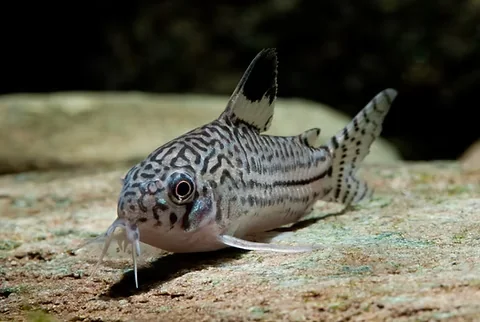
False Julii Corydoras
Corydoras trilineatus

Livingstoni Cichlid
Nimbochromis livingstonii

Red-Bellied Piranha
Pygocentrus nattereri

Red Tail Catfish
Phractocephalus hemioliopterus

Silver Arowana
Osteoglossum bicirrhosum

Venustus Cichlid
Nimbochromis venustus

Bala Shark
Balantiocheilos melanopterus
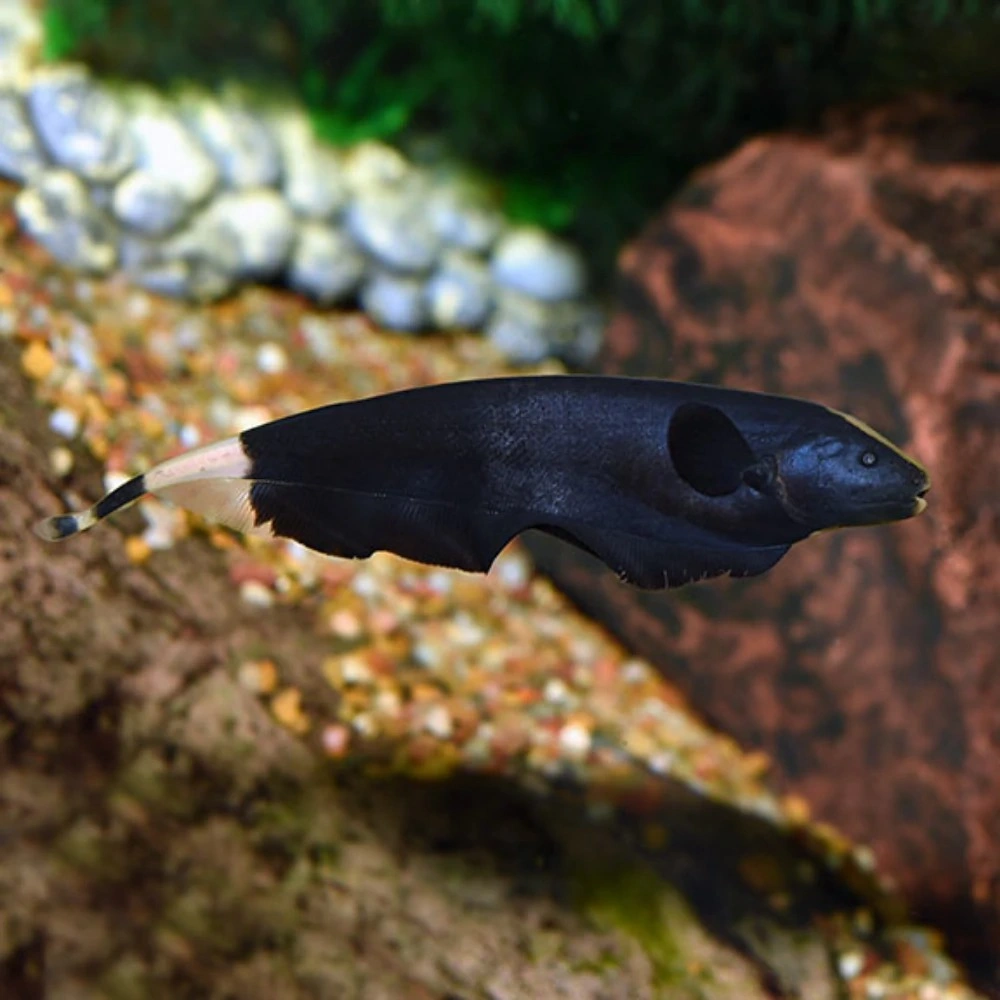
Black Ghost Knifefish
Apteronotus albifrons
Ready to Add Fahaka Puffer to Your Tank?
Use our free stocking calculator to check compatibility, bioload, and get personalized recommendations.