
Care Requirements
Adult Size
2.0" (5cm)
Min Tank
10 gal
Temperature
72-82°F
pH Range
7.5-8.5
Lifespan
2-3 years
Min Group
Can be kept alone
Diet
Omnivore
Swim Level
Bottom
Bioload
3/10
Hardness
8-25 dGH
About Red Claw Crab
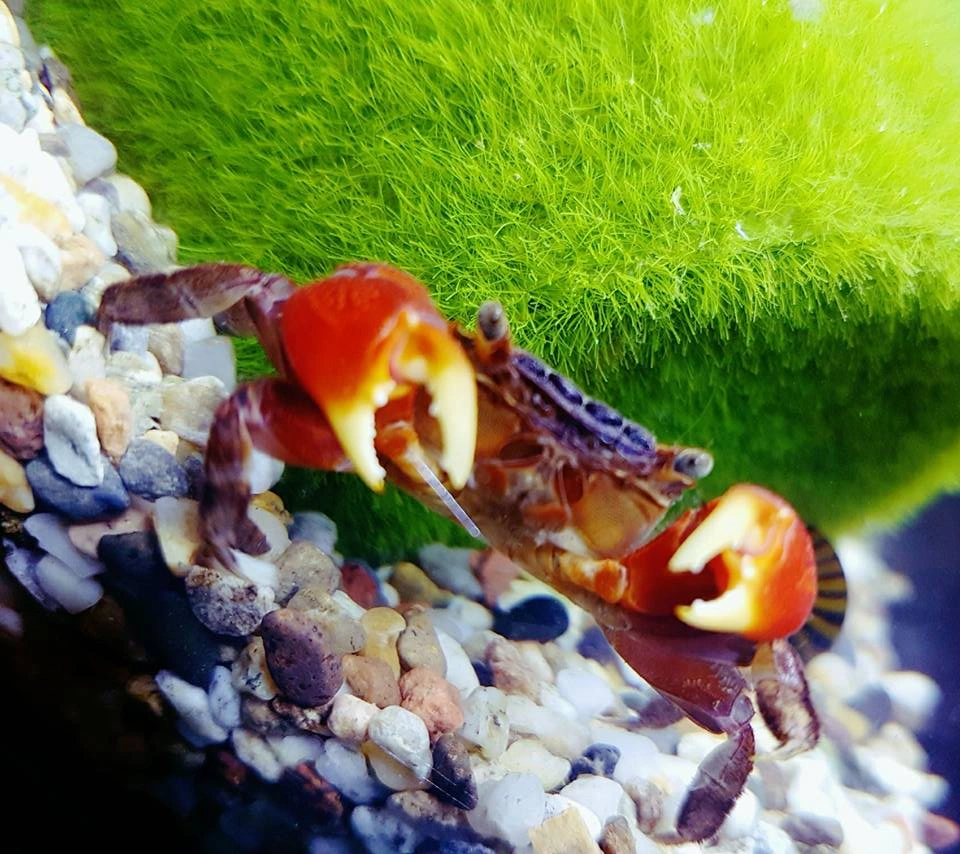
The Red Claw Crab (Perisesarma bidens) is one of the most commonly sold crabs in the freshwater aquarium trade — and one of the most commonly misunderstood. With their striking red claws, compact dark body, and active personalities, they're undeniably appealing. However, the pet store advice of 'just add them to your community tank' sets up both the crab and the keeper for failure. Red Claw Crabs are semi-terrestrial brackish water animals that need fundamentally different care than a standard aquarium provides.
In the wild, Red Claw Crabs inhabit mangrove swamps and brackish estuaries across Southeast Asia, from Indonesia to Malaysia. They live in the intertidal zone where freshwater rivers meet the sea, spending time both in shallow brackish pools and on the muddy banks above the waterline. This dual habitat requirement means they need a paludarium with both brackish water and dry land — typically a 50/50 to 30/70 water-to-land ratio.
Males are the showstoppers of the species, sporting oversized bright red claws that they use for territorial displays and combat with rival males. Females have smaller, less colorful claws but are otherwise similar in size and behavior. Both sexes are opportunistic predators and scavengers, eating anything they can catch or find — including fish, shrimp, snails, and plants. This predatory nature makes them poor community tank inhabitants.
Red Claw Crabs are notorious escape artists. They can and will climb silicone seams, filter tubes, airline tubing, heater cords, and any textured surface to find their way out of an enclosure. A completely sealed lid with no gaps is the single most important piece of equipment for keeping these crabs alive. An escaped Red Claw Crab will dehydrate and die within hours in a typical home environment.
Natural Habitat & Origin
Red Claw Crabs are native to the coastal mangrove swamps and estuaries of Southeast Asia, particularly Indonesia, Malaysia, and surrounding regions. They inhabit the intertidal zone where rivers empty into the sea, living among mangrove roots, muddy banks, and shallow brackish pools. The water in their habitat fluctuates between low-end brackish and full marine salinity with the tides. They are equally at home in water and on land, retreating into burrows during low tide and foraging in shallow water during high tide.
Native Region
Southeast Asia (Indonesia, Malaysia, Borneo, Sumatra)
Habitat Type
Coastal mangrove swamps, estuaries, intertidal mudflats
Wild Water Conditions
Brackish water (SG 1.005-1.020), alkaline pH, hard water with tidal fluctuation
Appearance & Varieties
Red Claw Crabs have a compact, rounded carapace measuring about 5 cm (2 inches) across. The body is dark brown to nearly black with occasional burgundy highlights. The namesake red claws are the most prominent feature — males have noticeably larger, brighter red claws used for display and combat, while females have smaller, duller claws. The legs are banded in dark and lighter brown. Eyes are mounted on stalks and provide nearly 360-degree vision. The abdomen (tail flap) tucked under the body is triangular in males and broadly rounded in females — the most reliable sexing method.
Popular Varieties
| Variety | Description | Rarity |
|---|---|---|
| Standard Red Claw | Dark body with bright red claws — the form universally sold in the aquarium trade. No selectively bred varieties exist. | Common |
Tank Setup & Requirements
Quick Requirements Summary
Tank Size
Minimum Tank Size
10 gallons
Recommended Tank Size
20 gallons
Red Claw Crabs need a brackish paludarium with significant land area. A standard aquarium with a lowered water level, sloped substrate, and cork bark or driftwood platforms works well. The water should be brackish (specific gravity 1.005) and no deeper than 15 cm (6 inches). Land areas must be easily accessible — crabs that can't reach land will eventually drown from exhaustion.
Water Parameters
Temperature 22-28°C (72-82°F), pH 7.5-8.5, hardness 8-25 dGH. CRITICAL: Water must be brackish at SG 1.005 minimum — use marine salt mix (not aquarium salt or table salt). Mix salt before adding to the tank. Maintain with 20% weekly water changes using pre-mixed brackish water.
Substrate
Sand is ideal — it mimics their natural mudflat habitat and allows natural burrowing behavior. Pool filter sand or play sand works well. Slope the substrate from deep water at one end to an exposed beach area at the other. Avoid sharp gravel that can damage legs during molting.
Plants & Decorations
Hardy brackish-tolerant plants like Java fern and Anubias survive in the water section. Mangrove propagules are thematically perfect and tolerate brackish water. Cork bark flats, driftwood, and rocks create essential land platforms and hiding spots. Provide at least one hide per crab.
Filtration & Water Flow
A small internal filter or HOB filter handles the shallow water volume. Sponge filters work well and create minimal current. The filter only needs to handle the water section — which is typically quite small. Ensure the filter intake doesn't create strong currents that could trap crabs.
Lighting
Standard aquarium lighting on a 10-12 hour cycle. Red Claw Crabs are active during both day and night, so lighting is primarily for plant growth and your viewing pleasure. Avoid intense lighting that raises water temperature significantly.
Diet & Feeding Guide
Diet Type
omnivore
Feeding Frequency
Every other day
Portion Size
What can be consumed in a few hours
Red Claw Crabs are aggressive omnivores that will eat almost anything organic. In the wild, they scavenge dead fish, eat algae, hunt small invertebrates, and consume plant matter. In captivity, they thrive on a varied diet of protein and vegetables. They are messy eaters — food debris should be removed promptly to maintain water quality in the small water volume.
Best Foods for Red Claw Crab
- Freeze-dried bloodworms or brine shrimp — High-protein favorites — crabs will snatch these eagerly from land or water
- Blanched vegetables — Zucchini, spinach, peas, and sweet potato provide essential plant nutrients
- Sinking pellets — Shrimp pellets, crab cuisine, or omnivore sticks placed on land platforms
- Calcium supplements — Cuttlebone or calcium blocks — absolutely essential for shell health and molting success
- Small pieces of raw fish or shrimp — Occasional protein boost — use unseasoned, unfrozen pieces
- Dried seaweed/nori — Provides minerals and plant matter — clip to the glass near the waterline
Foods to Avoid
- Seasoned or processed human food — Additives, salt levels, and preservatives are toxic to crabs
- Citrus fruits — Excessive acidity irritates gills and disrupts water chemistry
- Copper-containing products — Copper is lethal to all crustaceans even in trace amounts
- Large amounts of fatty food — Excess fat causes water quality issues in the small water volume
Offer food on land platforms rather than in water when possible — it keeps the water cleaner. Alternate between protein (2-3 times per week) and vegetables (2-3 times per week). Calcium should be continuously available via cuttlebone. Remove uneaten food after a few hours.
Behavior & Temperament
Red Claw Crabs are bold, active, and entertaining. Males are territorial and will display to rivals by raising their claws and standing tall. Actual combat involves claw-locking and pushing matches that rarely cause serious injury if adequate space and hiding spots are provided. They are opportunistic predators that will ambush fish or shrimp resting on the bottom. Climbing is a constant behavior — they will test every possible escape route relentlessly. During molting, they hide for several days and are extremely vulnerable until the new shell hardens. Healthy crabs are active, eat eagerly, maintain bright red claw coloration, and explore their territory. Signs of stress include prolonged hiding, loss of claw color, refusal to eat, and repeated escape attempts beyond normal testing.
Tank Mates: Compatibility Guide
Compatible Tank Mates
Other Red Claw Crabs (with caution)
Keep one male with 2-3 females in a large enclosure with multiple hides to reduce aggression
Large brackish snails
Nerite snails may survive if large enough — small snails will be eaten
Fast brackish fish (with caution)
Mollies in a large setup may coexist — but crabs will catch sleeping fish at night
Tank Mates to Avoid
Small fish
Will be hunted and eaten — crabs are effective ambush predators at night
Shrimp (all species)
Immediate prey item — crabs will hunt shrimp relentlessly
Small snails
Cracked open and eaten — only large, thick-shelled snails have a chance
Other crab species
Interspecies aggression — different care requirements make cohabitation impractical
Slow-moving bottom fish
Easy targets for ambush — any fish that rests on the bottom is at risk
Common Pairing Questions
Can Red Claw Crabs live in a community fish tank?
No. Despite being sold this way, they require brackish water and land access that standard community tanks don't provide. They will also eat any fish they can catch, especially at night when fish rest on the bottom.
Can I keep multiple males together?
Only in large enclosures (75+ liters) with abundant hiding spots and visual barriers. Even then, some aggression is inevitable. A better ratio is one male to 2-3 females.
Do they really need brackish water?
Yes. While they can survive in freshwater temporarily, long-term freshwater keeping leads to failed molts, weakened immune systems, and shortened lifespan. Brackish water at SG 1.005 is the minimum for healthy keeping.
Red Claw Crabs can mate in captivity, and females will carry eggs under their abdominal flap. However, successful rearing of larvae to juvenile crabs is extremely difficult. The larvae are planktonic and require full marine or high-brackish conditions (SG 1.020+) along with specific planktonic foods (phytoplankton, rotifers) to survive through multiple larval stages. This process takes weeks and requires dedicated equipment and experience. In standard paludarium setups, berried females release larvae that die in the low-salinity conditions. Captive breeding success is very rare outside of commercial operations.
Health Issues & Disease Prevention
Red Claw Crabs are reasonably hardy when their brackish and semi-terrestrial requirements are met. The most common health problems stem from keeping them in incorrect conditions — freshwater instead of brackish, or fully aquatic instead of with land access. Molting issues are the leading cause of death and are almost always related to insufficient calcium, wrong salinity, or inability to access land during the vulnerable post-molt period.
Common Diseases
| Disease | Symptoms | Treatment |
|---|---|---|
| Failed/incomplete molt | Stuck in old exoskeleton, limbs trapped, lethargy, death during molting process | Ensure brackish water (SG 1.005+), provide calcium supplements, ensure land access for molting. Prevention through correct conditions is the only reliable approach. |
| Shell rot | Pitting, dark soft spots, or erosion on carapace and claws; mushy texture | Improve water quality, ensure proper salinity, isolate affected crab. Often caused by bacterial infection from poor water conditions. |
| Limb loss from aggression | Missing legs or claws after fights with other crabs | Separate aggressive individuals, provide more hiding spots. Lost limbs regenerate over successive molts if the crab is otherwise healthy. |
| Gill damage from freshwater keeping | Lethargy, gasping at water surface, spending excessive time on land, swollen gill areas | Gradually transition to proper brackish conditions (SG 1.005). Damage may be irreversible in long-term freshwater-kept crabs. |
Signs of a Healthy Red Claw Crab
- Active climbing and exploring
- Bright red claw coloration in males
- Eating eagerly
- Regular successful molting
- Alert and responsive to movement
Prevention Tips
- Maintain brackish water at SG 1.005 minimum
- Provide land access at all times
- Keep cuttlebone available for calcium
- Seal every potential escape route
- Avoid copper-containing products
- Provide multiple hides to reduce aggression
Frequently Asked Questions
Neither — they are brackish water animals. They live in estuaries where fresh and salt water mix. In captivity, they need water mixed with marine salt to a specific gravity of approximately 1.005. Regular aquarium salt is not a substitute — you need proper marine salt mix (like Instant Ocean) mixed to brackish levels. Keeping them in pure freshwater is survivable short-term but leads to health problems and shortened lifespan.
Escape behavior is normal for Red Claw Crabs — they are natural climbers that explore the boundaries of any enclosure. However, excessive escape attempts can indicate inadequate land access, wrong water salinity, poor water quality, or overcrowding. Ensure the tank has 50-70% land area, proper brackish conditions, and adequate hiding spots. Even in perfect conditions, they will still test the lid — it must be completely sealed.
Yes. Despite needing water, they are semi-terrestrial and can drown if unable to reach land. They breathe through modified gills that extract oxygen from both air and water, but they fatigue in deep water. Water should never be deeper than 15 cm (6 inches), and land areas must be easily accessible from the water via ramps or sloped substrate.
Flip the crab gently and look at the abdominal flap (the 'tail' folded under the body). Males have a narrow, pointed, triangular flap. Females have a wide, rounded, dome-shaped flap that covers most of the underside — this is where they carry eggs. Males also have larger, brighter red claws compared to females.
Fading claw color usually indicates stress from incorrect water conditions (typically freshwater keeping), poor diet lacking in carotenoids and calcium, or general poor health. Transitioning to proper brackish water, providing varied diet with calcium supplementation, and ensuring land access typically restores coloration over successive molts.
Tips for Keeping Red Claw Crab
Pro Tips
- ✓Use marine salt mix, never aquarium salt or table salt — only marine salt provides the correct mineral profile for brackish conditions.
- ✓Slope substrate from deep water to a dry beach — this creates the natural gradient they need.
- ✓Silicone every possible escape point including around filter intakes, heater cords, and lid edges.
- ✓Feed on land platforms to keep the small water volume cleaner.
Common Mistakes to Avoid
- ✗Keeping them in freshwater — they need brackish water at SG 1.005 for long-term health.
- ✗Keeping them fully submerged — they need land access and will drown without it.
- ✗Housing with small fish or shrimp — they will eat anything they can catch.
- ✗Using mesh lids with gaps — these are expert escape artists that exploit any opening.
- ✗Neglecting calcium supplementation — leads to fatal molting failures.
Related Species You Might Like
View All Fish →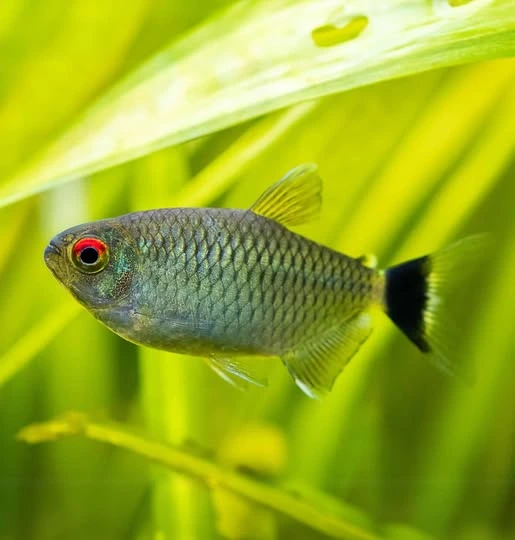
Red Eye Tetra
Moenkhausia sanctaefilomenae
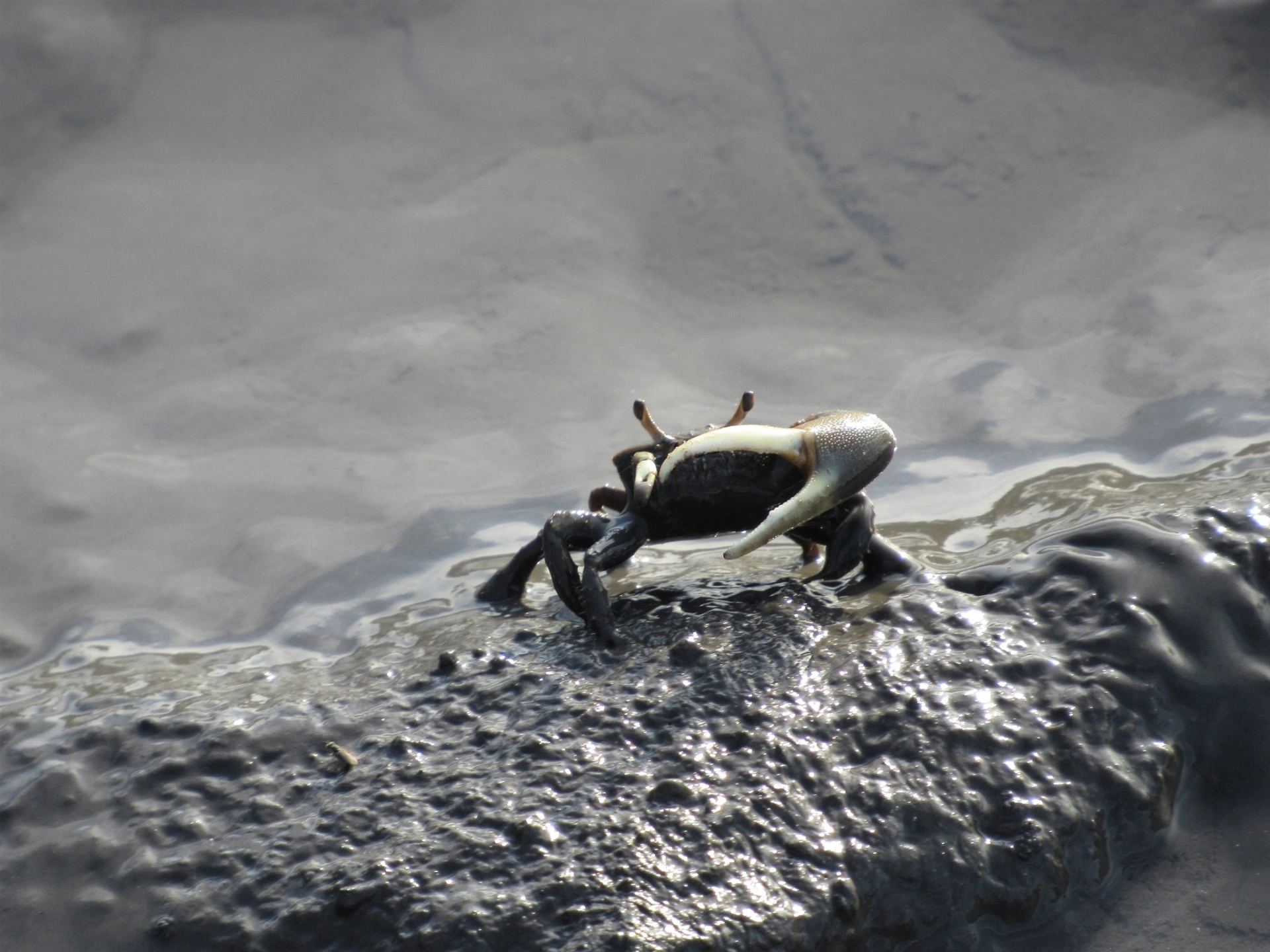
Fiddler Crab
Uca spp.
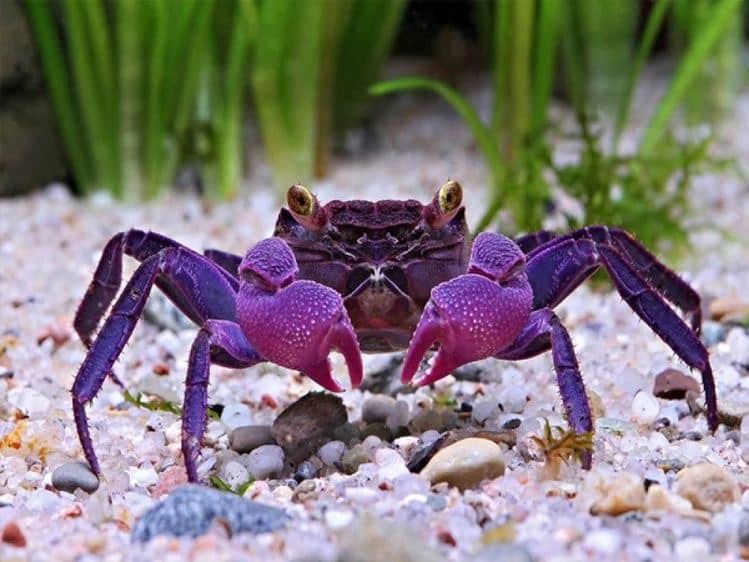
Vampire Crab
Geosesarma dennerle

African Clawed Frog
Xenopus laevis

Apistogramma Cacatuoides
Apistogramma cacatuoides

Black Skirt Tetra
Gymnocorymbus ternetzi

Buenos Aires Tetra
Hyphessobrycon anisitsi

Bumblebee Goby
Brachygobius xanthozonus
Ready to Add Red Claw Crab to Your Tank?
Use our free stocking calculator to check compatibility, bioload, and get personalized recommendations.