
Care Requirements
Adult Size
5.9" (15cm)
Min Tank
40 gal
Temperature
75-82°F
pH Range
7-8.5
Lifespan
5-8 years
Min Group
Can be kept alone
Diet
Carnivore
Swim Level
Bottom
Bioload
2/10
Hardness
10-30 dGH
About Freshwater Flounder
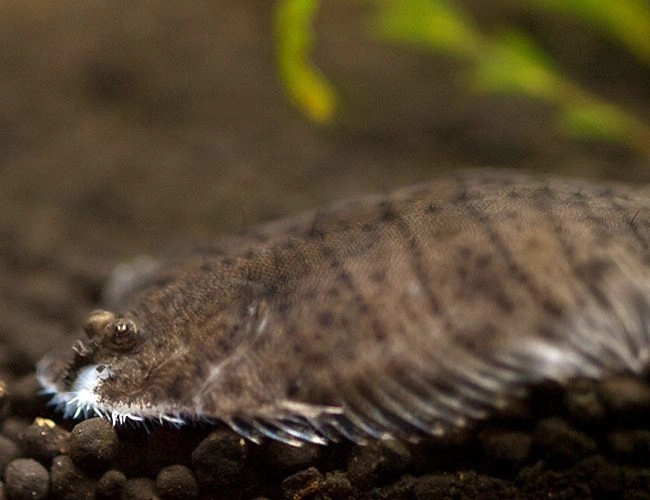
Freshwater Flounders bring ocean-style flatfish fascination to the aquarium hobby — though their 'freshwater' label requires immediate clarification. Most species sold under this name actually prefer brackish conditions and merely tolerate fresh water temporarily. True freshwater tolerance varies by species, but adding salt generally improves their long-term health and survival.
Their flatfish anatomy is genuinely remarkable. Both eyes positioned on one side of the body, lying flat against substrate, color-changing camouflage, and burial behavior make them unlike any typical aquarium fish. Watching a flounder disappear into sand using rapid body undulations, with only eyes protruding, demonstrates extraordinary adaptation.
Despite peaceful temperament toward fish too large to eat, they're effective ambush predators. Anything mouth-sized resting on the substrate becomes potential prey. Their hunting strategy involves patience — lying buried and invisible until prey approaches within striking distance.
They're not difficult fish when their needs are understood, but those needs are specific: sand substrate for burial is essential, brackish water is strongly preferred, and live/frozen foods are required since most never accept prepared foods.
Natural Habitat & Origin
The fish commonly sold as 'Freshwater Flounders' actually comprise several species from different genera — Asian species like Brachirus spp. and American species like Trinectes maculatus. What they share is preference for brackish estuarine environments rather than true freshwater.
Their natural habitat consists of sandy or muddy bottom estuaries, coastal streams, and sheltered bays where fresh and salt water mix. Salinity fluctuates with tides and seasons.
They spend nearly all time on or buried in substrate. The flat body, upward-facing eyes, and cryptic coloration are perfectly adapted for this benthic lifestyle. They're ambush predators waiting for prey to wander within striking range.
Diet in the wild consists of small invertebrates, worms, and small fish. They're nocturnal or crepuscular, most active during low-light periods.
Native Region
Southeast Asia, Indo-Pacific, Atlantic Americas (varies by species)
Habitat Type
Brackish estuaries, coastal streams, sandy/muddy bottoms
Wild Water Conditions
Warm (24-28°C), brackish (variable salinity), hard, alkaline
Appearance & Varieties
Freshwater Flounders possess the remarkable flatfish body plan — laterally compressed to extreme degree, lying on one side with both eyes migrated to the upward-facing surface. The upward-facing surface displays camouflage coloration — mottled browns, tans, and grays. They can adjust color intensity to better match surroundings. Adult size varies but commonly reaches 4-6 inches (10-15 cm).
Popular Varieties
| Variety | Description | Rarity |
|---|---|---|
| Asian Freshwater Sole (Brachirus spp.) | Most common 'freshwater flounders' in the trade. Rounded body shape, mottled brown coloration. Native to Southeast Asia. | Common |
| Hogchoker (Trinectes maculatus) | American species occasionally available. Similar care requirements. Named for difficulty their rough scales caused when consumed by livestock. | Uncommon |
Tank Setup & Requirements
Quick Requirements Summary
Tank Size
Minimum Tank Size
40 gallons
Recommended Tank Size
55 gallons
Freshwater Flounders require tanks accommodating their unique bottom-dwelling, burrowing lifestyle. Sand substrate and appropriate salinity are critical factors.
Water Parameters
Brackish water (SG 1.005-1.015) is strongly recommended despite the 'freshwater' common name. They tolerate fresh water but often decline over time without salt. Hard, alkaline freshwater is minimally acceptable; proper brackish conditions produce healthier fish.
Substrate
Sand substrate is mandatory — they bury themselves constantly, and anything rough damages their delicate undersides. Fine, soft aquarium sand or pool filter sand work well. Without appropriate sand for burial, they become stressed and develop health problems. This isn't optional; sand is as essential as water.
Plants & Decorations
Keep most substrate area open for burrowing. Some caves or decorations provide variety but shouldn't dominate. Smooth decorations only. Plants aren't necessary — if including them in brackish setups, choose tolerant species (Java Fern, Java Moss, Anubias). Open sand is their territory.
Filtration & Water Flow
Good filtration maintains water quality. Avoid strong currents that constantly disturb the sand they live in. Sponge filters work well for gentle filtration. In brackish setups, ensure filter materials tolerate salt.
Lighting
As nocturnal hunters, bright lighting keeps them buried and inactive. Dim or moderate lighting allows them to emerge more frequently. They prefer lower light conditions matching their twilight activity patterns.
Diet & Feeding Guide
Diet Type
carnivore
Feeding Frequency
Every 1-2 days
Portion Size
Small to moderate amounts. Target feed onto the substrate near where they're resting or buried.
Freshwater Flounders are carnivores requiring live or frozen meaty foods. Most specimens never accept prepared foods — this is their main feeding challenge.
Best Foods for Freshwater Flounder
- Live blackworms — Excellent food eagerly consumed. Worms burrowing in sand perfectly trigger hunting behavior.
- Frozen bloodworms — Usually accepted once feeding is established. Drop near them on the sand.
- Live brine shrimp — Moving prey triggers feeding response. Good for establishing feeding in reluctant specimens.
- Ghost shrimp — Small live shrimp are natural prey readily consumed.
- Frozen mysis shrimp — Usually accepted, good nutrition. Thaw and drop onto substrate.
- Tubifex worms — Live tubifex trigger strong feeding response.
Foods to Avoid
- Flakes and pellets — Almost universally ignored. Don't expect them to accept prepared foods.
- Floating foods — Bottom feeders that won't pursue food above the substrate.
- Plant-based foods — Obligate carnivores that don't eat plant matter.
They're ambush feeders — food must come to them or be placed where they can find it. Feed in dim lighting when they're most active.
Behavior & Temperament
Freshwater Flounders spend the vast majority of their time buried in sand with only their eyes protruding — this is entirely normal. Burial provides camouflage from predators and conceals them from prey.
Movement is distinctively flounder-like — undulating body motions. They can change location surprisingly quickly when motivated but prefer stationary hunting.
They're peaceful toward fish too large to eat but will consume anything mouth-sized that ventures near. Their strike is surprisingly fast for such sedentary-appearing fish.
Nocturnal or crepuscular activity patterns mean they're most visible at dawn, dusk, and night.
Tank Mates: Compatibility Guide
Compatible Tank Mates
Brackish surface dwellers completely ignoring bottom territory. Different zones.
Monos
Classic brackish tank companions. Mid-water schooling fish too large for predation.
Scats
Hardy brackish fish. Different feeding zone. Peaceful coexistence.
Brackish compatible. Monitor for aggression.
Other Flounders
Multiple specimens can coexist with adequate space.
Tank Mates to Avoid
Small bottom-dwelling fish
Prime prey — will be ambushed and eaten.
Dwarf shrimp
Natural prey. Will be hunted and consumed.
Small catfish
Competition for substrate territory and potential predation.
Aggressive bottom dwellers
May harass buried flounders. Their sedentary nature makes them vulnerable.
Freshwater fish intolerant of salt
If maintaining proper brackish conditions, many freshwater species won't survive.
Common Pairing Questions
Will my flounder eat my other fish?
If they're small enough and venture near the substrate — yes. They're ambush predators that strike at mouth-sized prey passing within range.
Can I keep flounders in a freshwater community?
Not ideal. They prefer brackish water and may decline in pure freshwater long-term. They'll also eat small bottom-dwelling tankmates.
Breeding Freshwater Flounders in aquariums is essentially unknown. Their complex life cycle involving planktonic larval stages makes captive breeding extremely challenging. All specimens are wild-caught.
Health Issues & Disease Prevention
Freshwater Flounders are moderately hardy when their needs are met but sensitive to inappropriate conditions — particularly lack of proper substrate and keeping in pure freshwater long-term.
Common Diseases
| Disease | Symptoms | Treatment |
|---|---|---|
| Freshwater decline syndrome | Gradual loss of condition, refusing food, skin problems in pure freshwater. | Add marine salt to achieve brackish conditions (SG 1.005-1.010). |
| Substrate injury | Damage to underside, sores, infections from inappropriate substrate. | Provide proper fine sand immediately. Treat wounds with mild salt and antifungal. |
| Ich (White Spot) | White spots on body visible when unburied. | Brackish conditions naturally help. Raise temperature. |
| Starvation | Visible spine, sunken appearance, lethargy. | Offer live foods (blackworms, ghost shrimp). Ensure food reaches them on the substrate. |
| Bacterial infections | Skin lesions, redness, fin deterioration. | Improve water quality. Brackish conditions help. Antibacterial medication. |
Signs of a Healthy Freshwater Flounder
- Successfully buried in sand
- Eating live/frozen foods
- Good body condition
- Clear eyes
- Intact skin and fins
- Normal coloration and camouflage response
Prevention Tips
- Maintain brackish conditions
- Provide fine sand substrate — mandatory
- Feed appropriate live/frozen foods
- Keep with compatible brackish tankmates
- Avoid rough substrate or decorations
- Provide dim lighting for activity
Frequently Asked Questions
Despite their common name, most species strongly prefer brackish water. They're estuarine fish that tolerate freshwater temporarily but often decline long-term. Adding marine salt (SG 1.005-1.015) significantly improves health.
That's completely normal — they spend the vast majority of time buried with only eyes exposed. This provides camouflage and ambush positioning. It's their natural lifestyle, not stress behavior.
Most freshwater flounders never accept prepared foods — they're ambush predators responding to live/frozen meaty foods. Provide live blackworms, frozen bloodworms, ghost shrimp.
Absolutely — sand is as essential as water for these fish. They bury constantly, and rough substrates damage their delicate undersides. Fine, soft sand is mandatory.
If they're small enough and venture near the substrate — yes. They're ambush predators. Keep with fish too large to eat and that occupy different zones.
Not very — by design. They're ambush predators that spend most time buried. Activity occurs primarily at night. Their fascination lies in unusual form and behavior rather than constant activity.
Tips for Keeping Freshwater Flounder
Pro Tips
- ✓Brackish conditions prevent most common health problems.
- ✓Live blackworms burrowing in sand are the secret to reliable feeding.
- ✓Feeding in dim lighting improves feeding success.
- ✓Multiple flounders create interesting displays — they're peaceful toward each other.
Common Mistakes to Avoid
- ✗Keeping in freshwater long-term — gradual health decline.
- ✗Using gravel instead of sand — damage to delicate underside.
- ✗Expecting them to eat prepared foods — starvation risk.
- ✗Keeping with small bottom-dwelling tankmates — those become prey.
- ✗Expecting visible activity — buried and waiting is their normal state.
Related Species You Might Like
View All Fish →
Frontosa
Cyphotilapia frontosa
Peacock Eel
Macrognathus siamensis

Australian Rainbowfish
Melanotaenia splendida
Blue Phantom Pleco
Hemiancistrus sp.
Boesemani Rainbowfish
Melanotaenia boesemani
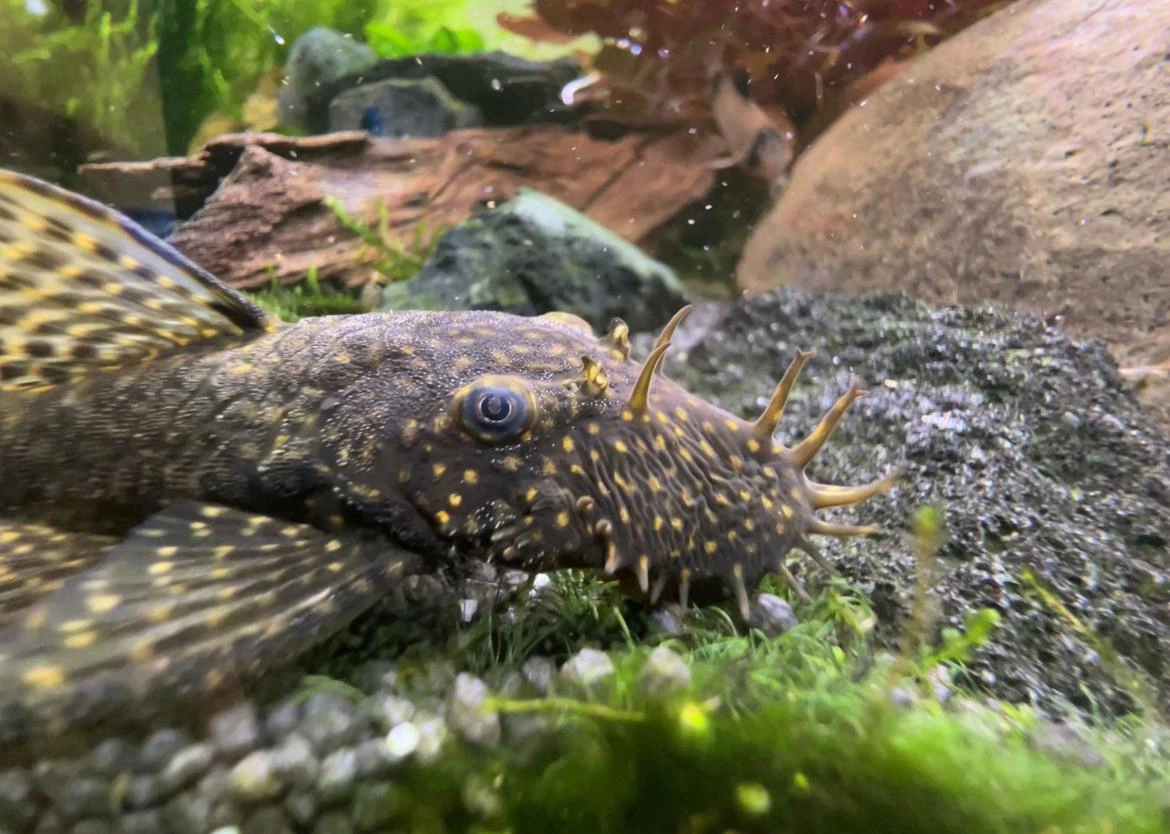
Bristlenose Pleco
Ancistrus sp.
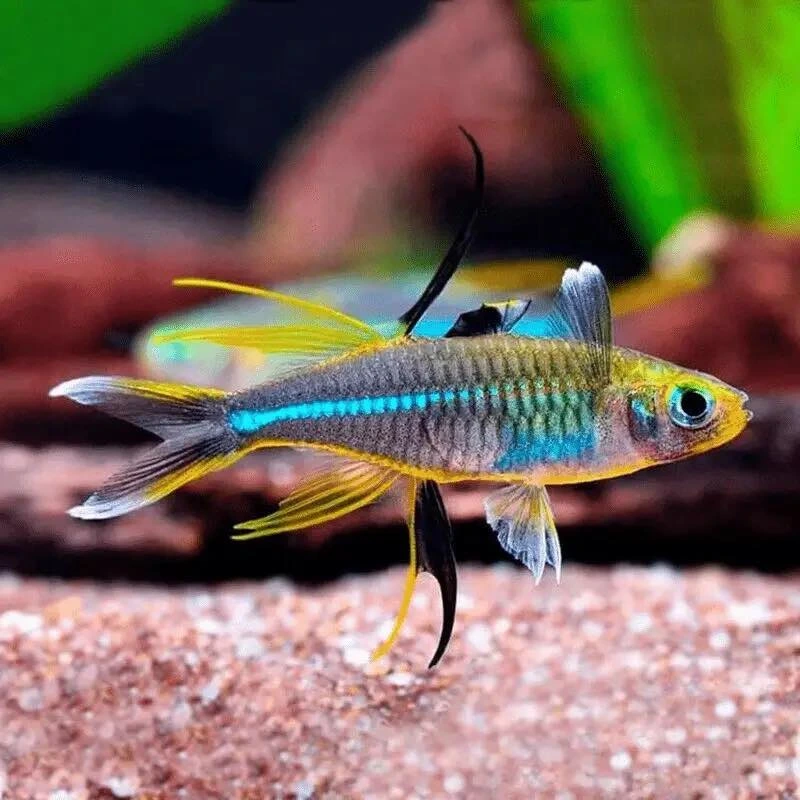
Celebes Rainbowfish
Marosatherina ladigesi

Congo Tetra
Phenacogrammus interruptus
Ready to Add Freshwater Flounder to Your Tank?
Use our free stocking calculator to check compatibility, bioload, and get personalized recommendations.