
Care Requirements
Adult Size
1.0" (2.5cm)
Min Tank
5 gal
Temperature
73-82°F
pH Range
5-7
Lifespan
3-5 years
Min Group
8+ fish
Diet
Omnivore
Swim Level
Middle
Bioload
1/10
Hardness
1-10 dGH
About Exclamation Point Rasbora
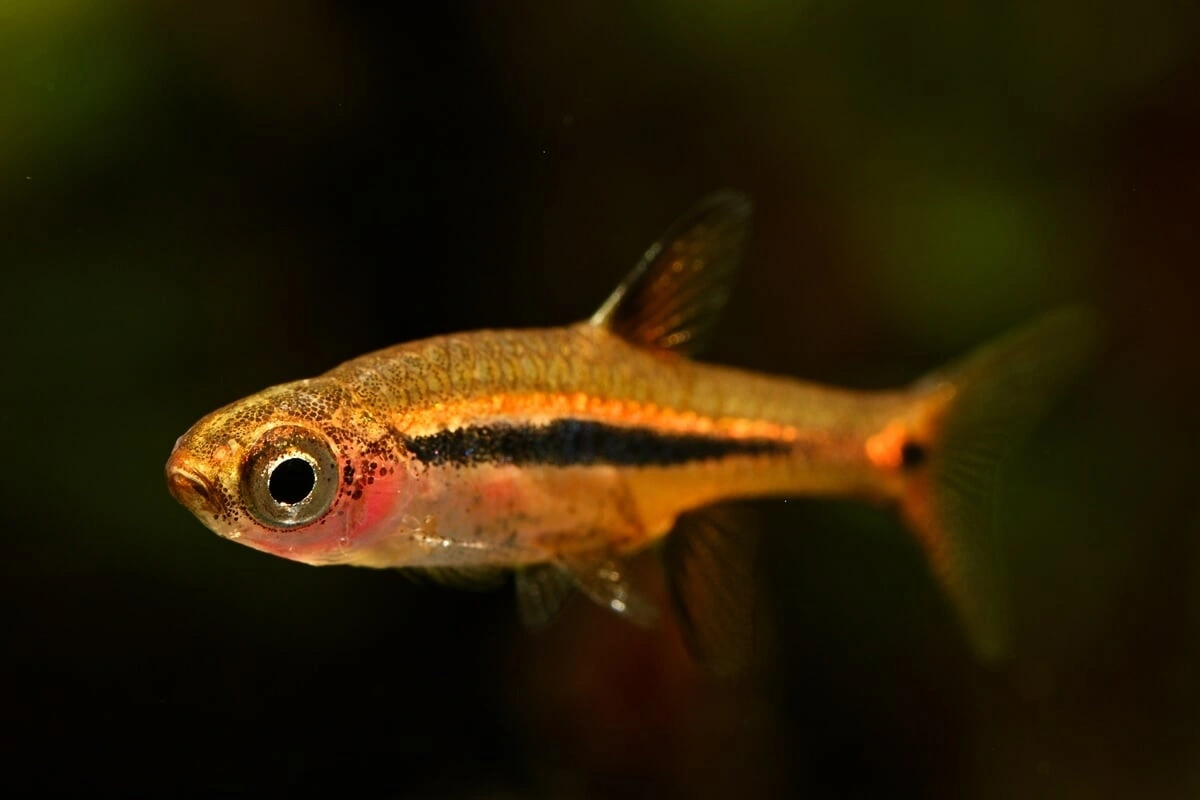
The Exclamation Point Rasbora earns its memorable name from a distinctive marking: a dark spot near the tail base followed by a dark lateral stripe extending forward — creating a pattern resembling the '!' punctuation mark. This unique marking, combined with vibrant orange-red coloration, makes them immediately identifiable and genuinely attractive despite their tiny size. At barely an inch (2.5 cm) maximum, they're among the smallest rasboras available.
Belonging to the genus Boraras alongside their close relative the Chili Rasbora (B. brigittae), Exclamation Point Rasboras share the miniature size and blackwater preferences that define this group. All Boraras species are nano fish requiring soft, acidic conditions and appropriately-sized foods. They reward keepers who can provide these parameters with stunning coloration and fascinating shoaling behavior.
Their native habitat spans the Mekong basin across Thailand, Cambodia, and Vietnam — shallow, heavily-vegetated pools and backwaters where tannin-stained water filters through dense plant growth. These conditions shape their aquarium requirements: soft, acidic water (ideally blackwater conditions), dense planting, and gentle tankmates that won't outcompete them for food.
In appropriate setups with large shoals (10+ individuals), their coloration intensifies and natural behavior emerges. Males display to each other and females, intensifying their red coloration. The shoal moves together through vegetation, creating living color against green plants or dark water. They're nano fish that genuinely reward the effort of creating appropriate conditions.
Natural Habitat & Origin
Conservation status: Near Threatened (NT)
Exclamation Point Rasboras inhabit the Mekong River basin across Thailand, Cambodia, and Vietnam. They occupy shallow, slow-moving or standing waters — pools, backwaters, swamps, and flooded areas. Water conditions are typically blackwater: soft, acidic, stained dark with tannins from decomposing vegetation. Their microhabitat features dense plant growth, submerged roots, and leaf litter where they hunt tiny invertebrates and graze biofilm.
Native Region
Southeast Asia — Thailand, Cambodia, Vietnam (Mekong basin)
Habitat Type
Shallow vegetated pools, backwaters, blackwater swamps
Wild Water Conditions
Warm (24-28°C), very soft, acidic (pH 4.5-6.5), tannin-stained
Appearance & Varieties
Exclamation Point Rasboras are tiny — maximum size around 1 inch (2.5 cm). The distinctive 'exclamation point' marking consists of a dark spot on the caudal peduncle followed by a dark lateral stripe extending forward. Body coloration features orange-red to red tones that intensify with good conditions. Males typically show stronger color than females, particularly when displaying. In blackwater conditions, their colors appear even more saturated.
Popular Varieties
| Variety | Description | Rarity |
|---|---|---|
| Wild-Type | Orange-red body with distinctive exclamation point marking. The natural and only form — no selectively-bred varieties exist. | Moderately common in specialty trade |
Tank Setup & Requirements
Quick Requirements Summary
Tank Size
Minimum Tank Size
5 gallons
Recommended Tank Size
10 gallons
Exclamation Point Rasboras thrive in mature, soft-water planted tanks — ideally blackwater setups that replicate their native habitat and bring out their most vivid coloration.
Water Parameters
Temperature 23-28°C (73-82°F), pH 5.0-7.0, hardness 1-10 dGH. Soft, acidic water is essential — they won't show best coloration in hard, alkaline conditions. Blackwater setups with tannins from Indian almond leaves and driftwood create ideal chemistry and enhance color dramatically.
Substrate
Dark substrate enhances their vibrant coloration by contrast. Fine dark sand or planted tank soil works well. Leaf litter (Indian almond, oak) creates natural conditions and releases beneficial tannins.
Plants & Decorations
Dense planting is essential — Java moss, Cryptocoryne, floating plants (Salvinia, frogbit), and fine-leaved species create the vegetated environment they need. Driftwood provides tannins and structure. Indian almond leaves and botanicals complete the blackwater aesthetic.
Filtration & Water Flow
Gentle sponge filtration ideal — minimal flow replicates their still-water habitat. These tiny fish are easily blown around by strong currents. Air-driven sponge filters provide adequate filtration without dangerous flow.
Lighting
Subdued lighting brings out their best coloration — bright lighting washes out their red tones. Floating plants naturally diffuse light. Dim conditions with dark substrate create the contrast that makes their colors pop.
Diet & Feeding Guide
Diet Type
omnivore
Feeding Frequency
1-2 times daily
Portion Size
Tiny amounts — their mouths are very small
Exclamation Point Rasboras are micro-omnivores requiring appropriately tiny foods. Their small mouths limit what they can consume. Variety and proper sizing are key to maintaining their vivid coloration.
Best Foods for Exclamation Point Rasbora
- Crushed quality flakes — Must be finely crushed to near-powder for their tiny mouths
- Micro pellets — Smallest available nano fish foods — many standard pellets are too large
- Live baby brine shrimp — Excellent for color enhancement and triggering strong feeding response
- Live daphnia and moina — Appropriately-sized live food that encourages natural hunting behavior
- Frozen cyclops — One of the best frozen options — perfectly sized for their tiny mouths
- Vinegar eels and microworms — Tiny live foods ideal for supplemental feeding
Foods to Avoid
- Standard-sized pellets and flakes — Too large for their tiny mouths — must be crushed to powder
- Large frozen foods (whole bloodworms) — Cannot consume standard-sized frozen foods without chopping
Feed multiple tiny meals rather than one large feeding. Target-feed near their shoaling area. In mature planted tanks, biofilm and infusoria supplement their diet naturally. Color-enhancing foods with carotenoids improve their orange-red tones.
Behavior & Temperament
Exclamation Point Rasboras are shoaling fish that display best in groups of 8 or more. In large groups, they form cohesive shoals that move together through vegetation — a beautiful sight in a well-planted tank. Males display to each other and females by intensifying their coloration and making short dashes. They're not aggressive but males establish loose hierarchies through display rather than combat. Activity level is moderate — they alternate between active shoaling and resting among plants. They rarely venture into open water, preferring to stay near cover.
Tank Mates: Compatibility Guide
Compatible Tank Mates
Perfect companions — identical care requirements, beautiful color contrast, and they often shoal together
Completely shrimp-safe — their tiny mouths can't harm even shrimplets
Peaceful algae eaters that ignore nano fish — share soft water preference
Tiny peaceful bottom dwellers in a different feeding zone
Similar size and peaceful nature — both show warm colors
Tank Mates to Avoid
Hard water species
Fundamental water parameter mismatch — livebearers, African cichlids, and similar species need conditions toxic to Boraras
Any fish large enough to eat them
At 2.5 cm, they're prey for most aquarium fish — even 'peaceful' community fish
Active, boisterous fish
Will outcompete for food, create stress, and may cause hiding behavior
Strong current lovers
They're from still water — rheophilic species need incompatible flow levels
Common Pairing Questions
Can they live with Chili Rasboras?
Yes — they're the ideal pairing! Both Boraras species share identical water chemistry, temperature, and food requirements. They create beautiful color contrast and often form mixed shoals. Keep 8+ of each for best effect.
Are they shrimp-safe?
Completely safe with all dwarf shrimp. Their tiny mouths physically cannot eat even baby shrimp. They're one of the most reliably shrimp-safe fish in the hobby.
Breeding occurs in mature, well-planted tanks with appropriate soft, acidic water conditions. They're egg scatterers — pairs spawn among fine-leaved plants and moss. Eggs are tiny and adhesive. Parents will eat eggs if found, so dense vegetation or separate breeding setups improve success. Fry are extremely tiny, requiring infusoria or paramecium cultures initially, graduating to vinegar eels and baby brine shrimp. Growth is slow. Conditioning with live foods and maintaining ideal water parameters triggers spawning behavior.
Health Issues & Disease Prevention
Exclamation Point Rasboras are reasonably hardy when their soft water requirements are met. Most health issues stem from inappropriate water chemistry (hard, alkaline water) or temperature extremes.
Common Diseases
| Disease | Symptoms | Treatment |
|---|---|---|
| Ich | White spots on body and fins, scratching, clamped fins | Raise temperature to 82°F gradually. Half-dose medication — they're sensitive to chemicals at full strength due to tiny size. |
| Columnaris | White cotton-like patches, especially on mouth and fins, rapid progression | Antibacterial medication, improve water quality. Can spread rapidly in stressed shoals. Quarantine affected fish. |
| Stress from hard water | Pale coloration, lethargy, hiding, shortened lifespan | Transition to soft, acidic water using RO water or appropriate remineralizers. Hard water is fundamentally incompatible with their physiology. |
| Mycobacteriosis (fish TB) | Slow wasting, curved spine, loss of color, no appetite | No effective treatment. Remove affected fish. Maintain excellent water quality to prevent. More common in stressed, overcrowded conditions. |
Signs of a Healthy Exclamation Point Rasbora
- Vivid orange-red coloration
- Active shoaling behavior
- Good appetite
- Males displaying to each other
- Swimming openly rather than constantly hiding
Prevention Tips
- Maintain soft, acidic water conditions
- Keep in large shoals (8+) to reduce stress
- Provide dense planting and subdued lighting
- Feed varied, appropriately-sized foods
- Avoid sudden parameter changes
Frequently Asked Questions
Both are Boraras species with similar care requirements, but they differ in marking and coloration. Exclamation Point Rasboras have a distinctive spot-and-line '!' marking with orange-red base coloration, while Chili Rasboras (B. brigittae) show a broader dark lateral band with deeper red coloration. They can be kept together beautifully and often form mixed shoals.
Faded coloration typically indicates stress or inappropriate conditions. Common causes include: insufficient group size (need 8+), hard/alkaline water (need soft/acidic), inadequate cover (need dense plants), bright lighting (prefer subdued), aggressive tankmates, or new tank syndrome. Address these factors systematically.
Not strictly required, but blackwater conditions dramatically enhance their coloration and replicate their natural habitat. Adding Indian almond leaves, driftwood, and botanicals creates tannin-stained water that brings out vivid orange-red tones. The difference between a standard tank and a blackwater setup is the difference between okay and stunning coloration.
Minimum 8, ideally 12-15+. They're shoaling fish that display fundamentally different behavior in large groups — cohesive movement, confident open swimming, and intense coloration that small groups of 4-6 don't show. Their minuscule bioload means even a 5-gallon tank can support 10+ without issues.
Intermediate rather than difficult. The main challenges are providing soft, acidic water (especially if your tap water is hard) and sourcing appropriately micro-sized foods. Once established in proper conditions, they're quite hardy and long-lived (3-5 years). The water chemistry requirement is the main barrier for keepers with hard tap water.
Tips for Keeping Exclamation Point Rasbora
Pro Tips
- ✓Blackwater brings out their best — Indian almond leaves and botanicals create stunning color enhancement.
- ✓Keep larger groups than you think — 10-12+ creates genuinely different behavior and coloration.
- ✓Pair with Chili Rasboras for beautiful contrast with identical care requirements.
- ✓Use RO water if your tap is hard — the investment pays off in vibrant, healthy fish.
Common Mistakes to Avoid
- ✗Keeping in hard, alkaline water — faded coloration, stress, and shortened lifespan.
- ✗Insufficient group size — stressed, hiding fish with pale colors need shoals of 8+.
- ✗Bright lighting without cover — washed-out colors and hiding behavior.
- ✗Food too large — their tiny mouths need crushed or micro-sized foods.
- ✗Mixing with boisterous tankmates — outcompeted for food and stressed.
Sources
- FishBase — Accepted scientific name, maximum size and native range for Exclamation Point Rasbora.
- IUCN Red List — Near Threatened conservation assessment for Boraras urophthalmoides.
Featured in Biotope Presets
Related Species You Might Like
View All Fish →
Fahaka Puffer
Tetraodon lineatus
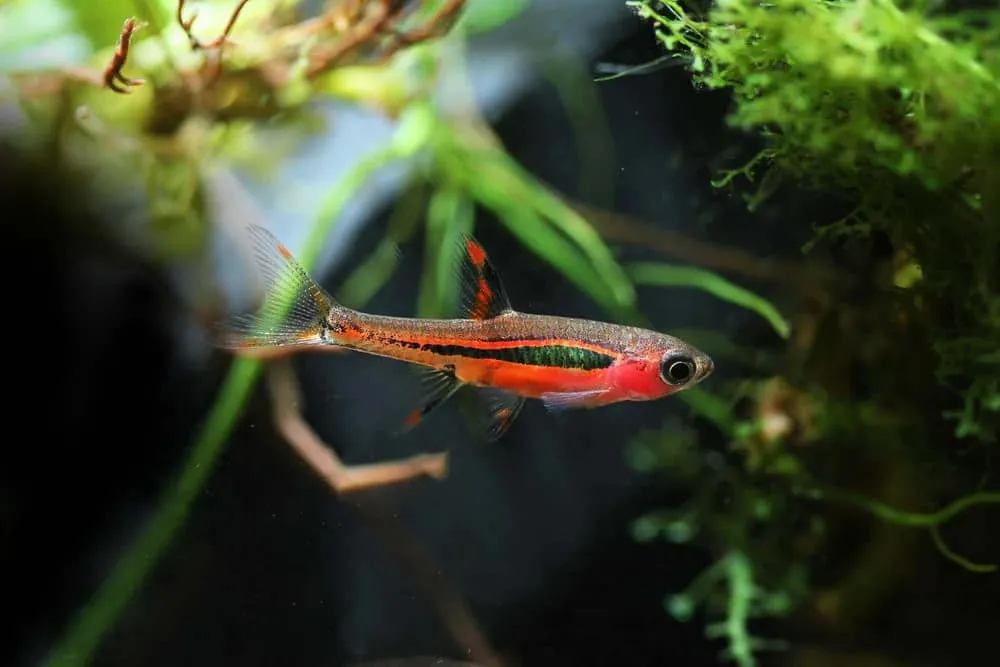
Chili Rasbora
Boraras brigittae
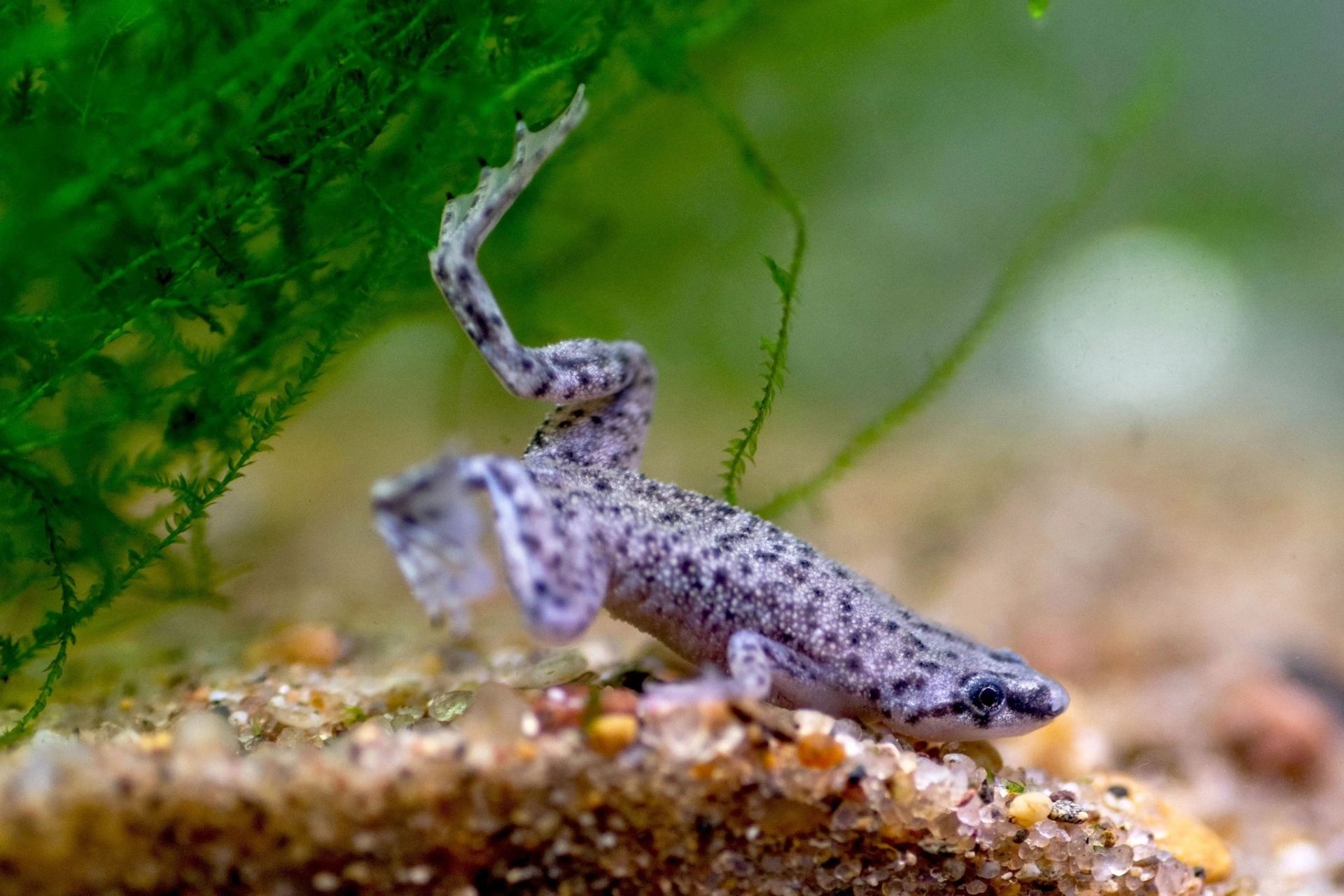
African Dwarf Frog
Hymenochirus boettgeri
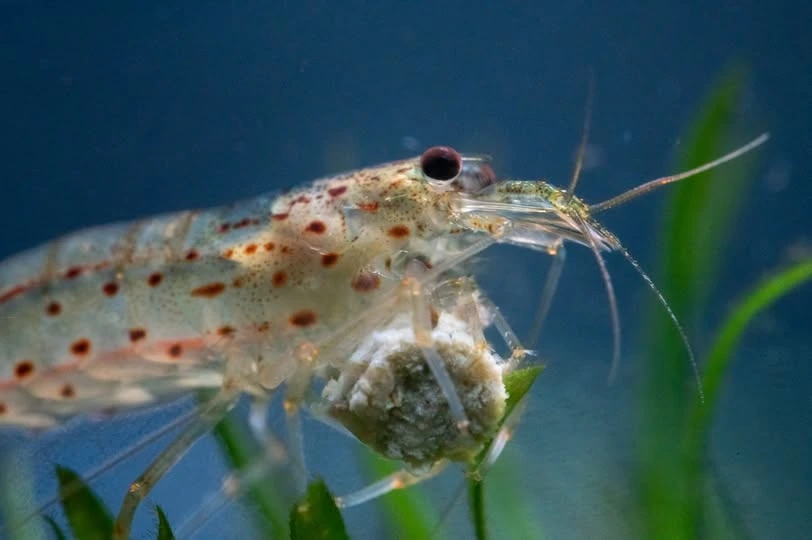
Amano Shrimp
Caridina multidentata
Asian Stone Catfish
Hara jerdoni
Bladder Snail
Physella acuta
Blue Velvet Shrimp
Neocaridina davidi var. blue
Cherry Shrimp
Neocaridina davidi
Ready to Add Exclamation Point Rasbora to Your Tank?
Use our free stocking calculator to check compatibility, bioload, and get personalized recommendations.