
Care Requirements
Adult Size
3.5" (9cm)
Min Tank
30 gal
Temperature
75-82°F
pH Range
5.5-7
Lifespan
5-8 years
Min Group
5+ fish
Diet
Omnivore
Swim Level
Middle
Bioload
3/10
Hardness
2-12 dGH
About Spotted Headstander
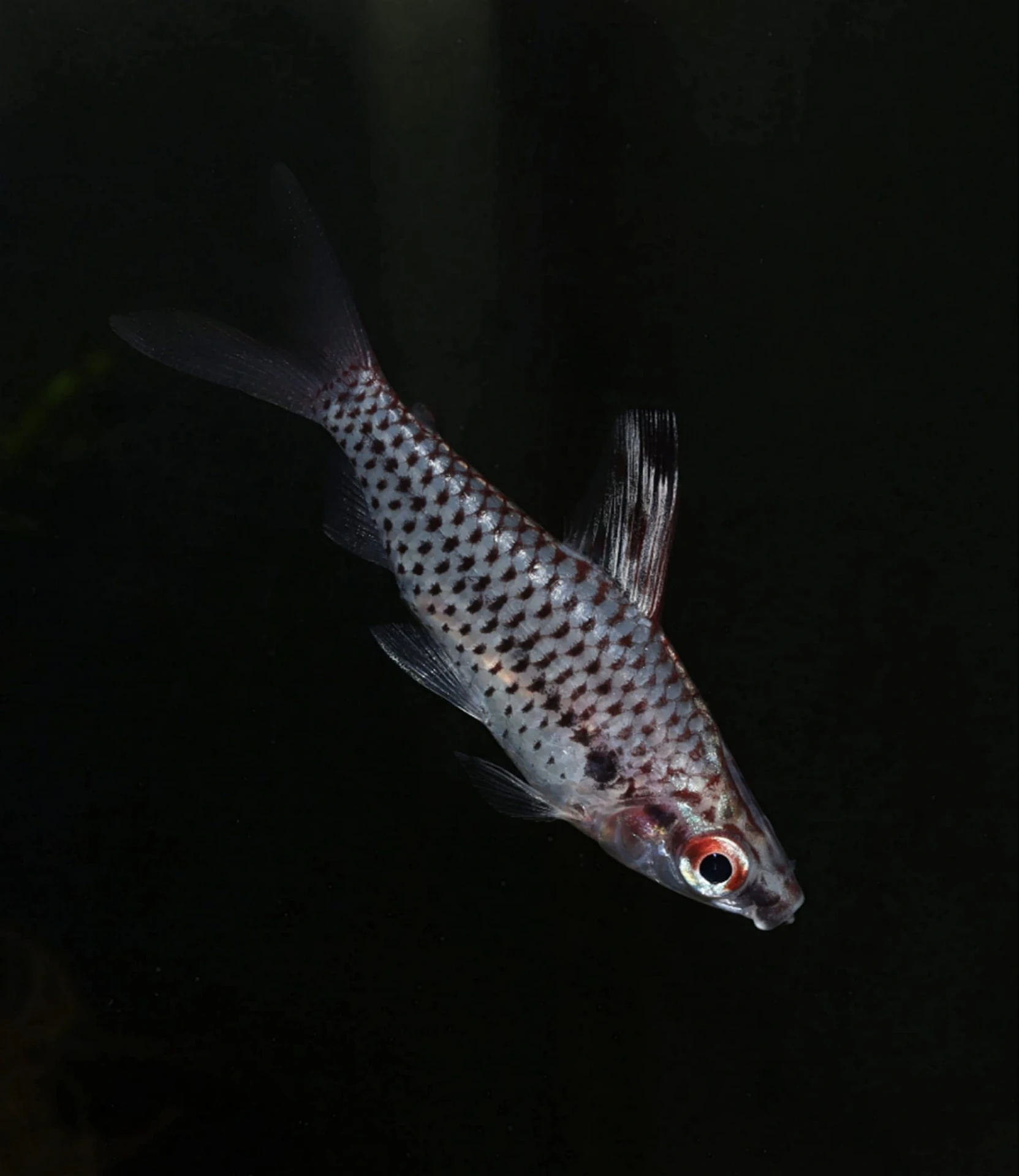
The Spotted Headstander is one of the most visually distinctive fish in the freshwater hobby, instantly recognizable by its characteristic swimming posture — it cruises through the water at a persistent 45-degree head-down angle. This isn't a sign of illness; it's the defining behavior of the species and the trait that gives them their common name. New fishkeepers often panic when they first see it, but this oblique orientation is perfectly normal and healthy.
Their beauty goes beyond their unusual posture. Spotted Headstanders are covered in an elegant pattern of dark spots arranged in rows across a silver-brown body, creating a refined, almost textile-like appearance. Combined with their unique swimming angle, they create a mesmerizing visual effect as a school of them tilts through the aquarium in synchronized formation.
In the wild, the head-down posture is functional — Spotted Headstanders feed by grazing on aufwuchs (the biofilm and algae coating on submerged surfaces) and detritus in the substrate. Their downward-pointing mouth is perfectly positioned for this feeding style. They're related to the larger, more aggressive headstanders of the genus Anostomus, but Chilodus punctatus is considerably more peaceful and better suited to community aquariums.
Keeping Spotted Headstanders successfully requires a mature tank with some biofilm growth, a group of at least 5-6 fish, and peaceful tankmates. They can be mildly nippy if kept in too-small groups, but in proper numbers, they're well-behaved community fish with one of the most entertaining swimming behaviors in the hobby.
Natural Habitat & Origin
Spotted Headstanders are found throughout the Guianas and the Amazon basin in South America. They inhabit slow-moving rivers and creeks with dense submerged vegetation, where they graze on the biofilm coating leaves, rocks, and wood. The water is typically soft and slightly acidic.
Their natural environment features sandy or muddy bottoms with abundant leaf litter and submerged wood — surfaces rich in the aufwuchs they feed on. The head-down posture keeps their specialized mouth perfectly positioned to graze these surfaces as they slowly navigate through their habitat.
Native Region
Guianas, Amazon basin — Guyana, Suriname, French Guiana, Brazil, Venezuela
Habitat Type
Slow-moving rivers and creeks with submerged vegetation and biofilm-rich surfaces
Wild Water Conditions
Warm (24-28°C), soft (2-12 dGH), slightly acidic (pH 5.5-7.0)
Appearance & Varieties
The Spotted Headstander has an elongated, laterally compressed body covered in neat rows of dark spots on a silver-brown background. The spots are remarkably uniform and create an attractive pattern that looks almost hand-painted. A dark horizontal stripe runs from the snout through the eye to the caudal peduncle. The fins are largely transparent with faint reddish hints. The mouth is small and downward-pointing, adapted for grazing. Males and females look similar, though males may develop slightly more intense coloration.
Popular Varieties
| Variety | Description | Rarity |
|---|---|---|
| Wild Type | Silver-brown body with neat dark spot pattern and transparent fins. The only form commonly available. | common |
| High-Spot | Occasionally seen specimens with particularly prominent, well-defined spotting. | uncommon |
Tank Setup & Requirements
Quick Requirements Summary
Tank Size
Minimum Tank Size
30 gallons
Recommended Tank Size
50 gallons
Spotted Headstanders need a mature tank with established biofilm growth on hardscape surfaces. A 30-gallon minimum is needed for a small group, with larger tanks preferred. They appreciate moderate current and well-oxygenated water. The tank should provide both open swimming space and grazing surfaces.
Water Parameters
Temperature 24-28°C (75-82°F), pH 5.5-7.0, hardness 2-12 dGH. Soft, slightly acidic water is preferred. Consistent parameters are more important than hitting exact values.
Substrate
Fine sand or smooth gravel. They occasionally graze on the substrate surface, so avoid sharp or rough materials.
Plants & Decorations
Driftwood and smooth rocks provide essential grazing surfaces for biofilm. Live plants are appreciated but may be nibbled — use hardy species like Java fern, Anubias, and Vallisneria. Broad-leaved plants provide additional grazing surface area.
Filtration & Water Flow
Moderate to strong filtration with some current. They come from flowing waters and appreciate oxygenated conditions. A canister filter or powerhead creating gentle flow works well.
Lighting
Moderate lighting that promotes some algae and biofilm growth on hardscape. This natural growth supplements their diet.
Diet & Feeding Guide
Diet Type
omnivore
Feeding Frequency
2-3 times daily
Portion Size
Small amounts that are consumed within 2-3 minutes
Spotted Headstanders are primarily herbivores and biofilm grazers in the wild, using their downward-pointing mouth to scrape aufwuchs from surfaces. In captivity, they need a diet rich in vegetable matter supplemented with protein-rich foods. They'll graze constantly on biofilm and algae in a mature tank.
Best Foods for Spotted Headstander
- Spirulina flakes or pellets — Excellent staple that addresses their herbivorous dietary needs.
- Blanched vegetables — Zucchini, cucumber, spinach — provides essential plant matter.
- Algae wafers — Supplement natural biofilm grazing; break into smaller pieces.
- Frozen bloodworms — Protein supplement offered 1-2 times per week.
- Biofilm on driftwood — Natural grazing — mature tanks with established biofilm are ideal.
Foods to Avoid
- High-protein diets — Primarily herbivorous; excess protein causes digestive issues.
- Large pellets — Their small, downward-pointing mouth can't handle oversized foods.
- Floating foods only — Their feeding posture is oriented downward; they struggle with surface foods.
Provide a primarily vegetable-based diet. In mature tanks with biofilm-covered driftwood, they'll graze throughout the day. This natural grazing should be supplemented with prepared foods. Sinking foods are preferred over floating varieties given their head-down feeding orientation.
Behavior & Temperament
The defining behavior is their persistent head-down swimming posture at roughly 45 degrees. This isn't occasional — it's their default orientation at all times. Schools of headstanders tilting in unison create one of the most unique visual displays in the hobby. They're generally peaceful but can become mildly fin-nippy if kept in too-small groups (fewer than 5). In proper schools, they establish a loose hierarchy with occasional chasing but no real aggression. They graze constantly on surfaces throughout the day.
Tank Mates: Compatibility Guide
Compatible Tank Mates
Peaceful bottom dwellers in similar water parameters — different feeding zone.
Small, peaceful schooler sharing soft acidic water preferences.
Both graze on biofilm but different enough in habit to coexist.
Peaceful bottom dweller active at different times.
Tight schooler in similar water conditions — beautiful combo.
Tank Mates to Avoid
Betta
Flowing fins may trigger fin-nipping behavior from headstanders.
Angelfish
Long fins make them targets for nipping; angelfish may also bully.
Discus
Too sensitive for the mild fin-nipping risk; discus stress easily.
Guppy
Flowing tails attract nipping, especially in small headstander groups.
Common Pairing Questions
Will Spotted Headstanders nip fins?
They can be mildly nippy, particularly if kept in groups smaller than 5. In proper schools of 6+, fin-nipping is greatly reduced as they focus social attention on each other. Avoid keeping them with long-finned fish like bettas, angelfish, and fancy guppies regardless of group size.
Is the head-down swimming normal?
Absolutely — this is their defining characteristic, not a sign of illness. They swim at roughly 45 degrees head-down at all times. It's an adaptation for grazing on biofilm and detritus. A headstander swimming level would actually be a cause for concern.
Breeding Spotted Headstanders in captivity is uncommon but has been achieved. They're egg scatterers that spawn among fine-leaved plants. Very soft, acidic water and a period of conditioning with high-quality foods may trigger spawning. Eggs hatch in 24-48 hours and fry are free-swimming within a few days. Fry require infusoria as first food. Separating adults from eggs is essential as they will eat them.
Health Issues & Disease Prevention
Spotted Headstanders are moderately hardy fish that do well in established aquariums with stable water conditions. They're susceptible to the common freshwater diseases but have no species-specific health concerns. Their biggest health risk comes from poor diet — as herbivores, they need plant-based nutrition that many aquarists fail to provide.
Common Diseases
| Disease | Symptoms | Treatment |
|---|---|---|
| Ich (White Spot) | White spots on body and fins, scratching against objects, lethargy. | Raise temperature to 30°C, add ich medication. Standard treatment protocol works well. |
| Hole-in-the-head (HITH) | Pits or erosions on the head and lateral line. | Improve diet with more vegetable matter, improve water quality. Often related to nutritional deficiency. |
| Intestinal issues | Bloating, stringy feces, loss of appetite. | Ensure adequate fiber in diet through plant-based foods. May indicate need for more vegetable matter. |
| Fin rot | Fraying or deterioration of fin edges. | Water changes, antibacterial treatment if severe. Often indicates poor water quality. |
Signs of a Healthy Spotted Headstander
- Consistent head-down posture
- Active grazing behavior
- Good body condition
- Clear spotting pattern
- Schooling with group
- Interest in food
Prevention Tips
- Provide plant-based diet as primary nutrition
- Keep in groups of 6+
- Maintain stable water parameters
- Ensure mature tank with biofilm growth
- Avoid long-finned tankmates
Frequently Asked Questions
This is completely normal — it's the species' defining characteristic and the reason for their common name. They swim at approximately 45 degrees head-down at all times. This posture positions their downward-pointing mouth for grazing on biofilm and detritus. A headstander swimming level would actually be abnormal and could indicate illness.
Minimum 5, ideally 6-8+. In smaller groups, they can become fin-nippers and are visibly stressed. Larger groups distribute social interactions, reduce nipping, and create the most impressive visual display as they school together in their tilted formation.
They may nibble on soft-leaved plants, but they primarily graze on biofilm and algae rather than plant tissue. Hardy plants like Java fern, Anubias, and Vallisneria are generally safe. Avoid delicate, soft-stemmed plants that may be damaged.
They're generally peaceful but can be mildly nippy toward long-finned tankmates, especially in small groups. This isn't aggression per se but more of a curiosity or grazing behavior directed at flowing fins. Keeping them in proper schools of 6+ significantly reduces this tendency.
Primarily herbivorous — spirulina flakes, blanched vegetables, algae wafers, and natural biofilm grazing form the core diet. Supplement with occasional protein (frozen bloodworms) 1-2 times per week. A mature tank with biofilm-covered driftwood provides continuous natural grazing.
Tips for Keeping Spotted Headstander
Pro Tips
- ✓Keep a group of 6+ to minimize fin-nipping and see the best schooling behavior.
- ✓Add established driftwood with biofilm — it provides continuous natural grazing and reduces hunger-based nipping.
- ✓Feed sinking vegetable-based foods — their head-down posture makes surface feeding awkward.
- ✓Watch for the synchronized tilting of a school — it's one of the most unique displays in freshwater fishkeeping.
Common Mistakes to Avoid
- ✗Keeping fewer than 5 — increases fin-nipping behavior and stress.
- ✗All-protein diet — they're primarily herbivores and need plant-based nutrition.
- ✗Keeping with long-finned fish — bettas, angelfish, and guppies attract nipping.
- ✗New, sterile tanks — they need mature tanks with biofilm for continuous grazing.
- ✗Assuming head-down swimming is illness — it's the species' normal, healthy posture.
Sources
- FishBase — Accepted scientific name, maximum size and native range for Spotted Headstander.
Related Species You Might Like
View All Fish →
Strawberry Betta
Betta albimarginata

Australian Rainbowfish
Melanotaenia splendida
Blue Phantom Pleco
Hemiancistrus sp.
Boesemani Rainbowfish
Melanotaenia boesemani
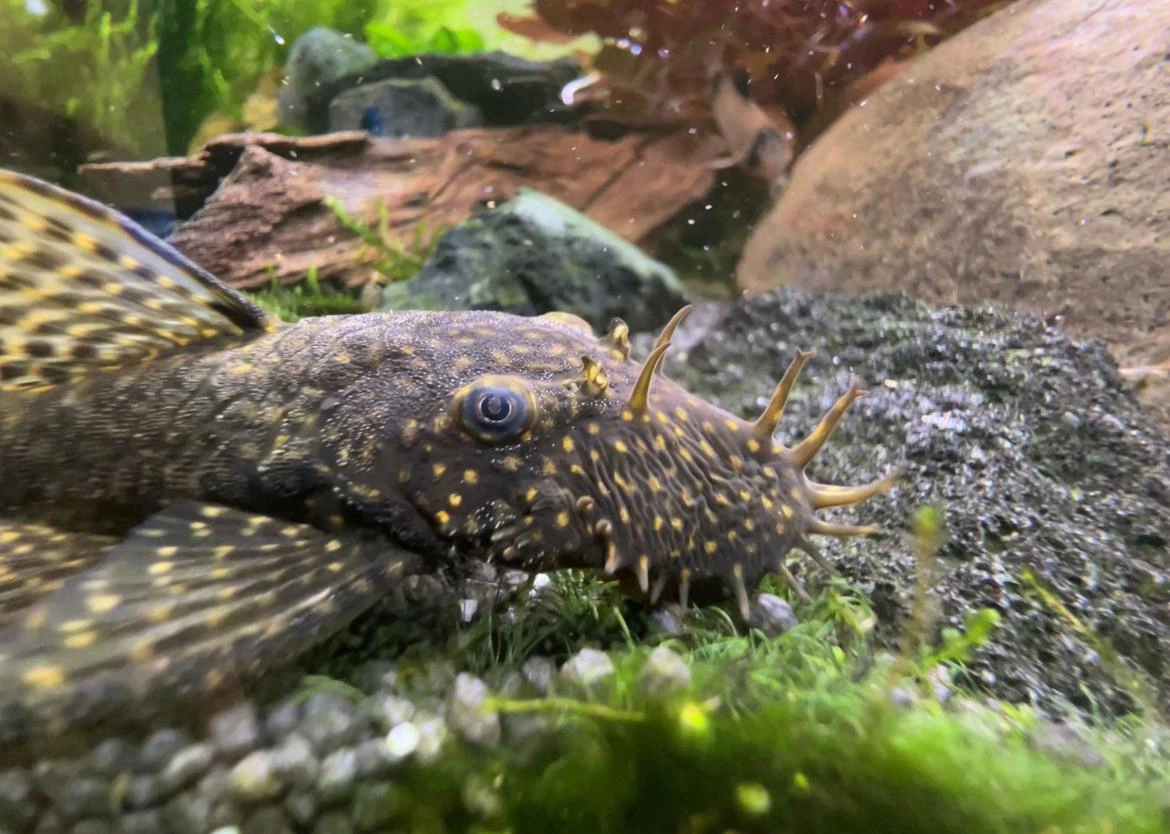
Bristlenose Pleco
Ancistrus sp.
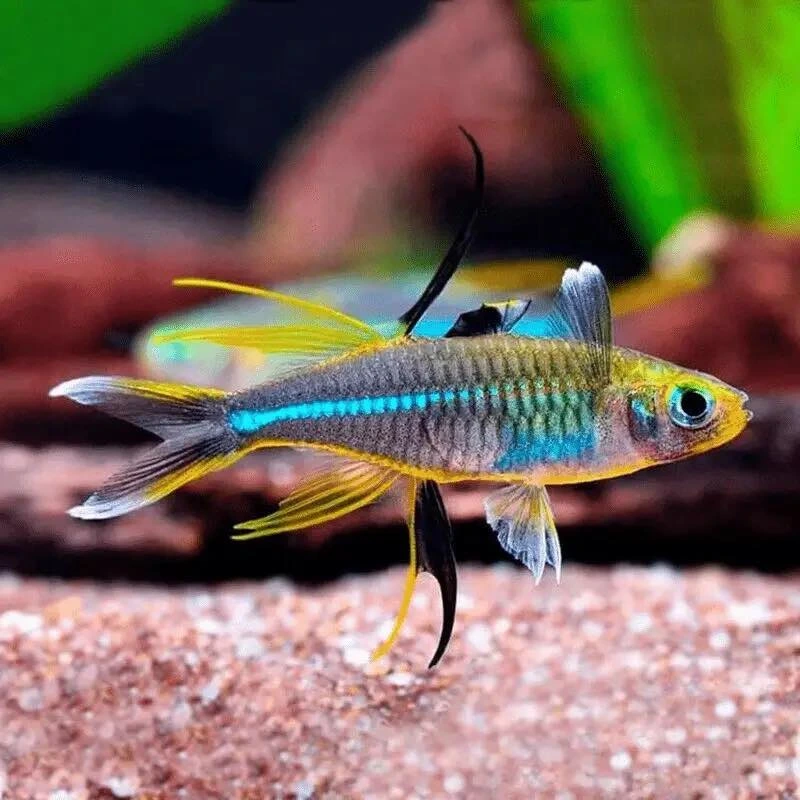
Celebes Rainbowfish
Marosatherina ladigesi

Congo Tetra
Phenacogrammus interruptus
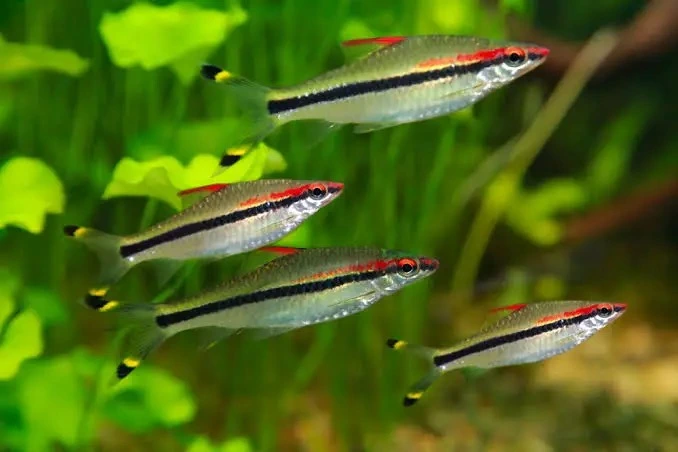
Denison Barb
Sahyadria denisonii
Ready to Add Spotted Headstander to Your Tank?
Use our free stocking calculator to check compatibility, bioload, and get personalized recommendations.