
Care Requirements
Adult Size
1.2" (3cm)
Min Tank
10 gal
Temperature
72-79°F
pH Range
6-7.5
Lifespan
3-5 years
Min Group
8+ fish
Diet
Omnivore
Swim Level
Bottom
Bioload
1/10
Hardness
2-12 dGH
About Salt and Pepper Corydoras
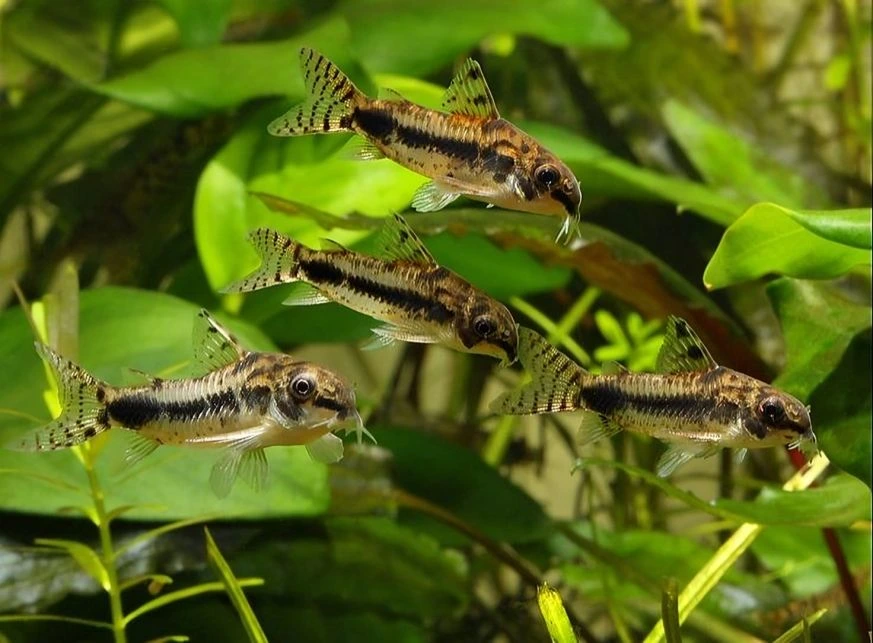
The Salt and Pepper Corydoras is one of the three dwarf Corydoras species (alongside Pygmy Corys and Hastatus Corys), making it perfect for nano tanks and small aquariums where standard Corydoras would be too large. At just over an inch fully grown, these tiny catfish pack all the charm of their larger relatives into a miniature package.
What distinguishes Salt and Pepper Corys from the other dwarf species is their behavior — they're true substrate dwellers that stay on the bottom like typical Corydoras. Pygmy Corys (C. pygmaeus) tend to hover in midwater and school with tetras, while Salt and Pepper Corys exhibit classic Cory behavior: foraging across sand, resting in groups, and methodically searching for food particles.
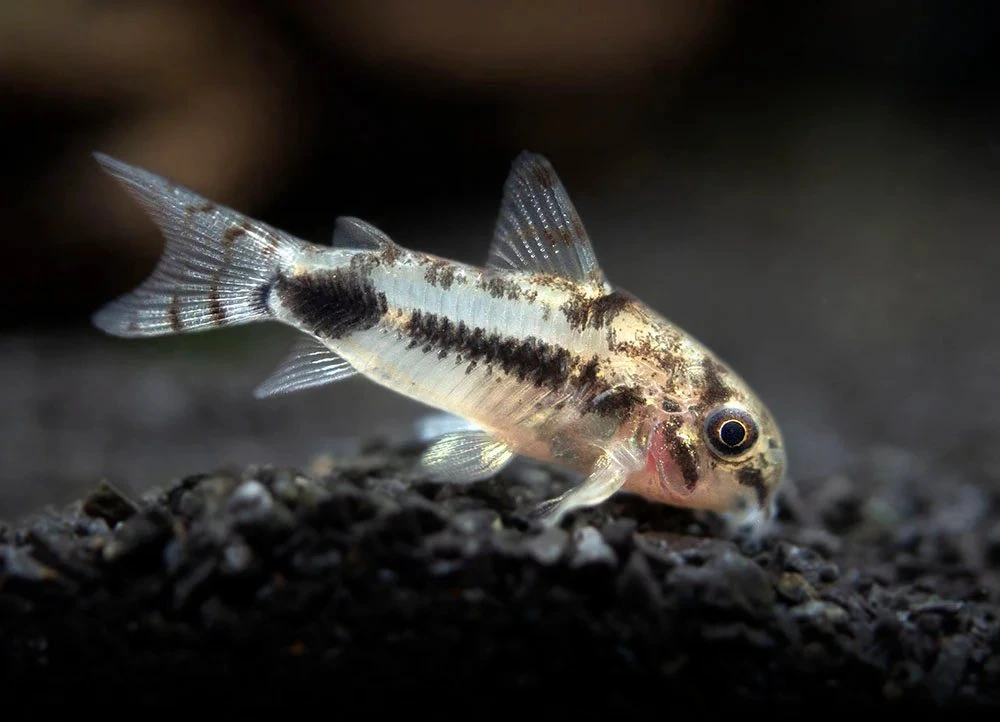
Their common name describes their appearance perfectly — a pale base color (the 'salt') covered with fine dark speckling (the 'pepper'). A distinctive dark lateral stripe runs from nose to tail, helping differentiate them from similar species. Despite their small size, they're attractively marked fish that become more appreciated as you observe their details.
Salt and Pepper Corys require larger groups than standard Corydoras due to their size and social nature. While six is the minimum for most Corys, these dwarf species do best in groups of eight to twelve or more. A sizable group foraging across sand creates an engaging, dynamic display that belies their tiny dimensions.
Natural Habitat & Origin
Conservation status: Near Threatened (NT)
Salt and Pepper Corydoras originate from the upper Orinoco River basin in Colombia and Venezuela. They inhabit slow-moving tributaries, flooded forests, and marginal vegetation zones where soft, sandy substrates accumulate organic debris. The water is typically warm, soft, and slightly acidic, often stained with tannins from decaying vegetation.
Their natural habitat features abundant leaf litter, submerged roots, and dense vegetation providing cover and foraging opportunities. They occupy shallow areas where their small size is advantageous for navigating tight spaces among debris and roots.
The upper Orinoco region experiences seasonal flooding that expands and contracts available habitat. This dynamic environment produces fish adapted to variable conditions and capable of exploiting diverse microhabitats.
Understanding their natural habitat explains their aquarium preferences: warm, soft water; sandy substrate with organic debris; and plenty of cover from plants and driftwood.
Native Region
Upper Orinoco River basin — Colombia and Venezuela
Habitat Type
Slow-moving tributaries, flooded forests, and vegetated margins with soft substrates
Wild Water Conditions
Warm (22-26°C), soft and acidic, often tannin-stained with abundant organic debris
Appearance & Varieties
Salt and Pepper Corydoras display a pale silver-white base color overlaid with fine dark speckling that creates their distinctive 'salt and pepper' appearance. A prominent dark lateral stripe runs from the snout through the eye and along the body to the tail base.
At maximum size of approximately 1.2 inches (3 cm), they're among the smallest Corydoras available. Sexing is possible in mature fish — females appear slightly larger and rounder when full of eggs.
They can be confused with Pygmy Corydoras (C. pygmaeus), but Salt and Pepper Corys have more extensive speckling, a more prominent lateral stripe, and different behavior (substrate-dwelling versus midwater hovering).
Popular Varieties
| Variety | Description | Rarity |
|---|---|---|
| Wild-Type | Silver-white base with dark speckling and prominent lateral stripe. The only form available. No selectively bred variants exist. | Common |
Tank Setup & Requirements
Quick Requirements Summary
Tank Size
Minimum Tank Size
10 gallons
Recommended Tank Size
20 gallons
Salt and Pepper Corydoras are perfect for nano tanks but still require appropriate setup for their needs. Their small size allows them to thrive in tanks as small as 10 gallons, provided group size and water quality requirements are met.
Water Parameters
Temperature 22-26°C (72-79°F). pH 6.0-7.5. Hardness 2-12 dGH. Prefer warmer water than cold-tolerant species like Peppered Corys. Consistency matters more than hitting exact numbers. Avoid temperature swings.
Substrate
Fine sand essential. Their tiny barbels are even more vulnerable to damage than larger species. Fine play sand or aquarium sand allows safe foraging behavior. Never use sharp gravel with dwarf Corydoras.
Plants & Decorations
Create a natural environment with plenty of cover. Leaf litter (Indian Almond leaves, oak leaves) provides foraging opportunities and natural aesthetics. Driftwood and plants offer security. Leave open sandy areas for group foraging. Plants are highly recommended — Java moss, Anubias, and cryptocorynes work well.
Filtration & Water Flow
Use gentle filtration appropriate for nano tanks. Strong currents can buffet these tiny fish. Sponge filters are ideal — they provide biological filtration without dangerous suction that could trap small Corys.
Lighting
Like all Corydoras, they prefer dimmer conditions. Floating plants can diffuse lighting. They're more active under reduced lighting.
Diet & Feeding Guide
Diet Type
omnivore
Feeding Frequency
Once or twice daily
Portion Size
Tiny amounts appropriate for their small size. They eat slowly — ensure food remains available.
Salt and Pepper Corydoras are omnivorous but require appropriately sized foods due to their tiny mouths. Standard Corydoras pellets may be too large — crush them or select foods designed for small fish.
Best Foods for Salt and Pepper Corydoras
- Crushed sinking pellets — Standard Corydoras foods crushed to appropriate size. Ensure particles are small enough for their tiny mouths.
- Micro pellets — Small sinking pellets designed for nano fish are ideal. Hikari Micro Pellets and similar products are appropriately sized.
- Frozen baby brine shrimp — Excellent protein source at perfect size for their small mouths. Readily accepted and nutritious.
- Frozen cyclops — Tiny frozen food ideal for dwarf fish. Highly nutritious and appropriately sized.
- Microworms — Live food perfect for dwarf Corydoras. Easy to culture at home and eagerly accepted.
- Crushed algae wafers — Provides plant matter in appropriate particle size. Crush standard wafers for their tiny mouths.
Foods to Avoid
- Standard-sized pellets — Too large for their tiny mouths. Always crush or use micro-sized foods.
- Floating foods — Bottom-dwellers can't effectively eat from the surface.
- Relying on scraps — Even more critical for dwarf species — they can't compete with larger fish for food.
Target feeding with a turkey baster or pipette ensures tiny, slow-eating Corys receive nutrition before faster tankmates consume everything.
Behavior & Temperament
Salt and Pepper Corydoras display classic Corydoras bottom-dwelling behavior in miniature. They forage across sand using sensitive barbels, rest in groups, and occasionally dart to the surface for air. Unlike Pygmy Corydoras that hover in midwater, these are true substrate dwellers.
They're gregarious and feel most secure in larger groups. A group of 10+ creates an engaging display of coordinated foraging. Solitary or small groups hide constantly and never display natural behaviors.
Toward tankmates, they're completely peaceful and essentially invisible to other fish. Their tiny size makes them vulnerable to any fish large enough to consider them food.
Tank Mates: Compatibility Guide
Compatible Tank Mates
Pygmy Corys and Salt and Pepper Corys can be kept together, providing variety in a nano tank.
Ember Tetras, Green Neon Tetras, and similar tiny species are perfect companions.
Ideal nano tank companions — tiny, peaceful, and beautiful.
Another excellent nano species pairing. CPDs are peaceful and appropriately sized.
Completely shrimp-safe. One of the best Corydoras for shrimp tanks due to their small size.
Nerites, Ramshorns, and similar snails coexist peacefully.
Tank Mates to Avoid
Larger fish (anything that could eat them)
Their tiny size makes them potential prey for any fish large enough to fit them in its mouth.
Aggressive or territorial fish
Any aggression is dangerous for these tiny, defenseless fish.
Fast, aggressive eaters
Fish that consume food before slow-eating Corys can reach it lead to malnutrition.
Large shrimp species
Some large Macrobrachium shrimp may harass or attack tiny fish.
Common Pairing Questions
Can Salt and Pepper Corydoras live with Bettas?
Possible in larger tanks (15+ gallons) with a mild-tempered Betta. Their small size makes them less threatening to Bettas, but monitor for aggression.
Can they live with Pygmy Corydoras?
Yes — both are dwarf species that coexist peacefully, though they may not school tightly together due to behavioral differences.
Salt and Pepper Corydoras can breed in aquariums following typical Corydoras patterns. Conditioning with protein-rich foods brings adults into breeding condition. Cooler water changes can trigger spawning. Clutch sizes are smaller — typically 20-50 eggs. Fry are extremely tiny and require infusoria or vinegar eels initially.
Health Issues & Disease Prevention
Salt and Pepper Corydoras are relatively hardy but their small size creates specific vulnerabilities. Their tiny barbels are extremely delicate, water quality impacts them quickly, and they can easily be outcompeted for food.
Common Diseases
| Disease | Symptoms | Treatment |
|---|---|---|
| Barbel Erosion | Shortened or missing barbels, redness around mouth. Even more problematic in dwarf species due to barbel delicacy. | Switch to fine sand substrate immediately. Improve water quality. Tiny barbels are extremely vulnerable. |
| Malnutrition | Sunken belly, lethargy, faded coloration. Common when outcompeted for food or when food is too large. | Feed appropriately sized foods. Ensure food reaches the bottom. Target feed if necessary. |
| Water Quality Issues | Lethargy, gasping, loss of appetite, general decline. | Immediate water change. Small fish in small tanks are vulnerable to parameter swings. |
| Ich | White spots on body and fins, flashing, clamped fins. | Raise temperature gradually to 28°C. Use half-dose medication if needed. Their small size makes disease progression rapid. |
Signs of a Healthy Salt and Pepper Corydoras
- Active foraging
- Intact tiny barbels
- Rounded belly
- Good coloration
- Staying with the group
- Normal activity level
Prevention Tips
- Fine sand substrate only — tiny barbels are extremely delicate
- Maintain stable, clean water — small fish are sensitive to fluctuations
- Feed appropriately sized foods — crush standard foods if necessary
- Keep in groups of 8+ for security
- Choose tankmates carefully — anything large enough to eat them will
- Use gentle filtration — avoid strong currents and dangerous suction
Frequently Asked Questions
Both are dwarf Corydoras of similar size, but their behavior differs significantly. Salt and Pepper Corys (C. habrosus) are true bottom-dwellers that stay on the substrate like typical Corydoras. Pygmy Corys (C. pygmaeus) hover in midwater and often school with tetras.
Minimum of 8, ideally 10-12 or more. Their tiny size makes them feel vulnerable, and they rely heavily on group security. Larger groups display more natural behavior.
Technically possible but not recommended. The required group size (8+) and water quality stability concerns make 10 gallons a safer minimum.
Excellent choice — possibly the best Corydoras option. Their tiny size means they're not threatening to adult shrimp or even larger shrimplets.
Small foods appropriate for their tiny mouths. Standard Corydoras pellets may need crushing. Micro pellets, baby brine shrimp, cyclops, and microworms are ideal.
Yes — even more critically than larger Corydoras. Their tiny barbels are extremely delicate and vulnerable to damage from sharp substrates.
Tips for Keeping Salt and Pepper Corydoras
Pro Tips
- ✓Larger groups (12+) dramatically improve behavior — they become more active, confident, and display fascinating group dynamics.
- ✓Leaf litter enhances their environment — Indian Almond leaves provide foraging opportunities and tannins.
- ✓Sponge filters are ideal — gentle filtration without dangerous suction.
- ✓Target feeding with a pipette ensures they eat in community tanks.
Common Mistakes to Avoid
- ✗Keeping with larger fish — being eaten is the risk due to their tiny size.
- ✗Groups too small — stressed, hiding fish that never display natural behavior.
- ✗Using sharp or coarse substrate — barbel damage is even more severe in dwarf species.
- ✗Food too large — inability to eat properly leading to malnutrition.
- ✗Confusing with Pygmy Corydoras behavior expectations — unlike Pygmy Corys, they're true bottom-dwellers.
Sources
- FishBase — Accepted scientific name, maximum size and native range for Salt and Pepper Corydoras.
- IUCN Red List — Near Threatened conservation assessment for Corydoras habrosus.
Related Species You Might Like
View All Fish →
Scarlet Badis
Dario dario
Adolfo's Corydoras
Corydoras adolfoi
Bronze Corydoras
Corydoras aeneus
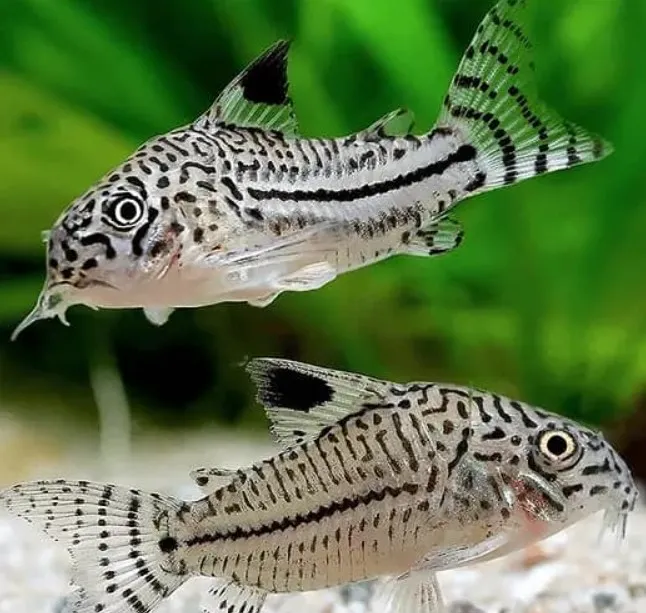
Corydoras Julii
Corydoras julii
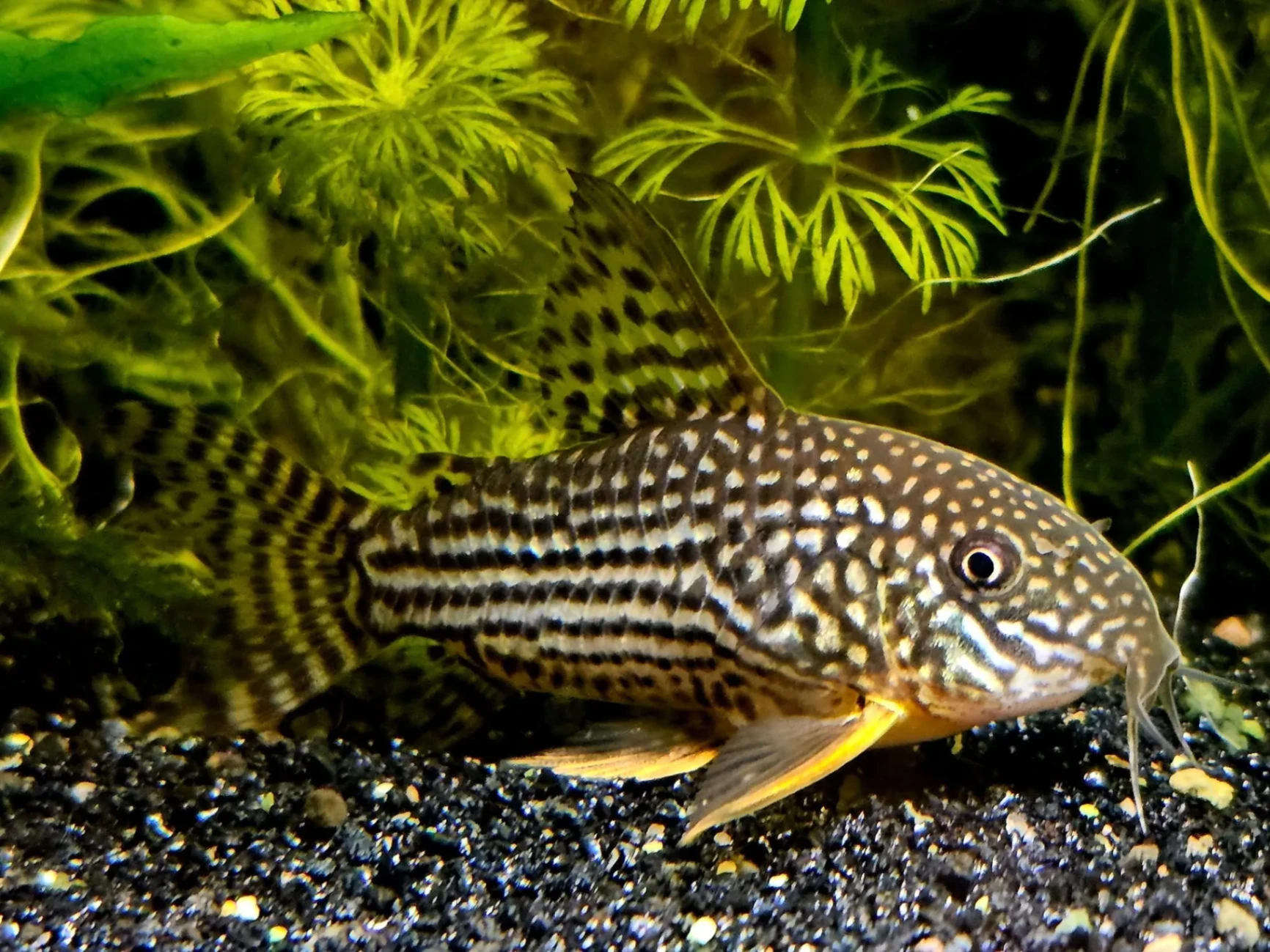
Corydoras Sterbai
Corydoras sterbai
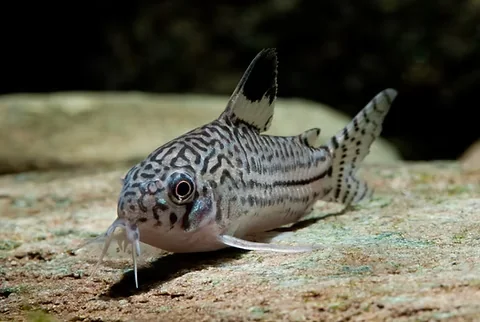
False Julii Corydoras
Corydoras trilineatus
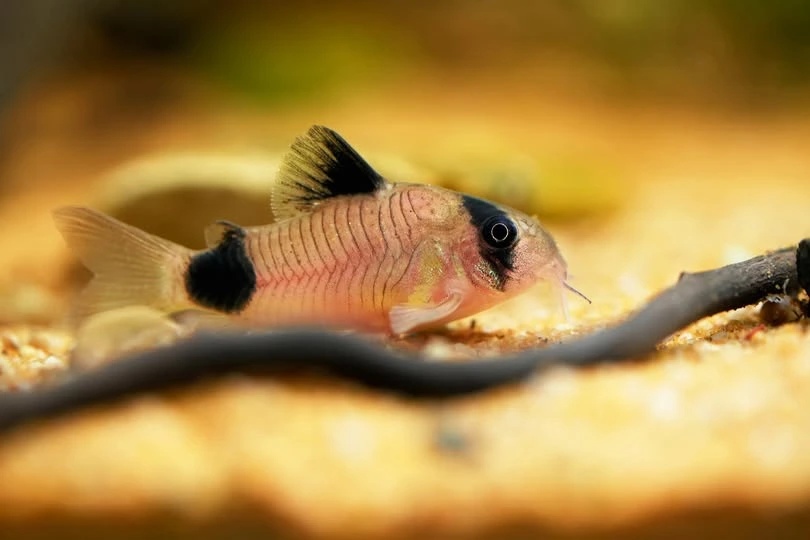
Panda Corydoras
Corydoras panda
Peppered Corydoras
Corydoras paleatus
Ready to Add Salt and Pepper Corydoras to Your Tank?
Use our free stocking calculator to check compatibility, bioload, and get personalized recommendations.