African Dwarf Frog Tank Mates: 7 Compatible Species (and 7 to Avoid)
An African Dwarf Frog is not a fish, and almost every stocking mistake made around one comes from forgetting that. It has poor eyesight, hunts by smell, and moves at a fraction of the speed of the animals sharing its tank, so the thing that kills it is rarely aggression — it is arriving at the food third. It also has lungs rather than gills and must swim to the surface for every breath, which makes tank height a hard limit no amount of volume gets around. And it swallows whatever fits in its mouth. Stock this tank around feeding and breathing, and the temperament question mostly answers itself.
Reviewed by the AquariumStocking team · Updated
The tank size that makes this work
Depth matters more than volume for a frog. It has to swim to the surface for every breath, and past roughly 40 cm of water that trip is exhausting for a weak swimmer — long and shallow beats tall and deep at every size below. The floor for a pair is 20 litres, about 5 gallons. Our database puts the african dwarf frog minimum at 5 gallons.
5 gallons
Two or three frogs and nothing else, which is the setup where they do best and are seen most. With no fish in the tank you can drop food anywhere and know it reaches them, and the water stays shallow enough that surfacing costs nothing. Add a smooth-leaved plant they can rest on partway up and a lid, because they do climb out through gaps.
Room for a trio of frogs plus one small, slow nano shoal or a couple of snails. Standard 10 gallon tanks are around 30 cm deep, which is comfortable. This is the size where you should start feeding the frogs at a fixed spot with a pipette or tongs, because from here on there is competition and it only ever goes one way.
A proper planted community with three or four frogs in it, as long as you choose the long footprint rather than the tall column — a 20 gallon high is 45 cm deep and makes the surface trip harder than it should be. The extra floor area lets you feed the frogs at one end while the fish are busy at the other, which is the practical solution to the whole problem. Keep the flow gentle; a frog pushed around by an outflow feeds badly.
How to choose tank mates for an african dwarf frog
The frog will lose every race to the food
It locates a sinking pellet by smell, then noses around until it finds it, and that takes a minute or two. A danio takes two seconds. Over weeks this produces a thin, listless frog in a tank where every fish looks superb, and the cause is almost never suspected until the frog dies. Pick slow, small-mouthed tank mates, and target feed regardless.
Keep the water shallow enough to breathe in
These are lunged amphibians that surface every few minutes. In a deep tank the climb is tiring, and frogs in tall columns are regularly found resting motionless near the top or, worse, drowned after failing the trip while weakened. Aim below about 40 cm of water depth, and give them plants or décor at mid-height to rest on along the way.
Anything that fits in the mouth goes in it
A slow swimmer is still a predator at close range. Fry, newly hatched shrimplets and very small nano fish that sleep on the bottom are all at risk, and the frog does not distinguish between food you provided and stock you bought. Judge tank mates by adult size and by where they rest at night, not by how gentle the frog looks.
Nippers find the feet and the fingers
Frogs have long, soft, waving limbs and no way to protect them, and they cannot dart away. Barbs and other habitual nippers treat those limbs the way they treat long fins, and the damage is real. This is the one situation where the frog is genuinely a victim rather than an under-fed bystander.
Substrate and flow decide whether it eats at all
Sand or large smooth pebbles, never small gravel — a frog will swallow gravel with its food and can be killed by an impaction. Strong current scatters sinking food and blows a poor swimmer off it. A gently filtered, sand-bottomed tank with a defined feeding spot is worth more than any change to the species list.
Make sure the shop sold you the right frog
African dwarf frogs have four webbed feet and stay around 4 cm. The African Clawed Frog has unwebbed front feet, reaches 12 cm or more, and will eat most of the fish in a community tank — the two are sold interchangeably far too often. Check the front feet before you buy, because the stocking plan for one is not the stocking plan for the other.
Compatible species, ranked by fit
Seven species that feed slowly or at the surface, cannot swallow a frog, and leave the sinking food alone long enough for one to find it.
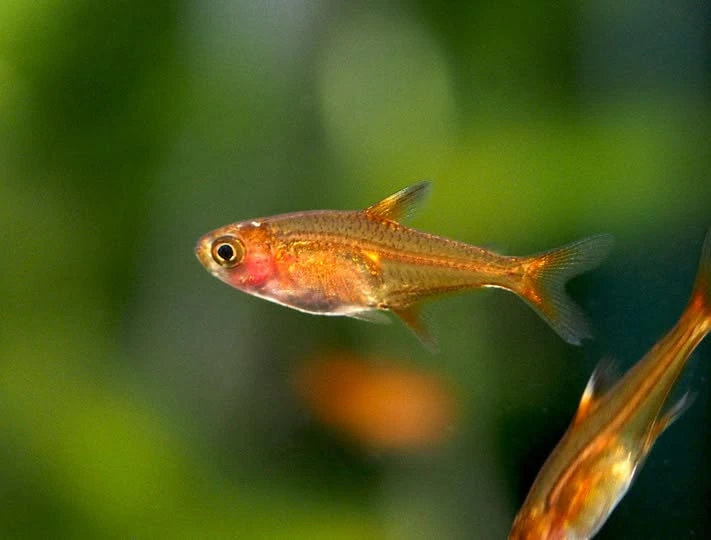
Ember Tetra
Hyphessobrycon amandae
Feeds in midwater on small floating particles and rarely goes to the substrate, which means it takes almost nothing that was intended for the frogs. At 2 cm it has no mouth for a frog and no interest in its limbs. It wants the same warm, gently filtered, dimly planted tank, so nothing about the setup is a compromise. Keep ten or more and feed the fish at the surface first, then the frogs below.
A 2 cm nano fish that hovers among plant stems picking at tiny food and is far too small to be a competitor at the bottom of the tank. It thrives in the still, soft, warm water a frog tank naturally provides, and it is calm enough not to unsettle a slow animal. The one thing to watch is that it is small enough for a frog to attempt if it sleeps on the substrate — in practice they rest among plants and losses are rare. A group of twelve looks like far more fish than it costs in bioload.
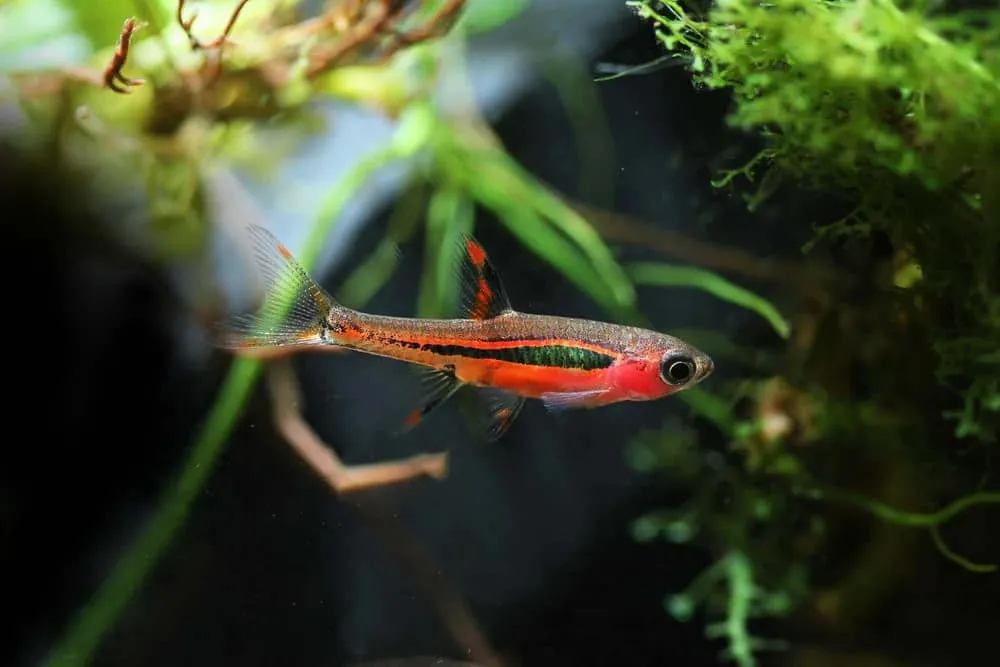
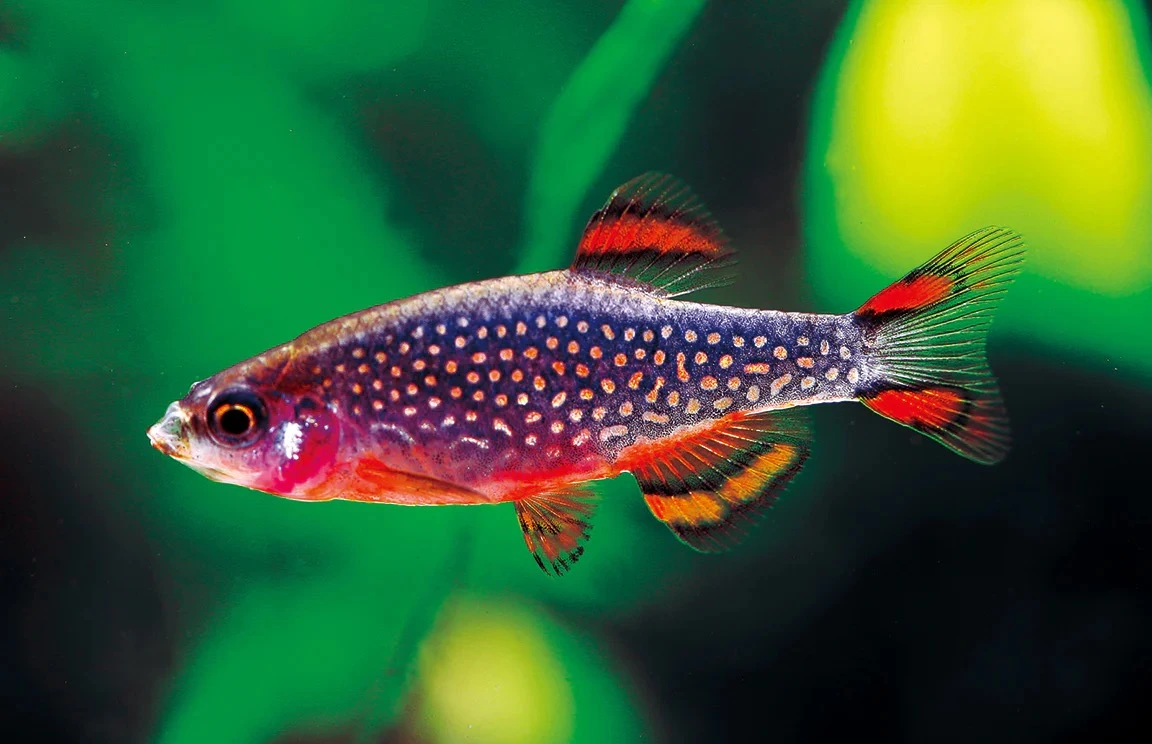
Despite the name it behaves nothing like a danio: it moves in short hops between plant clumps rather than tearing around the tank, so it does not strip food the way its faster relatives do. Males display to each other over tiny territories and ignore the frogs entirely. Keep it in a well-planted tank with gentle flow, which is exactly what a frog needs. Feed a little at the surface to occupy them while the frogs work the bottom.
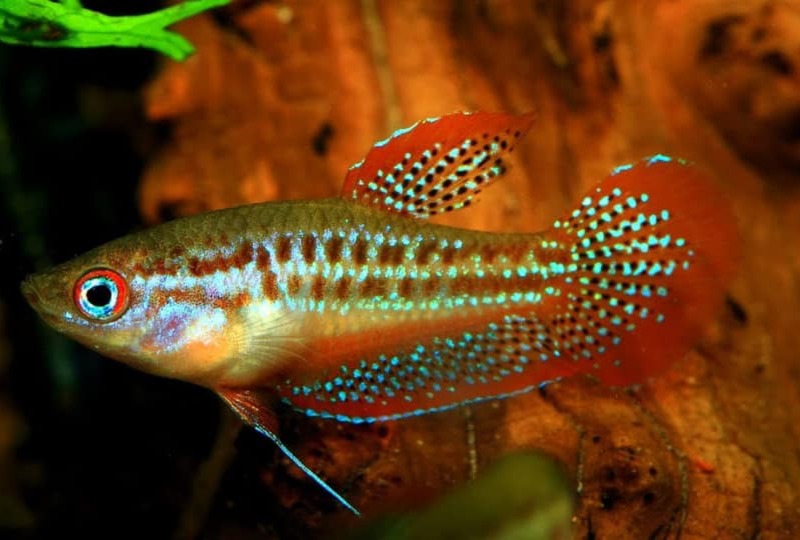
A 3 cm labyrinth fish that also breathes air at the surface and shares the shallow, still tank a frog wants, without any of the territorial edge its larger relatives bring. It feeds deliberately, taking one item at a time, so it never clears a feeding spot before the frogs arrive. It is quiet enough to hear croaking from — both species make sound in the same tank. Three or four, in dense planting.
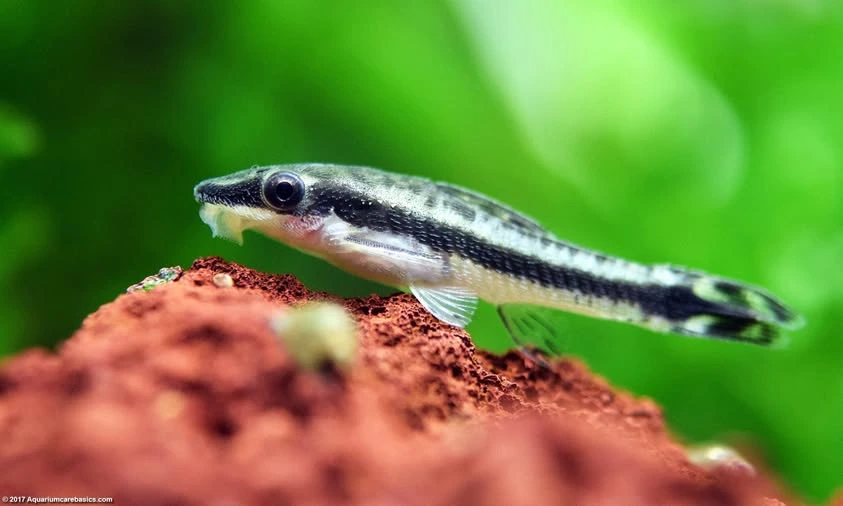
Grazes biofilm from leaves and glass rather than hunting for dropped food, which makes it one of the very few bottom-area animals that is not in direct competition with a frog. It is unarmed, tiny-mouthed and completely indifferent to other tank inhabitants. It needs an established tank with real algae, so add it months after setup rather than at the start. Six or more, with blanched courgette when the glass is clean.
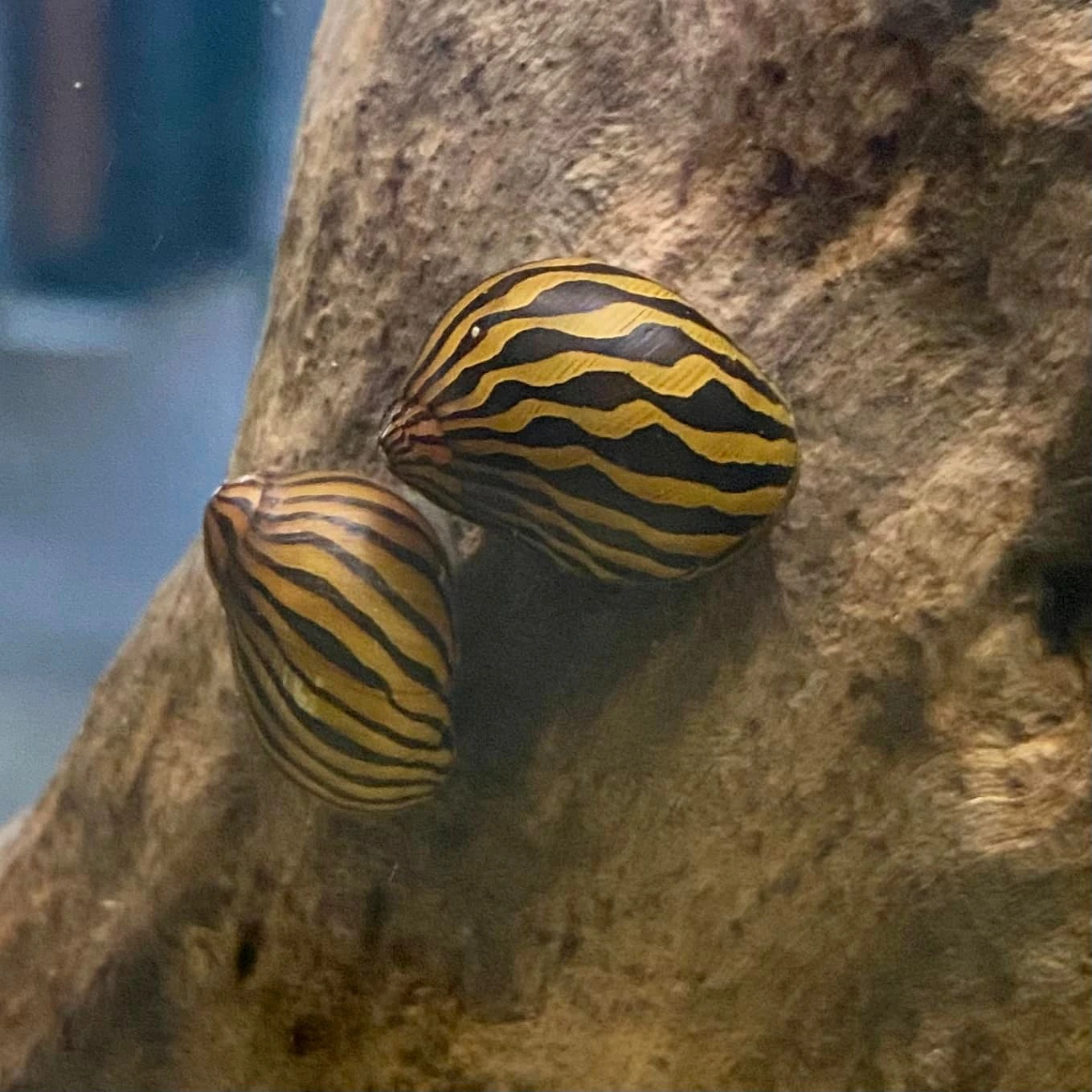
Eats algae off hard surfaces and nothing else, so it takes no protein food away from the frogs at all. It adds almost no waste and its eggs will not hatch in freshwater, so the population never grows into a problem. Frogs occasionally nose at a snail and then lose interest — the shell settles the matter. The only genuine downside is the white egg specks on driftwood.
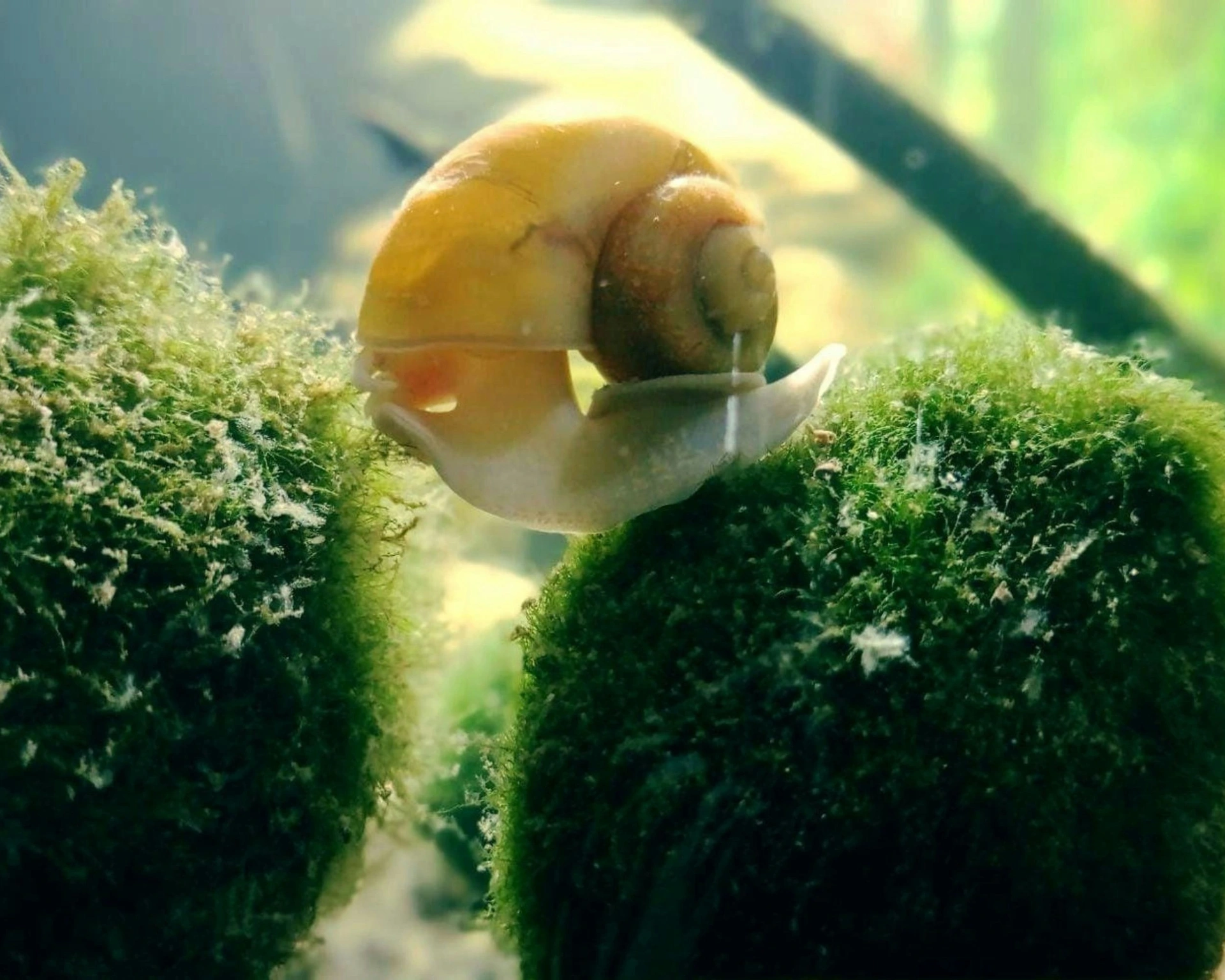
A large snail that cleans up leftovers without racing anyone for them, and its size makes it entirely safe from a 4 cm frog. It does eat sinking pellets, so drop the frogs' food away from wherever the snail happens to be and check it has been taken. It needs harder water than a soft-water nano tank provides for shell health, which suits the frog's pH 6.5–7.8 range well. Watch for it climbing out of an uncovered tank.
The species dwarf frogs are most often confused with in shops, and the confusion is expensive. It reaches 12 cm or more, has unwebbed front feet with visible claws, and treats a dwarf frog as prey rather than company. It is also illegal to keep in some regions. Check the front feet before you buy: webbed on all four means a dwarf frog, clawed front toes means this one.
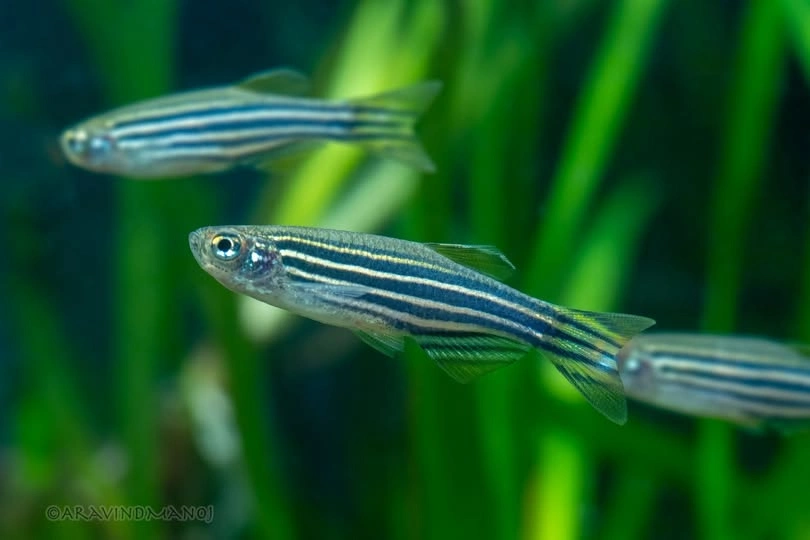
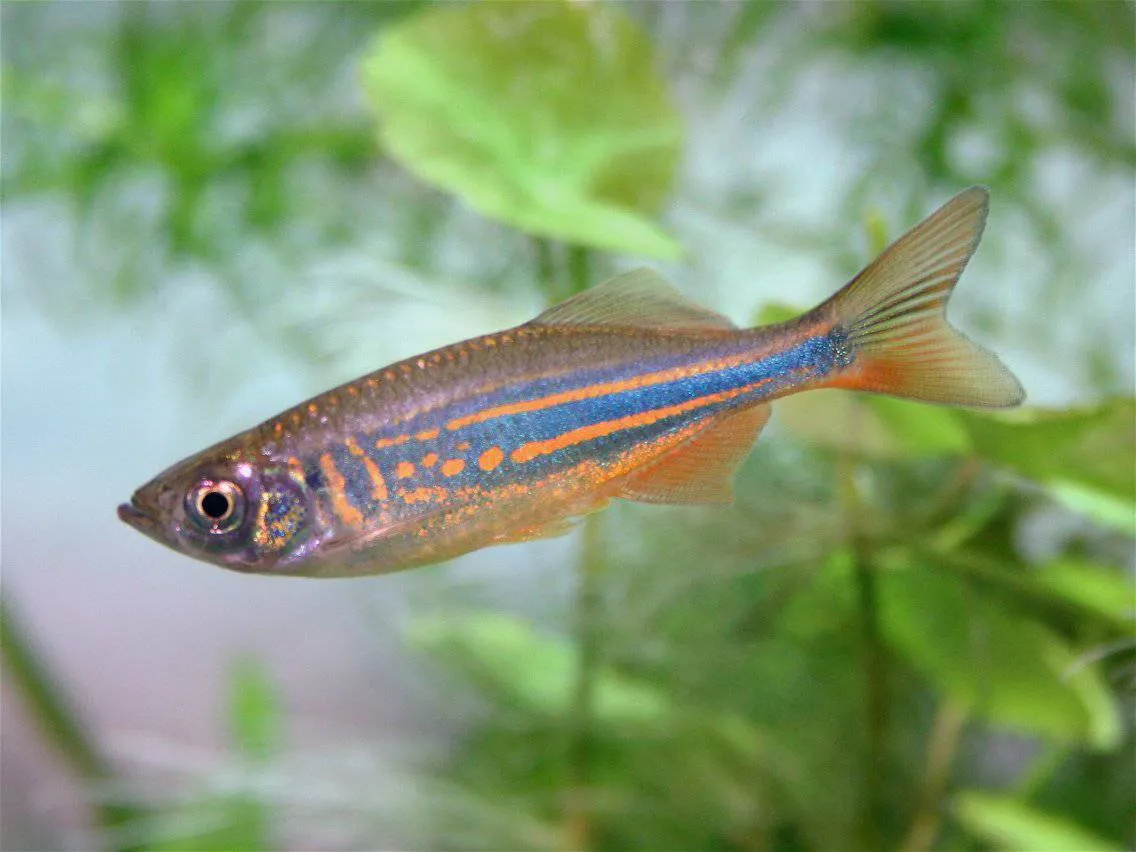
Nothing here is about aggression. A zebra danio is in perpetual motion and finds every particle in the tank within seconds of it entering the water, and a frog nosing its way toward a pellet is simply too late every time. In a tank with danios the frogs decline over a couple of months while the fish look magnificent. It also prefers cooler, faster water than a frog wants.
The same problem as its smaller cousin with 10 cm of fish behind it, plus enough speed and mouth size to make a frog nervous at close quarters. It also wants strong flow and a long, deep tank, which is close to the opposite of the still shallow water this animal needs. Two species with almost nothing in common.
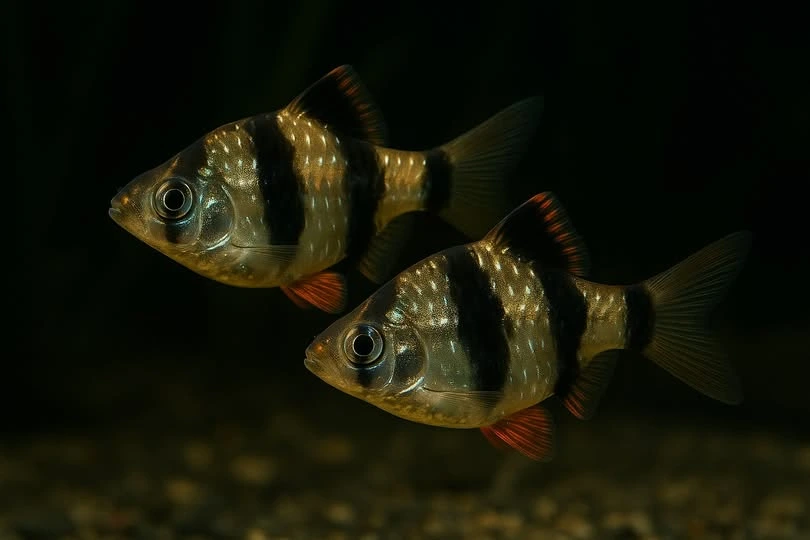
A habitual nipper in a tank containing an animal with four soft, slow-waving limbs and no escape speed. Toes get taken, and the wounds are prone to infection on permeable amphibian skin. Add to that a fast shoal clearing every scrap of food and there is nothing to recommend the combination.
A tiny beaked predator that investigates everything in the tank by biting it, and a frog's webbed feet are an obvious target. It is also a slow, fussy feeder that wants live food, so the two end up competing for the same protein at the same pace. Pea puffers belong in a species tank for their own sake as much as anyone else's.
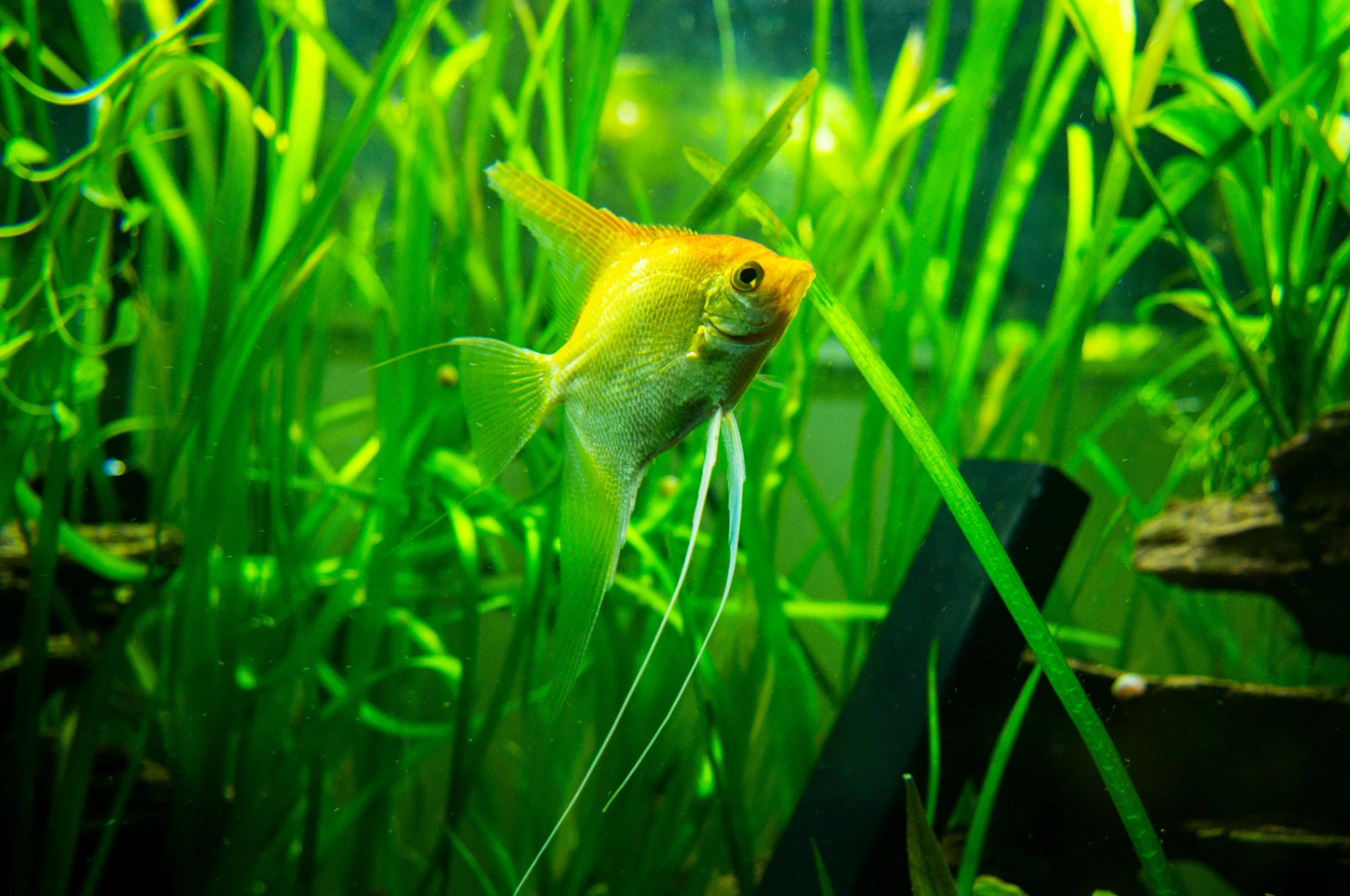
A 15 cm cichlid with a mouth easily large enough for a 4 cm amphibian, and one that hunts anything slow and soft near the substrate. Even where an adult frog survives, the tank an angelfish needs is 45 cm deep or more, which is the wrong shape for an animal that surfaces to breathe. Both the predation and the geometry rule it out.
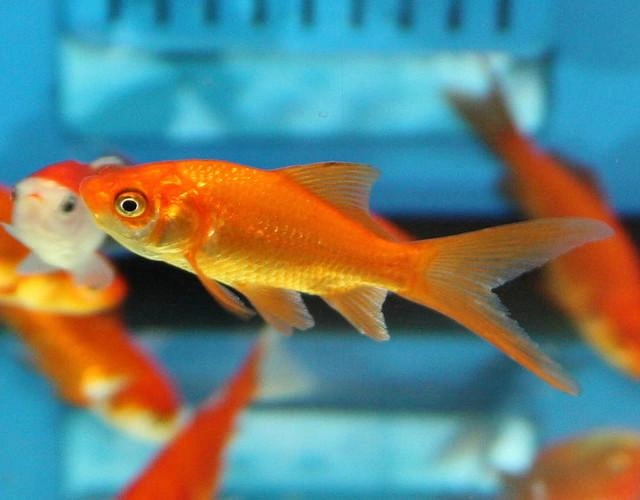
Coldwater at 18–22 °C against a frog that wants 24–28 °C, so one of the two is always kept wrong. Beyond that, a goldfish is a large, indiscriminate vacuum that will attempt anything it can fit in, frogs included, and it strips sinking food instantly. The pairing appears in shops surprisingly often and has no version that works.
Two that come down to the individual and to what you accept losing.
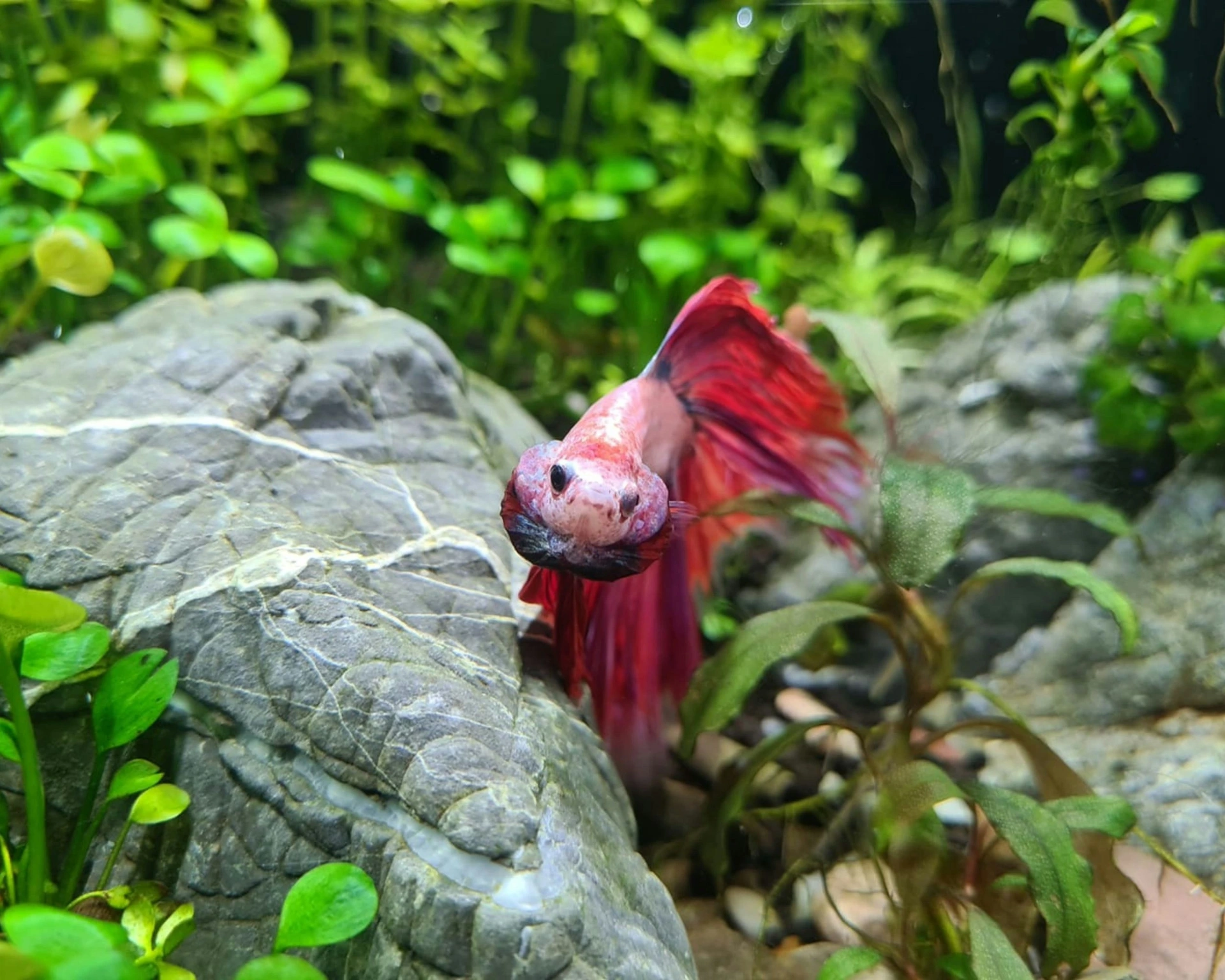
Betta
Betta splendens
Condition: Only in a 10 gallon or larger with a calm individual, and only with target feeding
The pairing is sold constantly and works about half the time. Water, temperature and depth all line up, and many bettas ignore frogs completely. The two failure modes are a betta that flares at and nips the frogs' waving limbs, and — far more often — a betta that simply eats everything before the frogs locate it. Feed the frogs with tongs at a fixed spot, and have a second tank ready in case you drew an intolerant fish.
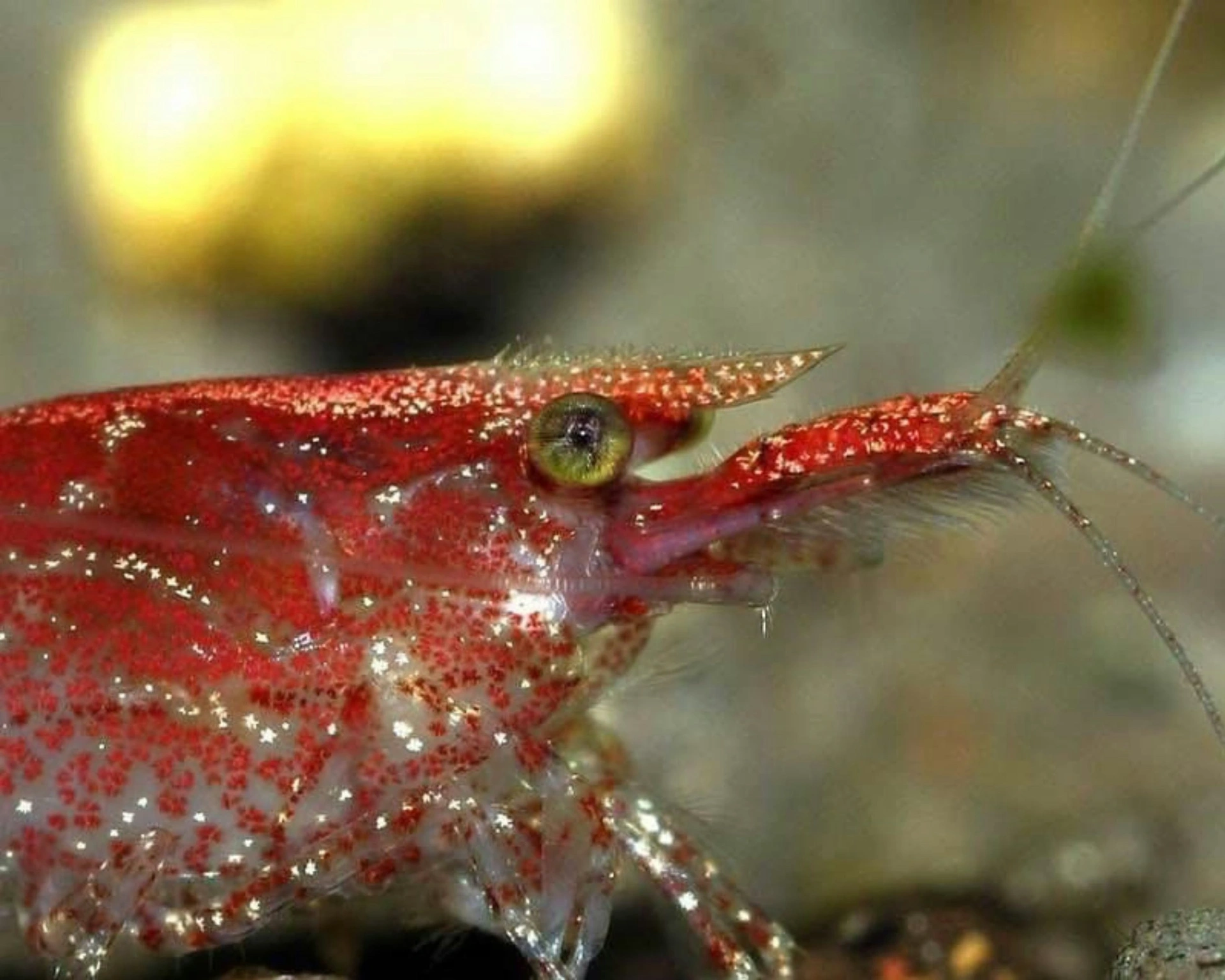
Condition: Only if you accept a colony that never grows
Adult cherry shrimp are quick enough to stay clear and useful for clearing uneaten food before it fouls the water. Shrimplets are frog food, plainly, so the colony holds steady rather than expanding. Adults also reach a dropped pellet faster than a frog does, which adds to the competition problem in a small tank. Heavy moss makes both issues milder without solving either.
Drop your tank size and shortlist into the stocking calculator to check bioload, swim-level balance and compatibility flags.
Frequently asked questions
What can live with African dwarf frogs?
Small, slow, surface-feeding fish and non-competing invertebrates: ember tetras, chili rasboras, celestial pearl danios, sparkling gouramis, otocinclus, nerite snails and mystery snails. The test is not whether a species is peaceful but whether it will eat the frog's food first — most fast community fish will.
Can African dwarf frogs live with bettas?
Sometimes. Temperature, water and tank depth all match, and plenty of bettas ignore frogs entirely. Two things go wrong: an individual betta that nips the frogs' limbs, and — much more commonly — a betta that eats everything before the frogs find it. Keep it in 10 gallons or more, target feed the frogs, and be ready to separate them.
How do I make sure my frog is actually getting food?
Feed it directly. Use long tweezers or a pipette to place frozen bloodworm, brine shrimp or sinking amphibian pellets right in front of it at the same spot every time, ideally after the lights go off when the fish are less active. Watch it eat rather than assuming it did. A well-fed frog is rounded across the belly and active; a flat, listless frog that hangs at the surface has been losing the race for weeks.
How deep can an African dwarf frog tank be?
Keep the water below about 40 cm. These frogs have lungs and must surface to breathe, and a tall tank makes every trip tiring for a weak swimmer. If you already have a deep tank, add plants and décor at mid-height so the frog can rest partway up.
Will African dwarf frogs eat my fish or shrimp?
They will eat anything that fits in their mouth, which in practice means fry, newly hatched shrimplets and very small fish that sleep on the substrate. Adult nano fish and adult cherry shrimp are generally safe. They are too slow to catch anything healthy and alert.
What is the difference between an African dwarf frog and an African clawed frog?
Check the front feet. Dwarf frogs are webbed on all four feet and stay around 4 cm; clawed frogs have unwebbed front toes with visible claws and grow to 12 cm or more, eating most tank mates as they go. Shops mix them up routinely, and clawed frogs are restricted in some regions.
How many African dwarf frogs should I keep?
At least two, and three or four is better. They are social and noticeably more active in company, and a lone frog spends most of its time hidden. Extra frogs cost very little bioload, so the group size is rarely the limiting factor.
Do African dwarf frogs need sand?
Sand or pebbles too large to swallow. Small gravel is the danger: a frog hunting by smell takes in substrate along with the food, and impaction from swallowed gravel is a common and avoidable cause of death.