Common Goldfish Tank Mates: 6 Compatible Species (and 7 to Avoid)
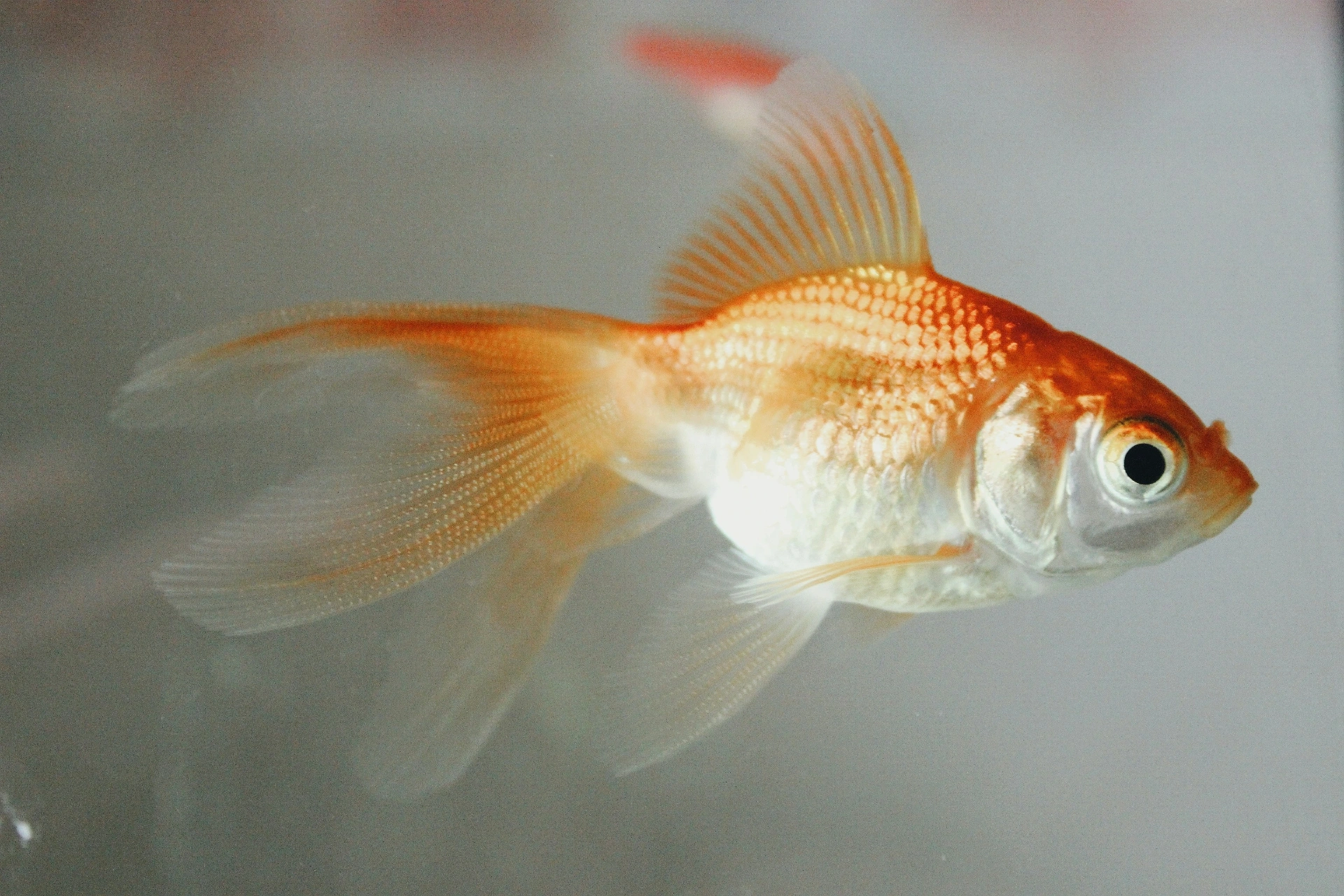
A Common Goldfish leaves the shop at 5 cm and ends up at 30, and it eats and excretes on the scale of the adult rather than the juvenile. That single fact governs the stocking list: the filter is already working at its limit for one fish, the water sits at 10–24 °C rather than tropical temperatures, and anything small enough to fit in a goldfish mouth eventually will. The shortlist below is not built around temperament, because goldfish have none worth worrying about — it is built around waste, water temperature and body size.
Reviewed by the AquariumStocking team · Updated
The tank size that makes this work
Volume here is filtration, not swimming room. A common goldfish produces enough waste that every litre is already spoken for diluting its own nitrate, which is why one fish alone sets the floor at 285 litres — around 75 gallons — before a tank mate is discussed. Our database puts the common goldfish minimum at 75 gallons.
75 gallons
One common goldfish and a cool-water bottom-dweller, and that is the end of the list. Most people arriving at this page have a 20 or 30 gallon tank and are asking the wrong question — at that volume there is no tank mate, only an overstocked goldfish. If 75 gallons is what you have, spend the surplus on filtration and a second weekly water change rather than a second fish.
Enough water to buffer two heavy feeders, so a second goldfish or a group of large temperate barbs becomes reasonable. Length matters more than depth here: goldfish are strong, straight-line swimmers and they use every inch of a long tank. Expect to change half the volume weekly regardless of what the test kit says between changes.
The first size where a genuine cool-water community is possible rather than merely survivable — two or three goldfish plus a shoal and a loach group, with the filtration split across two units. It is also the point at which most keepers admit that what they actually want is a pond, which is where this species does best anyway.
Temperature comes first and removes most of the shop
Common goldfish sit comfortably between 10 and 24 °C, and the standard tropical community runs at 24–27 °C. A single shared degree at the top of the goldfish range is not compatibility — it means one animal spends its life at the edge of what it tolerates, which shows up as a shortened lifespan rather than an obvious problem. Anything that needs a heater set above 24 °C is off the list before you look at its behaviour.
Mouth size is the second filter
A 30 cm goldfish has a mouth wide enough to take a 4 cm minnow, and it will do so without any predatory intent — it grazes, tastes and swallows. White clouds, neon tetras, shrimp and juvenile anything are food in this tank, not company. Work on the basis that a tank mate needs to be over 8 cm at full size, and buy it at that size rather than growing it out.
Every addition is paid for in nitrate
Goldfish produce more waste per centimetre of body than almost anything else in the hobby, so the tank is running near its biological ceiling before you add a thing. A tank mate here has to earn its bioload — which is why the list favours a few substantial fish over a busy shoal of small ones. Oversize the filter for the whole stock list, not for the fish you can see.
Nothing planted survives, so pick fish that do not need it
Goldfish eat soft plants and uproot the rest while foraging through the substrate. Species that need dense cover to feel secure will be permanently exposed, and species that need a stable territory will be permanently evicted. Choose open-water swimmers or hardscape-dwellers that use rock and wood instead of leaves.
Speed is a liability at feeding time, not an advantage
Goldfish are relentless, indiscriminate eaters that hoover the substrate for hours after a meal. A tank mate does not need to outpace them — it needs to be able to eat at all, which usually means feeding sinking food at the far end of the tank while the goldfish is busy. Slow feeders and fish that only take food from the surface will lose that race every day.
A pond answers most of this better than a tank does
The species is a temperate pond animal that happens to be sold in shops. Outdoors, the volume solves the waste problem, the seasonal temperature swing suits it, and the tank mate question mostly disappears. If you have the space, that route removes the compromises the rest of this page is trying to manage.
Compatible species, ranked by fit
Six species that hold up on temperature, size and waste tolerance at the same time. All of them assume 75 gallons or more.
Weather Loach
Misgurnus anguillicaudatus
The closest thing to a purpose-built goldfish companion. It is a temperate species that is genuinely happy at 15–22 °C, it reaches 25 cm so nothing about a goldfish mouth concerns it, and it spends its day working through the substrate for the food the goldfish missed. Keep three or more — a lone weather loach hides and stops feeding — and weight the lid, because they leave tanks through gaps you would not think twice about. They also react to changes in air pressure by swimming frantically, which is normal rather than a sign of trouble.
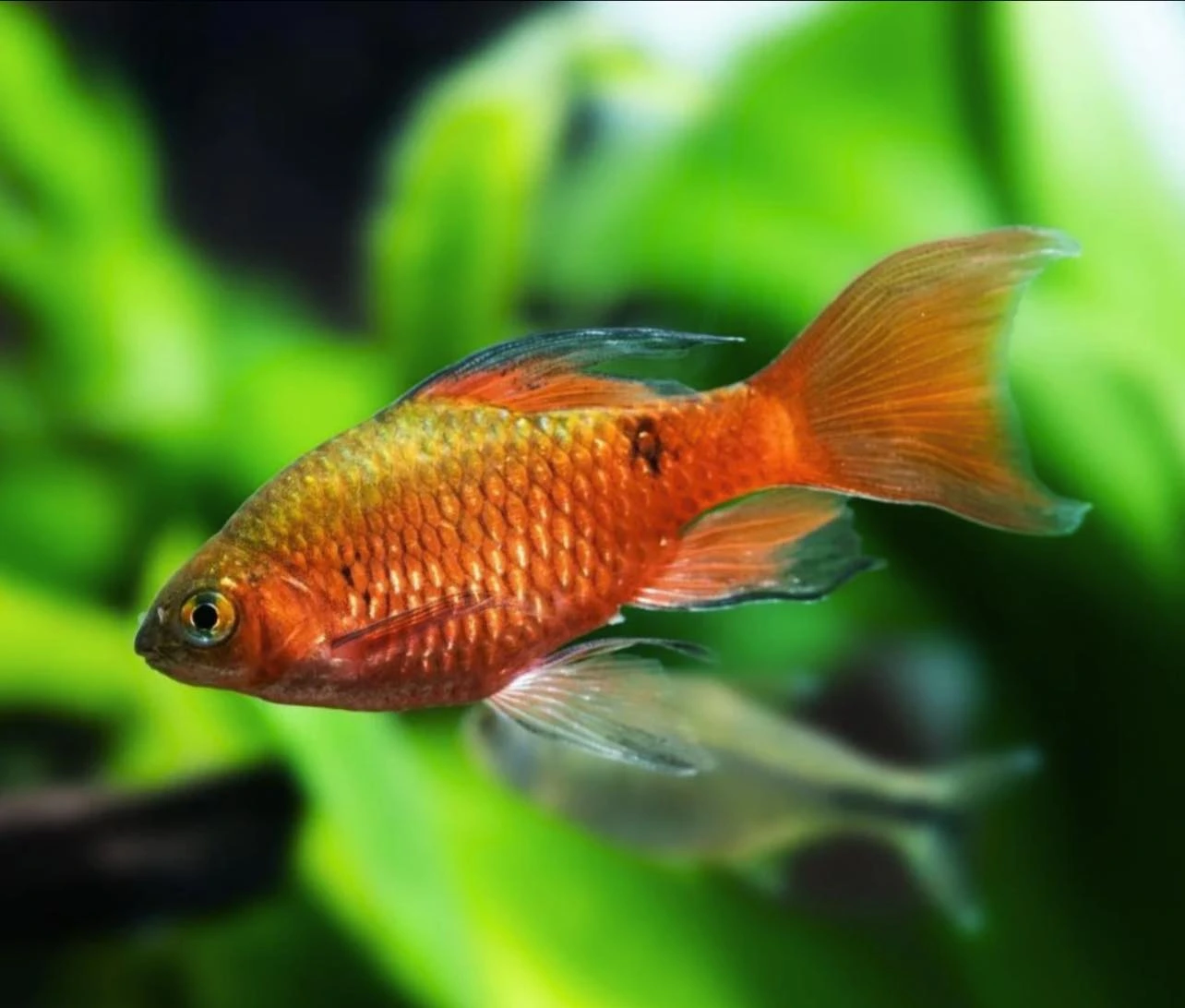
A hardy temperate barb that thrives in exactly the unheated 18–22 °C range a goldfish tank runs at, which is rare enough to make it a standard recommendation. In a group of six or more they use the middle water column the goldfish largely ignores and add visible movement to what is otherwise a slow tank. They are fast enough at feeding time to get their share, which is the failure point for most other candidates. The caveat is fin nipping — in a small group or a short tank they will test a goldfish's trailing fins, so keep the group large and the tank long.
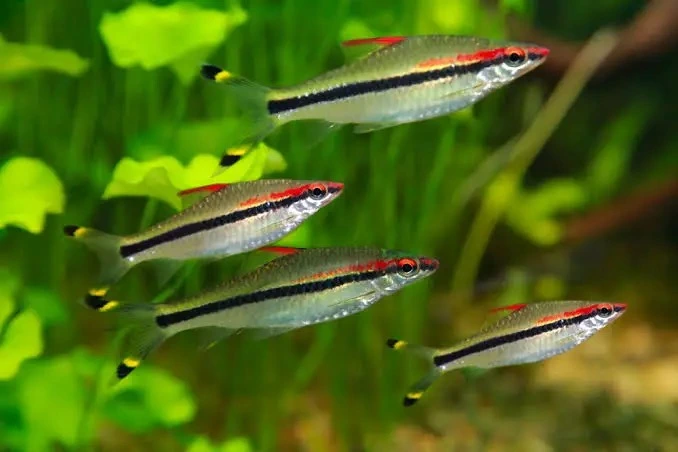
A 15 cm torpedo-shaped barb that is far too large to be eaten and comfortable down to 18 °C, so both of the usual objections disappear. They are strong swimmers that need length rather than volume, which suits the same footprint a common goldfish already needs. They eat fast and competitively, so they will never go hungry alongside a goldfish. Buy a group of at least five and expect them to need the full 210 litres of their own minimum on top of the goldfish's.
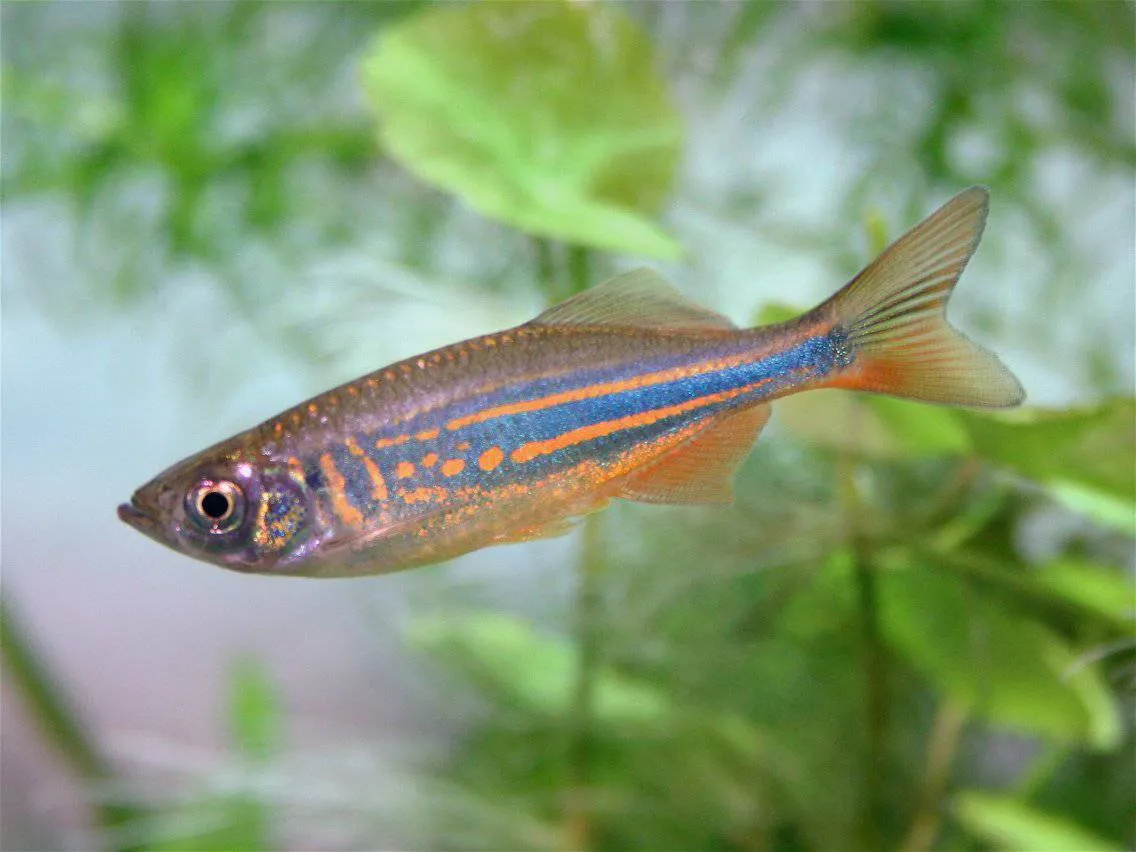
Reaches 12 cm, tolerates 20–24 °C without complaint, and is the fastest thing you can reasonably put in this tank. They shoal high in the water and stay well clear of a goldfish grubbing about on the bottom, so the two rarely interact. Their speed is also the reason they hold their own at feeding time. The risk is stress in the other direction — a tight group of six or more keeps them settled, while three or four will chase each other and unsettle the tank.
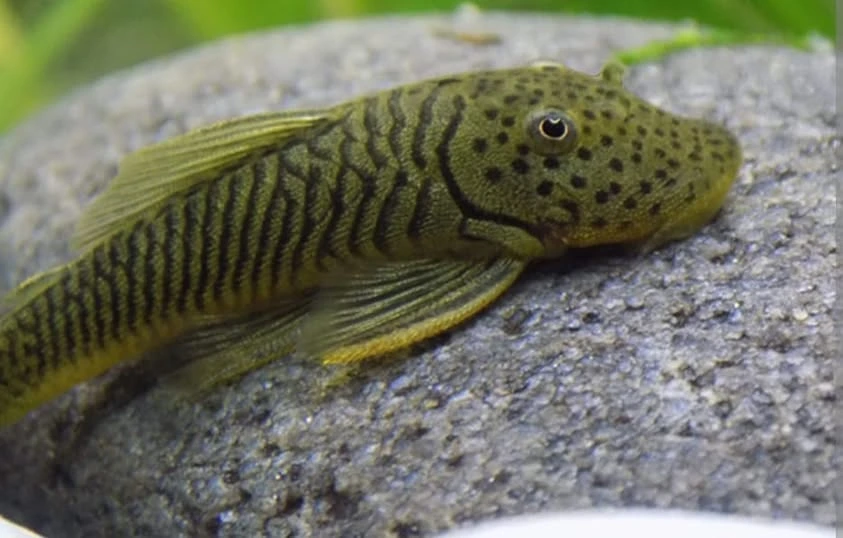
One of the few plecos that actively prefers the cooler end, sitting comfortably at 21–24 °C where a bristlenose would be struggling. It grazes algae off glass and hardscape, stays under 12 cm, and is armoured enough that a goldfish testing it gets nowhere. Unlike a common pleco it will not outgrow the tank or add a bioload of its own worth worrying about. Give it a piece of driftwood and feed vegetable matter, because a goldfish tank is usually too clean of algae to sustain one.
An unusual choice that works on the numbers: 12 cm at maturity, content at 20–24 °C, and an open-water swimmer that occupies the top third of the tank. They are peaceful without being timid, which matters when the alternative is being shouldered aside by a goldfish twice their length. A group of six in a long tank looks genuinely good against the goldfish's bulk. They are less widely stocked than the barbs above, so expect to order them in.
The pairing looks obvious and fails for a reason that has nothing to do with aggression. A common goldfish is a fast, single-tailed swimmer; a fancy is a slow, double-tailed one with compromised vision and a body shape that cannot chase. Put them together and the fancy eats what is left, which over months means a thin fish next to a thriving one. Keep the two body types in separate tanks.
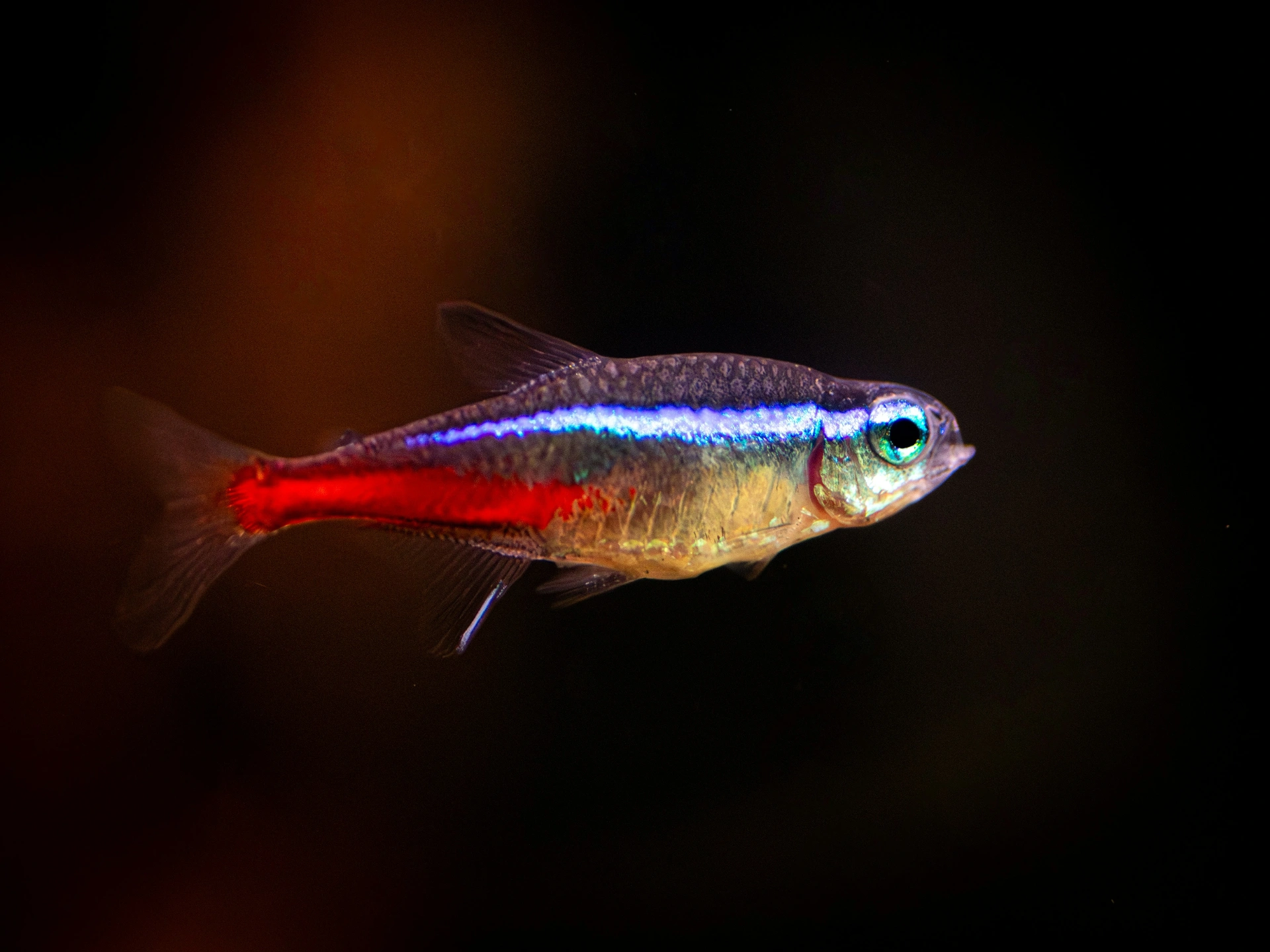
Three centimetres of soft-bodied fish in front of a mouth that takes anything that fits. Even if the goldfish left them alone, neons want 22–26 °C and soft acidic water, which is not the tank a goldfish should be kept in. The pairing is a shop suggestion rather than a working setup and it usually ends within weeks.
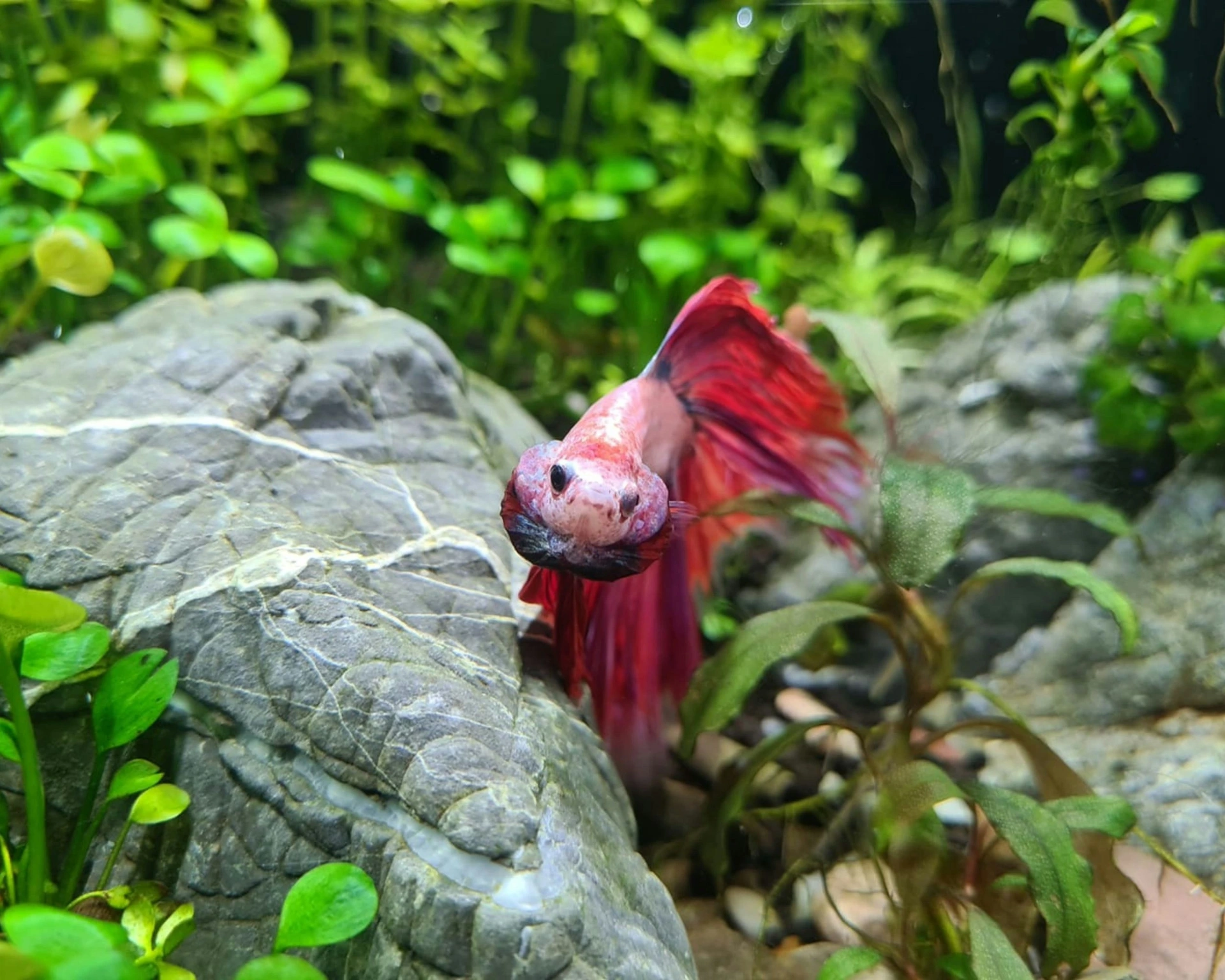
A betta needs a stable 25–27 °C and the goldfish tank is unheated or barely heated, so one of the two animals is always wrong. Add the betta's trailing fins in front of a fish that investigates by mouth and the second problem arrives quickly. There is no tank size that resolves either issue.
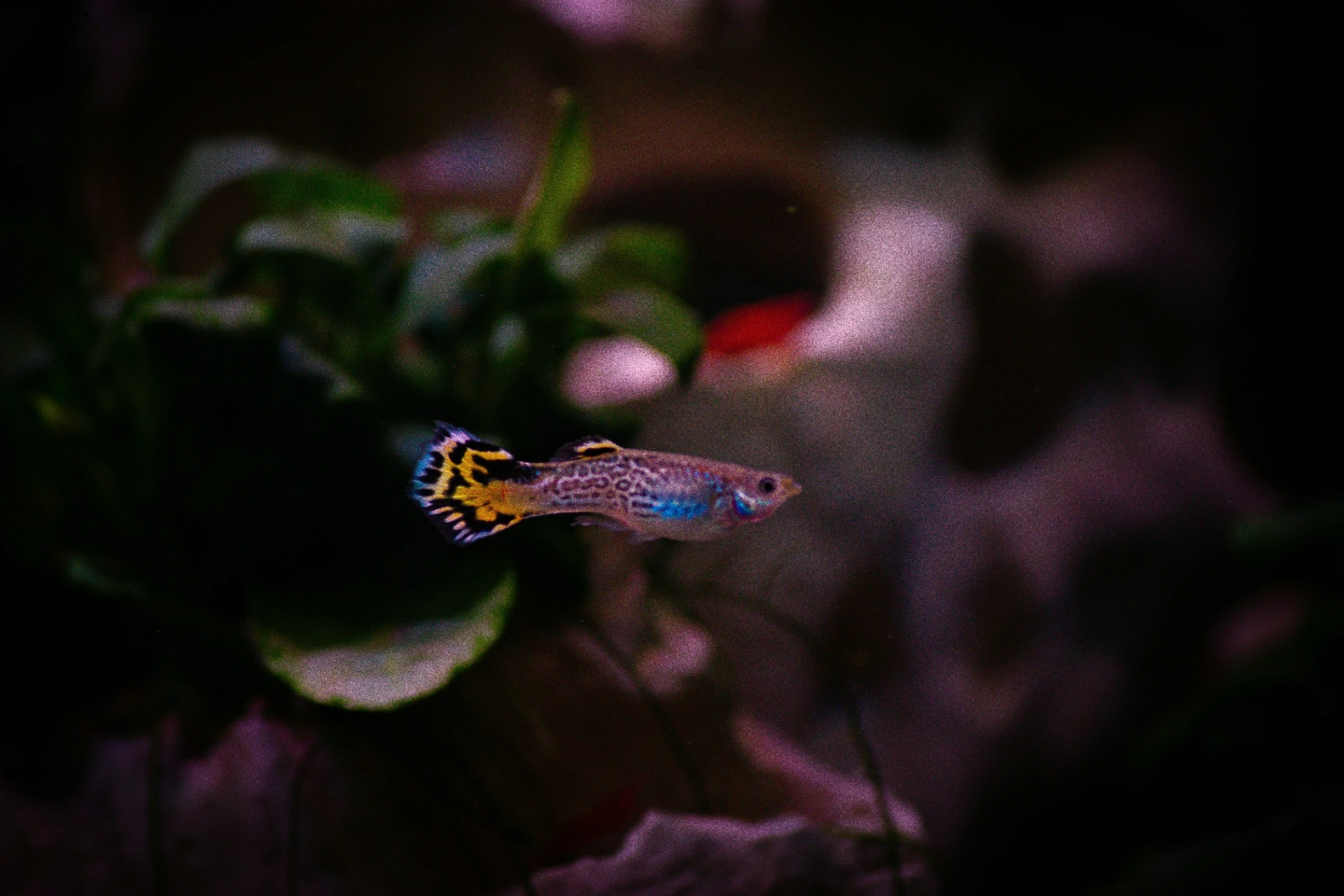
Guppies want 24–28 °C, hard alkaline water and a tank without a 30 cm fish grazing the substrate. At goldfish temperatures they become slow and prone to disease long before the goldfish gets round to eating the fry. The persistent advice that guppies and goldfish are both hardy misses that they are hardy in different conditions.
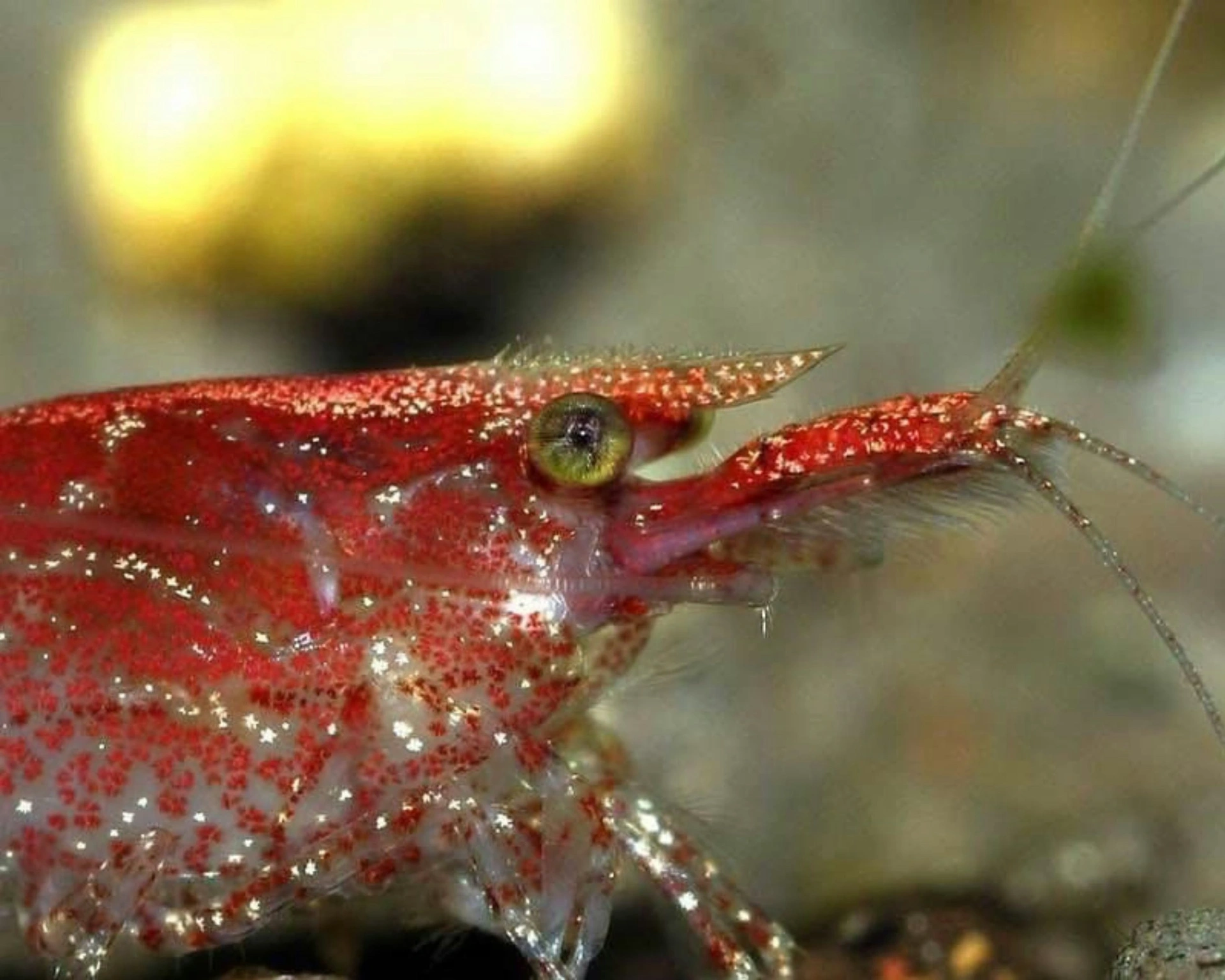
A goldfish clears a colony of cherry shrimp faster than it breeds, and it does so in the first week rather than gradually. No amount of moss or cover changes this, because goldfish forage through cover rather than around it. If you want shrimp, they need their own tank.
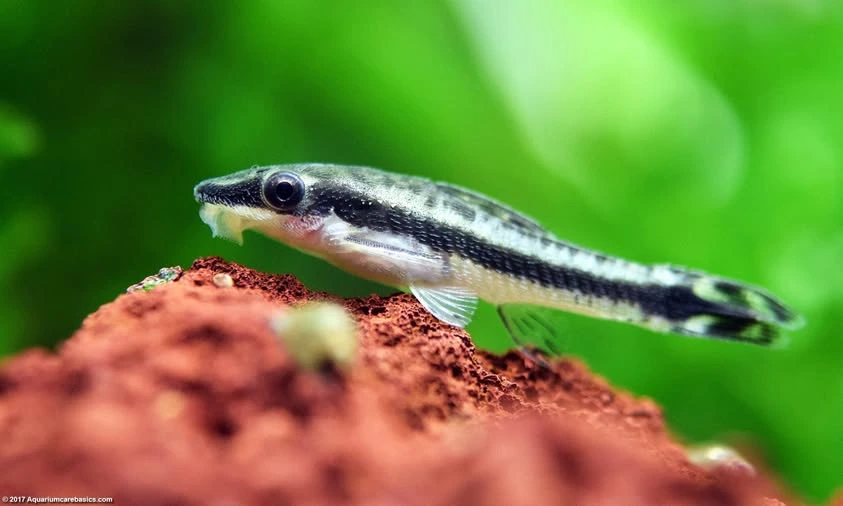
Otos are frequently recommended as goldfish algae crew and they should not be. They need 22–26 °C, mature biofilm and stable conditions, all of which conflict with a cool, heavily fed, heavily filtered goldfish tank. At 4 cm they are also within mouth range. A rubber lip pleco does the same job in the right temperature band.
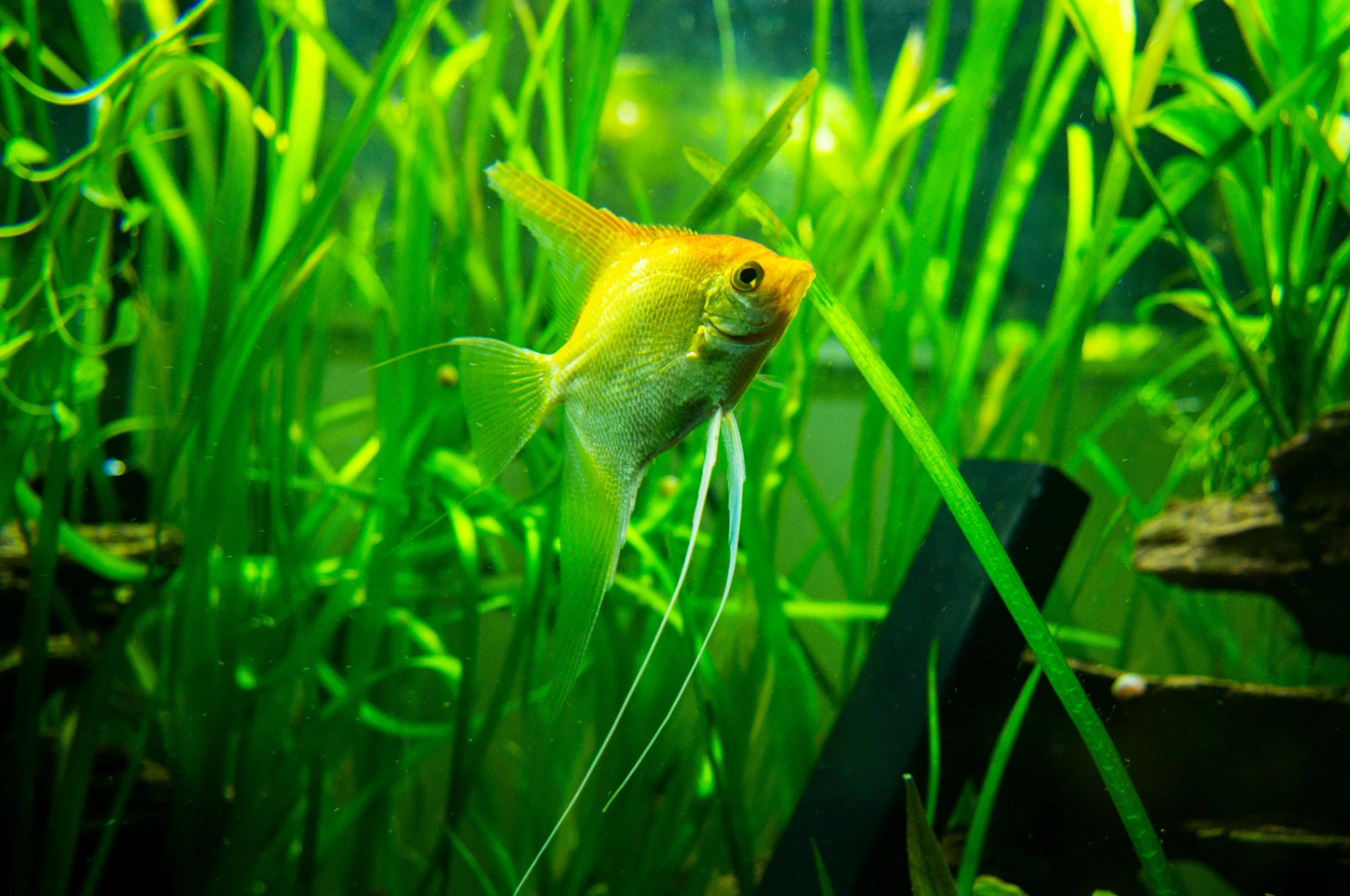
Angelfish are a 24–30 °C soft-water species that pairs off and defends territory; a goldfish is a 10–24 °C omnivore that grazes through whatever is in front of it. There is no overlap worth calling a range, and the goldfish's waste output pushes the water quality well outside what an angelfish tolerates long term.
These two work in some setups and quietly fail in others. The condition on each card is the deciding factor, not the species itself.
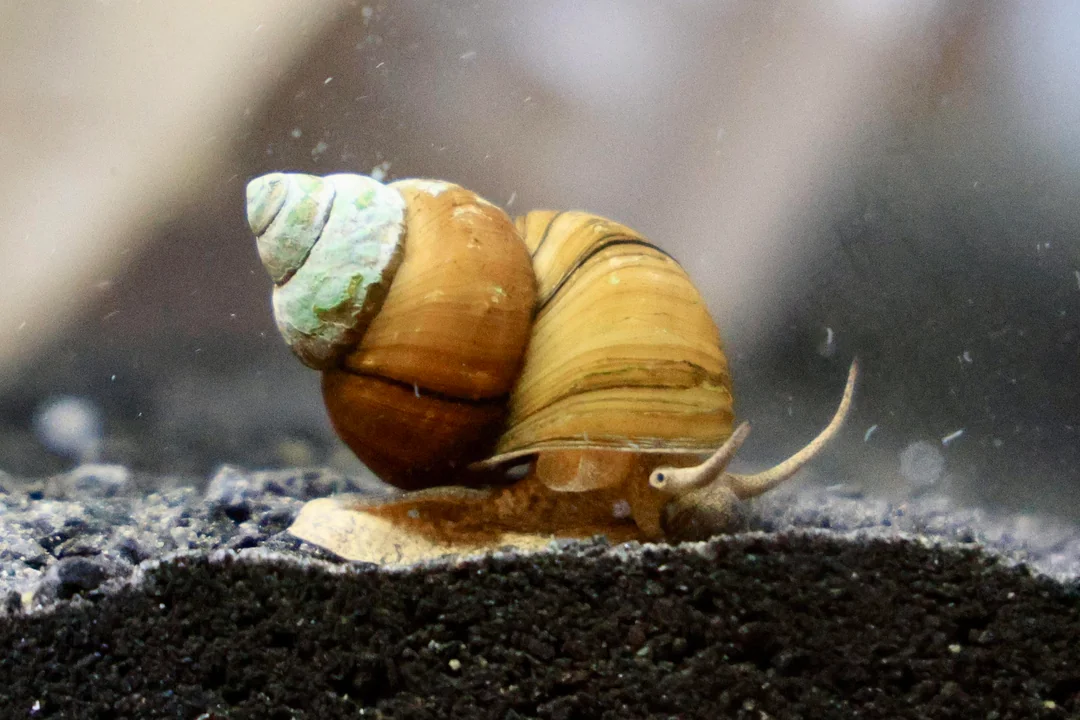
Japanese Trapdoor Snail
Cipangopaludina japonica
Condition: Adults only, and only if your goldfish ignores them
The trapdoor snail is the standard pond snail for cool water, with a thick shell and an operculum that makes it a poor target compared with a ramshorn. Full-grown specimens usually go unmolested and do useful work on leftover food and algae. Some goldfish, though, decide the antennae are worth pulling at and keep at it until the snail stays shut and slowly starves. Add one, watch for a fortnight, and take it out if it stops moving about.
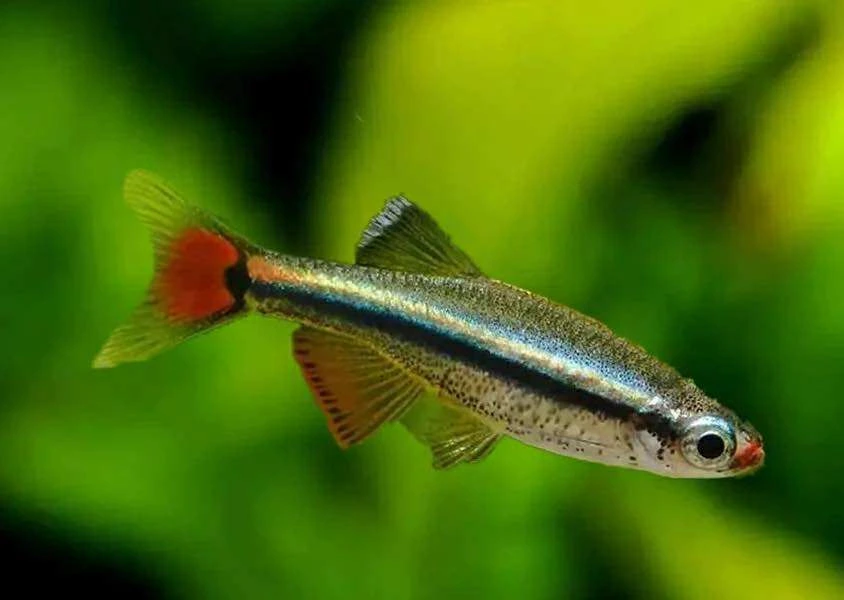
Condition: Only alongside a juvenile goldfish, or in a tub outdoors
On temperature this is the perfect match — white clouds are a genuinely cold-water fish that suffers above 22 °C, which is the opposite of every other small shoaler in the shop. On size it fails: at 4 cm they disappear one at a time as the goldfish grows into its adult mouth. The pairing holds while the goldfish is small and in an outdoor tub where the minnows have room and cover, and stops holding around the point the goldfish passes 15 cm. Plan an exit for them rather than hoping.
Drop your tank size and shortlist into the stocking calculator to check bioload, swim-level balance and compatibility flags.
Frequently asked questions
Can a common goldfish live with tropical fish?
Almost never. Common goldfish are comfortable between 10 and 24 °C while most tropical community fish need 24–27 °C, so any pairing leaves one of them at the edge of its range permanently. The handful of species that work — rosy barbs, giant danios, weather loaches, denison barbs — are temperate fish rather than tropicals, even though shops sell them alongside tropical stock.
How big a tank does one common goldfish need?
Our database sets the minimum at 285 litres, about 75 gallons, for a single adult. That figure is driven by waste rather than swimming room: a common goldfish reaches 30 cm and produces a bioload out of all proportion to its length. Anything smaller means either constant water changes or chronically poor water.
Can I keep a common goldfish with a fancy goldfish?
It is best avoided. A common goldfish is fast and single-tailed, a fancy is slow, double-tailed and often poorly sighted, and the common eats most of the food before the fancy reaches it. The result over months is a visibly underfed fancy rather than any obvious conflict, which is why the problem often goes unnoticed until the fish is unwell.
Will a common goldfish eat smaller fish?
Yes, though not out of aggression. An adult mouths anything it comes across and swallows whatever fits, which at 30 cm includes neon tetras, white cloud minnows, shrimp and fry. The practical rule is that a tank mate should exceed 8 cm at full size and be bought at close to that size.
Do goldfish need a heater?
Not in a room that stays between roughly 18 and 22 °C. What they need is stability rather than warmth — a heater set low can be useful in a cold room to stop the temperature swinging overnight, but heating a goldfish tank to tropical temperatures shortens its life and raises its already high waste output.
Can a common goldfish live with an axolotl?
No. Axolotls need 14–18 °C, colder than a goldfish should be kept long term, and a goldfish will pick at the axolotl's external gills. The axolotl in turn will attempt to swallow a small goldfish. Neither animal has a workable tank mate list that includes the other.
Are plants possible in a common goldfish tank?
Only tough ones, and not reliably. Goldfish eat soft-leaved plants and uproot anything they can get under while foraging. Anubias and java fern attached to wood or rock survive because they are unpalatable and not planted in the substrate, but a lush planted goldfish tank is not a realistic goal.
How many tank mates can a 75 gallon goldfish tank hold?
Realistically one addition — a small group of weather loaches or a rubber lip pleco. The goldfish alone accounts for the tank's biological capacity, so extra stock has to be paid for with extra filtration and larger water changes. Run the full list through the stocking calculator before you buy anything.