Fancy Goldfish Tank Mates: 7 Compatible Species (and 8 to Avoid)
Selective breeding gave the Fancy Goldfish a rounded body, a divided tail and, in many varieties, eyes that point the wrong way — and it took away the swimming ability and eyesight the wild form relies on. That reverses the usual tank mate question. The danger here is not what the goldfish does to its neighbours; it is what a quicker, sharper-eyed fish does to a slow one with trailing fins that reaches food last. Cool water narrows the candidate list, and feeding behaviour narrows it further.
Reviewed by the AquariumStocking team · Updated
The tank size that makes this work
Waste sets the number, not the fish's size. A fancy is shorter and slower than a common goldfish but eats just as heavily, so a single one starts at 115 litres, roughly 30 gallons, and a second takes you to 190 before any tank mate joins them. Our database puts the fancy goldfish minimum at 30 gallons.
30 gallons
One fancy goldfish, comfortably. Two if the filtration is generous and you change water weekly. There is no room here for a tank mate that needs its own group, which rules out almost everything on the list below except a few snails. A single well-kept fancy in a 30 is a better outcome than a crowded one with company.
Two or three fancies plus one small cool-water group — hillstream loaches on the hardscape, or peppered corydoras working the sand. The extra length is what makes it work: it lets the tank mates feed at one end while the goldfish take their time at the other. This is the size most fancy goldfish keepers should aim at.
A proper cool-water community. Three or four fancies, a bottom crew and a small temperate shoal, with enough water volume that a heavy feeding does not move the nitrate reading. It also gives a slow fish somewhere to be that is not the corner it got pushed into, which matters more for this variety than for any other goldfish.
A fancy swims by paddling rather than driving, and a telescope-eye or bubble-eye variety is close to blind in the direction it is heading. Standard community advice about picking peaceful fish misses the point — a peaceful fish that eats quickly is still a problem, because the fancy simply arrives second every time. Judge candidates on their feeding manners rather than their temperament rating.
Trailing fins invite attention
The long divided tail that makes the fish worth keeping is also a slow-moving target that hangs behind it. Barbs, serpae tetras and anything else with a nipping habit will take pieces out of it, and a torn fancy tail is slow to heal in the heavily fed water these tanks run. Anything on the list has to have no history of nipping at all, not merely a mild one.
Cool water rules out the usual bottom crews
A fancy is kept at 18–22 °C, which puts bronze corydoras, otocinclus and bristlenose plecos outside the range they should live in even though shops pair them constantly. The temperate substitutes exist — peppered corydoras, hillstream loaches, rubber lip plecos — and they do the same job without either animal being kept wrong. Check the temperature band before the behaviour.
Feed for the slowest fish in the tank
Sinking pellets placed where the goldfish already is, rather than flake scattered on the surface, is what stops a fancy losing weight in a community. Where the tank mates are quicker, feed them first at the far end and give the goldfish its own portion afterwards. If you cannot manage two feeding points, the tank should hold goldfish only.
Buoyancy problems make crowding worse
Round-bodied varieties are prone to swim bladder trouble, and a fish struggling to stay level needs open water and shallow depth rather than a busy tank of fast movers. Keeping the stocking light and the tank wide rather than tall gives an affected fish somewhere to rest. This is a real argument for fewer tank mates rather than a theoretical one.
Snails are the safest addition by a distance
A cool-tolerant snail adds no competition at feeding time, no fin risk and almost no bioload, which is more than can be said for any fish on this page. They are also the only addition that works at 30 gallons. If the goal is simply for the tank to be less empty, start there.
Compatible species, ranked by fit
Seven species that stay in the right temperature band, feed without stripping the tank, and leave a trailing tail alone.
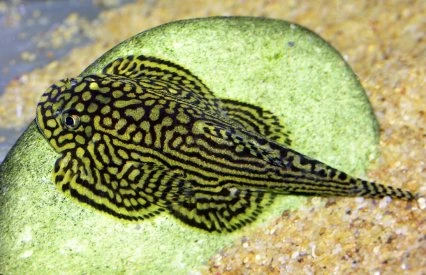
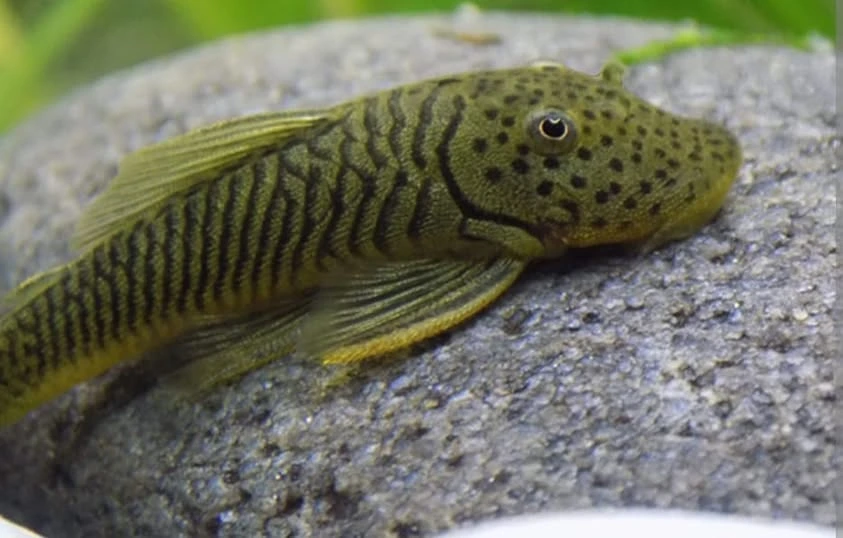
Hillstream Loach
Sewellia lineolata
A flat, sucker-shaped loach built for cool, oxygen-rich water, which is exactly what a lightly heated goldfish tank should be. It clings to glass and smooth rock grazing biofilm, occupies a layer no goldfish uses, and has no interest in anything with fins. It needs flow and hard surfaces rather than plants, both of which suit a goldfish setup. Keep three or more and accept that it eats algae rather than leftovers — supplement with vegetable wafers in a tank this clean.
A temperate loach that reaches 25 cm and behaves like a slow, harmless vacuum cleaner, working the substrate for food a fancy dropped or never found. Its size means it is in no danger from anything, and it has no interest in fins. It is the single most useful addition to a fancy tank because it eats what the goldfish's poor feeding leaves behind. Keep three, use sand rather than sharp gravel, and clamp the lid down.
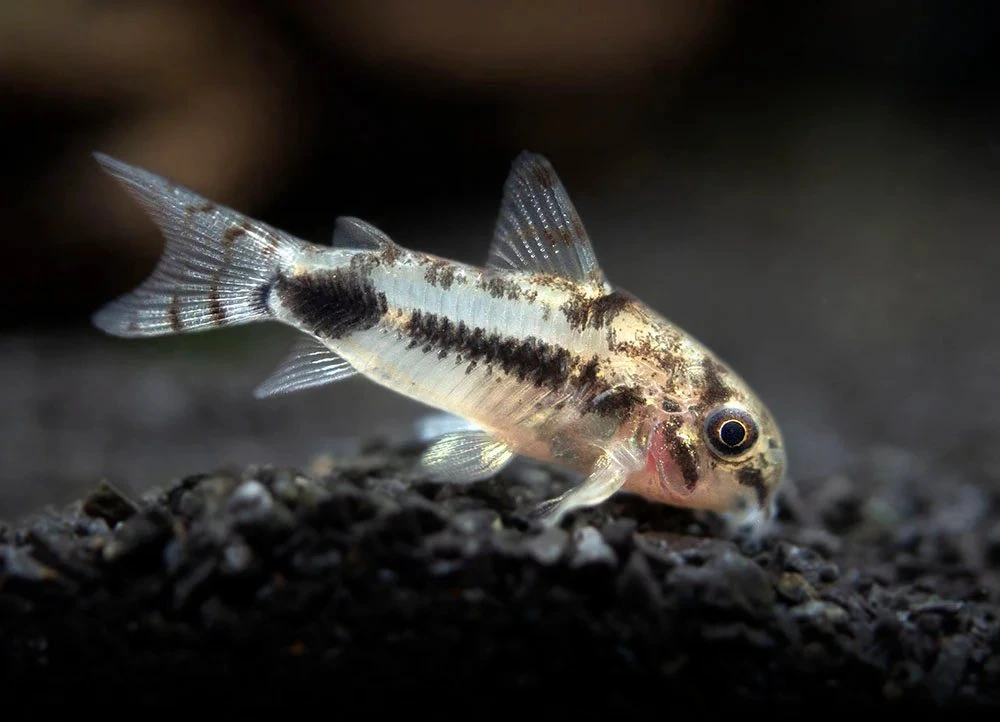
The one commonly sold corydoras that genuinely prefers cool water, comfortable at 18–23 °C where the bronze and sterbai varieties are not. In a group of six they shoal along the bottom, turn over the sand and stay out of the goldfish's slow path through mid-water. They are quick eaters, so drop sinking food for them at the opposite end of the tank. Their barbels need soft sand — gravel wears them down and leads to infection.
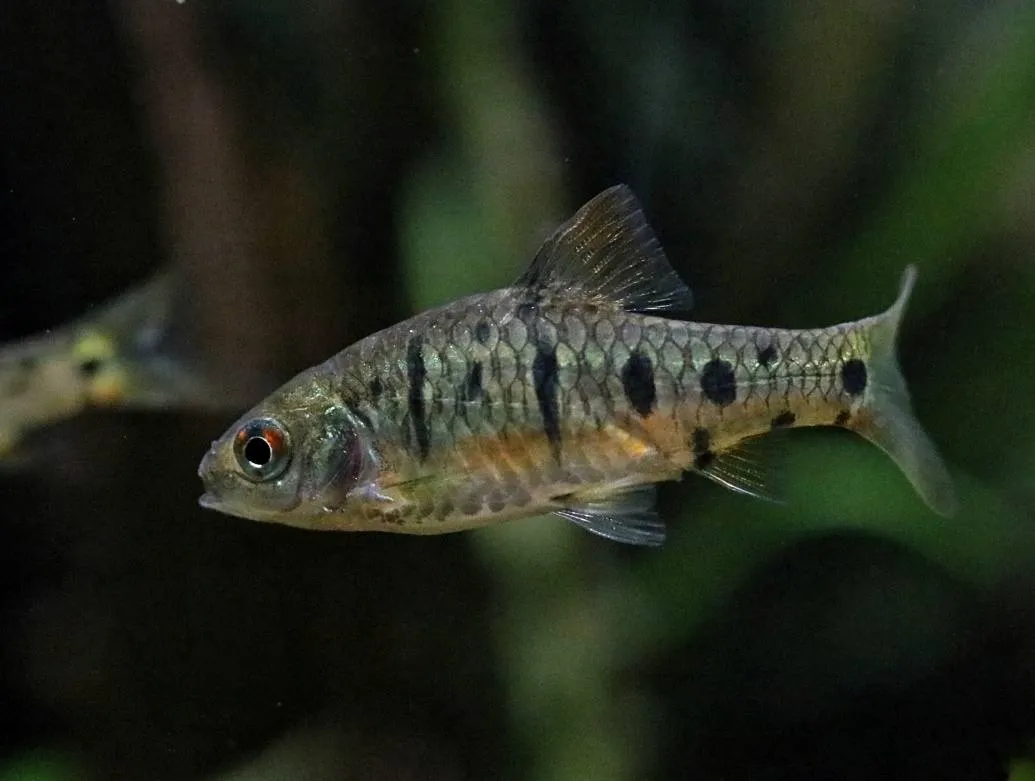
A temperate barb that holds up at 18–22 °C and, unusually for the family, is not a habitual fin nipper when kept in a proper group. Six or more spread out across the middle of the tank and add movement without ever crowding the goldfish. They will still get to food first, so this pairing depends on you feeding both ends of the tank. In a group of two or three they become pushy, which is when tails start getting tested.
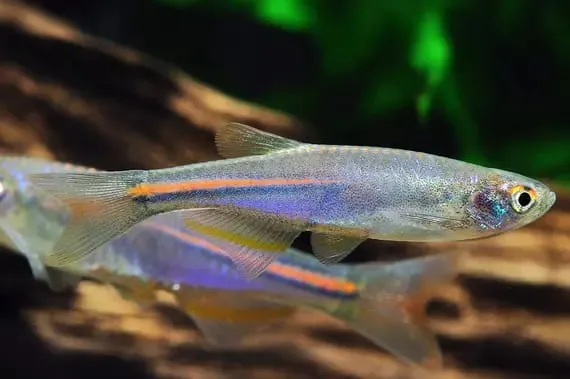
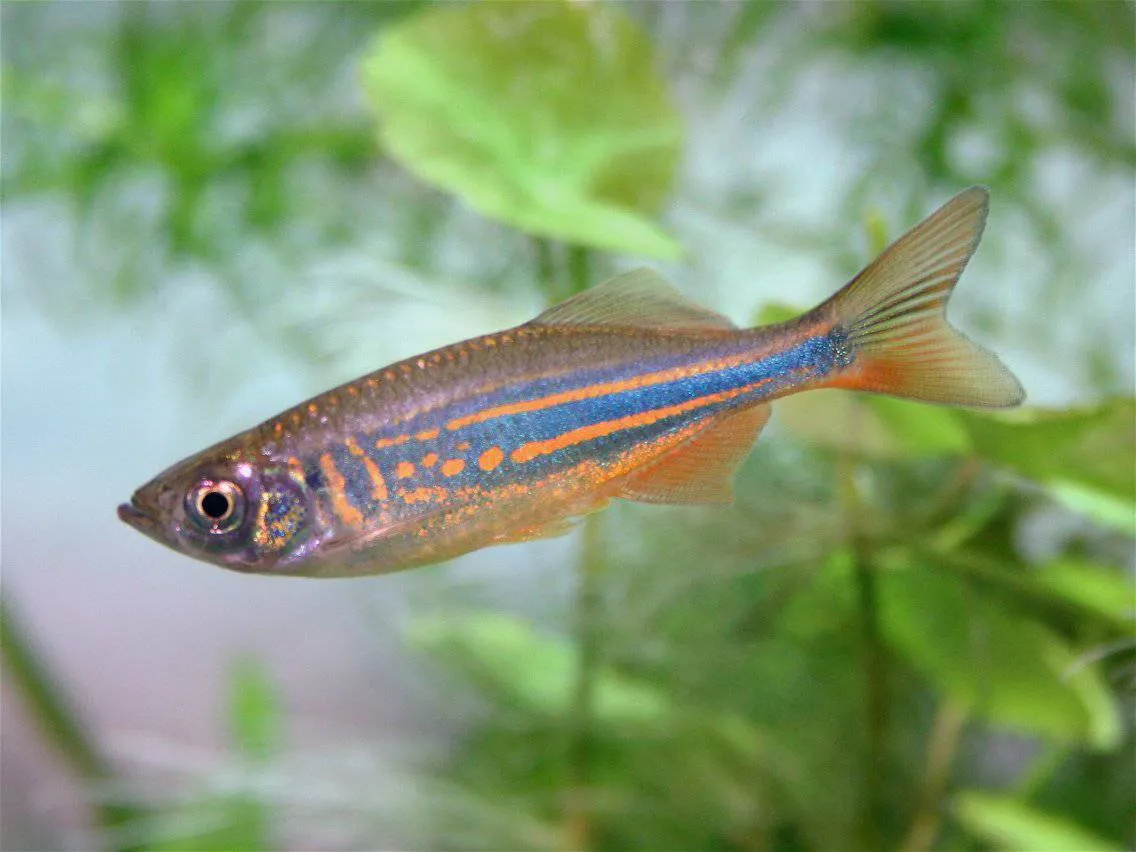
A hardy 6 cm danio that lives happily at the cool end, stays near the surface and moves in short bursts rather than constant patrol. It is small enough not to intimidate a slow goldfish and fast enough never to be caught by one, so the two coexist without interacting much. Keep eight or more — a small group is restless and that restlessness is what unsettles a fancy. Their bioload is negligible next to the goldfish's.
Designed for exactly this tank: a thick-shelled cool-water snail that eats leftover food and soft algae and has an operculum to shut behind. Fancy goldfish rarely bother them because there is nothing soft exposed to pull at. They breed slowly and give live young rather than egg clutches, so the population stays manageable. Add three or four to a mature tank and leave them to it.
The cool-water pleco, content at 21–24 °C and staying under 12 cm, which makes it the right answer where a bristlenose is the wrong one. It grazes hard surfaces at night and hides under wood during the day, so it never competes at feeding time. Its armoured body means a goldfish mouthing at it achieves nothing. Supplement with courgette and a piece of driftwood, because a goldfish tank rarely grows enough algae to keep one fed.
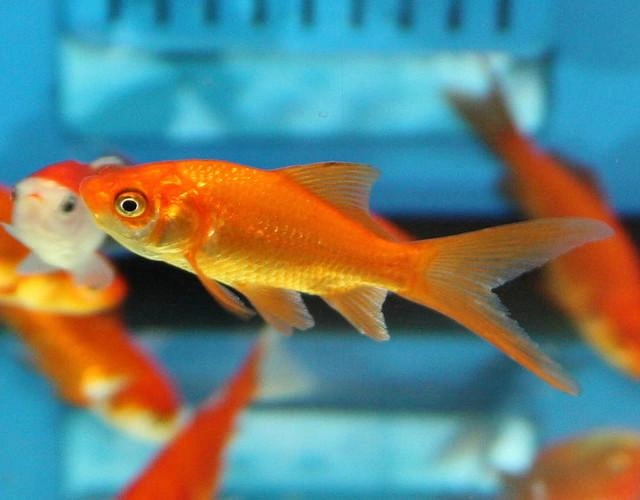
The most common mistake in this hobby, and the one with the slowest consequences. A common goldfish is a fast, streamlined swimmer that clears food before a fancy has crossed the tank, so the fancy thins out over months while the common thrives. It also reaches 30 cm against the fancy's 20. Keep single-tailed and double-tailed goldfish in separate tanks.
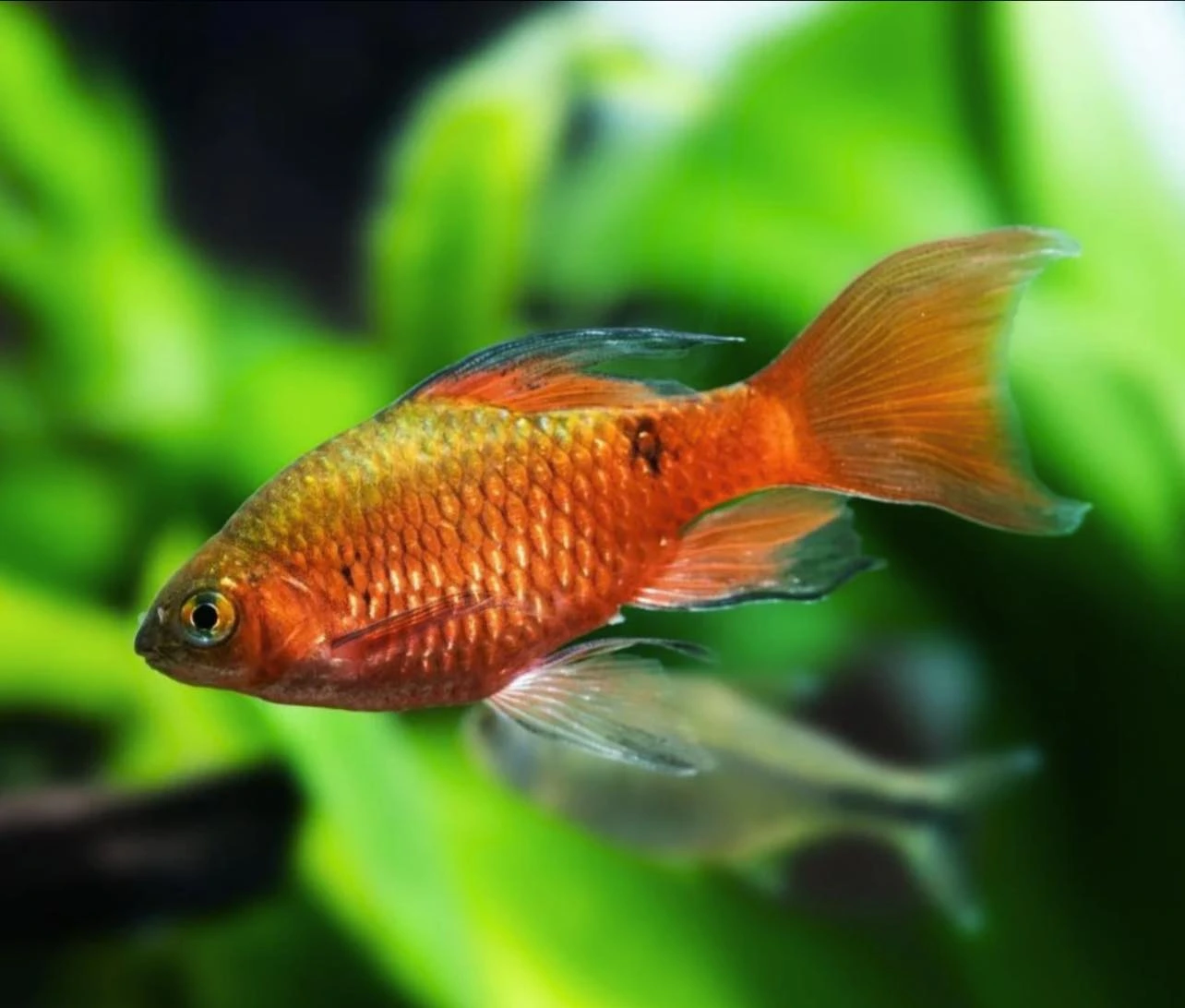
Rosy barbs are a standard cool-water recommendation and they are the wrong one here. They are persistent nippers when kept in small groups and a fancy's divided tail is the most obvious target in any tank they are put in. The damage tends to appear as a ragged edge rather than an obvious bite, which is why it is often blamed on water quality instead.
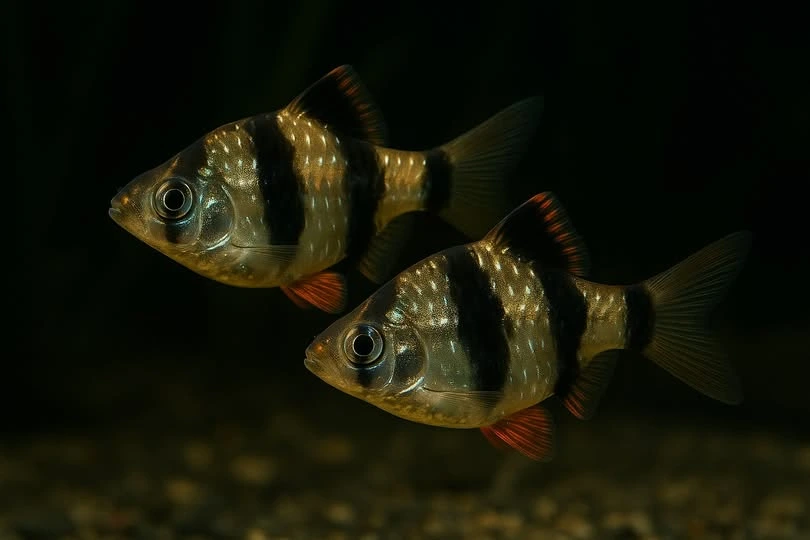
A faster, more determined version of the same problem, and tropical besides — tiger barbs want 24–26 °C, which a fancy should not be kept at. They shoal, they harass, and they strip trailing fins in days rather than weeks. There is no group size or tank length that makes this pairing safe.
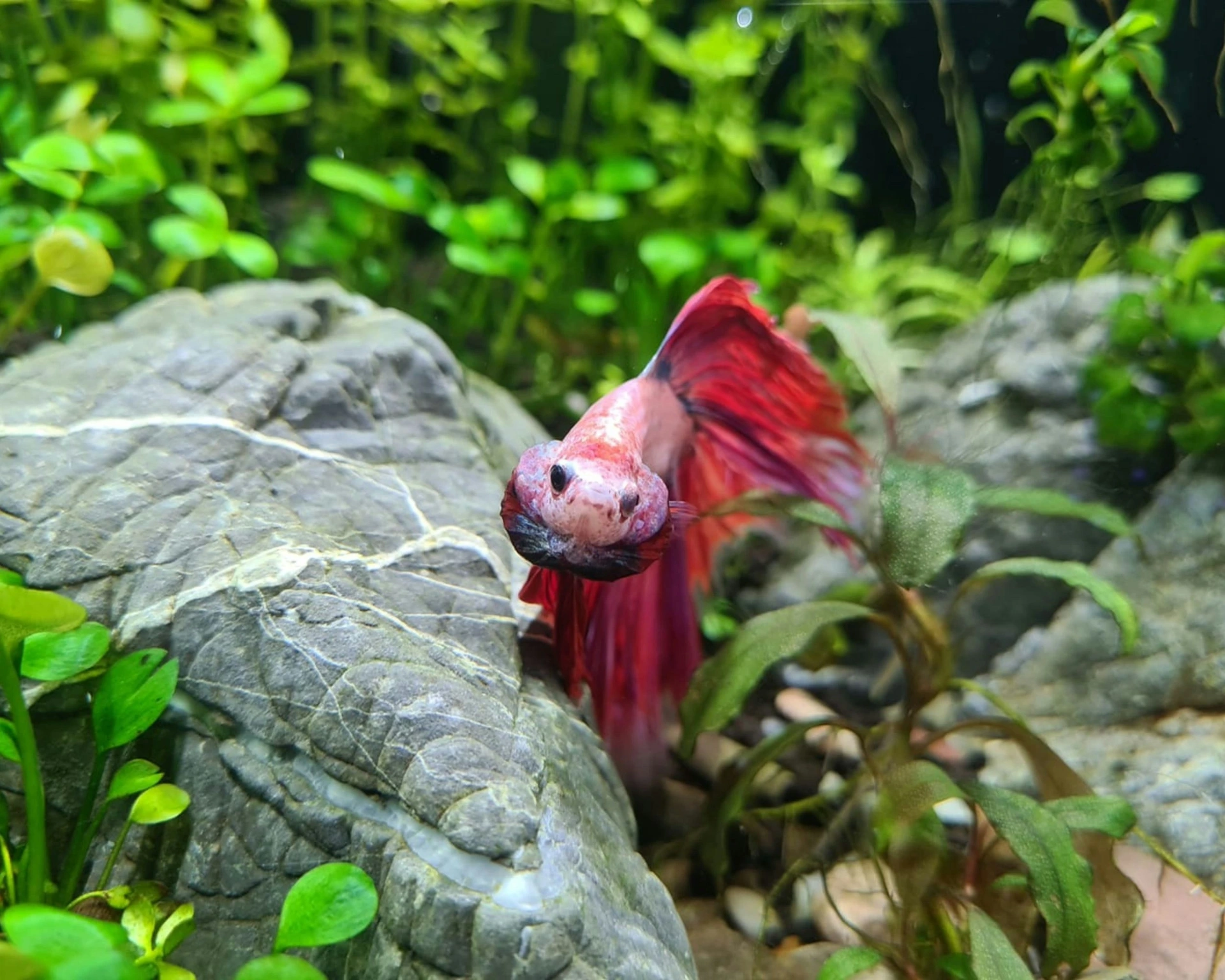
A betta needs 25–27 °C, several degrees above where a fancy goldfish should live, so the tank can only suit one of them. Beyond that, two slow fish with trailing fins and a shared preference for the same still water is a recipe for mutual nipping. The pairing is popular online and works for nobody.
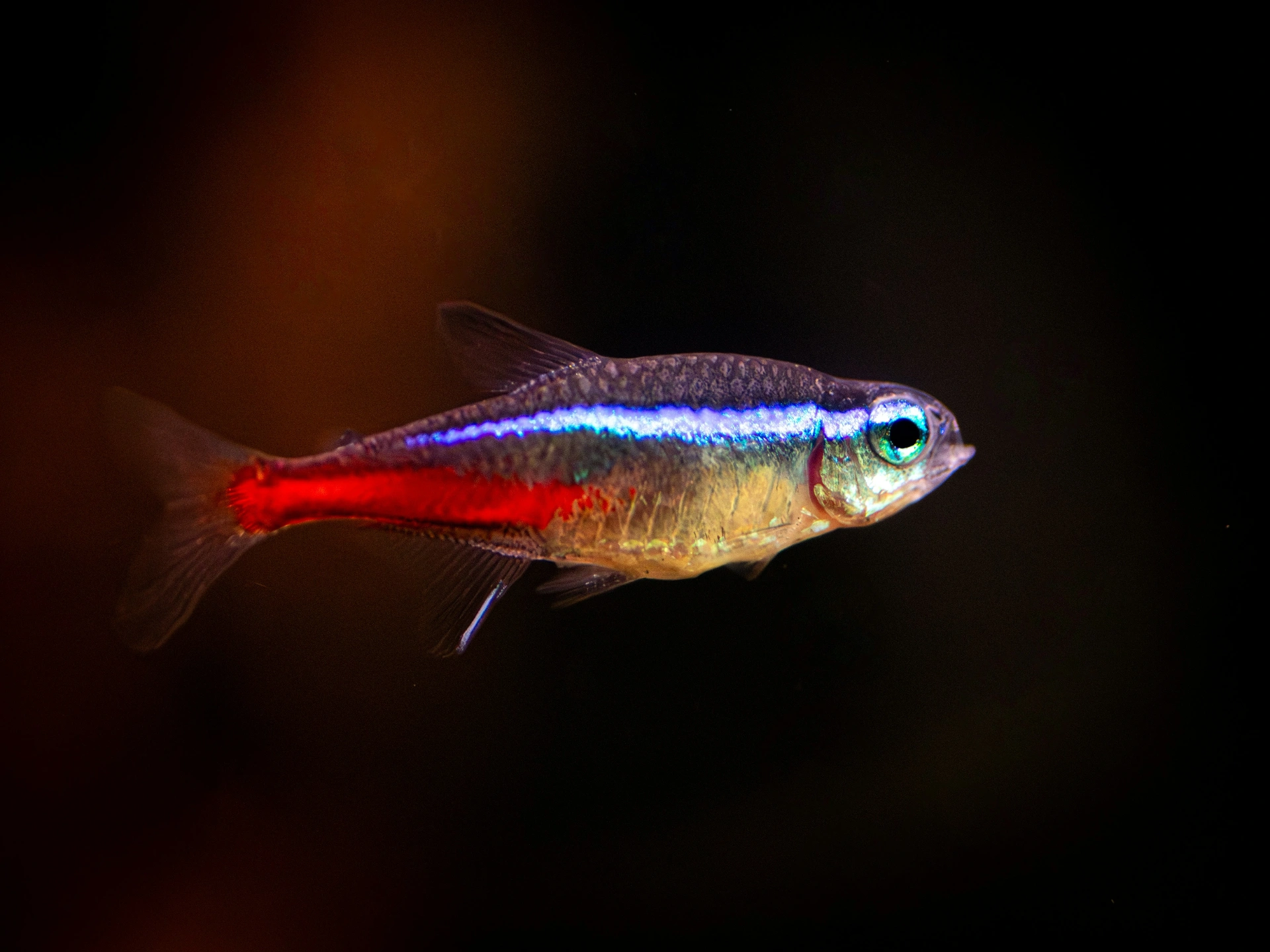
A fancy goldfish is slow but its mouth is not small, and a 3 cm tetra that swims into range at feeding time gets taken. Neons also want warm, soft, acidic water and stable conditions, none of which describes a goldfish tank. This is the pairing shops suggest most often and it fails on both counts.
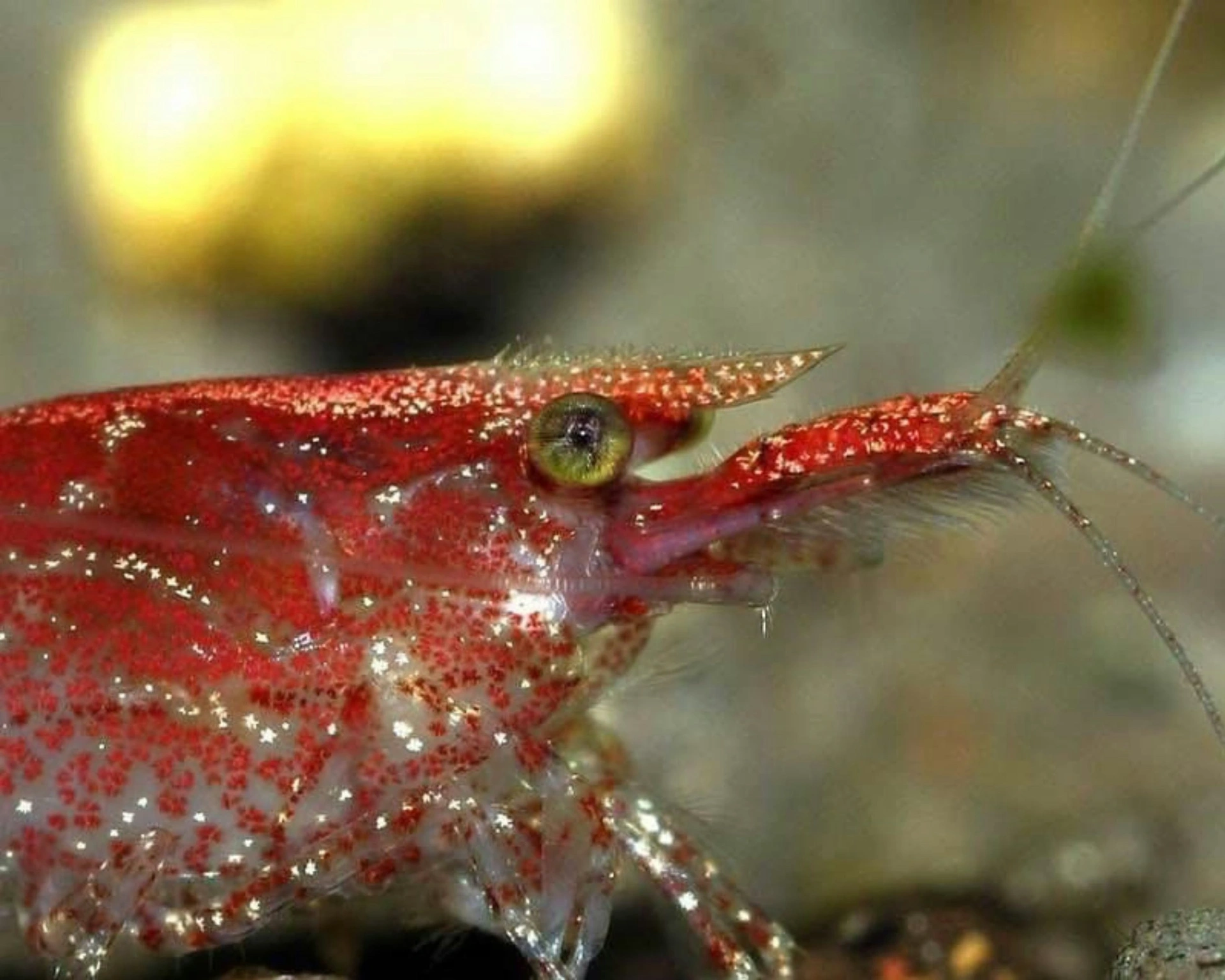
Goldfish eat shrimp, including a fancy that appears too clumsy to catch anything — they simply graze until they find one. A colony can persist for a while in heavy moss and then vanish over a single week. Cherry shrimp belong in their own tank if you want them to breed.
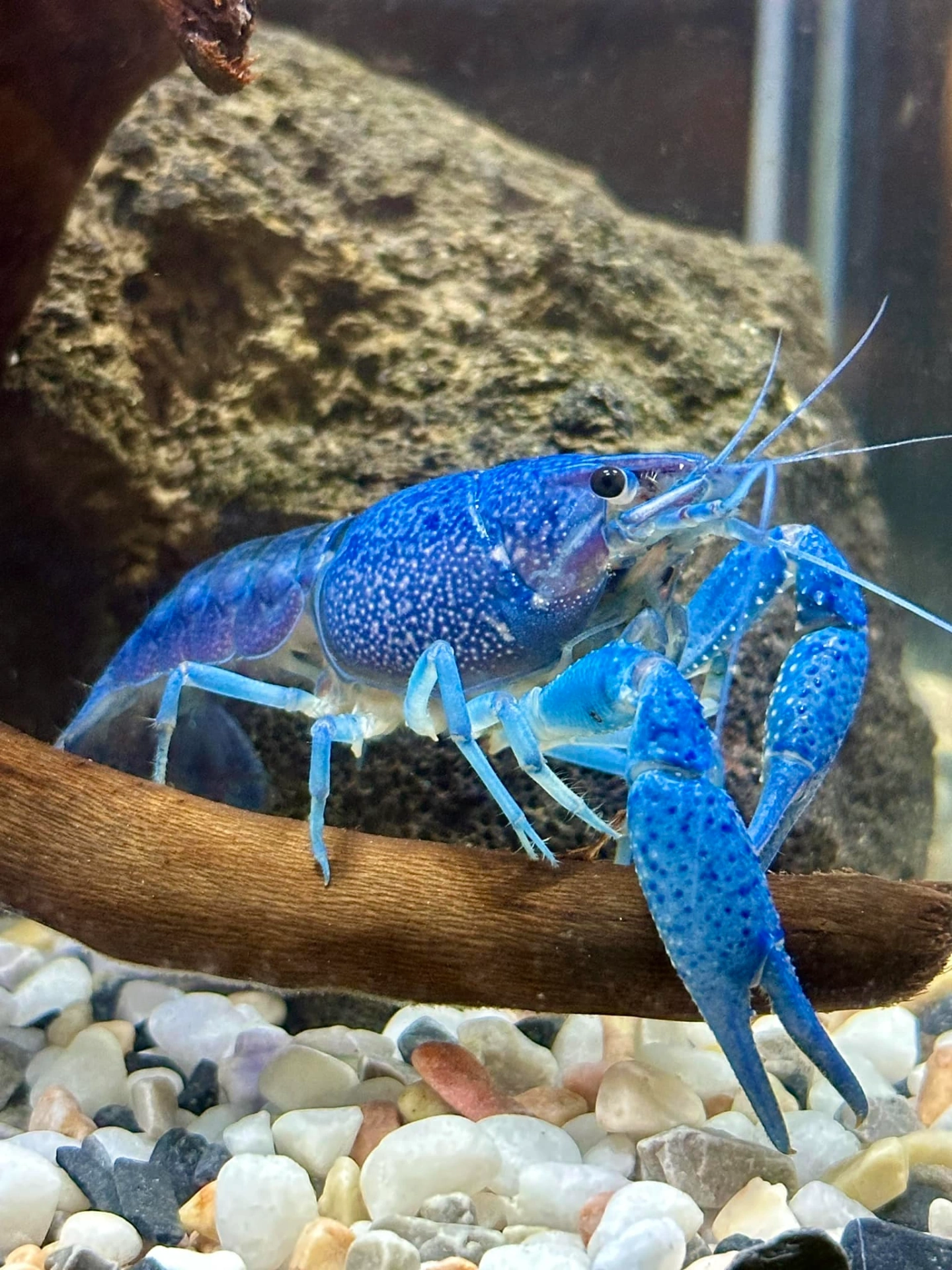
A crayfish spends the night with its claws up, and the slowest fish in the tank is the one that drifts into them. A fancy goldfish resting near the substrate is exactly that fish, and a lost tail or a damaged flank follows. Crayfish are also escape artists and opportunists with any dead or weakened stock.
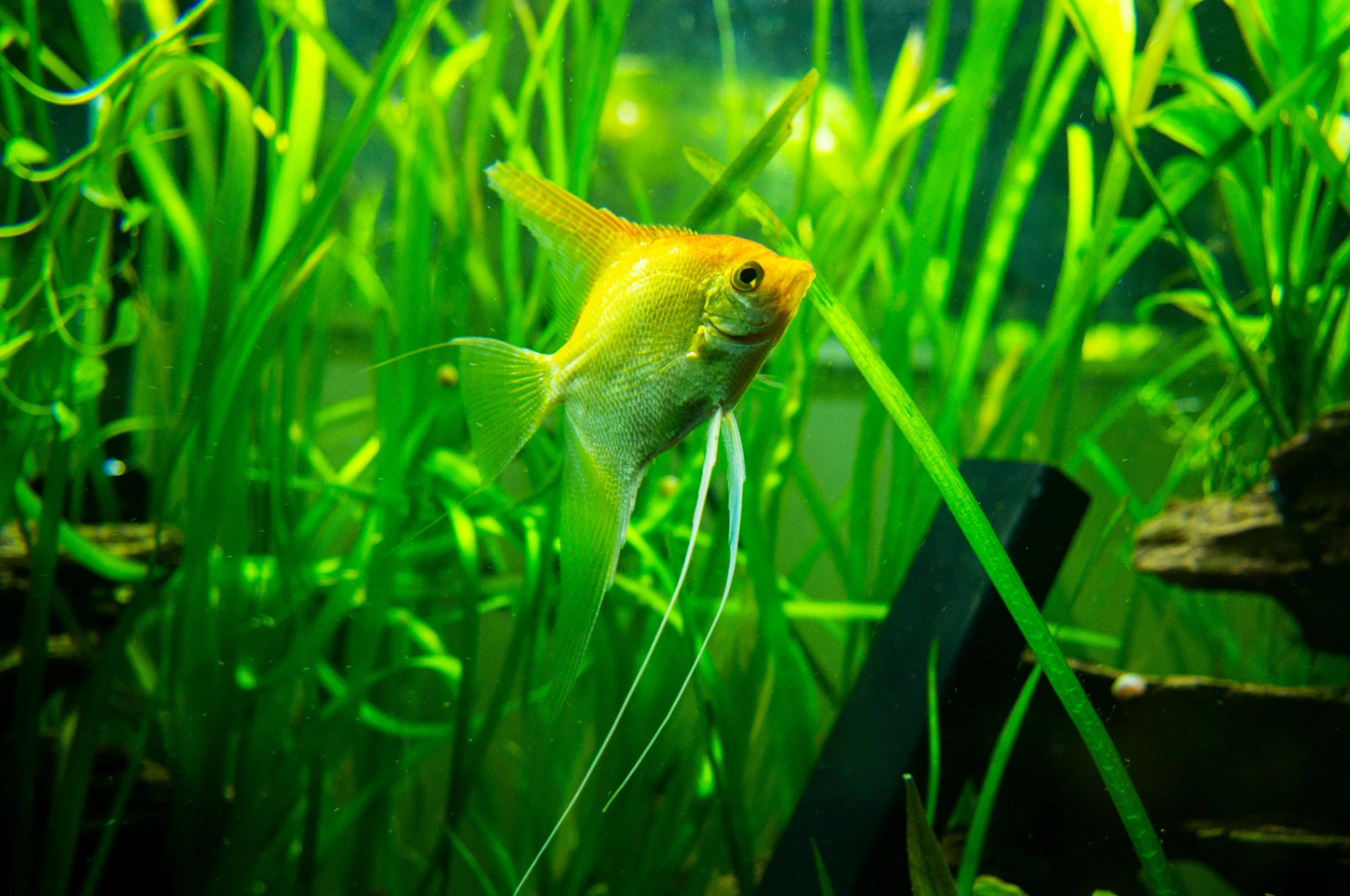
Angelfish need 24–30 °C and soft water; a fancy needs 18–22 °C and produces waste that pushes nitrate well past what an angelfish tolerates. Add that angelfish pick at slow-moving trailing fins as they mature and the pairing fails three separate ways. Nothing about tank size changes it.
Two that succeed or fail on how you feed rather than on the species itself.
Giant Danio
Devario aequipinnatus
Condition: Only in a 6 ft tank, with the goldfish fed separately
On paper the temperature and size both work, and giant danios are entirely harmless to a fancy. In practice they are the fastest feeders in the hobby and they will take a pellet out of the water before a slow goldfish has registered it. Where the tank is long enough to feed at two ends and you are willing to do that twice a day, the pairing is fine. In anything shorter the goldfish loses weight slowly and you notice it late.
Condition: Only if the tank runs at the warm end of the goldfish range
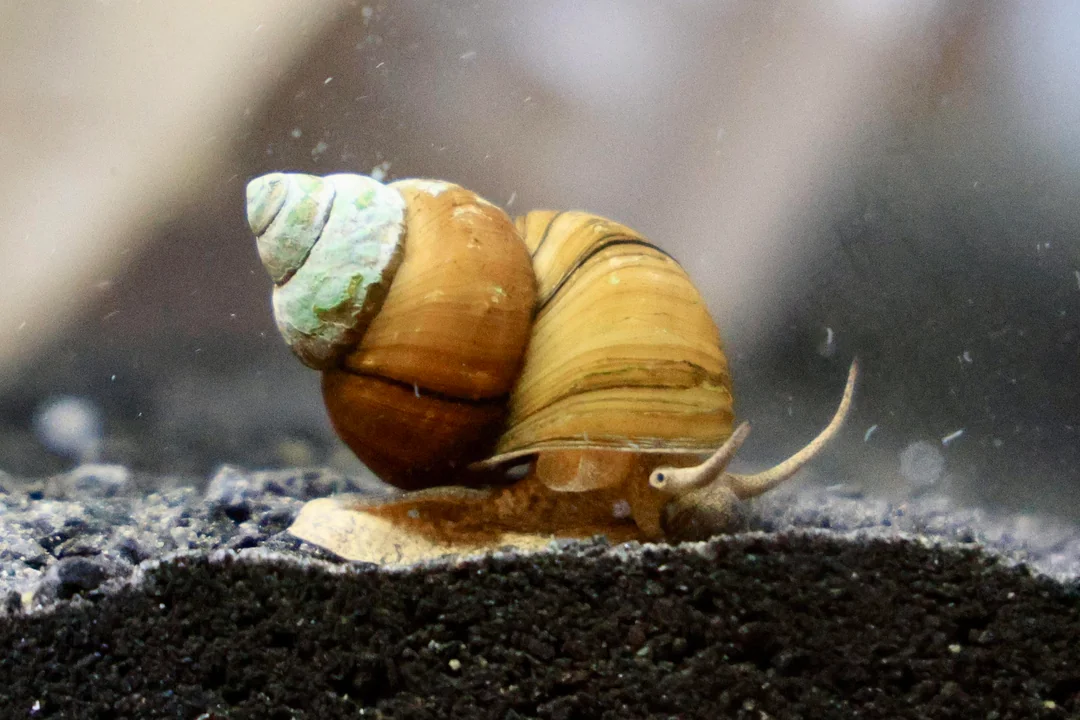
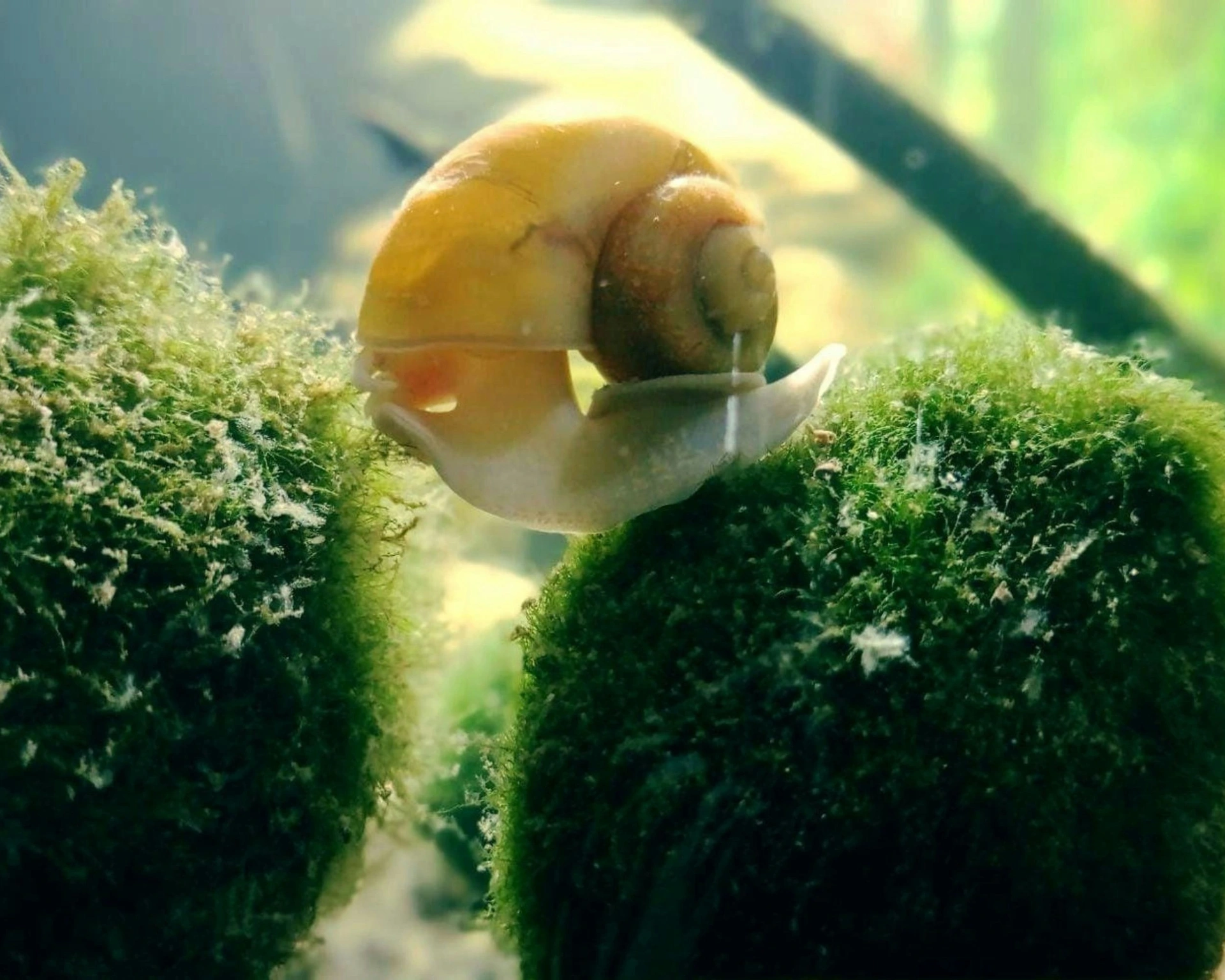
Mystery snails are peaceful, useful and completely uninterested in the goldfish, but they want 20 °C and above while a fancy is happiest a couple of degrees cooler. Where your tank sits at 21–22 °C the pairing works well. The other risk is the antennae: some goldfish pull at them repeatedly, which is enough to stop a snail feeding. Watch for a fortnight before deciding it has worked.
Drop your tank size and shortlist into the stocking calculator to check bioload, swim-level balance and compatibility flags.
Frequently asked questions
What can live with a fancy goldfish?
Cool-water species that feed without competing hard: weather loaches, hillstream loaches, peppered corydoras, gold barbs, pearl danios, rubber lip plecos and trapdoor snails. The common thread is that they tolerate 18–22 °C and none of them nip fins. Tropical community fish, including the ones shops routinely pair with goldfish, are not on the list.
Can fancy goldfish live with common goldfish?
They should not. A common goldfish is faster and reaches 30 cm against the fancy's 20, so it takes most of the food and the fancy slowly loses condition. The problem shows up as a thin fish months later rather than as visible conflict, which is why it is so often missed.
How big a tank does one fancy goldfish need?
Our database puts the minimum at 115 litres, about 30 gallons, for a single fish, with roughly 75 litres more for each additional fancy. The figure is driven by waste output rather than swimming space, so filtration and water change routine matter as much as the number on the tank.
Do fancy goldfish need a heater?
Usually not. They are comfortable at 18–22 °C, which most indoor rooms hold naturally. A low-set heater is worth having in a cold room to prevent overnight swings, but heating the tank into the tropical range stresses the fish and increases its already substantial waste production.
Will other fish nip a fancy goldfish's tail?
Many will. The divided tail is slow, conspicuous and hangs behind a fish that cannot turn quickly, which makes it the most obvious target in the tank. Rosy barbs, tiger barbs, serpae tetras and most barb species should be avoided for this reason, even the ones whose temperature range fits.
Can fancy goldfish live with shrimp or snails?
Snails yes, shrimp no. Japanese trapdoor snails are thick-shelled, cool-tolerant and largely ignored, and mystery snails work if your tank runs at the warmer end of the goldfish range. Cherry and other dwarf shrimp get eaten, usually faster than they breed.
Why is my fancy goldfish not getting any food?
Because something in the tank is faster than it is. Fancies are poor swimmers and many varieties have compromised eyesight, so they find food by searching rather than by sight. Feed sinking pellets directly where the goldfish is, and feed the other fish at the opposite end first.
Can I keep just one fancy goldfish?
Yes. They are sociable but not shoaling, and a single fish in a well-filtered 30 gallon is a better outcome than two in the same tank with the filtration stretched. If you want a second, plan for 190 litres or more before adding it.