Rainbow Shark Tank Mates: 7 Compatible Species (and 6 to Avoid)
Shops file the Rainbow Shark under community fish, and for the first year it usually behaves like one. What changes is maturity: at around 10 cm it stops sharing the tank and starts owning the bottom of it, patrolling a circuit of caves and wood and driving off whatever crosses the line. It is not an indiscriminate aggressor — most of its attention goes to fish that live on the floor or look like another shark — but the pairings that fail are exactly the ones the label encouraged. This list is written for the adult fish, not the juvenile in the bag.
Reviewed by the AquariumStocking team · Updated
The tank size that makes this work
Length is what decides this. A rainbow shark defends a patrol route along the bottom, and a long tank gives everyone else somewhere the route does not reach; a tall tank of the same volume does not. That puts the practical floor at 210 litres, roughly 55 gallons. Our database puts the rainbow shark minimum at 55 gallons.
55 gallons
One rainbow shark, no substitutes, plus mid-water fish that rarely descend. Break the floor into two or three separate cave zones with wood and rock so the shark cannot see the whole tank from one position — a clear line of sight is what turns patrolling into chasing. Keep the bottom otherwise clear of competitors at this size.
The point at which a second bottom-dweller becomes realistic, provided it is armoured or fast and does not look like a shark. A bristlenose pleco with its own wood at the far end usually holds a truce here. There is also room for two mid-water shoals, which spreads the shark's attention rather than concentrating it on one group.
Big enough for a full Southeast Asian community around the shark — barbs, danios, a rainbowfish group and a substantial mid-water population, with the shark simply one busy resident among them. Still one shark. Extra volume changes the odds between a shark and a barb; it does not change the outcome between two sharks.
Two rainbow sharks in anything short of a very large, heavily broken-up tank produce a winner and a casualty. The same applies to red tail sharks and to any similar torpedo-shaped bottom fish — the response is triggered by silhouette and by where the fish swims, not by species. If you want two, you want two tanks.
Stock upward, not downward
The safest tank mates are ones that live in the top two-thirds and have no reason to come down. Barbs, danios, rainbowfish and larger tetras all qualify, and a busy mid-water population also gives the shark something to watch that it cannot easily corner. Fish that graze the substrate all day are in its space by definition.
Choose fish that can shrug off a charge
A rainbow shark rarely inflicts real injury; it makes short rushes that fish either ignore or take badly. Robust, quick species treat it as background noise. Slow, long-finned or timid fish read every rush as a genuine attack and stop feeding, which is where the losses come from. Pick durability over gentleness.
Nothing small enough to be chased into a corner
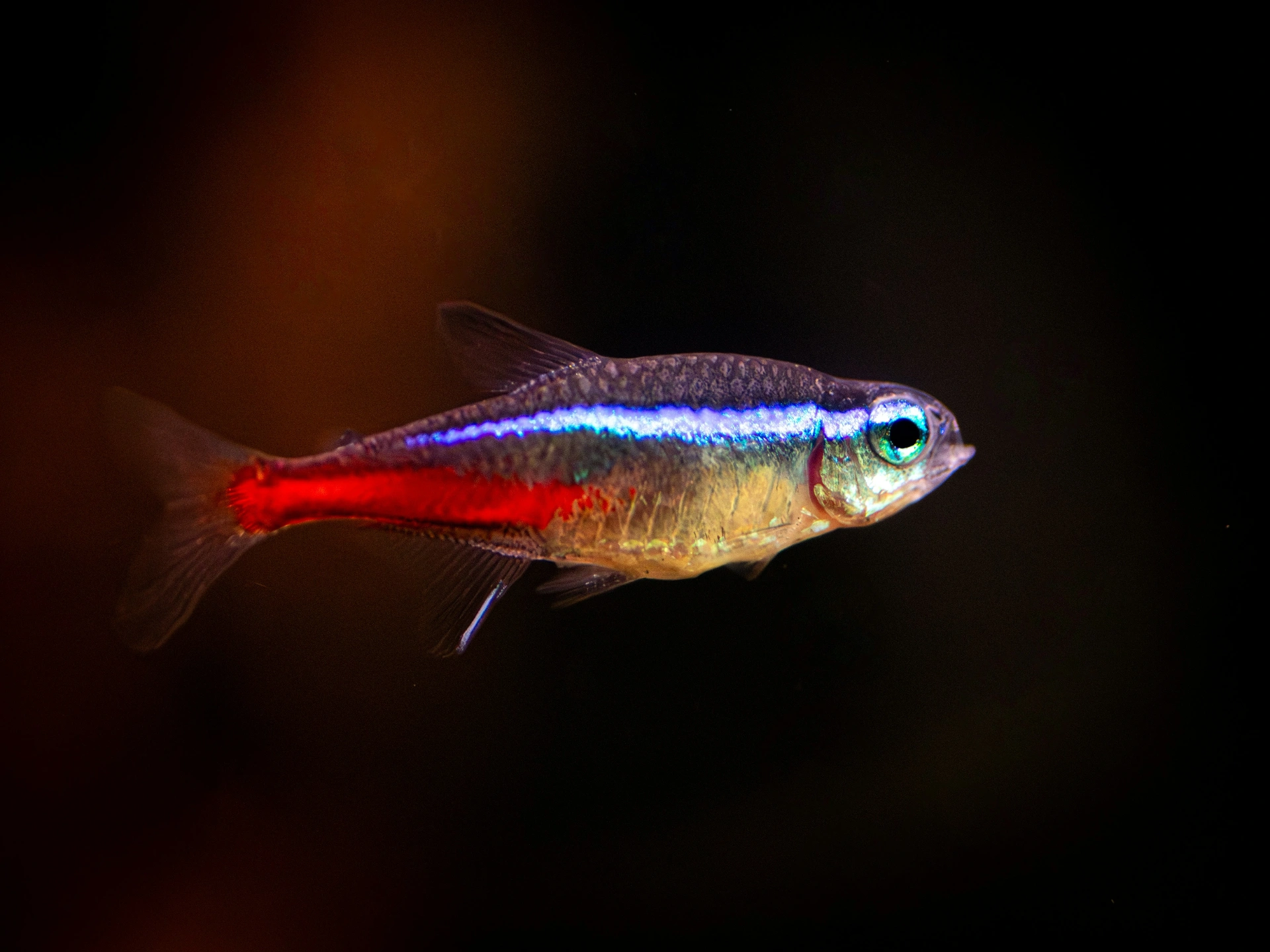
Neon tetras, chili rasboras, dwarf shrimp and pygmy corydoras are not eaten so much as harried — pushed into the top corners and kept there until they weaken. Anything under about 4 cm that lives near the bottom is unsuitable regardless of how peaceful the shark seems as a juvenile.
Break the sightlines before you add anything
Territory here is visual. A tank with a single open floor is one territory and the shark claims all of it; the same tank with rock piles and wood at both ends is three or four smaller ones with blind spots between. This single change does more for compatibility than swapping half the stocking list would.
Add the shark last
Introduce the rainbow shark after the other fish are settled and it arrives as the newcomer rather than the incumbent, which reduces how much ground it claims. If an established shark is already in place, rearranging the hardscape on the day you add new fish resets the territory and buys the newcomers a fair start.
Compatible species, ranked by fit
Seven species that hold the upper water, move fast enough to ignore a charge, and look nothing like a second shark.
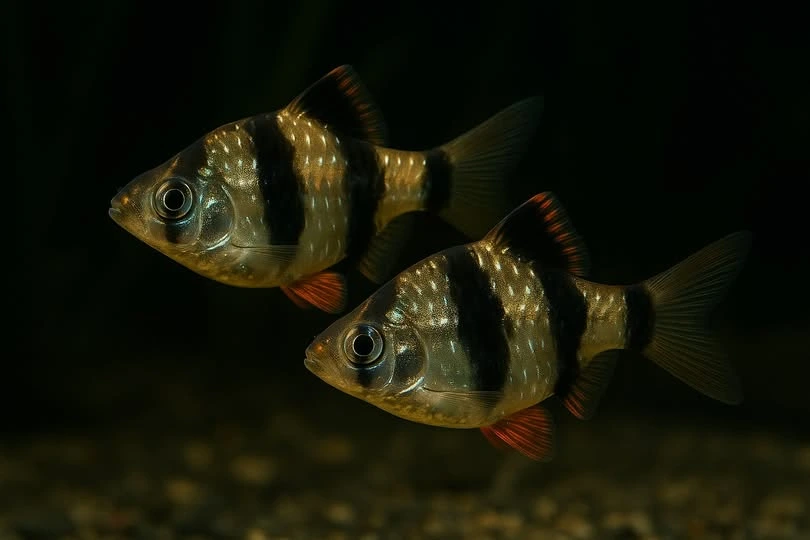
Tiger Barb
Puntigrus tetrazona
A boisterous mid-water shoal that is entirely unimpressed by a bottom-dwelling territorial fish, which is exactly what is wanted here. Tiger barbs stay high in the tank, feed fast at the surface and give the shark nothing to defend against. Keep at least ten so their nipping stays inside the group rather than being redirected. The pairing is loud and busy, and both species are better for it.
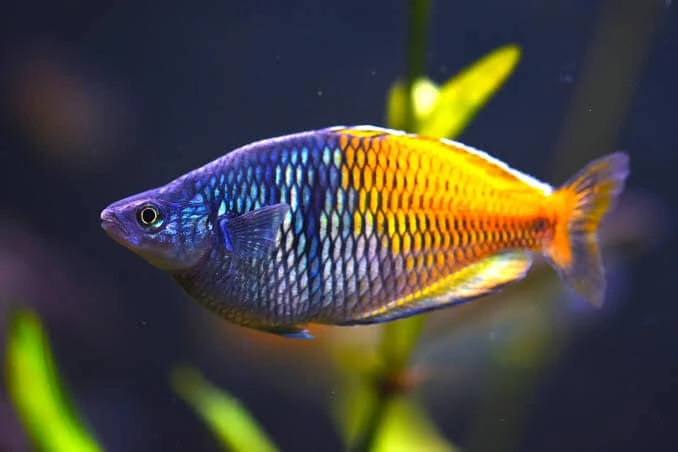
A 15 cm torpedo of a barb that matches the shark for size and outruns it comfortably, so a territorial rush registers as nothing at all. It wants the same warm, well-oxygenated, moving water and a long tank, which is the tank a rainbow shark needs anyway. Keep six or more — kept in pairs they become skittish and hug the back glass. The one caveat is bioload; this is a fish for 75 gallons and up.
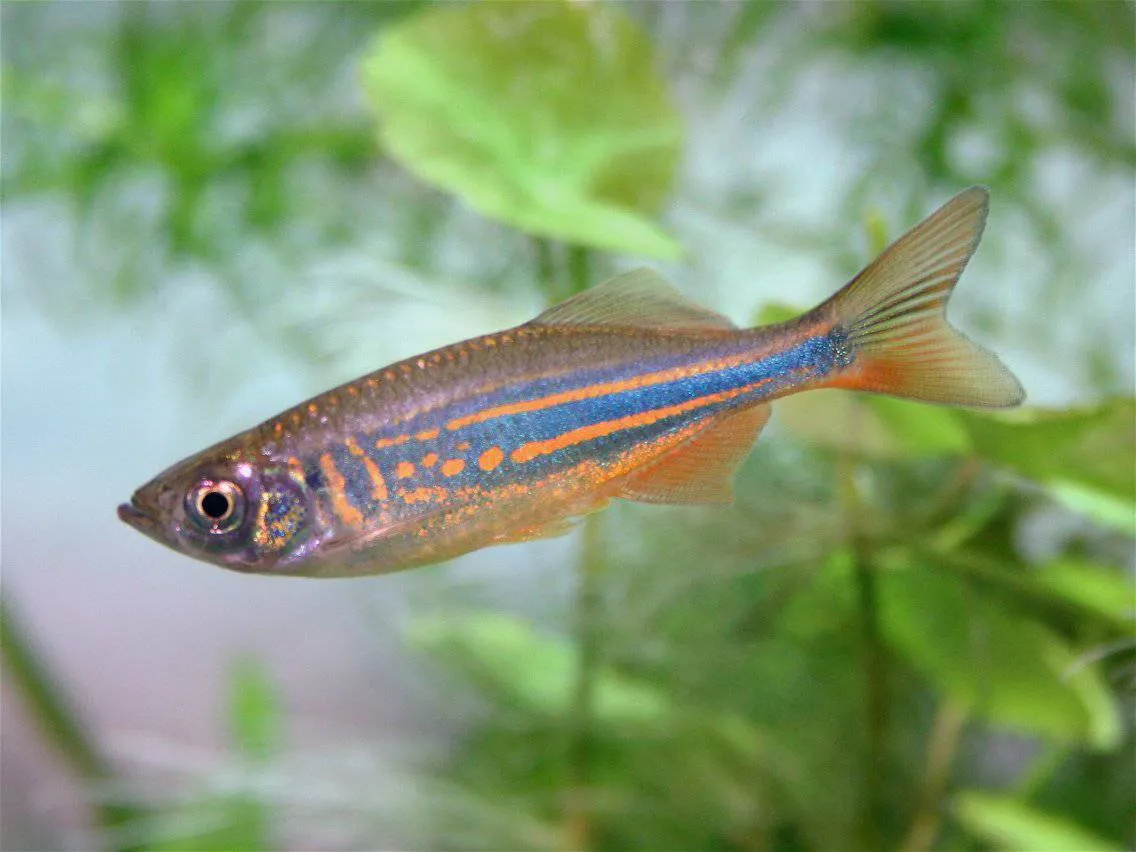
Holds the upper half of the tank permanently and has no interest in the substrate, which removes the conflict before it starts. Adults are deep-bodied and quick, so they are neither a target nor a look-alike rival. They colour up best in bright water with open swimming length, and that same open midwater keeps them clear of the shark's patrol. Five or more, with a couple of males for display.
Large enough not to be bullied and fast enough not to be caught, while staying in open midwater where the shark does not go. Its trailing fins raise a fair question, but rainbow sharks charge rather than nip, so the fins survive in a way they would not with a barb. It wants soft, slightly acidic water and dim overhead light, both compatible with a shark tank. Keep six or more or the males will not develop properly.
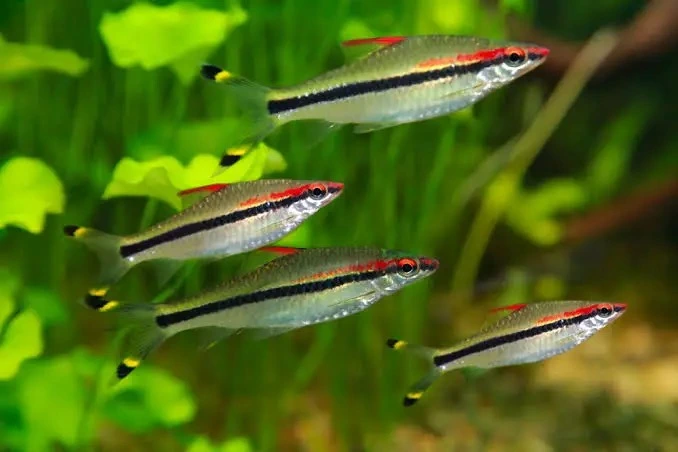
Ten centimetres of constant motion across the top of the tank, and a fish that a rainbow shark simply cannot corner. It doubles as an excellent dither species: nervous tank mates take their cue from confident swimmers overhead and stay out in the open. It needs length rather than volume and strong flow, which suits the same setup. Feed at the surface and it will take most of the food before anything sinks.
A sturdy, deep-bodied tetra that occupies midwater in a loose shoal and neither provokes the shark nor panics at it. Its short, robust body shape carries none of the risk that long trailing fins would, and it is large enough at 6 cm to be off the target list entirely. Keep six or more, since a small group turns nippy toward each other. Undemanding on water chemistry, which makes it easy to slot into an established tank.
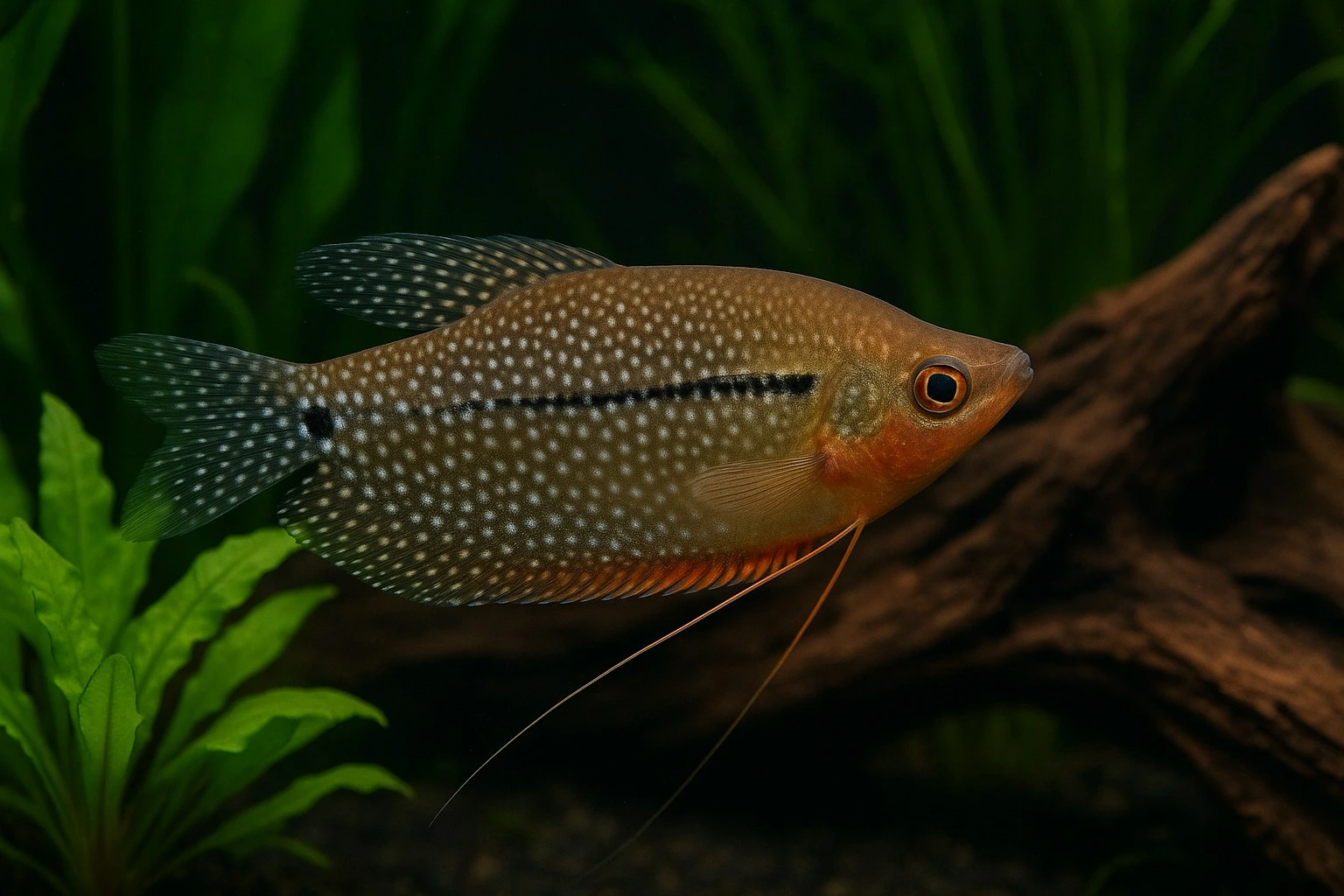
A surface-oriented labyrinth fish that spends its time at the top among floating plants, about as far from the shark's territory as the tank allows. It is calm without being timid, so an occasional rush from below does not send it into hiding. Give it still water at one end of the tank — the flow that a shark and its barbs enjoy is more than a gourami wants across the whole surface. One male with two females avoids display squabbles.
The single worst pairing available. The two are close relatives with the same silhouette, the same floor territory and the same intolerance, and neither recognises the other as anything but a rival. Fights are sustained rather than symbolic, and the outcome in a normal tank is one dead fish. No amount of hardscape or volume makes this reliable.
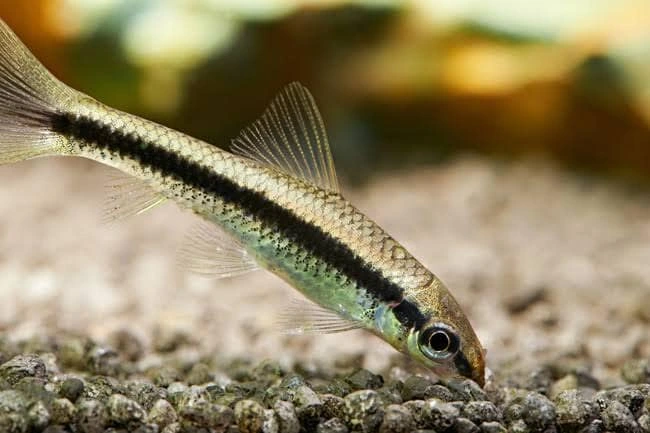
A useful algae eater and an unfortunate match here: long, slim, bottom-oriented and constantly moving across the substrate — a rainbow shark reads it as a competing shark. The chases are persistent rather than occasional, and the SAE spends its day being displaced from the surfaces it needs to graze. Choose a different algae eater for this tank.
Two bottom-claiming fish with overlapping habits, and the algae eater grows into a 25 cm adult that attaches to the flanks of other fish. Even if the shark wins the territory dispute, the loser is a large aggressive fish with nowhere to go. Neither species improves the other's tank.
Three centimetres, slow by comparison and prone to dropping toward the lower half of the tank when settled. A mature rainbow shark chases them off the floor repeatedly and the group stops feeding properly. Losses tend to be gradual and get attributed to water quality rather than to the shark.
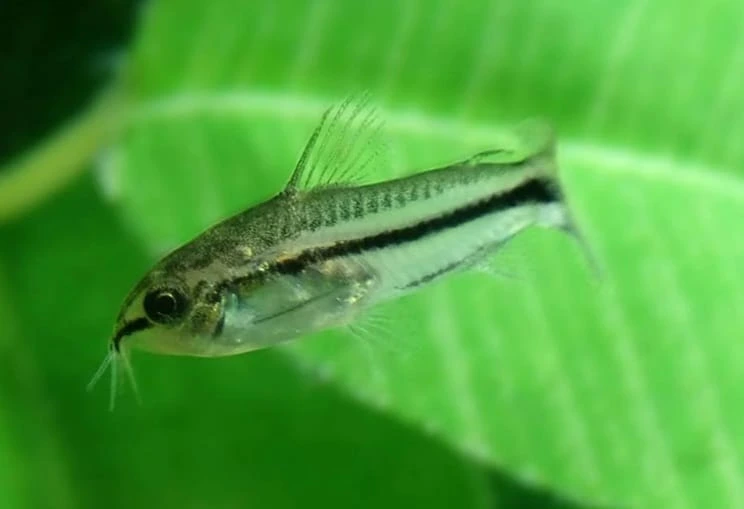
A bottom-dwelling group of 2.5 cm fish in a tank owned by a territorial bottom-dweller ten times their weight. They cannot use the substrate they need, and the sinking food they depend on is in contested ground. Full-size corydoras fare better; these do not.
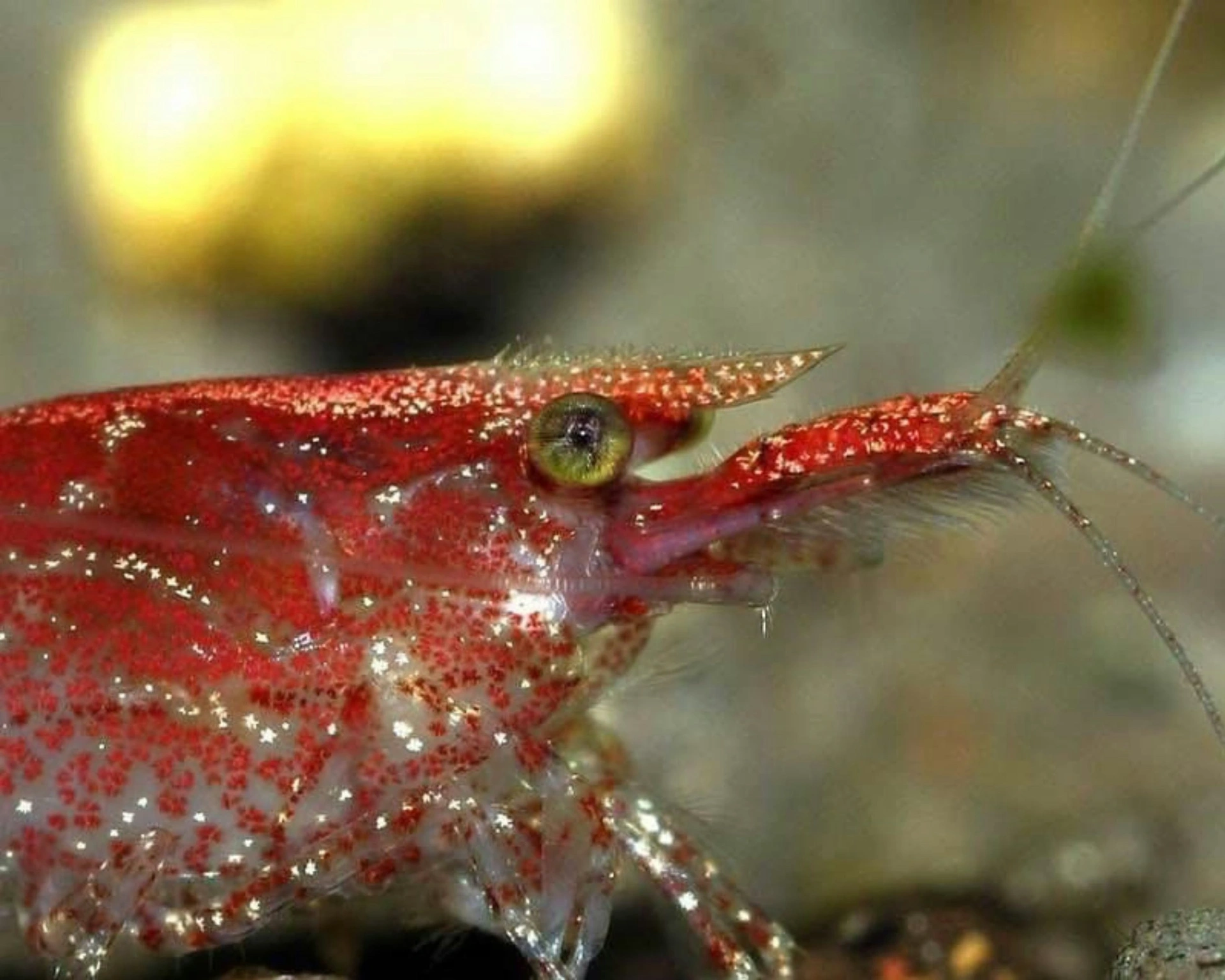
Dwarf shrimp live on exactly the surfaces the shark patrols, and adults are picked at while shrimplets simply vanish. Even where the colony survives in heavy moss, it never expands. Keep shrimp in a tank without a large territorial bottom fish in it.
Two that work in a big enough tank with the right layout, and fail in a small one.
Bristlenose Pleco
Ancistrus sp.
Condition: Only from 75 gallons, with separate wood at opposite ends
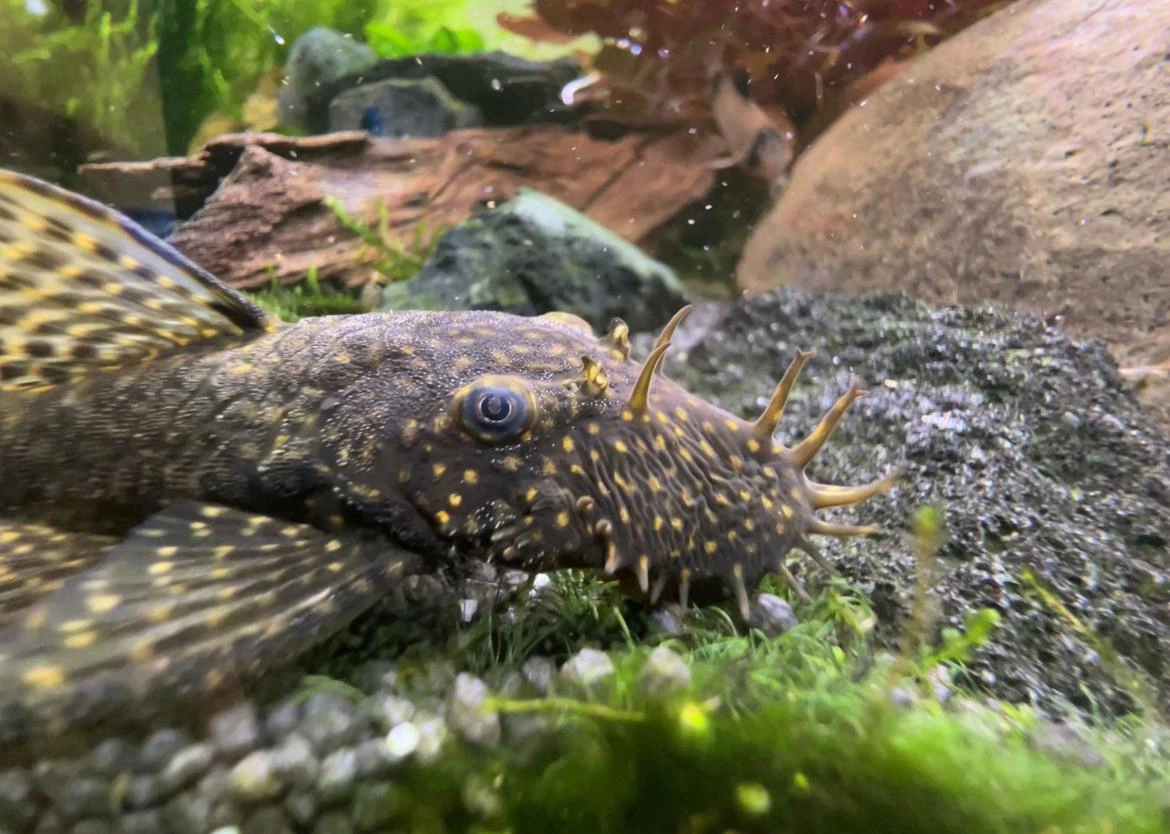
Both fish want caves and both work the same surfaces, so this is a direct territorial overlap rather than a temperament question. In a long tank with two distinct wood piles they settle into separate ends and largely ignore each other; in a 55 gallon with one centrepiece they contest it nightly and the pleco loses feeding time. The pleco's armour means damage is rare, but chronic displacement still costs it condition. Watch which fish is sitting in the cave at lights-out.
Condition: Only in a tall, planted tank of 75 gallons or more
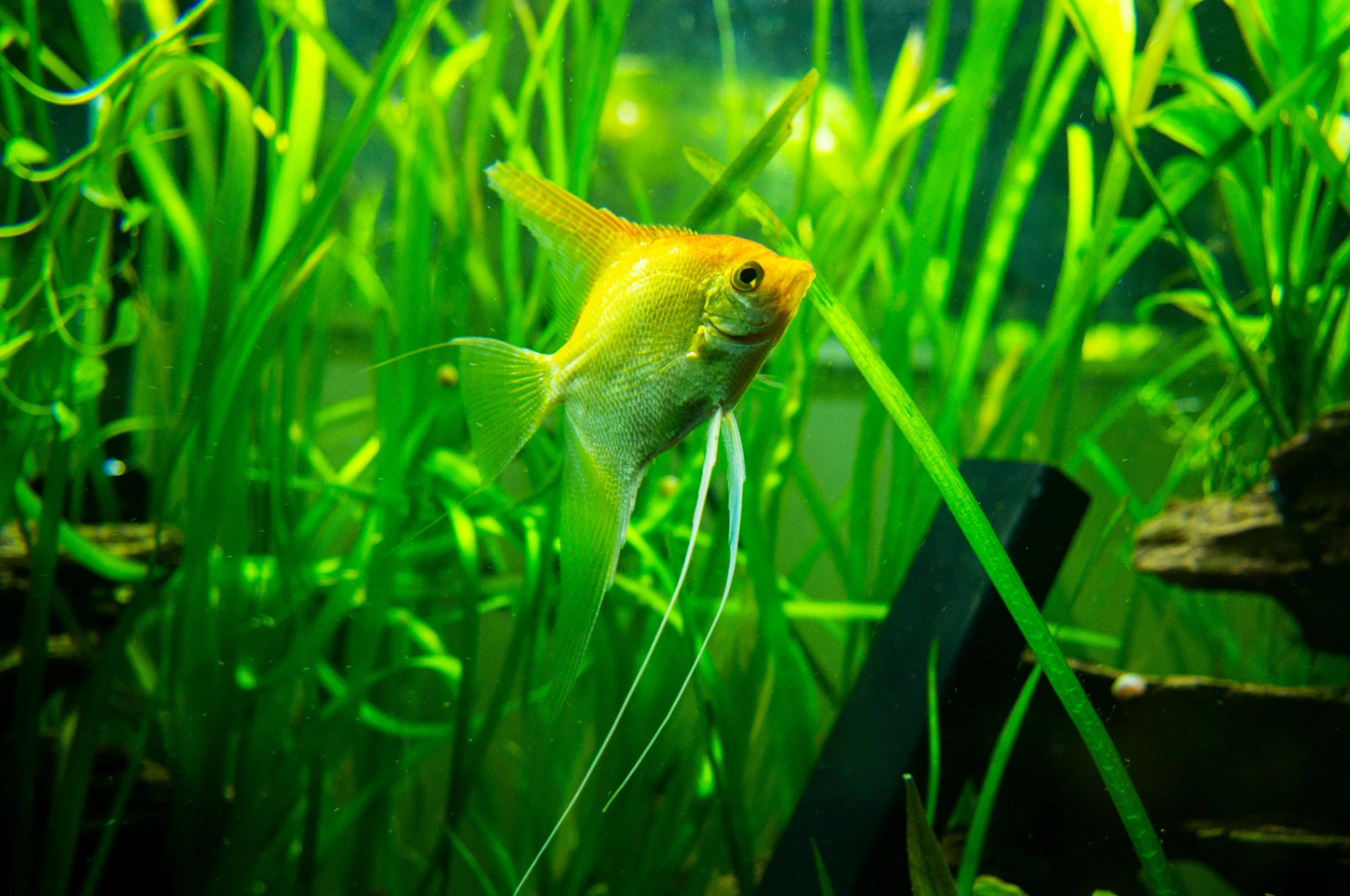
Angelfish stay in the upper and middle water and the pairing usually reads as calm, right up until the angels pair off and claim a spawning site low on a leaf or a piece of slate. That is the shark's ground, and neither fish backs down. In a tall, densely planted tank there is enough vertical separation for the spawn to happen out of reach. In a shallower one, expect a standoff every few weeks.
Drop your tank size and shortlist into the stocking calculator to check bioload, swim-level balance and compatibility flags.
Frequently asked questions
Are rainbow sharks community fish?
Partly, and the qualifier is the whole story. They are safe with robust mid-water fish that stay off the substrate — barbs, danios, rainbowfish, larger tetras — and unreliable with anything that lives on the floor or is small enough to be chased into a corner. The reputation for being community safe comes from juveniles; territorial behaviour appears at around 10 cm.
Can two rainbow sharks live together?
No, not in a normal home aquarium. Two mature rainbow sharks fight over the same floor territory until one is badly damaged or dead. This is the most consistent rule on the page, and it applies to red tail sharks and similar-shaped bottom fish as well.
What size tank does a rainbow shark need?
Our database sets the minimum at 210 litres, about 55 gallons, and length matters more than volume. The fish patrols a route along the bottom, so a long tank gives the rest of the stock somewhere that route does not reach.
Can rainbow sharks live with plecos?
From 75 gallons up, with two separate pieces of wood at opposite ends, usually yes. In a smaller tank with a single cave the two contest it every night and the pleco loses feeding time. Watch who occupies the cave after lights-out — that tells you whether the arrangement is working.
Why has my rainbow shark suddenly turned aggressive?
It matured. The change typically arrives between 8 and 12 cm, when the fish establishes a territory it did not previously hold. Rearranging the hardscape into several broken-up zones resets the claim and usually reduces the chasing considerably.
Do rainbow sharks eat other fish?
Rarely. They are omnivores that graze algae and take sinking food, not predators. The damage they do is behavioural — sustained chasing that stops smaller fish from feeding and resting — rather than predation.
What is the difference between a rainbow shark and a red tail shark?
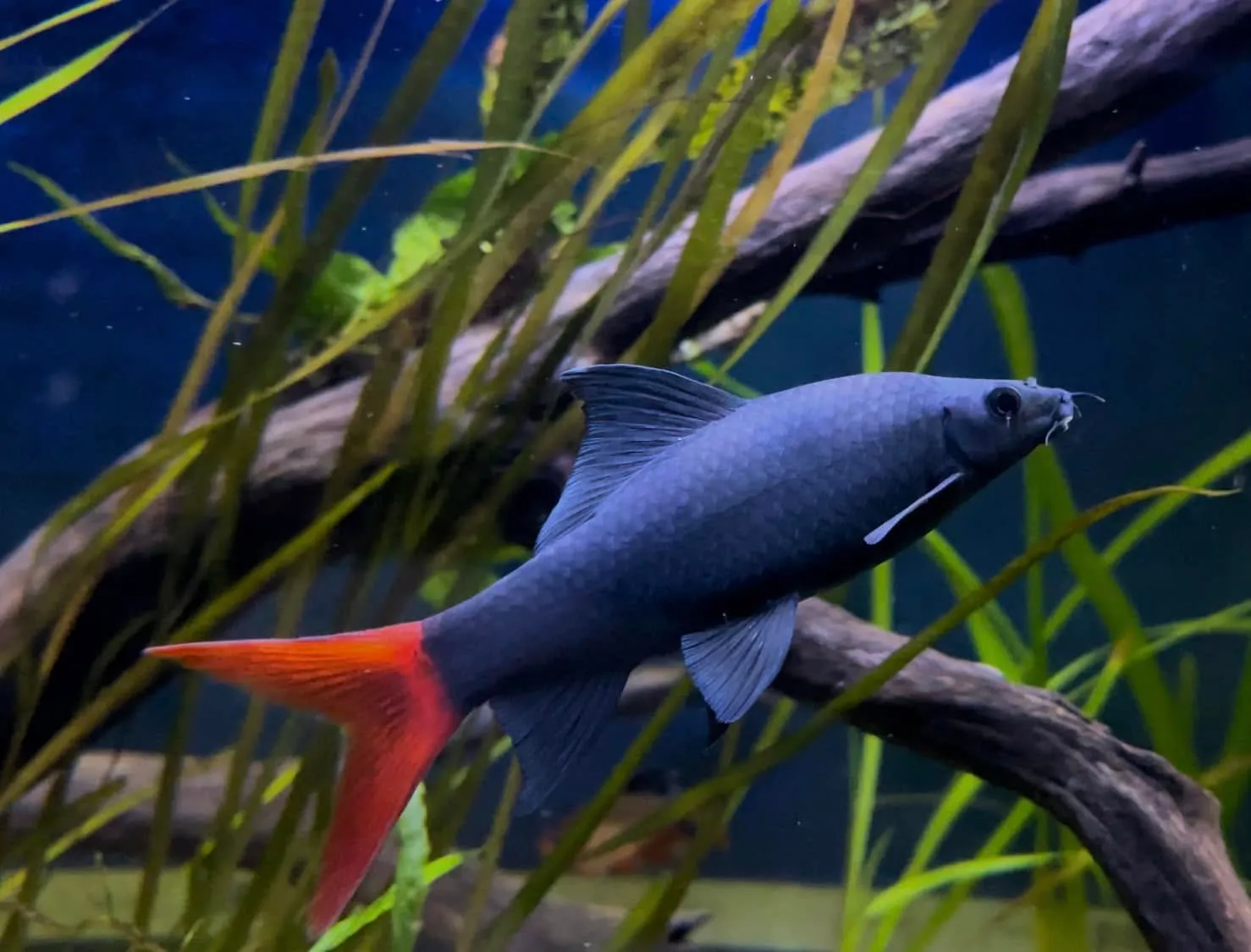
The rainbow shark has red fins across the body; the red tail shark is jet black with a single red tail. The red tail is the more aggressive of the two and needs a stricter stocking list, but both defend the bottom of the tank and neither tolerates the other.