
Dwarf Hairgrass Care Guide
Eleocharis parvula (syn. Eleocharis acicularis)
Reviewed by the AquariumStocking team · Updated August 2026
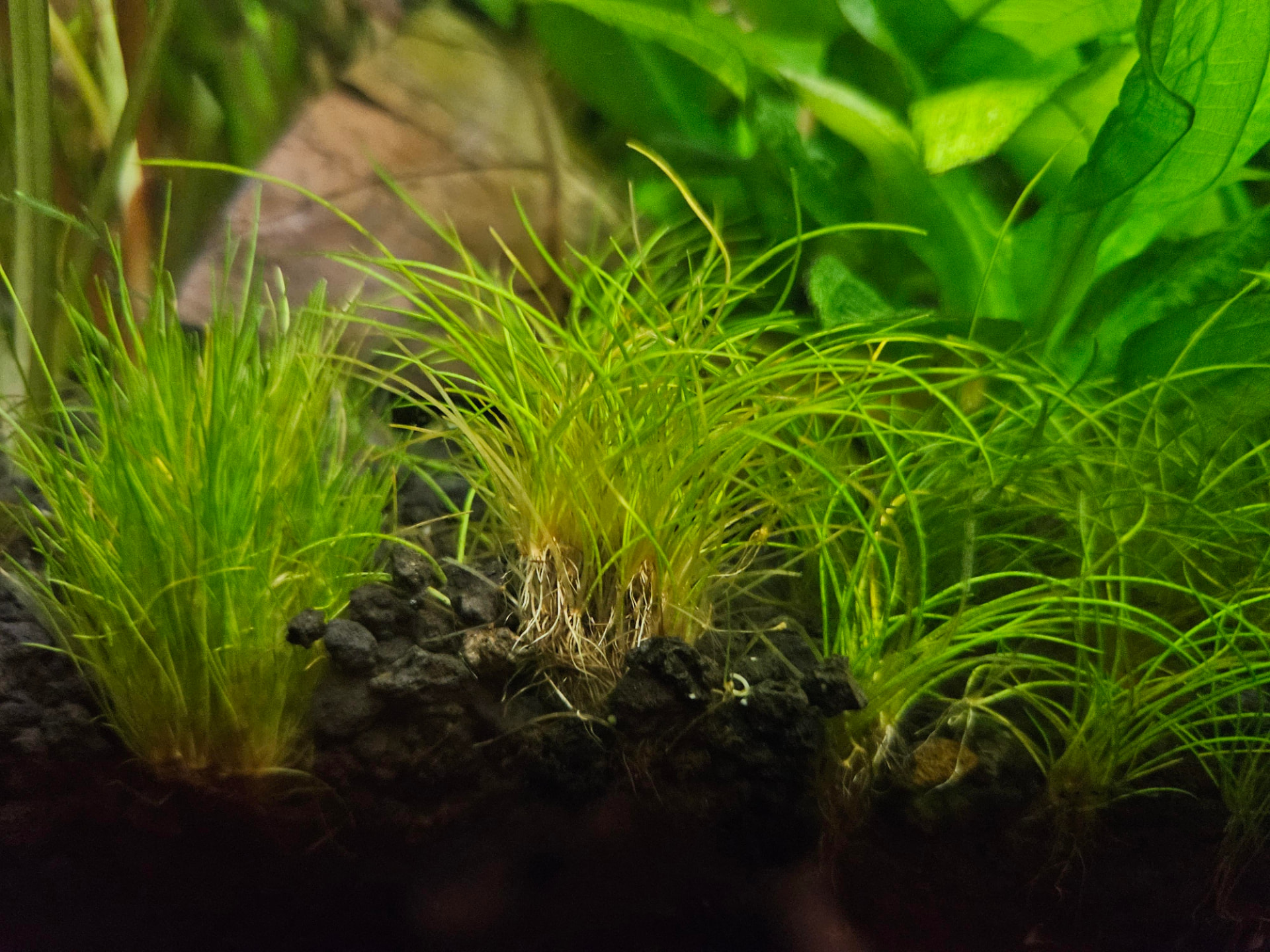
The first genuine carpet on this site, and the first plant here that will not deliver without strong light reaching the substrate. Under low light it does not carpet — it grows tall and thin and reaches for the surface.
Dwarf Hairgrass quick facts
- Light demand
- High
- CO2 requirement
- Beneficial
- Difficulty
- Intermediate
- Growth rate
- Medium
- Placement
- Foreground
- Growth habit
- Carpeting
- Substrate need
- Fine nutrient substrate
- Max size
- 10 cm (3.9 in) tall, ~30 cm wide
- pH
- 6.0–7.5
- Hardness
- 2–12 dGH
- Propagation
- Horizontal runners producing new plantlets alongside the parent
- Temperature
- 20–26 °C (68–79 °F)
Fine grain matters as much as nutrients. Coarse gravel will not hold the shallow roots or let runners travel, so clumps lift and the carpet never joins up.
Overview
Dwarf hairgrass (Eleocharis parvula) is the plant most people picture when they picture a planted tank: a short green lawn across the foreground, spreading sideways by runners until it joins into a continuous mat. It is the first genuinely demanding plant covered on this site, and the first where a low-tech setup will not get the result shown on the box.
The demand is specific and worth stating before anyone buys: light has to reach the substrate at real intensity. Under weak light hairgrass does not fail dramatically — it survives, and grows tall and sparse, each blade stretching upward for the surface instead of running sideways. That is the failure mode, and it is a slow, disappointing one rather than an obvious death.
CO2 is the second variable. Injection is not strictly required, but it is the difference between a carpet that closes in six weeks and one that is still patchy after six months. Combined with the fine substrate it needs and the fish that will dig it up, this is a plant that asks you to design the tank around it rather than adding it to a tank you already have.
What you're buying
Almost all dwarf hairgrass is grown emersed — in nurseries as a dense pot of short blades in rock wool, or in tissue culture as a sterile cup of gel-bound plantlets. Neither is submersed growth, and both convert after planting.
Pots vs tissue culture
Potted plants give more mass immediately but carry snails, algae and rock wool. Tissue culture is pest-free and cleaner to divide, with less starting material for the money.
Expect the melt
Emersed blades die back after flooding and are replaced by shorter, finer submersed growth. A carpet that browns in week two is converting, not dying.
Check the height on the plant
If the blades in the pot are already long and the label just says "hairgrass", you may be buying E. acicularis. Short, fine blades suggest E. parvula.
Buy more than one pot. A single pot divided into small clumps covers a surprisingly small area at proper spacing, and starting sparse in a high-light tank means weeks of open substrate for algae to colonise before the carpet closes.
If the tank is not built yet, a tissue-culture cup is the better choice for a dry start — the material is clean, small and easy to plant into damp substrate before there is any water to work through.
Light, CO2 & nutrients
Light
High
CO2
Beneficial
Fertilisation
Root tabs and water column
Light
This is the plant that breaks the low-light pattern on this site. Dwarf hairgrass needs genuinely strong light at substrate level, and the qualifier matters: the reading that counts is what reaches the bottom of the tank, not the output at the fixture. A tank that is deep, tinted with tannins, or covered by floating plants can have a powerful light and a dark foreground.
Give it too little and it does not die, it stretches. The blades grow long, thin and vertical, reaching for the surface, and the plant puts its energy into height rather than runners. That is the definitive symptom, and it is the one thing no fertiliser or CO2 adjustment will correct.
Eight to ten hours of strong light is a reasonable target, but be aware you have taken on the rest of the bargain at the same time: high light with marginal CO2 and nutrients is the classic recipe for algae in an open, slow-filling carpet.
CO2
Marked beneficial rather than required, and the distinction is honest but narrow. Without injection hairgrass grows and can carpet in a bright, well-fed tank; with it, the carpet closes several times faster and stays denser and shorter.
The reason is that carpeting is a runner-growth behaviour and runners are expensive. A plant with plenty of carbon spends the surplus spreading sideways; a plant that is carbon-limited spends what it has staying alive and growing upward. That is why the same light level can produce a lawn in one tank and a thin meadow in another.
If you are running high light without CO2, expect a longer, riskier establishment period and be stricter about nutrients and algae control during it.
Work out the injection rate a carpet actually needs →
Nutrients
Hairgrass feeds from both directions, which is unusual among the plants here. The fine root system takes up nutrients from the substrate, so root tabs and an enriched soil genuinely contribute, and the blades take from the water column, so liquid dosing matters too.
Iron and potassium show up first when something is short: pale, yellowing blades and slow spread. Because the plant is small and the deficiency is spread across thousands of thin blades, it reads as general poor colour rather than a distinct symptom on one leaf.
Feed the substrate before planting rather than after. Pushing root tabs into an established carpet means disturbing exactly the shallow root network you spent weeks growing.
Water & temperature
pH
6.0–7.5
Hardness
2–12 dGH
Temperature
20–26 °C (68–79 °F)
Chemistry is not the hard part. Roughly 6.0–7.5 pH and soft to moderately hard water at 2–12 dGH suit it, which covers most planted-tank conditions, and very hard water is the main thing to avoid.
Temperature is worth watching more than usual. It prefers the cooler end of the tropical range, around 20–26 °C, and a tank run warm for discus or similar will slow the spread and soften the growth.
Flow matters indirectly: good circulation carries CO2 and nutrients down into the carpet, and a dead spot in the foreground shows up as a patch that never fills in while the rest of the lawn thickens.
Planting
- 1Rinse the pot or tissue-culture cup and remove every trace of rock wool or gel from the roots.
- 2Divide the portion into small clumps of roughly five to ten blades each — a single pot should give you a dozen or more.
- 3Trim the blades back by about half before planting; less top growth means the clump puts its energy into roots and runners.
- 4Plant each clump with tweezers into fine substrate, 2–3 cm apart, gripping the roots rather than the blades.
- 5Push just deep enough that the roots are covered and the crown sits at the surface — too shallow and it floats loose, too deep and it rots.
- 6Fine grain matters here as much as fertility: runners travel through soft substrate and cannot push through coarse gravel.
- 7Expect six to ten weeks before the clumps knit into a carpet, and a browning-off of the emersed blades in between.
- 8Alternatively dry start: plant into damp substrate with no water, seal the tank with cling film, mist daily, and flood after four to six weeks with the carpet already established.
Plant small and plant often. The instinct is to press the whole pot in as one clump, and it produces a dense tuft that never spreads and rots underneath. Split it into portions of a few blades each and plant them 2–3 cm apart — sparse-looking at first, fully carpeted far sooner.
Placement & aquascaping role
Foreground, and effectively nowhere else. At 5–10 cm mature height for true E. parvula, it sits in front of everything and defines the open space rather than filling it. In a small tank it can carpet the entire base; in a larger one it works better as an open lawn between hardscape than as wall-to-wall coverage.
The important placement decision is vertical, not horizontal. Anything you put above the foreground competes with the carpet for light — floating plants most obviously, but also tall stems that lean forward and broad epiphytes on wood angled over the front. A shaded patch of hairgrass stretches while the rest of the lawn stays short, and the mismatch is very visible.
It also sets the substrate depth for the whole layout. Fine grain at 3–5 cm in the foreground gives the runners something to travel through, which is a different requirement from the deeper, coarser bed a rooted rosette plant wants at the back.
Growth, trimming & maintenance
The first month is slow and looks like failure. Newly planted clumps sit still, the emersed blades brown off, and nothing appears to happen while the plant builds roots and starts its first runners. Six to ten weeks to a closed carpet is a normal timeline with good conditions; longer without CO2.
Trimming is the counterintuitive part. Cutting the carpet back with scissors — taking the top third off the blades — pushes the plant into horizontal runner growth rather than vertical extension, so the lawn thickens and spreads faster after a trim than if left alone. A hairgrass carpet that is never trimmed gradually becomes a meadow.
Siphon the clippings out immediately. Cut blades float, settle back into the carpet and rot in it, and they are almost impossible to remove once they have sunk into a dense lawn.
Older carpets thicken to the point where the bottom layer is shaded and dies, and the mat starts lifting off the substrate in sheets. When that happens the fix is to tear out sections, thin them and replant, rather than trying to rescue the existing mat.
Propagation
Hairgrass spreads by runners: horizontal stems that travel just under the substrate surface and send up new plantlets at intervals alongside the parent. That is a different mechanism from every other plant on this site — not plantlets on a leaf, not fragmentation, not a flower stalk — and it is why the plant carpets rather than clumps.
It means propagation is the same process as establishment. You do not propagate hairgrass as a separate task; you create the conditions for runners and then harvest sections of the carpet once it has spread.
- 1Wait until the original clumps have visibly joined up and the carpet is dense.
- 2Push your fingers or tweezers under a section and lift it free with its roots and runners intact.
- 3Trim the blades of the lifted section back by about half to reduce the load while it re-establishes.
- 4Divide it into small clumps again — the same size you would plant from a pot.
- 5Replant at 2–3 cm spacing in the new area or tank, into fine substrate.
- 6Trim the parent carpet where you harvested; it fills the gap back in within a few weeks.
Troubleshooting & diagnosis
Hairgrass problems are diagnosed by shape rather than colour. Tall and thin means light; brown right after planting means conversion; never filling in means the whole environment is marginal rather than one thing being wrong.
| Symptom | Likely cause | Fix |
|---|---|---|
| Grows tall and thin instead of spreading sideways | Not enough light reaching the substrate | Increase intensity or reduce depth and shading; remove floating plants above it. |
| Melts and browns in the first two weeks after planting | Emersed-to-submersed conversion | Expected. Trim the dead blades off and wait for finer submersed growth. |
| Establishes but never fills in | Light, CO2 and nutrients all marginal rather than one deficiency | Raise all three together — fixing only one rarely changes the outcome. |
| Algae growing through the carpet | High light on slow-growing, sparse coverage | Prevention only. You cannot pick algae out of a lawn — shorten the photoperiod, stabilise CO2, add amano shrimp, and strip the worst patches out entirely. |
| Clumps floating loose or lifting in sheets | Planted too shallow, disturbed by fish, or the mat has thickened and detached | Replant loose clumps deeper; for a lifted mat, tear it out, thin it and replant sections. |
| Pale yellow-green blades across the whole carpet | Iron or potassium shortfall | Dose an all-in-one with iron; add root tabs at planting rather than into an established carpet. |
| One patch stays short while the rest stretches | Uneven light or a dead spot in the flow | Reposition the fixture or outlet so light and circulation reach the whole foreground. |
Algae relationship
Carpets have an algae problem that no other growth habit shares: you cannot clean them. Algae on a java fern leaf can be scrubbed or the leaf removed; algae threaded through thousands of hair-fine blades at substrate level cannot be picked out, wiped or treated selectively. The realistic response to a badly affected patch is to tear it out and replant.
The risk window is the establishment period, and the reason is structural. A newly planted carpet is mostly open substrate under strong light with very little plant mass consuming nutrients — precisely the conditions that start a bloom. The plant is at its most vulnerable exactly when the tank is at its most algae-prone.
That makes prevention the entire strategy. Plant densely enough to close the gap quickly, keep the photoperiod moderate until the carpet fills, hold CO2 steady rather than letting it swing, and add grazers early — amano shrimp and otocinclus work the carpet surface in a way no manual tool can.
Black beard algae on the blade tips is the common late-stage version and usually tracks unstable CO2 rather than excess light. Trimming the affected tips off the carpet removes most of it in one pass, which is one advantage of a plant you are meant to cut with scissors.
Commonly confused with
There are no true cultivars of dwarf hairgrass, but two different species are sold under the name and the difference matters more than any cultivar difference would. If you want a foreground lawn and receive the taller species, you have bought the wrong plant — and the tag will not tell you.
| Plant | Species | How to tell it apart |
|---|---|---|
| Dwarf hairgrass (the short one) | Eleocharis parvula | Matures at roughly 5–10 cm and stays low without trimming. This is the species that produces a genuine foreground lawn. Blades are fine and the clumps look short even in the pot. |
| Needle spikerush | Eleocharis acicularis | Noticeably taller at maturity — 15 cm and more — and it keeps reaching. Sold as dwarf hairgrass constantly. Fine as a midground meadow, wrong for a short foreground unless you are prepared to trim it forever. |
| Giant hairgrass | Eleocharis montevidensis | Much larger again, to 40 cm or more, and clearly a background plant. Rarely mislabelled deliberately, but easy to buy by mistake from a name alone. |
| Micro sword | Lilaeopsis brasiliensis | Flat, wider, blade-like leaves rather than round hair-fine ones, and it spreads more slowly. Frequently shelved beside hairgrass as an interchangeable carpet; it is not. |
Natural habitat & origin
Native range
Widespread — the Americas, Europe, Africa and Asia in shallow fresh and brackish margins
Habitat type
Shallow lake and pond edges, marsh flats and tidal margins, frequently seasonally exposed
Wild growing conditions
Full open sun, fine silt or sand, shallow water with seasonal drying
Eleocharis parvula is a spikerush of shallow margins — pond and lake edges, marsh flats and brackish shorelines — where it grows in fine silt in full, unobstructed sun. It is a sedge, not a grass, despite the name and the appearance.
Open sun in a few centimetres of water is why the light requirement is real. Nothing in its natural situation shades it, so it has no adaptation for growing under a canopy, and the stretching response is what the plant does when it finds itself shaded: it climbs toward the light because in the wild that works.
The seasonal drying explains the dry start method. These margins are regularly exposed, and the plant simply carries on growing emersed, spreading across wet mud until the water returns. Nursery production and the dry start technique both exploit exactly that behaviour.
The spreading habit is a colonising strategy for unstable shorelines: runners travel through soft sediment to claim ground quickly after each flood or drought. In a tank, that is the mechanism doing the carpeting — and it also explains why fine substrate matters so much, because a runner cannot travel through coarse gravel.
Fish & invert compatibility
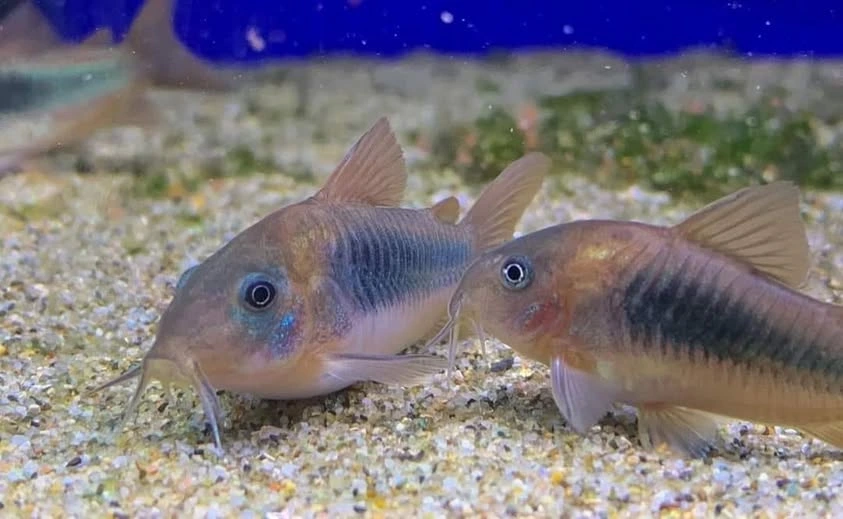
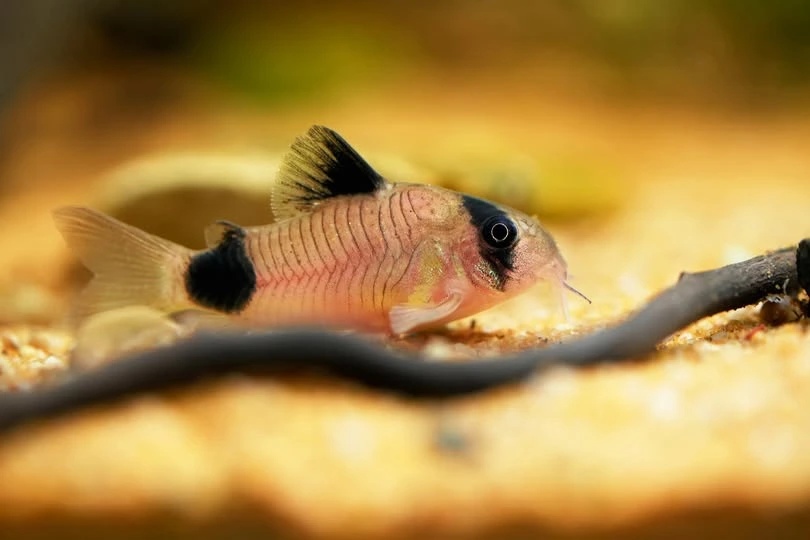
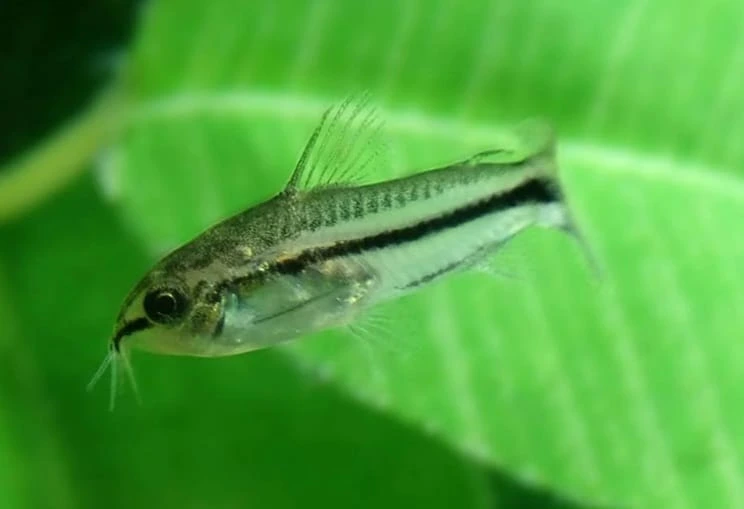
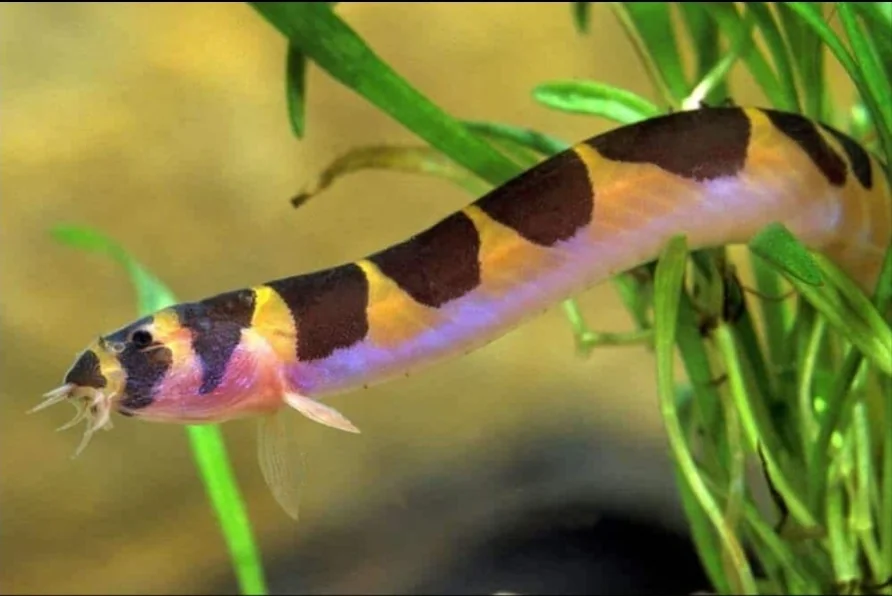
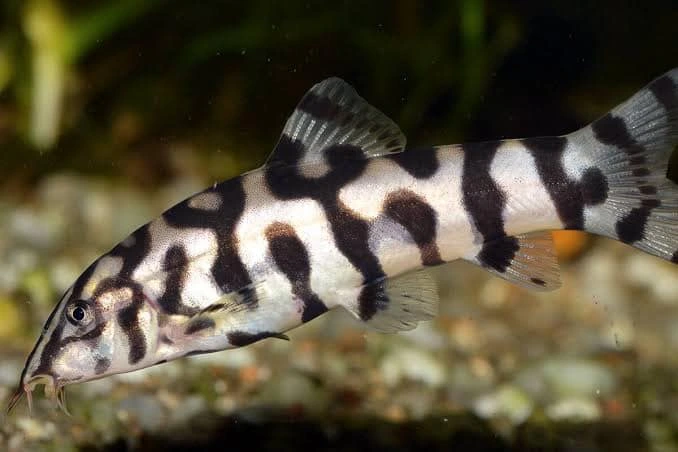
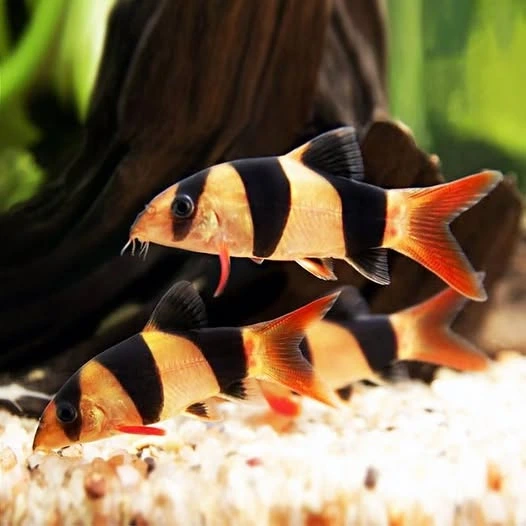
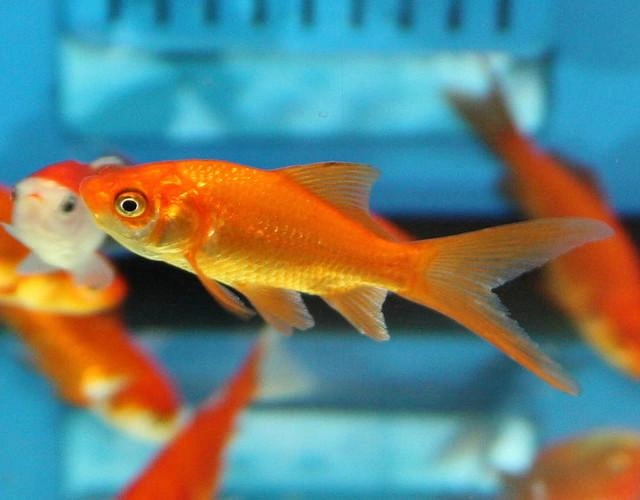
A carpet is not damaged from above, it is damaged from below. Anything that sifts, roots through or digs in the substrate lifts newly planted clumps before the runners have knitted them together, and one determined digger undoes weeks of spreading in an afternoon. Grazing barely matters here; excavation is the whole risk.
Safe with Dwarf Hairgrass
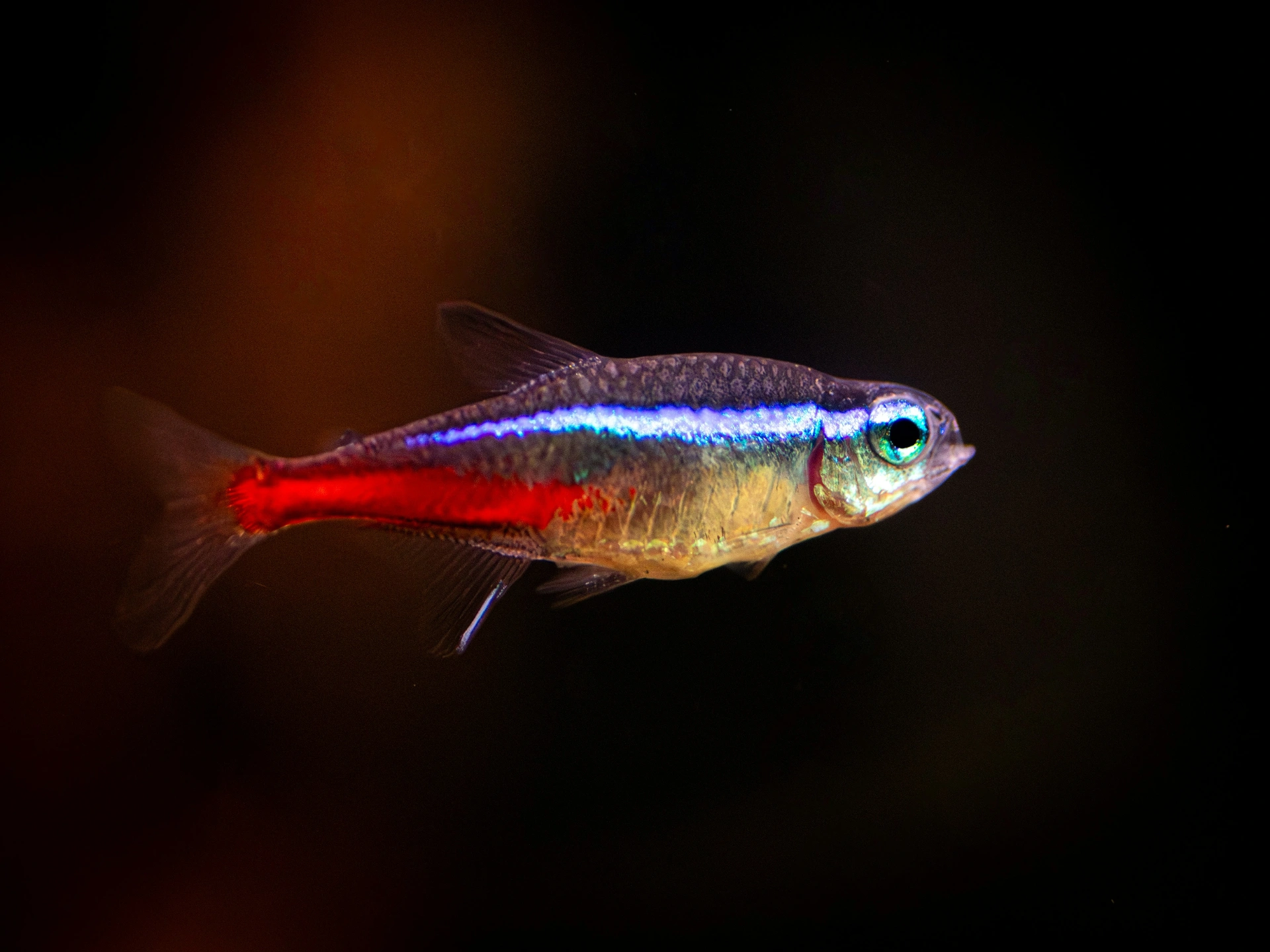 Neon TetraParacheirodon innesi
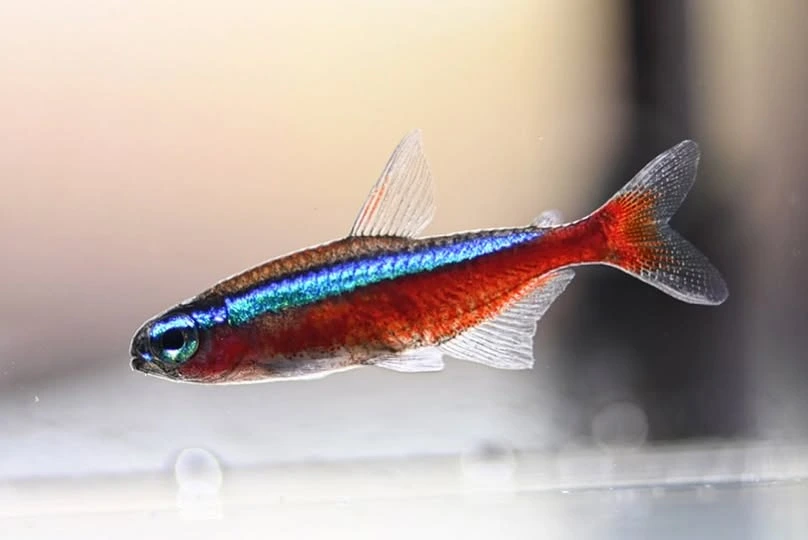 Cardinal TetraParacheirodon axelrodi
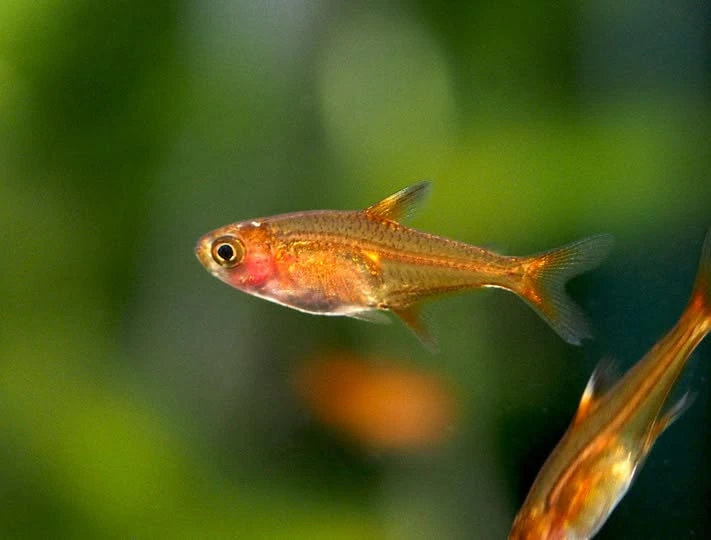 Ember TetraHyphessobrycon amandae
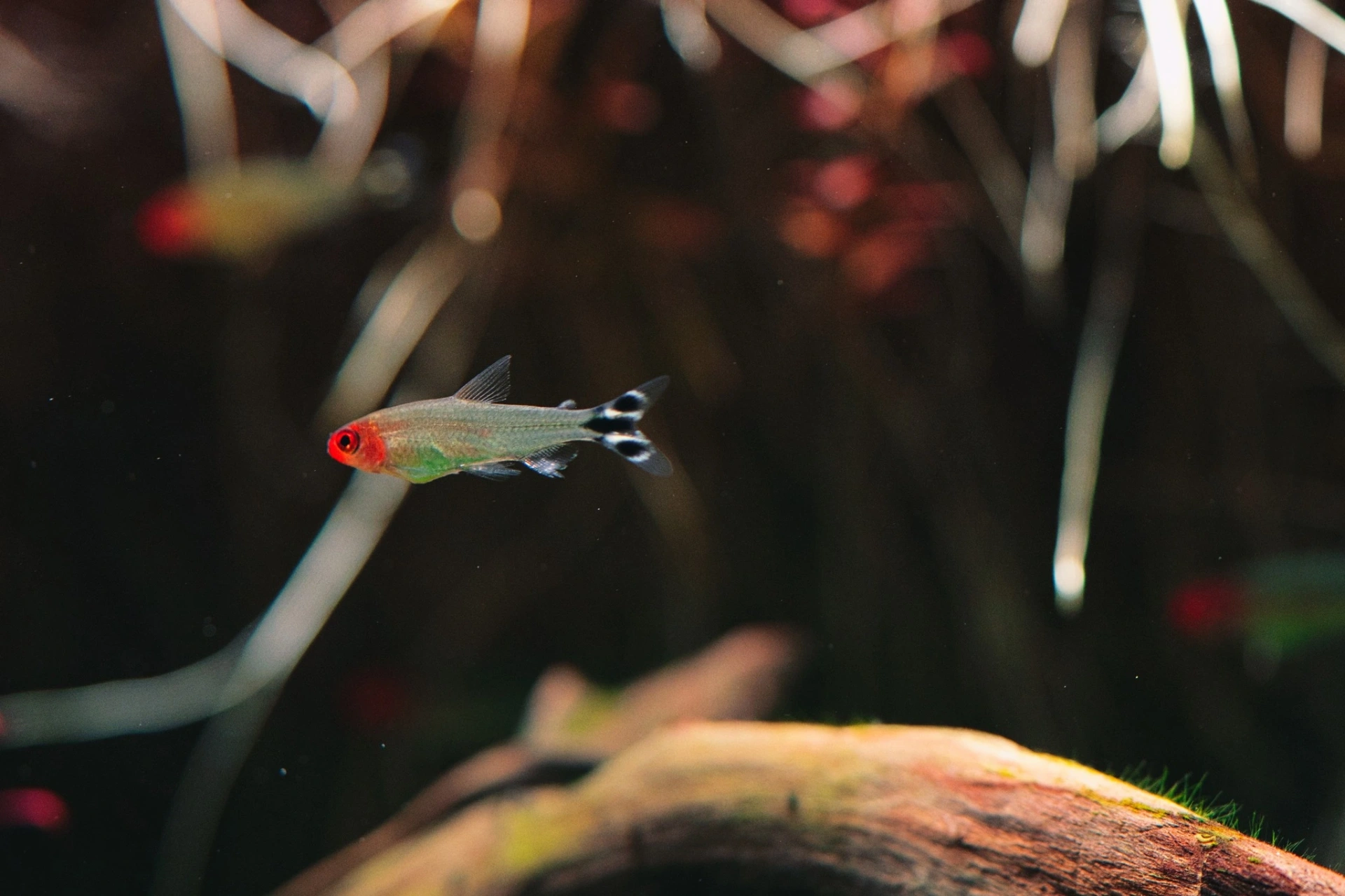 Rummy Nose TetraHemigrammus rhodostomus
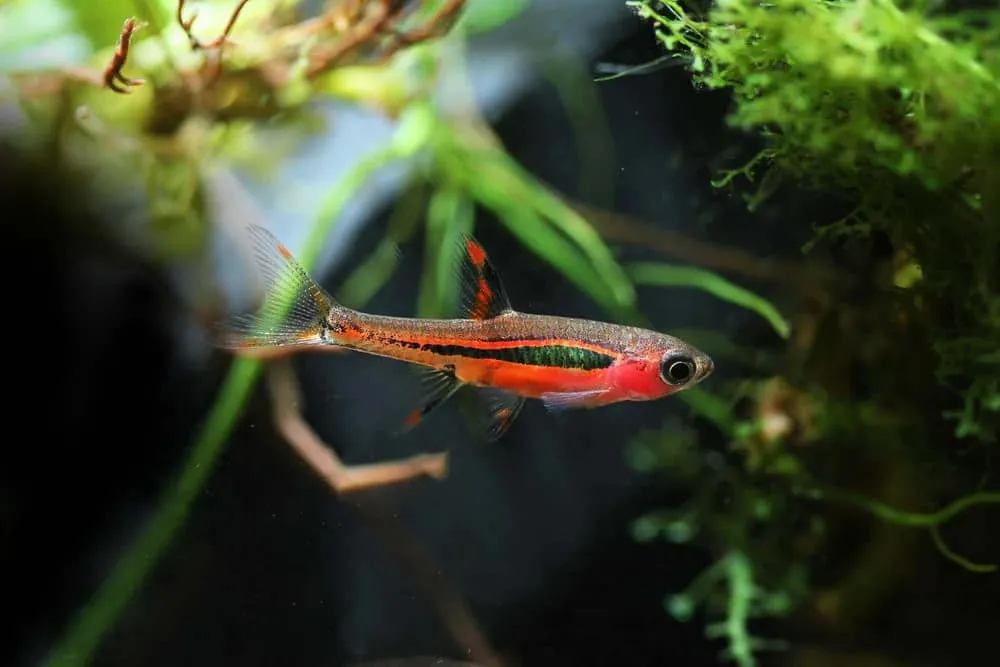 Chili RasboraBoraras brigittae
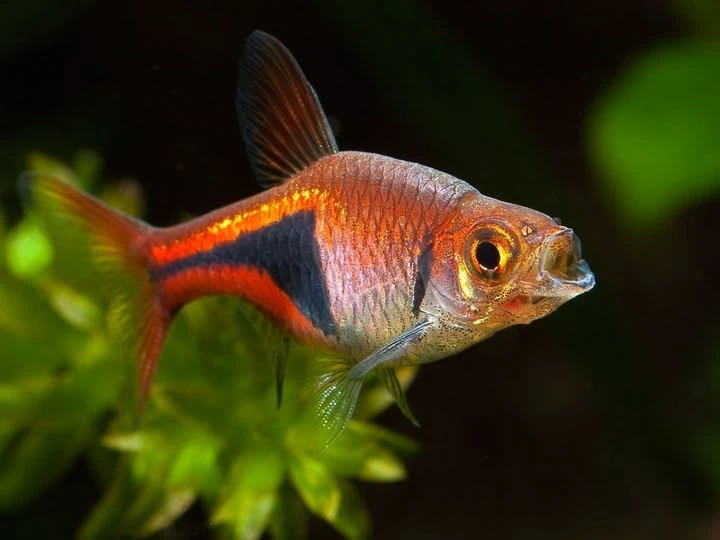 Harlequin RasboraTrigonostigma heteromorpha
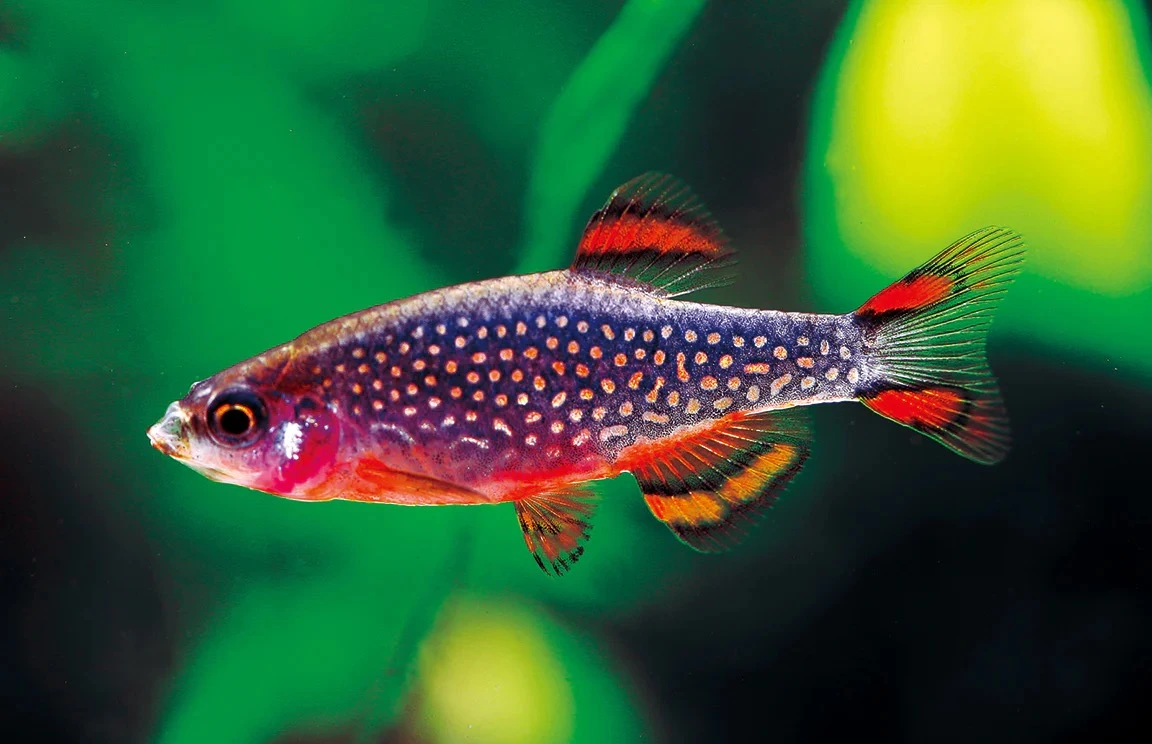 Celestial Pearl DanioDanio margaritatus
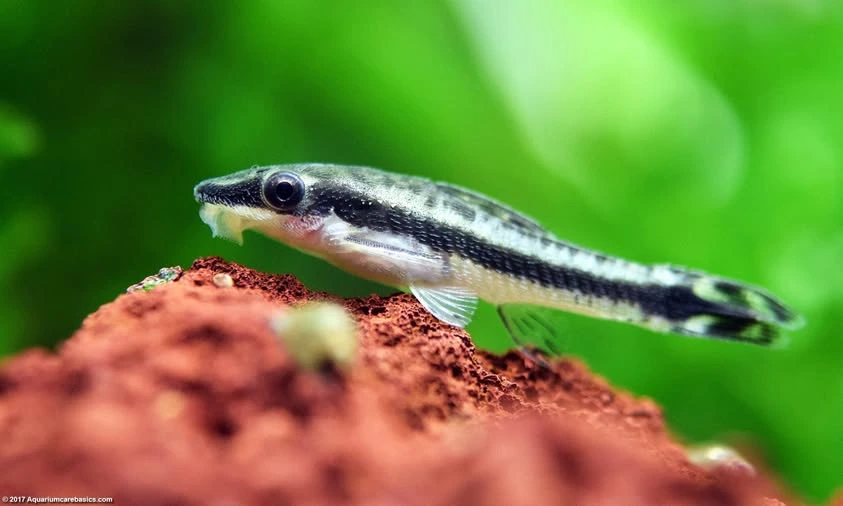 OtocinclusOtocinclus vittatus
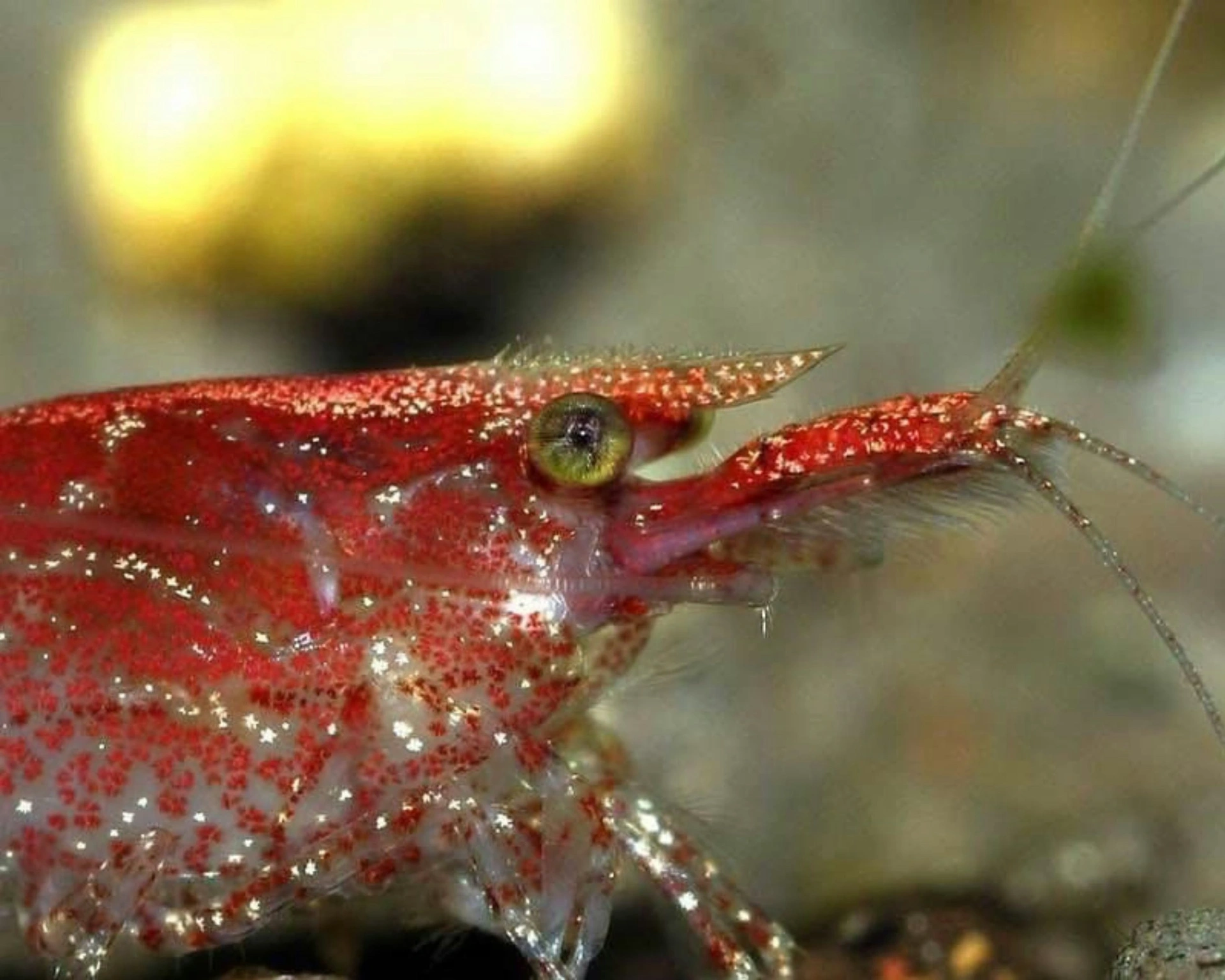 Cherry ShrimpNeocaridina davidi
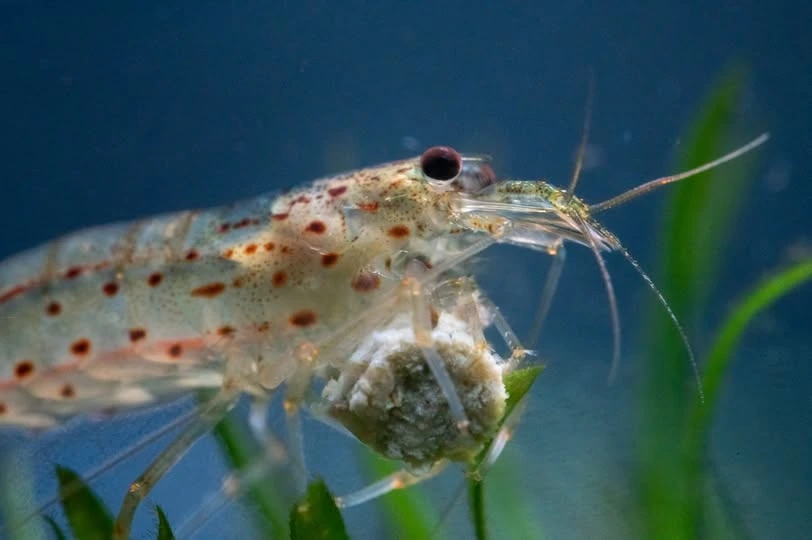 Amano ShrimpCaridina multidentata
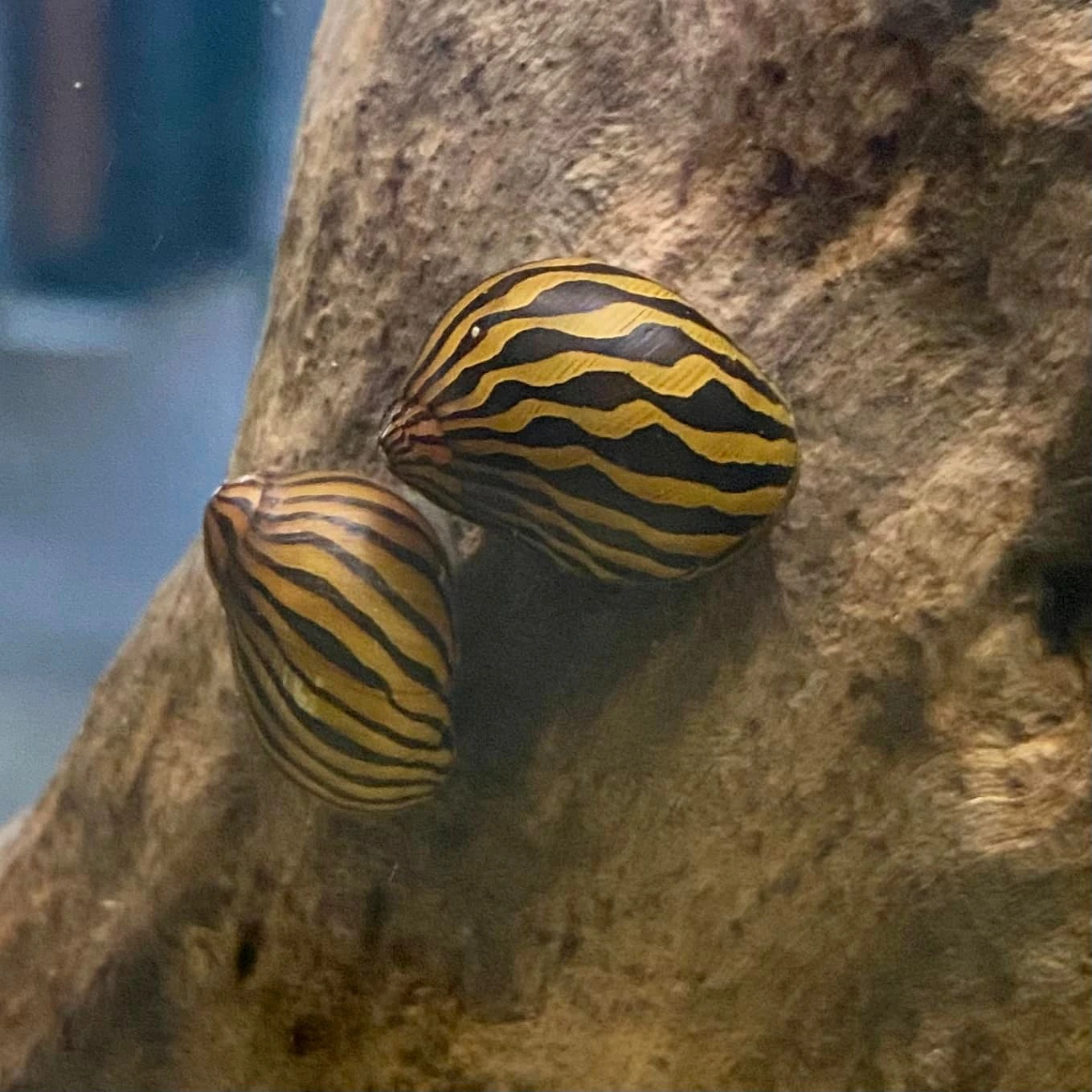 Nerite SnailNeritina sp.
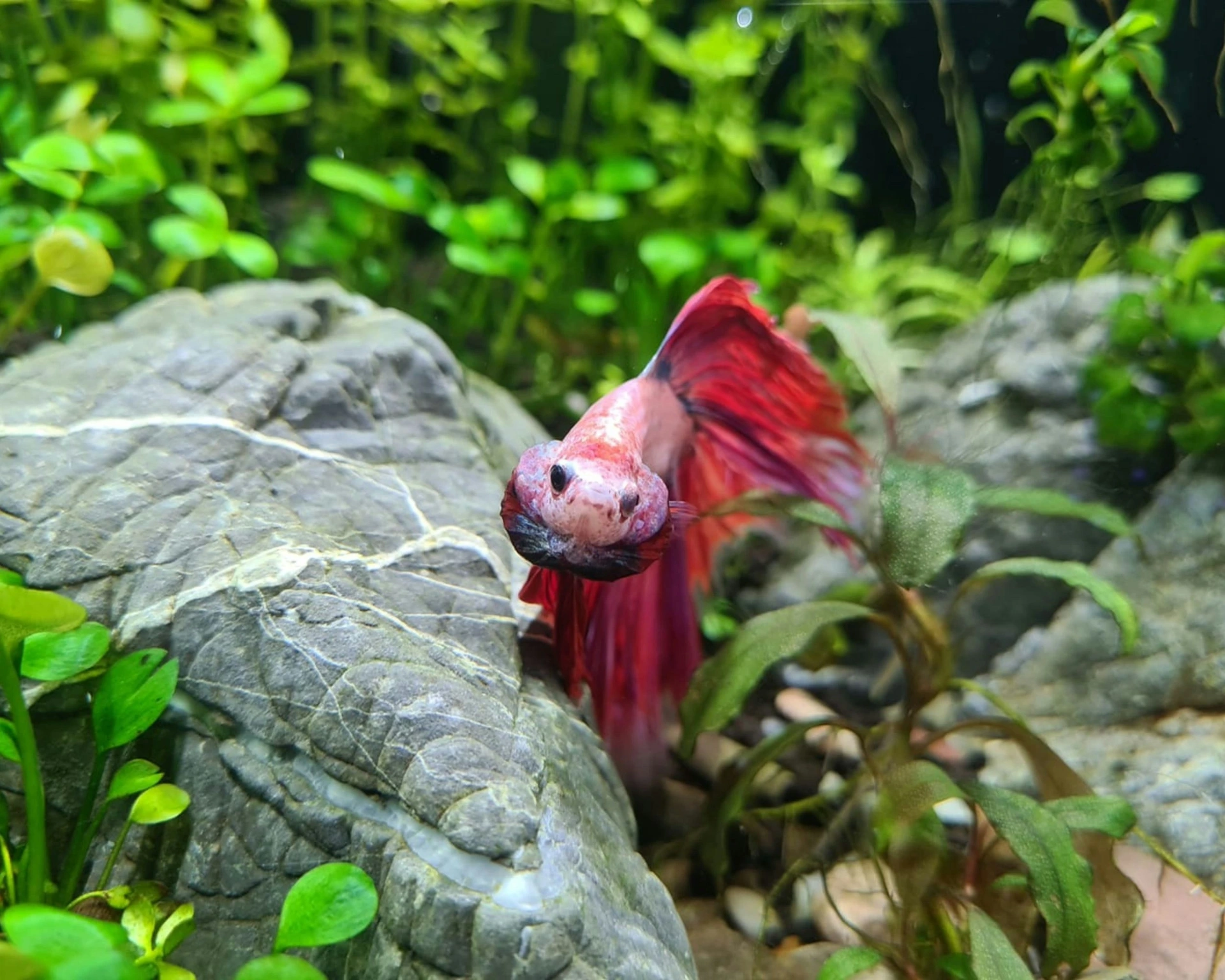 BettaBetta splendensHarmless to the carpet, but it wants the low flow and dim light that work against carpeting.
Will eat or uproot it
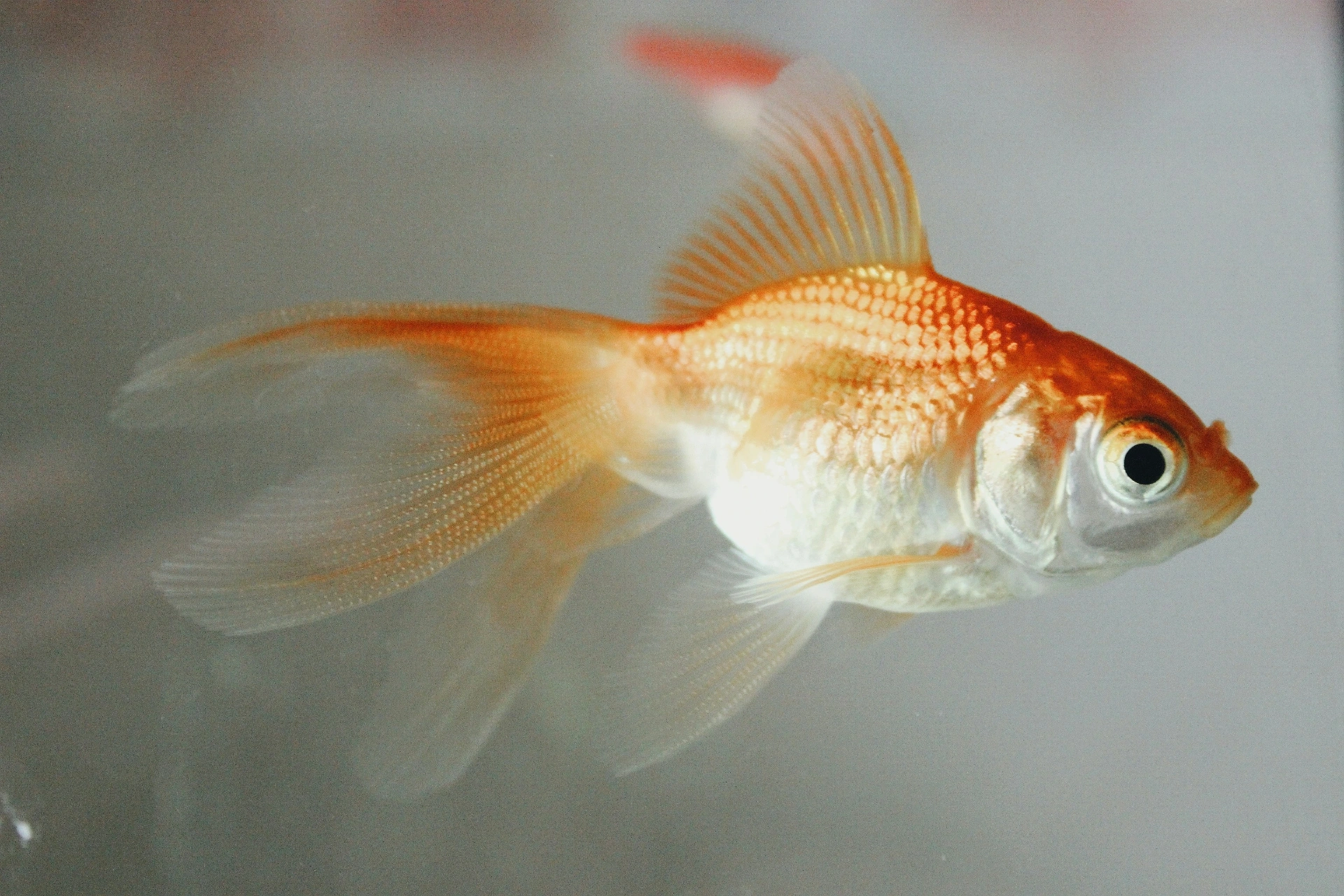


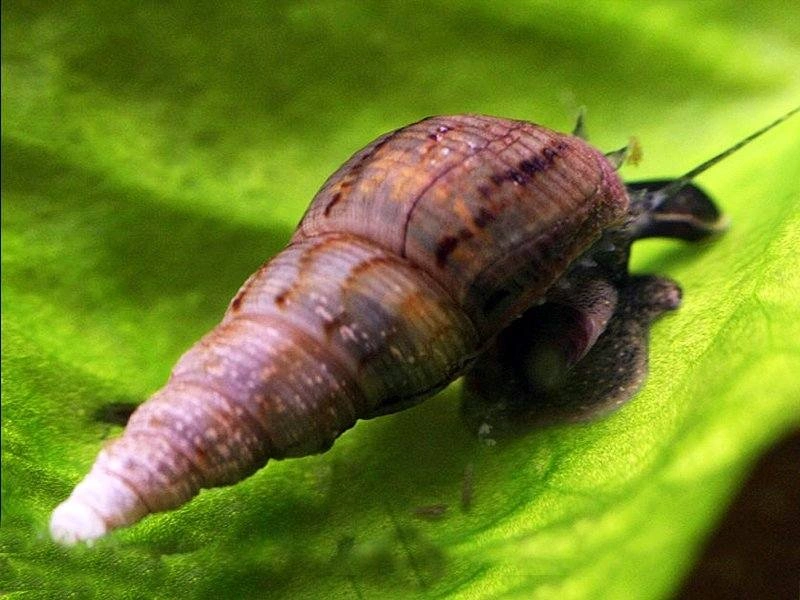
Companion plants
This is the one plant on the site with a real conflict against another. Dwarf hairgrass sits on the substrate and needs light to reach it, so a floating mat — red root floater and hornwort included — will stop it carpeting no matter how good the fixture is. Pair it with plants that stay out of the light path or occupy the back of the tank.
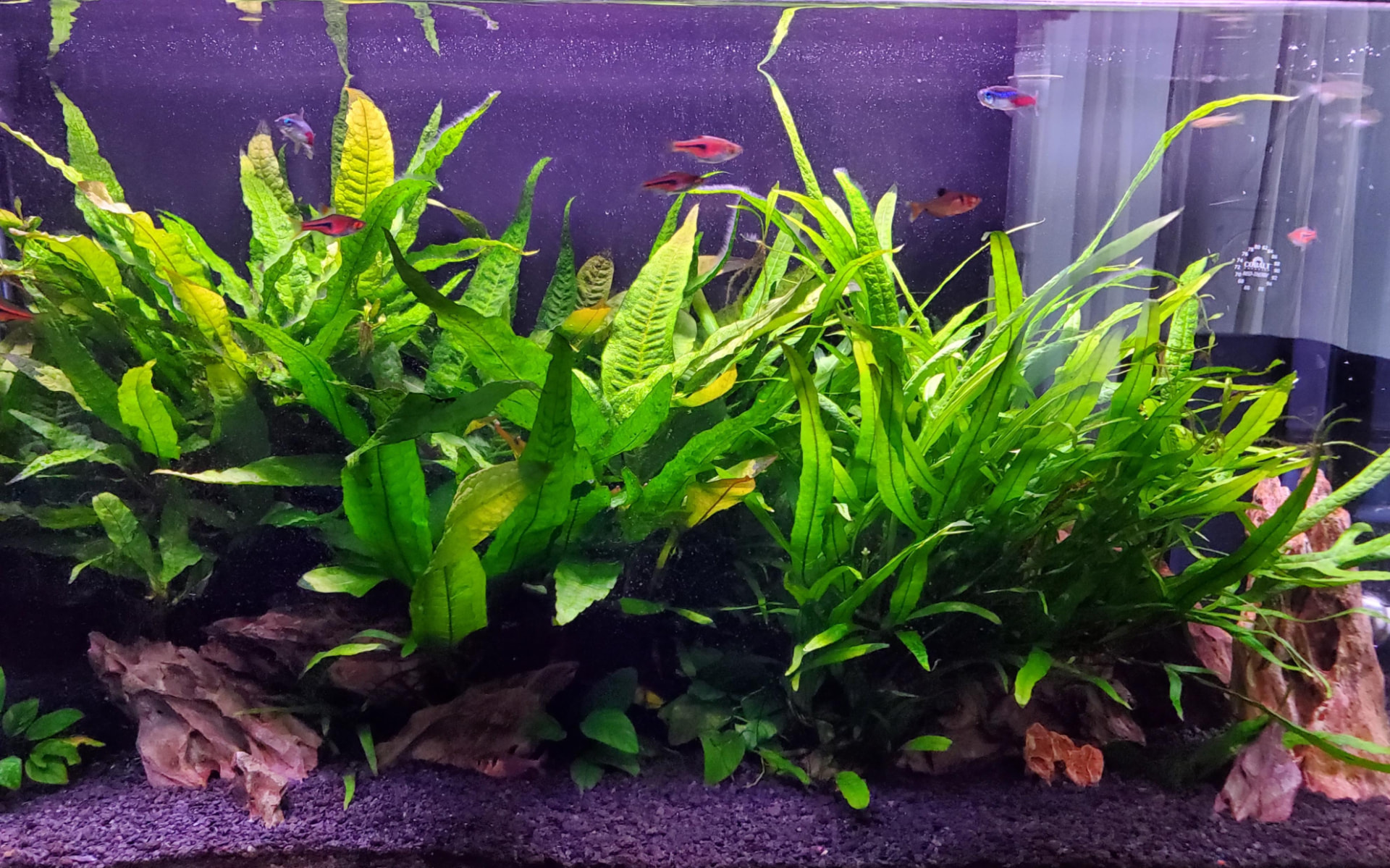
Java Fern
Microsorum pteropus
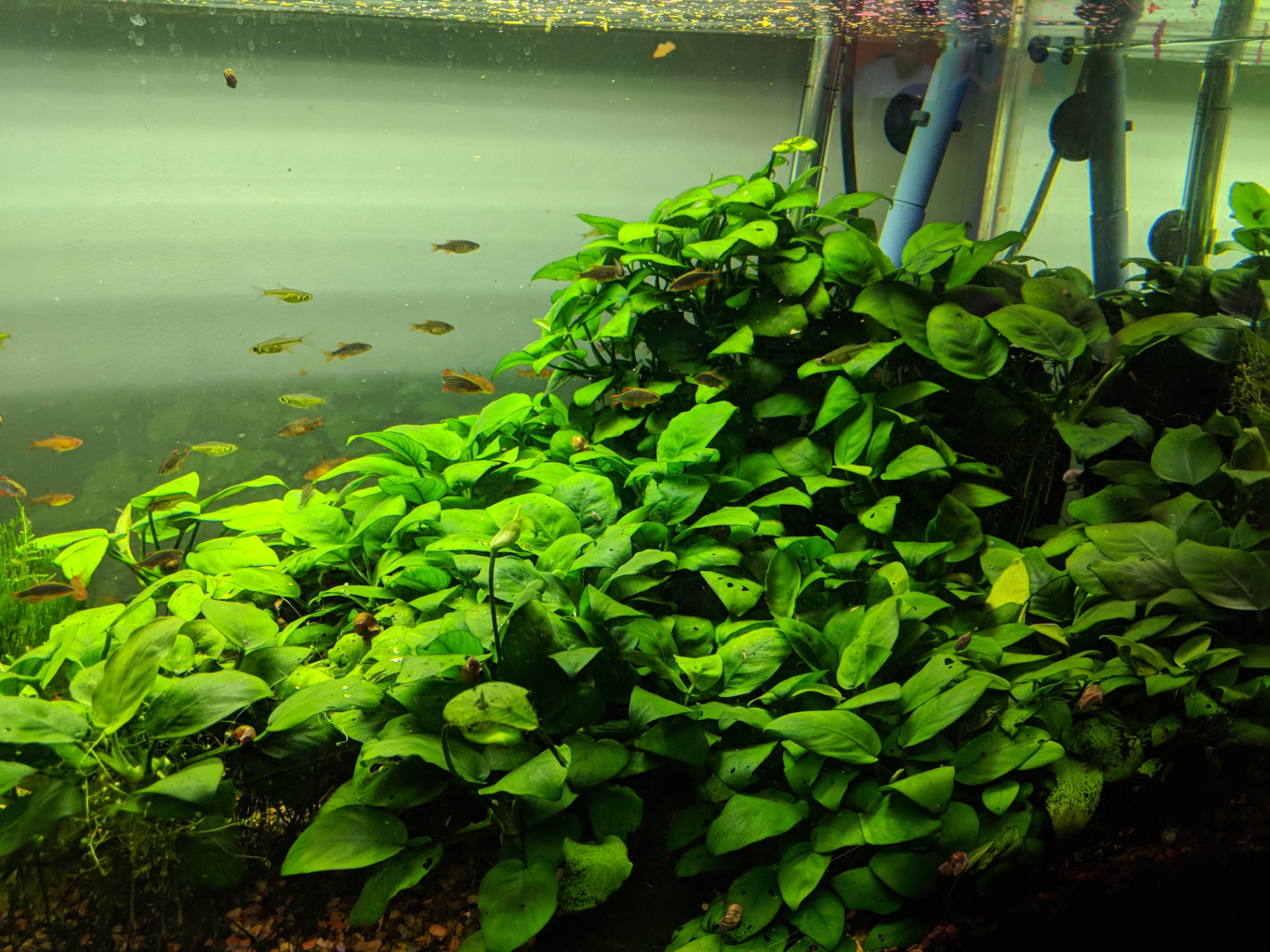
Anubias
Anubias barteri
Java Moss
Taxiphyllum barbieri
Pro tips & common mistakes
Pro tips
- Do a dry start if the tank is new: plant into damp substrate, cover the tank with cling film, mist daily, and flood after four to six weeks with the carpet already established.
- Divide a pot into far more clumps than feels right — a dozen small portions beat three big ones every time.
- Trim the carpet once it starts to establish; cutting drives horizontal runner growth rather than height.
- Get root tabs in before planting; adding them later means digging through the root network you were waiting for.
- Keep floating plants out of the tank entirely while the carpet establishes, then add them later if you still want them.
- Siphon trimmings out the same session — sunken clippings rot inside a dense carpet and cannot be retrieved.
Common mistakes
- Buying it for a low-tech tank and expecting a lawn; low light produces a tall, thin meadow instead.
- Planting the whole pot as one clump, which never spreads and rots in the middle.
- Running it under a floating plant, which is the most common way to shade out a foreground.
- Using coarse gravel, which the shallow roots cannot hold in and the runners cannot travel through.
- Giving up in week three when the emersed blades brown off — that is the conversion, not death.
- Keeping corydoras, loaches or cichlids over a freshly planted carpet and wondering why clumps keep surfacing.
Frequently asked questions
Sources
- Plants of the World Online — Accepted name Eleocharis parvula and its distribution.
- IUCN Red List — Least Concern assessment for the closely traded Eleocharis acicularis.
Related plants
Pearl Weed
Micranthemum micranthemoides
Marimo Moss Ball
Aegagropila linnaei
Amazon Sword
Echinodorus grisebachii
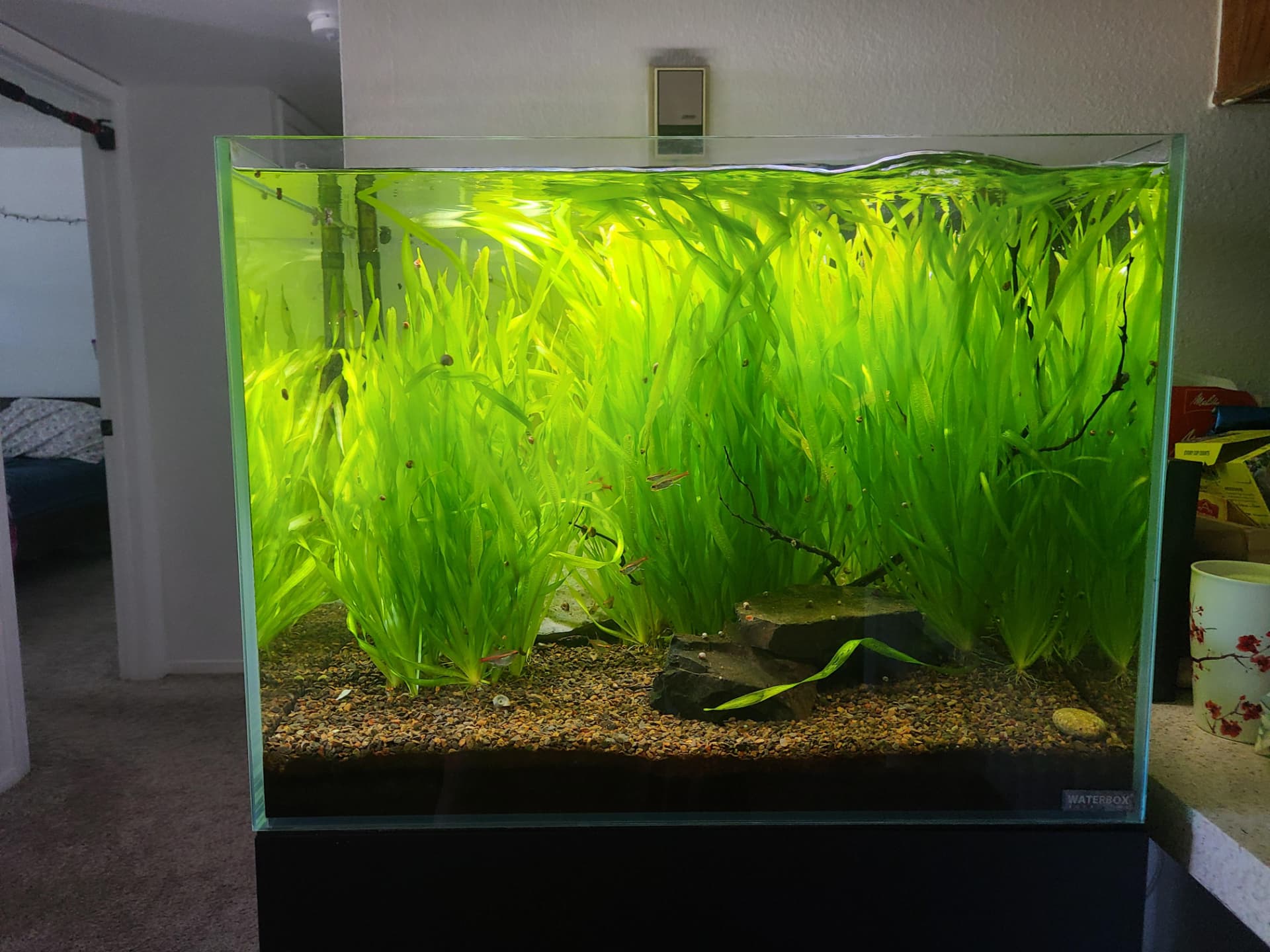
Vallisneria
Vallisneria spiralis
Before you commit to a carpet
A carpeted tank runs bright, injected and well fed, and that combination changes what the livestock side looks like too — starting with which fish will leave the foreground alone.
Reviewed by the AquariumStocking team · Updated August 2026