
Best Fish for a 65 Gallon Tank
A 65 gallon tank is the tall, deep alternative to a standard 55 — same length, but noticeably more height and water. That extra depth changes what works: it suits fish that use vertical space, like angelfish and taller cichlids, and it gives an African peacock display the water column to look its best. Sixty-five gallons is also where a dedicated single-species show tank starts to make sense — a group of peacocks or a shark-and-barb setup can be built around one clear theme rather than compromising. The height does trade away some floor area compared to a breeder, so heavy bottom-dwelling stock is slightly less at home here than in a 75 long. Every figure on the cards below — adult length, temperament, pH tolerance — is read from the shared database, guaranteeing this guide can never drift out of sync with the individual fish profiles.
What Fish Can Live in a 65 Gallon Tank?
Sixty-five gallons leans toward display setups: peacock cichlids that colour up in a group, a shark-and-barb community with plenty of movement, or a tall planted community. The added height favours mid-and-upper swimmers over a big bottom crew.
173
species fit
53
schooling fish
62
centerpiece & community fish
31
bottom dwellers
6
livebearers
Schooling Fish for a 65 Gallon Tank
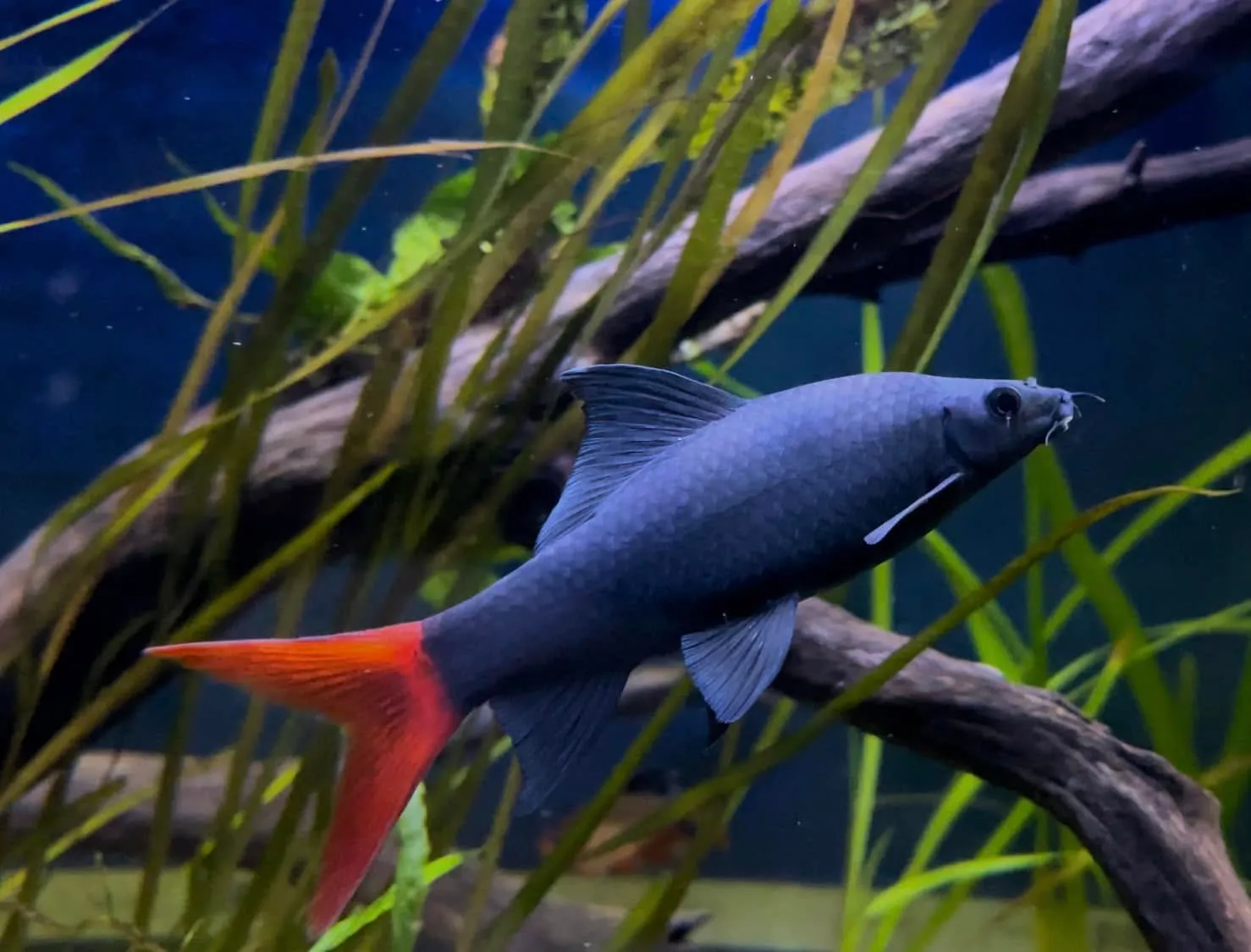
Epalzeorhynchos bicolor
Very territorial with own species and similar looking fish. Keep only one. Needs hiding spots and territory.

Epalzeorhynchos frenatum
Similar to red tail shark but red fins all over. Territorial to bottom dwellers. Albino variant available.
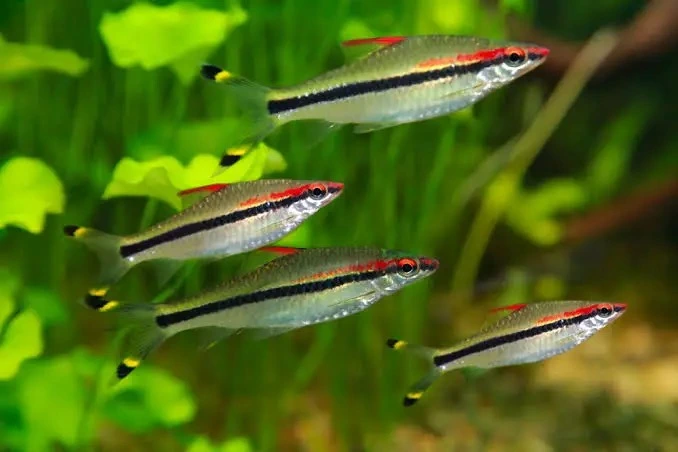
Sahyadria denisonii
Also called Roseline Shark. Endangered in wild - buy captive bred. Fast swimmers, need long tank.
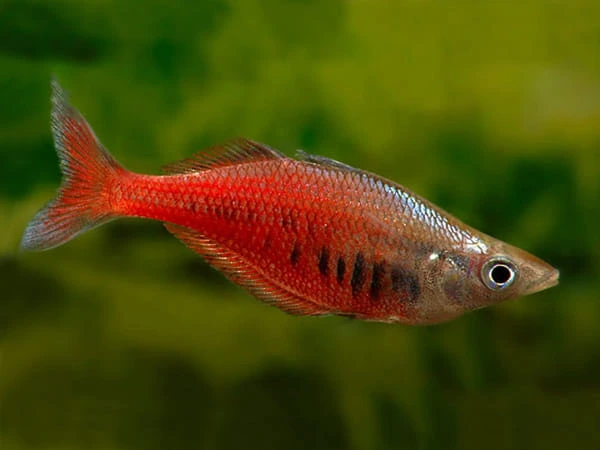
Glossolepis incisus
Males develop stunning deep red coloration with maturity. One of the largest and most colorful rainbowfish. Needs space for active swimming.

Phenacogrammus interruptus
Stunning iridescent males. Shy fish, needs space and plants. Flowing fins can be nipped by other fish.
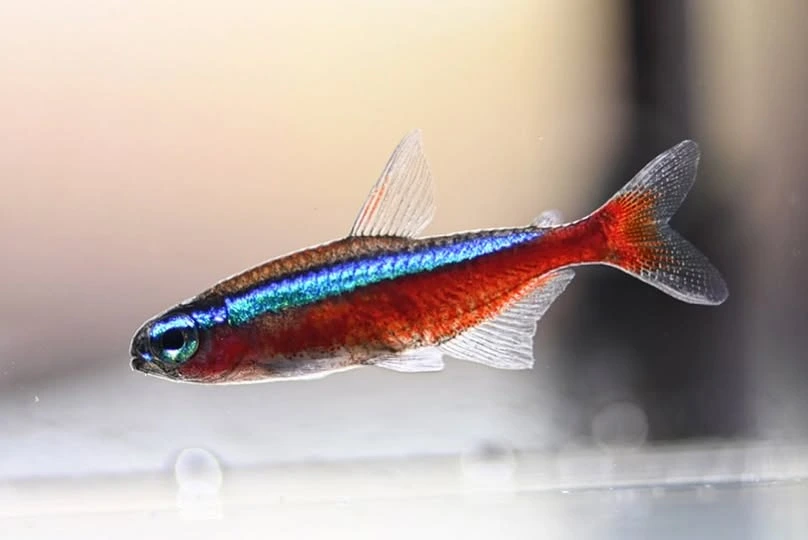
Paracheirodon axelrodi
Prefers softer, more acidic water than neon tetras. Wild-caught specimens more sensitive.
Best Community Fish for a 65 Gallon Tank
The strongest 65 gallon communities use the vertical space deliberately — a peaceful upper-water school, a mid-water centerpiece, and just enough bottom presence to keep the substrate clean. Peacock cichlids and electric blue acaras thrive with catfish that patrol below them.
Centerpiece & Community Fish

Aulonocara sp.
One of the most colorful freshwater fish. Males display incredible blues, reds, and yellows. More peaceful than mbuna.

Aulonocara sp. 'OB'
Hybrid peacock cichlid bred for its striking orange-blotched (OB) pattern. More colorful and variable than wild-type peacocks. Semi-aggressive — calmer than mbuna but still territorial during breeding. Keep 1 male to 3-4 females. Compatible with other peacocks and mild haps.

Aulonocara baenschi
One of the most brilliantly colored peacock cichlids — males are vivid lemon yellow with a metallic blue face. Calmer than mbuna but still territorial during breeding. Keep 1 male to 3-4 females. Excellent peacock for intermediate keepers entering the African cichlid hobby.

Labidochromis caeruleus
One of the most peaceful Malawi cichlids. Best kept in groups with 1 male to 3-4 females.

Maylandia estherae
More aggressive than Yellow Labs. Keep in mbuna community with lots of rockwork. Primarily herbivorous — avoid high-protein foods.

Andinoacara pulcher hybrid
One of most peaceful medium cichlids. Hardy and adaptable. Will eat small fish and shrimp.
Bottom Dwellers
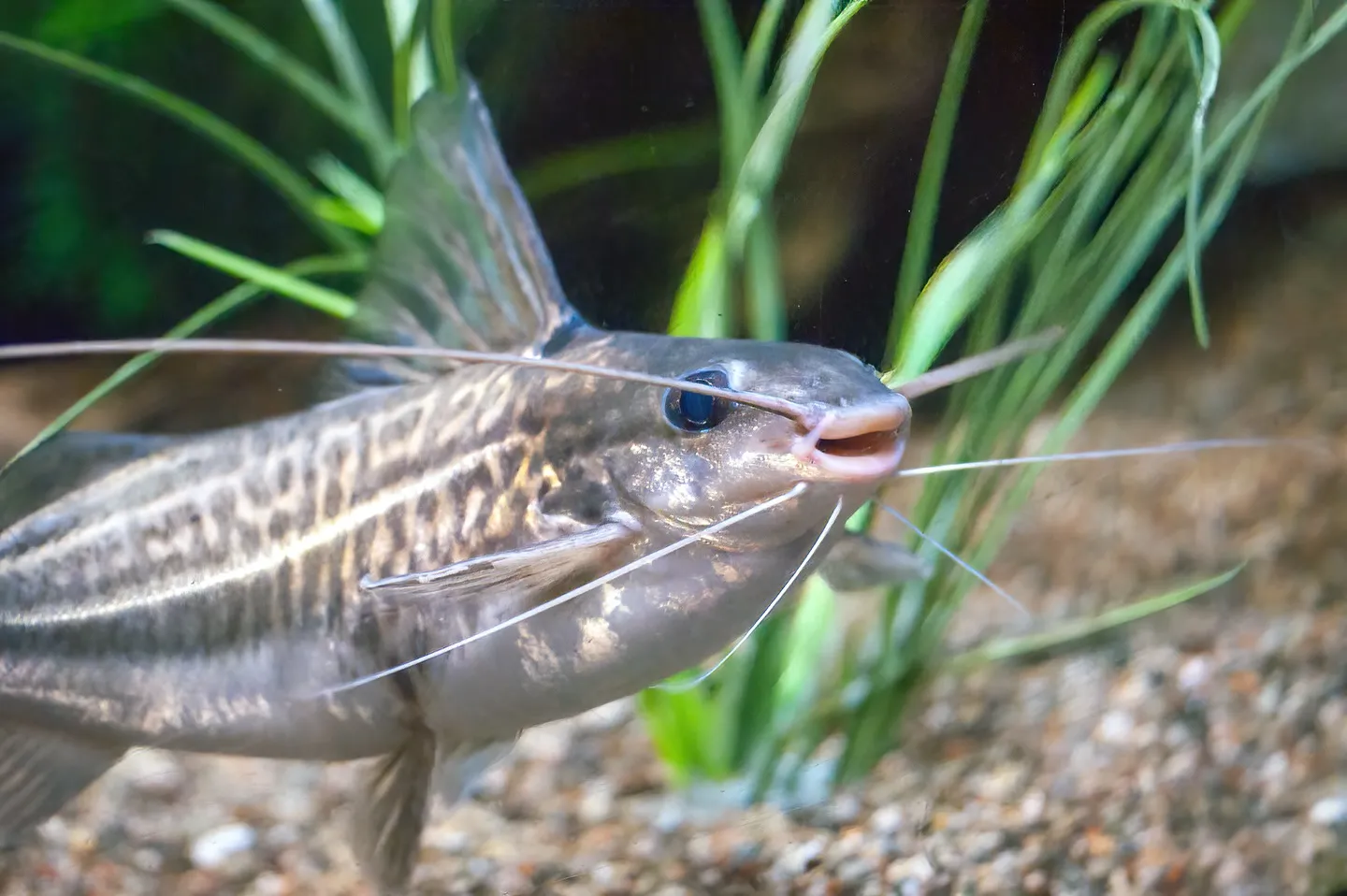
Pimelodus pictus
Will eat fish small enough to fit in mouth. Very active swimmer. Sharp pectoral spines can injure handlers.
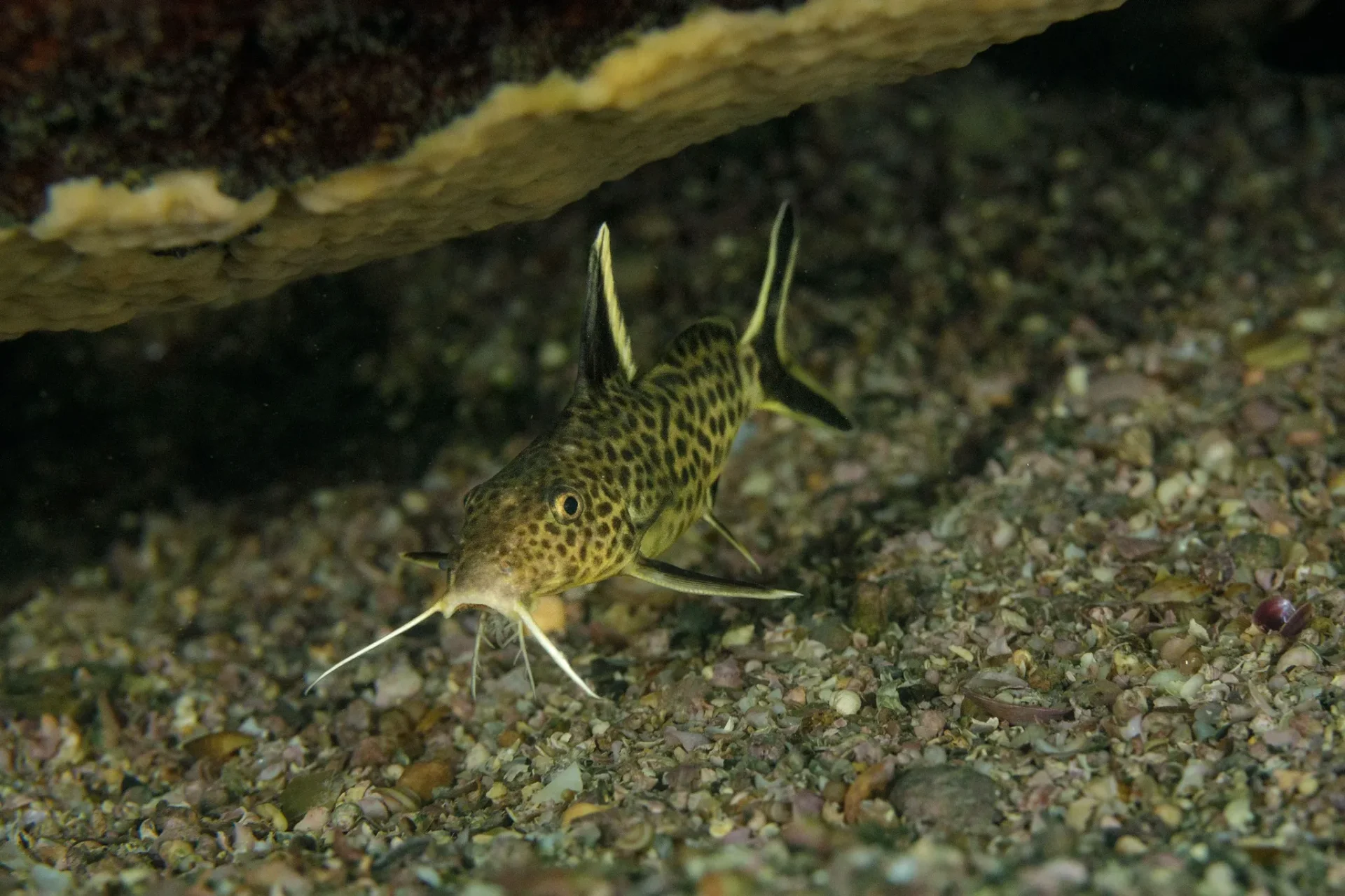
Synodontis petricola
From Lake Tanganyika. Prefers hard, alkaline water. One of smaller Synodontis species. Good for African cichlid tanks.
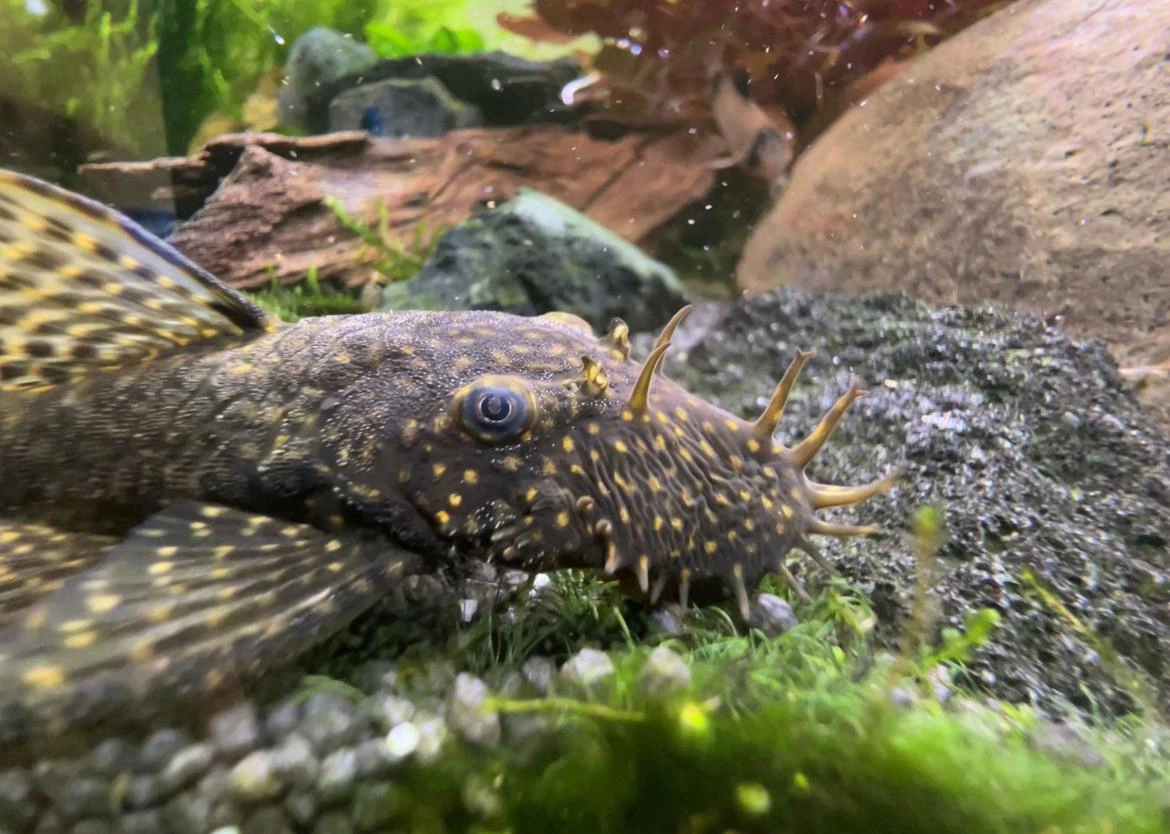
Ancistrus sp.
Excellent algae eater. Needs driftwood for rasping. Much better choice than common pleco.
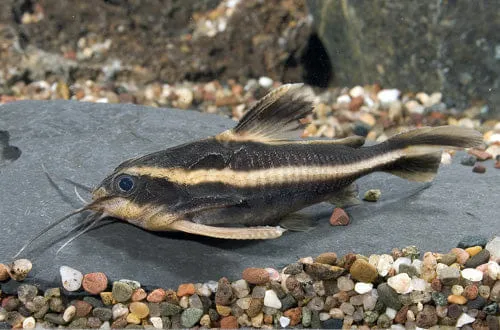
Platydoras armatulus
Nocturnal, rarely seen during day. Makes croaking sounds when caught. Sharp spines - never net this fish.

Misgurnus anguillicaudatus
Also called Dojo Loach. Becomes active before storms (hence name). Coldwater tolerant. Very personable.
Livebearers
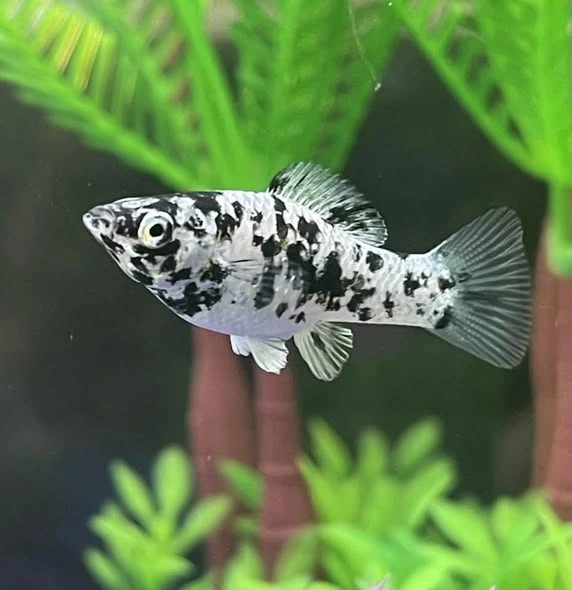
Poecilia sphenops
Prefer hard, alkaline water. Can tolerate brackish conditions. High bioload for their size.

Xiphophorus hellerii
Males can be aggressive to each other. Keep 1 male to 2-3 females. Strong jumpers, need secure lid.
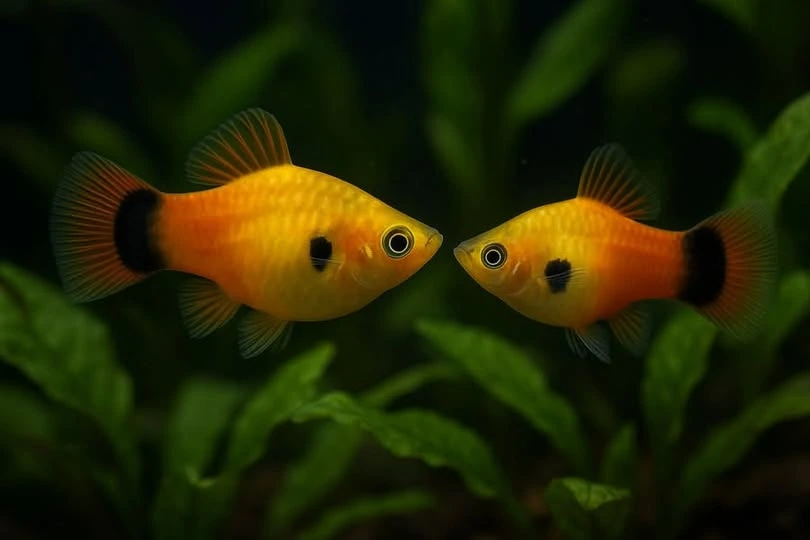
Xiphophorus maculatus
Hardy and adaptable. Good algae eaters. Will interbreed with swordtails.
Invertebrates
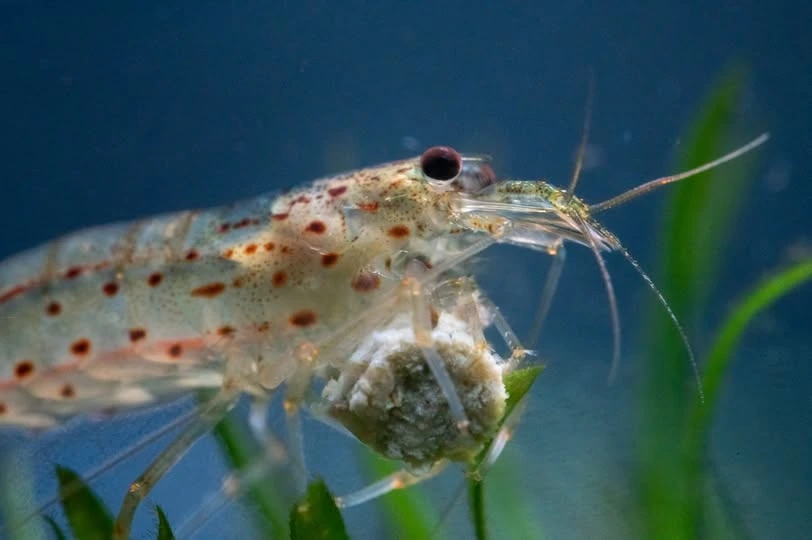
Caridina multidentata
Best algae-eating shrimp. Cannot breed in freshwater. Sensitive to copper medications.
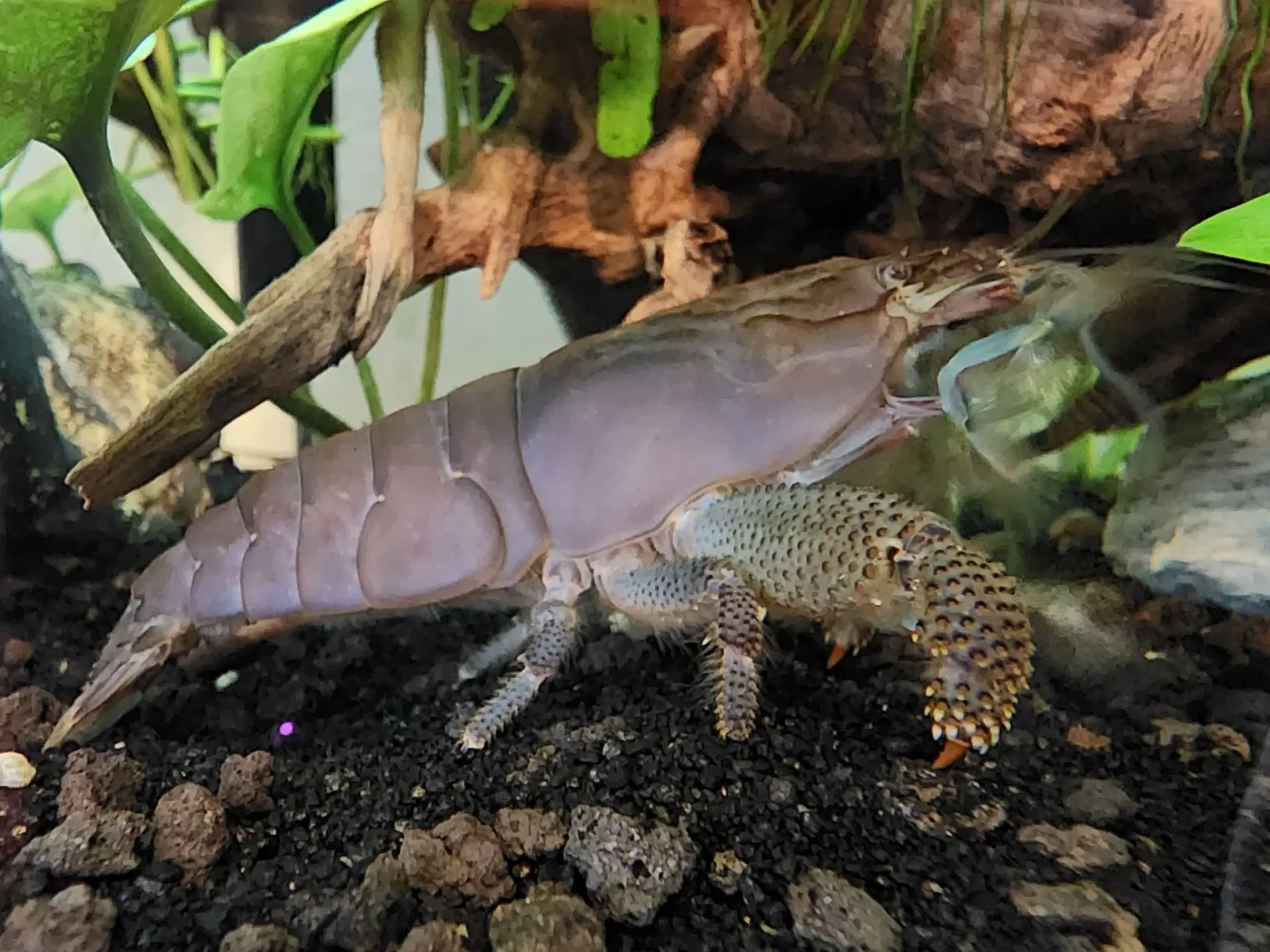
Atya gabonensis
Filter feeder, fans water for particles. Needs current and fine foods. Impressive size for freshwater shrimp.
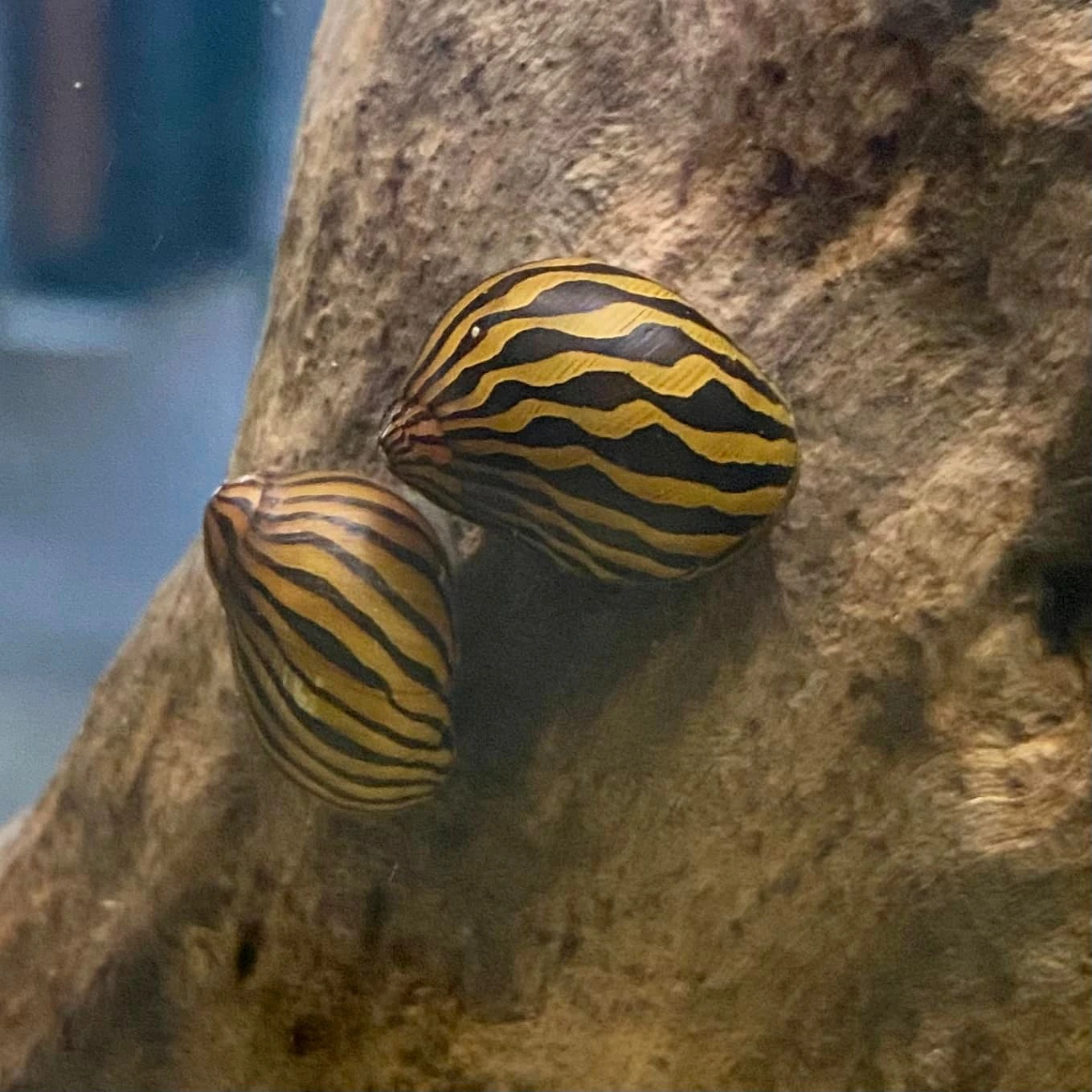
Neritina sp.
Excellent algae eaters. Cannot reproduce in freshwater. May lay white eggs on decor. Need calcium for shells.
Biggest Fish for a 65 Gallon Tank
The height of a 65 helps taller fish but doesn't add floor space, so the biggest residents here are medium cichlids and a single sizeable catfish. These are the largest species the database allows at 65 gallons.
Misgurnus anguillicaudatus
Also called Dojo Loach. Becomes active before storms (hence name). Coldwater tolerant. Very personable.
Platydoras armatulus
Nocturnal, rarely seen during day. Makes croaking sounds when caught. Sharp spines - never net this fish.
Aulonocara sp.
One of the most colorful freshwater fish. Males display incredible blues, reds, and yellows. More peaceful than mbuna.
Aulonocara sp. 'OB'
Hybrid peacock cichlid bred for its striking orange-blotched (OB) pattern. More colorful and variable than wild-type peacocks. Semi-aggressive — calmer than mbuna but still territorial during breeding. Keep 1 male to 3-4 females. Compatible with other peacocks and mild haps.
Stocking Ideas for a 65 Gallon Tank
Every combination is scored by the stocking calculator against a 65 gallon volume, so the bioload reading, swim-level balance, and compatibility notes shown are computed results — useful precisely because a tall tank can hide an unbalanced swim-level spread.
Congo Tetra Community
A well-filled 65-gallon setup: 7 Congo Tetra and 16 Cardinal Tetra.
Platy Community
A well-filled 65-gallon setup: 12 Platy and 8 Amano Shrimp.
- Platy×12
- Amano Shrimp×8
Cardinal Tetra Community
A comfortably stocked 65-gallon setup: 22 Cardinal Tetra and 8 Amano Shrimp.
How Many Fish Can You Keep in a 65 Gallon Tank?
Sixty-five gallons is roughly 246 litres. Because the tank is tall rather than long, count usable footprint as well as volume: mid-water schools scale generously, but bottom dwellers compete for a smaller floor. The calculator combos below show how quickly a peacock group approaches capacity versus a lighter planted community.
246 L
actual water volume
65 US gallons at the glass
173
suitable species
from our database at this size
Bioload > inches
what actually matters
the inch-per-gallon rule is a myth
Fish to Avoid in a 65 Gallon Tank
A tall 65 looks cavernous from the front, which fools buyers into oversized cichlids and sharks. Each species below exceeds the minimum tank size listed on its own profile — the exact threshold is on every card.
Height does not help a fish that needs floor space and outputs waste on an industrial scale.
A colony fish that reaches 35 cm and needs a long tank measured in feet, not a tall 65.
Grows to 45 cm and coats a tank in waste — far too much fish for 65 gallons.
A jumpy schooling fish that needs length and a group; a tall 65 stresses it badly.
A true monster that reaches over a metre. Never appropriate for a home aquarium.
Grows to a metre and needs pond-scale space; a 65 gallon is cruel for this species.
Plants for a 65 Gallon Tank
At 65 gallons you can fill the back wall with tall rooted plants and still leave open swimming space up front.
- Vallisneria — Low light, fast growth, no CO2 needed
- Amazon Sword — Medium light, medium growth, no CO2 needed
- Java Fern — Low light, slow growth, no CO2 needed
- Anubias — Low light, slow growth, no CO2 needed
- Hornwort — Low light, fast growth, no CO2 needed
- Water Lettuce — Medium light, fast growth, no CO2 needed
Browse the full plant database for care requirements on every species.
65 Gallon Setup Notes
Setting up a 65: use the height for tall decor and plants, cycle before stocking, and remember bottom fish have less floor than a same-volume long tank.
Ready to stock your 65 gallon?
Check compatibility, bioload, and capacity for your exact setup.